
Florist’s gloxinia (Sinningia speciosa, )
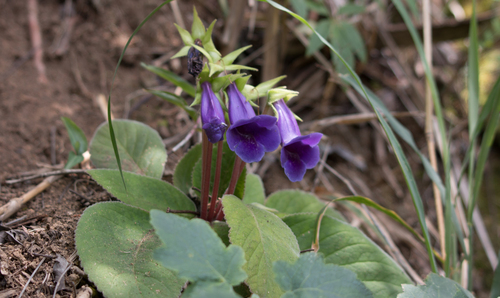

Florist’s gloxinia (Sinningia speciosa), a Brazilian member of the Gesneriaceae family, has a perennial tuber. Its wild, nodding flowers differ from the upright corollas of many cultivars.
Read moreFlorist’s gloxinia and Brazilian gloxinia
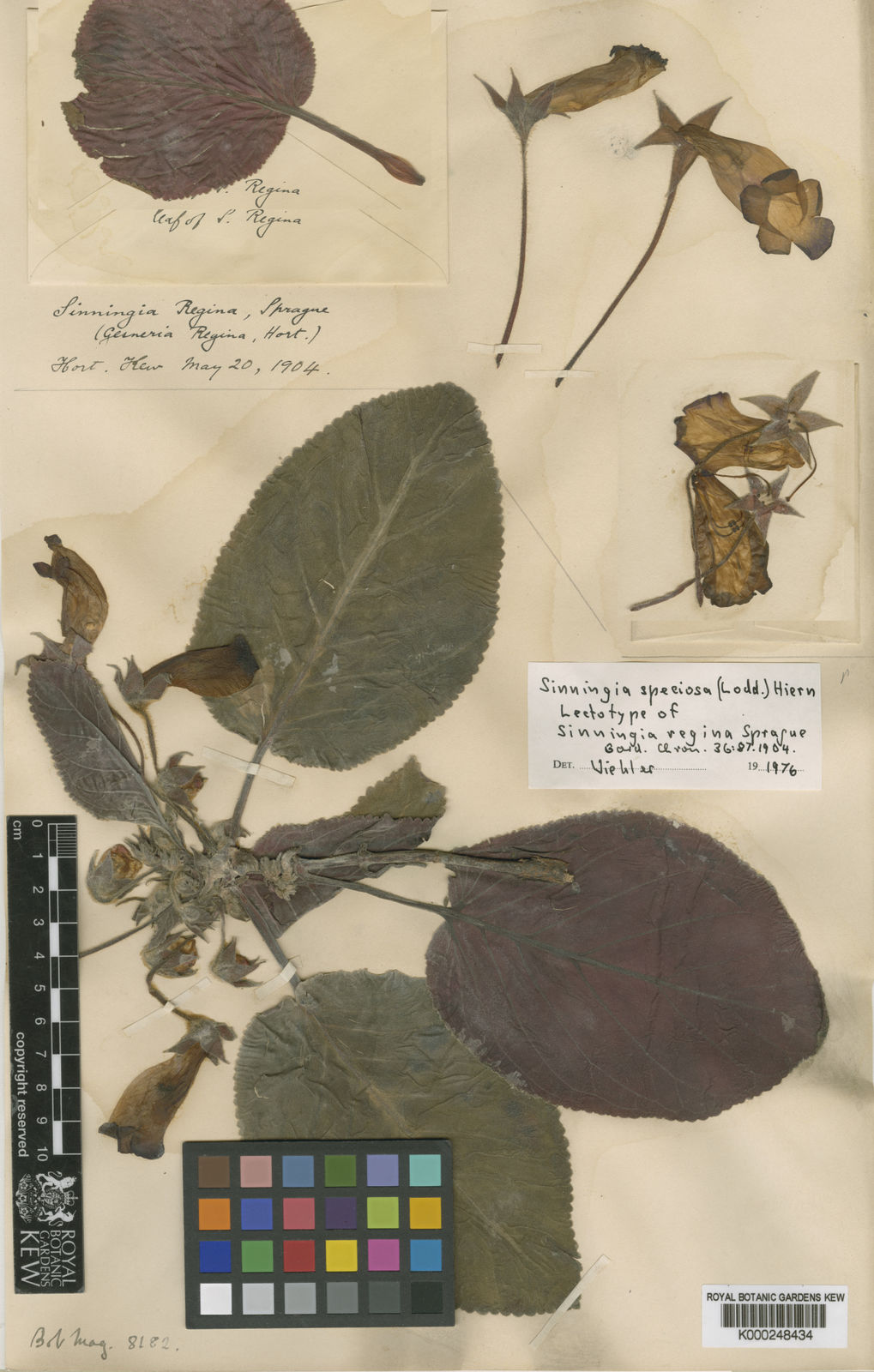
Gloxinia speciosa and Sinningia regina
Give plenty of ambient light without direct sun on the leaves.
Bright indirect light, sheltered from direct sun indoors.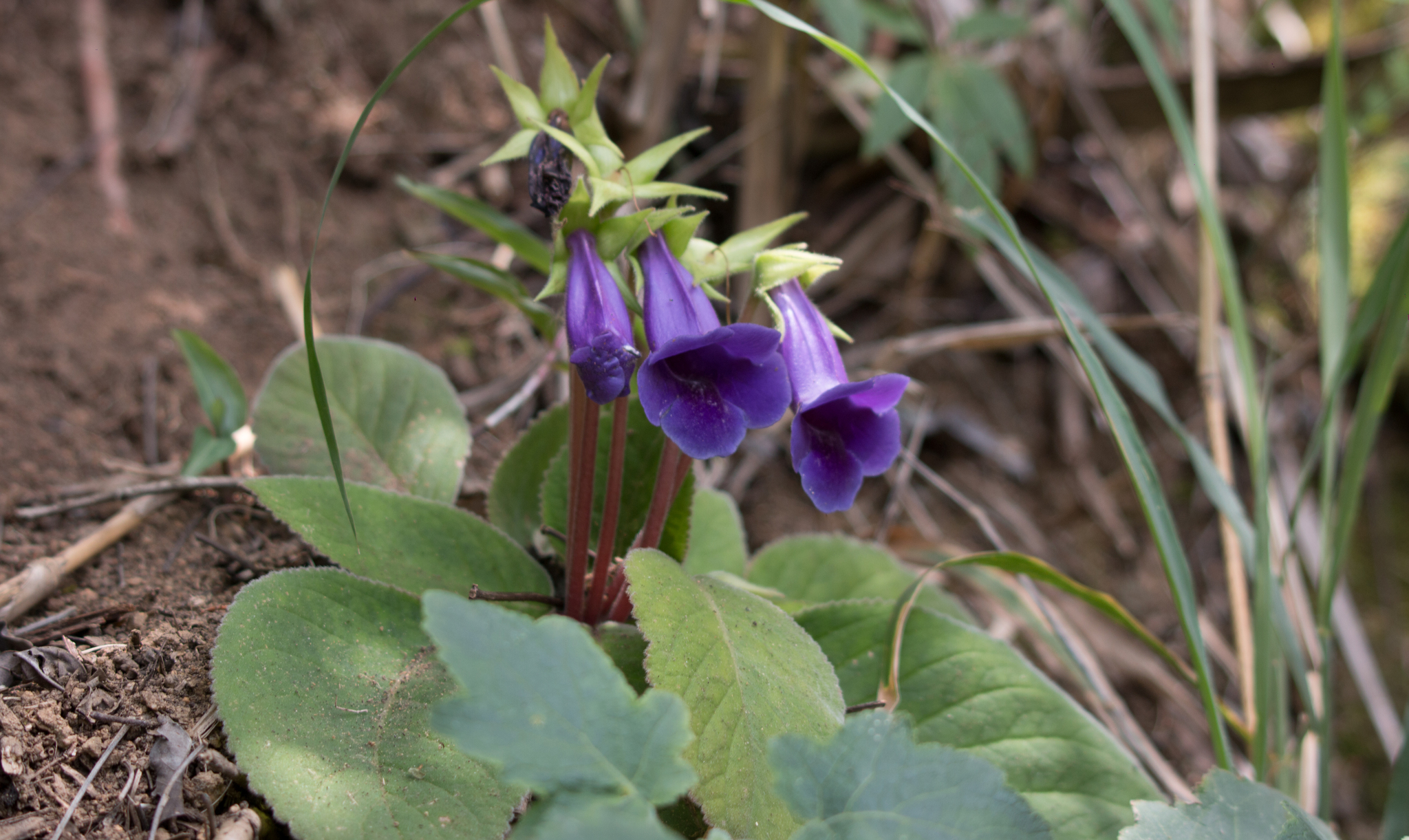


© photo
(c) Diego Monsores, some rights reserved (CC BY-NC), uploaded by Diego Monsores · cc-by-nc
Henrique Nogueira · cc-by
Wikimedia Commons · CC BY-SA or Public Domain
Taken Feb 21, 2022 by Gilmar Ivanski (cc-by-sa)
© copyright of the Board of Trustees of the Royal Botanic Gardens, Kew.


Global distribution
Native to southeastern Brazil, in the Atlantic Forest region.
Identity
Florist’s gloxinia (Sinningia speciosa (G.Lodd. ex Ker Gawl.) Hiern, 1877) has a perennial tuber, whereas true gloxinias in the genus Gloxinia have rhizomes. Its common name preserves a long-standing botanical confusion. Brazilian gloxinia is another name for this same species in the Gesneriaceae family. 1 2 3
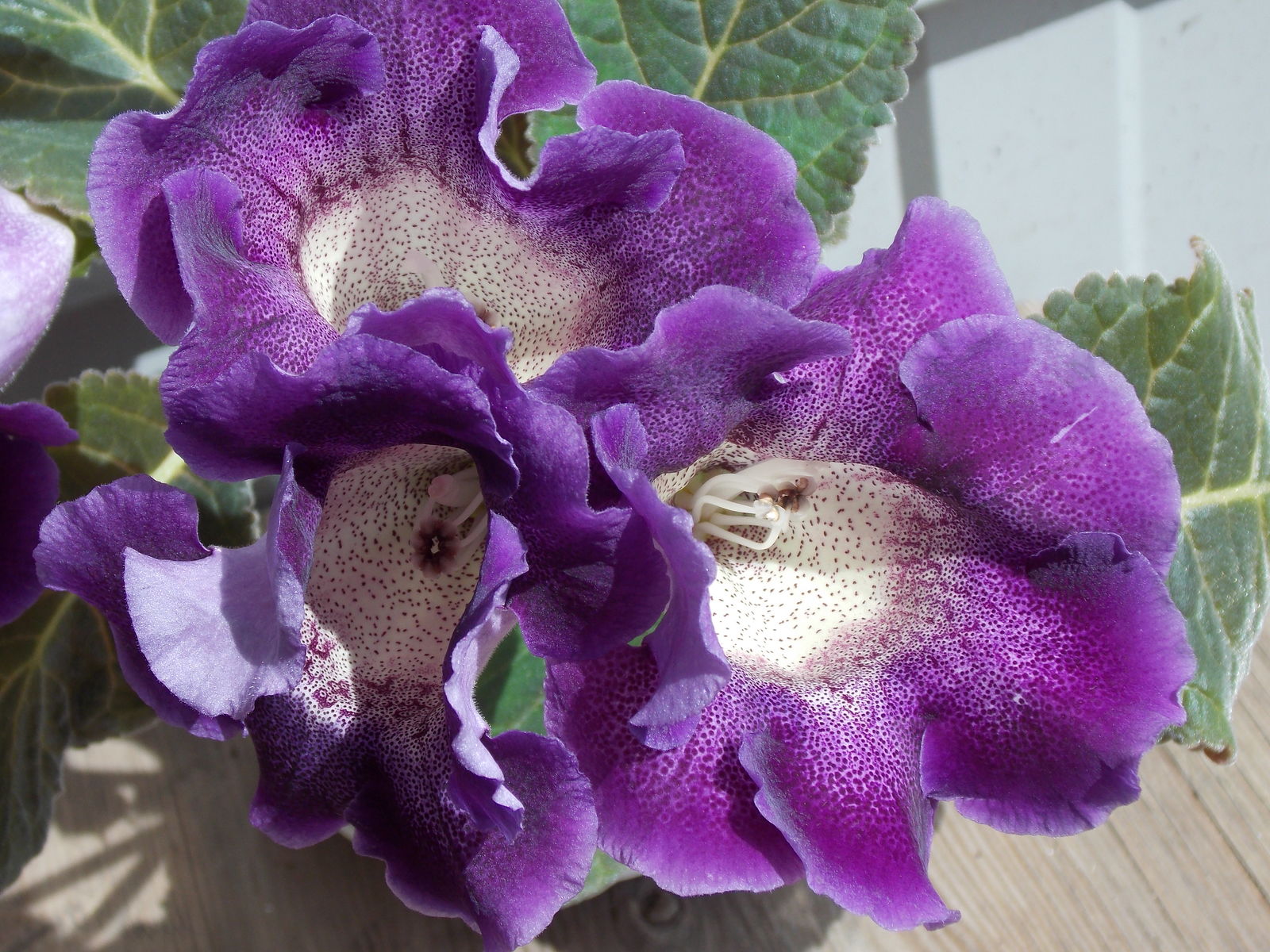
In wild forms, flowers are nodding and bilaterally symmetrical. Large, upright flowers with lobes radiating around the center characterize many horticultural cultivars. A red-flowered pot plant with double corollas therefore does not describe the appearance of the entire wild species. Flower orientation and symmetry matter when comparing cultivated and wild plants. 3 7
Recognition
Green, oval, velvety leaves cluster in a basal rosette on commonly cultivated plants. Their edges are scalloped or toothed. Bell-shaped or trumpet-shaped flowers emerge above the foliage, combining a compact leafy base with corollas held clear of the leaves. 5
Natural diversity extends beyond this familiar pot-plant outline. Some wild populations have dark leaves with silvery veins; others have elongated stems. Wild flowers are mainly lavender or purple, more rarely white or pink. Color alone is insufficient to identify a wild form. The plant's habit and the symmetry of its corolla provide further clues. 3
In the cultivars described in horticulture, flowers can reach 10 cm in diameter and bear patterns or spots. This dimension concerns the cultivated forms described, rather than a universal flower size for the species. A measurement taken from a garden selection should retain that scope. 7
Useful taxonomy
The accepted name is Sinningia speciosa, in the order Lamiales. Its basionym, Gloxinia speciosa G.Lodd. ex Ker Gawl., is the name on which the current combination is based. The former classification explains why the word "gloxinia" persists in the plant trade. 1 3
The plant entered British cultivation in 1815 and was illustrated as Gloxinia speciosa in 1817. Its transfer to Sinningia dates to 1877. Sinningia regina Sprague is also listed among the horticultural synonyms assigned to this species. Changes in the botanical name concern identification; they do not turn every older name into a separate cultivar. 3 4
Habitat and range
Florist’s gloxinia is native to southeastern Brazil, in the Atlantic Forest region. Populations are documented in the states of Rio de Janeiro, Espírito Santo and Minas Gerais. Its presence in European homes reflects ornamental cultivation, rather than a native European distribution. 3 2
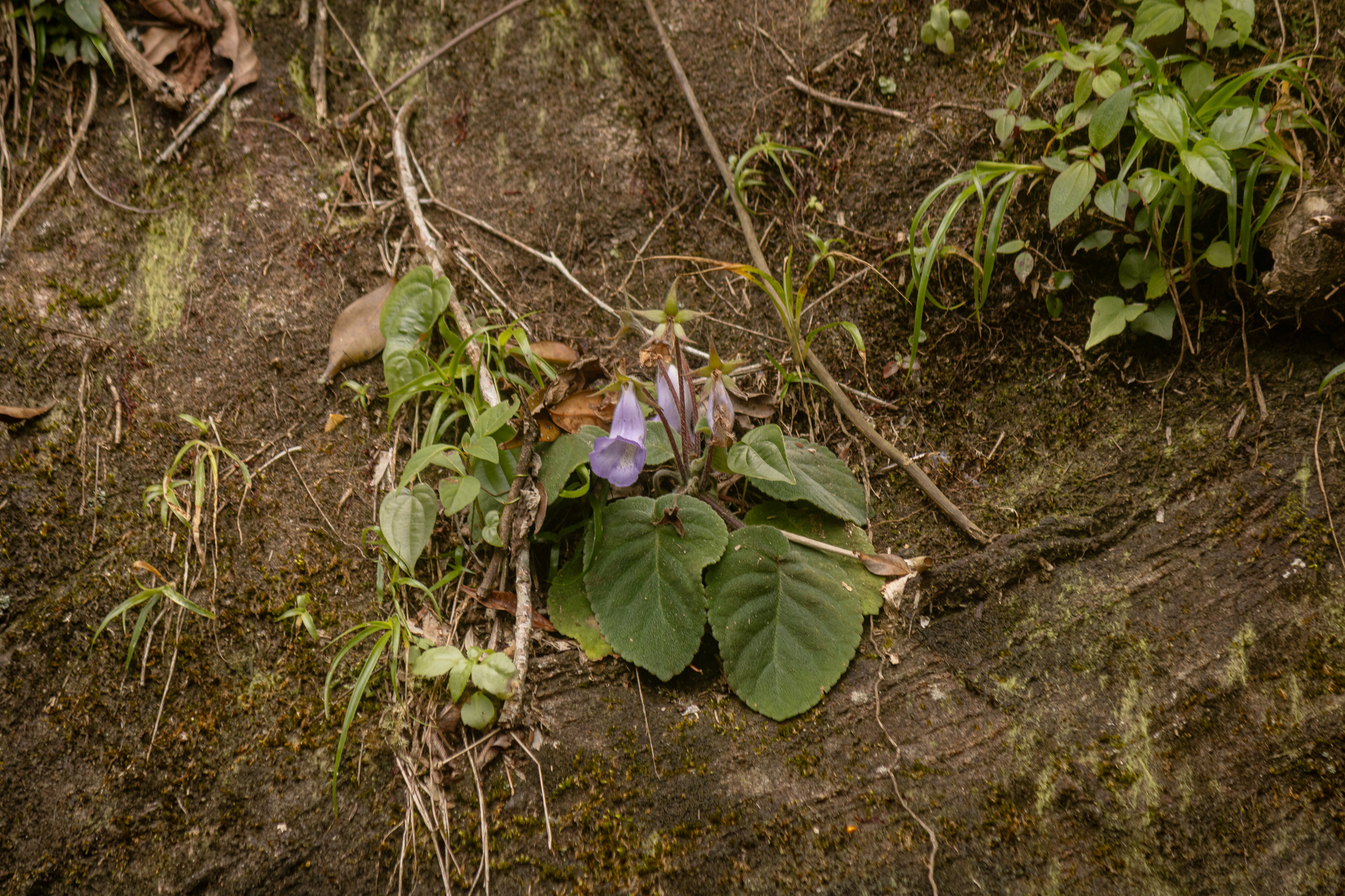
Natural sites include granite rock faces, slopes near the sea and damp banks. Some forms also grow near streams. Wild gloxinia therefore does not occupy only deep, uniform forest soil. Field observations published in 2012 describe isolated populations, sometimes with few individuals, and locally endemic forms. The variety sold in pots does not replace the diversity found among natural populations. 3
Life cycle and reproduction
Tuber dormancy follows the end of flowering: the leaves decline and then disappear. For plants brought back into growth in spring indoors in France, the calendar represents spring and summer growth followed by winter dormancy. Its monthly indices are relative. New shoots and the dying back of foliage determine when care is actually needed. 6
Gradually reduce water as the foliage declines, then leave the tuber dormant in dry potting mix for 2 to 4 months. Resume watering when new shoots appear. During growth, use a balanced fertilizer sparingly, following the product instructions. Feeding is unnecessary during dormancy. 6
Horticultural propagation uses seed, tubers, leaf cuttings or stem cuttings. Take leaf cuttings in spring while the plant is actively growing. This timing relates to the plant's active phase in cultivation. 6 5
Uses and risks
Florist’s gloxinia is grown for its flowers in pots indoors. Bright indirect light suits growth; excessive direct sun can scorch the leaves. Watering over the foliage encourages crown rot or gray mold, so the way water is applied matters as well as the moisture level of the growing medium. 5
A well-drained potting mix with a pH of 5.5 to 6.5 suits horticultural cultivation. Cultivars should not sit in waterlogged soil, because their tubers can rot. The moisture needed during active growth must therefore be accompanied by effective drainage. 6 7
The species is explicitly classified as non-toxic to cats, dogs and horses. This classification does not establish human safety: the status of adults and children remains unknown, as does that of other animals. A lack of reports does not demonstrate safety. Gloxinia is unsuitable for use as fodder. 8 9
Varieties, look-alikes and related plants
'Kaiser Wilhelm', also called 'Emperor William,' is an old cultivar with purple and white peloric flowers. The Brocade horticultural series includes several colors, with white edging on some flowers. These features describe cultivated selections, rather than the appearance of all wild plants. 3 5
Cultivars such as 'Purple' retain nodding flowers of the wild type. A nodding corolla alone therefore does not prove a natural origin. Genetic analyses published in 2012 link the cultivars studied to populations in the Rio de Janeiro region, with uncertainty over contributions from other populations. The tuber remains a useful feature for distinguishing florist’s gloxinia from the true genus Gloxinia. 3
Main sources
Florist’s gloxinia has the accepted botanical name Sinningia speciosa; Gloxinia speciosa is its basionym. 1
- GBIF Backbone Taxonomy, Sinningia speciosa
- EPPO Global Database, Sinningia speciosa: identity and French names
- David Zaitlin, AoB PLANTS (2012), diversity of Sinningia speciosa
- Royal Horticultural Society, Sinningia speciosa
- NC State Extension, Sinningia speciosa
- Clemson Cooperative Extension, Gloxinias
- NParks, Sinningia speciosa cultivars, horticultural scope
- ASPCA, Gloxinia : Sinningia speciosa
- University of Zurich, CliniTox, Sinningia speciosa
Frequently asked questions
Is florist’s gloxinia an annual?
Sinningia speciosa is a tuberous perennial. Its foliage can disappear during dormancy after flowering.
Why should I avoid getting water on gloxinia leaves?
Overhead watering of the foliage can encourage crown rot and gray mold.
Is gloxinia toxic to cats?
Sinningia speciosa is explicitly classified as non-toxic to cats, dogs and horses. Its status for humans remains unknown.
If you are unsure about a plant’s toxicity, ask a botanist or veterinarian for advice.