
Small-leaf spiderwort (Tradescantia fluminensis, )
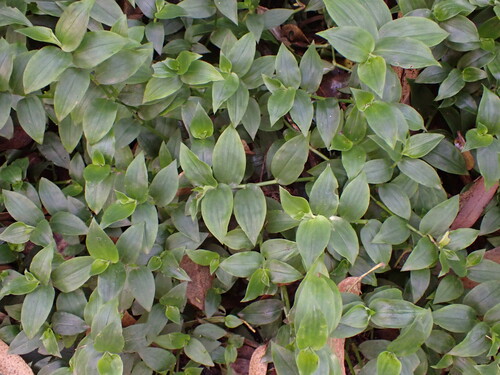
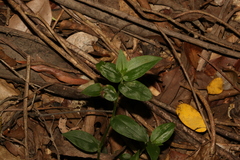
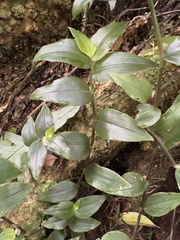
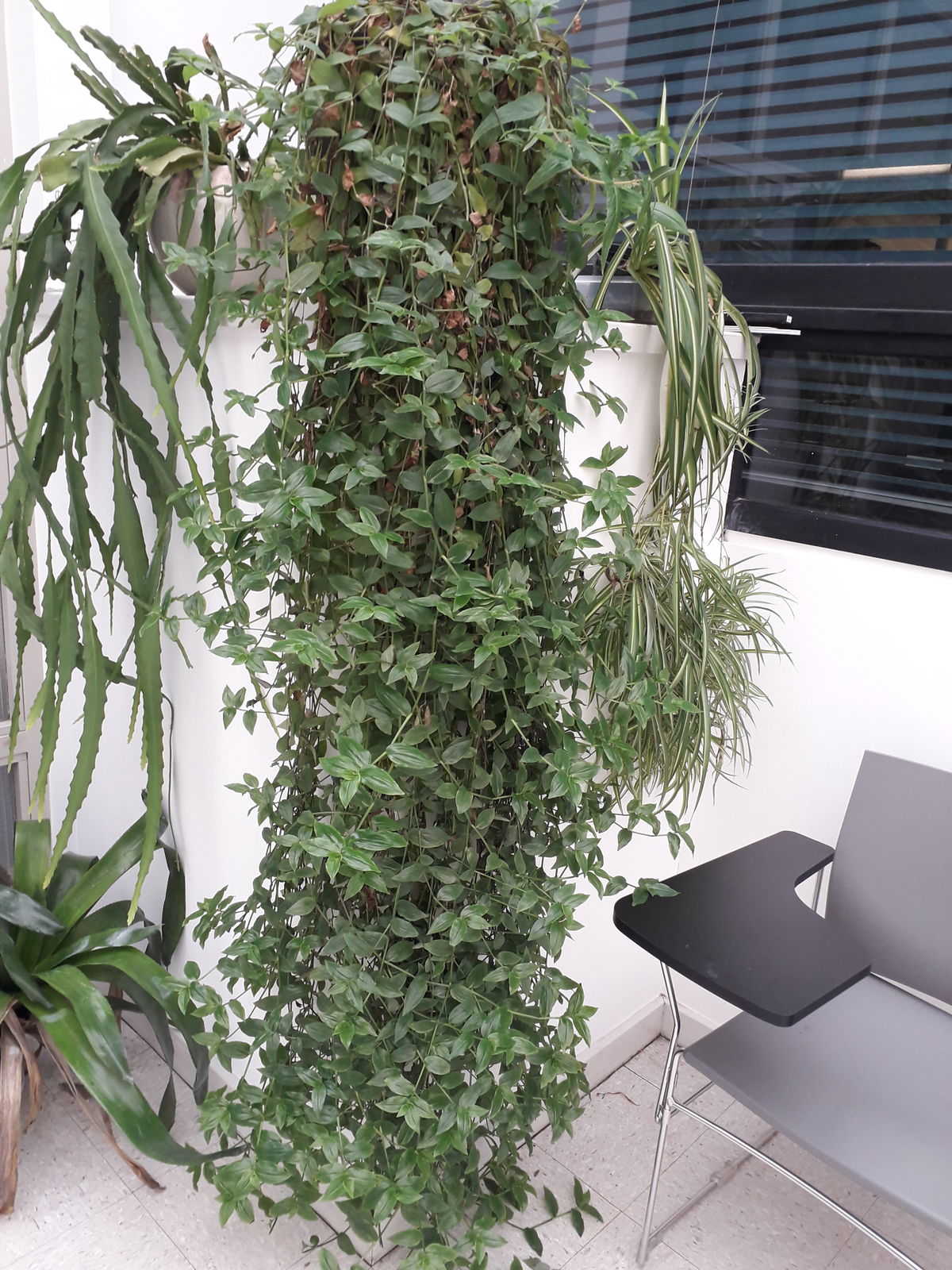
Small-leaf spiderwort (Tradescantia fluminensis) spreads fleshy stems over the ground or trails from a hanging basket. Its nodes root on moist soil, a trait that makes cuttings easy to grow but also allows it to spread beyond gardens.
Read moreSmall-leaf spiderwort, River spiderwort, Wandering trad and White inch plant
Tradescantia albiflora, Tradescantia albovittata, Tradescantia fluminensis f. albovittata, Tradescantia fluminensis f. aureovittata and Tradescantia laekenensis
Give plenty of ambient light without direct sun on the leaves.
Bright indirect light; protect from direct afternoon sun.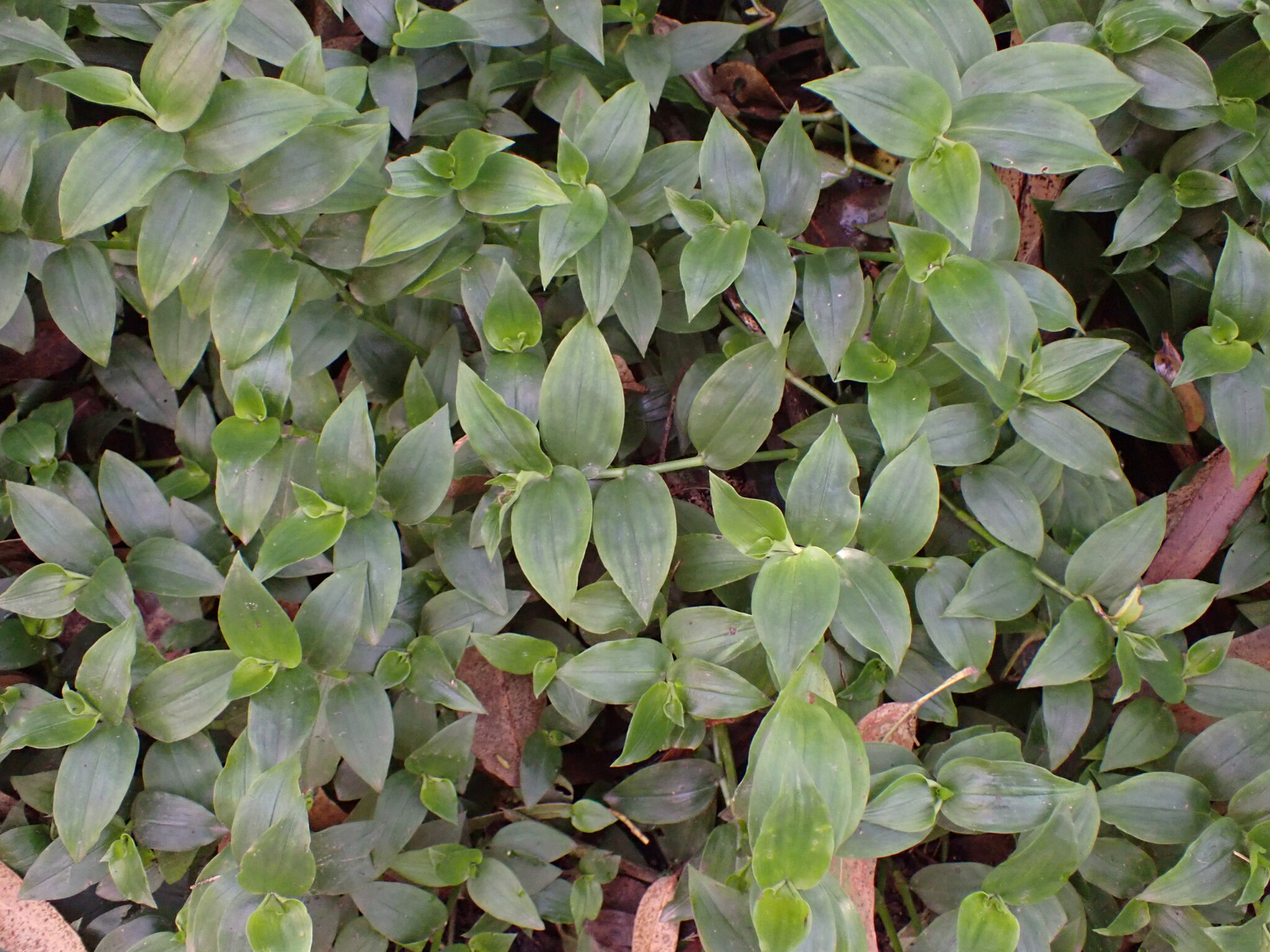


© photo
Randal · cc0
Greg Tasney · cc-by-sa
Caleb Catto · cc-by
Taken Oct 23, 2021 by Amanda Luísa (cc-by-sa)
Taken Feb 23, 2022 by Hayley Crouch (cc-by-sa)
Taken May 3, 2017 by Rémi Knaff (cc-by-sa)
Taken Jun 2, 2022 by Claudie Piedallu (cc-by-sa)
Taken Jan 5, 2022 by Jan-Ruben R (cc-by-sa)
© copyright of the Board of Trustees of the Royal Botanic Gardens, Kew.


Global distribution
Native from southeastern and southern Brazil to northern Argentina, including Paraguay and Uruguay. Introduced in many countries, including France and Corsica; invasive in Florida.
- Native4
- Introduced2
- Invasive1
- Southern and southeastern Brazil
- Northern Argentina
- Paraguay
- Uruguay
- France, including Corsica
- New Zealand
- Florida
Hexagons: regions where the plant occurs. Green dots: native range.1
Identity
Small-leaf spiderwort (Tradescantia fluminensis Vell., 1829) roots at the nodes of its creeping stems, so a stem fragment can extend the mat of vegetation. This evergreen perennial belongs to the Commelinaceae and is also grown in hanging baskets, where its shoots trail down. In warm climates, its ability to cover the ground can make it invasive. 1 3
French common names documented for Tradescantia fluminensis include éphémère du Rio and "misère du fleuve," as well as "misère" and "tradescancia du fleuve." The epithet fluminensis refers to Rio de Janeiro, where the plant was collected. Common names supplement the binomial, which identifies the botanical species when buying or identifying a plant. 2 3
Recognition
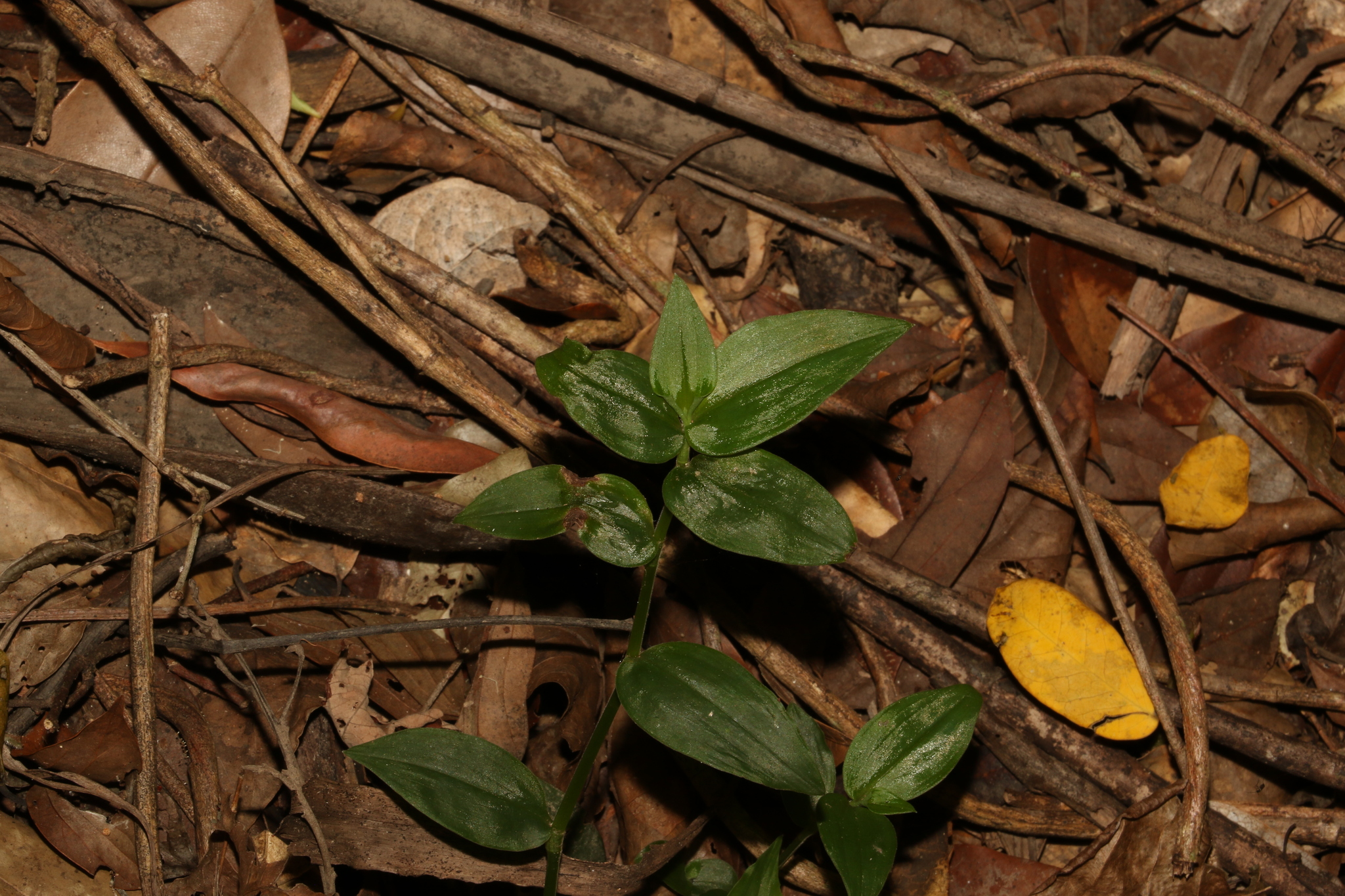
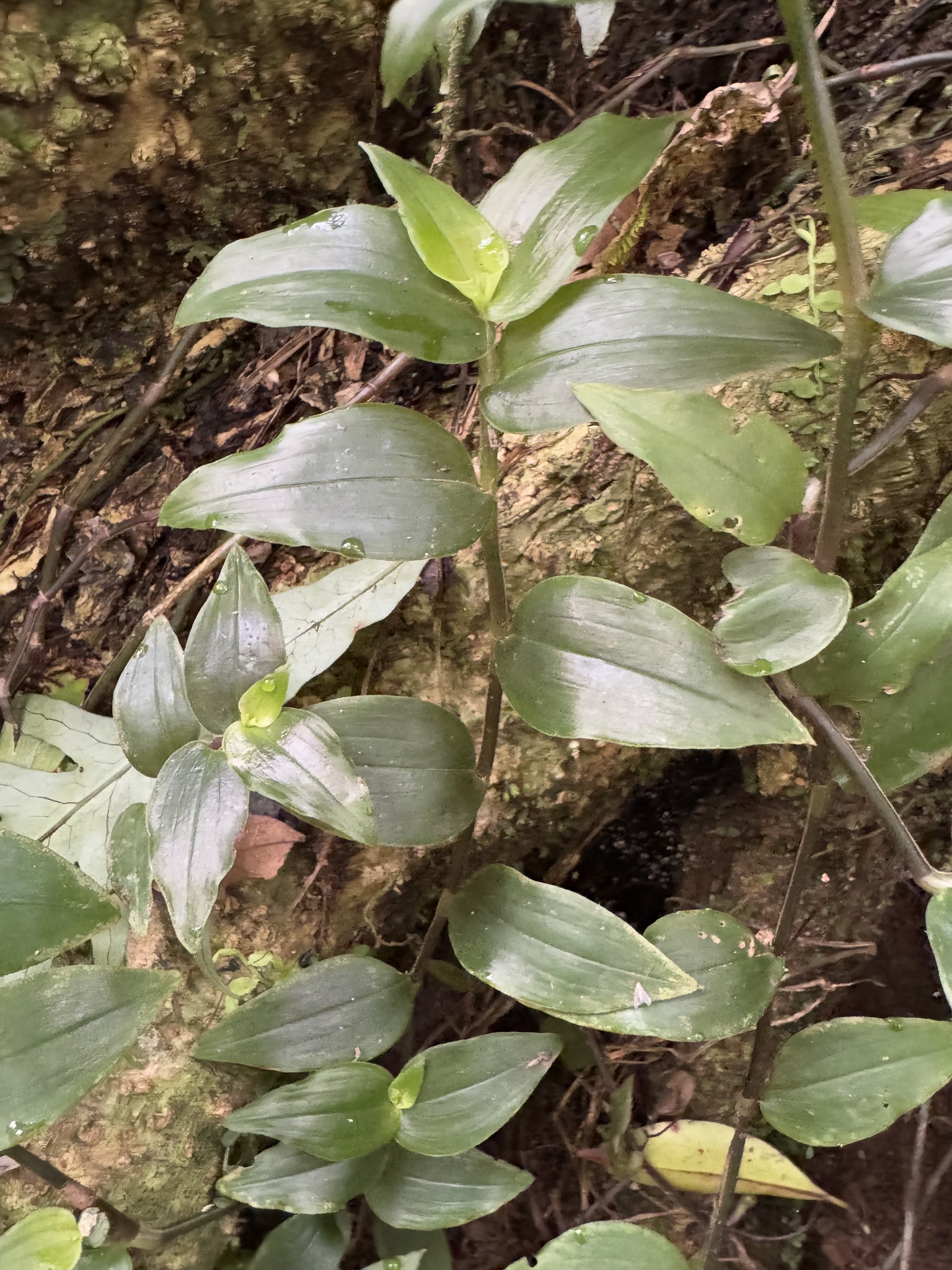
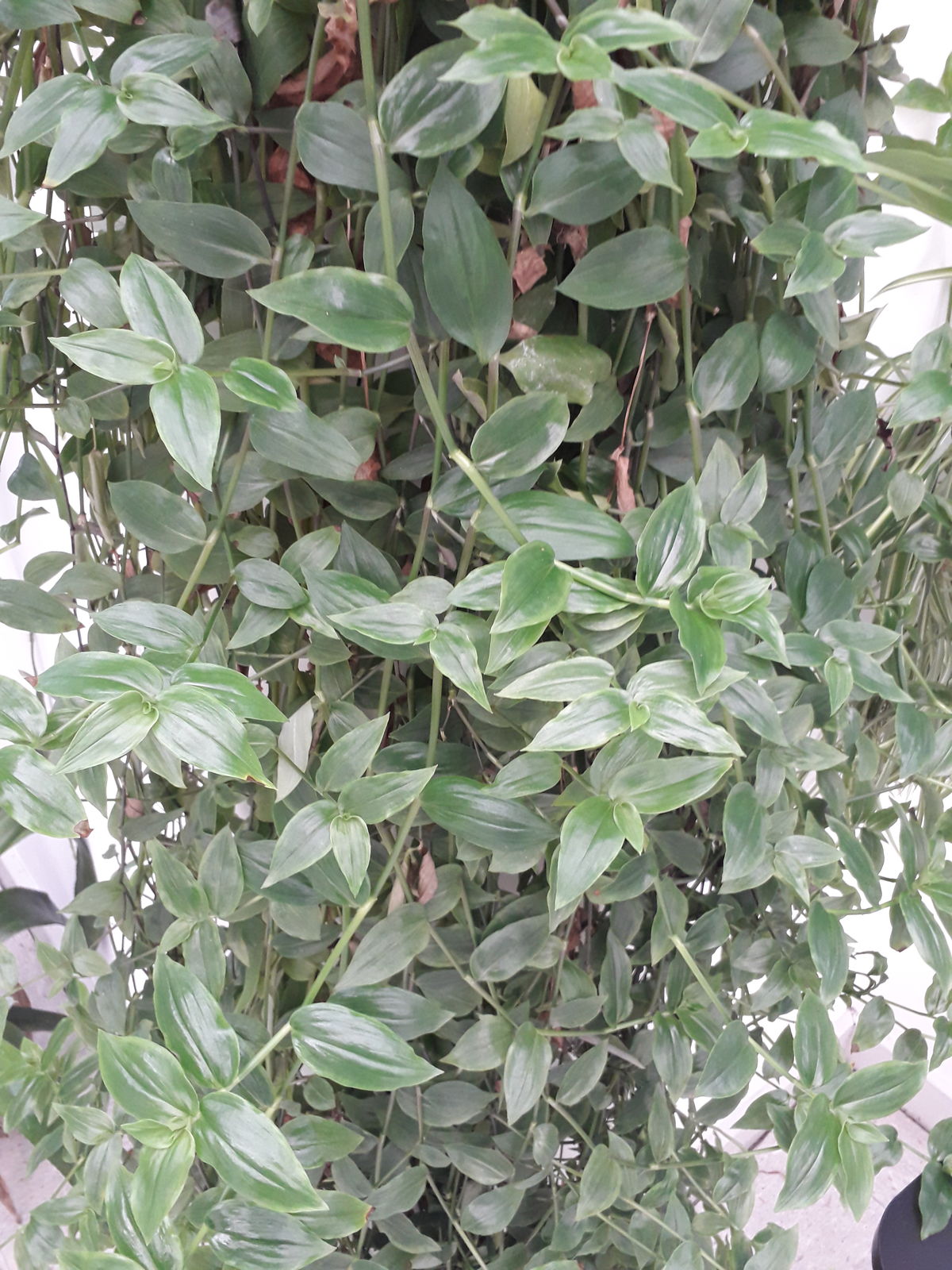
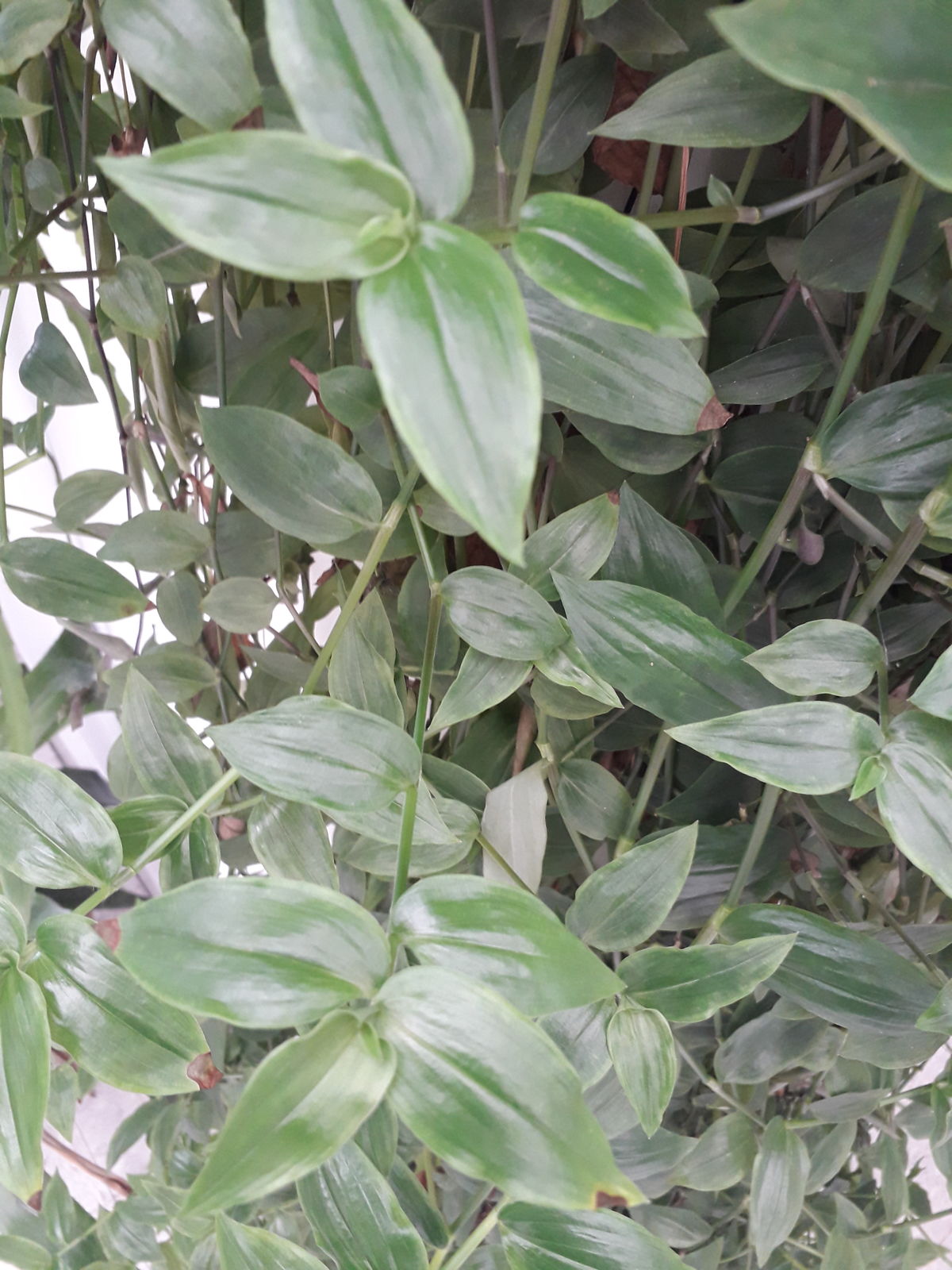
Small-leaf spiderwort has alternate leaves arranged in two rows, with a closed sheath around the stem. The glossy blades are oval to oblong, with pointed tips. In the Florida floristic description, leaves reach 5 cm (about 2 in) long and 2 cm (about 0.8 in) wide. Fleshy stems creep along the ground, while their tips may turn upward. 5 3
Pellegrini's corrected revision describes small-leaf spiderwort in the strict sense as having hairless stems and leaf blades, light to medium green undersides, and fine hairs along the leaf margins. The small white flowers have three separate petals and six stamens with bearded filaments. Their petals are pleated, and hairs on the sepals are confined to the keels. Purple undersides mentioned in horticultural descriptions therefore call for a check of the plant's identity. 5 10
Useful taxonomy
Vellozo published the accepted name Tradescantia fluminensis in 1829. Its botanical synonyms include Tradescantia albiflora Kunth and Tradescantia albovittata Pynaert. The historical forms Tradescantia fluminensis f. albovittata (Pynaert) Voss and f. aureovittata Voss also belong to this synonymy. The older botanical names can therefore appear on records of Tradescantia fluminensis. 1
A botanical synonym and a cultivar name describe different ranks. The botanical name albovittata must be distinguished from the horticultural name ‘Albovittata’, treated as a synonym of ‘Variegata’. Horticultural accounts describe the plant as a creeping herbaceous perennial, while Kew's biological classification uses "hemiepiphytic subshrub." The descriptions differ in their terminology for the plant's habit. 7 3 1
Habitat and range
The native range of small-leaf spiderwort extends from southeastern and southern Brazil to northern Argentina, and includes Paraguay and Uruguay. Its principal biome is wet tropical. In invaded regions, tolerance of shade and moist soil allows Tradescantia fluminensis to colonize woodland understories and riverbanks. Shade tolerance allows Tradescantia fluminensis to spread beneath tree cover. 1 5
France and Corsica are listed among the territories where the plant has been introduced. Introduced presence alone does not establish a regulatory status. In Florida, Tradescantia fluminensis forms dense cover that smothers seedlings and low native vegetation. Florida's removal guidance does not establish a French ban on cultivation, and regional advice should retain its geographic scope. 1 5
Life cycle and reproduction
Each flower of small-leaf spiderwort lasts one day. In its native habitat, flowering extends from spring to autumn; indoors, flowers remain rare. The fruit is a small capsule divided into three parts, with black, pitted seeds. The absence of flowers on a houseplant therefore does not by itself rule out identification as Tradescantia fluminensis. 3 5
Stem cuttings make use of the nodes' ability to root. The same propagation by fragments explains why incompletely removed patches can return: pieces left behind may take root again. Pinching the shoots makes small-leaf spiderwort bushier and limits bare stems. A fragment that is useful for propagation can thus also maintain an unwanted patch outdoors. 3 5
The small-leaf spiderwort calendar describes indoor cultivation in mainland France, under natural light. Its scores are relative editorial indices. Reduced winter watering follows the pattern described for ‘Viridis’. The RHS general houseplant guide favors spring repotting and feeding from March to October. The calendar expresses spring as March–May: repot only when needed, without repeating the task every month. Outside that window, routine repotting is not recommended. Feeding remains possible from March to October if the plant is growing. From November to February, the calendar assumes rest and recommends stopping fertilizer, following Clemson's conditional advice. Continued growth calls for adjusting those markers; they are not a universal timetable for every climate or hemisphere. 6 8 13
Uses and risks
For pot cultivation, small-leaf spiderwort needs bright indirect light and a moist but free-draining mix. Direct afternoon sun can scorch the leaves; overwatering exposes roots to rot. Monthly liquid feeding during active growth is recommended for ‘Viridis’, without an established application dose. That cultivar-specific monthly schedule cannot automatically be applied to every cultivar of Tradescantia fluminensis. 3 6
Small-leaf spiderwort is classified as toxic to cats, dogs and horses, with dermatitis as a clinical sign. In humans, contact can redden and irritate the skin. Ingestion can cause oral or gastric irritation and vomiting, or even a swollen mouth and breathing difficulties. The toxic principle remains unknown. Wearing gloves limits contact when handling the plant. 4 3
Varieties, look-alikes and related plants
The cultivar ‘Variegata’ has green and cream leaves; ‘Albovittata’ is its horticultural synonym. ‘Viridis’ has olive-green leaves with grayish yellow-green undersides. These two documented cultivars remain within Tradescantia fluminensis. Their foliage provides no basis for concluding that either cultivar is safe to ingest or handle without precautions. 3 7 6
References differ over the placement of ‘Nanouk’: NC State lists it under T. fluminensis, while the RHS assigns it to Tradescantia cerinthoides. A ‘Nanouk’ label alone therefore does not confirm small-leaf spiderwort. 3 9 The revision also distinguishes Tradescantia mundula, which has hairy blades and partly or entirely wine-colored undersides. Its sepals are evenly velvety, and its petals are flat. Many cultivated plants called T. albiflora belong to T. mundula in that revision; this does not justify reassigning ‘Variegata’ or ‘Viridis’. 10
Two silver or white longitudinal stripes mark the leaves of Tradescantia zebrina, whose flowers are lavender to purple. Tradescantia pallida has purple lance-shaped blades and pink to pale purple flowers. Small-leaf spiderwort, by comparison, has white flowers. The flower and leaf differences help distinguish small-leaf spiderwort from T. zebrina and T. pallida, despite their similar trailing growth. 12 11
Main sources
Botanical references establish the name and range of small-leaf spiderwort; horticultural sources distinguish its cultivars and their growing conditions.
- Kew, Plants of the World Online, Tradescantia fluminensis Vell.
- EPPO Global Database, Tradescantia fluminensis
- NC State Extension, Tradescantia fluminensis
- ASPCA, Inch Plant
- University of Florida IFAS, Tradescantia fluminensis
- RHS, Tradescantia fluminensis ‘Viridis’
- RHS, Tradescantia fluminensis ‘Variegata’
- Clemson Extension, houseplant fertilization and light requirements
- RHS, Tradescantia cerinthoides ‘Nanouk’
- Pellegrini, PhytoKeys 104 (2018), corrected revision of Austrotradescantia
- NC State Extension, Tradescantia pallida
- NC State Extension, Tradescantia zebrina
- RHS, houseplant cultivation, repotting and feeding
Frequently asked questions
How do I identify small-leaf spiderwort?
Creeping stems root at the nodes. The alternate leaves grow in two rows and have closed sheaths; the small white flowers have three petals.
Is small-leaf spiderwort toxic to pets?
The ASPCA classifies it as toxic to cats, dogs and horses, with dermatitis as a clinical sign. Toxicity to other animals is unestablished; NC State lists the toxic principle as unknown.
Why does small-leaf spiderwort rarely flower indoors?
Flowering is rare in houseplants, although the species blooms from spring to autumn in its native habitat. An absence of flowers therefore does not rule out the identification.
Is ‘Nanouk’ a cultivar of Tradescantia fluminensis?
References differ: NC State lists it under Tradescantia fluminensis, while the RHS assigns it to Tradescantia cerinthoides. It is therefore not included among confirmed cultivars of Tradescantia fluminensis.
If you are unsure about a plant’s toxicity, ask a botanist or veterinarian for advice.