
Colt's-foot (Tussilago farfara, )
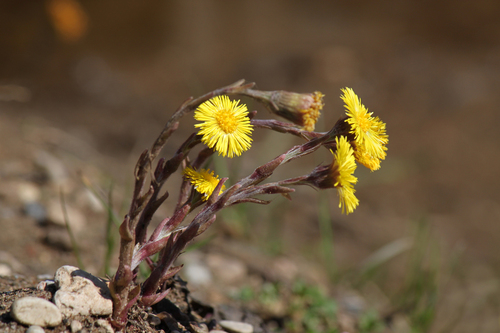
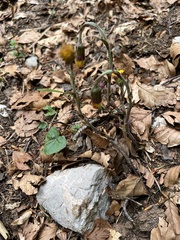
Colt's-foot (Tussilago farfara) is a perennial wildflower in the Asteraceae family. Its very early yellow flowers often appear before the leaves, on scaly stems in disturbed, moist or clay-rich ground.
Read moreColt's-foot, Coltsfoot, Ass's foot and Coughwort

© photo
(c) snsergeevna, some rights reserved (CC BY-NC) · cc-by-nc
Mirko Ubović · cc0
Harvey Martin · cc0
(c) Michael Ellis, some rights reserved (CC BY) · cc-by
no rights reserved · cc0
Identity
Colt's-foot (Tussilago farfara L.) is an early-flowering member of the Asteraceae family. Its timing distinguishes it from dandelions: yellow flowers appear very early, often before the leaves are clearly visible. 2 8
Botanical references POWO, WFO, IPNI and Wikidata recognize Tussilago farfara L. in the Asteraceae. This species belongs to a much narrower genus than Taraxacum, the familiar dandelions. 2 3 4 1
Early flowering gives this wildflower much of its visual appeal. On moist banks or disturbed soil, its yellow heads appear while many other plants have yet to resume growth. 8
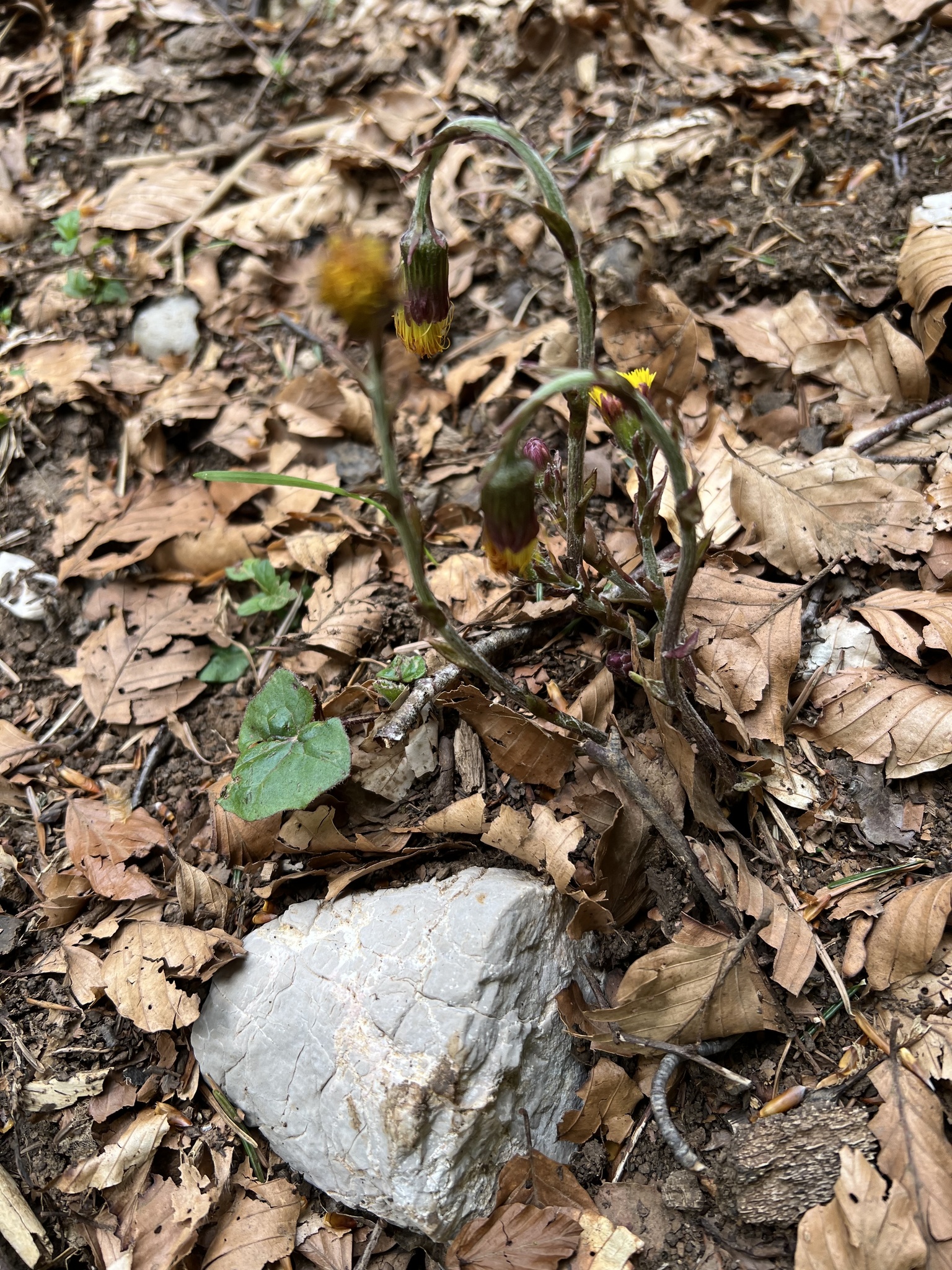
Scaly stems and later-developing leaves deserve closer attention than a passing resemblance to a slender dandelion. Colt's-foot has its own distinctive growth pattern and a strong association with disturbed ground. 5
Recognition
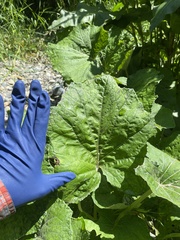
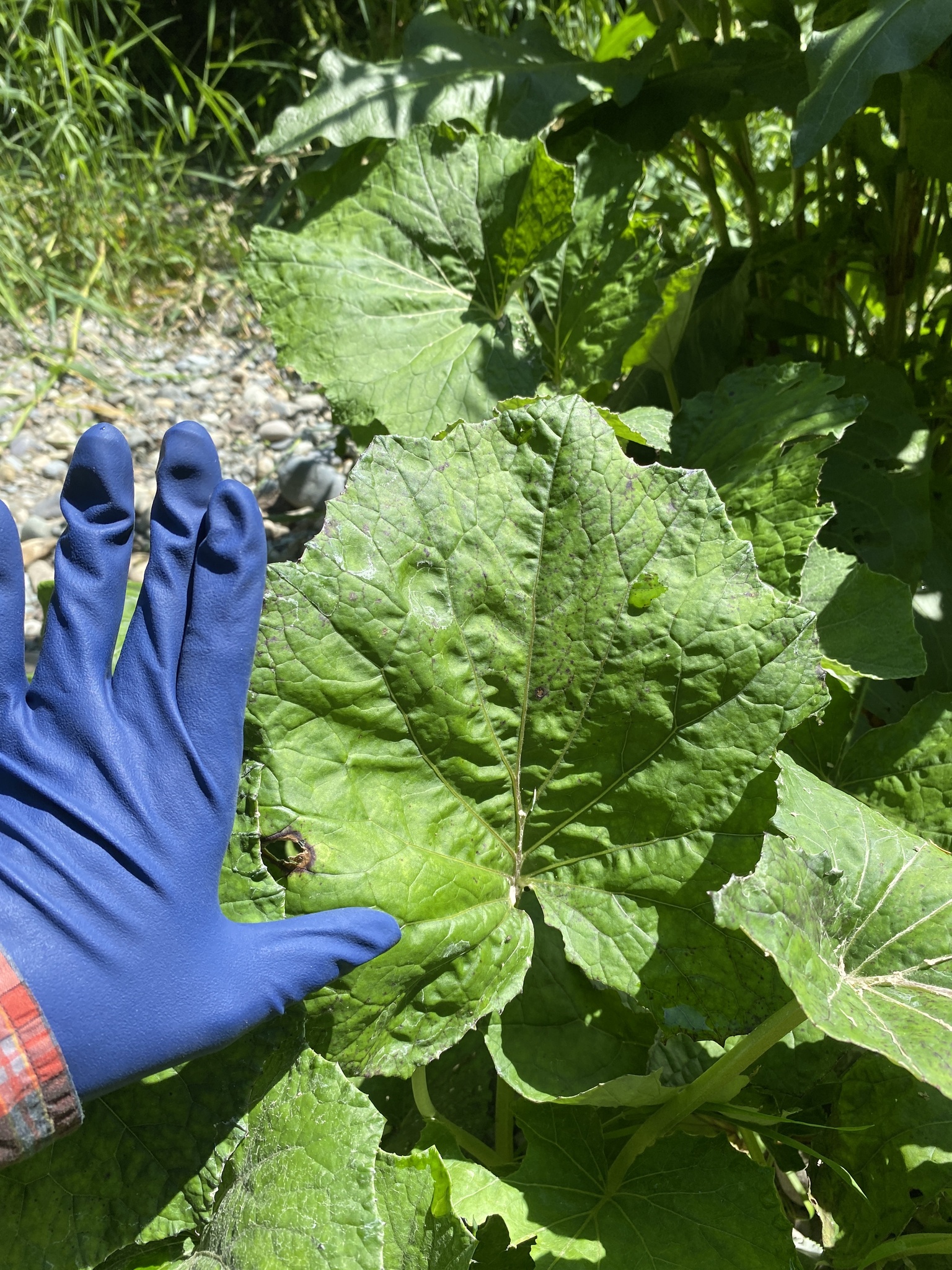
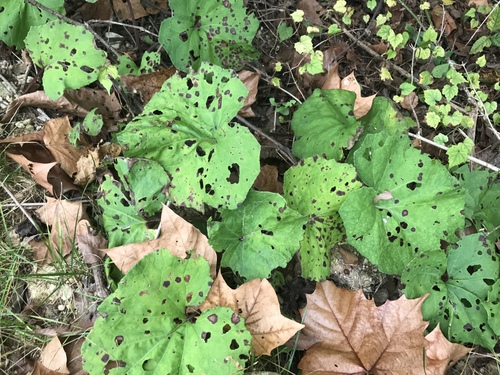
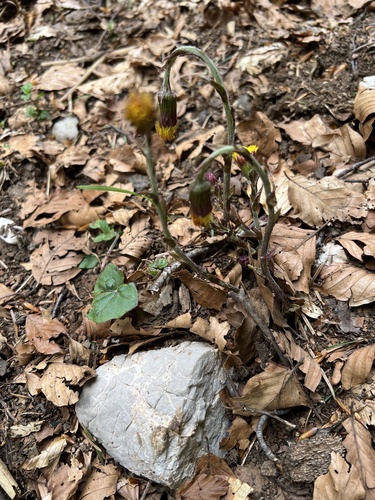
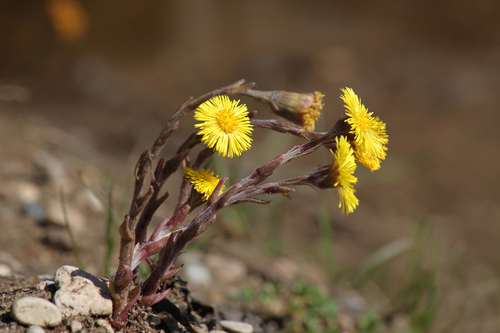
Identification begins with the sequence of growth: flowers before leaves. Short, scaly flowering stems carry a single yellow head; large, rounded leaves with heart-shaped bases develop later. 7 5
Viewed from a distance, the flower heads resemble small dandelions, but the plant does not first form a rosette of toothed leaves. This difference in timing is the most useful field clue. 8
Broad mature leaves often have whitish or felted undersides, contrasting with the more deeply cut foliage of dandelions. Following the same plant for several weeks makes identification easier. 7
Disturbed clay, ditch edges and moist fill provide another habitat clue. A very early yellow flower on a scaly stem in such a site warrants a closer look for colt's-foot. 8
Useful taxonomy
For this plant, the accepted name is Tussilago farfara L. It identifies the species itself, rather than the genus as a whole or a local variety. 2 8
The aliases Coltsfoot, Ass's foot and Coughwort also refer to this plant. Leaf shape underlies its hoof-related common names. The binomial remains more reliable for avoiding confusion with other early yellow Asteraceae. 7
Membership in the Asteraceae explains the flower-head resemblance to dandelions, arnica and hawkweeds. Family resemblance alone cannot establish identity: stem, leaf and season all matter. 3
Accurate identification matters especially for a plant with a history of traditional medicinal use. It prevents transferring uses or risks to a different yellow wildflower. 5
Cultivation
Rather than a conventional border perennial, colt's-foot is primarily a plant of disturbed, moist, often clay-rich sites. Its rhizomes and seeds take advantage of newly exposed soil. 5
Gardeners may find observation a better first choice than deliberate introduction. The plant can become difficult to control where conditions suit it, especially on bare or disturbed ground. 6
Limiting its spread requires action before seed dispersal and removal of as much underground growth as possible. Shallow pulling often leaves enough behind for regrowth. 6
Where it is retained for biodiversity or observation, choose a wild area away from vegetable beds, paths and areas used for harvesting plants. It offers a useful lesson in seasonal development, but need not be planted everywhere. 8
Monitoring should continue beyond flowering. Early heads seen in late winter are easily forgotten, although the later leaves can confirm identification. Returning in April or May, in the seasonal setting described here, turns an initial impression into a more reliable observation. 8
Soil disturbance often provides the real opening for establishment. Construction, fill, cleared ditches and exposed clay create opportunities for colt's-foot. Restoring stable vegetation can sometimes limit it more effectively than repeated pulling on bare soil. 6
Uses
Learning to recognize wild yellow flowers is a useful reason to study colt's-foot. It encourages attention to seasonal timing as well as color. 8
Traditional respiratory uses are reflected in the plant's scientific name. That history does not justify modern self-medication, particularly with repeated or concentrated preparations. 7
In a naturalistic garden, its presence can indicate moist, disturbed or compacted ground. This observation reveals something about the site as well as the plant. 5
Comparing colt's-foot and dandelions during the same season makes a useful field exercise. One flowers before its leaves appear; the other has an established low rosette. The contrast connects botanical knowledge with direct observation. 8
On nature walks, photographing rather than picking is a useful approach. Include the scaly stem, flower head and surrounding soil; a later photograph of the leaf completes the identification record. 7
Caution
Although the toxicity rating is low, this familiar-looking plant calls for restraint. Traditional medicinal uses cannot replace a current assessment of health risks. 2
The main ingestion concern involves pyrrolizidine-type compounds reported in the literature on colt's-foot. Avoid homemade teas, courses of treatment and casual gathering for consumption. 7
Persistent rhizomes and potential dispersal also demand practical care in gardens. Introducing it into a small, tidy border means accepting the work of managing its spread. 6
Descriptions such as medicinal plant do not mean a plant is mild or harmless. Historical use of colt's-foot must be considered alongside current knowledge of unwanted compounds and dosage. 7
Taken together, very early yellow flowers, scaly stems and leaves that appear later identify Tussilago farfara. These useful field characters go hand in hand with real caution about taking it internally. 8 2
Main sources
- Wikidata, Tussilago farfara
- Plants of the World Online / Kew, Tussilago farfara
- World Flora Online, WFO Plant List, June 2026: Tussilago farfara L. (accepted species)
- International Plant Names Index, Tussilago farfara
- Royal Horticultural Society, Tussilago farfara — coltsfoot plant profile
- Royal Horticultural Society, Tussilago farfara search results
- Wikipedia EN, Tussilago farfara
- Floralens, selection of yellow flowers
If you are unsure about a plant’s toxicity, ask a botanist or veterinarian for advice.