
Wall pennywort (Umbilicus rupestris, )
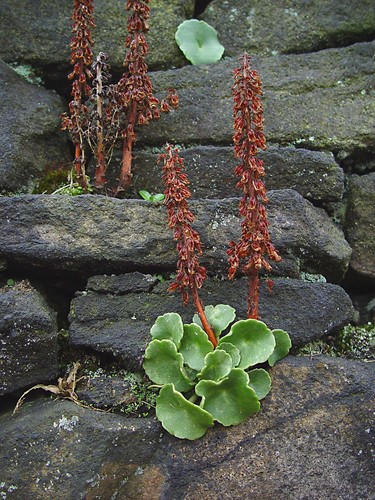
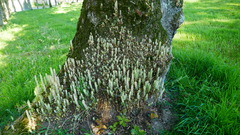
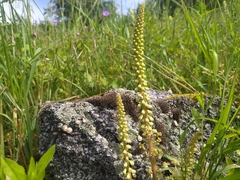
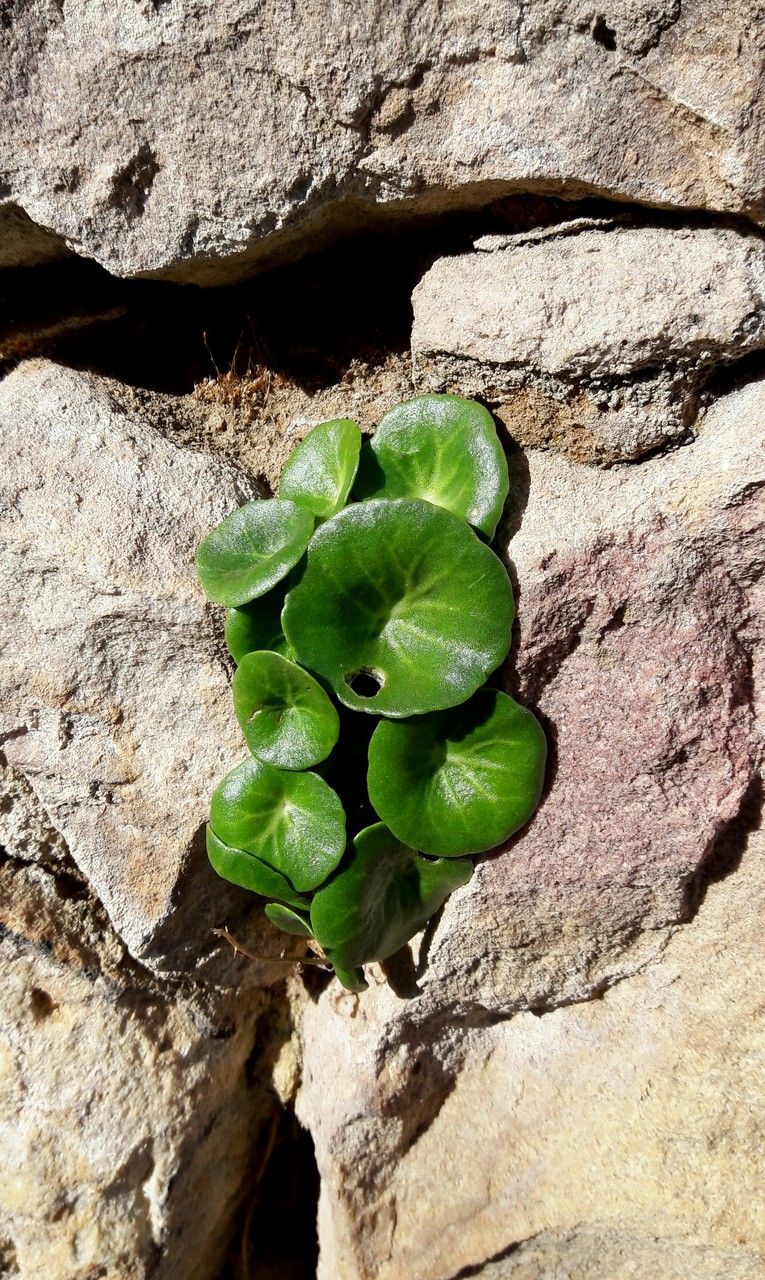
Wall pennywort (Umbilicus rupestris) is a small succulent perennial in the Crassulaceae family, native to western Europe and beyond. Its round, centrally attached leaves have a navel-like hollow and precede a long cluster of hanging tubular flowers.
Read moreWall pennywort and Navelwort
Cotyledon rupestris, Cotyledon umbilicus-veneris, Umbilicus pendulinus and Umbilicus vulgaris
Allow a few hours of direct sun per day, preferably morning or evening.
Partial shade or gentle sunshine, sheltered from scorching summer sun.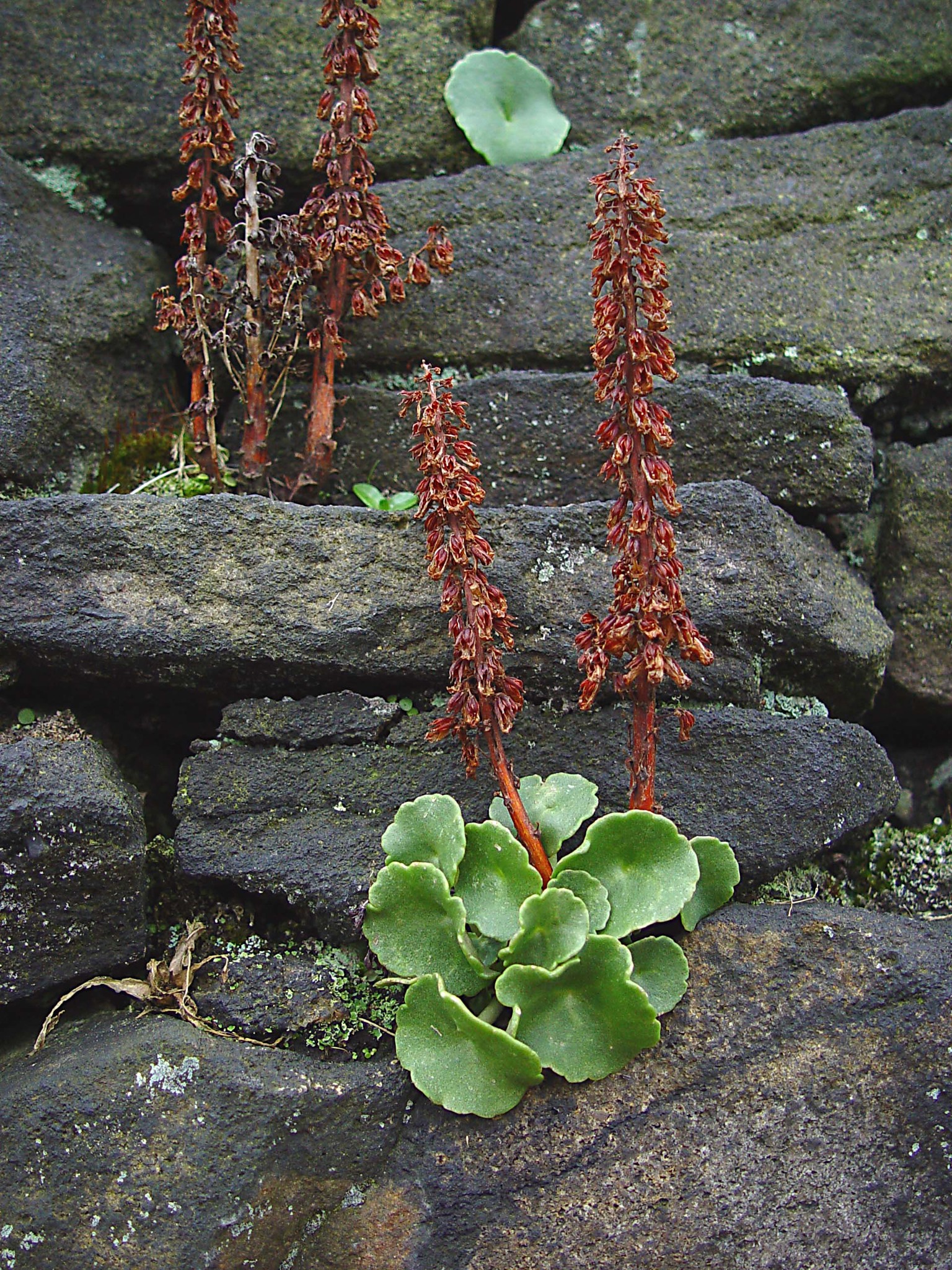



© photo
(c) David Earl, some rights reserved (CC BY-NC), uploaded by David Earl · cc-by-nc
Patrick Le Mao · cc0
iNaturalist User · cc0
Taken Apr 21, 2015 by Tela Botanica − Hervé Goëau (cc-by-sa)
Taken Dec 28, 2011 by Tela Botanica − Claire FELLONI (cc-by-sa)
Taken Feb 21, 2021 by Antoine LEPAGE (cc-by-sa)
Taken Feb 6, 2018 by Pierre d'Halluin (cc-by-sa)
Taken Jan 14, 2020 by Eduard (cc-by-sa)
© copyright of the Board of Trustees of the Royal Botanic Gardens, Kew.




Global distribution
Native from Macaronesia, western Europe and the Mediterranean to the Arabian Peninsula and southwestern India; introduced in Germany.
Identity
Wall pennywort (Umbilicus rupestris (Salisb.) Dandy, 1948) is recognised by its round leaves with a hollow centre. This succulent perennial belongs to the Crassulaceae, the stonecrop family. It has a tuberous rootstock hidden in a crevice, from which the leaves and flower stalk emerge. As a tuberous geophyte, it retains an underground reserve when its foliage disappears. 13
Navelwort is another English name for the same species. Both this name and the scientific name Umbilicus recall the central hollow of the leaf blade, where the stalk attaches. This image is a useful memory aid, but identification must also consider the actual stalk attachment and the flowers. 934
Recognition
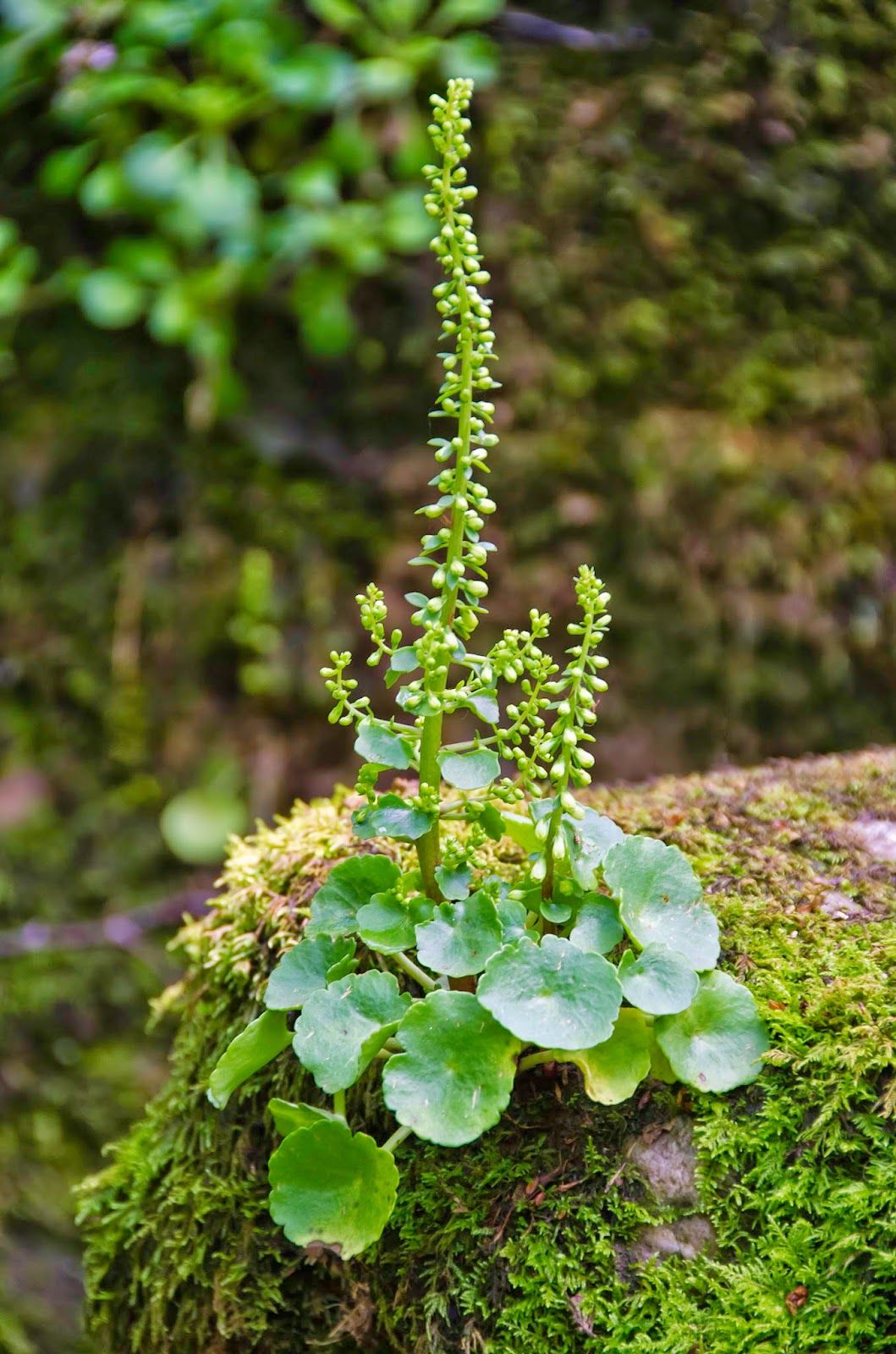
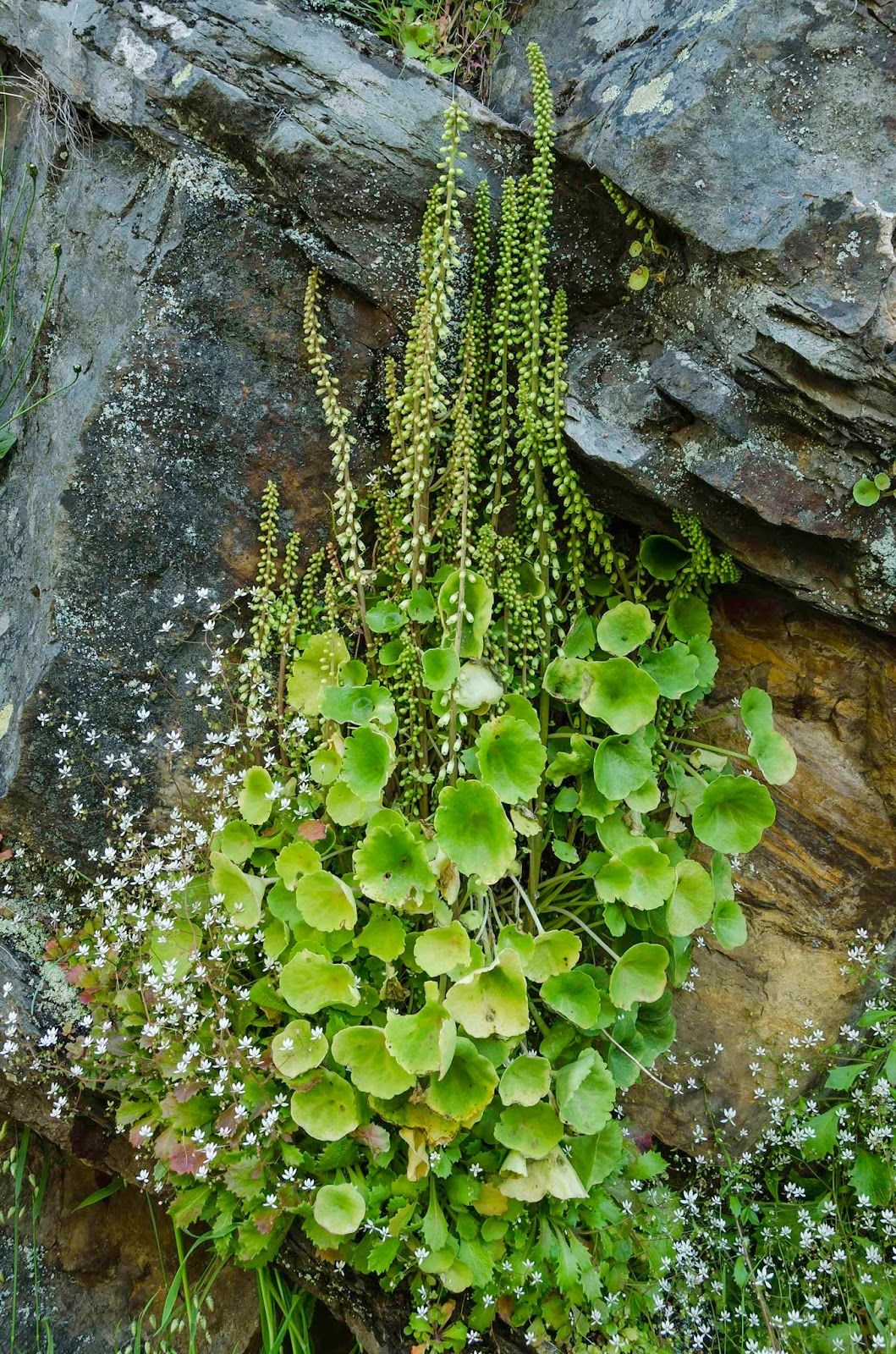
The leaf stalk meets the centre of the blade, rather than its edge. Basal leaves are round, fleshy and gently scalloped, with a depression on their upper surface. The blade measures 3–6 cm (1.2–2.4 in) across and breaks easily. Look beneath an attached leaf instead of pulling one off to check this character. 37
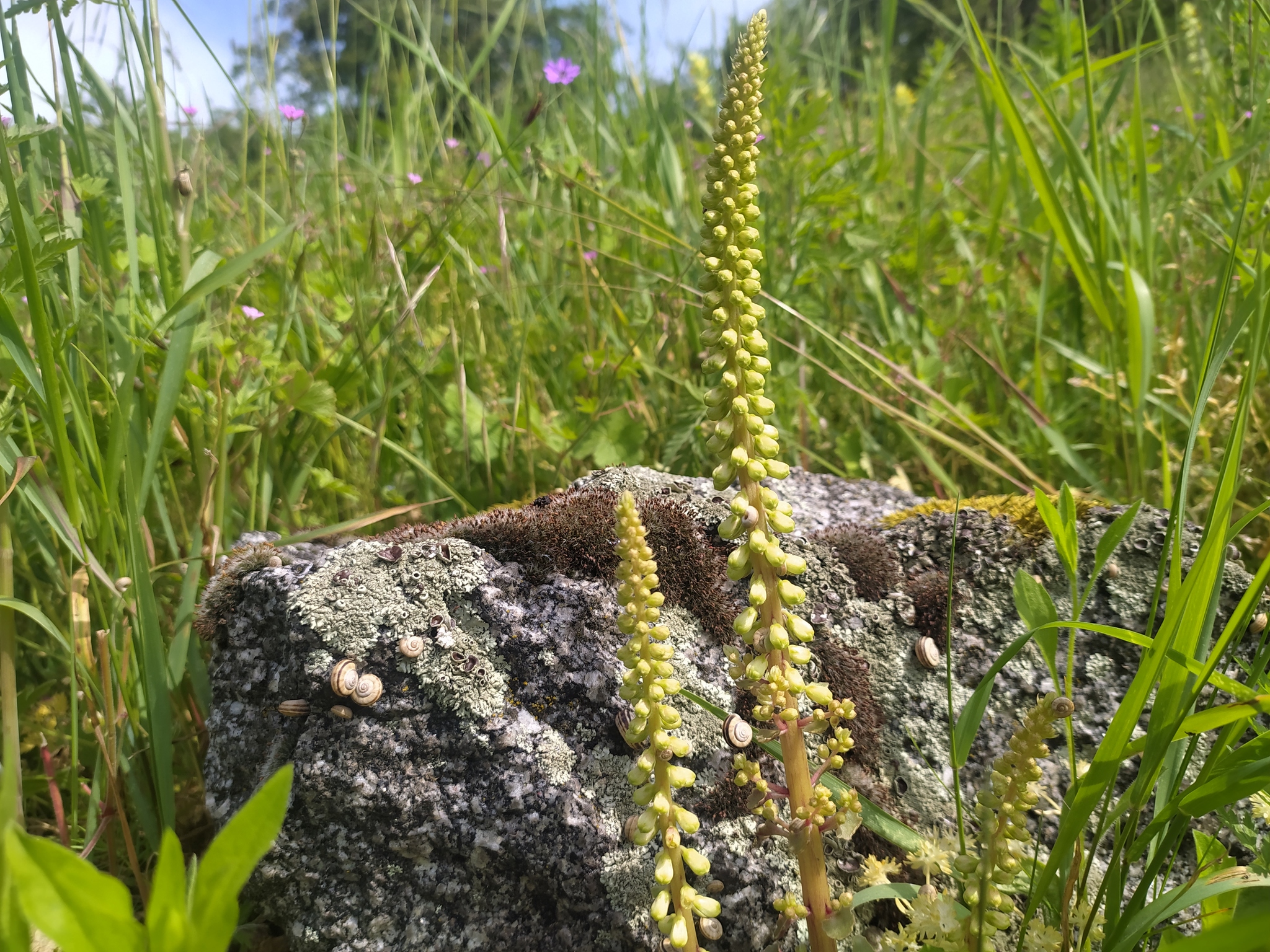
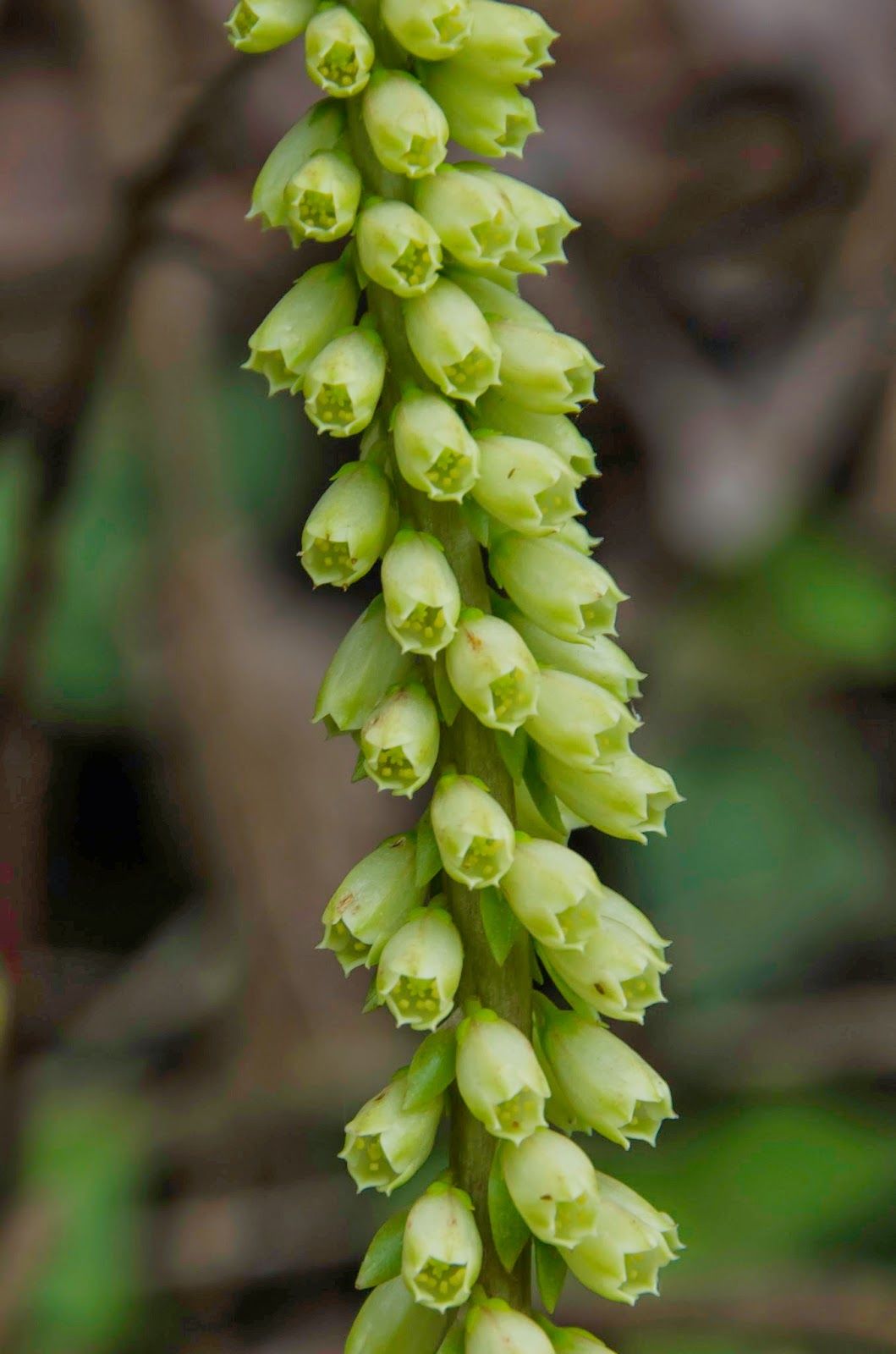
Flowering stems generally reach 10–50 cm (4–20 in). Their few leaves are wedge-shaped and toothed, quite different from the basal leaves. Flowers hang along an elongated cluster. Each corolla forms a tube 7–10 mm (0.28–0.39 in) long, greenish white, yellowish or sometimes tinged red. A flowerless plant therefore shows only some of the useful characters; photographing the entire flower stalk helps confirm identification. 437
Useful taxonomy
The accepted name is Umbilicus rupestris. Its basionym is Cotyledon rupestris Salisb., published in 1796. Dandy published the combination in its present genus in 1948, in the Gloucestershire flora. These dates represent different nomenclatural acts, rather than two discoveries of the plant. 12
Cotyledon umbilicus-veneris L. and Umbilicus pendulinus DC. are listed as synonyms. An old illustration carrying either name may therefore show today's wall pennywort. Synonymy connects historical floras with modern databases without artificially creating several species. 1
Habitat and distribution
Shady old walls and rock crevices are characteristic habitats. In France, wall pennywort grows particularly in the south, centre and west, and in Corsica, favouring siliceous ground. Look in the gaps between stones rather than the deep soil of a garden bed. 3
The species is not threatened nationally in France, where its category is Least Concern. Some regions near its range limits nevertheless consider it vulnerable: Near Threatened in Centre, Vulnerable in Haute-Normandie and Endangered in Burgundy. These regional assessments describe a different geographical scale from the national category. 93
Its native range extends well beyond the French coast, from Macaronesia and western Europe through the Mediterranean to the Arabian Peninsula and southwestern India. Germany is listed among introduced territories. A German population and a French population therefore need not share the same biogeographical status. 1
Growing in a crevice does not imply a need for permanent drought. Wall pennywort occupies moist, well-drained sites, including damp banks. Moisture and drainage can coexist, particularly on a shaded wall. 563
Life cycle and reproduction
French flowering occurs mainly from May to July. British and Irish observations more often cover June to August, sometimes continuing into September in mild conditions. A calendar must remain connected to local climate: a British date does not exactly describe a warm Mediterranean crevice. 36
Growth is particularly active in winter and spring in oceanic regions. Intense summer heat can bring dormancy and drying of the above-ground parts. Summer loss of foliage alone therefore does not prove that the rootstock has died. In a garden, watering follows winter and spring growth; rainfall and the speed at which the substrate dries determine how much is needed. 6
Wall pennywort is propagated by seed or division. To establish a plant, start with cultivated stock and respect its tuberous rootstock rather than pulling a specimen from an old wall. 59
Uses and risks
Food use of the leaves is documented, raw or cooked. Their flavour is milder in winter and early spring, becoming stronger in summer. This use concerns correctly identified leaves, rather than any round-leaved plant collected from a crevice. No known hazard is reported, which does not constitute proof of safety. 5
Historical applications to the skin belong to ethnobotany and are not clinical evidence of effectiveness. These traditions do not support a recommendation to treat wounds at home. 5
Safety for cats, dogs and horses remains unestablished. Animal toxicity lists do not cover every species, and any plant material can cause digestive upset in dogs and cats. The absence of a species-specific entry therefore cannot classify this plant as safe for animals. 8
Varieties and similar plants
Flower orientation helps separate related Umbilicus species. Wall pennywort's flowers hang along almost the whole inflorescence. Another western Mediterranean species has more horizontal flowers restricted to the upper half of the cluster. This contrast is more useful than a simple colour difference. 7
An isolated leaf hides this distinction. A reliable observation combines views of the blade, its central stalk attachment and the flowering stem. The botanical synonyms above describe one species rather than cultivars. For cultivation, the main choice is a suitable site: moist during growth and without standing water. 75
Main sources
The accepted name is Umbilicus rupestris (Salisb.) Dandy, published in 1948. The older names Cotyledon rupestris and Umbilicus pendulinus refer to the same species. 21
- Kew, Plants of the World Online : Umbilicus rupestris
- International Plant Names Index : Umbilicus rupestris
- Tela Botanica, eFlore : Umbilicus rupestris
- Info Flora : Umbilicus rupestris
- Plants For A Future : Umbilicus rupestris
- Botanical Society of Britain and Ireland : Umbilicus rupestris
- University of the Balearic Islands, Herbari Virtual : Umbilicus rupestris
- ASPCA : scope and limits of the toxic plant list
- INPN, TAXREF : Umbilicus rupestris
Frequently asked questions
How do I recognise wall pennywort?
Its fleshy leaves are round, scalloped and attached at the centre; tubular flowers hang in a long cluster.
Why do the leaves disappear in summer?
Growth occurs mainly in winter and spring. During intense heat the plant tends to become dormant, and above-ground parts may dry out while the rootstock remains alive.
Is wall pennywort edible?
Its leaves are eaten raw or cooked. This use guarantees neither the identity of a harvest nor safety for animals.
If you are unsure about a plant’s toxicity, ask a botanist or veterinarian for advice.