
Laurustinus viburnum (Viburnum tinus, )
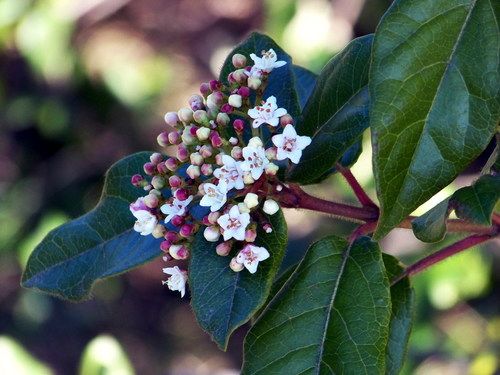
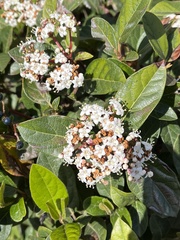
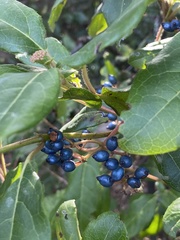
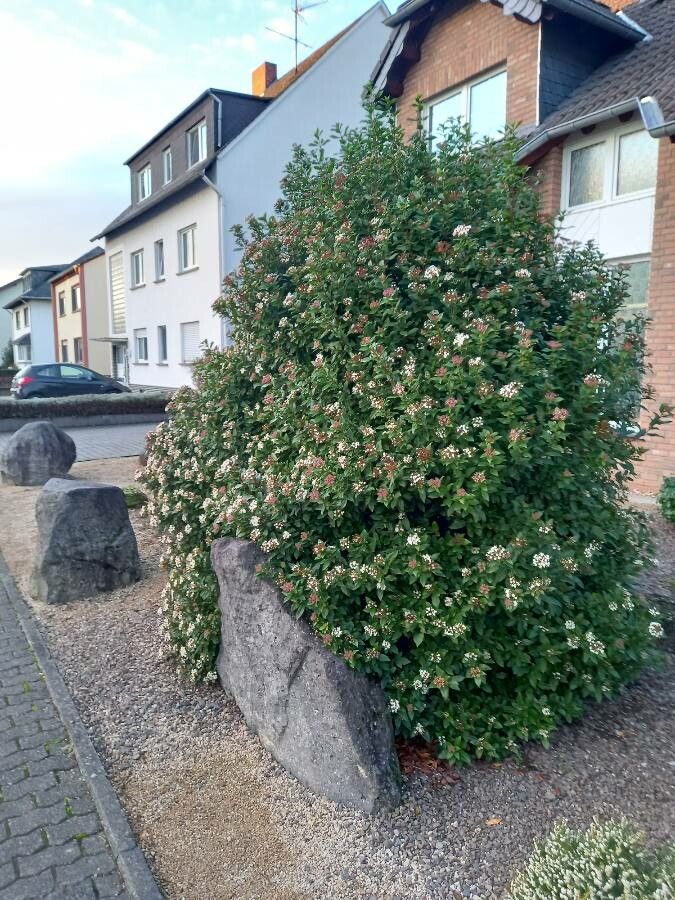
Laurustinus viburnum (Viburnum tinus) is an evergreen Mediterranean shrub in the Viburnaceae family. Pink buds open into small white flowers in winter and spring. Its opposite leaves distinguish it from true laurels.
Read moreLaurustinus viburnum, Laurustinus and Laurustine
Tinus laurifolius, Tynus lauriformis and Viburnum lucidum
Give plenty of ambient light without direct sun on the leaves.
Sun or partial shade; protect from cold, drying winds.


© photo
(c) Cassiopée2010, some rights reserved (CC BY-NC-SA) · cc-by-nc-sa
Bob Walker · cc0
Thomas Dreux · cc-by
Taken Dec 1, 2021 by mohammad fazel dehkordi (cc-by-sa)
Taken Nov 27, 2021 by Maryse M (cc-by-sa)
Taken Feb 25, 2021 by Santoyo Javier (cc-by-sa)
Taken Nov 29, 2022 by Alberto Bushell (cc-by-sa)
Taken Dec 2, 2021 by Manuëlle (cc-by-sa)
© copyright of the Board of Trustees of the Royal Botanic Gardens, Kew.




Global distribution
Native to the Mediterranean basin; introduced in various mild climates.
- Native3
- Introduced1
- France
- Corsica
- North Africa
- Great Britain
Hexagons: regions where the plant occurs. Green dots: native range.1
Identity
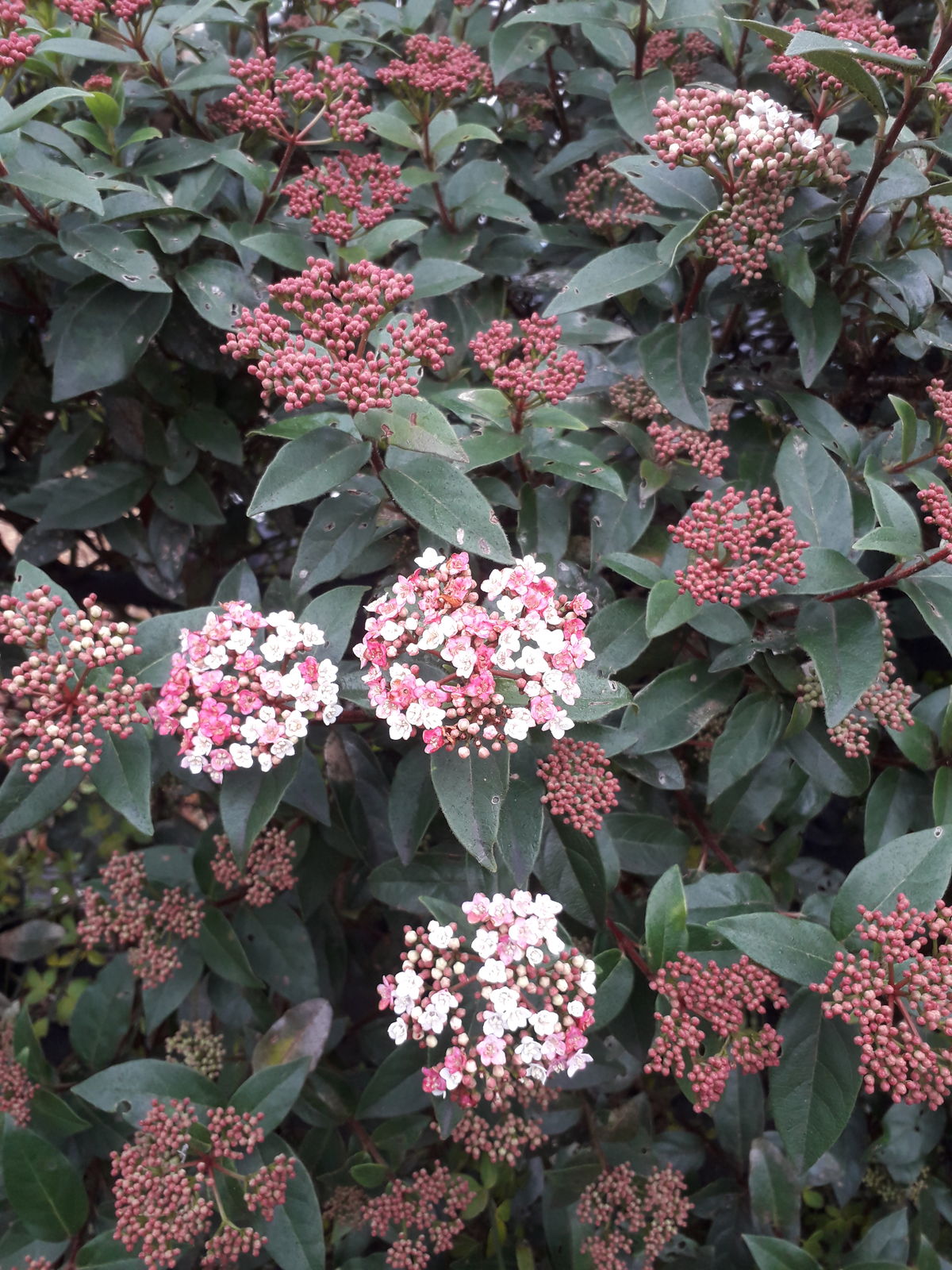
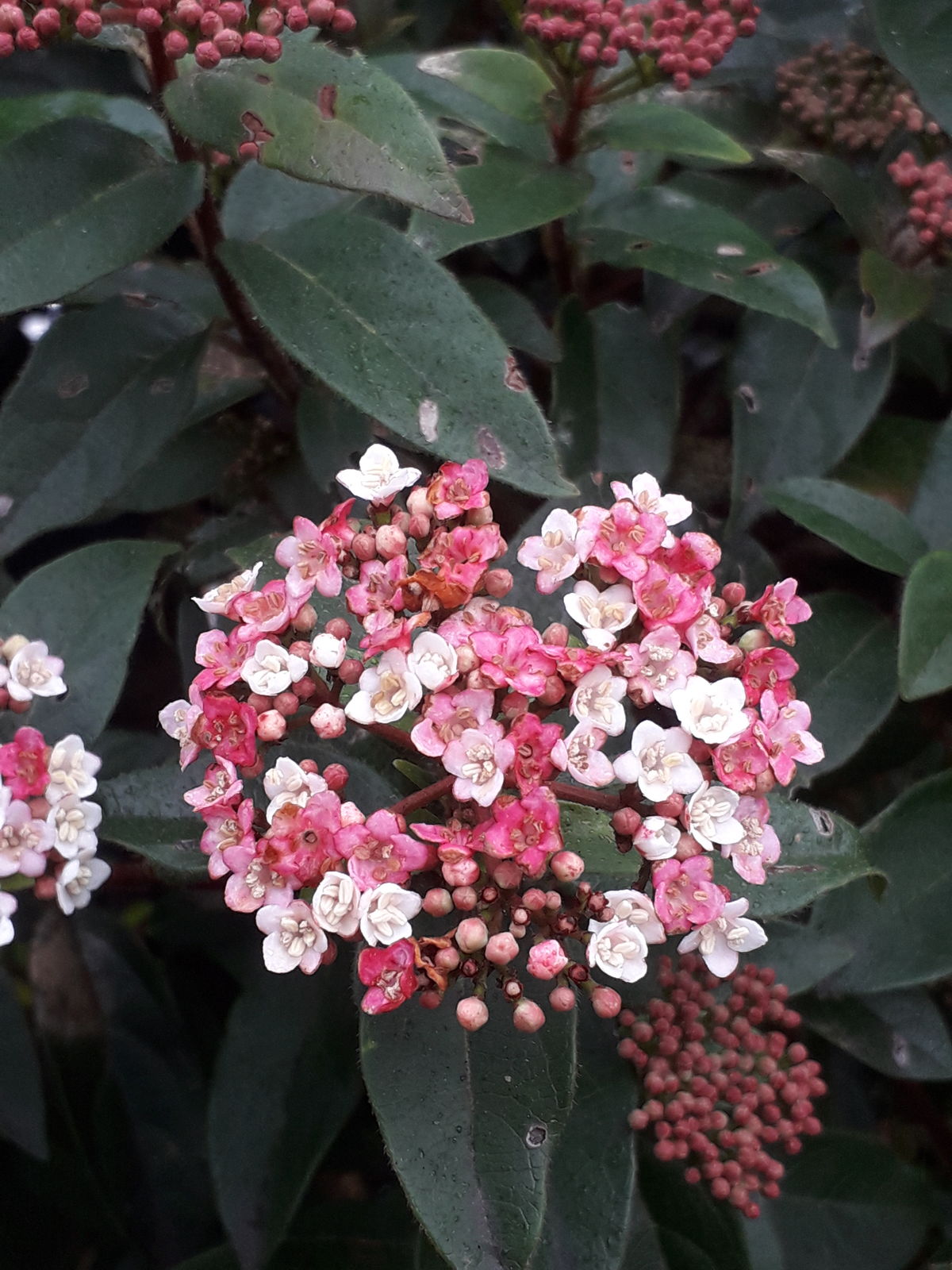
Laurustinus viburnum (Viburnum tinus L., 1753), also called laurustinus, is an evergreen Mediterranean shrub. Its pink buds open into white flowers clustered at the shoot tips in winter and spring. Dark green leaves remain throughout the year, including during flowering. Their persistent presence is part of its appearance rather than a sign of a separate summer and winter form. 38
It belongs to the Viburnaceae, rather than the bay laurel family. Its common name reflects a resemblance in foliage without establishing close relationship or a culinary use. Laurustinus and laurustine refer to the same species. A label saying only “laurel” is too imprecise to identify a plant. 19
Recognition
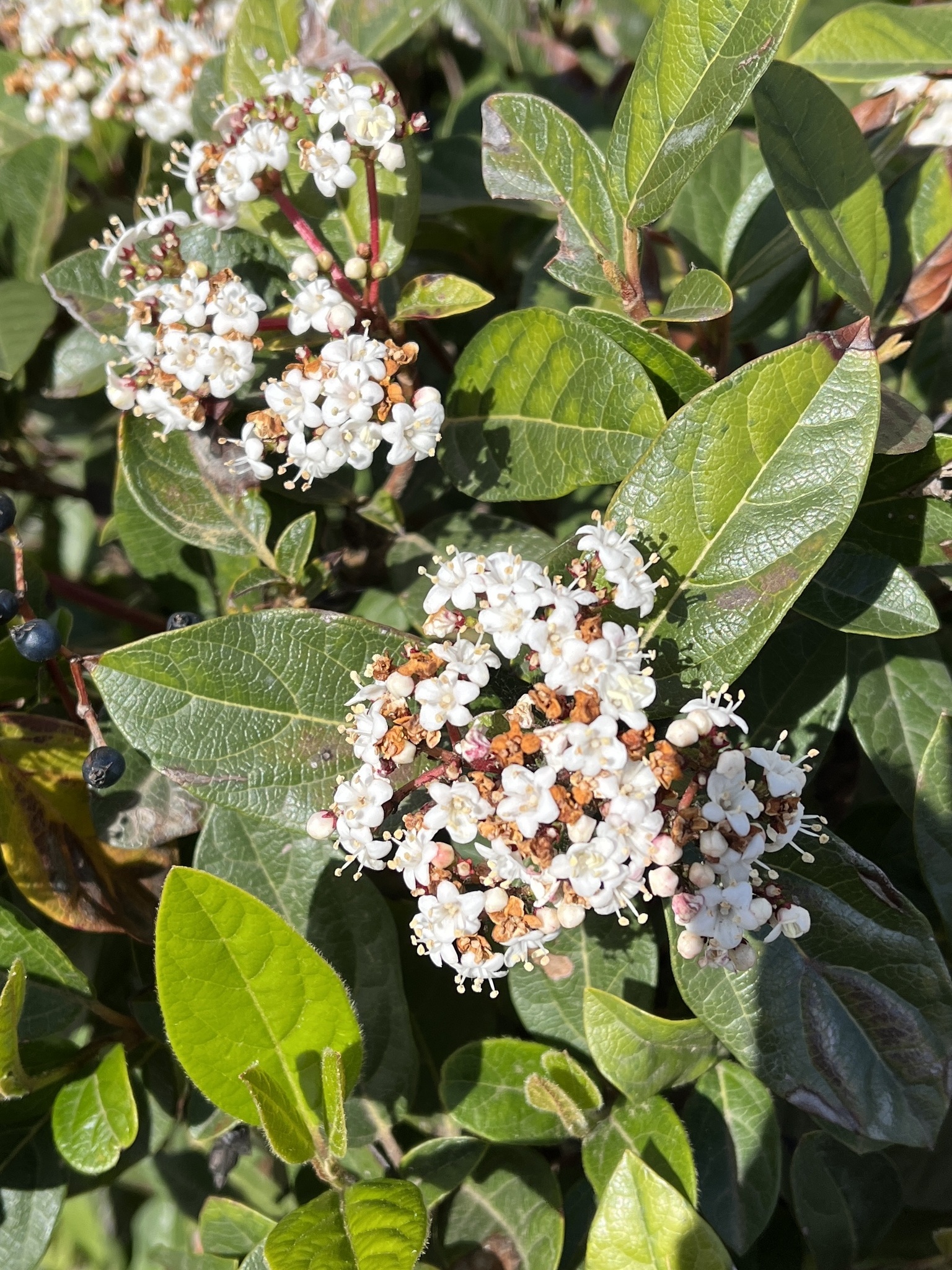
Leaves grow in opposite pairs. Oval, leathery and glossy, they have small tufts of hairs beneath. This underside deserves a close photograph: the dark colour and thick texture above are shared by several hedge shrubs. Simple, opposite leaves provide an initial filter before examining the flowers. 34
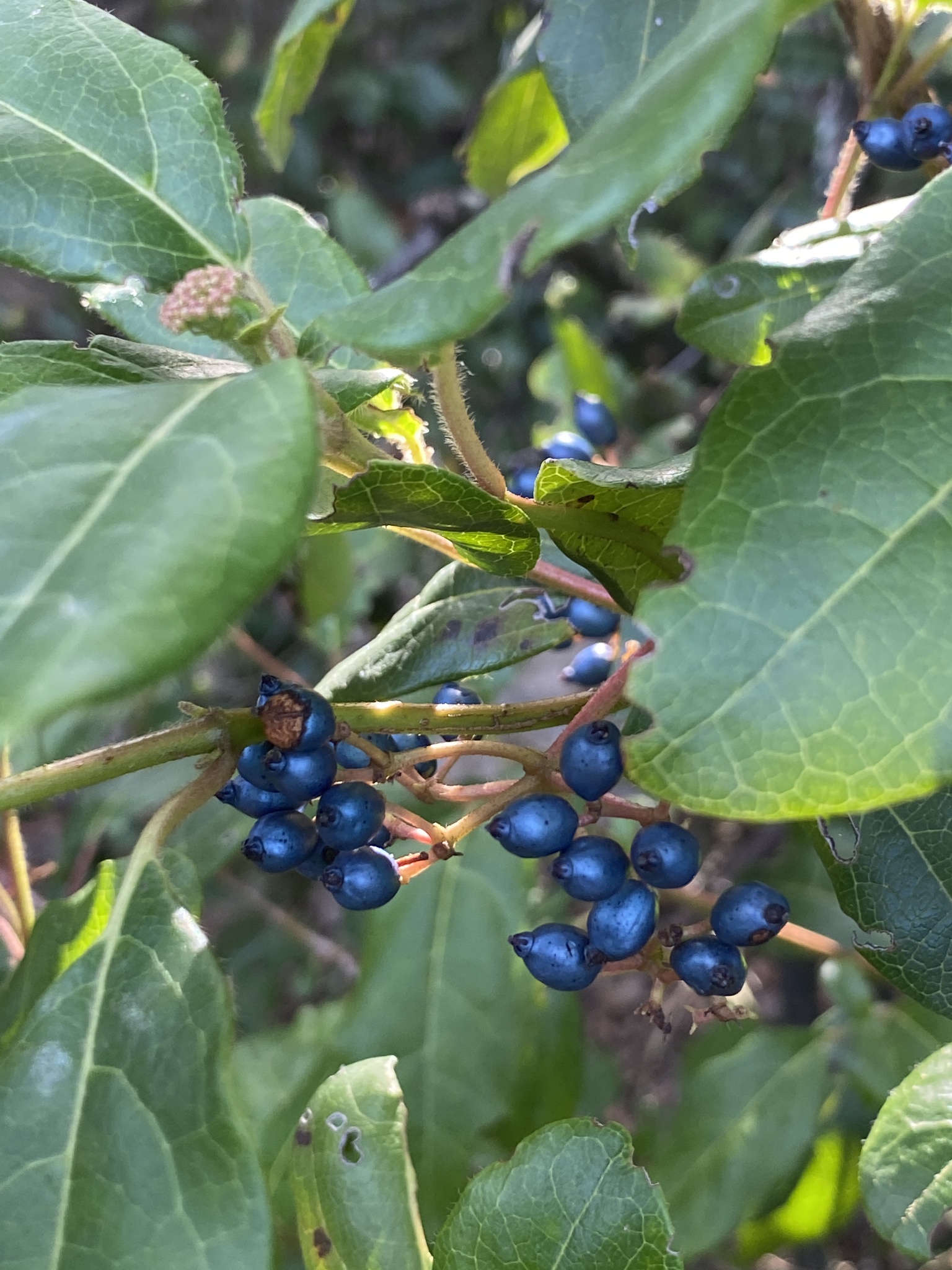
Inflorescences contain small white flowers, sometimes still surrounded by pink buds. Fruits are metallic blue drupes that turn black, each containing one stone. The contrast between pink buds, white flowers and dark fruits helps recognition, although these stages are not always present simultaneously. Document an observation with an entire leafy shoot and its clusters rather than a single detached fruit. 3
Useful taxonomy
Linnaeus published Viburnum tinus in 1753, in the first volume of Species Plantarum, page 267. “L.” identifies him as the author. The scientific name has retained its form since publication; it does not represent a recent garden introduction, even though the shrub is widely grown. 2
Tinus laurifolius Borkh. and Tynus lauriformis J.Presl are synonyms. Older floras may also place it in Caprifoliaceae or Adoxaceae. The current classification uses Viburnaceae. When comparing references, the binomial and its author are more stable than these changes in family boundaries: a different family on an older label does not necessarily mean a different species. 127
Habitat and distribution
Laurustinus viburnum is native to the Mediterranean basin, from southern Europe to North Africa and the Middle East. France and Corsica lie within this range. Great Britain, Ireland, California and Tasmania are instead among introduced territories. A plant growing outside a garden there is therefore not automatically native. 1 In France it occurs naturally in the woods and garrigue of the south, from Provence to Roussillon, and in Corsica; in southwestern France it is naturalised. 8
It grows particularly in maquis and Mediterranean woodland understorey, often near the sea. This origin does not require a scorching, completely dry garden position: some shade and moisture-retaining soil also suit it. Choose drainage and shelter rather than equating summer tolerance with resistance to cold, drying winds. 74 Sources differ on its tolerance of difficult conditions: some describe drought and salt tolerance, while others find it poorly suited to poor, dry soils and direct maritime exposure. 37
Life cycle and reproduction
Flowering occurs mainly from winter into spring. In southern France it extends from February to June, and fruits ripen in August and September. 8 ‘Eve Price’ opens its flowers from late winter; ‘Gwenllian’ also flowers in late winter. A difference of a few weeks between gardens may therefore reflect cultivar choice as well as exposure. Watching buds reveals preparations for flowering before the corollas open. 46
Flowers attract insects and fruits feed wildlife. Good flowering does not guarantee heavy fruiting on an isolated plant: other compatible viburnums favour fruit production. Semi-ripe cuttings in summer are used to propagate a horticultural selection; layering provides another method. 35
Uses and risks
The shrub can form an evergreen hedge or stand alone. Allowing its mature width reduces repeated pruning beside a narrow path. Vigorous ‘French White’ may reach about 3 m (10 ft), while ‘Eve Price’ is generally listed at 1.5–2.5 m (5–8 ft). A compact plant at purchase therefore does not predict its size after several years. 54
Fruits must not be eaten by people or domestic animals. Their value to birds does not prove safety for a child or dog. They remain ornamental fruits, unsuitable for food preparations or home remedies. Gloves are recommended when handling these shrubs. 63
Varieties and similar plants
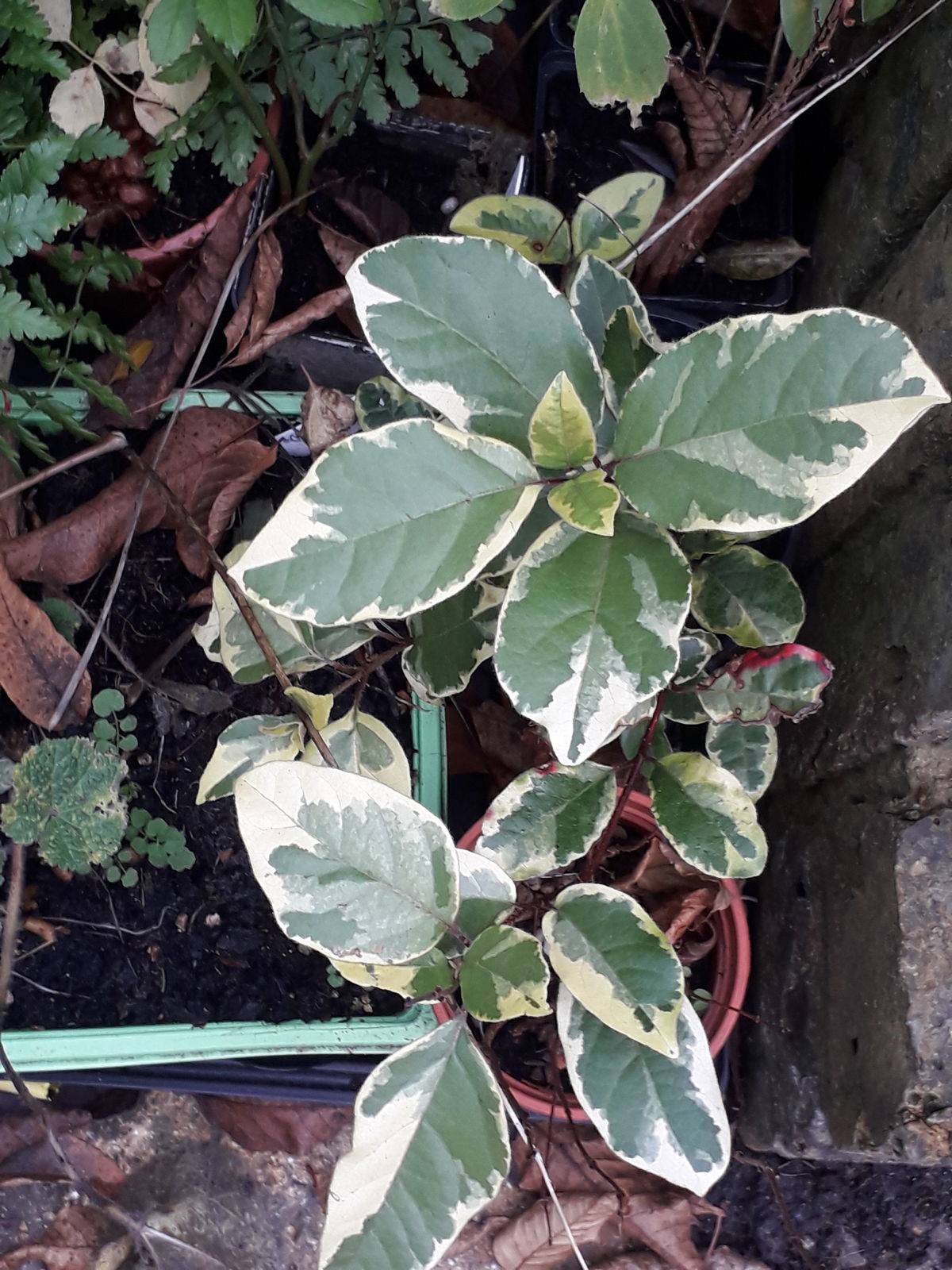
Cultivar choice chiefly concerns habit and flowering details. ‘Eve Price’ has dark pink buds; ‘French White’ develops white cymes on a vigorous shrub. ‘Gwenllian’ bears reddish buds followed by white flowers and metallic blue fruits. These names describe horticultural selections of the same species, rather than three wild species. 456
Bay laurel (Laurus nobilis) and laurustinus share a laurel-related common name but must not be substituted for one another. Opposite leaves and terminal clusters of white flowers point towards a viburnum. For an unlabelled plant, confirm and retain its scientific name before any use: similar evergreen leaves do not transfer food uses or precautions between species. 36
Main sources
Laurustinus viburnum is native to southern France and Corsica. Its cultivars differ chiefly in habit and bud colour, and their fruits must not be eaten. 84
Frequently asked questions
Is laurustinus viburnum a true laurel?
No. It belongs to the genus Viburnum and has opposite leaves.
Can laurustinus viburnum fruits be eaten?
No. The fruits are ornamental and must not be eaten.
When does laurustinus viburnum flower?
Flowering mainly runs from winter into spring. In southern France it extends from February to June, varying with climate and cultivar.
If you are unsure about a plant’s toxicity, ask a botanist or veterinarian for advice.