
Silver vase (Aechmea fasciata, )
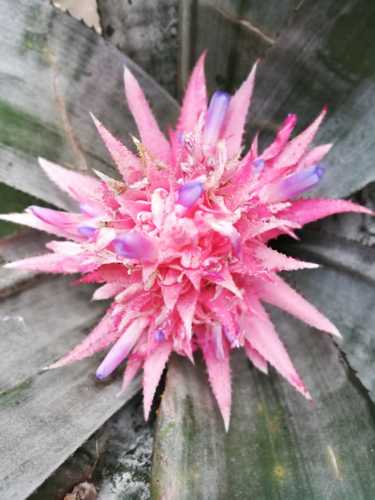

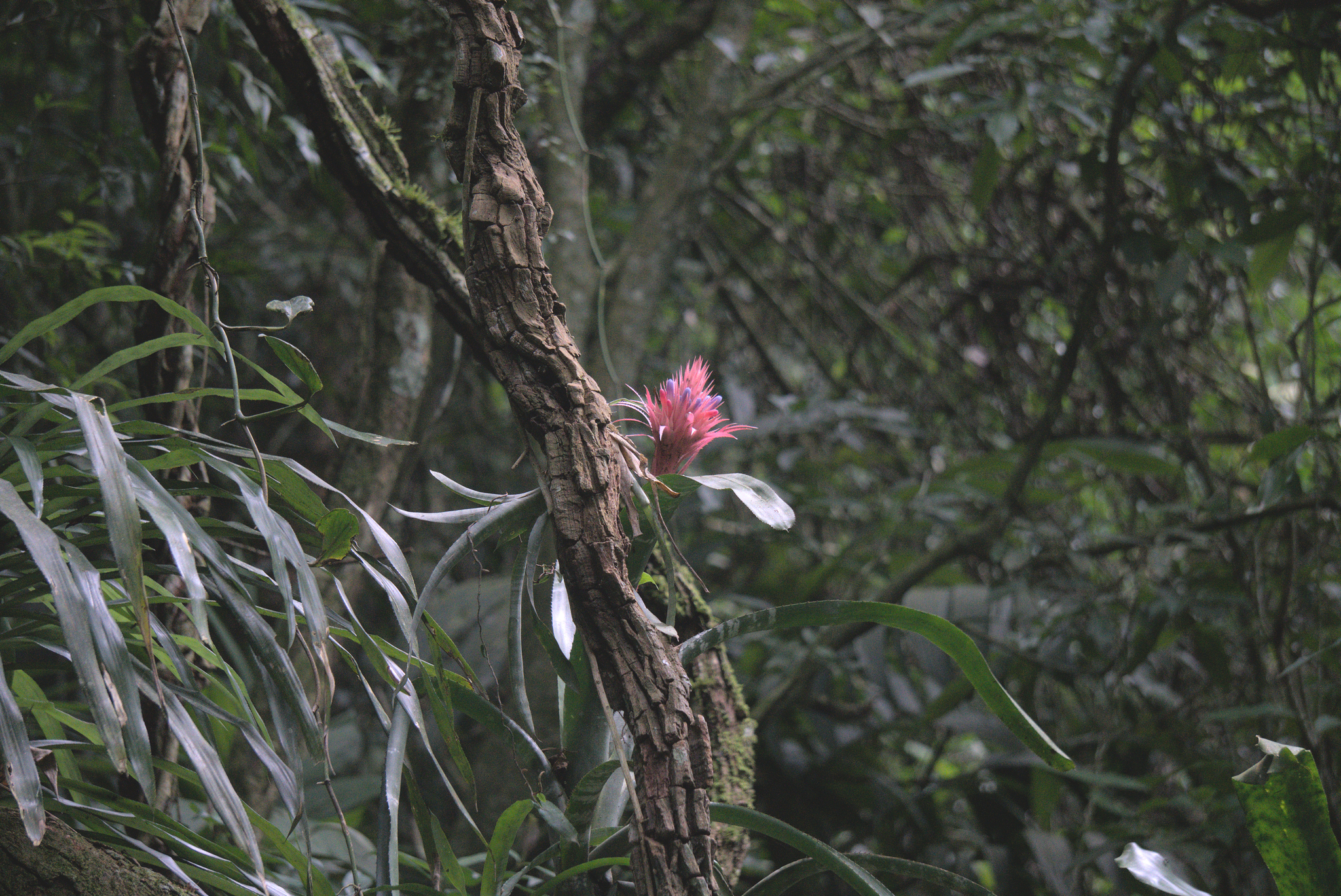
Silver vase (Aechmea fasciata) is an epiphytic bromeliad from Brazil. Its stiff, silver-banded leaves form a reservoir around an inflorescence with pink bracts and small blue to violet flowers.
Read moreSilver vase, Urn plant and Living vase
Billbergia fasciata, Bromelia fasciata, Hohenbergia fasciata, Hoplophytum fasciatum and Platyaechmea fasciata





© photo
(c) stevj, some rights reserved (CC BY-NC) · cc-by-nc
iNaturalist User · cc-by
Taken Mar 13, 2020 by Dieter Albrecht (cc-by-sa)
Taken May 31, 2021 by Lizard (cc-by-sa)
Taken Apr 30, 2021 by naomiarteggiando (cc-by-sa)
© copyright of the Board of Trustees of the Royal Botanic Gardens, Kew.


Global distribution
Native to the state of Rio de Janeiro in southeastern Brazil; introduced to Puerto Rico and widely grown in pots.
- Native1
- Introduced1
- Brazil, state of Rio de Janeiro
- Puerto Rico
Hexagons: regions where the plant occurs. Green dots: native range.1
Identity
The silver-banded leaves and central cluster of pink bracts distinguish silver vase (Aechmea fasciata (Lindl.) Baker). This evergreen perennial belongs to the Bromeliaceae, the pineapple family. It grows naturally as an epiphyte in the humid tropics of southeastern Brazil. 2 3
“Urn plant” and “living vase” are other established English names for the species. The vase imagery describes its shape: the leaves form a rosette with a central cavity that holds water. 5 3
Recognition
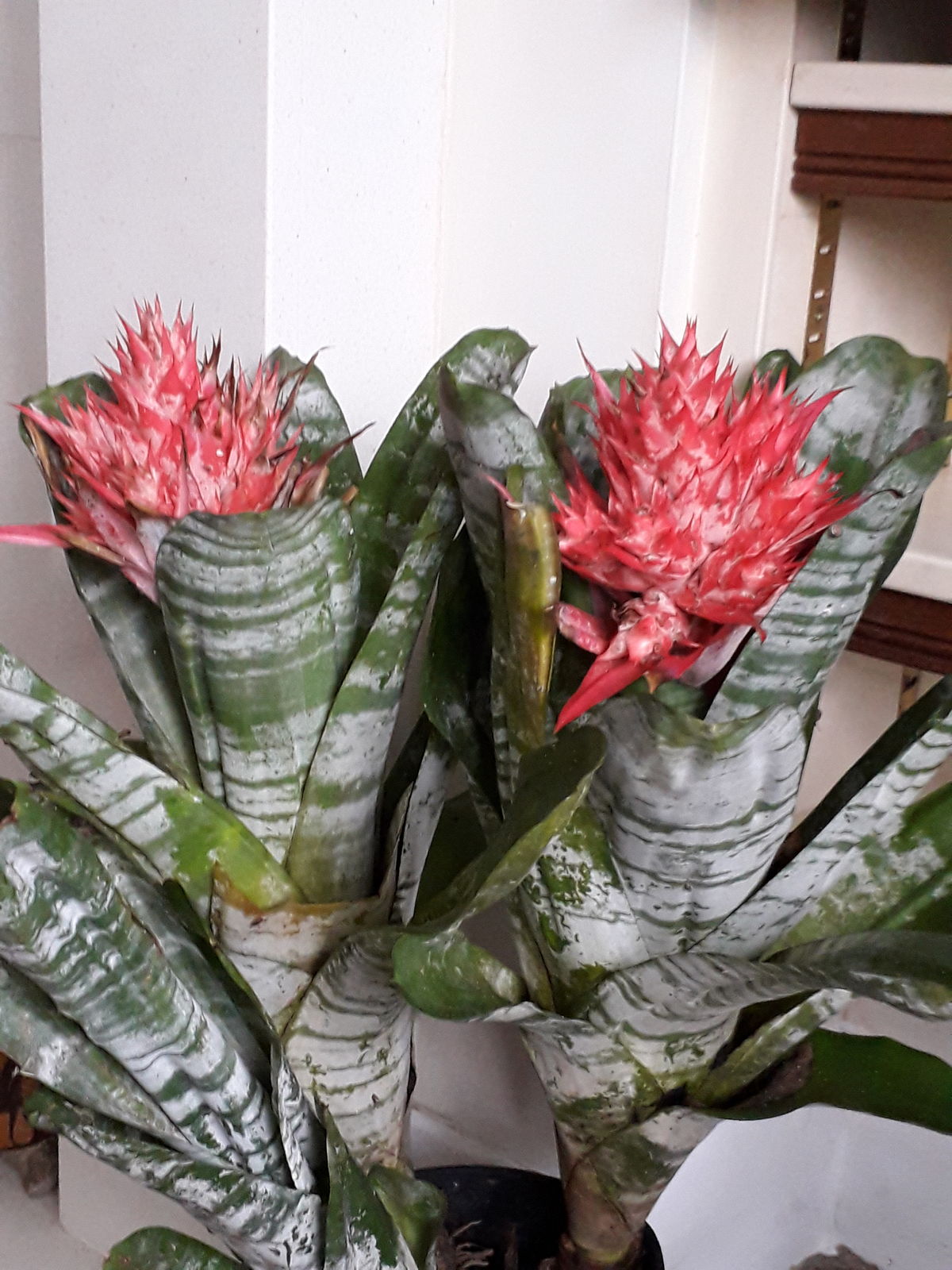
Thick, arching or upright leaves form a funnel-shaped rosette. The leaf blade can reach 50 cm (20 in) long and 5 to 8 cm (2 to 3 in) wide. Its rounded end has a pointed tip, and small black spines line the edges. Pale gray scales partly cover the green surface, most visibly in the horizontal bands. 4
These scales are absorptive trichomes on the leaf surfaces. Their arrangement gives the foliage its silvery appearance. The plant is described as reaching 35 to 50 cm (14 to 20 in) in height. 6
The dense, pyramidal inflorescence is 7 to 10 cm (2.8 to 3.9 in) long. Its large pink structures are bracts; the smaller true flowers remain partly hidden between them. The blue petals turn dark red as they age. The pink outline therefore remains ornamental after the flowers have opened. 4
Useful taxonomy
The accepted name is Aechmea fasciata (Lindl.) Baker, a combination published in 1879. Its original name, Billbergia fasciata Lindl., dates from 1828. The parentheses around “Lindl.” record that earlier description in a different genus. 1
Bromelia fasciata (Lindl.) Desf. and Platyaechmea fasciata (Lindl.) L.B.Sm. & W.J.Kress are also synonyms. Both names refer to the same species despite the change of genus. 1 The epithet fasciata refers to the transverse leaf bands, a more useful identification feature than bract color alone. 3
Habitat and range
Silver vase is native to the state of Rio de Janeiro in Brazil. Its habitat is the humid Atlantic Forest, known as the Mata Atlântica, where it grows on trees as an epiphytic herb. An introduced population is documented in Puerto Rico. Plants cultivated elsewhere do not extend its native range. 1 9
An epiphyte uses a tree for support without drawing nutrients from it. In these bromeliads, the roots mainly anchor the plant, while the leaves help absorb moisture and nutrients. The central reservoir collects rainwater. 7
Brazil’s 2017 national assessment classifies the species as vulnerable under criterion A2c. It identifies urbanization-related degradation of lowland forests and lower slopes as a threat. Botanical collections have been made in Tijuca and Serra dos Órgãos national parks. These records from protected areas coexist with threats to the habitat. 9
Life cycle and reproduction
Each silver vase rosette flowers only once. After flowering, the rosette declines while offsets develop at its base. The loss of the mother rosette is part of the reproductive cycle; younger rosettes can take over. Separating these offsets is a way to propagate the plant. 3
Bright, filtered light suits silver vase indoors. The potting mix needs to drain freely even when water remains in the leaves: the central reservoir and moisture around the roots occupy separate spaces. 2 7
For tank-forming bromeliads, water the potting mix less in winter and regularly replace the soft water in the central cup. Half-strength liquid fertilizer is optional in spring and summer. Repot in summer if the container has become too small. These recommendations underpin the seasonal calendar for a plant grown indoors in France. 7
Uses and risks
Silver vase is widely grown as a potted ornamental. Its evergreen foliage and lasting inflorescence explain that use; its fruit is not a food crop. The fruits described are berries, but the presence of berries does not establish that they are edible. 5 4 6
A small exploratory bite by a young child is considered harmless in the cited assessment, which reports no known poisoning from this plant. That advice concerns a child tasting a small amount; it does not define an edible serving. 8
The plant’s overall toxicity remains poorly characterized. A lack of evidence in the literature supports a presumption of low risk, alongside advice against using it as fodder. Safety for each audience therefore remains undetermined here. The spines along the leaf edges are well documented and need to be considered when handling the plant. 6
Varieties, look-alikes and related plants
‘Primera’ has green leaves with silver bands, pink bracts and small violet flowers. ‘Purpurea’ has dark purple foliage with white bands. These descriptions apply to the named horticultural forms, rather than to every silver vase plant. 3
‘Charles Hodgson’ combines upright leaves with faint gray bands, stiff pink bracts and mauve petals. 4 Among indoor bromeliads, Guzmania lingulata has glossy green leaves and red, star-shaped bracts. Silver bands together with a dense pink flower head help distinguish silver vase. 7 2
Main sources
- Plants of the World Online, Aechmea fasciata
- Royal Horticultural Society, Aechmea fasciata
- NC State Extension, Aechmea fasciata
- Royal Botanic Gardens Victoria, HortFlora, Aechmea fasciata
- EPPO Global Database, Aechmea fasciata
- University of Zurich, CliniTox, Aechmea fasciata
- Royal Horticultural Society, How to grow bromeliads
- Giftinformationscentralen, Blomsterananas
- CNCFlora, Aechmea fasciata, 2017 national assessment
Frequently asked questions
Does silver vase die after flowering?
The rosette that has flowered gradually declines. Offsets develop at its base and can keep the clump growing.
Should I water only the central cup of silver vase?
No. Keep soft water in the reservoir and replace it regularly, but water the potting mix too, with less water in winter.
Is the large pink part a flower?
The pink color comes mainly from the bracts. The true flowers are small, blue to violet and partly hidden within the inflorescence.
Similar plants
If you are unsure about a plant’s toxicity, ask a botanist or veterinarian for advice.