
Tree aeonium (Aeonium arboreum, )
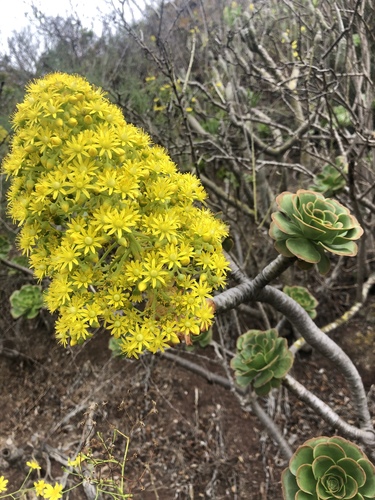
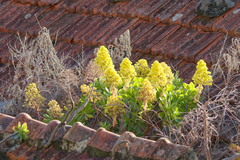
Tree aeonium (Aeonium arboreum) carries rosettes of fleshy leaves at the tips of upright branches. This succulent from the Canary Islands and southwestern Morocco can slow down in summer heat; watering should follow the growth you can see.
Read moreTree aeonium and Tree houseleek
Sempervivum arboreum
Place in full sun, with intense direct light all day long.
Sun; acclimate gradually when moving outdoors

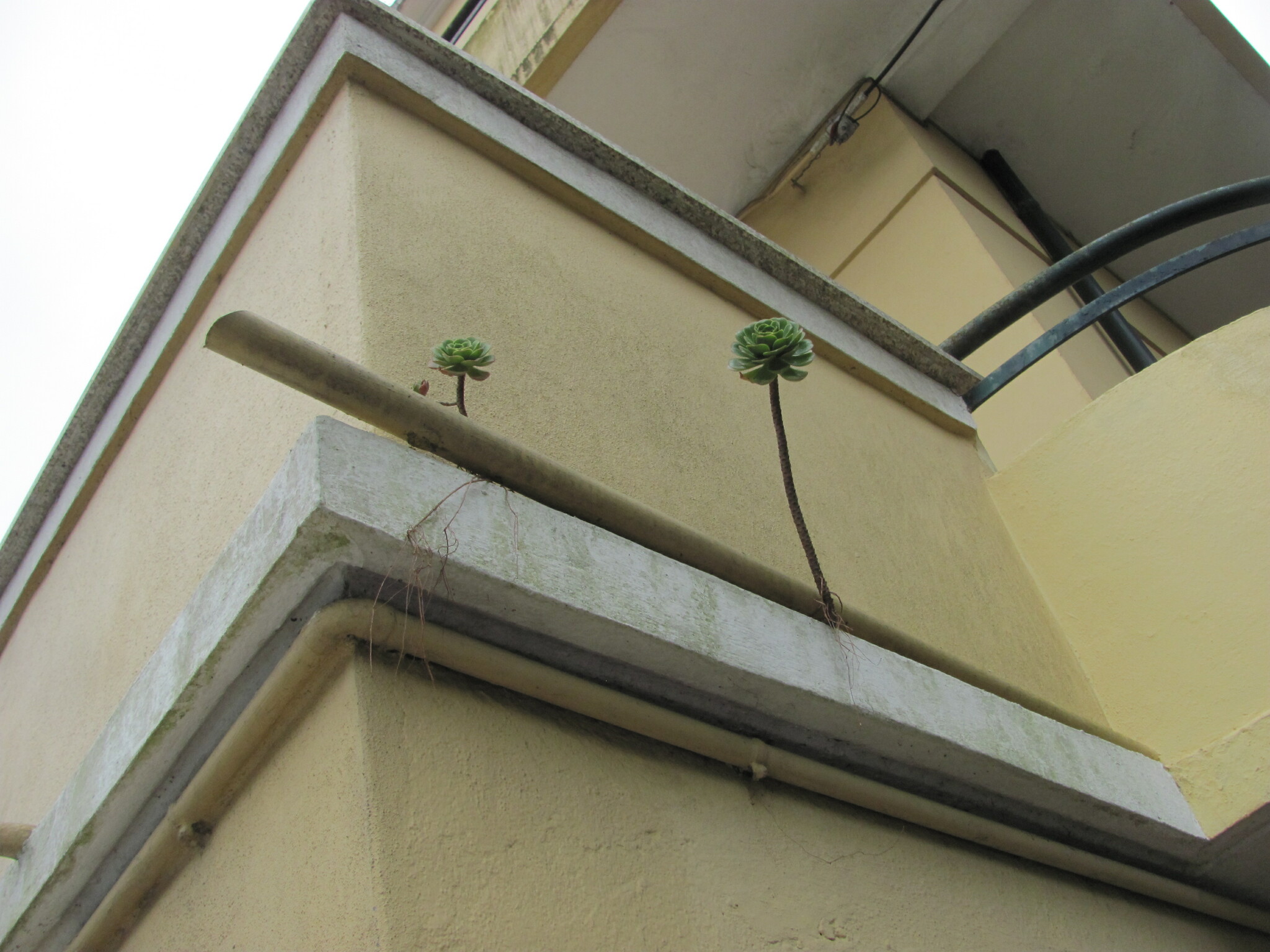


© photo
(c) William Stephens, some rights reserved (CC BY), uploaded by William Stephens · cc-by
Donald Davesne · cc-by
zebedeugalinha · cc-by
Taken Jan 23, 2022 by Jacques Viljoen (cc-by-sa)
Taken Oct 10, 2021 by Carlos Duque (cc-by-sa)
Taken Dec 12, 2021 by Allison Belcher (cc-by-sa)
Taken Apr 10, 2020 by gaiamannino (cc-by-sa)
Taken Sep 7, 2019 by Daniel von Heyden (cc-by-sa)
© copyright of the Board of Trustees of the Royal Botanic Gardens, Kew.




Global distribution
Native to the Canary Islands and southwestern Morocco; introduced in France, Spain, Portugal and California, among other places.
- Native2
- Introduced4
- Canary Islands
- Morocco
- France
- Spain
- Portugal
- California
Hexagons: regions where the plant occurs. Green dots: native range.1
Identity
Tree aeonium (Aeonium arboreum (L.) Webb & Berthel., 1840) carries its rosettes at the top of upright branches, rather than forming only a cushion close to the ground. The French name "chou en arbre," meaning tree cabbage, refers to the same succulent. Tree aeonium belongs to the Crassulaceae family, and its native range includes the Canary Islands and southwestern Morocco. 1 7
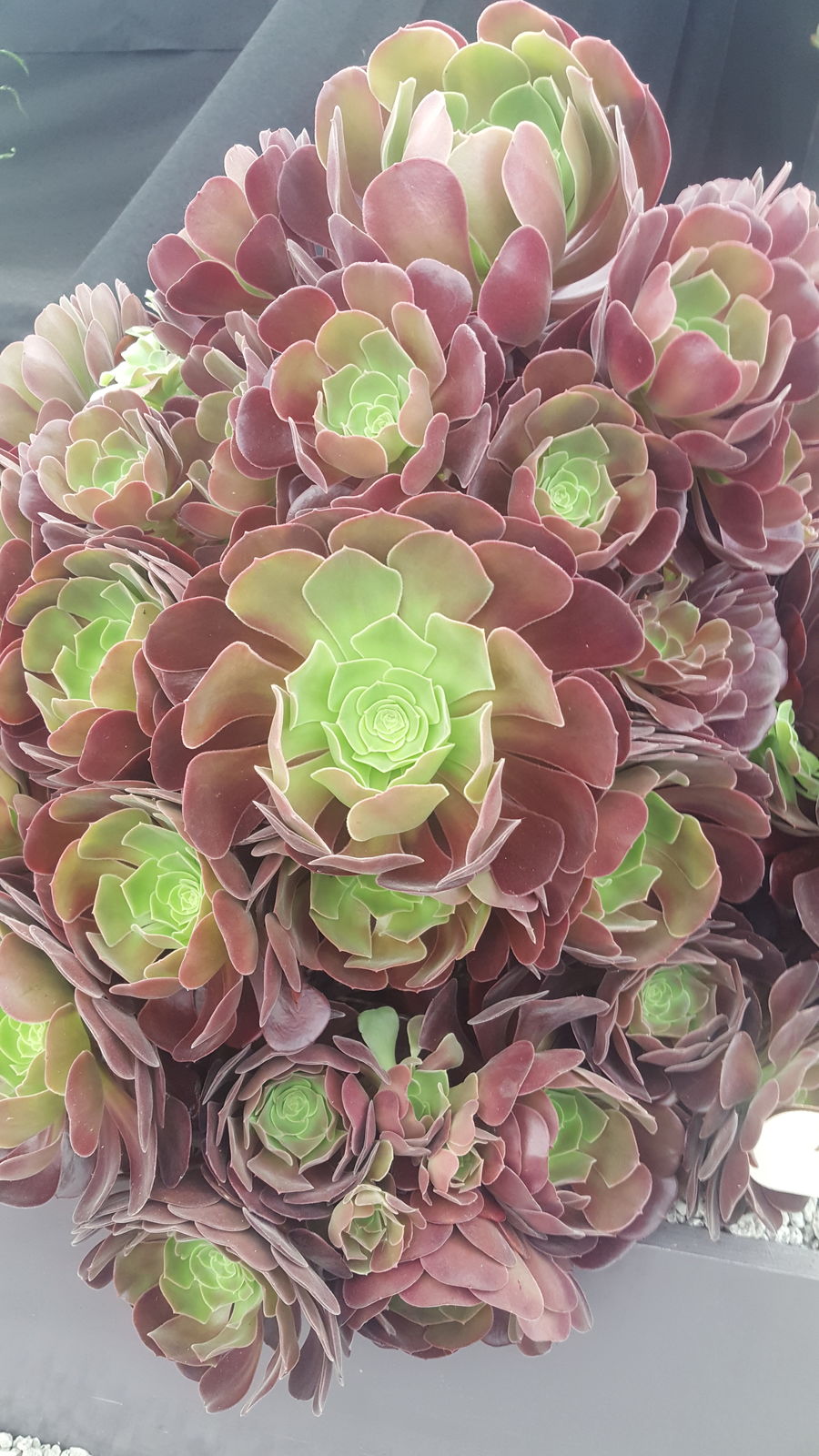
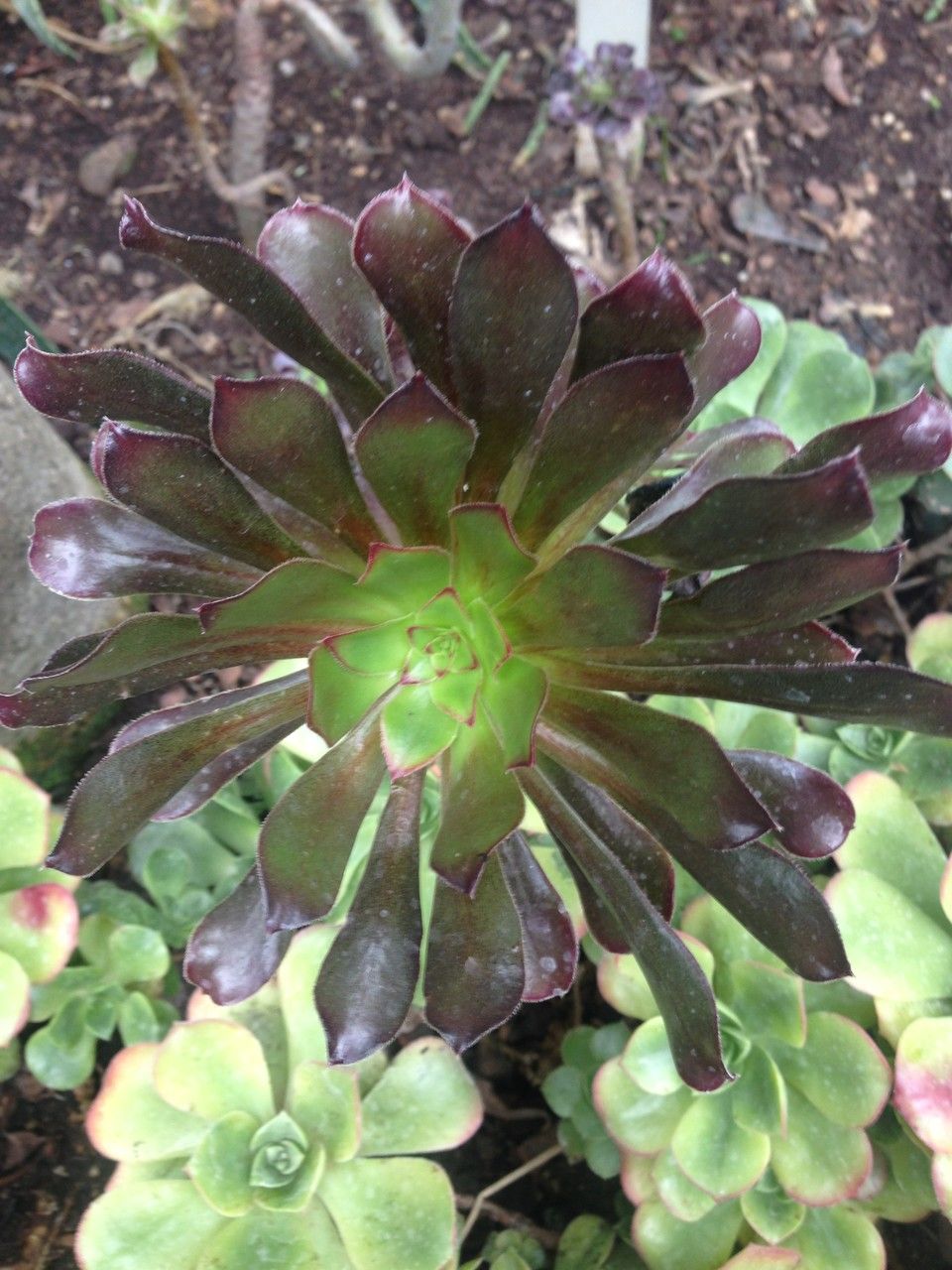
Green foliage helps identify the species: reddish-purple plants sold as ‘Atropurpureum’ belong to a cultivar. A photograph of dark rosettes therefore shows the appearance of a particular selection, rather than the full range of appearances within the species. The foliage color needs to be read alongside the plant's botanical name. 6 4
Recognition
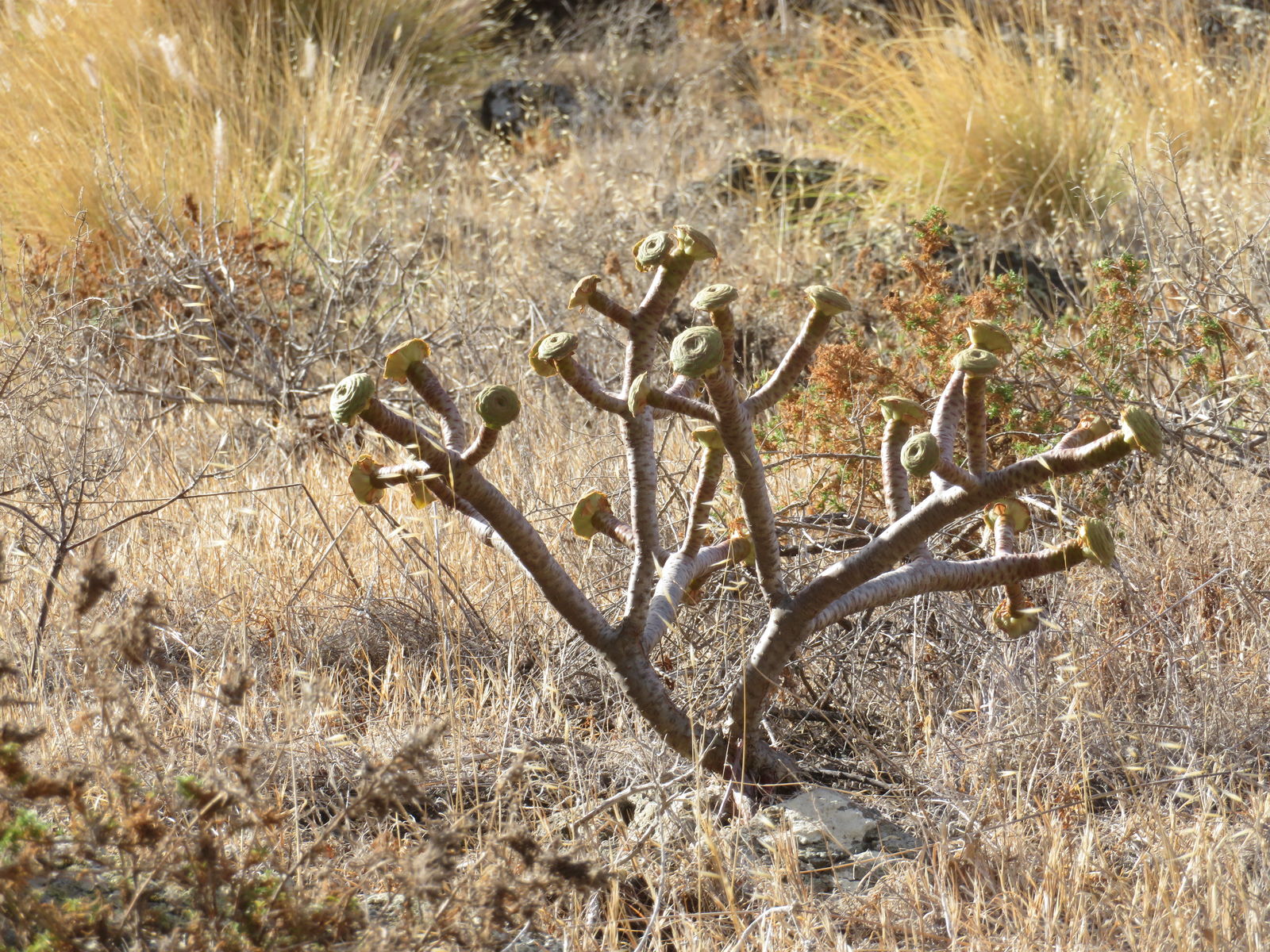
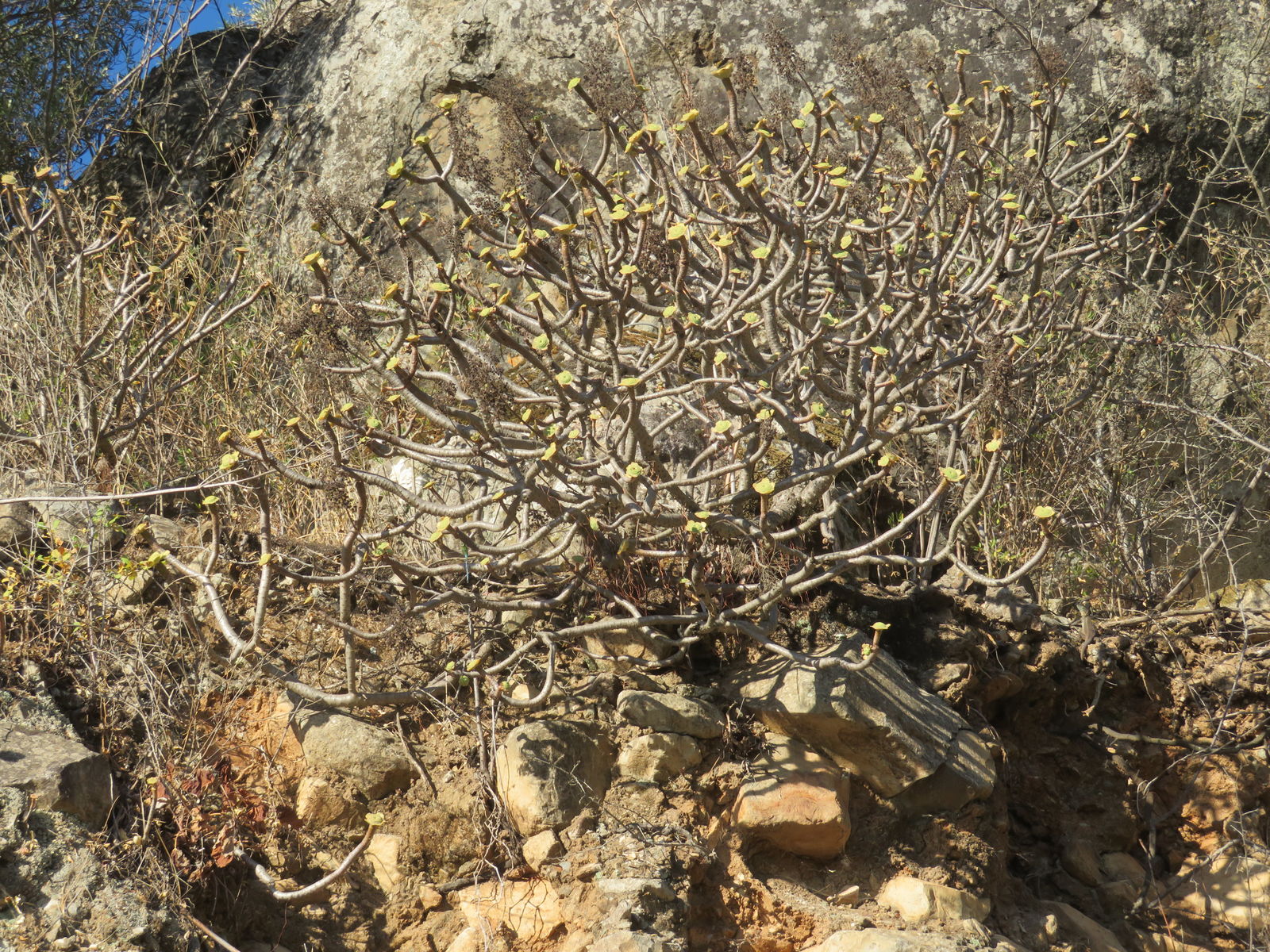
Upright branches tipped with spoon-shaped, fleshy leaves give tree aeonium its outline. Tree aeonium is an evergreen subshrub with relatively few branches. In horticultural cultivation, it reaches 1–1.5 m (3–5 ft) in both height and spread. The leaves form terminal rosettes; their position at the ends of the stems produces the plant's branching silhouette. 2
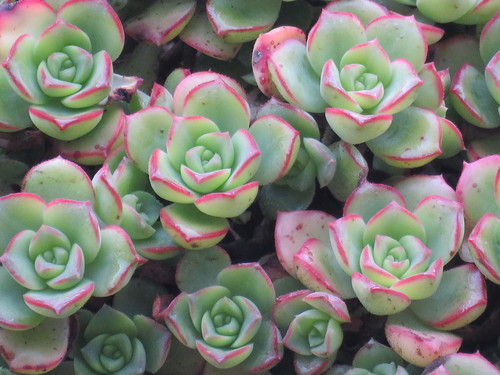
Glossy leaves broaden toward the tip and narrow at the base. Small, curved hairs line their edges. A botanical description gives the rosettes a diameter of 10–25 cm (4–10 in). Yellow flowers gather in an upright, cone-shaped to egg-shaped inflorescence above the foliage. The leafy rosette and the flowering cluster are separate structures, so their dimensions should not be confused. 7
Useful taxonomy
Aeonium arboreum is the accepted botanical name. The synonym Sempervivum arboreum L., published in 1753, is the basionym: the name under which the species was first described. The combination in the genus Aeonium dates to 1840. Both names therefore refer to the same botanical identity under successive classifications, rather than to separate garden plants. 1
The classification of Aeonium arboreum recognizes the subspecies arboreum, holochrysum and korneliuslemsii. Subspecies of Aeonium arboreum are botanical subdivisions, separate from cultivars selected for foliage color. ‘Atropurpureum’ identifies a horticultural selection with purple leaves; its cultivar name accompanies the species name and does not replace it. 1 6
Habitat and range
The Canary Islands and southwestern Morocco form the native range of tree aeonium, within the subtropics. France, Spain, Portugal and California are among the places where the species has been introduced. Finding a plant on a Mediterranean coast does not, by itself, identify the population as native to that coast. 1
Records in Mediterranean France concern rocky coasts and cliffs, as well as sites altered by human activity. Plants that have escaped cultivation on these coasts could sometimes come from hybrid cultivars, so their appearance cannot be applied without qualification to the wild species. A regional alert in Provence-Alpes-Côte d’Azur identifies an ecological risk; that regional classification does not amount to a national ban on cultivation. 3
Life cycle and reproduction
Summer dormancy changes watering needs in tree aeonium. In horticultural trials of the genus, plants that remain active receive water, while dormant specimens are left unwatered. Fall growth is also observed. General advice for aeoniums in winter is to limit watering while maintaining good light. The distinction between an active plant and a dormant one matters when deciding whether to water. 5 4
The calendar expresses these seasonal tendencies for a potted plant protected from frost in mainland France. Its indices are relative, rather than measurements of water volume. Spring repotting follows general advice for succulents when the roots fill their container. Apply a balanced liquid fertilizer two or three times during active growth, without feeding to force a dormant plant back into growth. 8 2
Sow seeds in spring at 19–24 °C (66–75 °F). Keep rosette cuttings at 18 °C (64 °F) in barely moist potting mix until they root. In branching aeoniums, the loss of a rosette after flowering does not necessarily mean that the other branches will die too. 2 4
Uses and risks
Tree aeonium is grown for its foliage and branching habit. A pot allows the plant to be brought indoors before the first frost. Drainage matters alongside exposure: potting mix that stays waterlogged can cause root rot. Repotting into an excessively large container prolongs that wetness by leaving more damp mix around the roots. 5 8
The risks of ingestion remain unknown for the different groups of people and animals. The presumption of safety reported in veterinary literature rests on an absence of poisoning reports; it does not establish that the plant is safe food for humans or animals. Tree aeonium should not be used as animal feed. 7
Varieties, look-alikes and related plants
Dark reddish-purple foliage and yellow flowers in late spring characterize ‘Atropurpureum’. The color traits of ‘Atropurpureum’ belong to that cultivar. The green-leaved species also has a place in cultivation: trials describe a branching habit with apple-green foliage, without requiring the dark color of purple selections. 6 5
Aeonium haworthii has flatter rosettes with gray-green to blue-green leaves, sometimes edged in red. The more clearly green, spoon-shaped foliage of tree aeonium helps distinguish the two. For aeoniums, compare the overall outline alongside leaf shape and the position of leaves on the stems. Color alone does not reliably separate species from horticultural selections. 4
Main sources
Taxonomic references distinguish tree aeonium from its subspecies; horticultural guidance specifies growing conditions for either the species or the genus.
- Plants of the World Online, Aeonium arboreum
- Royal Horticultural Society, Aeonium arboreum
- CBNMed and CBNC, INVMED-Flore, Aeonium arboreum
- NC State Extension, Aeonium genus
- Royal Horticultural Society, Aeonium trial 2022–2024
- Royal Horticultural Society, Aeonium arboreum Atropurpureum
- University of Zurich, CliniTox, Aeonium arboreum
- Royal Horticultural Society, growing indoor cacti and succulents
Frequently asked questions
Why does tree aeonium slow down in summer?
Heat can trigger summer dormancy. Reduce watering at that point; dormant plants are left unwatered, while plants that are still growing receive water.
Does tree aeonium always have purple leaves?
No. The species has green foliage; Atropurpureum is a reddish-purple cultivar. Dark foliage does not define the whole species.
Can tree aeonium stay outdoors in winter?
Growing it in a pot lets you bring the plant indoors before frost. Protection from cold and excessive moisture is necessary.
Is tree aeonium safe for cats?
Safety for cats has not been established. A lack of reported poisoning does not guarantee that eating the plant is safe.
Similar plants
If you are unsure about a plant’s toxicity, ask a botanist or veterinarian for advice.