
Ramps (Allium tricoccum, )
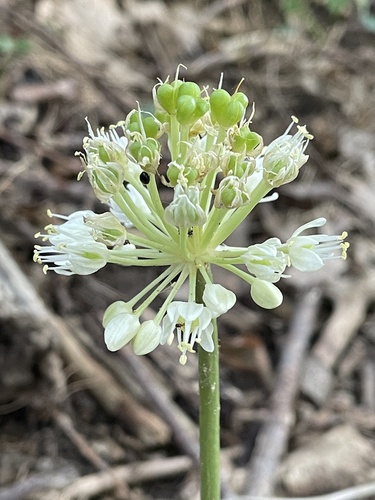

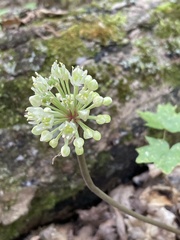
Ramps (Allium tricoccum) are woodland bulbous perennials in the Amaryllidaceae family, native to eastern North America. Also known as wild leek or wood leek, they favor cool, moist deciduous woods. They are edible for people after reliable identification, but must be kept away from cats, dogs and horses.
Read moreRamps, Wild leek, Ramp and Wood leek
Place in indirect light or in a shaded room.
Open deciduous shade, spring light followed by summer canopy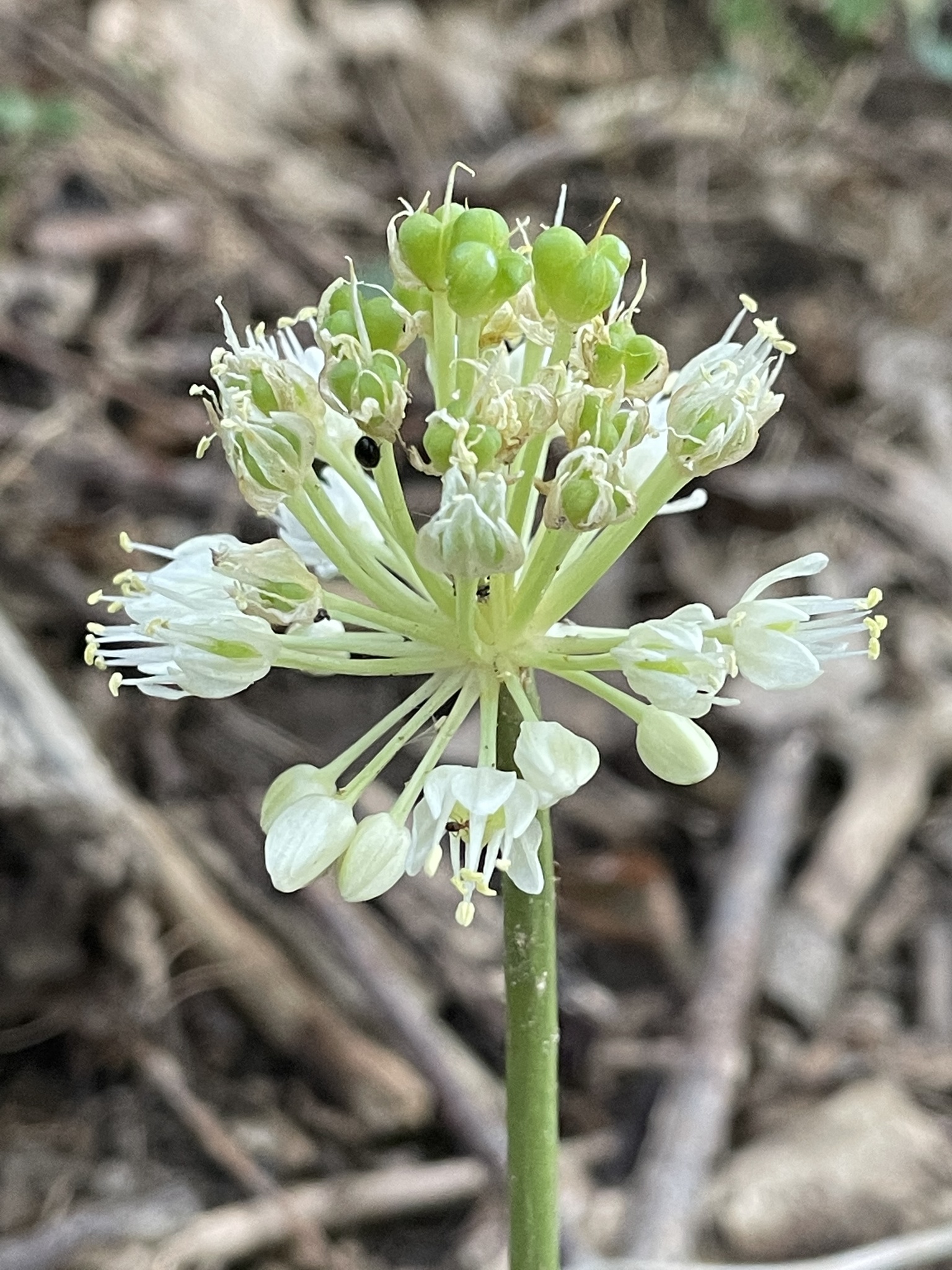

© photo
Annie Weissman · cc0
(c) Dan Mullen, some rights reserved (CC BY-NC-ND) · cc-by-nc-nd
Kiernan Blouin · cc0




Global distribution
POWO accepts Allium tricoccum as native to eastern North America. North American sources emphasize its rich, moist woodland habitat and the slow renewal of populations.
- Native3
- Eastern United States
- Eastern Canada
- Appalachian Mountains
Hexagons: regions where the plant occurs. Green dots: native range.1
Identity
Ramps (Allium tricoccum Aiton, 1789) belong to the genus Allium. POWO, WFO and IPNI place this accepted species in the Amaryllidaceae family. Its role as an edible woodland plant concerns this North American species specifically, rather than European wild garlic or cultivated garlic, which have separate botanical identities. 1 2 3
English names include ramp, wild leek and wood leek. Keeping the scientific name alongside a common name avoids ambiguity, since several wild members of Allium share a similar smell. A familiar culinary name alone does not establish which species a plant belongs to. 5 6
Geography helps separate the two woodland relatives: Allium tricoccum comes from eastern North America, while Allium ursinum is European wild garlic. Both inhabit woodland, but they differ in their geographic range and the local conservation issues surrounding collection. They should therefore not be treated as interchangeable names for the same plant. 5 1
Recognition
Broad, flat, light green leaves emerge in spring, often with a purplish tint at the base. The bulbs form shallow clusters below the soil surface. A crushed leaf releases an onion or garlic smell, an important clue that must never serve as the only basis for identifying a plant intended for food. 5 7
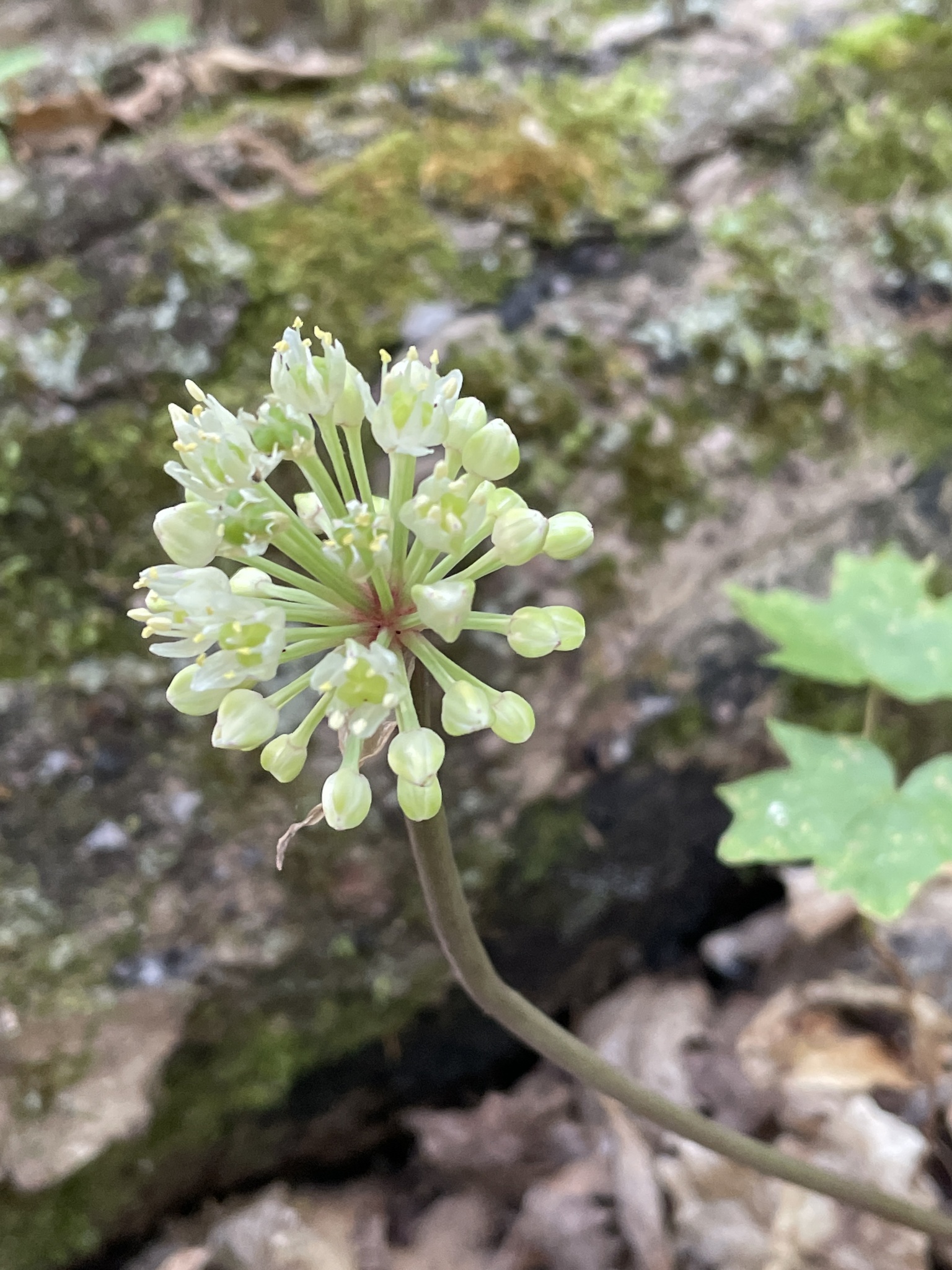
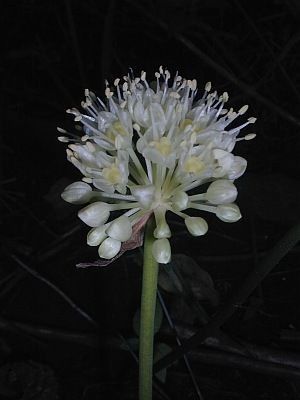
Flowering often follows the disappearance of the foliage. A stalk carries an umbel of small white to greenish flowers, followed by black seeds. This sequence explains why a patch can appear empty in summer even though living bulbs remain below ground, waiting for the next spring growth period. 5
Slow establishment is another defining feature. Cultivation sources describe a lengthy wait when starting plants from seed. A colony develops over several years, rather than behaving like a quick vegetable crop that can be sown and harvested in one short season. 7
An established patch often reflects woodland soil that has remained stable for a long time, with organic matter, spring moisture and little mechanical disturbance. In a newly planted garden, a quiet establishment phase is therefore normal. Patience matters before expecting a substantial carpet that can withstand even a limited harvest. 7
Woodland cultivation
Rich, moist, humus-filled woodland soil suits ramps, with light in spring followed by shade from deciduous trees. A cool woodland edge or forest garden provides the appropriate model. An exposed vegetable bed in full sun does not reproduce the conditions in which the species normally grows. 7 5
Summer dormancy changes the watering rhythm. This is not an annual vegetable with visible leaves throughout the growing season, yet the soil must not become hard and dry while the leaves are active. A mulch of fallen leaves resembles its woodland setting more closely than a heavy surface layer of overly rich compost.
Starting from seed requires patience. Cultivated bulbs or divisions from established colonies develop faster, but should come from responsible suppliers. Sustainable harvesting remains central: removing too many bulbs destroys the colony itself, rather than merely reducing the current season's crop. 7
Allow space when establishing a productive area. Because the foliage disappears early, mark the planting position or combine it with woodland perennials that take over without requiring the soil to be dug. Ferns, hostas or woodland-edge plants can occupy the summer layer while the bulbs are dormant underneath.
In France, ramps are an introduced edible collection plant rather than the local European wild garlic. A specialized forest garden can accommodate them when conditions are suitable. Buy cultivated plants instead of encouraging wild collection or the movement of plants taken from natural populations. This distinction also matters when choosing planting stock elsewhere.
Even cultivated plants need strict identification. A crushed ramp leaf smells strongly of Allium, but smell does not replace checking the leaf base, seasonal cycle and origin of the plant. Several woodland plants grow together at the same time, and some mistakes in gathering can have serious consequences. Botanical identification must come before flavor. 5 7
Harvesting and safety
People eat the leaves and bulbs of correctly identified ramps in North American cooking. Edibility depends on knowing exactly what has been gathered. A plant's place in an edible forest garden does not remove the need to distinguish it carefully from other woodland plants growing alongside it. 5
A restrained approach takes mainly a few leaves, never an entire clump. Uprooting bulbs turns a slow-growing perennial into a disposable resource. In a young planting, allow flowering and seed production for several seasons before considering any harvest, giving the colony time to establish and build reserves. 7
Domestic animals require the opposite approach. Allium plants pose risks to cats, dogs and horses. Merck describes poisoning from Allium species, while the ASPCA lists cultivated garlic as toxic to these animals. Applying that precaution to ramps means keeping them out of pet food, even though people can eat them. 8 9
Wild harvesting also risks depleting populations. Ramps are in strong demand in parts of North America. Growing a colony in the garden and taking very little is more consistent with their slow renewal than encouraging intensive collection from the wild. A large-looking patch should not be mistaken for a rapidly replaceable resource. 5 7
In a household with pets, manage the planting as a human food bed inaccessible to cats and dogs. The leaves' smell may attract attention, and preparation scraps must not go into an animal's bowl. The concern applies across the genus Allium, rather than only to ordinary kitchen onions. 8
Role in a forest garden
Within a forest garden, ramps provide an edible woodland layer. Their place depends on patience, careful identification and restrained harvesting. They should not be presented as an easy substitute for chives: the slow establishment and recovery of their colonies call for a different approach to production and picking. 1 7
Related Allium plants retain their own identities. Comparing ramps with European wild garlic and cultivated garlic helps distinguish the North American woodland species, while the shared animal toxicity precautions remain relevant across the group.
Main sources
- Plants of the World Online / Kew, Allium tricoccum
- World Flora Online, Allium tricoccum
- International Plant Names Index, Allium tricoccum
- International Plant Names Index, Allium tricoccum homonym record
- Wikipedia EN, Allium tricoccum
- Wikipedia EN, Allium
- NC State Extension, Cultivation of Ramps
- Merck Veterinary Manual, Garlic and Onion Allium spp Toxicosis in Animals
- ASPCA, Garlic toxicity entry
Frequently asked questions
Are ramps the same as European wild garlic?
No. Ramps are the North American Allium tricoccum. European wild garlic is Allium ursinum, a separate species.
Are ramps edible?
Yes, for people after reliable identification, but harvesting must remain very limited because the plant renews itself slowly.
Are ramps toxic to animals?
Treat ramps with the precautions appropriate to Allium. Cats, dogs and horses must not receive Allium leaves, bulbs, scraps or powder.
Can ramps be grown in France?
Yes, in a collection or a cool, moist woodland garden, but they need patience, open shade and moist woodland soil.
Why are ramps included in forest gardens?
They provide an edible woodland layer, with sustainable harvesting a particularly important consideration.
How long before ramps can be harvested?
Several years, especially from seed. Responsible harvesting takes very little and allows the bulbs to rebuild their reserves.
Similar plants
If you are unsure about a plant’s toxicity, ask a botanist or veterinarian for advice.