
Candelabra aloe (Aloe arborescens, )
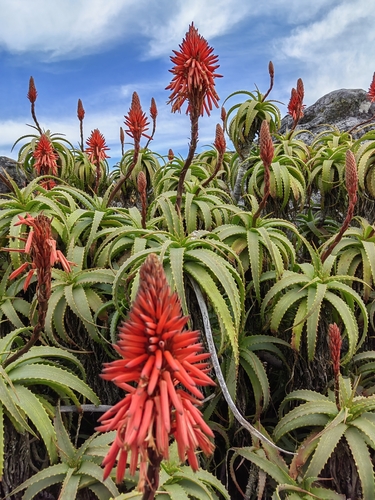

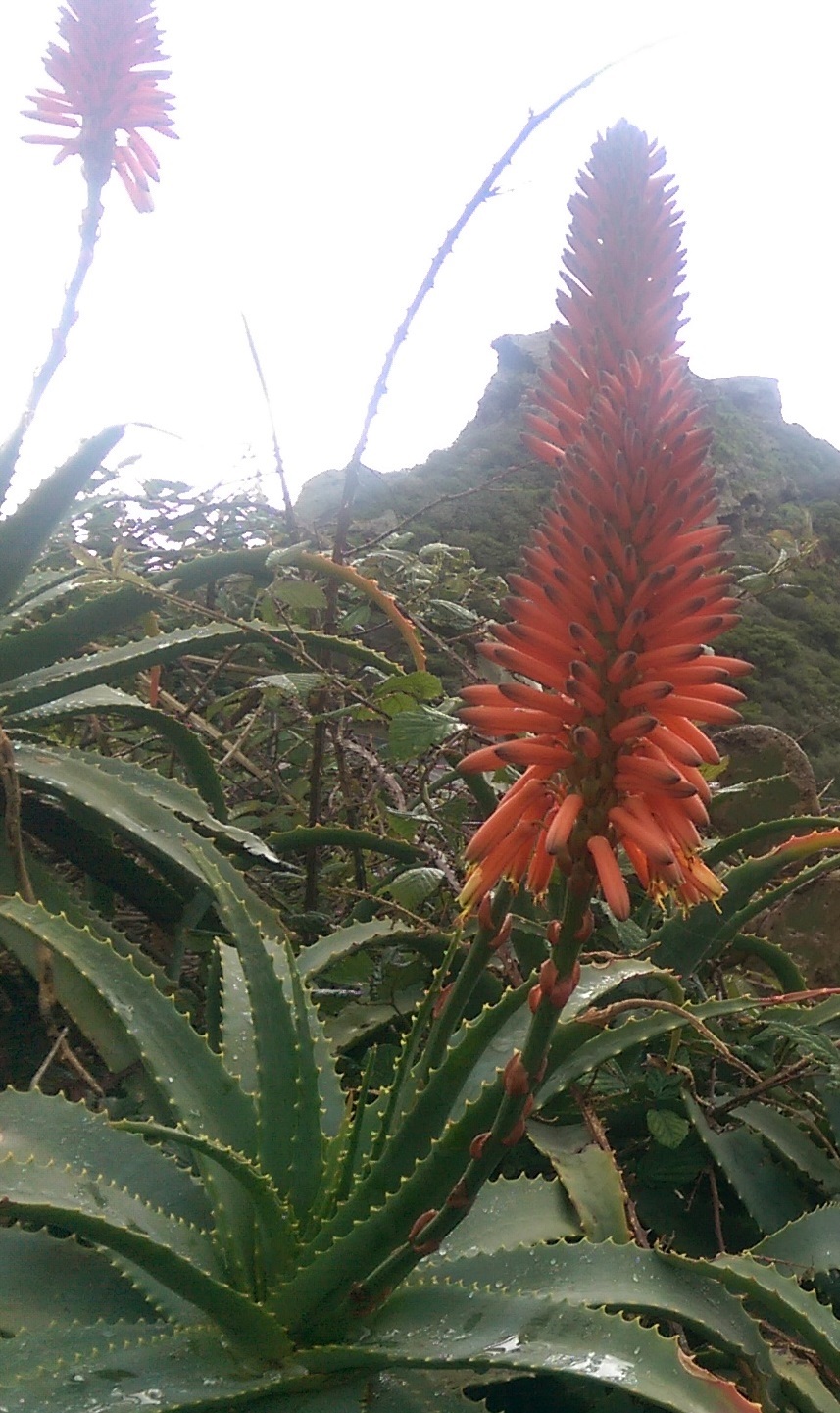
Candelabra aloe (Aloe arborescens) carries rosettes of arching leaves at the tips of branching stems. This southern African succulent produces clusters of red tubular flowers and can be grown in a pot, with winter shelter in cold regions. Eating it is harmful to people and several domestic animals.
Read moreCandelabra aloe
Aloe perfoliata var. arborescens and Catevala arborescens
Place in full sun, with intense direct light all day long.
Full sun; a bright sheltered position in winter.



© photo
(c) Lindokuhle Mgwaba, some rights reserved (CC BY-NC), uploaded by Lindokuhle Mgwaba · cc-by-nc
Mirela · cc0
Shaun Swanepoel · cc-by
Taken Sep 16, 2021 by Silvia Domínguez (cc-by-sa)
Taken May 10, 2020 by pardal lucia (cc-by-sa)
Taken Jan 30, 2020 by Fernandes Ana Rita (cc-by-sa)
Taken Jun 14, 2020 by Kayla Ross (cc-by-sa)
Taken Feb 12, 2022 by mamutrini (cc-by-sa)
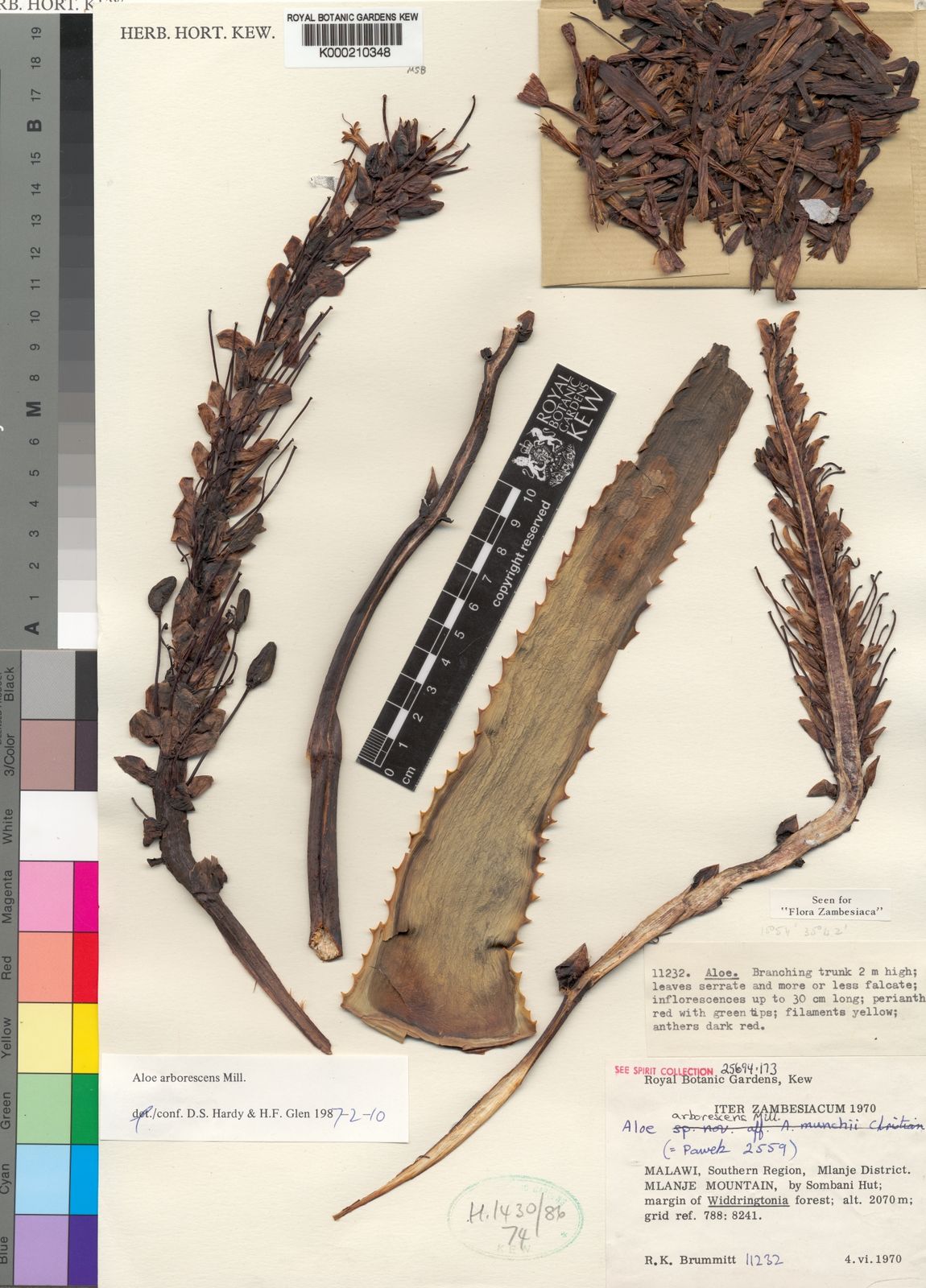
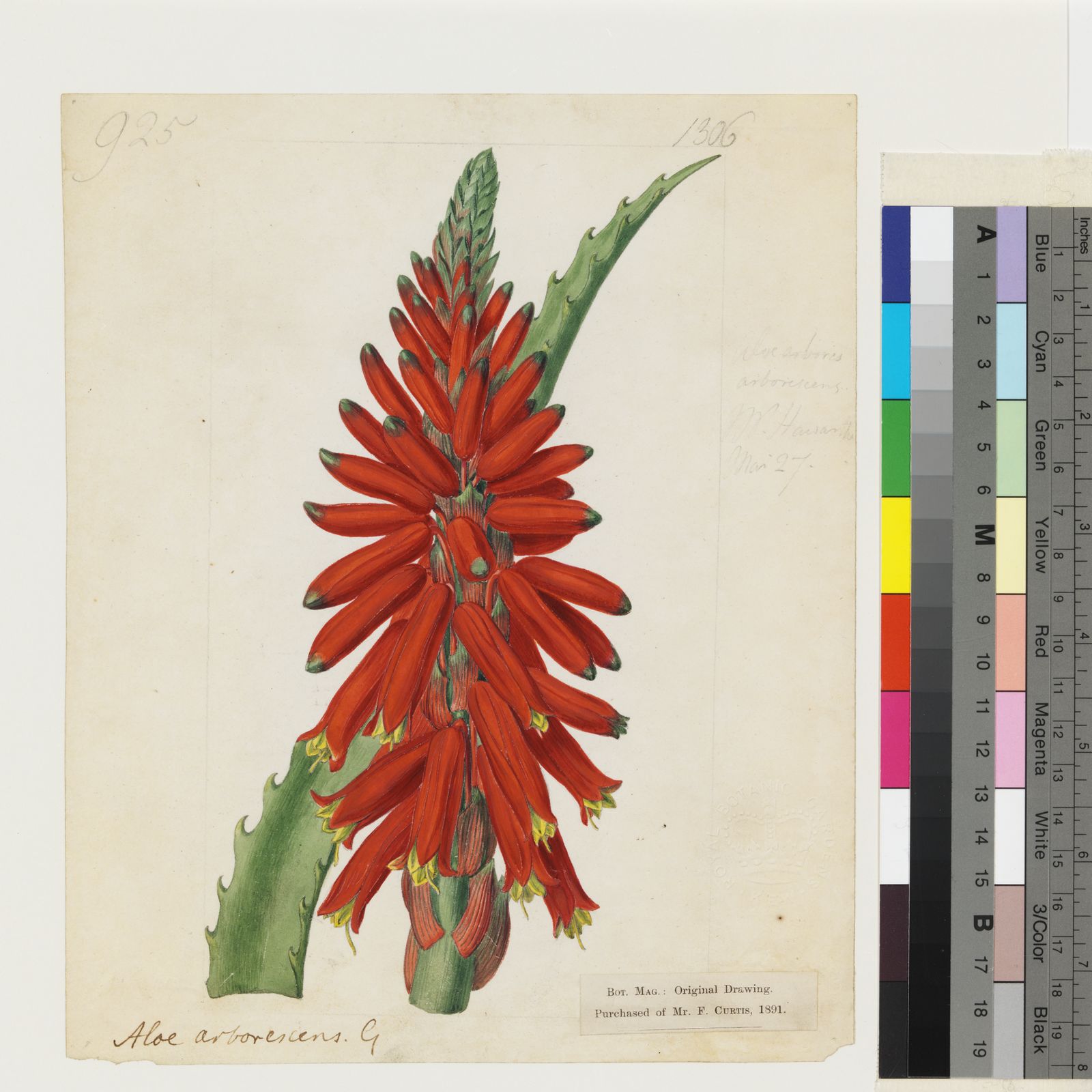
© copyright of the Board of Trustees of the Royal Botanic Gardens, Kew.


Global distribution
Native to southern Africa and introduced in several Mediterranean regions, including France.
- Native6
- Introduced1
- South Africa
- Botswana
- Eswatini
- Malawi
- Mozambique
- Zimbabwe
- France
Hexagons: regions where the plant occurs. Green dots: native range.1
Identity
Candelabra aloe (Aloe arborescens Mill., 1768) forms a branching shrub with a rosette of fleshy leaves at each shoot tip. Its many-headed structure helps identify this evergreen succulent even when it is not flowering. Clusters of red tubular flowers later rise above the foliage. 5 1
"Aloès arborescent" is a recorded French name for the species, while "candelabra aloe" and "octopus plant" are English names. The genus Aloe belongs to the Asphodelaceae family, within the order Asparagales. Its shrubby appearance does not change the plant's botanical genus or family. 2 4
Recognition
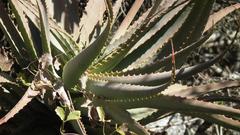
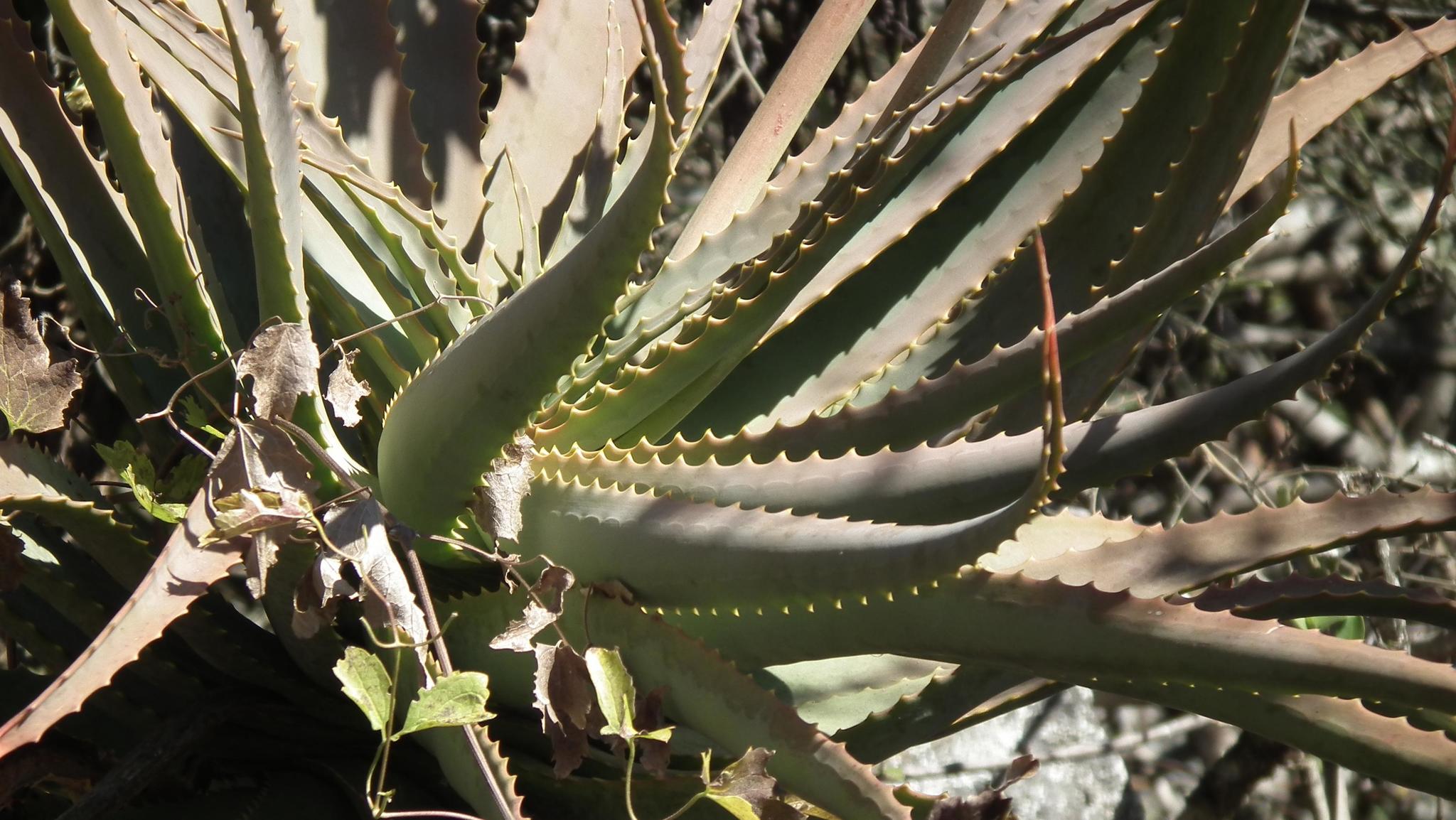
Woody stems that branch from the base distinguish a mature candelabra aloe from a single isolated rosette. The leaves arch, and pale teeth line their edges. In the New South Wales flora, leaf blades reach 50 cm (20 in) long and 4–7 cm (1.6–2.8 in) wide; their surfaces lack paler spots. The upper surface varies from glaucous to yellowish-green, while the underside stays dull green. 3
Under horticultural conditions, candelabra aloe can reach 2.5–4 m (8–13 ft) tall and 1.5–2.5 m (5–8 ft) wide. Space intended for a small windowsill plant can therefore become inadequate as the shrub develops. The measurements for candelabra aloe describe an established plant in favorable conditions, rather than the size every potted specimen should be expected to reach. 5
Taxonomy and variegated forms
Aloe arborescens Mill., published in 1768, is the accepted name. Two nomenclatural synonyms help locate the species in older works: Aloe perfoliata var. arborescens (Mill.) Aiton and Catevala arborescens (Mill.) Medik.. The subspecies arborescens and mzimnyati are recognized within the species. The subspecies names of Aloe arborescens describe botanical subdivisions, rather than color selections made for cultivation. 1
The cultivar ‘Variegata’ has green leaves striped with pale yellow. Flowering in late spring and early summer is described for this cultivar; that timing does not set the flowering calendar for the entire species. Keeping the cultivar name alongside the binomial helps identify a variegated plant without confusing a horticultural selection with a botanical subspecies. 7
Habitat and range
Southern Africa is the native home of candelabra aloe, including South Africa and Botswana, Eswatini, Malawi, Mozambique and Zimbabwe. France is among its introduced territories, along with Italy, Spain and Portugal. A Mediterranean occurrence therefore does not establish that the species originated in the Mediterranean basin. Native range and introduced range need to remain distinct. 1
In Africa, candelabra aloe grows in rocky mountain grasslands and open woodland, extending into coastal forests. Its habitat is broader than desert alone. In New South Wales, naturalized populations are recorded near the sea in the Kempsey district, and plants also persist around former gardens. Those Australian records describe populations outside the species' African native range. 4 3
Life cycle and reproduction
Late winter and spring are the flowering seasons recorded for candelabra aloe in the British context described by the RHS. PROTA records flowering in June and July in southern Africa. June and July in southern Africa fall in a different season from the same months in France. Applying them unchanged to a French flowering calendar would misrepresent the seasonal context. 5 4
The fruit is a capsule containing several seeds. The Australian flora describes dark brown to black capsules measuring 10–14 mm (0.4–0.6 in). The capsule measurement in Aloe arborescens refers to the fruit, rather than to an individual seed. 3
Candelabra aloe can be propagated from seed or stem cuttings. Offsets can also be removed in late spring or early summer. Separating an offset and sowing a seed are distinct ways of producing a new plant. 4 5
Container growing and seasonal rhythm
A well-drained potting mix and a sunny position suit candelabra aloe. For container growing, peat-free cactus mix or potting mix with added horticultural grit helps avoid retaining too much water around the roots. In cold regions, overwinter the plant in bright shelter and reserve outdoor growing for the warmer season. 5
The calendar describes a potted plant in mainland France, using relative water and growth indices. Water moderately during growth and very sparingly in winter. Apply a general liquid fertilizer once a month from May through August while the plant is growing, following the temperate container routine described by the RHS. Winter flowering alone does not justify heavy watering. 5
For indoor succulents, repotting in spring is recommended when roots fill the container. An oversized pot holds more damp potting mix and increases the risk of rot. After taking a stem cutting, let the cut surface dry before planting. Keeping the mix barely moist during rooting also limits the risk of decay. 6
Uses and risks
Candelabra aloe is grown for ornament and as a living hedge in southern Africa. Traditional use of the leaves on burns is reported, but that practice does not establish the safety of a homemade preparation or its clinical effectiveness. The leaf exudate contains aloin, associated with a laxative action and unwanted digestive effects, including diarrhea and colicky pain. 4
Eating candelabra aloe is reported to be harmful to people, dogs, cats and rabbits. The human warning includes children; keep leaves out of their reach and wear gloves when handling the plant. The status of horses remains unknown, and a warning about particular domestic animals does not describe all animal species. Reported medicinal uses do not cancel the warning against ingestion. 5
Main sources
Botanical sources distinguish the accepted name, identifying features and introduced populations; RHS growing advice concerns horticultural cultivation in a temperate climate.
- Kew, Plants of the World Online, Aloe arborescens
- ITIS, Aloe arborescens, nomenclature and common names
- Royal Botanic Gardens Sydney, PlantNET, Aloe arborescens
- PROTA, Aloe arborescens, botanical overview and uses
- Royal Horticultural Society, Aloe arborescens
- Royal Horticultural Society, growing indoor cacti and succulents
- Royal Horticultural Society, Aloe arborescens ‘Variegata’
Frequently asked questions
How can I identify candelabra aloe?
Its woody stems branch and carry rosettes of arching leaves with toothed edges. The New South Wales flora describes leaves without pale spots, up to 50 cm (20 in) long.
When does candelabra aloe flower?
The RHS records flowering in late winter and spring in its British setting. PROTA gives June and July in southern Africa: these records concern different hemispheres.
Can candelabra aloe stay outdoors in winter?
In cold regions, grow candelabra aloe in a pot and overwinter it in bright shelter. The RHS rates it H1B, a category for plants that can go outdoors during summer.
Is candelabra aloe toxic to animals?
The RHS reports that ingestion is harmful to dogs, cats and rabbits. The risk specifically to horses remains undocumented here; that absence does not establish safety.
Similar plants
If you are unsure about a plant’s toxicity, ask a botanist or veterinarian for advice.