
Kumquat (Citrus japonica, )
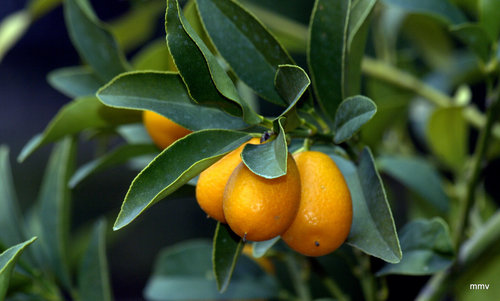


Kumquat (Citrus japonica) is an evergreen shrub in the Rutaceae family, native to southeastern China and Hainan. Its small orange fruits are eaten with their peel; their shape and flavor vary among horticultural selections.
Read moreKumquat
Fortunella japonica, Citrus margarita, Fortunella margarita and Fortunella crassifolia
Place in full sun, with intense direct light all day long.
Full sun in a sheltered position; bright conditions over winter
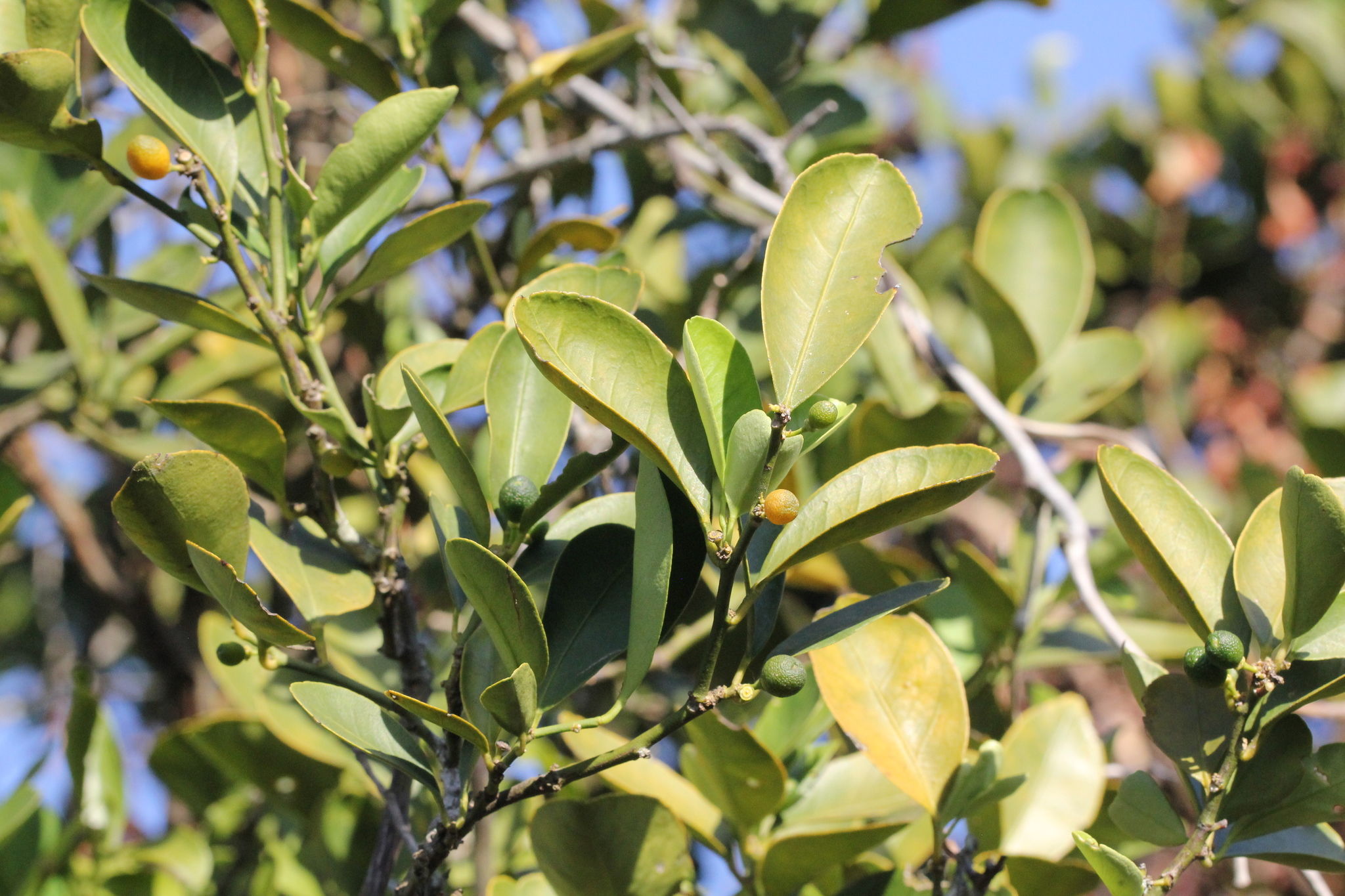
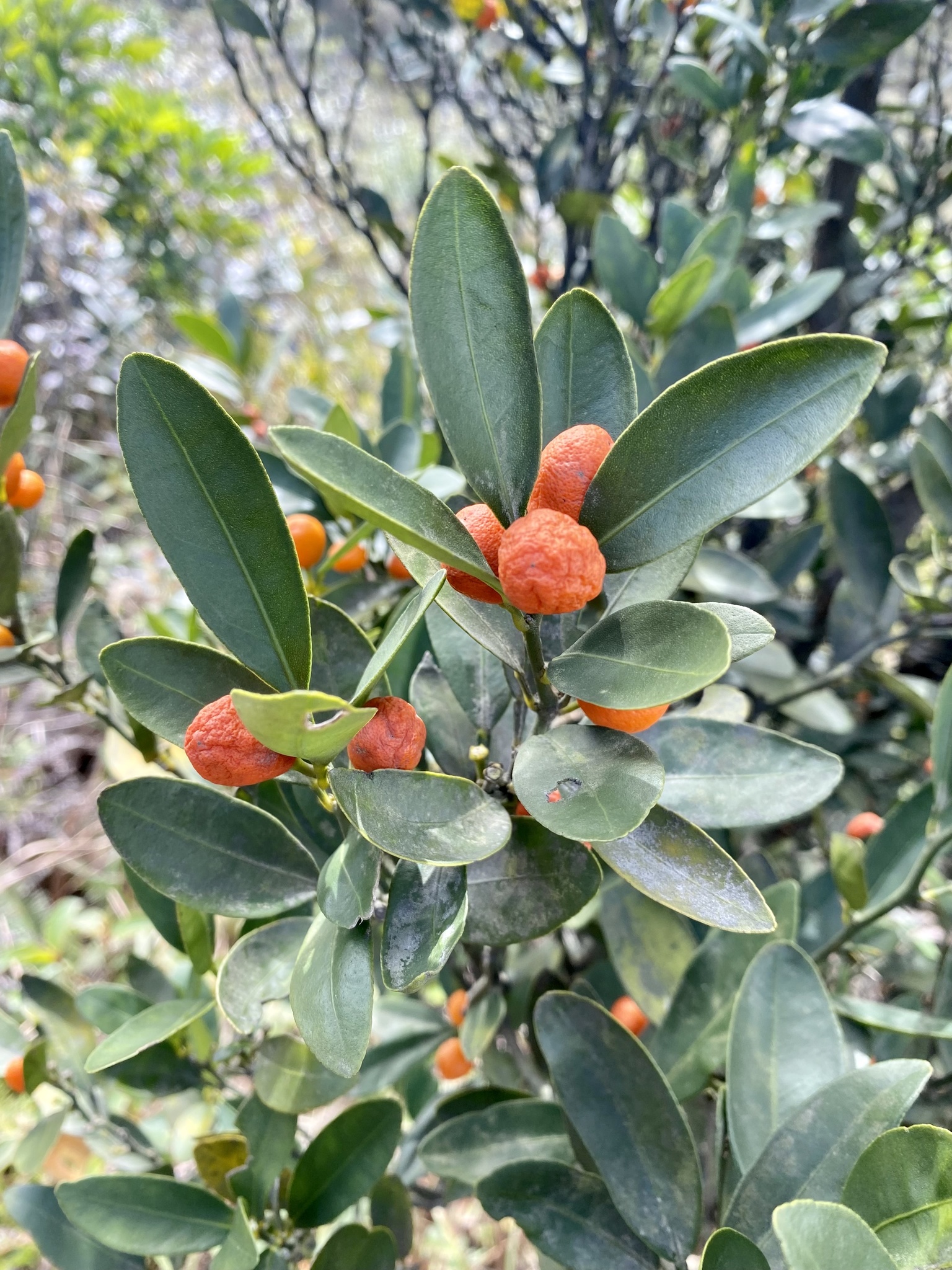
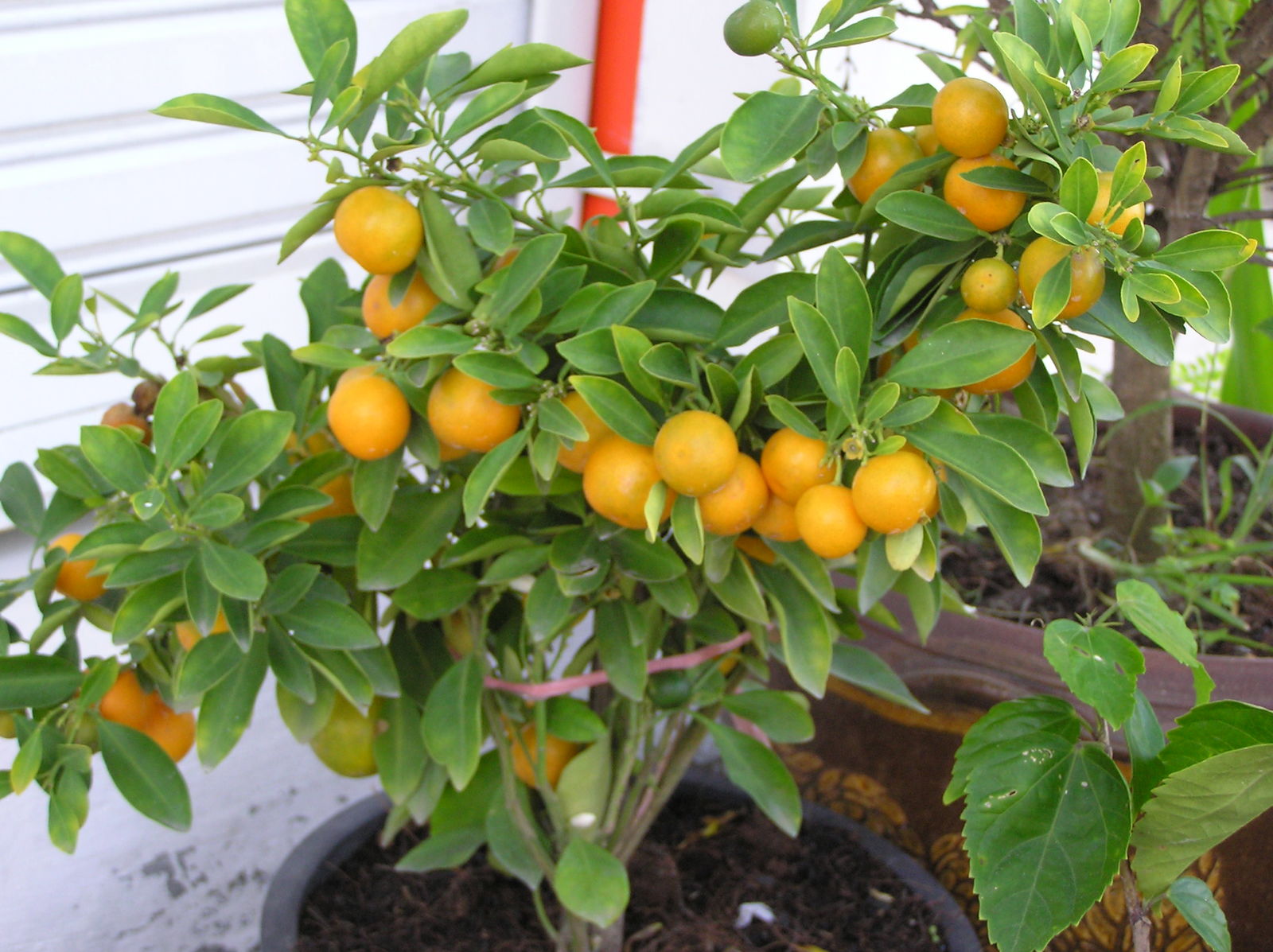
© photo
(c) Manuel Martín Vicente, some rights reserved (CC BY-NC-ND) · cc-by-nc-nd
Agnes Trekker · CC BY-NC
Toby Y · cc-by
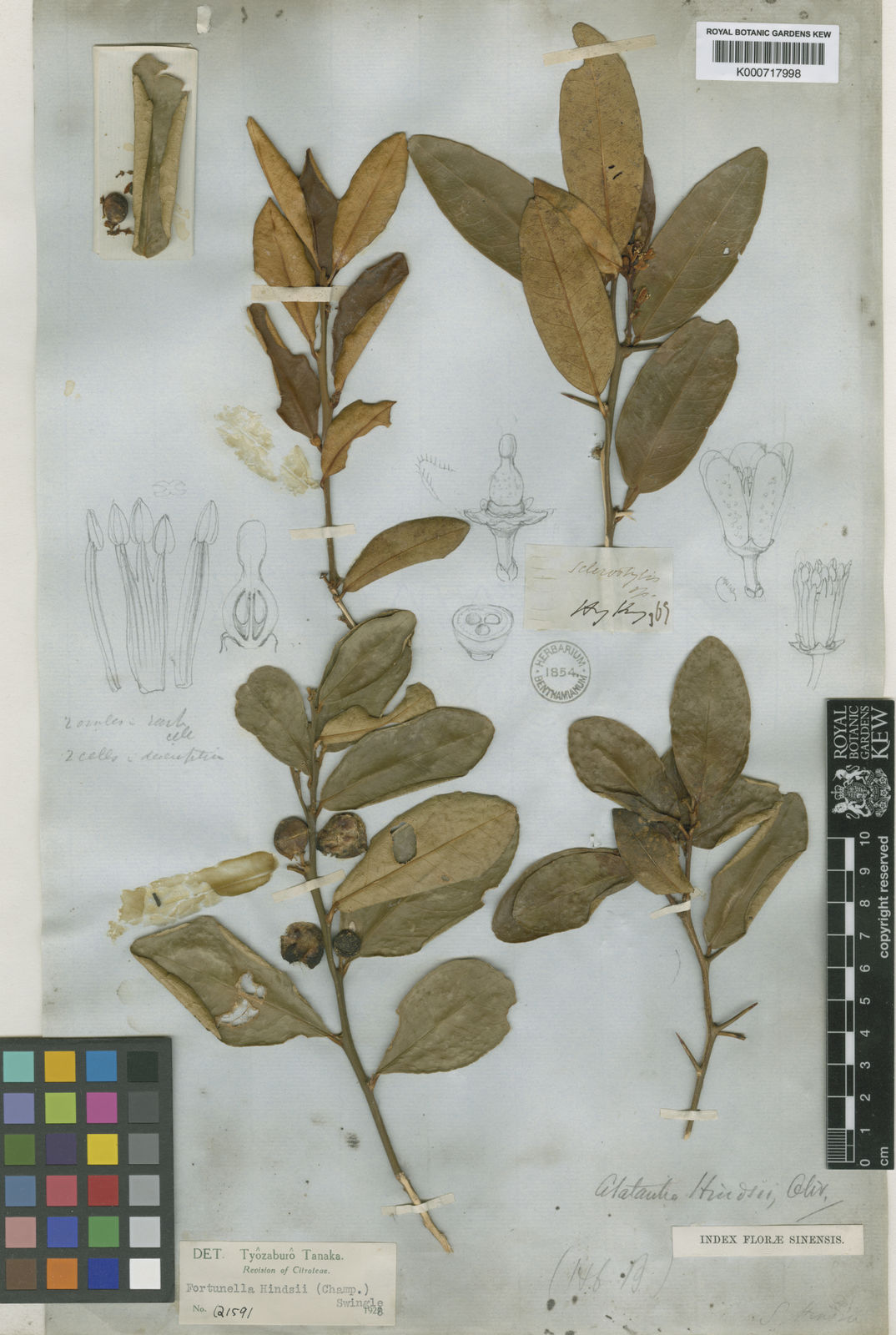
© copyright of the Board of Trustees of the Royal Botanic Gardens, Kew.




Global distribution
Native to southeastern China and Hainan; introduced in regions including Japan, Korea, Vietnam and California.
- Native1
- Introduced4
- Southeastern China and Hainan
- Japan
- Korea
- Vietnam
- United States, California
Hexagons: regions where the plant occurs. Green dots: native range.1
Identity
Kumquat (Citrus japonica Thunb.) is a small citrus plant whose fruit is eaten with the peel. This evergreen shrub belongs to the Rutaceae, the family that includes other citrus plants. Its orange fruits contrast with the dark green foliage, which explains its appeal as both a fruiting and an ornamental plant. The pulp and peel are both edible. 2 8
The name "kumquat" is also recorded in French for this plant. It combines two Chinese terms meaning gold and mandarin: the name refers to the color and appearance of the small fruit. 4 8
Recognition
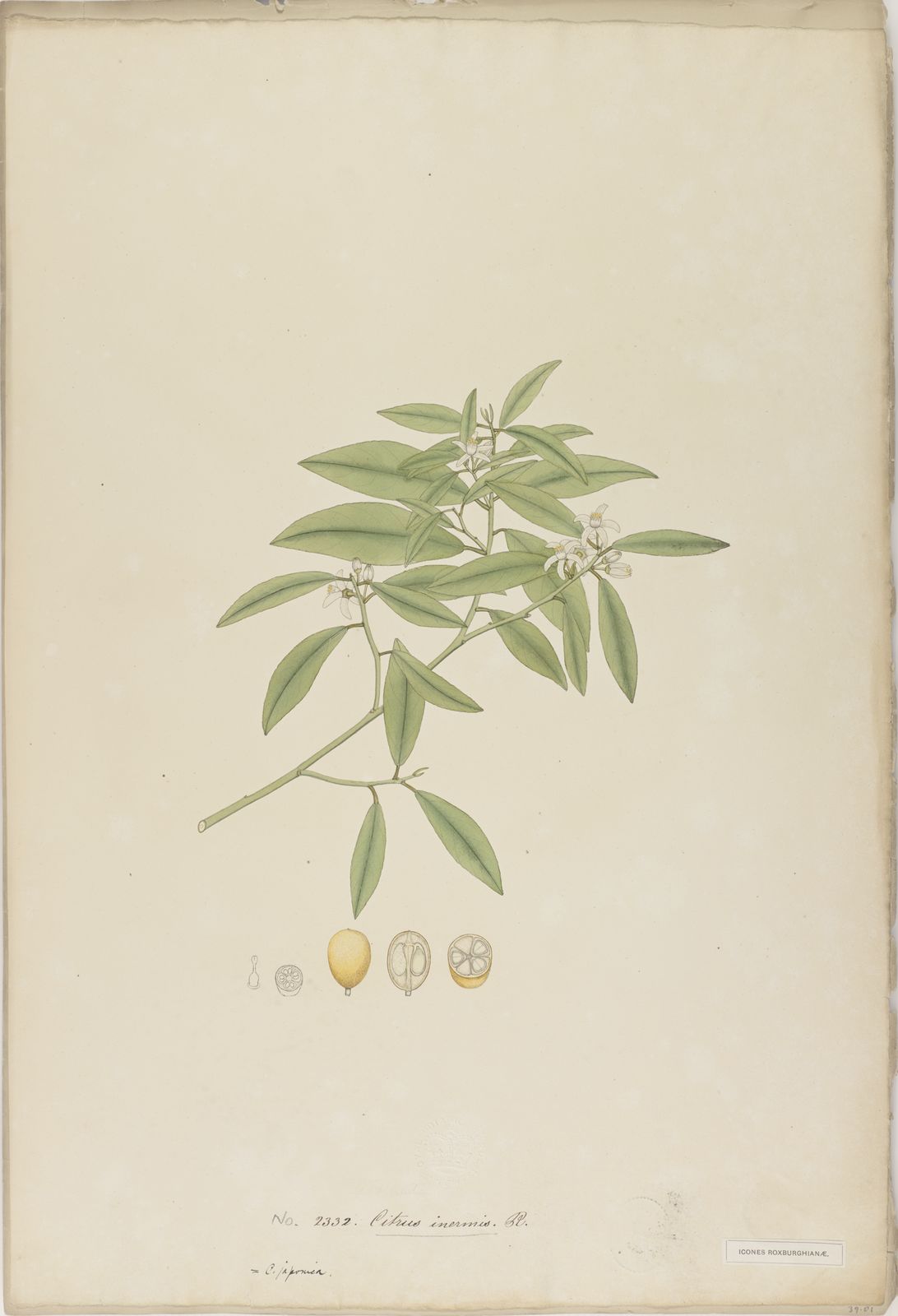
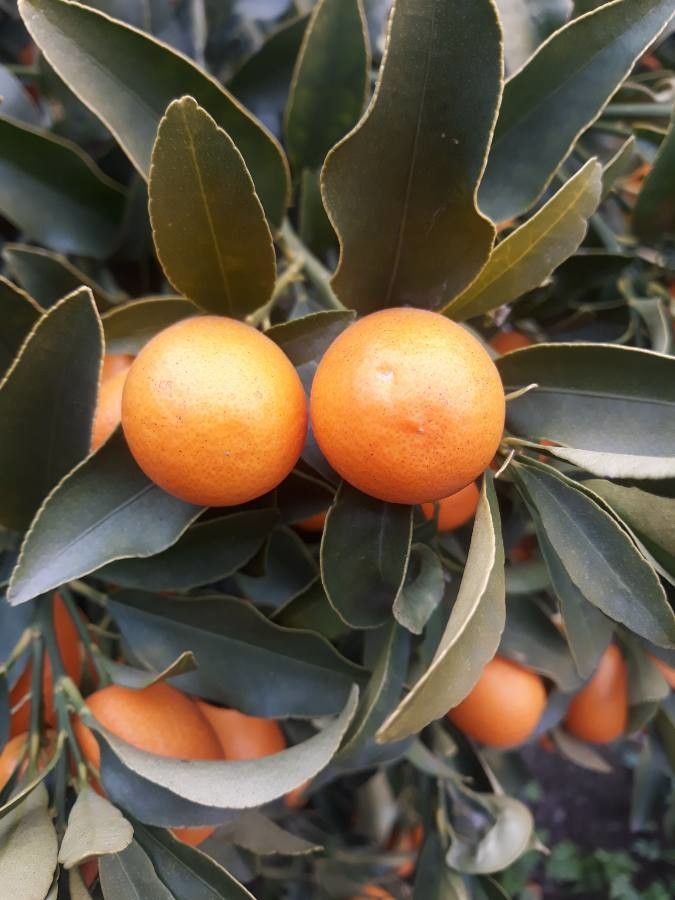
Kumquat forms a bushy, thorny shrub with glossy foliage. The narrow, lance-shaped leaves persist throughout the year. The species' horticultural profile gives a mature height of 2.5 to 4 m (8 to 13 ft) and a spread of 1.5 to 2.5 m (5 to 8 ft); these dimensions do not necessarily describe a plant kept in a pot. 2
The fragrant white flowers appear in the leaf axils in spring and summer. They reach 1.2 cm (0.5 in) in diameter. This description gives the round orange fruits a diameter of 3 to 4 cm (1.2 to 1.6 in). Fruit shape varies among horticultural selections, however, so an oval kumquat should not be ruled out on shape alone. 2 5
Under cover, scale insects, aphids or mites may colonize kumquat plants. Checking the branches and foliage therefore complements observation of the flowers and fruit. 2
Useful taxonomy
The accepted name is Citrus japonica Thunb., published in 1780. The combination Fortunella japonica (Thunb.) Swingle, published in 1915, retains the same epithet in a different genus. The name Fortunella is still used in horticultural and plant-health references: a change of label alone does not distinguish two plants. 1 4
The synonymy of Citrus japonica also includes Citrus margarita Lour., Fortunella margarita (Lour.) Swingle and Fortunella crassifolia Swingle. References that separate oval, round and Meiwa kumquats therefore sometimes use several species names for the kumquats grouped under Citrus japonica. The horticultural name remains useful when choosing a particular fruit. 1 7 6
The name Fortunella honors Robert Fortune, who introduced kumquats to Europe in 1846. This cultivation history is separate from the species' geographic origin. 8
Habitat and distribution
Kumquat is native to southeastern China and Hainan, in the subtropical biome. Japan is among the places where the species has been introduced: the epithet japonica therefore does not, by itself, identify its native range. Introductions are also documented in Korea, Vietnam and California. 1
Growing kumquat in a container allows it to be moved with the seasons. A sunny, sheltered position suits it in summer; winter calls for a bright, cool place. A heated, dry room is less suitable than an appropriate greenhouse or conservatory. 3
Life cycle and propagation
Kumquat keeps its leaves in winter. Flowering precedes the formation of the small fruits, but observations of one cultivar in a particular climate do not establish a universal harvest calendar. For Meiwa, summer flowering and late-winter ripening are described in Californian cultivation. 2 6
A single plant can bear fruit, as citrus plants are self-fertile. Propagation is by seed or semi-ripe cuttings. Cuttings preserve the parent's characteristics; seedlings take several years to bear fruit and may produce different fruits. 2 3
For a potted kumquat in France, the calendar expresses seasonal care: keep the growing medium just moist in summer, allowing its surface to dry partly between winter waterings. Repot in spring if roots are emerging from the pot. Use an appropriate fertilizer year-round, with a nitrogen-rich formula from late March to October, followed by a balanced winter formula. These months reflect that Northern Hemisphere setting; the practical schedule depends on actual growing conditions. 3
Uses and risks
Kumquats are eaten whole, fresh or made into jams and preserves. In Nagami, the sweet peel contrasts with the acidic pulp; the fruits are also used in candied preparations or salads. This difference between peel and flesh explains the appeal of eating the whole fruit. 8 5
Kumquat flowers are described as mildly allergenic, without details of the substance responsible or the symptoms. This caution concerns the flowers and does not contradict the documented use of the fruit as food. The references used here do not establish a status for cats, dogs or horses; edibility for people does not demonstrate that the whole plant is safe for these animals. 8
Varieties, lookalikes and related plants
Nagami bears elongated fruits, ellipsoid to egg-shaped, 3.5 to 4.3 cm (1.4 to 1.7 in) long and 2.3 to 2.9 cm (0.9 to 1.1 in) wide. These measurements concern this selection, which can form a compact small tree reaching 3.5 m (11.5 ft). In Nagami, zinc deficiency can cause smaller leaves and shorter internodes, the sections of stem between two leaves. These changes should not be mistaken for normal varietal characters. 5 Marumi differs in its spherical or slightly flattened fruits, 2.5 to 3 cm (1 to 1.2 in) in diameter, with thin, aromatic peel. 7
Meiwa produces nearly round fruits with sweet peel thicker than Nagami's. Its pulp remains acidic; the proportion of peel contributes to a sweeter impression when eaten. These differences explain why two kumquats sold under the same common name can taste different. 6
Main sources
- Plants of the World Online, Citrus japonica
- Royal Horticultural Society, Citrus japonica
- Royal Horticultural Society, How to grow citrus
- EPPO Global Database, Fortunella japonica
- National Parks Board, Citrus japonica Nagami
- University of California Riverside, Meiwa CRC 3818
- University of California Riverside, Marumi CRC 3237
- University of Florida IFAS, Fortunella spp., Kumquat
Frequently asked questions
Can you eat kumquat peel?
Yes, both the peel and pulp are edible. Nagami has sweet peel, while its pulp remains acidic.
Do I need two kumquat plants to get fruit?
A single plant can bear fruit: citrus plants are self-fertile.
What is the difference between Nagami and Marumi?
Nagami has elongated fruits, while Marumi produces round or slightly flattened fruits. These horticultural forms have also been known under separate botanical names.
Similar plants

If you are unsure about a plant’s toxicity, ask a botanist or veterinarian for advice.