
Silver dollar jade (Crassula arborescens, )

Silver dollar jade (Crassula arborescens) has fleshy, rounded blue-gray leaves, often edged in red. This South African succulent in the Crassulaceae family forms a small branching shrub, grown in containers in bright light and protected from frost.
Read moreSilver dollar jade, Silver jade plant, Chinese jade and Silver dollar plant
Cotyledon arborescens
Allow a few hours of direct sun per day, preferably morning or evening.
Bright light; sun to light shade depending on exposure.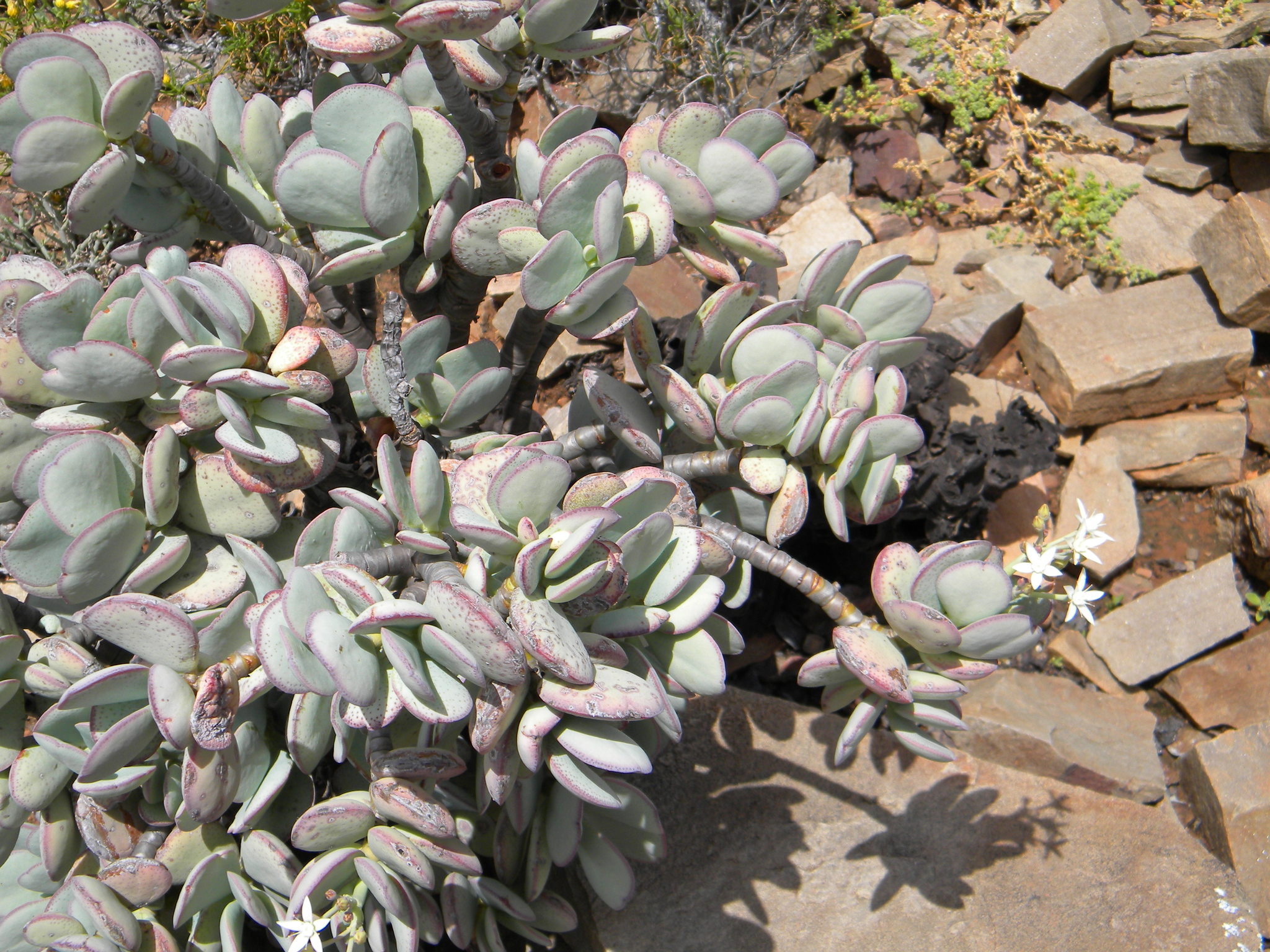

© photo
Tim Kirsten · cc0
(c) Steven Molteno, some rights reserved (CC BY-NC), uploaded by Steven Molteno · cc-by-nc
Di Turner · cc0
(c) kevin koen, some rights reserved (CC BY-SA) · cc-by-sa
no rights reserved · cc0
Global distribution
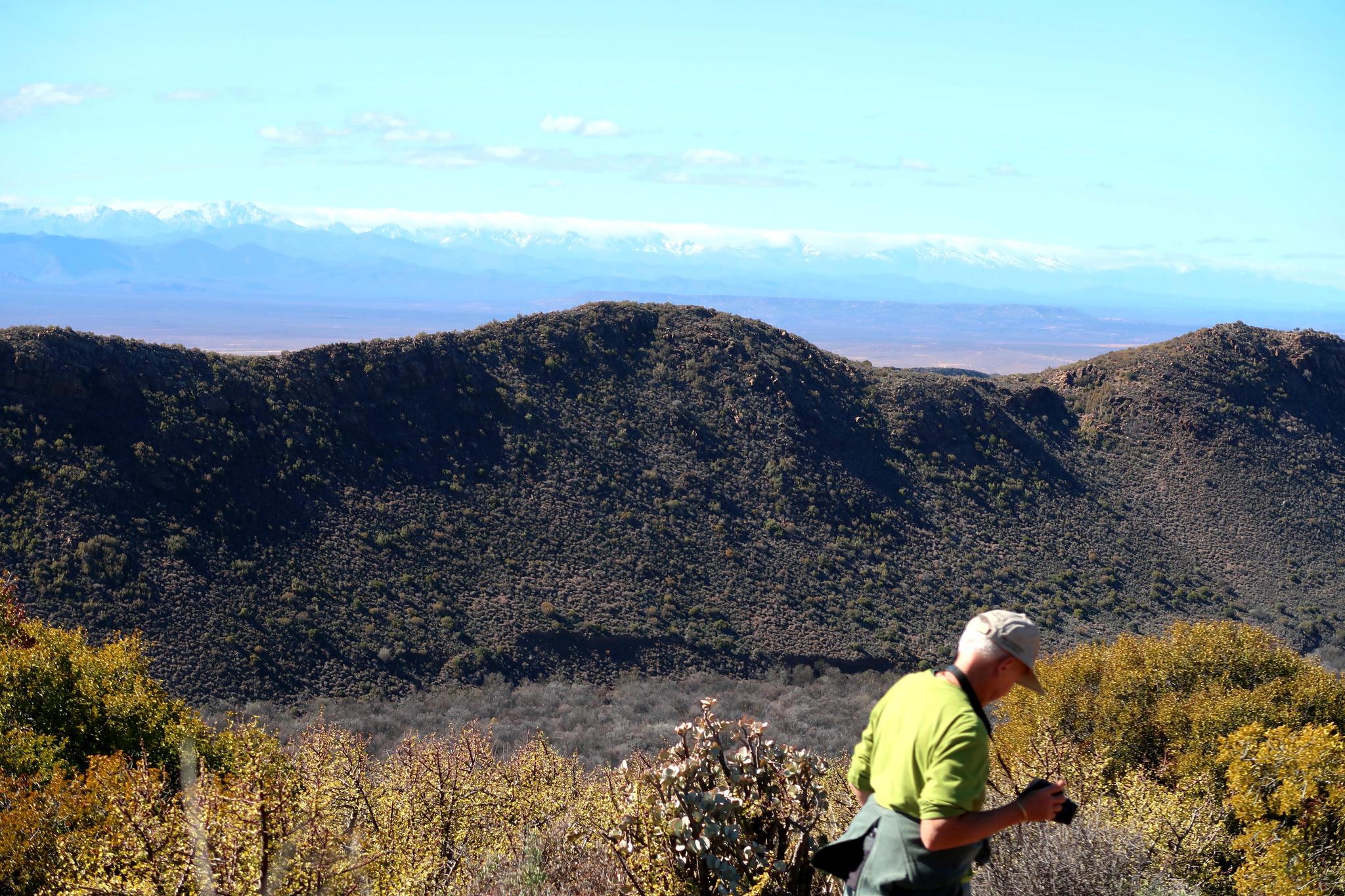
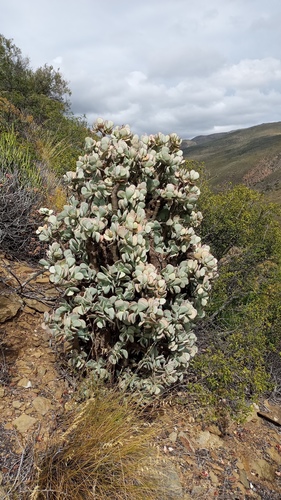
Native to South Africa, recorded in the Cape region; grown as an ornamental in mainland France.
Identity
Silver dollar jade (Crassula arborescens (Mill.) Willd., 1798) has fleshy blue-gray leaves, often edged in red. Its French name, crassule arborescente, is recorded in the standardized names of mainland France's vascular flora. This perennial succulent belongs to the Crassulaceae family, in the order Saxifragales. 1 2 5
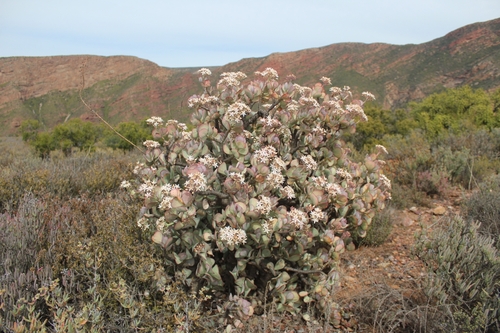
Silver dollar jade keeps its leaves and forms a small branching shrub. Its tree-like shape explains the Latin epithet arborescens. A tree-like outline alone cannot identify the species: the jade plant also branches, but its ordinary foliage is green and glossy. 7 8
Recognition
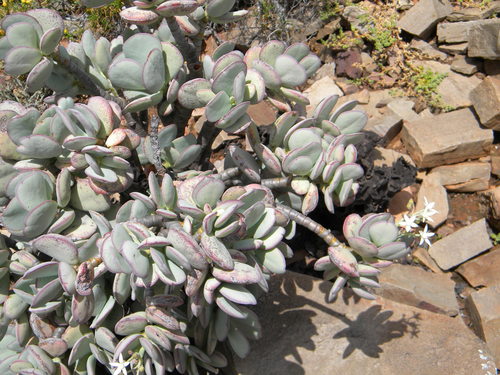
Thick, hairless opposite leaves grow in pairs and range from rounded to elliptical. Small dark red spots sometimes mark the upper surface, and the margin can develop the same color. The bluish tint accompanies a waxy coating that reduces water loss and protects against sun. The leaf's surface and overall color are useful identifying features alongside the red margin. 5 7
Silver dollar jade's stems begin as succulent growth and become woody with age. Cultivated height and spread are given as 0.5 to 1 m (1.6 to 3.3 ft), although specimens may exceed that height. Growth is slow. White or pink star-shaped flowers appear in clusters above the foliage. 3 5
Useful taxonomy
The accepted name is Crassula arborescens (Mill.) Willd. Its basionym, Cotyledon arborescens Mill., is the earlier name retained in the species' naming history when it changed genus. The author in parentheses records Miller's contribution; Willdenow published the new combination in 1798. Here, the two names refer to the same species. 1
The Latin crassus, meaning "thick," refers to the genus's succulent leaves. The English names "silver dollar" and "Chinese jade" are used for silver dollar jade. "Chinese jade" does not identify its geographic origin: the species comes from South Africa. 7 3
Habitat and range
Silver dollar jade is native to South Africa, in the Cape region. Its thick leaves store water, helping it withstand dry periods and making it useful in succulent arrangements. The roots still need appropriate drainage in cultivation. 3 7
The species is cultivated as an ornamental in mainland France. In climates with frost, a container allows silver dollar jade to be moved under cover. Free-draining compost is necessary because excess water encourages root rot, even in a plant that tolerates drought. 2 3 5
Insufficient light causes weak, misshapen growth in indoor succulents. Give silver dollar jade a bright window and a sheltered position. The growing mix needs to release excess water rather than remain saturated, so the lighting recommendation and drainage requirement both matter when choosing where and how to grow it. 4 3
Life cycle and reproduction
Silver dollar jade rarely flowers indoors. Reported seasons differ: autumn to winter under British horticultural conditions, and spring to summer in the North American description. Neither seasonal account guarantees a flowering date for a plant grown in an apartment. 3 5
For cultivation under cover in the Northern Hemisphere, water moderately during growth and sparingly in winter. Apply a balanced liquid fertilizer once a month during growth. The April to September reference period comes from guidance for indoor succulents. Repot in spring only when the container has become too small; an oversized pot stays wet and increases the risk of rot. Elsewhere, use observed growth to interpret the seasonal guidance. 3 4
Propagate with leaf or stem cuttings in spring and summer. Allow the cut surface to dry before placing the cutting in a free-draining mix, kept slightly moist while roots form. Seeds can also be sown in early spring at 15 °C (59 °F). The sowing temperature refers to germination, rather than year-round cultivation of an adult plant. 3 4
Uses and risks
Silver dollar jade is grown as a houseplant or conservatory plant in full light. A terracotta pot with drainage holes helps excess water escape. The species suits a succulent collection, with slow growth and evergreen foliage providing its main interest when flowers are absent. 3 5
Recommended winter conditions for indoor succulents combine cool nights, around 8 to 10 °C (46 to 50 °F), with minimal watering. Water is then used to prevent excessive leaf shriveling. A plant kept cool therefore needs a different watering rhythm from one growing actively in spring. 4
Silver dollar jade is toxic to cats, dogs and horses. Reported signs include vomiting, a drunken gait in cats and, rarely, tremors. The toxic principle is unknown. Contact a veterinarian promptly after suspected ingestion; the lack of an identified toxic compound does not change the recorded animal toxicity. 6
In humans, eating the leaves may cause digestive upset. No child-specific classification is established here; keeping the plant out of children's reach remains an exposure precaution. The effects documented in domestic animals do not establish safety for other animals. 7 6
Varieties, look-alikes and related plants
The jade plant (Crassula ovata) normally has green, glossy leaves, while silver dollar jade has blue-gray foliage. Both species can develop a red edge. Look at the color of the whole leaf and its surface rather than relying on the margin alone: a shared red border is less useful than the contrast between glossy green and blue-gray foliage. 8 5
The subspecies undulatifolia differs in its wavy leaf margins. The horticultural name "Blue Bird Variegata" is also listed under silver dollar jade, describing flat leaves with yellow edges and broad green central bands. The yellow margins and central green bands characterize 'Blue Bird Variegata'; they do not describe the species' ordinary foliage or every plant sold under its botanical name. 5
Main sources
The Société botanique du Centre-Ouest records the French name "crassule arborescente." Horticultural descriptions and cultivation guidance complement that naming reference; the ASPCA documents animal toxicity. 2 6
- GBIF, Crassula arborescens (Mill.) Willd.
- D. P. Mercier, standardized French names of the vascular flora of mainland France, Evaxiana 9, p. 202
- Royal Horticultural Society, Crassula arborescens
- Royal Horticultural Society, growing indoor cacti and succulents
- NC State Extension, Crassula arborescens
- ASPCA, Chinese Jade (Crassula arborescens)
- University of Seville, Crassula arborescens
- NC State Extension, Crassula ovata
Frequently asked questions
How do I identify silver dollar jade?
The fleshy leaves are blue-gray, rounded to elliptical, often edged in red and marked with small dark red spots. The thick stems branch and become woody with age.
Is silver dollar jade toxic to cats?
Yes. Silver dollar jade is toxic to cats, dogs and horses. Vomiting, a drunken gait in cats and rare tremors are reported. Contact a veterinarian after suspected ingestion.
Why isn't my silver dollar jade flowering?
Flowering is rare in plants grown in containers indoors. A lack of flowers alone does not diagnose a problem; when flowers appear, they are white or pink and star-shaped.
How should I water silver dollar jade in winter?
Water sparingly in winter. Free-draining compost and a pot with drainage holes limit standing water, because overwatering encourages root rot.
Similar plants
If you are unsure about a plant’s toxicity, ask a botanist or veterinarian for advice.