
Siam tulip (Curcuma alismatifolia, )


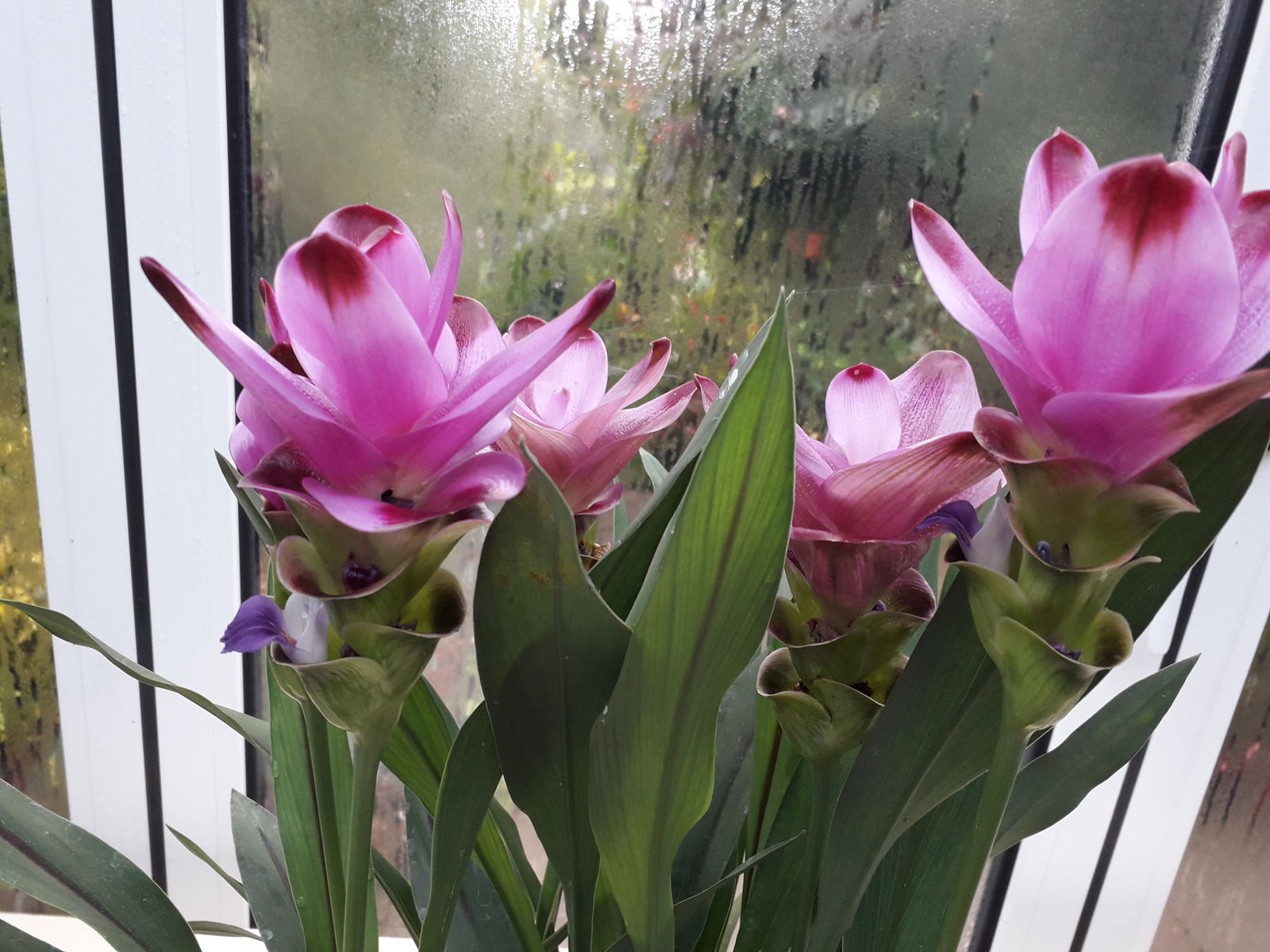
Siam tulip (Curcuma alismatifolia) forms a tulip-like outline with its colorful bracts. This rhizomatous perennial in the ginger family, Zingiberaceae, comes from Southeast Asia and alternates between leafy growth and seasonal dormancy.
Read moreSiam tulip and Thai tulip ginger
Hitcheniopsis alismatifolia
Allow a few hours of direct sun per day, preferably morning or evening.
Sun to partial shade, sheltered from cold or drying winds



© photo
Wikimedia Commons · CC BY-SA or Public Domain
Wikipedia · CC BY-SA
Taken Jul 19, 2019 by Stephanie Stephanie (cc-by-sa)
Taken Mar 2, 2022 by Beate Liebold (cc-by-sa)
Taken Jan 23, 2022 by Clodomar José Rodrigues (cc-by-sa)
© copyright of the Board of Trustees of the Royal Botanic Gardens, Kew.




Global distribution
The native range includes Myanmar, Thailand, Laos, Cambodia, and Vietnam.
- Native5
- Myanmar
- Thailand
- Laos
- Cambodia
- Vietnam
Hexagons: regions where the plant occurs. Green dots: native range.1
Identity
Overlapping bracts give Siam tulip (Curcuma alismatifolia Gagnep.) its tulip-like outline. Also known as Thai tulip ginger, this plant belongs to the Zingiberaceae, the ginger family. The bracts form the pink, purple, or white cone valued in containers and bouquets. 5 The French name "tulipe du Siam" is recorded for this species in a national horticultural list. 2
This herbaceous perennial survives through its underground organs. The foliage may disappear during winter dormancy while the rhizome remains alive. A pot with no visible leaves therefore does not necessarily mean that the plant has died; the seasonal disappearance of the shoots is part of its growth cycle. 6
Recognition
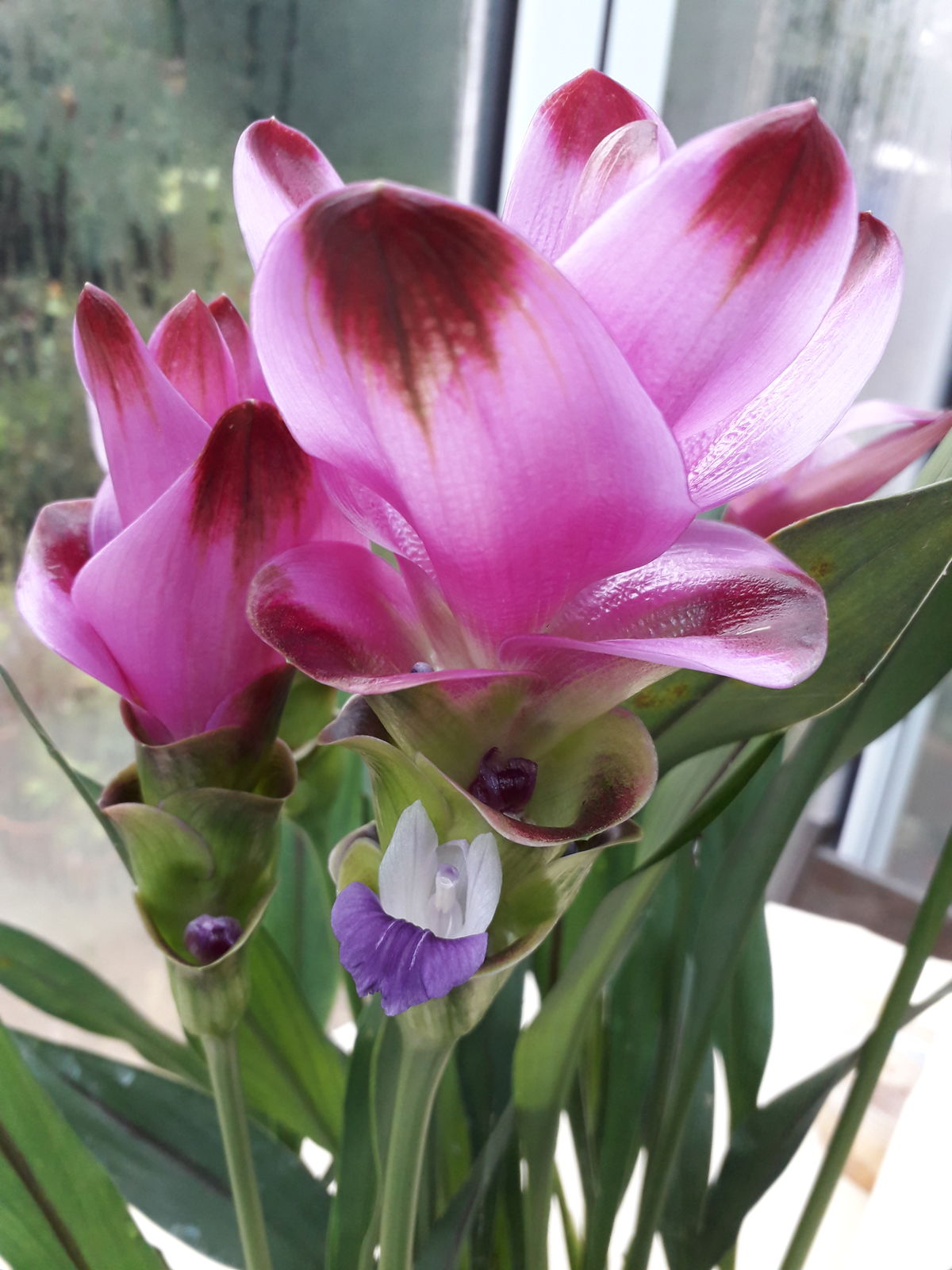
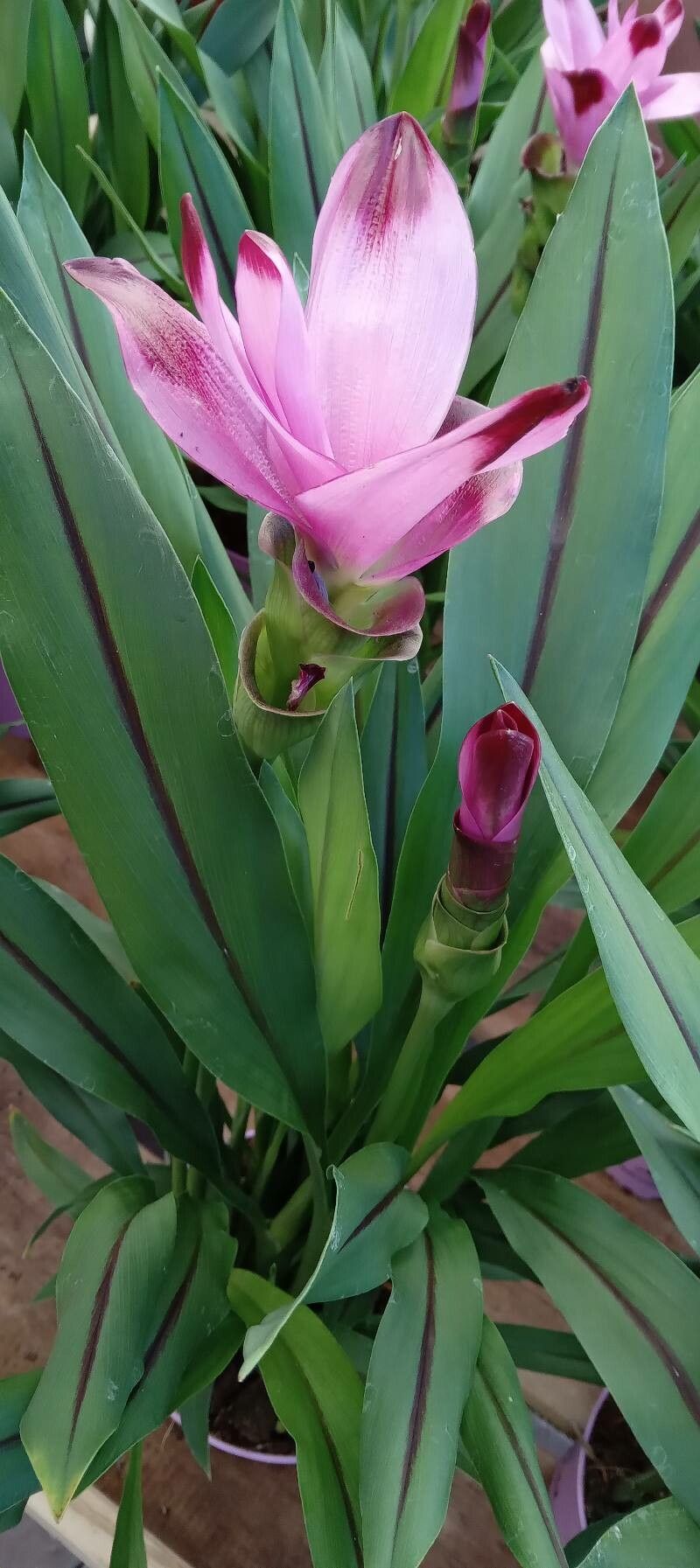
A long, slender, rigid flower stalk carries the large pink bracts associated with Siam tulip. In Curcuma, the bracts join at their bases to form pockets. The uppermost bracts, known as the "coma" bracts, are generally sterile. These conspicuous decorative structures should be distinguished from the flowers themselves when examining the inflorescence. 3
The lower bracts are green, while the upper bracts overlap in a spiral. Their close overlap explains the compact appearance of the spike. 5 Horticultural dimensions of 30–60 cm (12–24 in) tall and 30–50 cm (12–20 in) wide provide a useful guide when choosing space for a container. These dimensions describe the plant in cultivation, rather than a particular named cultivar. 6
Useful taxonomy
The accepted name is Curcuma alismatifolia Gagnep., published in 1903. Hitcheniopsis alismatifolia (Gagnep.) Loes. is a synonym based on the same botanical type. Finding that name on an older label does not identify a different species; it reflects a different combination of the botanical name. 1
"Curcuma" alone is insufficient to identify a plant. The spice turmeric comes from Curcuma longa, whereas Siam tulip is cultivated as an ornamental. Shared membership of the genus does not establish shared uses. 5 The complete binomial also helps distinguish the botanical species from horticultural selections that carry an additional cultivar name.
Habitat and range
The native range of Siam tulip includes Myanmar, Thailand, Laos, Cambodia, and Vietnam. The species is a rhizomatous geophyte of seasonally dry tropical habitats. Its persistent organ lies underground, while the above-ground shoots follow the seasonal cycle. 1
In Thailand, Siam tulip occurs in open areas within pine or deciduous forests. A forest origin therefore does not mean that it grows exclusively beneath dense cover. 3 Horticultural advice likewise gives sun to partial shade, with shelter from cold or drying winds. The plant is frost-sensitive. 6
Life cycle and reproduction
Siam tulip alternates between leafy growth and rhizome dormancy. Let the foliage die back naturally: the reserves it supplies support the next period of growth. A humus-rich, well-drained growing mix, kept moist during active growth, suits this cycle. Resume watering in late winter or spring. Divide the plant in summer as needed, and apply a balanced fertilizer in late spring when the leaves emerge. 6
In the Thai production cycle described in the research, crops start in April and May, flower in July and August, and enter dormancy in November and December. These months follow the local climate. They are not a schedule to transfer month for month to France or to another growing region with different seasonal conditions. 4
Flowering also responds to day length. In a Thai trial, a period of light interrupting the night promoted flowering in late plantings. This was a production technique tested under controlled conditions. It does not establish a need to reproduce night-break lighting for a plant grown at home. 4
Uses and risks
Siam tulip is grown in beds, containers, and as a cut flower. A trial involving 'Chiang Mai Pink' and numbered breeding lines found that the cultivar and the use of floral foam affected the longevity of cut stems. Floral foam shortened the vase life of the stems tested. The result cannot predict how long every arrangement containing Siam tulip will last. 5
Safety has not been established for adults or children, or for cats, dogs, horses, and other animals. The rhizome of Curcuma longa is used to make turmeric. That food use does not establish that Curcuma alismatifolia is edible; the ornamental species needs to retain its own, undetermined safety status. 5
Varieties, look-alikes and related plants
'Chiang Mai Pink' is a cultivar studied for cut-flower use. The numbered lines included in the same trial were still under development, so their results do not automatically describe the wild species. 5 In pink cultivars, malvidin 3-rutinoside was the anthocyanin identified, and its concentration increased as the pink color became more intense. This chemical result concerns the cultivars analyzed. 7
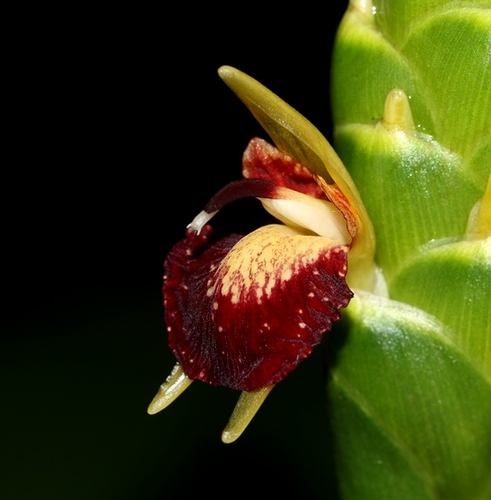
Color alone cannot identify Siam tulip. Some selections have white bracts, as does Curcuma parviflora, a smaller species. Curcuma harmandii differs in having dark green, lance-shaped bracts with recurved tips. Hybrids between Curcuma aurantiaca and Curcuma petiolata form another horticultural group; their appearance does not define Curcuma alismatifolia. 3
Main sources
- Plants of the World Online, Curcuma alismatifolia
- SNHF, national plant identification competition, horticultural list, 2017
- Sirirugsa, Larsen and Maknoi, The Genus Curcuma, Gardens' Bulletin Singapore, 2007
- Ruamrungsri et al., Planting Date and Night Break Treatment Affected Off-Season Flowering, 2007
- Favero, Lima and Dole, Curcuma alismatifolia vase life, Ornamental Horticulture, 2017
- Tesselaar, Siam growing guide
- Nakayama et al., Malvidin 3-rutinoside as the pigment responsible for bract color in curcum, 2000
Frequently asked questions
Is Siam tulip a true tulip?
No. Curcuma alismatifolia belongs to the Zingiberaceae family; overlapping bracts create its tulip-like outline.
Why does Siam tulip lose its leaves in winter?
Siam tulip has a winter dormant period. As the foliage dies back naturally, it supplies reserves to the rhizome for the next growth cycle.
Can I use a Siam tulip rhizome as a spice?
Turmeric comes from Curcuma longa. That use does not establish that Curcuma alismatifolia is edible.
Similar plants
If you are unsure about a plant’s toxicity, ask a botanist or veterinarian for advice.