
Siebold's plantain lily (Hosta sieboldiana, )
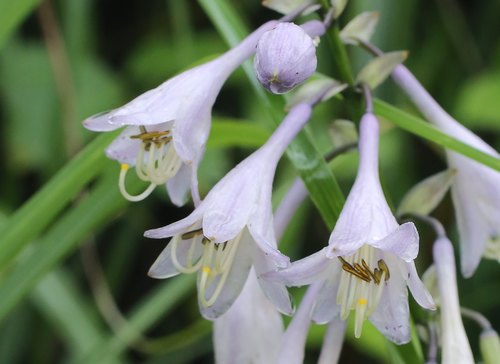
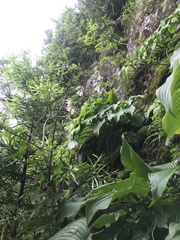

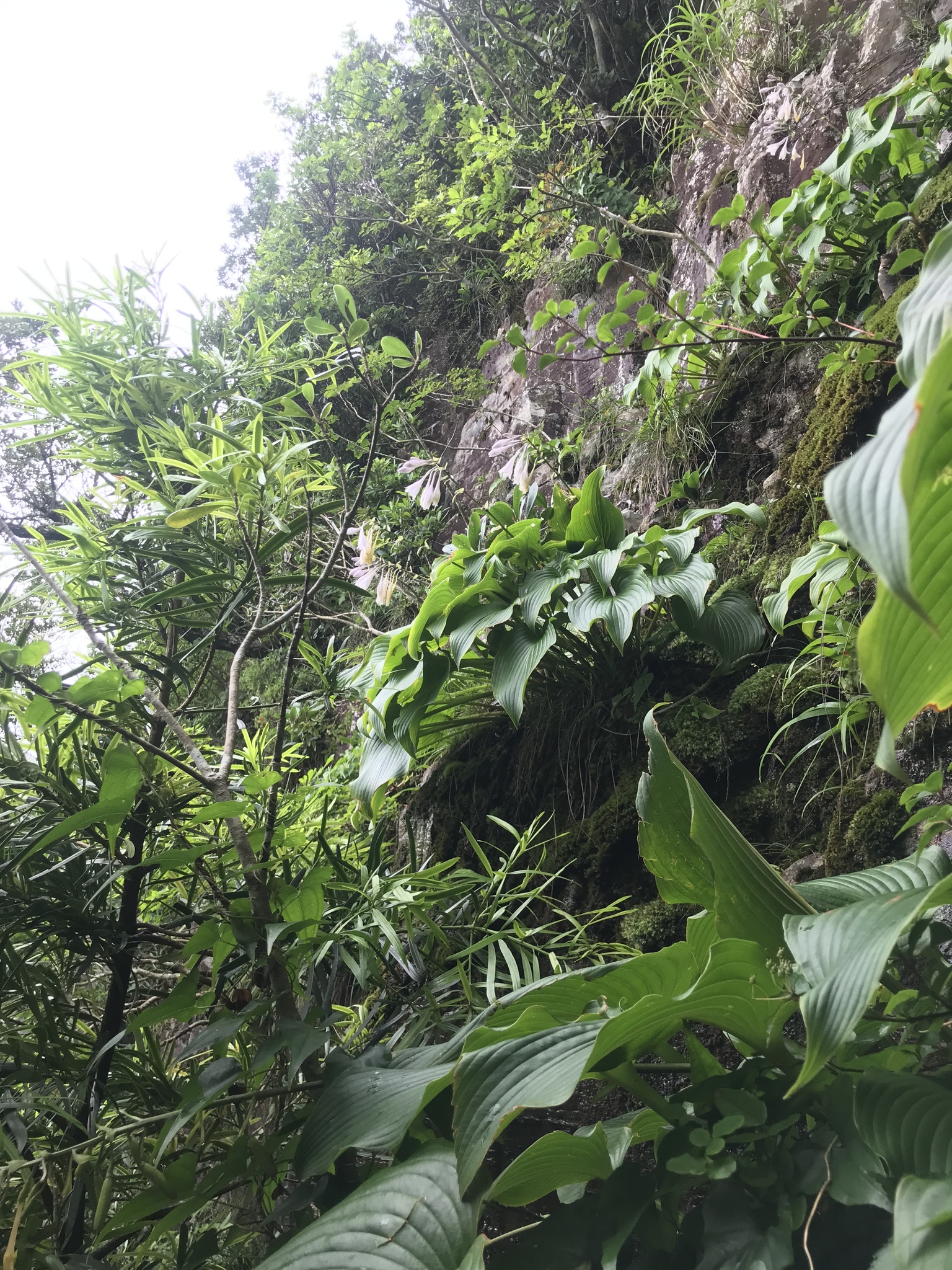
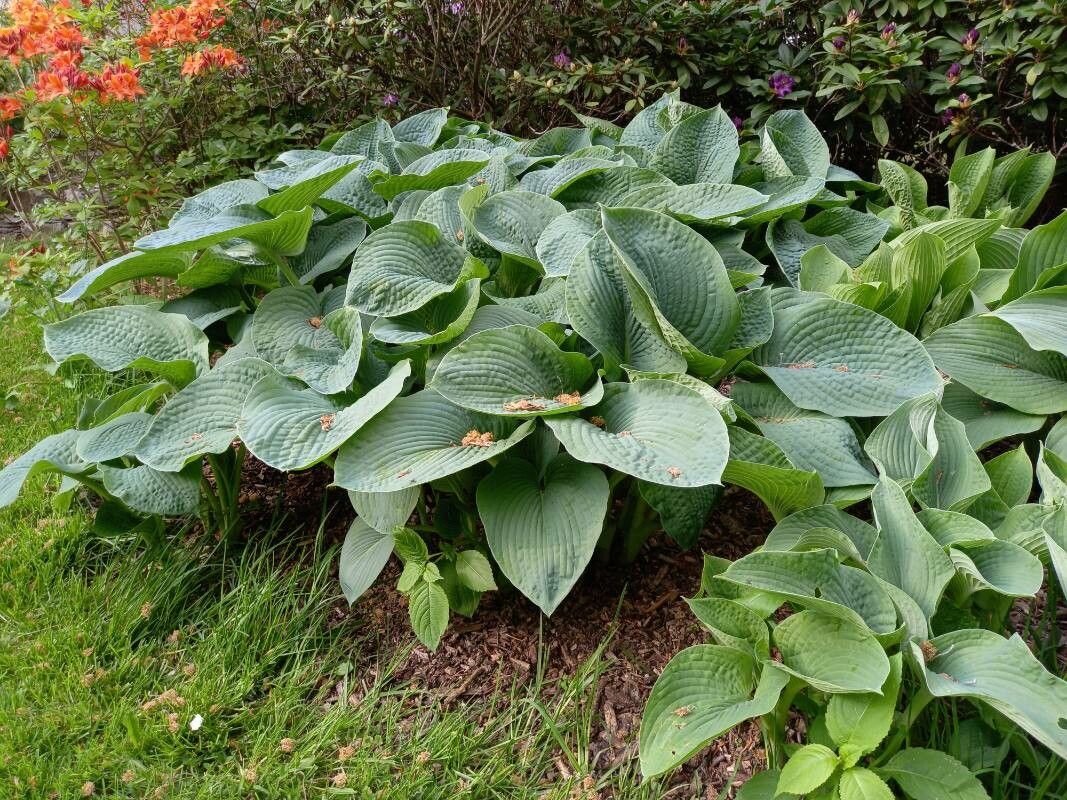
Siebold's plantain lily is a Japanese perennial with large, veined blue-green leaves and white summer flowers. Its foliage dies back in winter; the crown sends up new growth in spring.
Read moreSiebold's plantain lily
Funkia sieboldiana Hook., Funkia sieboldii Lindl., Niobe sieboldiana (Hook.) Nash and Saussurea sieboldiana (Hook.) Kuntze
Give plenty of ambient light without direct sun on the leaves.
Partial shade, sheltered from cold, drying winds

© photo
(c) 空猫, some rights reserved (CC BY-NC), uploaded by 空猫 · cc-by-nc
Mason Brock · cc0
Wikimedia Commons · CC BY-SA or Public Domain
© copyright of the Board of Trustees of the Royal Botanic Gardens, Kew.



Global distribution
Native to Japan; introduced in Korea and southern European Russia.
- Native1
- Introduced2
- Japan
- Korea
- Southern European Russia
Hexagons: regions where the plant occurs. Green dots: native range.1
Identity
Siebold's plantain lily (Hosta sieboldiana (Hook.) Engl., 1887) combines large, veined blue-green leaves with white summer flowers. This Japanese herbaceous perennial belongs to the Asparagaceae family. Its broad clump is mainly suited to moist sites in partial shade. 12
The French name “hosta bleu” is documented for this species, but a blue-tinged leaf is not enough to identify a nursery plant: the genus includes many horticultural selections. The botanical label and cultivar name are still needed to establish which plant you are growing. 710
Identification
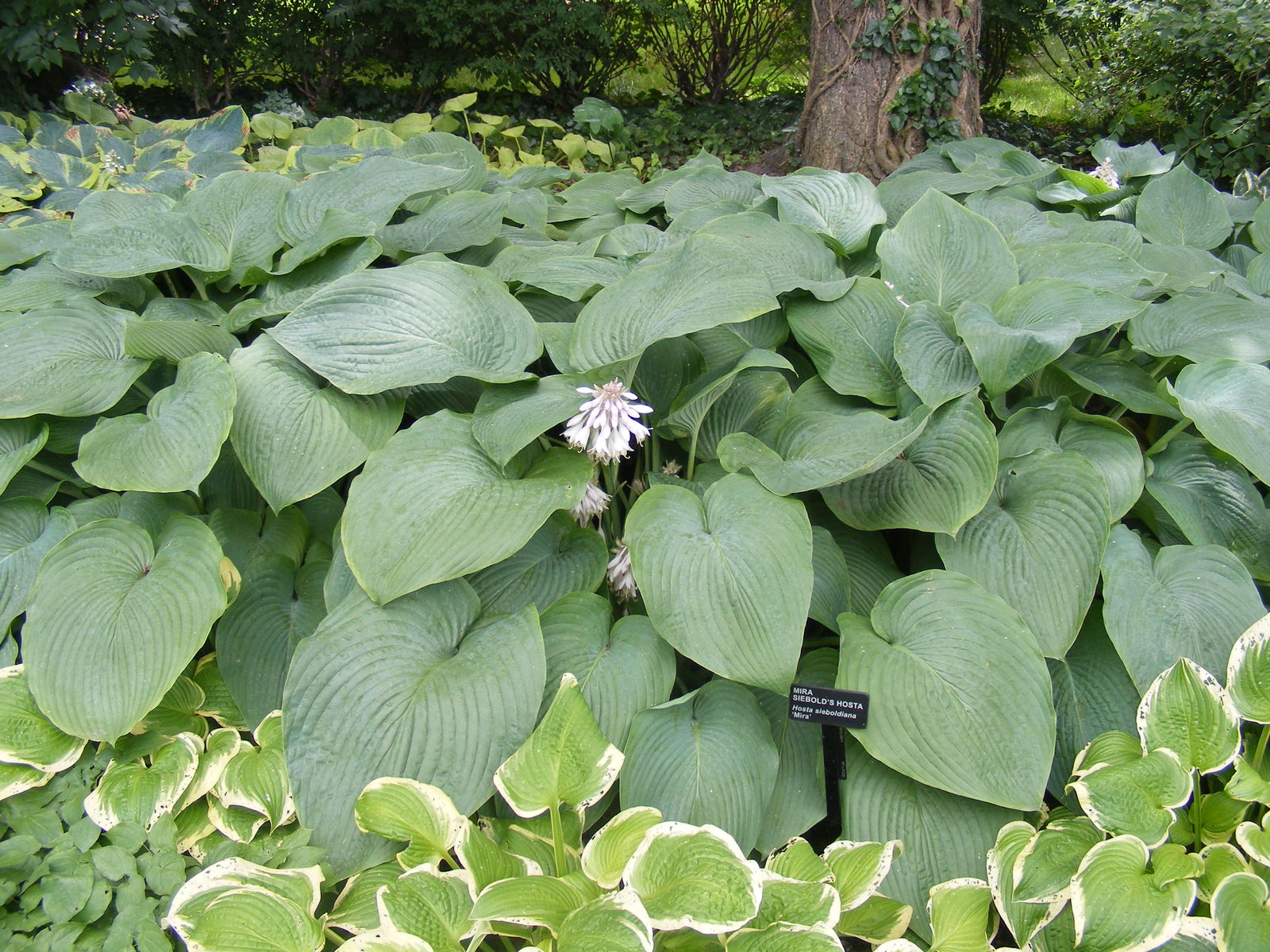
Siebold's plantain lily forms a clump of broadly oval leaves, with prominent veins and wavy edges. In cultivation, it reaches 0.5–1 m (1.6–3.3 ft) in height with a spread of 1–1.5 m (3.3–4.9 ft), and a stated time to maturity of 2–5 years. White, bell-shaped flowers appear in summer on stalks reaching 80 cm (31 in). 2
The blue color of the foliage comes from a waxy coating. In blue hostas, too much sun encourages scorching and paler leaves; very dense shade also slows growth. Color therefore depends as much on exposure as on the choice of plant. 5
Useful taxonomy
Hosta sieboldiana is an accepted species, published under this combination in 1887. Its original name, Funkia sieboldiana Hook., dates to 1838. The combinations Niobe sieboldiana (Hook.) Nash and Saussurea sieboldiana (Hook.) Kuntze refer to the same taxon. 1
Two botanical varieties are accepted: Hosta sieboldiana var. glabra N.Fujita and var. sieboldiana. The horticultural designation “var. elegans” should be distinguished from this list: ‘Elegans’ is also used as a cultivar name. A botanical variety and a garden selection are not interchangeable ranks. 14
Habitat and distribution
Siebold's plantain lily is native to Japan, in the temperate biome. It is recorded as introduced in Korea and southern European Russia. These records describe the species' distribution without assessing how cultivars behave in French gardens. 1
In the garden, choose moist but well-drained soil that is fertile, acidic or neutral, in partial shade and sheltered from cold, dry winds. This cultivation recommendation does not by itself describe the wild habitat. 2 Under trees, shade does not guarantee moisture: competing roots can dry out the soil. An organic mulch, kept away from the crown, helps retain water. 5
Life cycle and propagation
Siebold's plantain lily is deciduous: its foliage dies in late fall, then the crown remains dormant until spring. Young hosta shoots can suffer from late frosts. In containers, pay particular attention to winter waterlogging; in summer, check the moisture of the potting mix regularly. 2105
Division preserves the cultivar: take sections with buds in spring or early fall and replant at the same depth. Seeds collected in fall can be sown in spring in a cold frame, but will not reproduce the cultivar faithfully. 3 Division is not needed to keep a hosta clump healthy; it is mainly used to propagate plants or reduce their size. 5
For hostas in containers, apply a general-purpose liquid fertilizer monthly during growth. In fertile garden soil, an annual addition of organic matter is generally sufficient; poor soil can receive fertilizer in early spring. The calendar applies this genus-level advice to a temperate Northern Hemisphere climate: its indices are relative and do not represent measured volumes of water. Adapt seasonal timing to local climate and renewed growth. Planting and division periods guide the repotting windows. 3
Uses and risks
Siebold's plantain lily suits beds, borders and large containers in shade. Its leaves and flowers can be used in bouquets. Slugs and snails damage the foliage; in containers, vine weevils are another pest to watch for. 2 Hosta foliage can hide the leaves of spring bulbs as they turn yellow after flowering. 5
Warnings for the genus Hosta classify all parts as toxic to cats, dogs and horses. This genus-level warning informs precautions around Siebold's plantain lily without constituting a study specific to this species. 10 Saponins are associated with vomiting, diarrhea and depression in pets. Suspected ingestion warrants prompt contact with a veterinarian. For adults and children, these veterinary warnings do not establish a species-specific level of risk. 6
Varieties, lookalikes and related plants
‘Elegans’ has large, quilted blue-gray leaves, 20–30 cm (8–12 in) long, and white flowers tinged with lilac. These dimensions apply to this horticultural selection, not to every individual of the species. The name ‘Blue Angel’ is reported as misapplied to ‘Elegans’, so the two labels are not interchangeable. 4
Hosta sieboldii has narrow, lance-shaped leaves, up to 15 cm (5.9 in) long, and lavender flowers. This contrast with the broad, oval, blue-green leaves of Siebold's plantain lily helps distinguish the two species despite their similar names. 82
‘Royal Standard’ is a hybrid of Hosta plantaginea and Siebold's plantain lily, grown for its very large white flowers. The fragrant flowers of Hosta plantaginea and the qualities of its hybrids should not automatically be attributed to Hosta sieboldiana. 9
Main sources
The accepted name of Siebold's plantain lily is Hosta sieboldiana (Hook.) Engl.. 1
- Plants of the World Online, Hosta sieboldiana
- Royal Horticultural Society, Hosta sieboldiana
- Royal Horticultural Society, How to grow hostas
- Royal Horticultural Society, Hosta sieboldiana var. elegans
- University of Minnesota Extension, Growing hostas in Minnesota
- Pet Poison Helpline, toxicity of the genus Hosta to pets
- UPOV, document C/58/5, French name of Hosta sieboldiana
- Royal Horticultural Society, Hosta sieboldii
- Royal Horticultural Society, Graham Rice, Growing hostas for flowers
- NC State Extension, Hosta
Frequently asked questions
Why does Siebold's plantain lily disappear in winter?
Its foliage is deciduous. The leaves die in late fall and the crown remains dormant until spring.
Is Siebold's plantain lily suitable for a dry site?
Dry soil does not suit it. Choose moist but well-drained soil, especially under trees, where roots also draw water from the soil.
How can you recognize Hosta sieboldii?
Hosta sieboldii has narrow, lance-shaped leaves; Siebold's plantain lily forms a clump of broad, oval, blue-green leaves.
Does Siebold's plantain lily pose a risk to animals?
Veterinary warnings for the genus Hosta concern cats, dogs and horses. Saponins can cause digestive problems; contact a veterinarian after suspected ingestion.
Similar plants
If you are unsure about a plant’s toxicity, ask a botanist or veterinarian for advice.