
New Guinea impatiens (Impatiens hawkeri, )
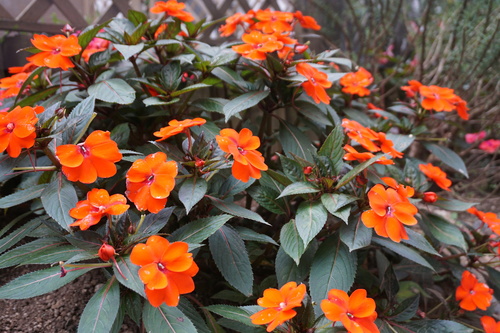

New Guinea impatiens (Impatiens hawkeri) has flowers with long spurs and toothed leaves bearing small glands. This Papuasian species belongs to the Balsaminaceae family; plants sold under its name include many horticultural selections and hybrids.
Read moreNew Guinea impatiens and Sunshine impatiens
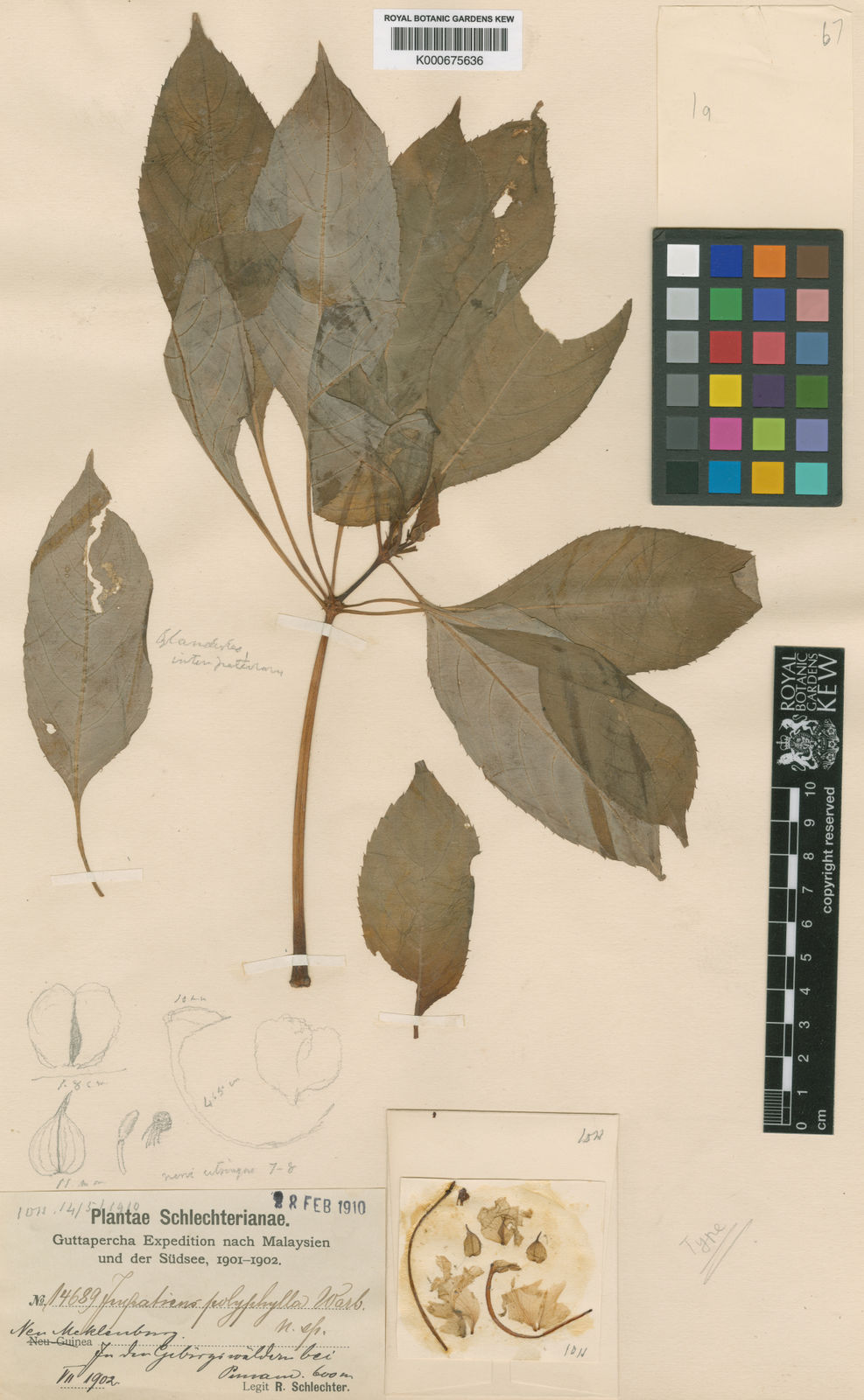
Impatiens linearifolia and Impatiens schlechteri
Give plenty of ambient light without direct sun on the leaves.
Partial shade outdoors; bright, indirect light for indoor-grown forms


© photo
(c) xiroro, some rights reserved (CC BY-NC-ND) · cc-by-nc-nd
Wikimedia Commons · CC BY-SA or Public Domain
Wikipedia · CC BY-SA
© copyright of the Board of Trustees of the Royal Botanic Gardens, Kew.
Global distribution
Native to New Guinea, the Bismarck Archipelago and the Solomon Islands; introduced to Costa Rica and Nicaragua.
- Native3
- Introduced2
- New Guinea
- Bismarck Archipelago
- Solomon Islands
- Costa Rica
- Nicaragua
Hexagons: regions where the plant occurs. Green dots: native range.1
Identity
Long-spurred flowers and small, upright glands on the leaf teeth help identify New Guinea impatiens (Impatiens hawkeri W.Bull, 1886). The species belongs to the Balsaminaceae family. Its botanical name is accepted, but plants sold as New Guinea impatiens include selections and hybrids. A commercial flower color alone therefore cannot identify a wild plant. 1 2 5
The epithet hawkeri honors Lieutenant Hawker, who collected the plant in Papua New Guinea in 1884. Collectors from the USDA and Longwood Gardens introduced it to American horticulture in the 1970s. Its arrival in American cultivation came after its botanical description. 2
Recognition
New Guinea impatiens has simple leaves, arranged in opposite pairs or whorls around the stem. The oval, elliptical or lance-shaped blades have scalloped to toothed edges. Glands on short stalks stand above the leaf blade and provide a more precise identification feature than foliage color alone. The underside can be red or purple. 2
Solitary flowers grow on long stalks. The projecting spur and broad, rounded lateral sepals with pointed tips complement the leaf features. The horticultural description gives a clumping plant, with a size table equivalent to about 15 to 61 cm (6 to 24 in) in height and 45.72 to 91.44 cm (18 to 36 in) in width. These dimensions describe cultivated New Guinea impatiens, rather than measurements of a wild population. 2
Useful taxonomy
The accepted name Impatiens hawkeri was published in the Gardeners’ Chronicle in 1886. The RHS lists Impatiens linearifolia and Impatiens schlechteri as synonyms of this species. These scientific synonyms do not identify flower colors or commercial series. 1 3
Botanical classification recognizes the varieties hawkeri and heliophila. A botanical variety and a cultivar are different categories: the former subdivides a species, while a name such as ‘Bonfire Orange’ identifies a horticultural selection. The New Guinea hybrid group must also remain distinct from the species in its strict sense. 1 2 4
Habitat and range
New Guinea impatiens is native to New Guinea, the Bismarck Archipelago and the Solomon Islands. Costa Rica and Nicaragua are part of its introduced range. Finding this plant in Central America therefore does not establish an American origin. 1
The species grows mainly in the wet tropical biome and is described as an epiphyte. Cultivated plants need moist, well-drained soil enriched with organic matter. Partial shade gives good results; a sunnier position increases water needs. The humidity of its native habitat does not justify keeping the roots in a waterlogged mix. 1 2
Life cycle and reproduction
Horticultural New Guinea impatiens are frost-tender perennials grown as annuals. In France, flowering runs from May to October under the conditions described by the SNHF. A plant kept in a greenhouse can live for several seasons; “annual” then describes the chosen growing method. 5
The recommended temperatures are 20 °C (68 °F) by day and 17–18 °C (63–64 °F) at night. 5
The calendar concerns a plant kept under cover in mainland France. Its relative scores follow advice for indoor impatiens: more water in spring and summer, then less in winter. Apply fertilizer from March to October at the manufacturer’s recommended rate. Keep the mix slightly moist in winter. 4
Ripe capsules burst open and scatter their seeds. The name Impatiens, meaning “impatient,” refers to this dispersal mechanism. To propagate cultivated plants, root young stem cuttings in water or in potting mix kept moist without excess water. General guidance for the genus recommends taking cuttings in spring. 2 4
Uses and risks
New Guinea impatiens can be grown in beds, containers or hanging pots. The hybrids can also grow indoors in bright, indirect light. To keep frost-tender impatiens through winter, horticultural guidance recommends shelter maintained at a minimum of 10 °C (50 °F). Frost kills plants used for summer displays. 2 4
The ASPCA classifies the genus Impatiens as non-toxic to cats, dogs and horses; NC State also applies these descriptions to I. hawkeri. This veterinary assessment does not establish safety for humans or other animals. Whether the flowers are safe to eat cannot be deduced from this veterinary classification alone. 6 2
Varieties, look-alikes and related plants
‘Bonfire Orange’ has a compact habit and large orange flowers; ‘Celebration Light Lavender’ has variegated foliage and lavender flowers. The orange-flowered form described by NParks reaches 25 to 45 cm (10 to 18 in). These descriptions concern particular selections, without assigning their color or size to the entire species. 2 7
Impatiens walleriana and Catharanthus roseus are among the reported look-alikes. Impatiens downy mildew affects cultivars of Impatiens walleriana, while New Guinea hybrids are listed as unaffected. That resistance does not protect against every disease: gray mold remains possible in impatiens, especially where humidity and crowded planting help it spread. 2 4
Main sources
Kew documents the botanical identity and native range of Impatiens hawkeri; the horticultural references describe cultivated plants and their selections separately. 1 5
- Plants of the World Online, Impatiens hawkeri W.Bull
- NC State Extension, Impatiens hawkeri
- Royal Horticultural Society, Impatiens hawkeri
- Royal Horticultural Society, growing impatiens
- Société nationale d'horticulture de France, New Guinea impatiens
- ASPCA, Buzzy Lizzie, Impatiens spp.
- NParks, Impatiens hawkeri, orange-flowered form
Frequently asked questions
Are New Guinea impatiens annuals?
The horticultural plants are frost-tender perennials usually grown as annuals. A plant kept under cover can live beyond a single summer season.
Do New Guinea impatiens need sun?
Partial shade suits cultivated plants. New Guinea hybrids can also grow indoors in bright light without direct sun; selections suited to full sun should be chosen separately.
How should I water New Guinea impatiens?
Keep the mix moist without waterlogging it, and avoid letting it dry out completely. Reduce winter watering for a plant kept indoors.
Are New Guinea impatiens toxic to cats?
NC State lists the species as non-toxic to cats, dogs and horses, in agreement with the ASPCA classification of the genus Impatiens. This status does not establish human safety.
Do orange flowers and variegated leaves define the species?
No. Colors and variegation described for a horticultural selection are not required characteristics of the botanical species Impatiens hawkeri.
Similar plants
If you are unsure about a plant’s toxicity, ask a botanist or veterinarian for advice.