
Creeping Pilea (Pilea nummulariifolia, )
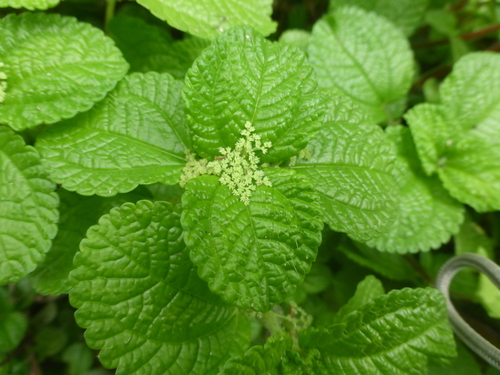

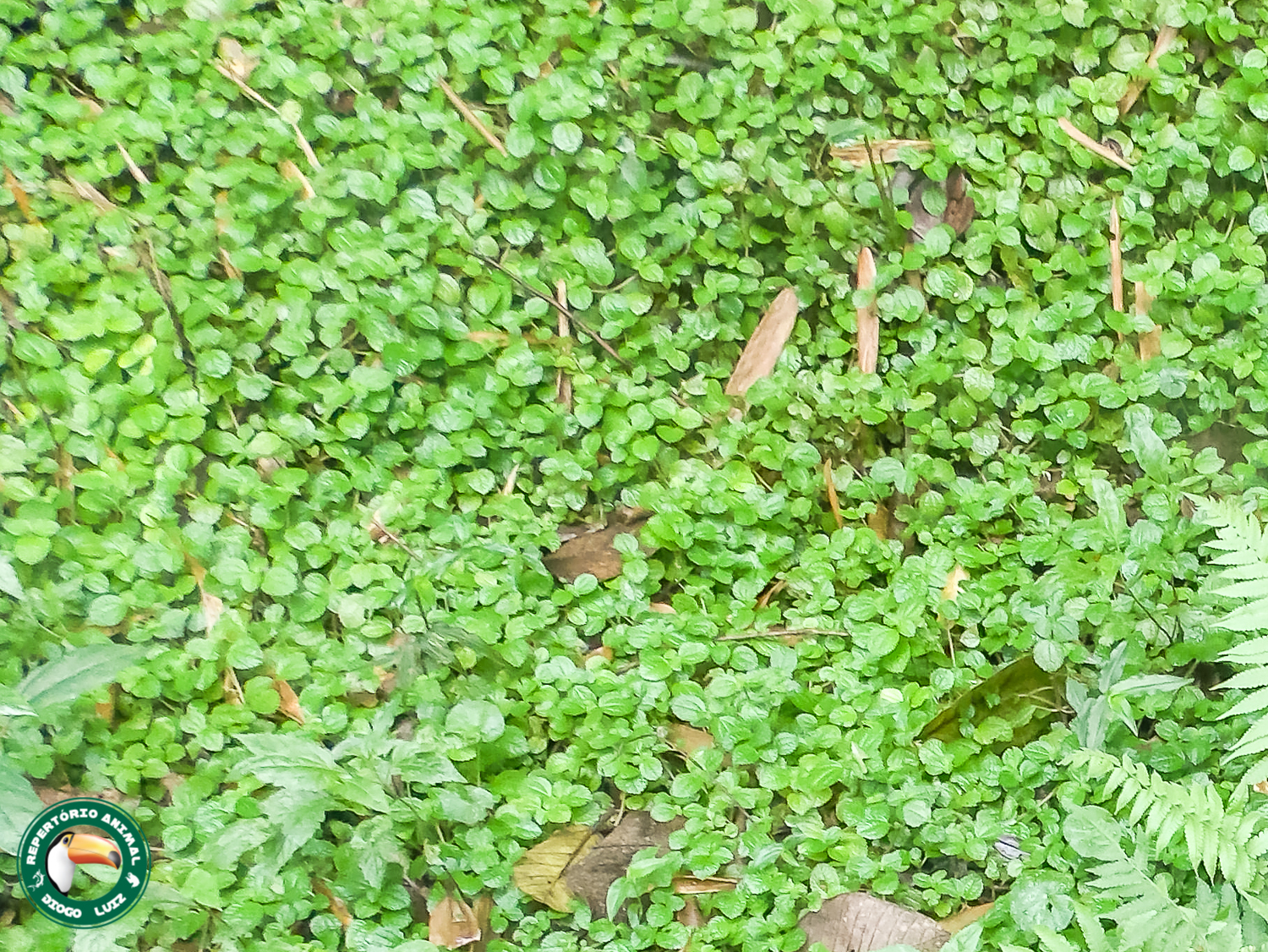
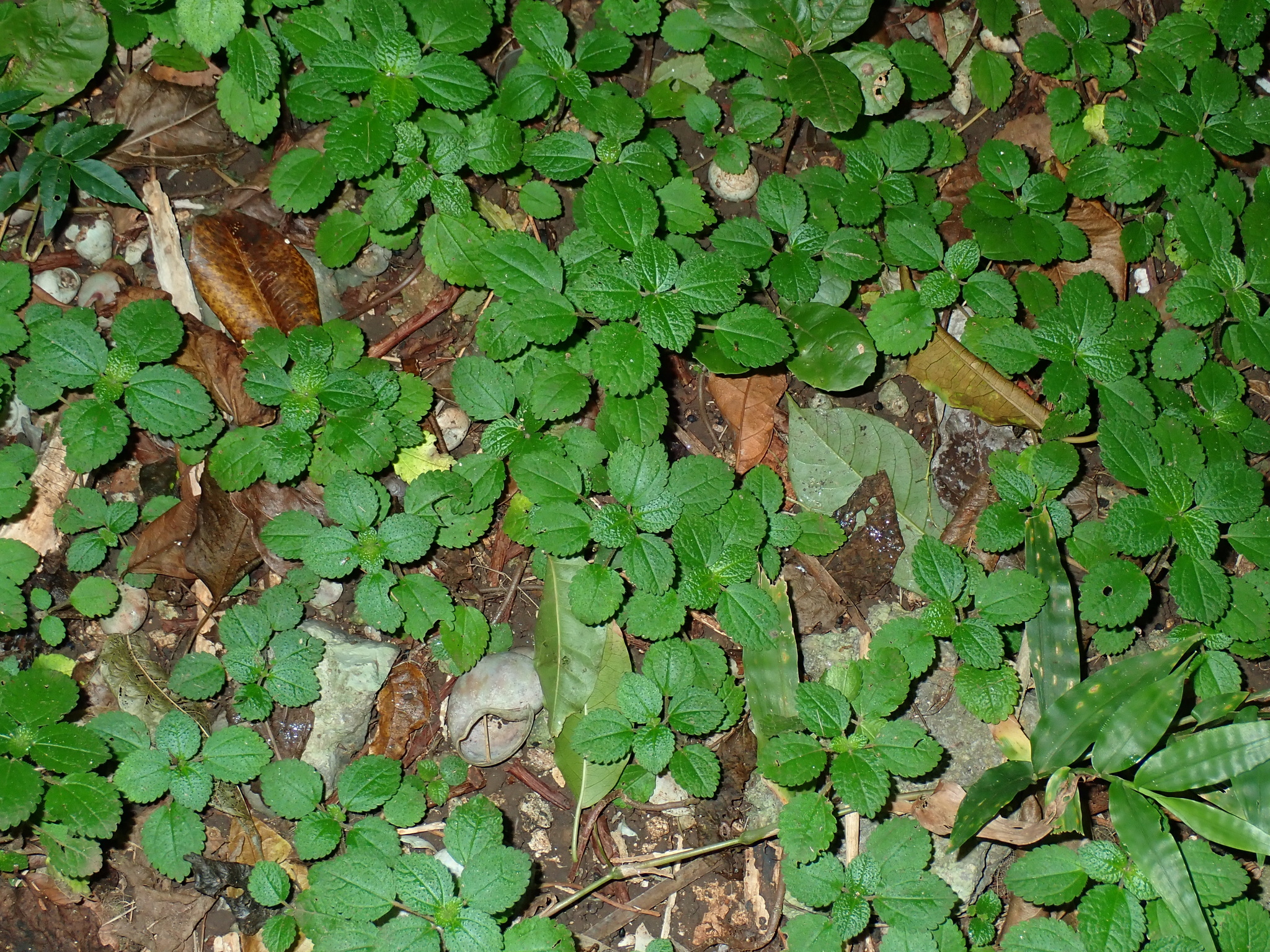
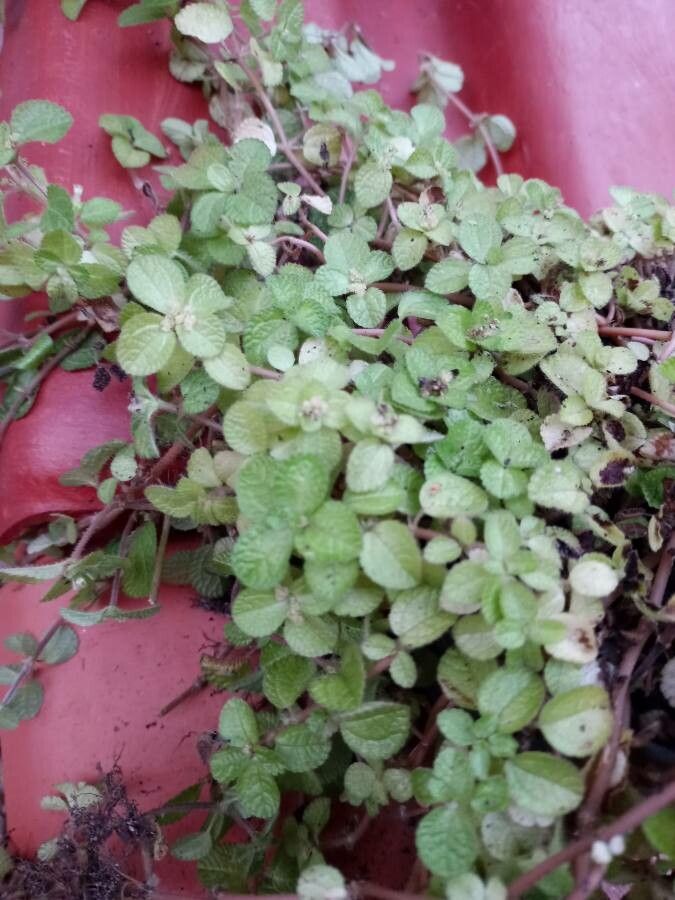
Creeping Pilea (Pilea nummulariifolia), a tropical American member of the Urticaceae, forms mats of deeply quilted green leaves. Its stems root at the nodes or trail from a hanging pot; this pilea needs indirect light and moist, well-drained potting mix.
Read moreCreeping Pilea and Creeping Charlie
Urtica nummulariifolia and Adicea nummulariifolia
Give plenty of ambient light without direct sun on the leaves.
Bright indirect light; intense sun scorches the leaves.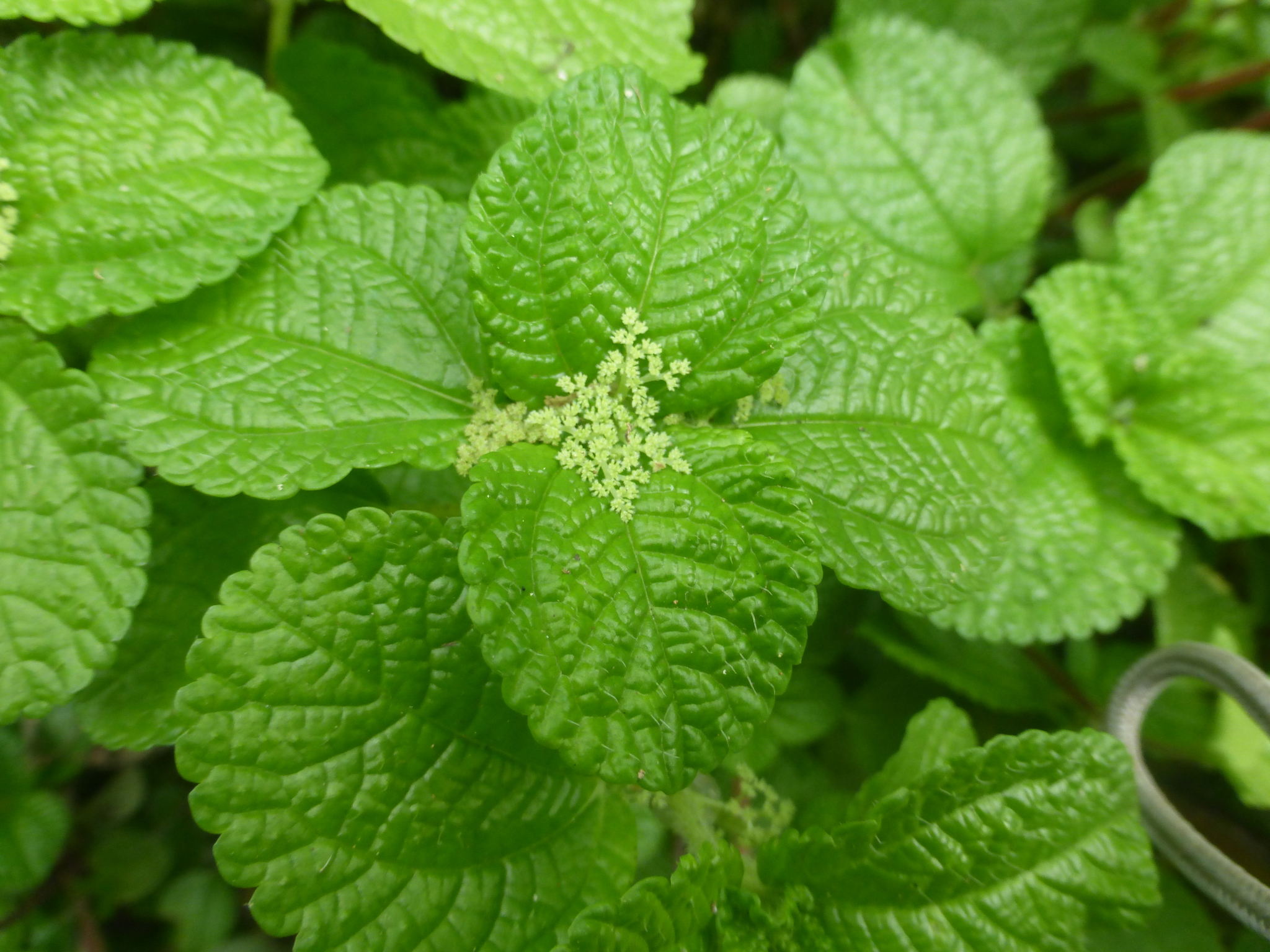



© photo
no rights reserved, uploaded by geralg · cc0
Diogo Luiz · cc-by
Don Loarie · cc-by
Taken Apr 17, 2019 by OTS - R. Aguilar (cc-by-nc-sa)
© copyright of the Board of Trustees of the Royal Botanic Gardens, Kew.




Global distribution
Native from Central America to northern Venezuela and Peru, and to the Caribbean; Kew documents introductions on several islands.
- Native4
- Introduced2
- Costa Rica
- Colombia
- Peru
- Cuba
- Taiwan
- Cook Islands
Hexagons: regions where the plant occurs. Green dots: native range.1
Identity
The deeply quilted leaves of Creeping Pilea (Pilea nummulariifolia (Sw.) Wedd., 1852) grow along creeping stems that root where they touch the soil. This perennial in the Urticaceae also grows in hanging pots. The French names "petit thym rond" and "plante-monnaie" are documented by DEAL in Martinique; its Creole name is "Ti tenn won." 2 6 1
Kew accepts the current name, published in 1852, and lists Urtica nummulariifolia Sw. and Adicea nummulariifolia (Sw.) Kuntze as synonyms. Floriscope confirms the family and botanical author. Kew's description as a subshrub and the horticultural descriptions as an herbaceous perennial refer to the same taxon. 1 7 2
Identification
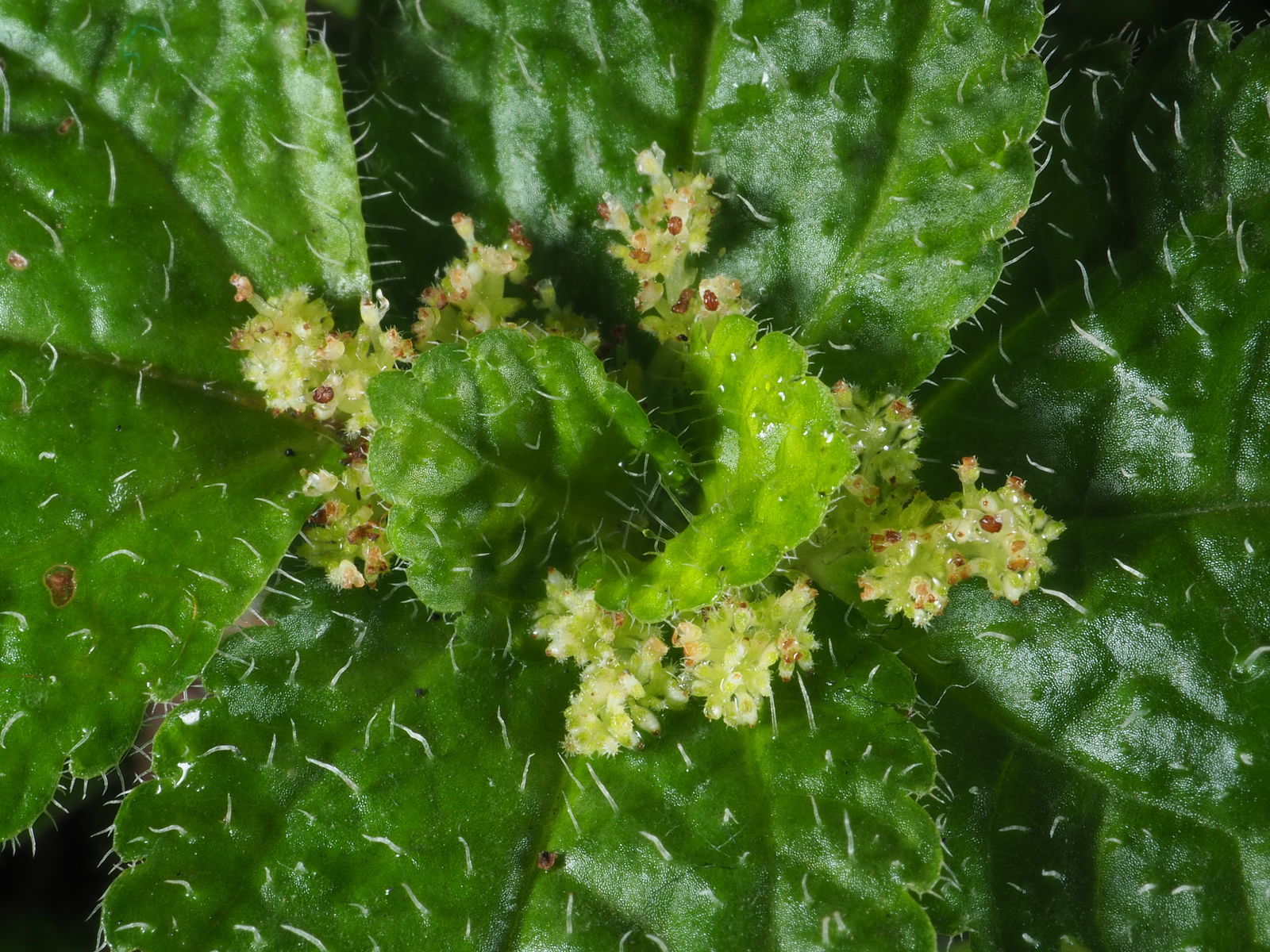
The opposite leaves, round to oval in outline, have finely scalloped margins. Their veins appear sunken, while the areas between them rise into the characteristic blistered surface. NParks also describes a small notch at the leaf tip. The slender, reddish, hairy stems spread and then root at the nodes. 2 5
Descriptions differ on leaf hairs: DEAL describes hairy leaves, while the corresponding NC State field records hairless leaves. The quilted surface and creeping habit therefore provide more consistent clues than hairiness alone. Normal leaf quilting is not enough to diagnose a watering problem. 6 2
NC State also records mealybugs and bacterial leaf spots. The regular raised areas between the veins belong to the species' normal structure and need to be distinguished from new leaf damage. The word "quilted" alone cannot support a diagnosis. 2
Habitat and distribution
The native range extends from Central America to northern Venezuela and Peru, and includes the Caribbean. Kew distinguishes introduced populations, including those in Bermuda, the Cook Islands, Hawaii and Taiwan. This distinction separates cultivation or introduction from natural origin. 1
Creeping Pilea belongs to the wet tropical biome. In Martinique, DEAL records it in the understory of mesic forest and on damp, shaded cliffs. The plant is described there as common and not assessed in the red data book. These observations concern Martinique and do not establish a global conservation status. 1 6
Life cycle and propagation
The small white to pinkish flowers form inconspicuous axillary clusters; NC State records flowering in spring and summer. The fruits are small green achenes. Horticultural references emphasize the ornamental appeal of the foliage and trailing stems. 2 5
Stem cuttings and division are recommended for this species. For trailing pileas, the RHS advises taking soft shoot tips in spring or summer and placing them in well-drained, peat-free potting mix, with humid conditions until they root. Leaf-cutting methods described for Pilea peperomioides do not automatically apply to Creeping Pilea. 2 3
Pruning trailing stems that have become too long and sparse encourages bushier growth, according to the RHS guide. 3
Growing conditions and seasonal care
Creeping Pilea prefers bright indirect light. NParks records leaf scorch in intense sun and sparse foliage in shade. Keeping the potting mix moist also requires good drainage. NC State recommends watering when roughly the top 2.5 cm (1.0 in) has dried, but excess water can cause root rot. 5 2
The RHS general guide recommends a warm room without cold drafts and temperatures always above 10 °C (50 °F). This is horticultural guidance for indoor pileas, rather than an ideal temperature range measured for this species. Humid air suits Creeping Pilea; NParks includes terrariums among its growing settings. 3 5
The calendar follows the RHS general pilea guide for indoor growing in mainland France: reduce watering in winter when growth slows, check the roots in spring, and repot only when they are crowded. Apply the seasonal advice according to local growth conditions. An oversized pot holds moisture for too long; empty the saucer after watering. 3
The RHS recommends a balanced liquid fertilizer from April to September, every month or two, according to the product's dilution instructions. NC State instead recommends monthly feeding from spring to fall for this species. The calendar retains the RHS northern-hemisphere window; its water and growth indices show relative trends, without prescribing a measured dose. 3 2
Uses and risks
The ASPCA explicitly lists Pilea nummulariifolia as non-toxic to cats, dogs and horses; NC State covers the same groups. However, the family "Lamiaceae" shown by the ASPCA conflicts with botanical references, which place the species in the Urticaceae. 4 2 1
DEAL mentions edible young leaves, and NC State records use in herbal tea. These documented uses establish neither a safe dose for children nor a clinical assessment of human safety. The references assembled here also leave the status of other animal species unknown. 6 2 4
Varieties and similar plants
Kew recognizes the botanical varieties Pilea nummulariifolia var. klugii and var. nummulariifolia. These taxonomic ranks do not denote horticultural cultivars. 1
Pilea peperomioides grows upright, with disk-shaped leaves on long stalks, unlike creeping Pilea nummulariifolia. Pilea depressa also trails and has small, shiny, rounded leaves. The RHS describes P. nummulariifolia as having deeply veined leaves on long pinkish-brown stems. Considering habit alongside the leaf surface helps distinguish these pileas. 3
Main sources
Kew supplies the accepted name and distribution; DEAL documents French names and habitat in Martinique. The RHS seasonal advice covers indoor pileas, with species-specific details from NC State.
- Kew, Plants of the World Online, Pilea nummulariifolia
- NC State Extension, Pilea nummulariifolia
- Royal Horticultural Society, How to grow pilea
- ASPCA, Creeping Charlie, Pilea nummulariifolia
- National Parks Board of Singapore, Pilea nummulariifolia
- DEAL Martinique, botanical profile of Pilea nummulariifolia
- Plante & Cité, Floriscope, Pilea nummulariifolia
Frequently asked questions
How can I identify Creeping Pilea?
The opposite, round to oval leaves have sunken veins that create a quilted surface. According to NC State, its creeping stems root at the nodes.
Does it need as much water in winter?
The RHS general guide to pileas recommends reducing watering in winter, when growth slows, and emptying any water left in the saucer.
Is Creeping Pilea toxic to animals?
The ASPCA lists it as non-toxic to cats, dogs and horses, a classification also given by NC State. These references do not establish its safety for other animal species.
Can it be propagated from cuttings?
NC State recommends stem cuttings and division. The RHS guide recommends taking cuttings of trailing pileas in spring and summer.
Similar plants
If you are unsure about a plant’s toxicity, ask a botanist or veterinarian for advice.