
Snowflower (Spathiphyllum floribundum, )
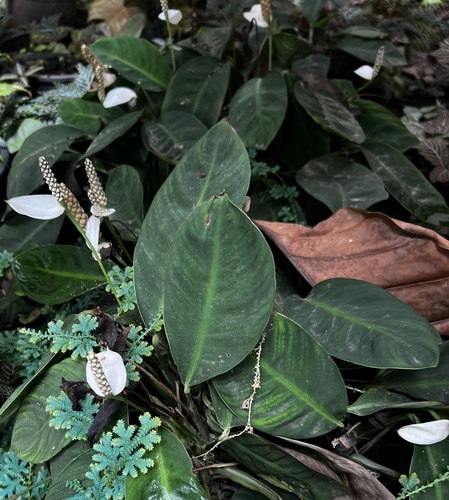

Snowflower (Spathiphyllum floribundum) has dark green leaves and a white spathe. This South American evergreen herbaceous perennial belongs to the Araceae; its shared common names make the binomial essential for identifying the species.
Read moreSnowflower and Peace lily
Amomophyllum floribundum (Linden & André) Engl., Anthurium floribundum Linden & André and Spathiphyllum floribundum var. cuneatum Engl.


© photo
(c) Marcos Mortara, some rights reserved (CC BY-NC), uploaded by Marcos Mortara · cc-by-nc
Wikimedia Commons · CC BY-SA or Public Domain
Wikipedia · CC BY-SA
Taken Sep 23, 2021 by Gomes Alves Adriana (cc-by-sa)
Taken Jun 10, 2022 by Antenor López Quej (cc-by-sa)
© copyright of the Board of Trustees of the Royal Botanic Gardens, Kew.


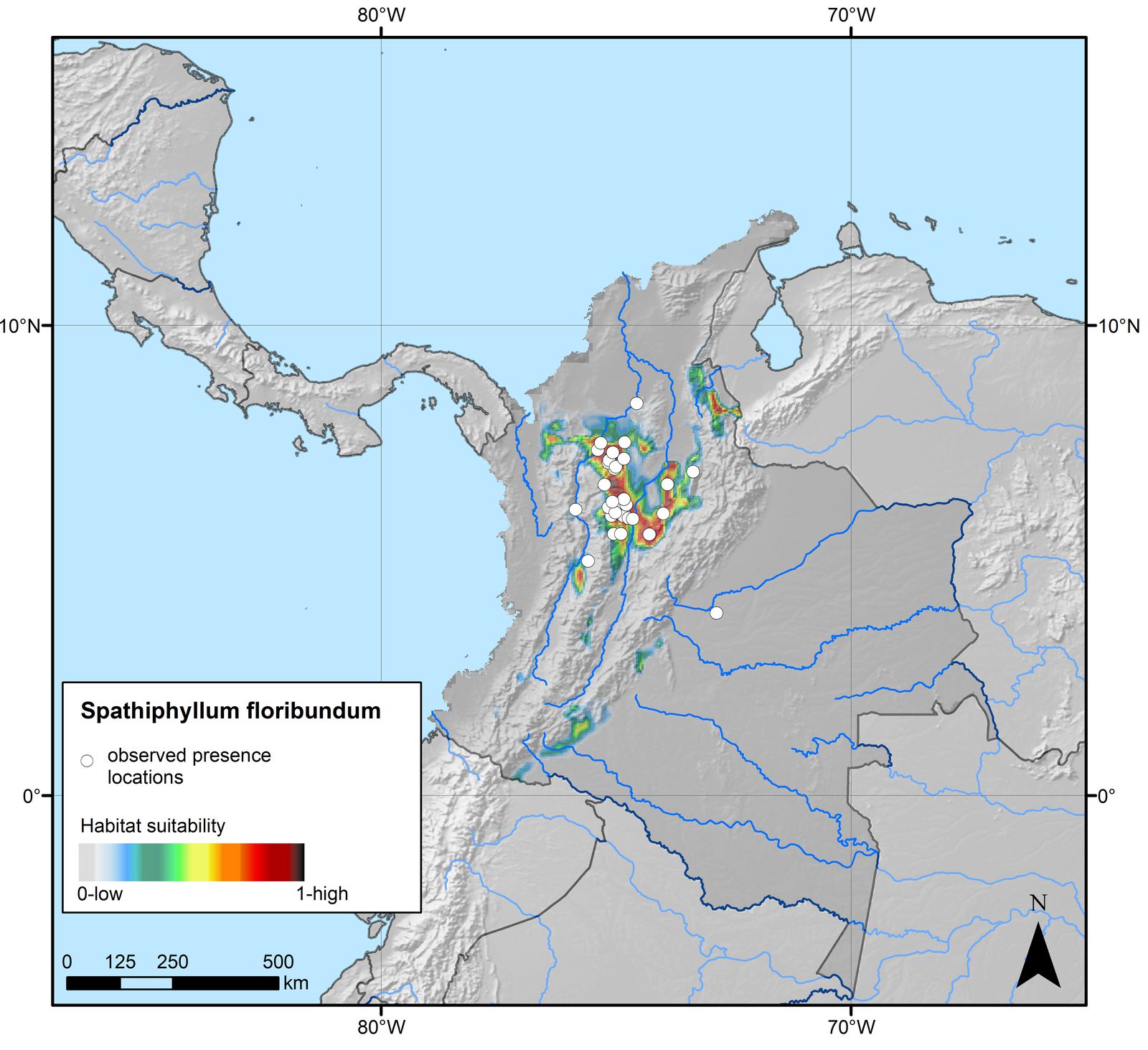
Global distribution
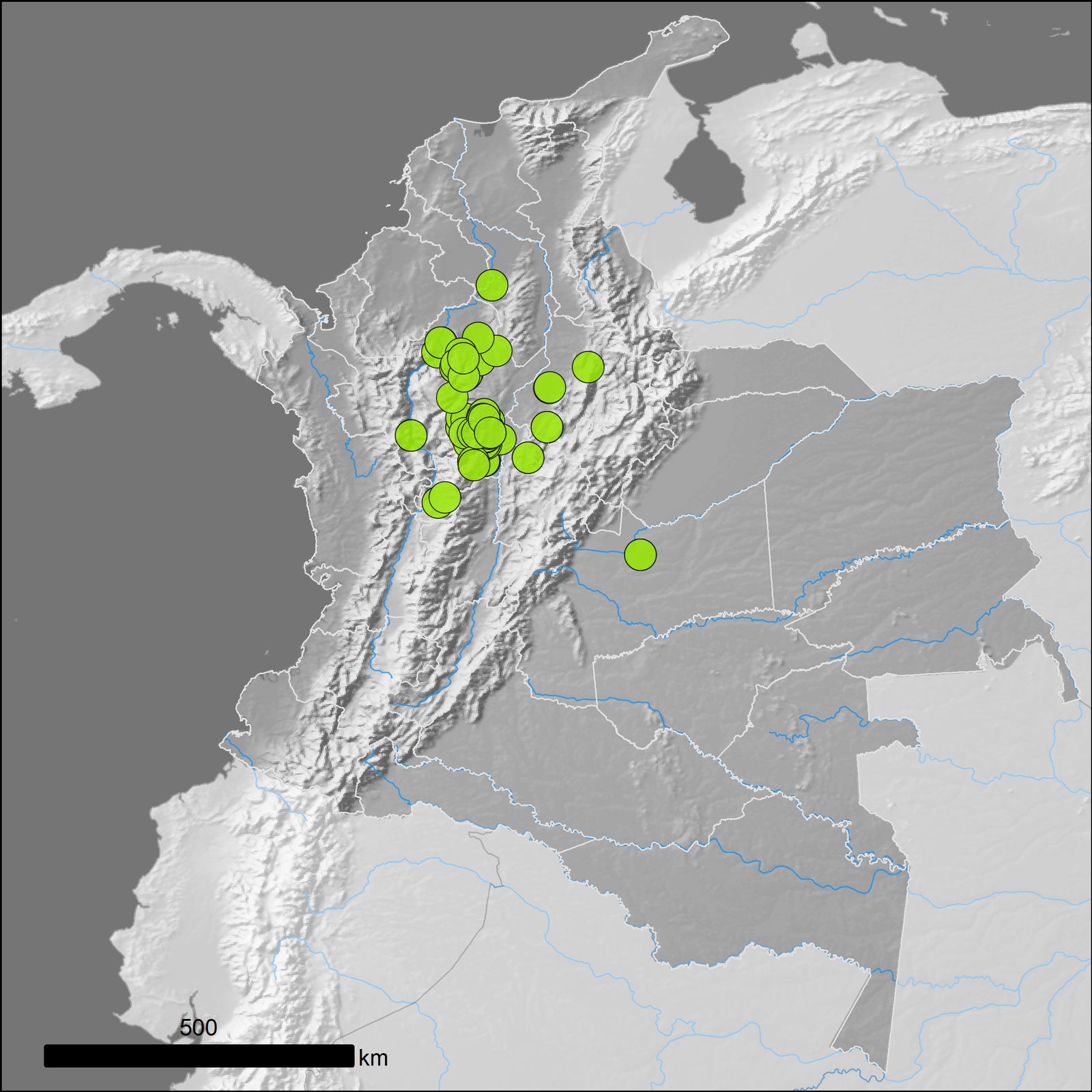
Currently native to Colombia, Ecuador, Peru and Venezuela; the 1960 revision described a narrower Colombian range. Ornamental cultivation is documented in Guatemala.
- Native4
- Colombia
- Ecuador
- Peru
- Venezuela
Hexagons: regions where the plant occurs. Green dots: native range.9
Identity
Snowflower (Spathiphyllum floribundum (Linden & André) N.E.Br., 1878) has dark green leaves with a velvety luster, a feature described in the botanical revision of the species. This evergreen herbaceous perennial belongs to the Araceae family. 1 10 9 3
The French name "fleur de lune" is recorded for this binomial in an inventory of ornamental plants in Burkina Faso. Common names shared among spathiphyllums do not identify a species on their own; the binomial Spathiphyllum floribundum provides that precision. Snowflower is grown as an ornamental, including in pots and shade in Guatemala. 11 2
Recognition
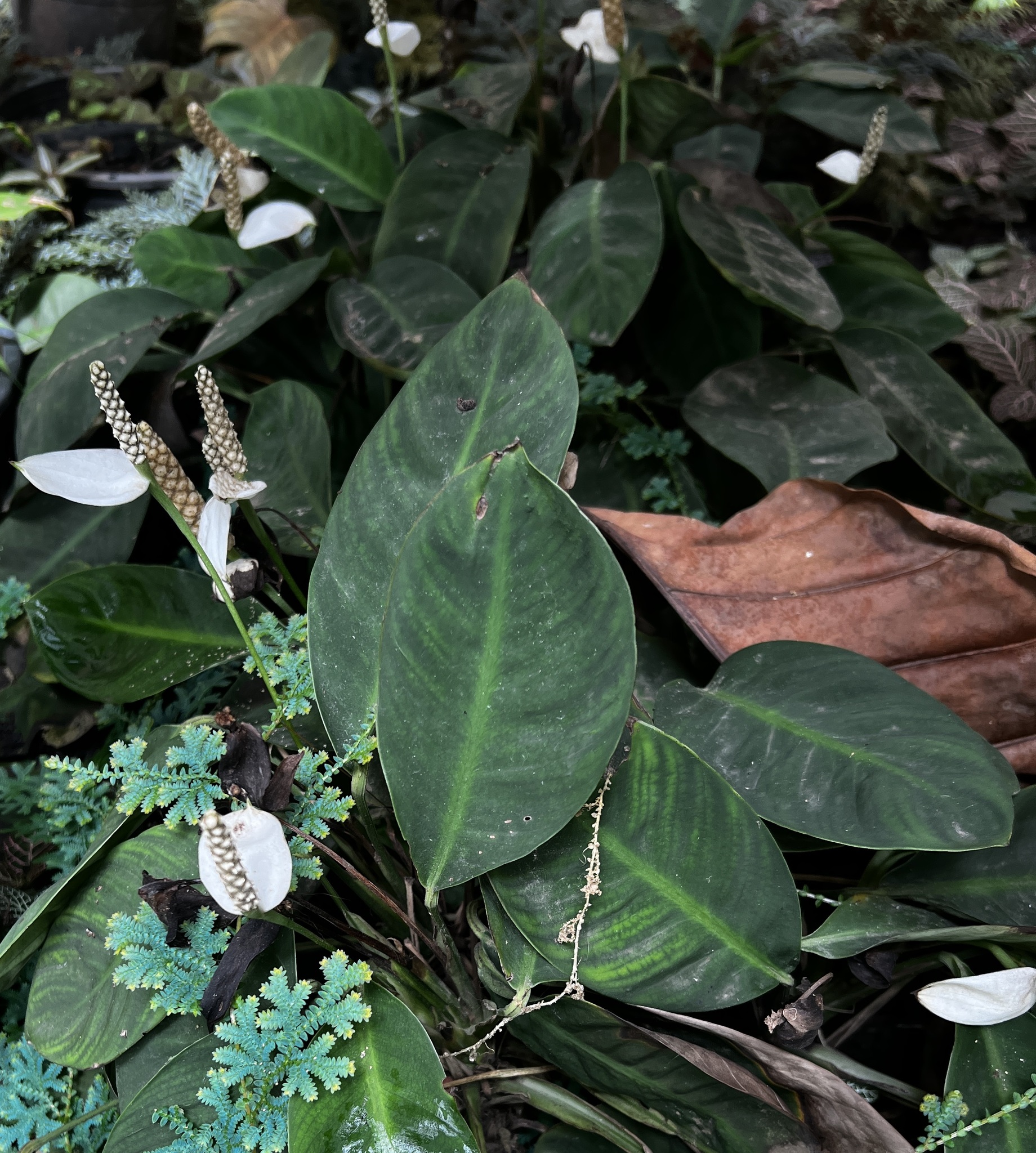
The leaf blade of Spathiphyllum floribundum is conspicuously oblique, with wavy edges. Its outline ranges from elliptical to oblong or broader toward the tip. In the botanical description, blades measure 13–20 cm (5–8 in) long, exceptionally 26 cm (10 in), and 5.5–9 cm (2.2–3.5 in) wide, exceptionally 10.5 cm (4.1 in). The blade measurements exclude the leaf stalk, so they should not be read as the length of an entire leaf including its stalk. 1
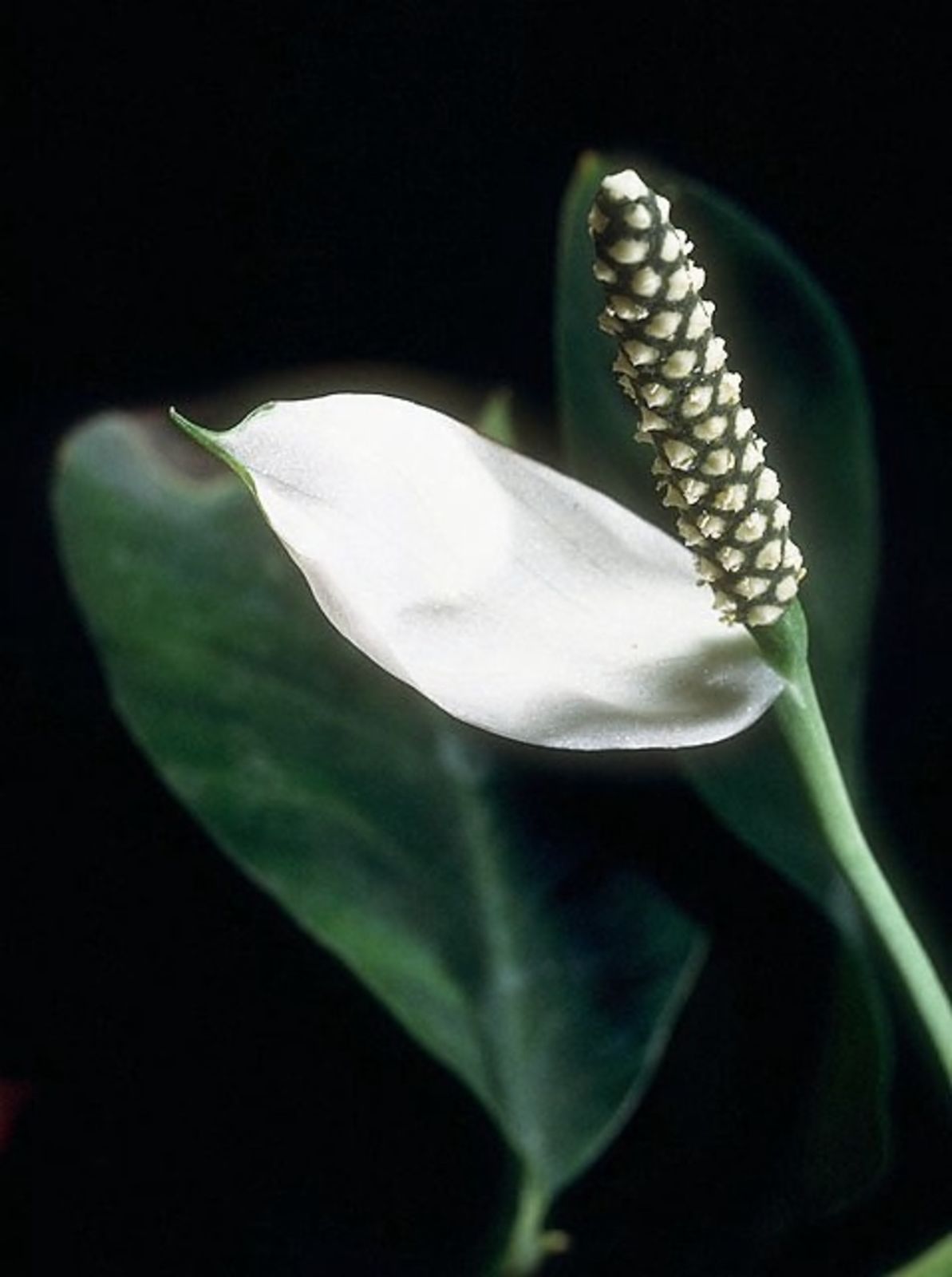
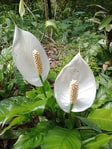
The white spathe surrounds a spadix bearing tiny flowers: the large white structure is a bract. The spathe measures 4–8 cm (1.6–3.1 in), reaching 9.8 cm (3.9 in), while the spadix measures 2.5–5.5 cm (1–2.2 in). Dimensions reported for large horticultural hybrids do not describe this botanical species. The size of a hybrid sold as a peace lily therefore cannot be transferred to S. floribundum. 1 2 12
Useful taxonomy
Snowflower was described as Anthurium floribundum Linden & André in 1874, from a plant cultivated by Linden. The combination in Spathiphyllum dates to 1878. The dates of the original name and new combination concern botanical nomenclature. The first collection is reported before 1864, by Gustav Wallis, which is a separate event from publication of either botanical name. 1 10
The names Amomophyllum floribundum (Linden & André) Engl. and Spathiphyllum floribundum var. cuneatum Engl. also appear in the synonymy. Botanical synonyms of S. floribundum concern its taxonomic naming history. Commercial cultivar names describe cultivated selections and should not be treated as interchangeable with these synonyms. 9
Habitat and range
The currently accepted native range includes Colombia, Ecuador, Peru and Venezuela, in the wet tropical biome. The 1960 revision described a narrower range centered on Colombia's Magdalena Valley and questioned identifications from Panama. That historical treatment does not establish that Spathiphyllum floribundum is currently regarded as endemic to Colombia. The older range and current accepted range need to be distinguished. 9 1
Stream banks are documented habitat in the central Magdalena Valley. Records from Guatemalan gardens concern ornamental cultivation; they do not extend the species' native range into Guatemala. 1 2
Life cycle, propagation and calendar
The fruits of Spathiphyllum floribundum are spheroid, with one or two seeds per chamber. Division and seed propagation are recommended in cultivation guidance shared by this species and Spathiphyllum wallisii. 1 6
Reported flowering seasons for snowflower differ between the Swiss and Polish accounts. The Swiss horticultural description gives March to July, while the Polish account covering both species gives March to September. These are Northern Hemisphere cultivation windows, not guarantees of the same flowering dates in every home. Readers in other hemispheres should retain the seasonal context rather than apply those months as a universal schedule. 3 6
The calendar retains its original context of an indoor plant in mainland France, in the Northern Hemisphere. Water and growth indices are relative editorial rankings rather than measured volumes or speeds. The model emphasizes spring and summer activity; genus-level guidance describes a winter slowdown. Allowing the soil surface to dry before watering remains the practical check on the pot. 5
Repotting and feeding are conditional. The Polish guidance places repotting in late winter to early spring, when cramped roots make it necessary. The British guide places feeding through the growing season, provided growth continues. Months without an operation lie outside the selected windows and do not express a botanical prohibition. The Polish account reduces watering from fall, ahead of the British guide's winter reduction. These seasonal recommendations need to be read in their temperate Northern Hemisphere context. 6 5 8
Growing in pots and risks
Light recommendations differ between sources. The Polish account recommends shade for both species; the British genus guide recommends bright indirect light and notes that deep shade slows growth and limits flowering. Feeding remains moderate: every two weeks during active growth in the Polish account, and every few weeks in the British guide. Another genus-level recommendation uses one-quarter strength fertilizer with flushing between applications. These separate protocols do not establish a single universal dose for Spathiphyllum floribundum. 6 5 8
All parts of snowflower are toxic. Chewing releases needle-shaped calcium oxalate crystals, or raphides, that irritate the mouth and throat. For cats and dogs, the genus-level toxicity listing describes burning, drooling, vomiting and difficulty swallowing. 3 4 7
A general genus account rates poisoning severity as medium. 8 The species-specific veterinary account describes convulsions, abnormal heart rhythms and liver or kidney injury after large doses. The serious effects reported after large doses explain the high risk level retained for the species. Their usual frequency is not established, and their severity should not be extrapolated to children or adult humans. The lethal dose is unknown. 4
For children and adults, precautions address ingestion and irritation: keep the plant out of reach and wear gloves when handling it. Horse-specific risk remains unknown despite a genus-level warning. Birds receive a separate strong warning in the veterinary account. Risk therefore cannot be generalized uniformly to all animals, and an unspecified risk should not be read as proof of safety. 5 6 8 4
Hybrids and related species
‘Lynise’ is a hybrid, produced by crossing a parent combining ‘Mauna Loa Alice’ and Spathiphyllum floribundum with Spathiphyllum wallisii. ‘S12’ comes from ‘Petite’ and a seedling of S. floribundum. The cited sources do not specify the species placement of ‘Petite’, so the interspecific status of ‘S12’ remains unestablished. ‘Lynise’ is not a synonym of the botanical species. 12 13
The botanical revision compares S. floribundum with Spathiphyllum fulvovirens and Spathiphyllum juninense, both much larger plants. To identify S. floribundum, examine the oblique leaf blade and its velvety luster as well. The general outline of a peace lily does not by itself distinguish these species. 1
Main sources
The botanical description separates measurements of Spathiphyllum floribundum from horticultural advice shared by several spathiphyllums. 1 5
- New York Botanical Garden, Bunting, A revision of Spathiphyllum, 1960
- Universidad Francisco Marroquín, Spathiphyllum floribundum
- University of Zurich, CliniTox, botanical description of Spathiphyllum floribundum
- University of Zurich, CliniTox, toxicology of Spathiphyllum floribundum
- RHS, How to grow peace lilies, Spathiphyllum genus guide
- Zabrze Botanical Garden, Spathiphyllum wallisii and S. floribundum
- ASPCA, Peace Lily, genus-level Spathiphyllum toxicity
- NC State Extension, Spathiphyllum, genus-level care and risks
- Plants of the World Online, Spathiphyllum floribundum
- GBIF, taxonomic identity of Spathiphyllum floribundum
- Burkina Faso national monograph on biological diversity, 2021, ornamental plant appendix
- Patent USPP6145, parentage of the hybrid Lynise
- Patent USPP10008P, parentage of S12
Frequently asked questions
Do snowflower and peace lily always mean Spathiphyllum floribundum?
These common names are shared among Spathiphyllum species. The binomial Spathiphyllum floribundum identifies this species; a label giving only a common name is insufficient.
Is snowflower toxic to cats?
The genus Spathiphyllum is listed as toxic to cats and dogs. Chewing can cause oral irritation, excessive drooling, vomiting and difficulty swallowing.
Does snowflower need repotting every spring?
Repotting depends on roots becoming cramped in the pot. Late winter to early spring is a suggested Northern Hemisphere window for Spathiphyllum wallisii and Spathiphyllum floribundum; it does not make repotting an annual requirement.
Similar plants
If you are unsure about a plant’s toxicity, ask a botanist or veterinarian for advice.