
Yarrow (Achillea, )


Yarrow (Achillea L.) is a genus in the Asteraceae from the temperate Northern Hemisphere, comprising mainly sun-loving herbaceous perennials with often divided, aromatic leaves. Garden species carry flat clusters of small white, yellow, pink or red flowers, useful in dry borders, meadows and both fresh and dried arrangements.
Read moreYarrow and Milfoil
Place in full sun, with intense direct light all day long.
Full sun; temporary partial shade gives fewer flowers


© photo
Wikimedia Commons · CC BY-SA or Public Domain
© copyright of the Board of Trustees of the Royal Botanic Gardens, Kew.
Global distribution
Achillea belongs to the temperate Northern Hemisphere, with many Eurasian and North American species. Garden yarrows are cultivated far beyond their original ranges, especially in dry borders and naturalistic meadows.
- Native4
- Europe
- Temperate Asia
- North America
- Mainland France
Hexagons: regions where the plant occurs. Green dots: native range.1
Identity
Yarrow (Achillea L.) is a genus in the Asteraceae, accepted by POWO and IPNI and published by Linnaeus in 1753. It includes the yarrows grown in dry flower borders. Yellow-flowered plantings often feature Achillea filipendulina, one species within this broader horticultural group. 1 3
The name yarrow covers several species. Achillea millefolium, also called milfoil, is familiar for finely divided leaves and historical uses. Achillea filipendulina supplies large yellow flower clusters for dry gardens. Border cultivars extend the palette with red, pink, orange and cream tones, rather than all sharing the same flower color. 4 7
Achillea is a genus, not a single species. The notation Achillea spp. refers to yarrows collectively and should not be taken to mean only Achillea millefolium. Individual species within the genus differ in their foliage, flower color, size and horticultural role. 2
Recognition
Garden yarrows are herbaceous perennials for full sun, often aromatic when their leaves are bruised. Leaves are alternate and range from divided to very finely dissected, depending on the species. Common yarrow’s many fine leaf divisions are reflected in the name milfoil. 5 8
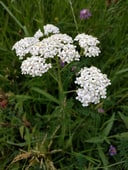
Flowering stems carry flat-topped corymbs. Many small flower heads packed together create a horizontal surface on which insects can land easily. This broad, flat outline differs from the large, separate flower heads of daisies and rudbeckias, even though all belong to the daisy family. 4 7
Color varies markedly between species and cultivars. White and pink predominate in many forms of A. millefolium, whereas golden yellow is frequent in A. filipendulina. Modern selections may change color as their flowers age. That fading can be attractive, but makes a single photograph an uncertain guide to an exact lasting shade. 4
Cultivation in dry borders
Choose well-drained, poor to moderately fertile soil and plentiful sunshine. Overly rich ground often produces tall stems that flop. Excess moisture encourages a soft crown, powdery mildew and a less effective floral display. Good drainage supports both plant health and the firm outline of the flowering clump. 5 4
Water sufficiently after planting to establish the crown, then reduce watering. An established yarrow tolerates dry spells well, especially in deep soil. This makes it useful in gravel gardens, naturalistic meadows and borders that are not watered intensively, provided newly planted divisions are allowed to root first. 5
Fertility strongly affects the plant’s form. In a rich border, stems elongate quickly and collapse after rain, losing the horizontal flower outline. Leaner ground produces a more compact plant with a long flowering season and less need for staking. Combine it with similarly restrained perennials such as lavender, sages, fine grasses, echinaceas or catmints. These dry-meadow combinations suit yarrow better than frequent watering for moisture-demanding neighbors. 4 5
Divide clumps every three to five years if their centers become bare or flowering declines. Work in local spring or early autumn. Division also maintains named cultivars, since seedlings do not always reproduce the parent’s flower color. Rejuvenating a tired clump and preserving a selection can therefore be achieved together. 4
Uses and botanical names
Yarrows suit informal cut-flower arrangements. Their flat clusters create horizontal lines, fill spaces between rounder flowers and dry readily. Cut when the heads are fully open, strip the lower leaves and stand the stems in a small quantity of clean water. The same structure works in fresh and dried bouquets. 4
The genus has a medicinal history, particularly through Achillea millefolium. That reputation does not make every garden yarrow a remedy. Species, plant part, dose and medical circumstances matter; an ornamental selection chosen for color is not interchangeable with a therapeutic preparation. 7 5
The names describe different botanical levels: Achillea denotes the genus; Achillea millefolium the familiar meadow species with historical medicinal uses; Achillea filipendulina the tall yellow border plant. Moonshine and Paprika, by contrast, are names of horticultural selections. A cultivar name adds information to the broader yarrow name. 1 4
A nursery label saying only yarrow may refer to a white meadow species, a tall architectural yellow plant or a red cultivar sold for cutting. Check the species and cultivar when a particular habit or flower color matters. No single yarrow represents the full range of forms contained in the genus. 1 2
Safety and toxicity
ASPCA lists yarrow as toxic to cats, dogs and horses. Reported signs include vomiting, diarrhea, dermatitis and increased urination. The risk is generally low to moderate, but sufficient to prevent animals from eating the plant. Its use in ornamental borders does not make it suitable for chewing. 6
Yarrows can irritate sensitive human skin, particularly in people with Asteraceae sensitivity. Traditional use does not remove possible contraindications, allergies or interactions. Wear gloves for substantial cutting or handling if contact causes a skin reaction, and do not assume that all species or preparations behave alike. 5
These plants combine value in dry gardens, flower arrangements and pollinator planting with a need for care around animals. Keep cut stems and living plants from being chewed. Historical medicinal use belongs to particular species and preparations, rather than providing a general safety rule for the whole genus. 6 4
Useful look-alikes
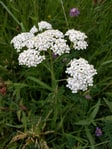
Several meadow plants have flat or white flower clusters. Wild carrot, greater ammi and meadowsweet can play a similar visual role in a bouquet, but are not Asteraceae and have different leaves. Yarrows retain their tightly packed flower heads and divided, aromatic foliage, which help distinguish them from these superficially similar plants. 7
Among yellow flowers, tansy and goldenrod are frequent sources of confusion. Tansy has round button-like heads without visible rays; goldenrod produces feathery panicles. Yarrow instead forms a flat floral table. Compare the arrangement of the heads rather than relying only on their shared yellow color. 4
The name Achillea is appropriate for yarrows as a broad group. A species name or named cultivar identifies a narrower part of that group and retains the distinctions relevant to its appearance, cultivation and use. Genus, species and cultivar names should therefore remain separate rather than being treated as synonyms. 1 3
Main sources
Frequently asked questions
Is Achillea a genus or a species?
Achillea is a genus. Achillea millefolium and Achillea filipendulina are individual species, while named cultivars are horticultural selections. These names describe different levels.
Does yarrow prefer poor soil?
Yes. Poor, well-drained ground in full sun often produces sturdier stems than rich, wet soil.
Can you use yarrow as a cut flower?
Yes. Its flat flower clusters last well in fresh arrangements and also dry easily for dried bouquets.
Is yarrow toxic to animals?
ASPCA lists yarrow as toxic to cats, dogs and horses. Digestive or skin symptoms are the main concerns, so prevent animals from eating it.
Is common yarrow a medicinal plant?
Achillea millefolium has historical medicinal uses, but this does not make self-medication appropriate. Species, dose and contraindications need checking.
Should yarrow clumps be divided?
Yes, every few years if the center opens up or flowering declines.
Species in this genus
Similar plants
If you are unsure about a plant’s toxicity, ask a botanist or veterinarian for advice.