
Welsh onion (Allium fistulosum, )
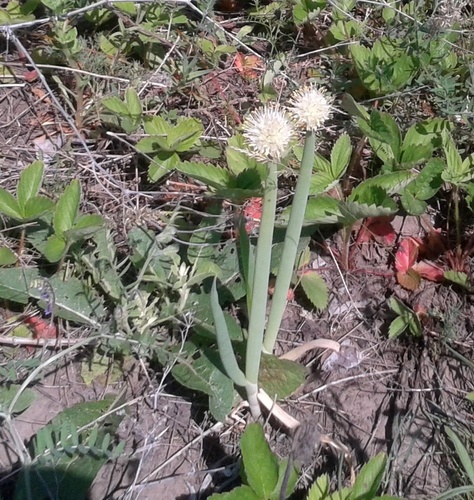


Welsh onion (Allium fistulosum) is an herbaceous perennial in the Amaryllidaceae family, cultivated since ancient times in China for its hollow cylindrical leaves and onion flavor. Unlike a common onion, it never forms a true round bulb; its elongated pseudobulb is barely thicker than the leaf bases.
Read moreWelsh onion, Bunching onion, Japanese bunching onion, Green onion, Spring onion and Negi
Allow a few hours of direct sun per day, preferably morning or evening.
Full sun; tolerates light partial shade


© photo
Oleksandr Shynder · cc-by
Wikimedia Commons · CC BY-SA or Public Domain
Taken Jan 1, 1970 by Photoflora - L'Abbé COSTE (©)
Taken May 10, 2020 by clement vanderlynden (cc-by-sa)
Taken Nov 7, 2017 by Janina Janina (cc-by-sa)
© copyright of the Board of Trustees of the Royal Botanic Gardens, Kew.




Global distribution
Allium fistulosum is a cultigen with no confirmed wild population. Its origin is traced to northeastern China, where cultivation predates the Common Era by several centuries. Allium altaicum, wild in Siberia and Mongolia, is its probable ancestor. Cultivation spread the plant across much of Eurasia and North America, with locally naturalized escapes.
- Native1
- Introduced2
- China
- Russia
- United States
Hexagons: regions where the plant occurs. Green dots: native range.1
Identity
Welsh onion (Allium fistulosum L., 1753) belongs to the Amaryllidaceae family alongside other Allium crops such as onion, garlic and leek. Cultivated in China since ancient times, this herbaceous perennial produces hollow cylindrical leaves with a milder onion flavor than the familiar bulb onion. 1 7
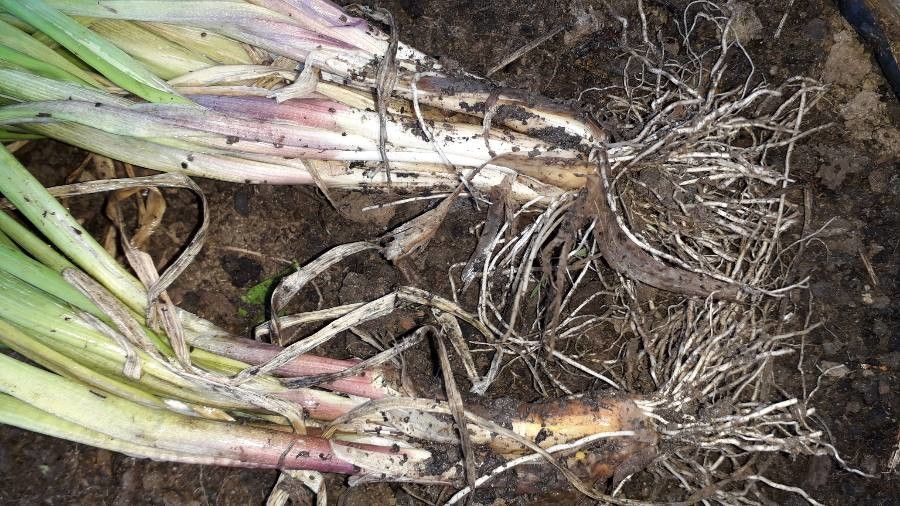
An elongated pseudobulb replaces the swollen round bulb of common onions. It is scarcely thicker than the leaf bases. Together with the hollow stems, that narrow base distinguishes Welsh onion from Allium cepa without cutting the plant open. Other established names include bunching onion, Japanese bunching onion, green onion, spring onion and negi. 4 2
Recognition
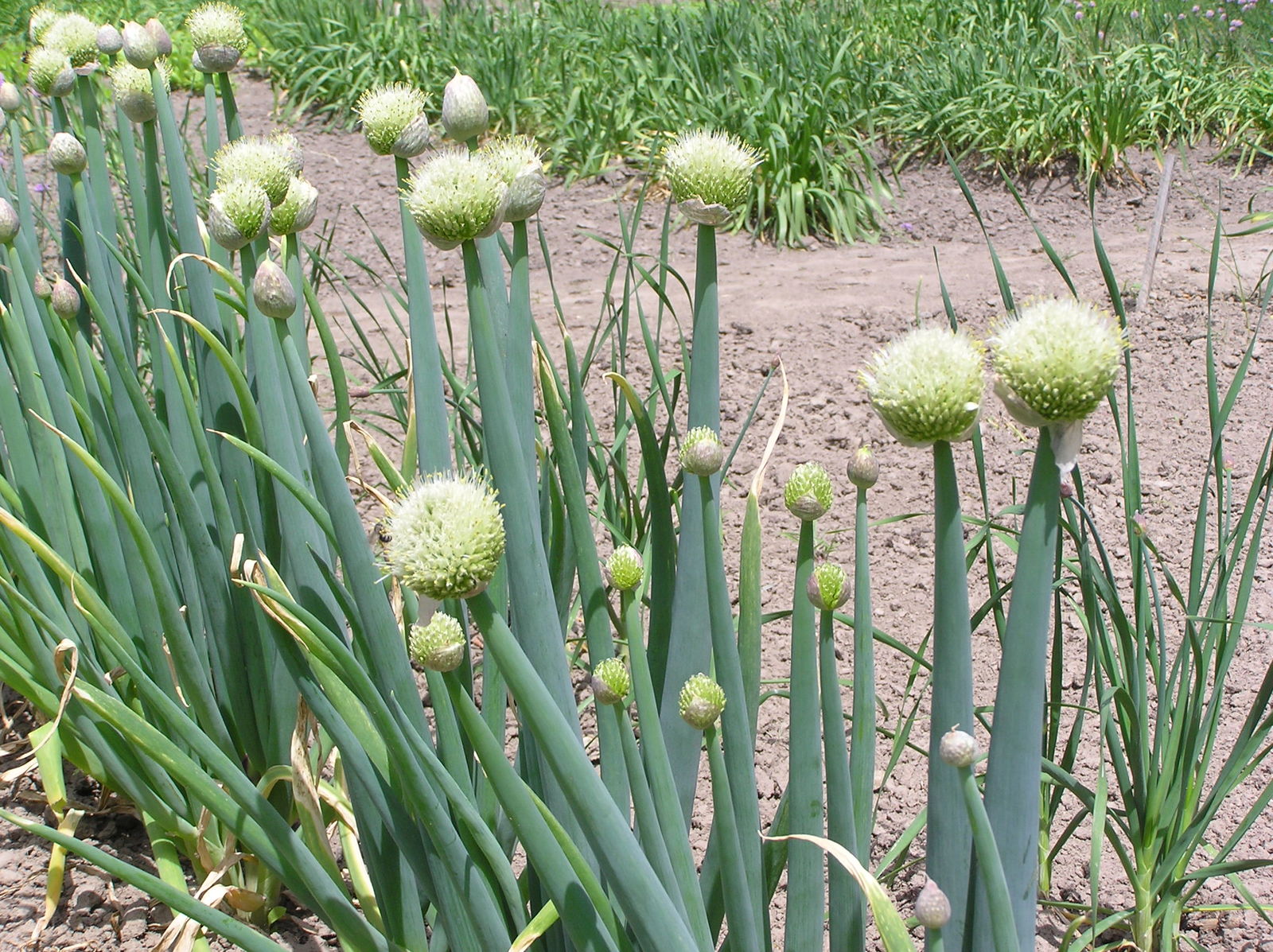
Dark green leaves with a slight blue cast form clumps 30 to 150 cm (1 to 5 ft) tall, depending on the variety and growing method. The leaves are cylindrical, hollow and hairless. Much thicker and fleshier than chives, the stems can reach 40 to 50 cm (16 to 20 in) long. 7 2
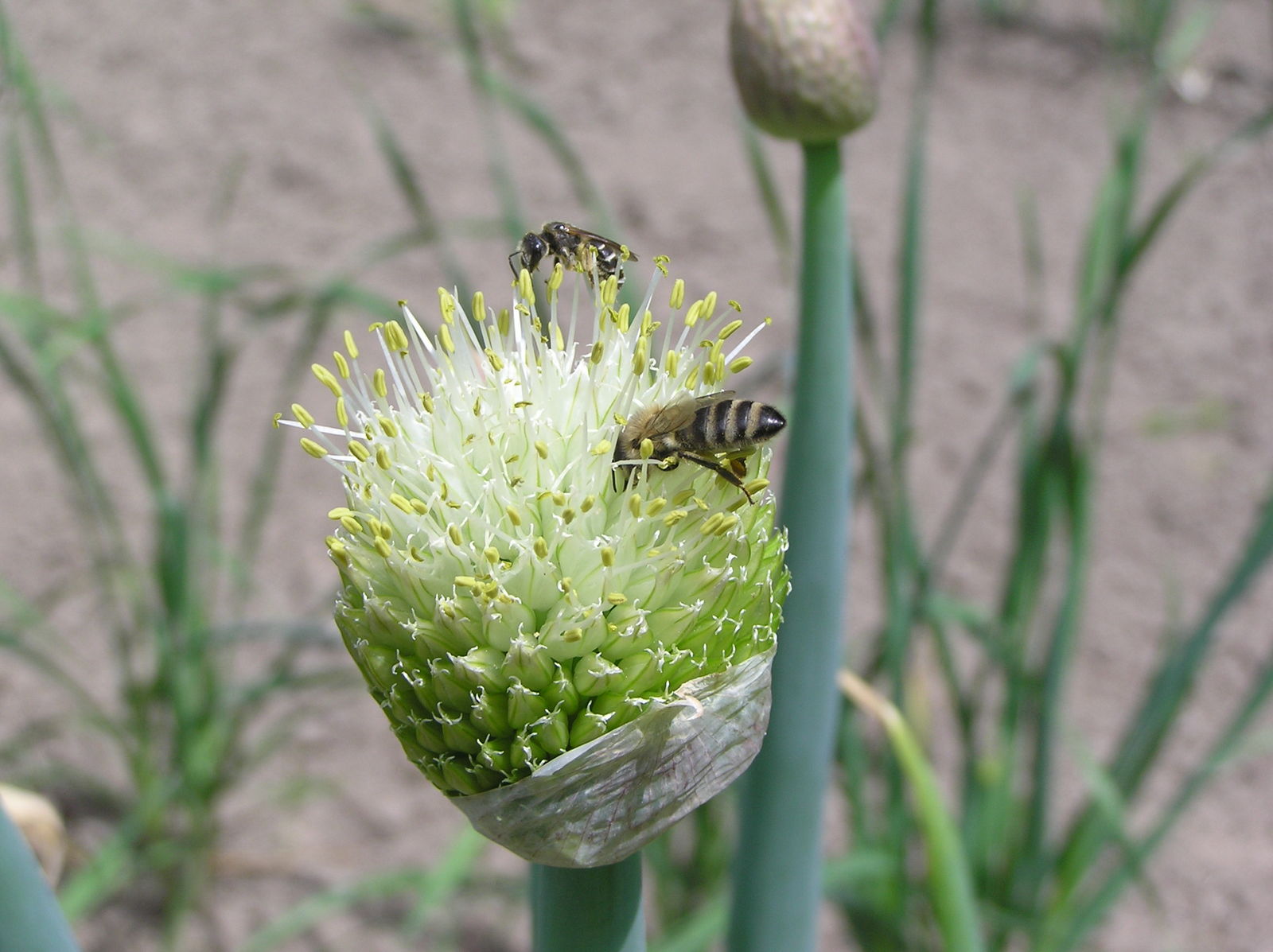
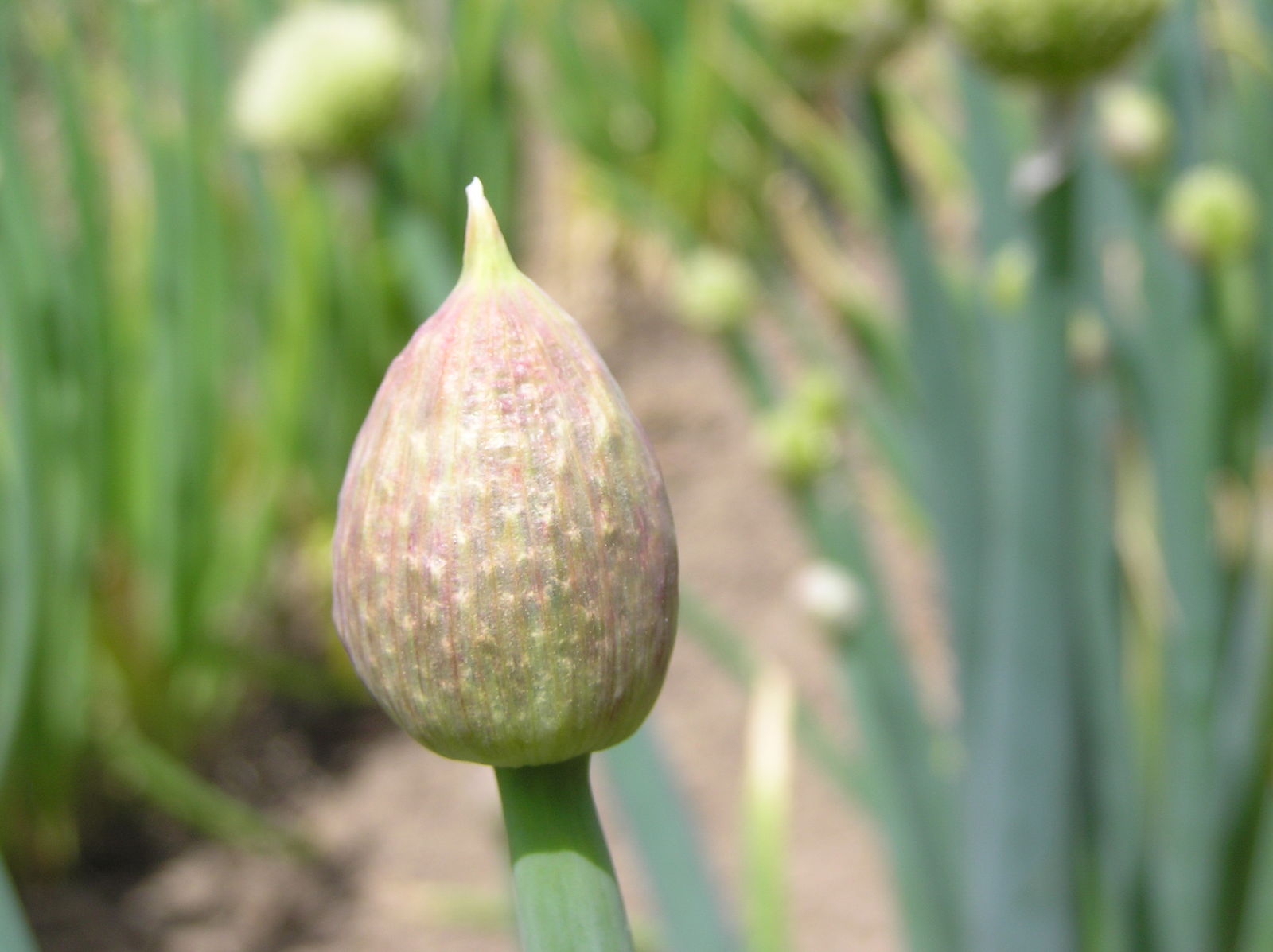
Summer to early-fall flowering produces a dense spherical umbel, 3 to 7 cm (1 to 3 in) across, on a hollow flower stalk without a swelling. Some plants develop greenish-white flowers; others produce leafy bulbils in place of flowers. 7 4
Crushed leaves release a clear onion aroma. Their milder flavor sometimes approaches leek, reflecting sulfur compounds specific to the plant, including propenyl compounds that contribute to this intermediate scent. 7
Useful taxonomy
The species name Allium fistulosum is accepted by POWO. Its history includes infraspecific varieties and synonyms, some of which placed the plant under the common onion:
- Allium cepa subsp. fistulosum (L.) Douin, an earlier subspecies placement
- Allium fistulosum var. caespitosum Makino, a historical varietal name
- Allium fistulosum var. giganteum Makino, a historical varietal name
- Allium fistulosum var. viviparum Makino, a bulbil-bearing name
- Allium fistulosum f. viviparum (Makino) M.Hiroe, another name for the bulbil-bearing form
The synonym Allium cepa subsp. fistulosum records a former treatment as a subspecies of onion; the accepted name keeps the two species separate. The name viviparum refers to plants producing bulbils instead of flowers. 1 7
Habitat and range
A cultivated origin shapes the range of this cultigen. POWO associates it with northeastern China without recording a strictly wild population, and PFAF states that it is not known in the wild. Its probable ancestor, Allium altaicum, grows naturally in Siberia and Mongolia. 1 3
At least two thousand years of cultivation in China preceded its spread across East Asia and later much of Eurasia and North America. It now naturalizes locally around cultivated areas, so an escaped clump does not establish a native wild population. 7 6
Loose, moist soil and full sun suit Welsh onion in the garden. Hardy to USDA zone 5, it can grow in most temperate climates, tolerating cold winters and warm summers without a particular need for partial shade during hot weather. 3 2
Life cycle and reproduction
Gardeners often grow this perennial as an annual or biennial vegetable. Direct sowing takes place in early spring in moist soil. Germination and early growth are slow during the first weeks, after which the clump gradually establishes itself. 7 4
Harvest begins after three to five months. Pick leaves as needed rather than pulling up the entire plant during its first year. Removing flower stalks as they appear prolongs the supply of tender leaves. 7 4
Fall clump division multiplies an established plant faster than sowing. Each section retains a few roots and resumes growth without waiting for new seedlings. Some plants also form leafy bulbils directly on their flowering stalks, a vegetative route associated with the name viviparum. 7 3
Uses and risks
Leaves and pseudobulbs supply the main culinary use. They are eaten raw or cooked, chopped as a seasoning or used as a vegetable in soups, stir-fries and salads. They are particularly prominent in Chinese, Japanese and Korean cooking. 7 6
Human edibility does not extend to pets. Like other Allium species, Welsh onion contains sulfur compounds, including N-propyl disulfide, that damage red blood cells. The ASPCA classes it as toxic to cats, dogs and horses, with risks including hemolytic anemia, vomiting and dark urine. 5 6
Onion fly and leek moth cause the main pest damage in gardens. Downy mildew and white rot also occur, particularly where the soil stays too wet. These problems affect the crop even though established clumps otherwise need relatively little maintenance. 2 7
Varieties, look-alikes and related plants
Cultivar differences reflect harvest and culinary uses rather than separate botanical species. Blanche hâtive and Commune rouge appear in the French official catalog. The Japanese type Ishikura produces no pseudobulb and resembles a slender leek. 7 2
Common kitchen look-alikes can be separated by their leaves and bases:
- Allium tuberosum, garlic chives, has flat leaves and a garlic flavor;
- Allium schoenoprasum, chives, forms a lower clump with much finer leaves;
- Allium cepa, common onion, forms a swollen true bulb instead of an elongated pseudobulb;
- young white onions sold in bunches are annual bulbs pulled before maturity, rather than the perennial clump described here.
The narrow pseudobulb, hollow leaves and clump that regrows from the base each year together confirm Welsh onion even when flowers and bulbils are absent. 4 1
Main sources
- Plants of the World Online / Kew, Allium fistulosum L.
- Royal Horticultural Society, Allium fistulosum - Welsh onion
- Plants For A Future, Allium fistulosum
- Missouri Botanical Garden, Allium fistulosum
- ASPCA, Onion (Allium species) toxicity entry
- Wikipedia EN, Allium fistulosum
- Wikipedia FR, Ciboule (Welsh onion)
- INPN / TAXREF, Allium fistulosum L., 1753
Frequently asked questions
Is Welsh onion the same as garlic chives?
No. Welsh onion (Allium fistulosum) has hollow cylindrical leaves with an onion flavor. Garlic chives (Allium tuberosum) has flat leaves and a more garlicky aroma. They are separate species despite overlapping common names.
Is Welsh onion poisonous to cats and dogs?
Welsh onion is a common edible vegetable for humans. For animals, the ASPCA classifies it as toxic to cats, dogs and horses because its sulfur compounds can cause hemolytic anemia.
Why does Welsh onion never form a round bulb?
Its base remains an elongated pseudobulb, barely thicker than the leaf bases. Common onions instead store reserves in distinctly swollen concentric layers.
How do I propagate a clump of Welsh onion?
Sow directly in spring or, for faster results, divide an established clump in fall into sections that each retain a few roots.
How is Welsh onion different from chives?
Welsh onion (Allium fistulosum) has thick, fleshy stems and can reach 150 cm (5 ft). Chives (Allium schoenoprasum) forms a low clump of much finer leaves. They are related Allium species, but distinct plants.
Can Welsh onion survive winter?
Yes. It tolerates hard frost, and its leaves remain green for much of the year, even under snow in some regions.
Where does Welsh onion come from?
Its origin is traced to northeastern China, where it has been cultivated since ancient times, with no confirmed wild population. Its probable ancestor, Allium altaicum, grows wild in Siberia and Mongolia.
Similar plants
If you are unsure about a plant’s toxicity, ask a botanist or veterinarian for advice.