
Chinese taro (Alocasia cucullata, )
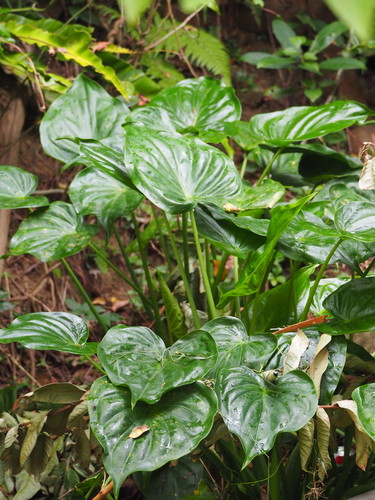

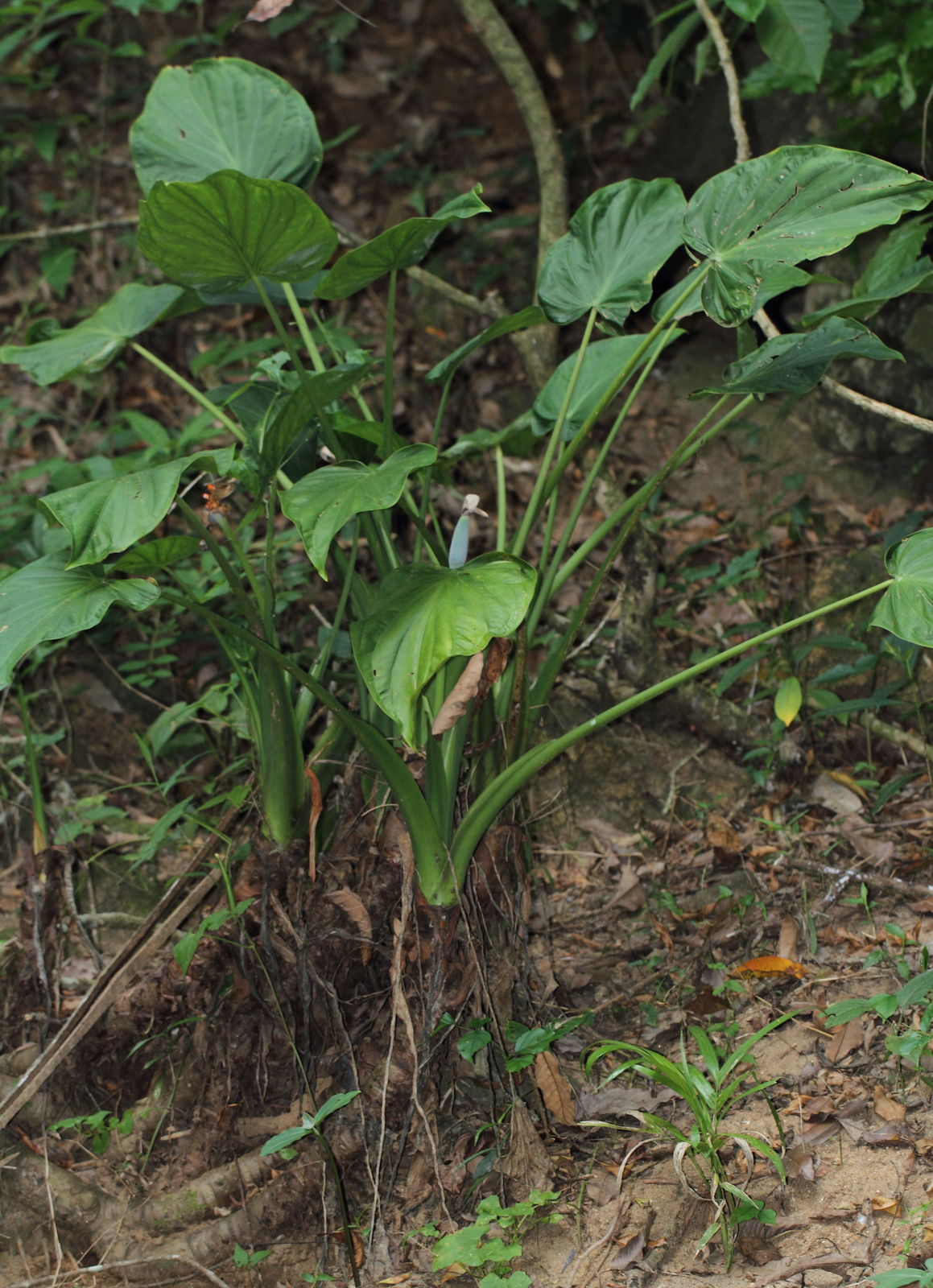
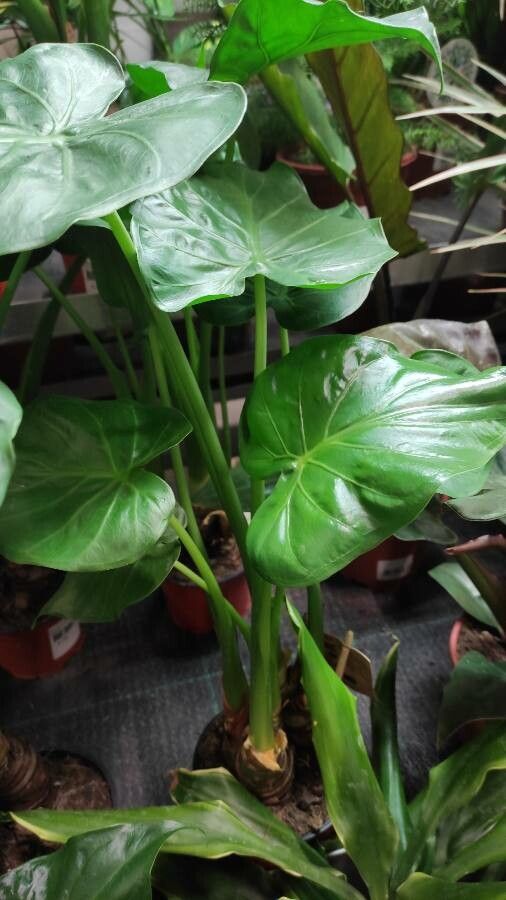
Chinese taro (Alocasia cucullata) forms a clump of glossy green, broadly oval to heart-shaped leaves. This Asian perennial in the Araceae family stays around 1 m (3 ft) tall in cultivation and needs indirect light, a well-drained growing medium and protection from cold.
Read moreChinese taro, Hooded dwarf elephant ear and Buddha’s hand
Arum cucullatum Lour., Caladium cucullatum (Lour.) Pers., Colocasia cucullata (Lour.) Schott, Alocasia rugosa (Desf.) Schott, Caladium colocasia Schott ex Wight, Caladium rugosum Desf., Colocasia cochleata Miq., Colocasia rugosa (Desf.) Kunth and Panzhuyuia omeiensis Z.Y.Zhu
Give plenty of ambient light without direct sun on the leaves.
Bright filtered or indirect light indoors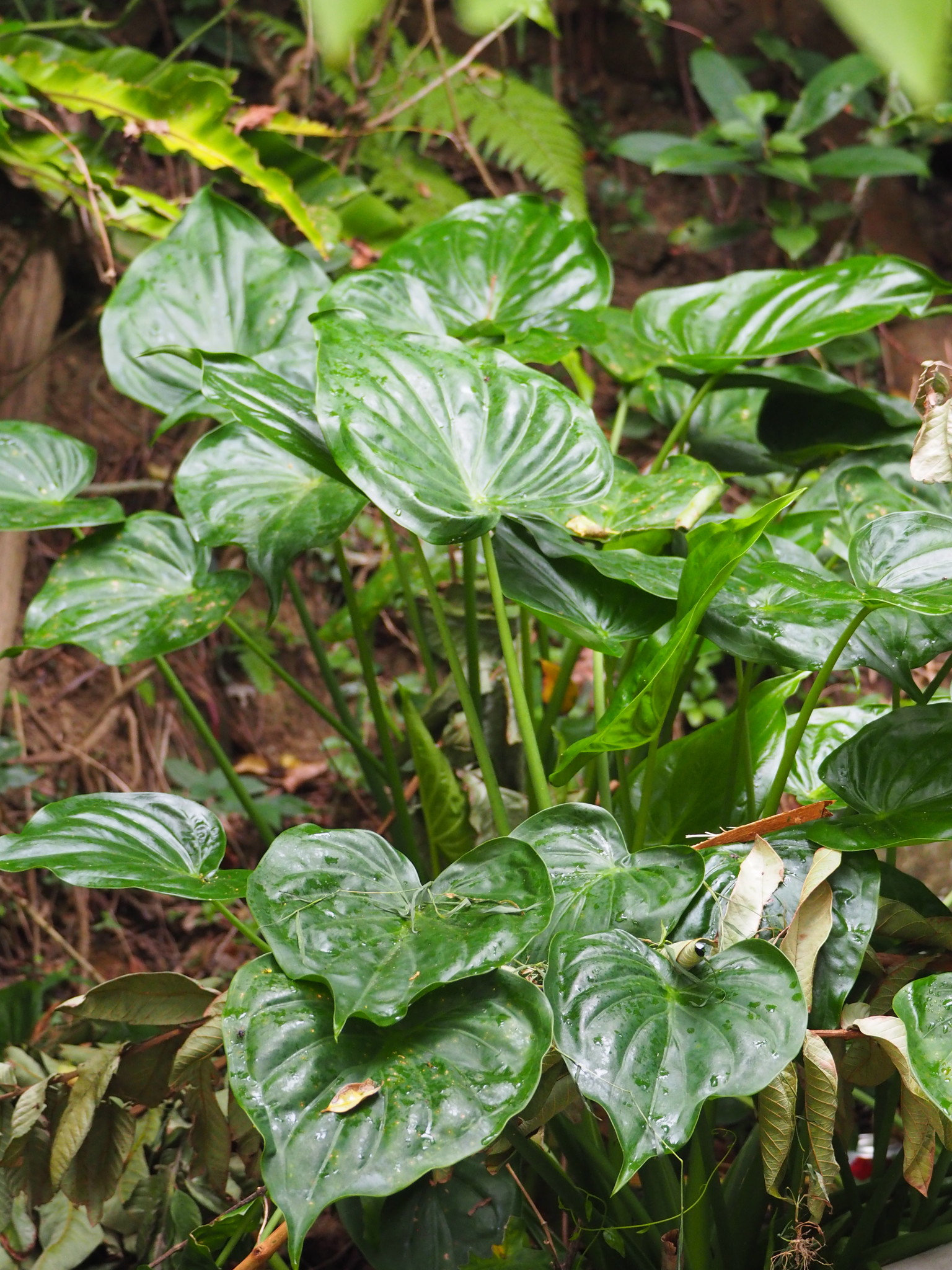


© photo
no rights reserved, uploaded by 葉子 · cc0
葉子 · cc0
Frank Thomas Sautter · cc0
Taken Sep 13, 2020 by Burity Edilson (cc-by-sa)
Taken Apr 17, 2019 by OTS - J. González (cc-by-nc-sa)
© copyright of the Board of Trustees of the Royal Botanic Gardens, Kew.




Global distribution
POWO gives a native range from Sri Lanka and the Himalayas to southern China and Indochina, with introductions including Japan and Central America. Boyce considers it a possible ancient cultigen; its precise wild origin remains uncertain.
- Native5
- Introduced2
- Sri Lanka
- Southern China
- Laos
- Thailand
- Vietnam
- Japan
- Costa Rica
Hexagons: regions where the plant occurs. Green dots: native range.1
Identity
Chinese taro (Alocasia cucullata (Lour.) G.Don, 1839) has glossy, heart-shaped green leaves and forms a compact clump. This perennial in the Araceae family reaches around 1 m (3 ft) in cultivation. Its foliage suits a pot in indirect light, but the plant is toxic if eaten. 1 3
The French names “main de Bouddha” and “taro chinois” also refer to this species. Like the English name “Buddha’s hand,” these are horticultural common names, rather than names for a botanical variety or cultivar. 6 7 5
Recognition
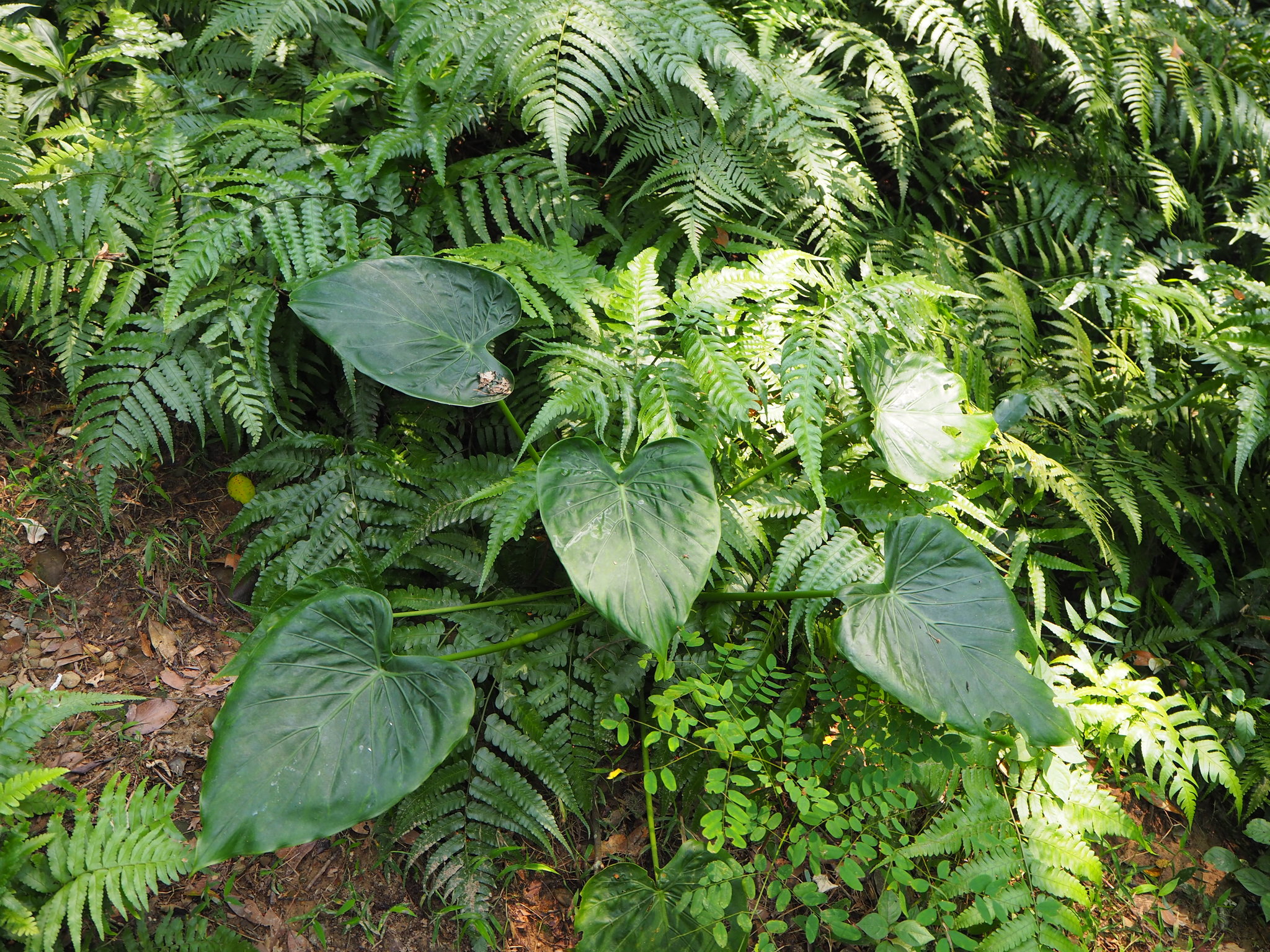
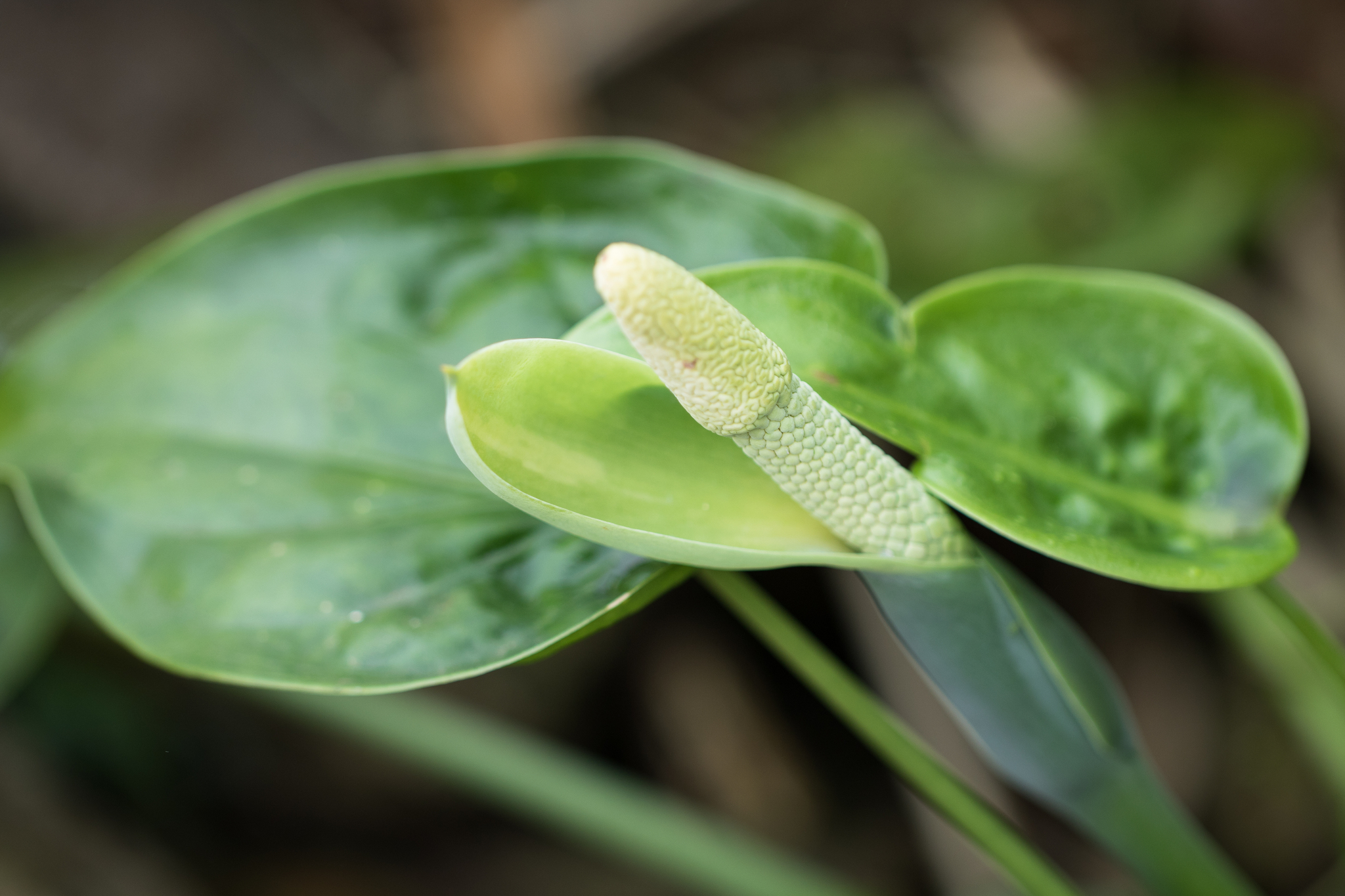
Chinese taro has broadly oval to heart-shaped leaf blades, with a heart-shaped notch at the base and a pointed tip. The leaves measure 10–40 cm (4–16 in) long and 7–25 cm (3–10 in) wide. Their margins are unbroken but wavy; the veins form a palmate network across the glossy surface. 2
The upright stems branch at the base. Under horticultural conditions, mature height and spread range from 0.5 to 1 m (1.6–3.3 ft), with the plant reaching its full size over 2–5 years. 3
Useful taxonomy
The accepted name for Chinese taro is Alocasia cucullata. Its first published name was Arum cucullatum Lour., in 1790; the combination in the genus Alocasia dates to 1839. The author’s name in parentheses preserves the reference to Loureiro. 1
The names Caladium cucullatum (Lour.) Pers. and Colocasia cucullata (Lour.) Schott reflect earlier placements of the same taxon. Its synonyms also include Alocasia rugosa (Desf.) Schott and Panzhuyuia omeiensis Z.Y.Zhu. An old label under Colocasia therefore does not, by itself, identify a different plant: the species epithet and botanical authority matter too. 1 5
Habitat and range
Plants of the World Online (POWO) gives the native range of Chinese taro as Sri Lanka, the Himalayas, southern China and Indochina. POWO also lists Bangladesh, Laos, Myanmar, Thailand, Vietnam and Taiwan among its native territories. The plant grows mainly in the wet tropical biome. 1
In his provisional revision of Thailand’s alocasias, Boyce describes Chinese taro as a probable ancient cultigen. He reports the species only in association with habitats disturbed by human activity, including places near temples and villages. The precise wild origin of Chinese taro therefore remains uncertain. 8
Japan, Costa Rica and Honduras are listed among its introduced territories, along with Hawaii and several Pacific island groups. Finding Chinese taro in these regions does not establish a local origin. Introduction records describe distribution; on their own, they establish no invasive status in France or elsewhere. 1 5
For indoor cultivation, Chinese taro needs bright filtered light and a moist, well-drained growing medium. The species-specific winter recommendation is to keep the plant above 12 °C (54 °F). This horticultural threshold concerns keeping a plant in cultivation; it is not an experimentally established temperature at which its tissues die. 3
Life cycle and reproduction
Division in spring or summer provides a way to propagate Chinese taro; stem cuttings are also recommended in spring. Flowering remains rare in cultivation. 3
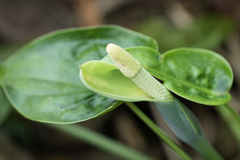
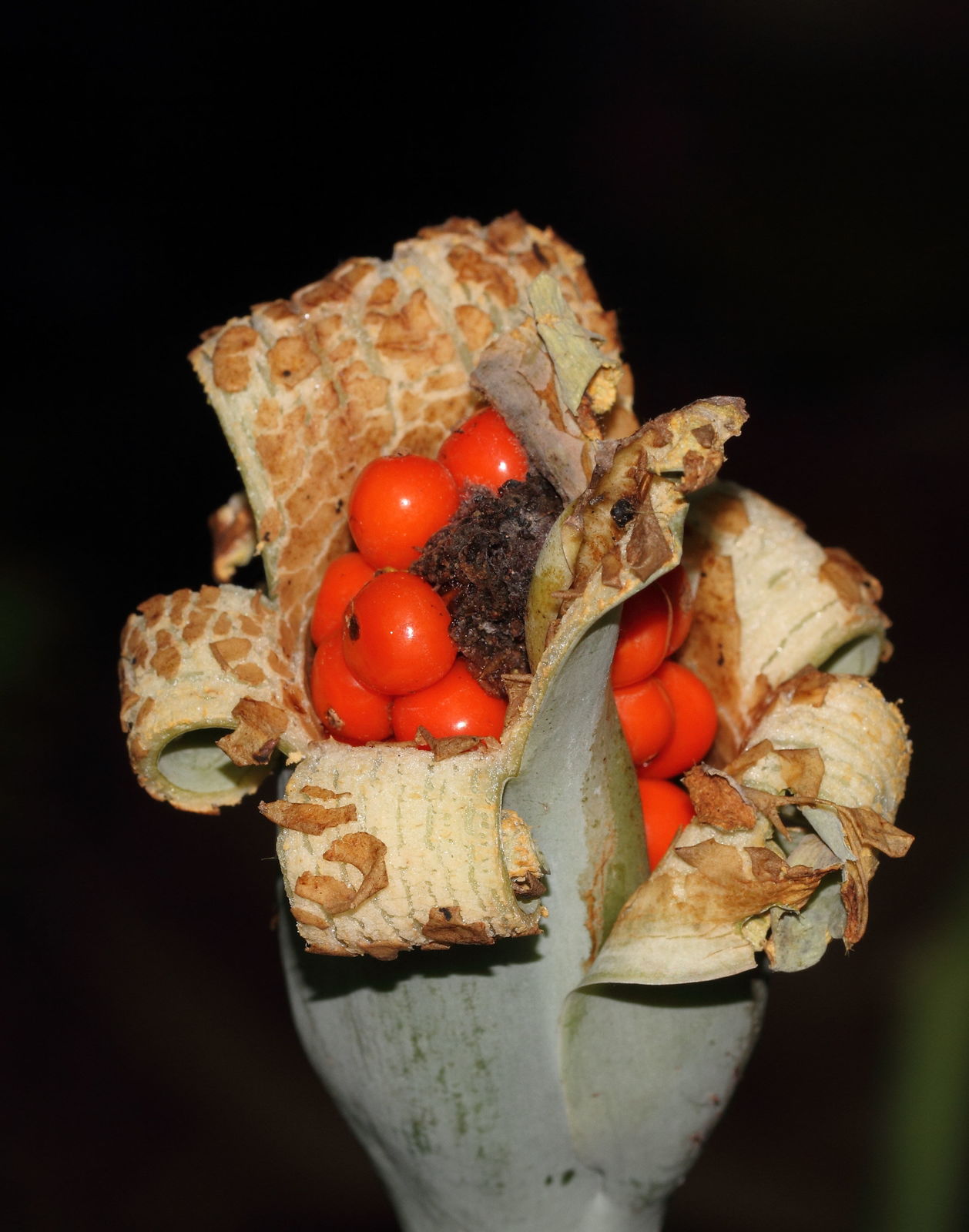
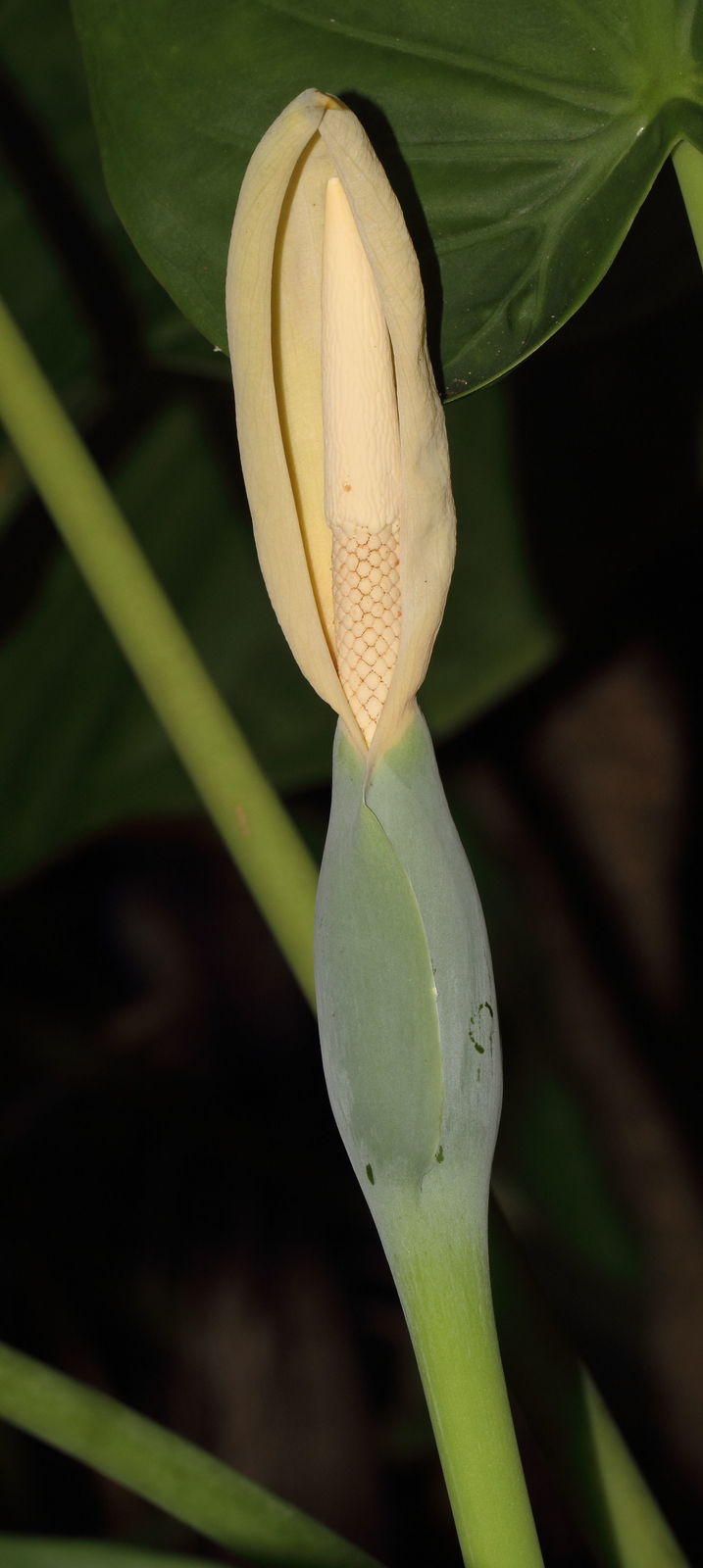
The inflorescence has a green spathe around a yellowish-white spadix. The spathe measures 9–15 cm (3.5–6 in) and the spadix 8–15 cm (3–6 in). Inflorescences occur singly or in pairs. The fruits are nearly spherical berries, red when ripe, measuring 6–8 mm (0.24–0.31 in) across. 2
The calendar uses indoor cultivation in metropolitan France, in the Northern Hemisphere, as its reference setting. Its water and growth scores are relative editorial values without units: they express an active season followed by a winter slowdown. The scores measure neither water volume nor growth rate. Repotting windows depend on whether roots have become crowded; general advice for alocasias places repotting in spring, when needed. 3 4
Water Chinese taro less in winter. During growth, the species-specific recommendation is a general liquid fertilizer every 2–3 weeks, from spring through fall. This interval does not define a universal dose: the guidance specifies neither an NPK formula nor a numerical dilution. 3
Uses and risks
Chinese taro is grown for its ornamental foliage, in pots or indoors. In Thailand and Laos, it is also planted in front of some homes as a good-luck plant. The English name “Buddha’s hand” refers to the resemblance seen between the large leaves and Buddha’s hands. 2
Chinese taro is toxic if eaten and can irritate the skin or eyes on contact. Wearing gloves when handling the plant limits exposure. Toxicity is also reported for pets collectively; there are no horse-specific data that would allow a more precise assessment for horses. 3
The corm, the underground storage organ, contains toxic calcium oxalate crystals. Traditional medicinal uses are reported, but their effectiveness has not been validated. Neither the word “taro” nor these uses establishes that Chinese taro is safe to eat. 2
Varieties, look-alikes and related plants
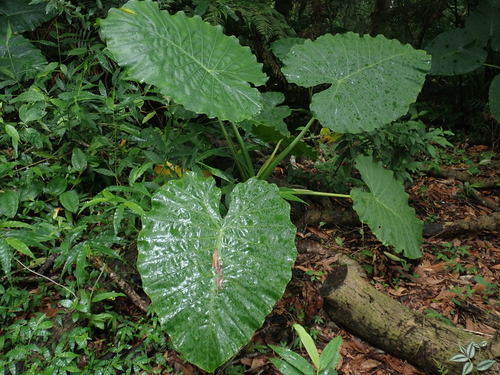
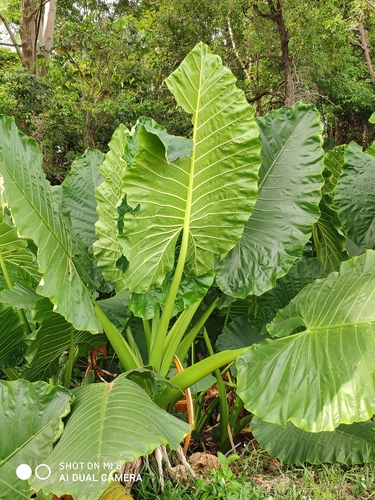
The uniform green foliage of Chinese taro differs from the dark green leaves with silvery veins of the hybrid alocasia Alocasia × amazonica ‘Polly’. The large alocasias Alocasia odora and Alocasia macrorrhizos are also separate species, described as reaching around 1.5 m (5 ft) in an indoor growing context. Their dimensions should not be applied to Alocasia cucullata. 3 4
“Main de Bouddha” remains a French common name for the species. A named cultivar requires a verified description and taxonomic association; a sales label alone does not establish a distinct horticultural selection. 6 7
Main sources
The botanical references establish the identity and characteristics of Chinese taro. The two commercial references attest only to its French common names.
- Kew, Plants of the World Online, Alocasia cucullata
- NParks Flora & Fauna Web, Alocasia cucullata
- RHS, Alocasia cucullata
- RHS, How to grow alocasias, genus-level advice
- EPPO Global Database, Alocasia cucullata
- Palmiers et Compagnie, attestation of the French name taro main de Bouddha
- LANDI, attestations of the French names main de Bouddha and taro chinois
- Boyce (2008), A review of Alocasia (Araceae: Colocasieae) for Thailand, pp. 5 and 7–8
Frequently asked questions
How do I identify Chinese taro?
Alocasia cucullata forms a clump of glossy green, oval to heart-shaped leaves with pointed tips. The leaf blade measures 10–40 cm (4–16 in) long and 7–25 cm (3–10 in) wide.
Is Chinese taro edible?
Alocasia cucullata is toxic if eaten. The name taro and traditional medicinal uses of its corm do not establish that it is safe to eat.
What temperature does Chinese taro need in winter?
The horticultural recommendation specific to Alocasia cucullata is to keep the plant above 12 °C (54 °F), with reduced watering in winter.
Is Main de Bouddha a cultivar?
Main de Bouddha is an attested French common name for Alocasia cucullata. The name alone does not identify a cultivar.
Similar plants
If you are unsure about a plant’s toxicity, ask a botanist or veterinarian for advice.