
Green velvet alocasia (Alocasia micholitziana, )


Green velvet alocasia (Alocasia micholitziana) has dark-green, velvety leaves traced with white veins. This rhizomatous perennial from Luzon is grown with protection from cold.
Read moreGreen velvet alocasia


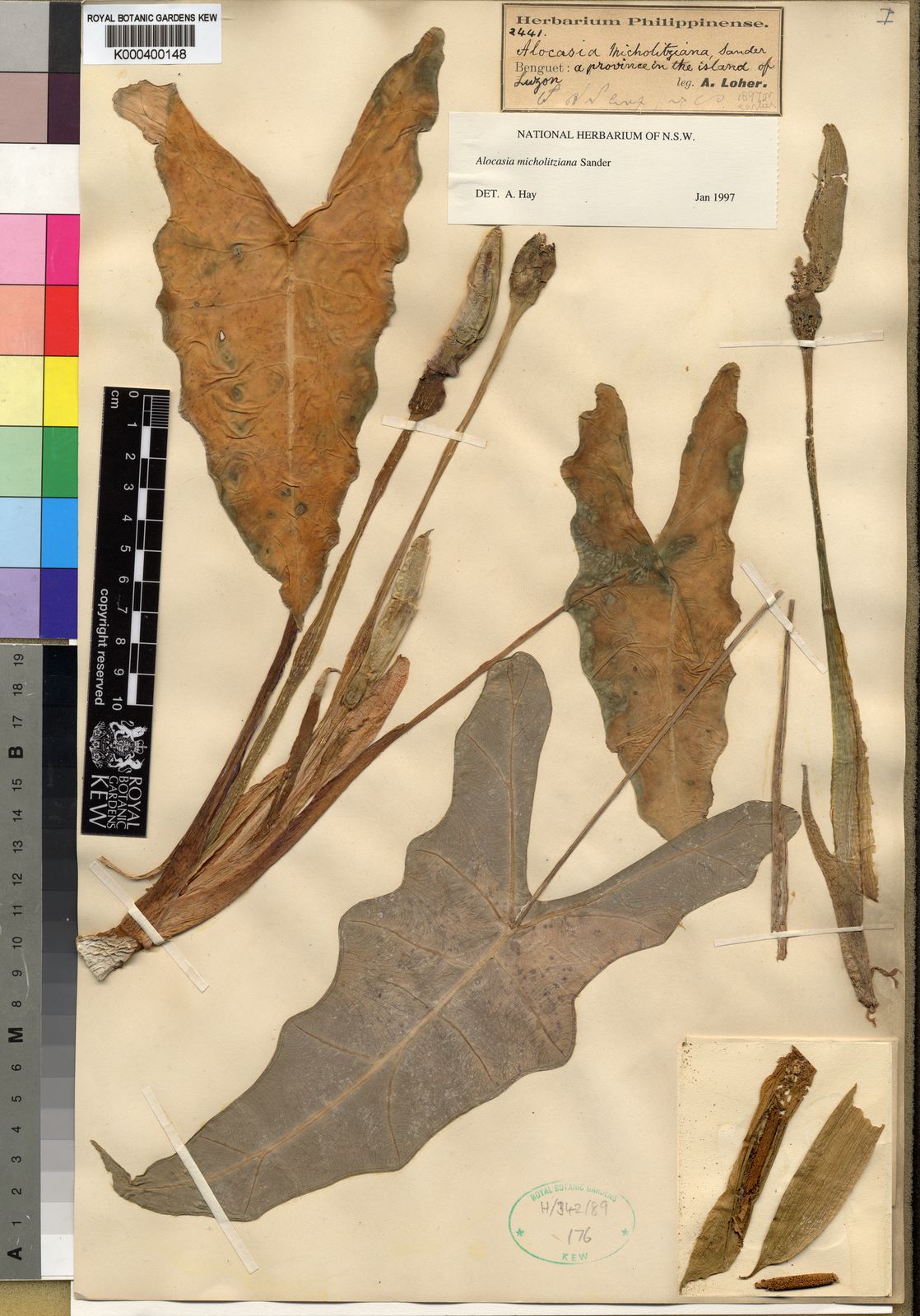
© photo
Wikimedia Commons · CC BY-SA or Public Domain
Wikipedia · CC BY-SA
© copyright of the Board of Trustees of the Royal Botanic Gardens, Kew.


Global distribution
A species native to Luzon in the Philippines, in a wet tropical climate.
Identity
Green velvet alocasia (Alocasia micholitziana) is a rhizomatous perennial in the Araceae family, grown for its dark leaves with white veins. The botanical name carries the author attribution Sander. Its publication is dated to 1912 in the International Plant Names Index, which mentions the Gardeners’ Chronicle and an illustration in the Botanical Magazine. 3 2
The velvety foliage is a useful first clue, but identification also requires a look at the shape of the leaf blade and its underside. Alocasias include plants with very different leaves: the general “elephant’s ear” outline is not enough to recognize this species. 3 4
Identification
The leaves of Alocasia micholitziana are arrow-shaped, dark green, and velvety. White veins contrast with the blade; the edge is wavy and the underside pale green. The RHS describes leaves up to 40 cm (16 in) long, borne on petioles that can measure 45 cm (18 in). Look for these features together on a developed leaf. 3
The plant described reaches about 65 cm (26 in) tall. For greenhouse or indoor cultivation, the horticultural profile gives a height and spread of 50–100 cm (20–39 in). These dimensions apply to cultivation under cover and help in planning space near a window; they do not define a maximum size in its natural habitat. Inflorescences with a greenish spathe occasionally appear. 3
Useful taxonomy
NCBI’s classification places Alocasia micholitziana in the genus Alocasia, family Araceae, and order Alismatales. It names the kingdom Viridiplantae: that is the designation used in the classification presented here. 1
The name Alocasia micholitziana designates the species. A name added in single quotation marks designates a horticultural selection when recorded as such: the RHS has a separate entry for ‘Freydyk’, with that spelling. This entry describes a variegated plant, whereas the species description concerns dark foliage with white veins. 3 6
Read the full label before comparing two plants. Broad pale patches of variegation and naturally white veins are different features. Dimensions or growth rates given for a particular selection do not necessarily describe the whole species. 6 3
Habitat and distribution
Alocasia micholitziana comes from Luzon in the Philippines. This origin appears in IPNI’s nomenclatural data. Its tropical background explains its use as a greenhouse plant or houseplant in temperate regions; the RHS classifies the species as sensitive to cold. 2 3
For alocasias grown at home, the RHS recommends bright, indirect light and humid air. Strong sun can scorch the leaves. A bright bathroom may be suitable, while a position exposed to cold drafts is problematic. This advice concerns cultivation of the genus; it does not provide climate measurements for a wild site on Luzon. 5
Life cycle and reproduction
The rhizome is a useful propagation organ in alocasias. The RHS guide advises separating offshoots in spring with their roots intact, or dividing the fleshy rhizome in late spring and early summer. Keep divisions warm, in a well-drained growing medium and good light. Wear gloves when handling them. These seasonal timings follow the British guide’s calendar. 5
In temperate indoor cultivation, watering and feeding follow growth. The British guide places watering and fertilizing mainly between April and October. For a plant in France, also observe how the pot dries: the RHS suggests waiting until the top 5 cm (2 in) is dry before watering during this period. During winter rest, greatly reduce water and stop feeding; an overly wet growing medium can cause root rot. 5
Uses and risks
The plant is grown as an ornamental for its foliage. The general RHS guide advises repotting in spring when the roots lack space, using a pot only slightly larger and a well-drained mix. A pot that starts drying out very quickly after watering can indicate overcrowded roots. Cut dead leaves off at the base. This spring timing comes from the British growing guide. 3 5
Insoluble calcium oxalates are the toxic principle listed by the ASPCA for Alocasia spp., which includes the species of the genus. Alocasias are classified as toxic to cats, dogs, and horses. Chewing can cause pain and swelling in the mouth, drooling, and difficulty swallowing; vomiting concerns animals capable of vomiting, not horses. Contact a veterinarian if ingestion is suspected. 7
Alocasia micholitziana is toxic if ingested, according to the RHS warning for this species, which also notes possible skin and eye irritation. Keep the plant out of children’s reach and wear gloves when cutting it. Particular sensitivity in children has not been established; the risk to other animal groups is not documented here. 3 4
Varieties, look-alikes, and related plants
The selection ‘Freydyk’ described by the RHS has silvery-white patches and creamy-white veins on very dark, velvety leaves. The species profile, by contrast, describes a dark blade traced with white, without these broad areas of variegation. Comparing the two appearances avoids expecting a green plant to show a feature specific to a variegated selection. 6 3
Dark foliage with pale veins also occurs in other horticultural alocasias. The RHS guide mentions ‘Polly’, whose dark-green leaves have silvery veins. For Alocasia micholitziana, check the velvety texture, wavy edges, and pale-green underside in particular, rather than vein color alone. 5 3
Main sources
Frequently asked questions
How can you identify green velvet alocasia?
Its arrow-shaped leaves are dark green and velvety, with white veins, wavy edges, and pale-green undersides. The RHS gives a leaf blade length of up to 40 cm (16 in).
How large does green velvet alocasia grow in cultivation?
The RHS describes a plant about 65 cm (26 in) tall, with a horticultural height and spread of 50–100 cm (20–39 in) under cover. These figures do not describe a maximum size in the wild.
Is Alocasia micholitziana toxic to cats?
The ASPCA classifies Alocasia spp. as toxic to cats, dogs, and horses because of insoluble calcium oxalates. Keep the plant out of reach and contact a veterinarian if ingestion is suspected.
Should the growing medium stay constantly waterlogged?
No. The RHS guide to alocasias recommends waiting for the top 5 cm (2 in) to dry during growth and greatly reducing watering during rest, because excess water can cause root rot.
Similar plants
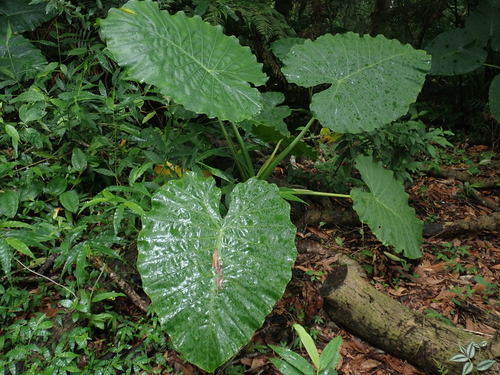
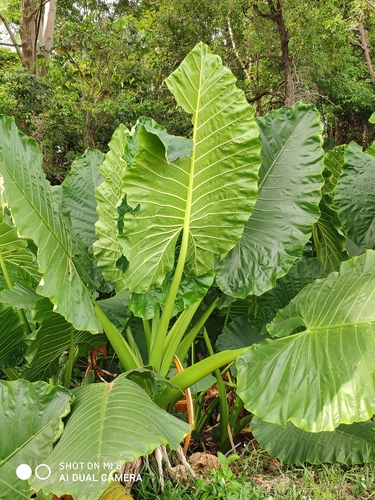
If you are unsure about a plant’s toxicity, ask a botanist or veterinarian for advice.