
Titan arum (Amorphophallus titanum, )
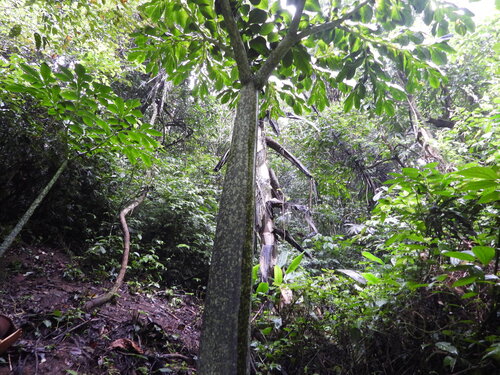
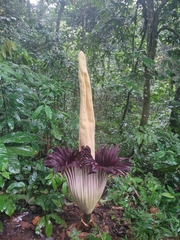
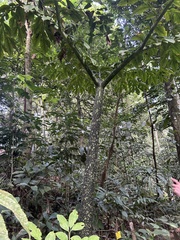
Titan arum (Amorphophallus titanum) is an aroid endemic to the rainforests of western Sumatra, famed for its huge unbranched inflorescence and the smell of decaying flesh released during its rare, brief flowering. Year after year, the same enormous tuber produces either a single tree-like leaf or an inflorescence, never both at once.
Read moreTitan arum and Corpse flower



© photo
Светлана Царахова · cc0
Samuel GUIRAUDOU · cc-by
eustreptospondylus · cc-by
Taken Nov 30, 2021 by William Coville (cc-by-sa)
Taken Jul 8, 2021 by Dieter Albrecht (cc-by-sa)
© copyright of the Board of Trustees of the Royal Botanic Gardens, Kew.




Global distribution
Amorphophallus titanum is endemic to western Sumatra, Indonesia, growing in tropical rainforest gaps on limestone hills. Wild populations occur only on this island; elsewhere it is cultivated in botanical gardens or specialist collection greenhouses.
Identity
Titan arum (Amorphophallus titanum (Becc.) Becc., 1879), also called corpse flower, is an aroid with an enormous tuber, endemic to the rainforests of western Sumatra. Italian naturalist Odoardo Beccari discovered it on August 6, 1878 in the forested hills around Pariaman, before taking a dried inflorescence, tubers and seeds back to Europe. 1 8
The scientific name combines Greek amorphos, meaning shapeless, and phallos, referring to the silhouette of the spadix, with Titan, the giants of Greek mythology. Corpse flower translates the Indonesian bunga bangkai, directly describing the smell of decaying flesh during flowering. 2
Recognition
Rare flowering reflects an energy trade-off. Each year, the underground tuber produces either a leaf or an inflorescence, never both simultaneously. It is heavier than the tuber of any other known flowering plant, exceeding 90 kg (198 lb) in an old specimen, with a documented Edinburgh record of 153.9 kg (339 lb) after seven years of growth. 6 5
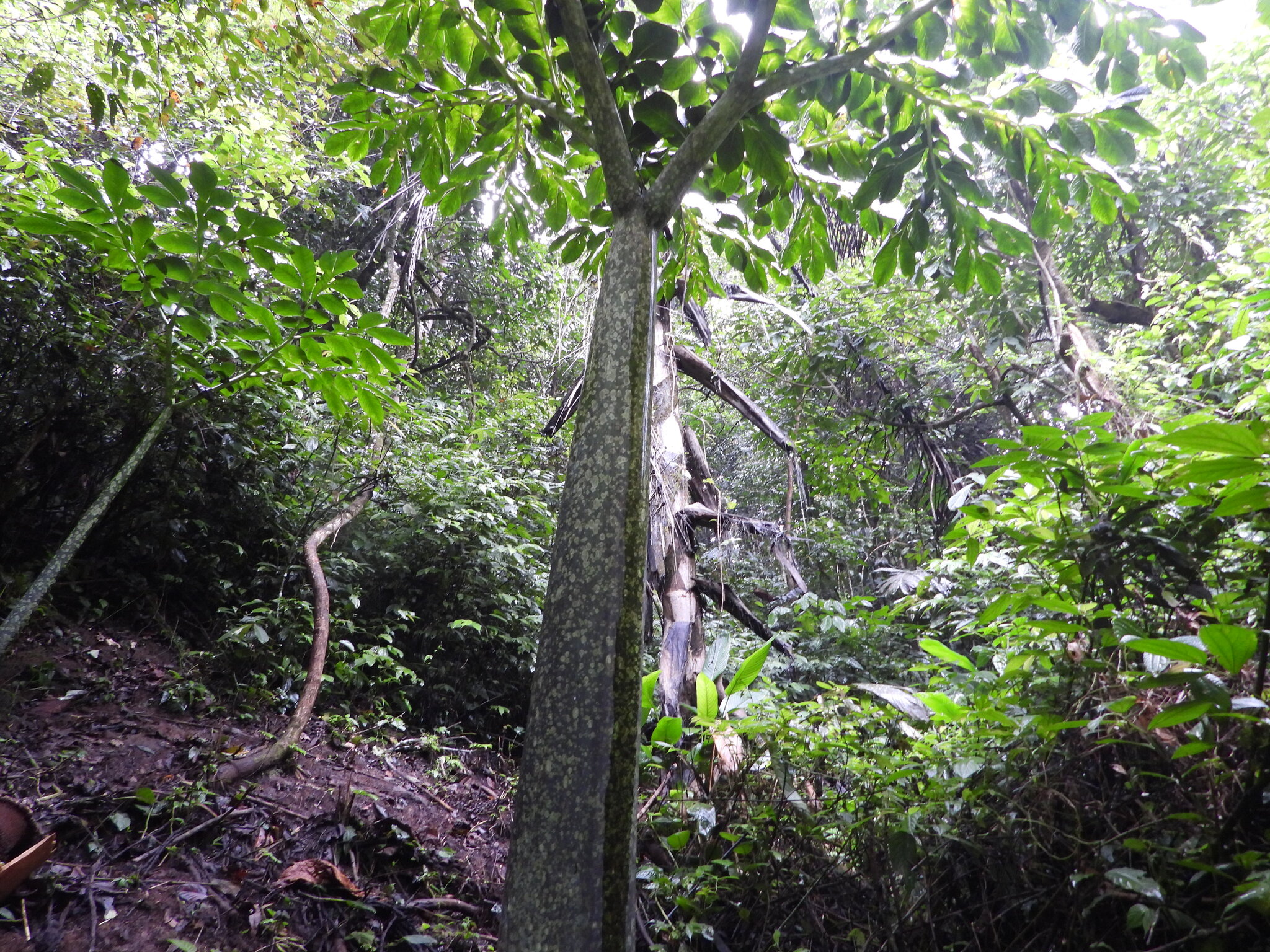
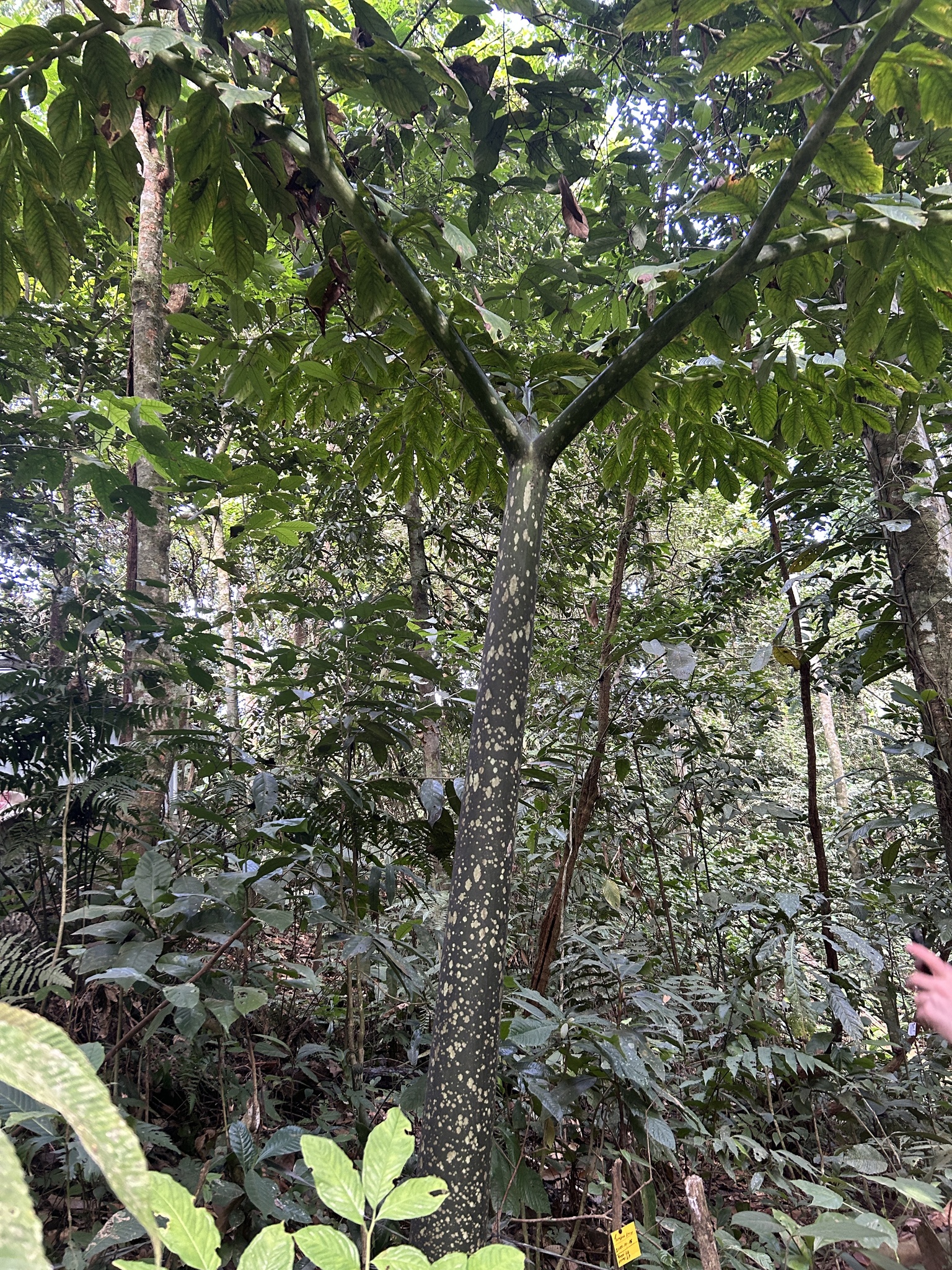
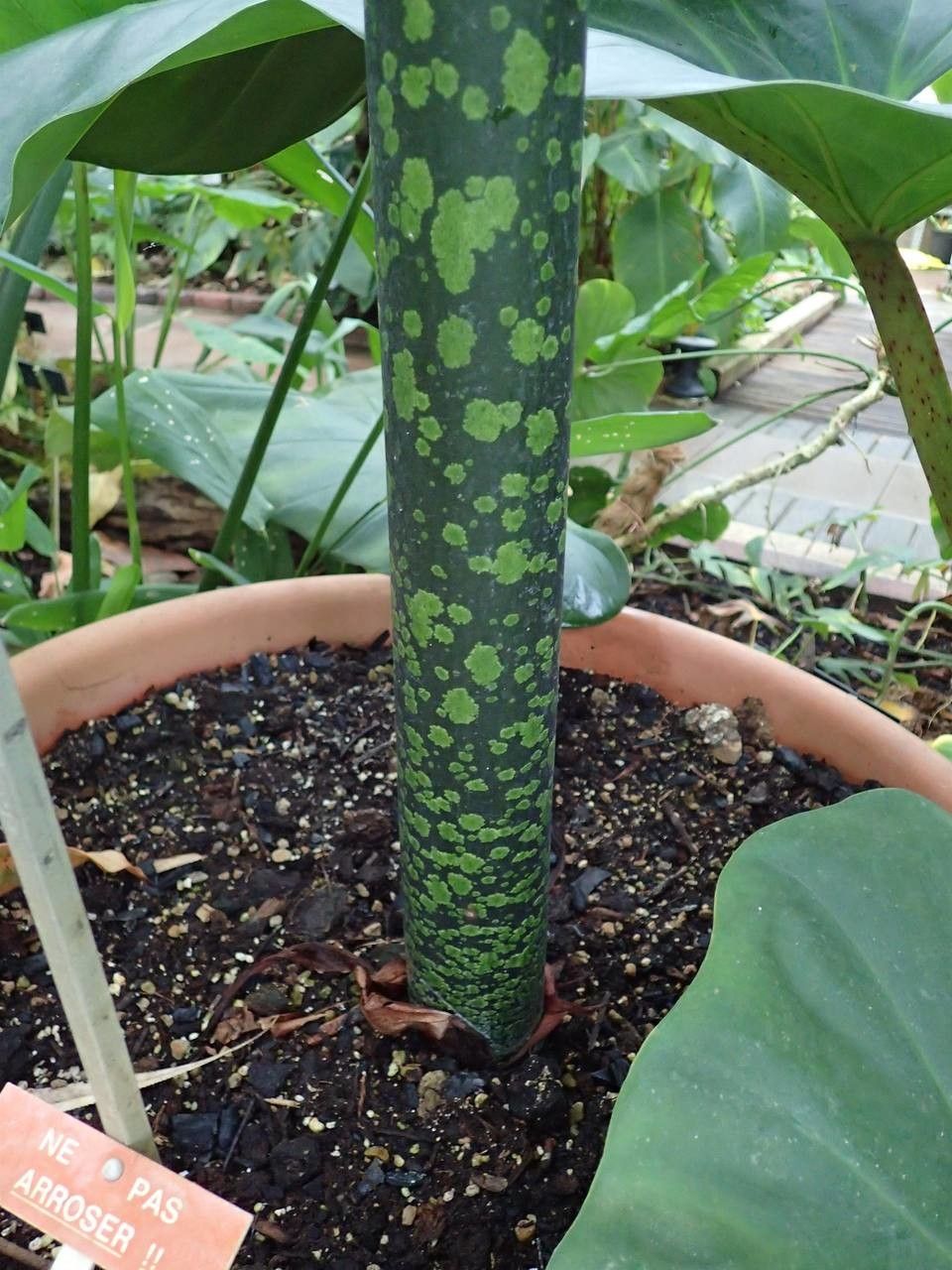
When producing a leaf rather than a bloom, titan arum develops a single tree-like leaf on a green-and-white mottled petiole as thick as a human thigh. It divides into three branches covered in leaflets. The single leaf reaches nearly 4.7 m (15.4 ft) tall, dies after about a year and leaves the tuber dormant for four months. 6
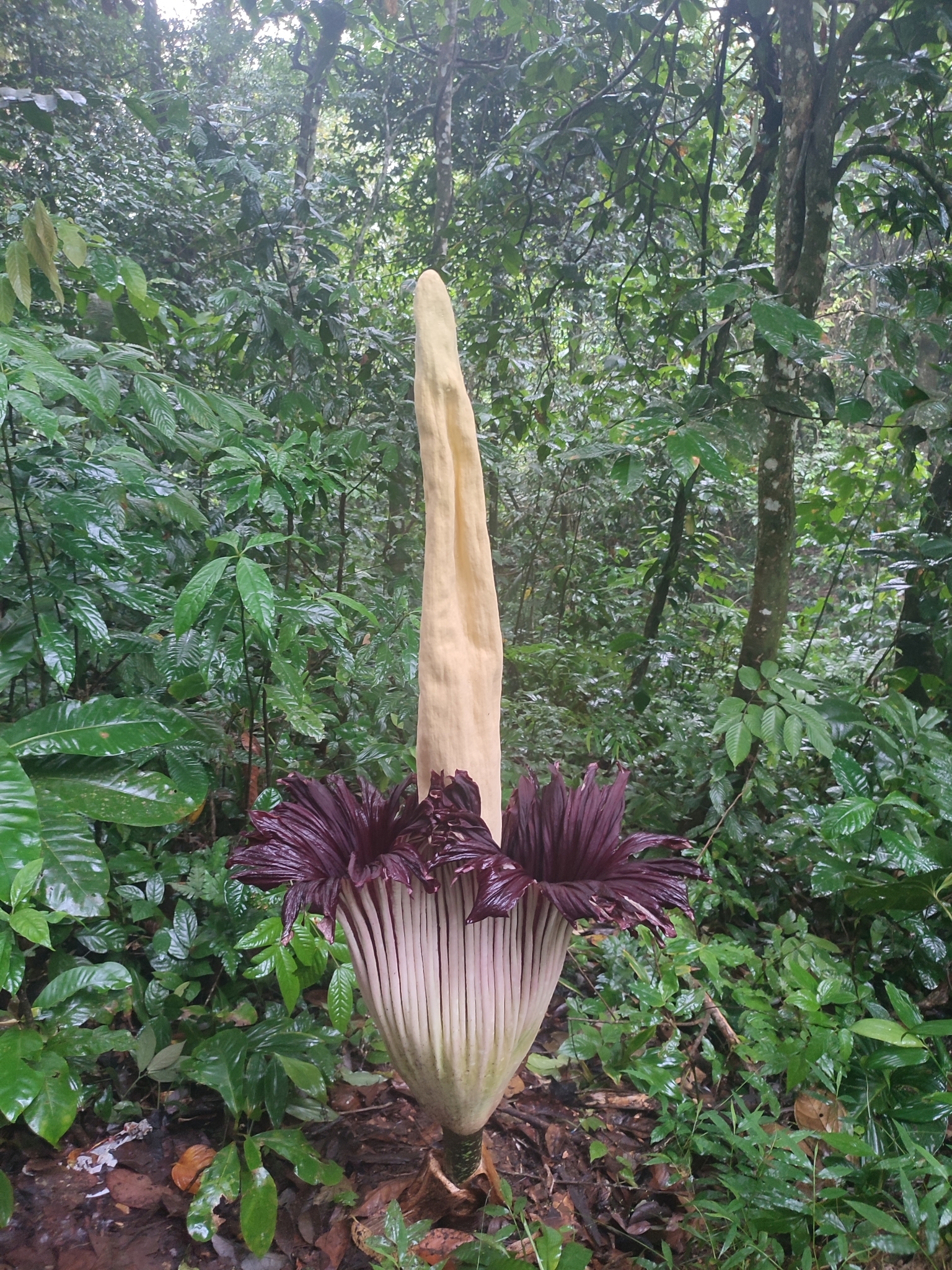
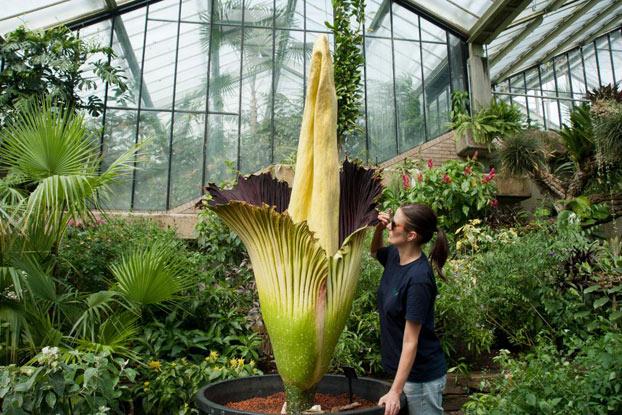
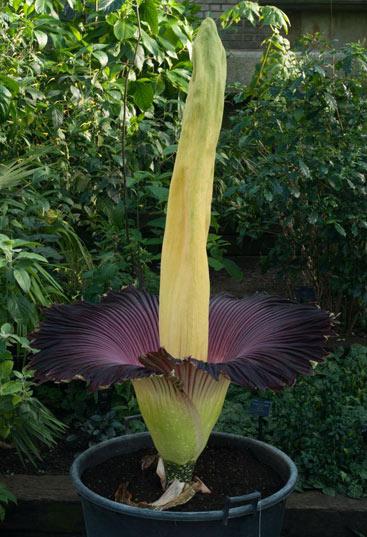
Flowering instead produces an unbranched inflorescence that can exceed 3 m (9.8 ft), the largest known in the world. The current record, measured at Meise Botanic Garden in 2024, is 3.225 m (10.6 ft). A spathe, creamy green outside and deeply pleated dark purple within, surrounds a central spadix with two rings of small flowers hidden at its base. 1 5
Useful taxonomy
Beccari initially named the plant Conophallus titanum in 1878, in an anonymously published letter. In 1879 he transferred it himself to Amorphophallus, establishing the currently accepted name Amorphophallus titanum. 1 2
The genus Amorphophallus includes about 170–200 species, distributed from tropical Africa through India, Southeast Asia and Japan to Australia. All share a single-chambered ovary. Few approach titan arum in size: most are much smaller, sometimes cultivated for edible tubers rather than spectacular blooms. In the great majority, the tuber is considerably smaller and lighter than that of titan arum. 1
Habitat and range
Amorphophallus titanum is endemic to western Sumatra, Indonesia, growing in rainforest gaps on limestone hills. The densest populations occur in southern Aceh and Sumatera Utara. The hot, humid climate favors almost continuous tuber growth through all twelve months of the year. 4 1
The IUCN has classified it as Endangered since 2018. Fewer than 1,000 mature individuals remain wild, with no more than about ten individuals at each known site. Numbers have fallen by more than 50% over three generations, driven by deforestation and oil-palm expansion, compounded by targeted tuber collection. Sumatra lost 47% of its forest habitat between 1990 and 2010, directly accounting for population decline. 4
Outside its native island, titan arum occurs only in cultivation, in botanical gardens and rare private collections with heated greenhouses. Its rarity and demanding cultivation make it virtually absent from ordinary horticultural commerce, unlike many indoor aroids. 8
Life cycle and reproduction
The cycle alternates leaf growth and dormancy until the tuber has enough reserves to flower, usually 5–10 years of vegetative growth from germination. Thereafter an inflorescence may recur every 3–7 years, sometimes every two years under the best growing conditions. 6 5
As the spathe opens, the spadix heats to about 37 °C (99 °F), close to human body temperature, helping scent compounds volatilize. It releases dimethyl trisulfide, dimethyl disulfide, trimethylamine and isovaleric acid, mimicking a decomposing corpse and detectable from several hundred meters, or several hundred yards, away. Odor peaks in late evening and at night, when its carrion beetle and flesh fly pollinators are most active. 5
Pink female flowers in the lower ring open before the cream-colored male flowers immediately above, a timing difference that prevents self-pollination. The entire bloom lasts only 24–36 hours. The spathe and upper spadix then wither, leaving a spike of bright red fruit. Rhinoceros hornbills eat these fruits and disperse the seeds through the forest. 5 6
Uses and risks
Titan arum is grown almost exclusively for botanical display and science. Botanical gardens and specialist greenhouses maintain it as an attraction and a genetic resource for conservation. Its first cultivated flowering occurred at the Royal Botanic Gardens, Kew, in 1889, from a single seed sent by Beccari. Subsequent blooms still draw crowds and, since the 2000s, live audiences online. 8
Like most aroids, titan arum contains irritating calcium oxalate crystals in its leaves and tuber. Swallowed crystals cause mouth and esophageal irritation, excessive salivation and difficulty swallowing in humans and domestic animals, without being fatal. 7
Varieties, look-alikes and related plants
There is no named horticultural cultivar of Amorphophallus titanum. Its rarity and demanding cultivation have limited selection to a few individuals held in botanical gardens under the botanical name. Sexual reproduction remains the preferred route, including hand cross-pollination between gardens to preserve genetic diversity. 8
Two confusions recur in the press and among the public:
- Rafflesia arnoldii, an unrelated parasitic plant, holds the record for the largest individual flower, whereas Amorphophallus titanum produces the largest unbranched inflorescence, an assembly of many small flowers;
- Amorphophallus paeoniifolius, elephant foot yam, is a close relative with a much smaller edible tuber, sometimes confused with young titan arums before their first flowering.
Tuber size, the height of the single leaf and the characteristic flowering odor remain the most reliable distinctions from other carrion-scented aroids, such as the much smaller Mediterranean Dracunculus vulgaris and Helicodiceros muscivorus. Titan arum inflorescences exceed 3 m (9.8 ft), compared with at most 1 m (3.3 ft) for Dracunculus vulgaris, its similarly scented European relative.
Main sources
- Plants of the World Online / Kew, Amorphophallus titanum (Becc.) Becc.
- International Plant Names Index, Amorphophallus titanum record
- IUCN Red List, Amorphophallus titanum assessment (2018)
- Yudaputra et al. 2022, Biodiversity and Conservation, habitat and population status of Amorphophallus titanum
- Chicago Botanic Garden, Titan Arum FAQ
- University of Wisconsin-Madison, Titan Arum Archive
- North Carolina Extension Gardener Plant Toolbox, Amorphophallus genus
- Royal Botanic Gardens Kew (archive), Titan arum cultivation history
Frequently asked questions
Why does titan arum smell so bad?
The spadix heats to about 37 °C (99 °F) and releases bursts of sulfur compounds that mimic decaying flesh. The smell attracts carrion beetles and flesh flies, its natural pollinators.
How long does titan arum bloom?
The spathe remains open for only 24–36 hours. The smell is strongest in late evening and at night, when the carrion insects that pollinate it are most active.
Does titan arum really have the largest flower in the world?
No. This is a frequent confusion. Amorphophallus titanum produces the largest known unbranched inflorescence, made up of many small flowers. The largest individual flower belongs to Rafflesia arnoldii, a parasitic plant unrelated to titan arum.
How long does titan arum take to flower?
Usually 5–10 years of vegetative growth, through successive leaf and dormancy cycles, are needed before the tuber has enough reserves to produce its first inflorescence.
Is titan arum toxic?
Like most aroids, its tissues contain irritating calcium oxalate crystals. If swallowed, they irritate the mouth and esophagus in humans and animals without being fatal.
Why is seeing a titan arum in flower so rare?
Each tuber produces only one organ per annual cycle, either a leaf or an inflorescence, never both. Flowering consumes enormous energy, explaining the several-year intervals between blooms and the crowds they draw to botanical gardens.
Similar plants

If you are unsure about a plant’s toxicity, ask a botanist or veterinarian for advice.