
Crystal anthurium (Anthurium crystallinum, )
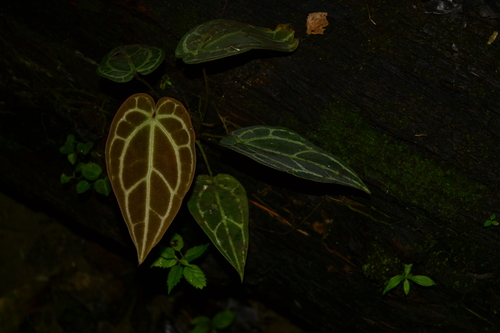

Crystal anthurium (Anthurium crystallinum) has large, dark green, velvety leaves traced with silvery veins. This epiphytic member of the Araceae from Panama and Colombia grows in warm conditions, with indirect light and an airy potting mix.
Read moreCrystal anthurium
Anthurium crystallinum f. peltifolium and Anthurium killipianum
Give plenty of ambient light without direct sun on the leaves.
Bright indirect light; protect from direct summer sun.




© photo
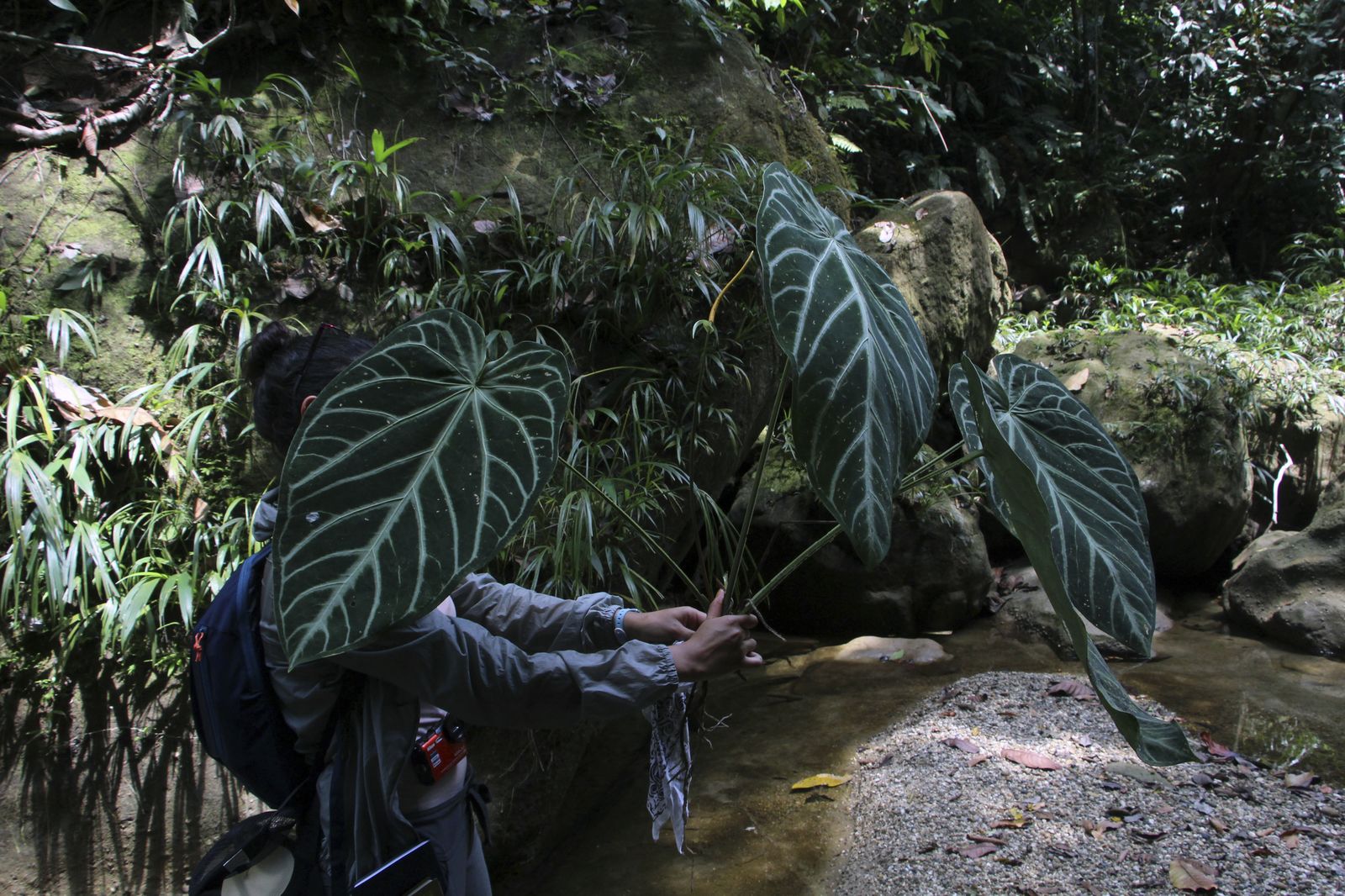
(c) Ángela Celis, some rights reserved (CC BY-NC), uploaded by Ángela Celis · cc-by-nc
Wikimedia Commons · CC BY-SA or Public Domain
Wikipedia · CC BY-SA
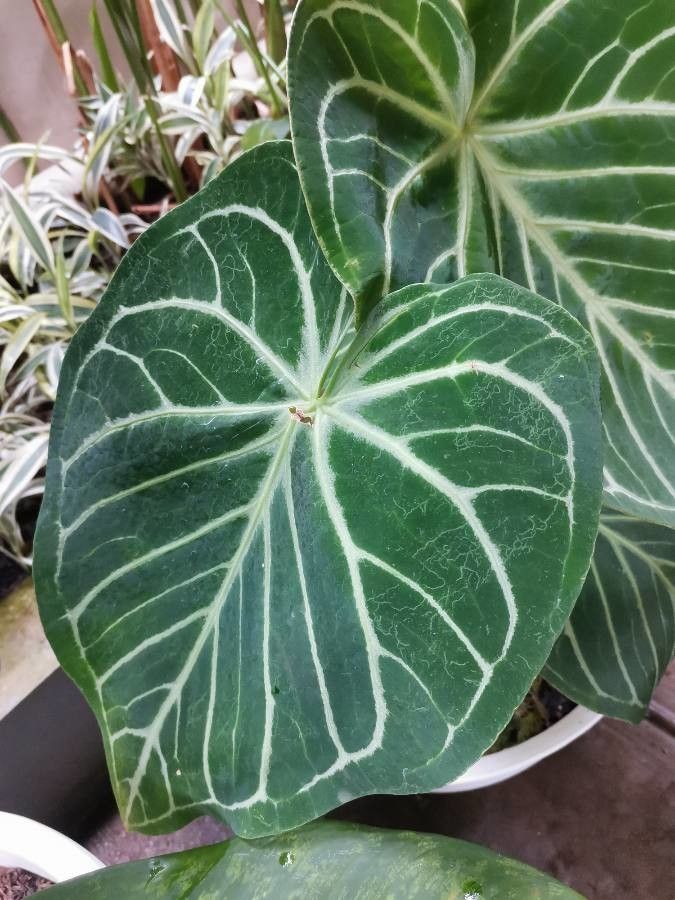
Taken Jul 14, 2022 by albert hines (cc-by-sa)
© copyright of the Board of Trustees of the Royal Botanic Gardens, Kew.




Global distribution
Native from Panama to Colombia under Kew’s delimitation; a record of Peru in NParks differs from that range.
Identity
Crystal anthurium (Anthurium crystallinum Linden & André, 1873) is recognized by its dark, velvety foliage crossed by pale veins. The French name "anthurium cristallin" is recorded for this species; the binomial specifies its identity among cultivated anthuriums. Crystal anthurium is a perennial in the Araceae family, within the order Alismatales. 1 3 7
Crystal anthurium keeps its leaves and grows as an epiphyte, using another plant as a support. In horticultural cultivation, the recorded height and spread are 0.1–0.5 m (4–20 in). The range describes the development of a cultivated plant. It does not measure the length of an individual Anthurium crystallinum leaf, so plant dimensions and leaf dimensions should be read separately. 4
Recognition
Heart-shaped at the base and tapering to a point, crystal anthurium leaves have entire edges. The dark green blade carries white main veins, sometimes silvery or pale green. Reddish tones can also appear in the foliage. The morphological description gives leaves reaching 40 cm (16 in) long and 22 cm (9 in) wide, with the greatest width near the middle of the blade. 5 7
A narrow green spathe, sometimes tinged with red, accompanies a yellow spadix. The inflorescence is much less conspicuous than the foliage. The spathe measures about 8 cm (3 in). Calling the whole structure a flower can cause confusion: the spadix bears the small flowers, while the spathe is the part beside it. The two structures have different roles in the inflorescence. 5 7
Useful taxonomy
Anthurium crystallinum remains the accepted botanical name for crystal anthurium. Its original publication dates to 1873. Two names are linked to the species in the current synonymy: Anthurium crystallinum f. peltifolium Engl. and Anthurium killipianum L.Uribe. The botanical synonyms of Anthurium crystallinum do not identify cultivars to seek separately at a garden center. 2 3
A scientific synonym and a cultivar name have different purposes. The synonym refers to the history of classification; the cultivar name identifies a horticultural selection. The word "variety" on a sales label therefore does not, on its own, establish a botanical rank. A commercial description needs to be distinguished from a formal taxonomic name. 6
Habitat and range
Panama to Colombia is the native range recognized for crystal anthurium, within the wet tropical biome. Peru appears in one horticultural description but lies outside Kew's current delimitation. The discrepancy matters when a sales label gives a broader South American origin: the two descriptions do not define the same geographic range. 2 5
Epiphytic growth explains why an airy potting mix suits crystal anthurium. The roots of epiphytic anthuriums cling to tree bark; indoors, a well-drained mix replaces that natural support. Humid air and constantly saturated soil are different conditions. Standing water exposes the roots to rot, even when the surrounding air is appropriately humid for the plant. 6
Life cycle and propagation
Crystal anthurium can produce inflorescences intermittently throughout the year when growing conditions suit it. Its flowering is therefore discontinuous. Horticultural propagation uses division or stem and rhizome cuttings in spring or summer. Ripe seeds can also be sown in warmth, at 24–27 °C (75–81 °F). Seeds and vegetative divisions are distinct ways of obtaining a new plant. 4
The flowers of crystal anthurium are bisexual. The entire fruiting structure can reach 12 cm (5 in) long; its individual berries are narrow and egg-shaped, purple with a whitish tinge. The purplish fruit color gives an additional identification feature when foliage alone leaves several pale-veined anthuriums difficult to distinguish. The measurement describes the whole fruiting structure, rather than a single berry. 5
Growing conditions and seasonal rhythm
For crystal anthurium, choose bright indirect light and an acidic, well-drained mix containing bark. Keep the air humid. In winter, reduce watering while keeping the plant above 18 °C (64 °F). Crystal anthurium still needs warmth when its water supply is reduced; less frequent watering does not remove its need for warm growing conditions. 4
Orchid fertilizer supports indoor anthuriums during active growth, from April through October in the temperate routine described. The calendar expresses this season as relative guidance for indoor cultivation in France. Room conditions and the actual activity of the plant remain decisive when applying that seasonal guidance. 6
Before watering crystal anthurium, check how far the mix has dried instead of following a fixed interval. An oversized pot keeps the mix wet for too long and increases the risk of rot. Repot anthuriums into a container only slightly larger than the plant’s current container, rather than surrounding the roots with an unnecessarily large volume of damp mix. 6
Risks and look-alikes
Crystal anthurium is harmful if eaten by people and pets; its sap can irritate the skin and eyes. Chewing anthuriums releases calcium oxalate crystals and can cause oral pain, drooling, vomiting or difficulty swallowing. Wear gloves when handling the plant and keep it out of reach of children. The ornamental foliage should not be treated as edible. 4 7
Cats and dogs are among the animals exposed to the risk. The available information does not establish safety for horses or for all other animals. The low severity described for human poisoning by the genus does not make crystal anthurium a food plant. An assessment of severity and a statement of edibility are different conclusions. 7
A related species, Anthurium clarinervium, also has dark, heart-shaped leaves marked with white. Its orange berries contrast with the purplish fruits of crystal anthurium. Without fruit, a similar pattern of leaf veins is insufficient to settle the identification. Fruit color supplies a comparison that pale veins alone cannot provide. 7
Main sources
Taxonomic references specify the name and native range; horticultural descriptions document identification features and growing conditions.
- EPPO Global Database, Anthurium crystallinum and its French name
- Plants of the World Online, Anthurium crystallinum Linden & André
- GBIF Backbone Taxonomy, Anthurium crystallinum
- Royal Horticultural Society, Anthurium crystallinum
- NParks Flora & Fauna Web, Anthurium crystallinum
- Royal Horticultural Society, How to grow anthuriums
- NC State Extension, Anthurium: comparative features and toxicity of the genus
Frequently asked questions
How can I identify crystal anthurium?
Anthurium crystallinum has large, heart-shaped, dark green, velvety leaves with pale veins. Its ripe berries are purplish, unlike the orange berries of Anthurium clarinervium.
Does crystal anthurium produce red flowers?
The species has a narrow green spathe, sometimes tinged with red, and a yellow spadix. The large red spathes of florist anthuriums do not describe Anthurium crystallinum.
Can Anthurium crystallinum stay in the garden in winter?
Keep this tropical plant warm. Indoors, maintain a temperature above 18 °C (64 °F) and protect it from cold drafts.
Is crystal anthurium toxic to cats?
Keep the plant out of reach of cats and dogs: chewing anthuriums exposes them to oral irritation, with drooling and difficulty swallowing. Risk to horses remains unestablished by the references used.
Similar plants
If you are unsure about a plant’s toxicity, ask a botanist or veterinarian for advice.