
Pigtail anthurium (Anthurium scherzerianum, )


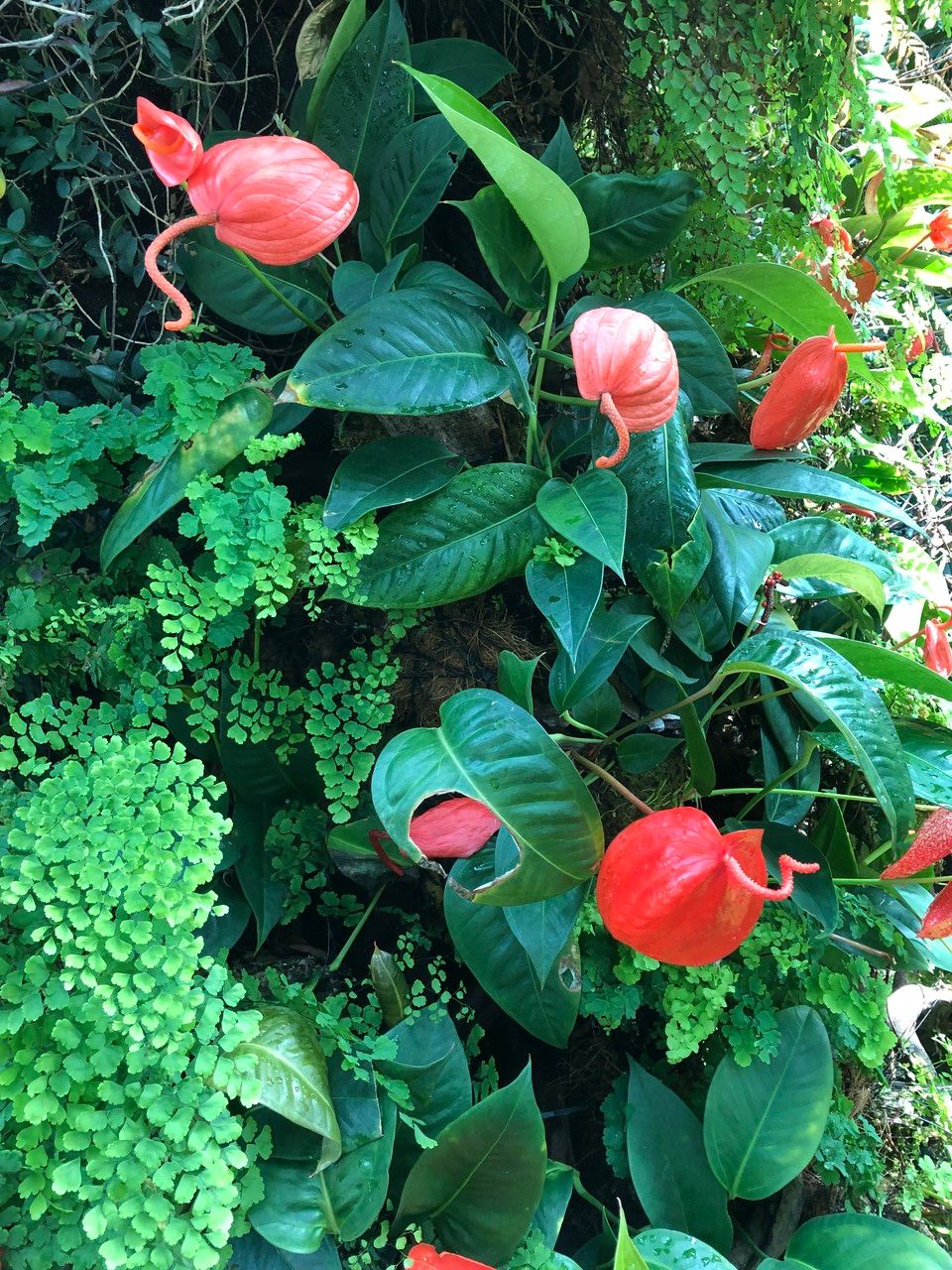
Pigtail anthurium (Anthurium scherzerianum) has an orange-red, corkscrew-shaped spadix above a red spathe. This Costa Rican anthurium grows well in indirect light, an airy potting mix and humid air.
Read morePigtail anthurium, Pigtail plant and Pigtail flower
<cite>Anthurium rothschildianum</cite> <small>(Pynaert) Pynaert</small> and <cite>Anthurium williamsii</cite> <small>(B.S.Williams) Anon.</small>
Give plenty of ambient light without direct sun on the leaves.
Bright indirect light; direct sun can scorch the leaves.


© photo
Sue Carnahan · cc-by
Wikimedia Commons · CC BY-SA or Public Domain
Wikipedia · CC BY-SA
Taken May 27, 2022 by C A (cc-by-sa)
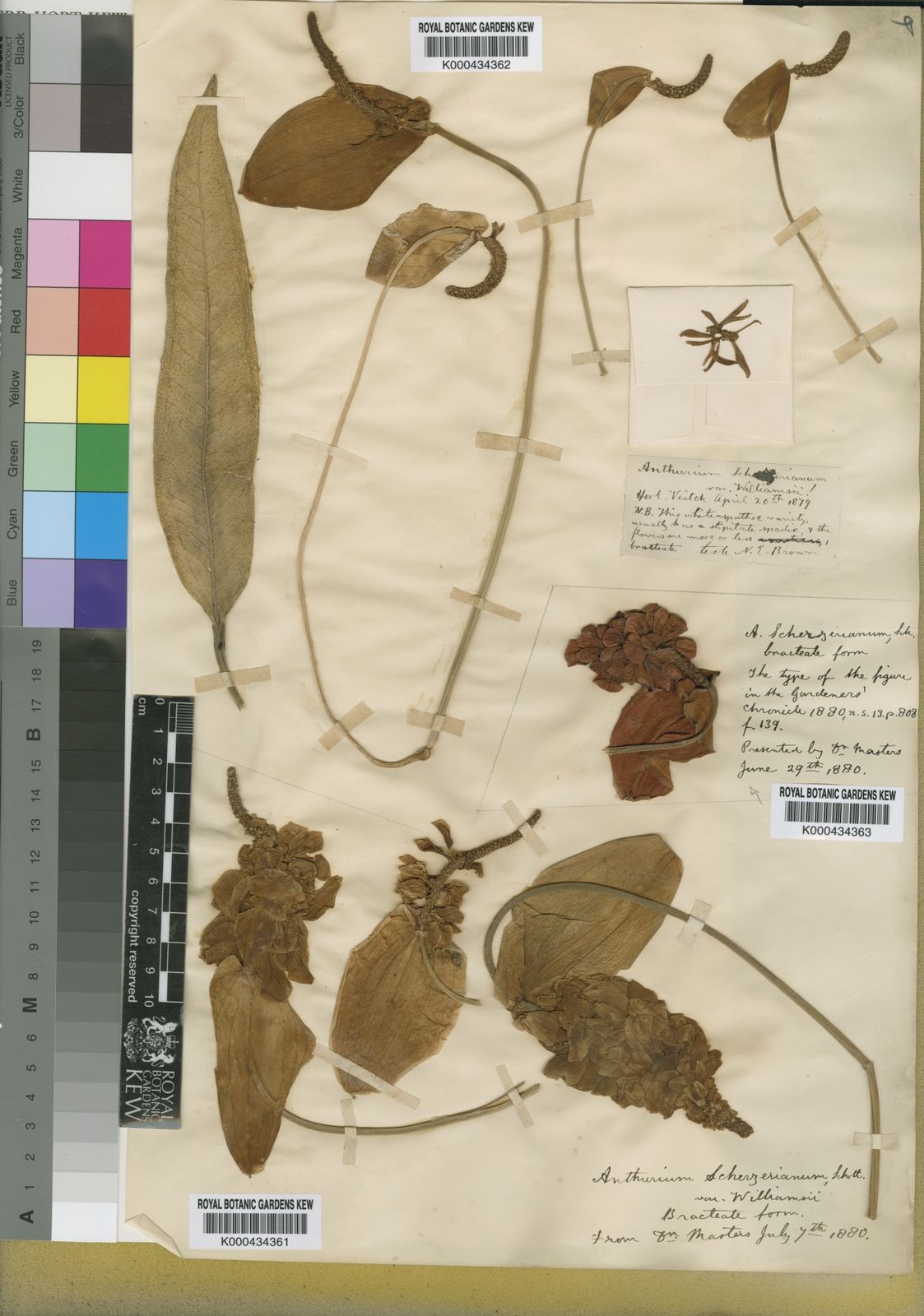
© copyright of the Board of Trustees of the Royal Botanic Gardens, Kew.




Global distribution
Native to Costa Rica, particularly the mountain forests of the Central and Talamanca ranges.
Identity
Pigtail anthurium (Anthurium scherzerianum Schott) bears an orange-red corkscrew-shaped spadix with a red spathe. This character distinguishes it from Anthurium andraeanum, which has less elongated leaves. The species belongs to the Araceae, like other anthuriums. 3
The French name "queue de cochon" is also recorded. Common names refer here to one plant, but similar names used in anthurium sales do not identify every species reliably. The scientific binomial specifies which species is meant. 2
Recognition
Pigtail anthurium forms an upright clump with evergreen, dark green leaves that are glossy and leathery. The blades are lance-shaped or narrowly oblong, on long leaf stalks. The plant stays compact: published garden dimensions are 0.1 to 0.5 m (4 to 20 in) in both height and spread. 35
The red spathe is 8 to 10 cm (3 to 4 in) long and 6 to 8 cm (2.4 to 3 in) wide; the coiled spadix reaches 8 cm (3 in). The spathe looks like a petal, but is a leaflike structure accompanying the flower-bearing axis. The fruits are orange to red berries. A plant without an inflorescence is therefore harder to identify confidently than one in flower. 473
Useful taxonomy
The accepted name is Anthurium scherzerianum Schott, published in 1857. The taxonomic reference restricts its native range to Costa Rica. The former names Anthurium rothschildianum (Pynaert) Pynaert and Anthurium williamsii (B.S.Williams) Anon. are synonyms of this species. 1
A botanical synonym is another name for the same taxon; it does not automatically denote a variety sold in horticulture. This distinction helps interpret an old label without treating each name as a separate species. Horticultural names in quotation marks need to be checked separately.
Habitat and distribution
Pigtail anthurium grows in the humid mountain forests of Costa Rica, particularly in the Central and Talamanca ranges. This herbaceous plant can grow on the ground or as an epiphyte on another plant. Its mountain origins explain a preference for cooler conditions than those of tropical lowlands. 4
High heat is therefore not a growing target. Species-specific horticultural advice recommends 25 °C (77 °F) or below to support growth; another recommendation is to keep it above 18 °C (64 °F) in winter. These growing temperatures for pigtail anthurium are not absolute survival limits. 45
Life cycle and propagation
Inflorescences can appear intermittently throughout the year. Bright indirect light encourages flowering: too little light slows growth and reduces flowers, while direct sun can scorch the leaves. Near a window, observing the actual light matters more than its compass direction alone. 53
The roots need an airy, moist but well-drained growing medium. One mix recommended for the species combines two parts peat-free acidic potting mix, one part horticultural grit and one part orchid bark. Excess water encourages root rot; reduce watering in winter. 5
For potted anthuriums, rainwater or filtered water at room temperature helps maintain an acidic growing medium. Repot according to root crowding, generally every two to three years: a much larger pot holds moisture for too long. 7
Apply orchid fertilizer every two weeks from spring through fall. The calendar expresses this advice for an indoor setting in mainland France: relative water and growth scores fall in winter, with feeding from April to October. These months reflect that Northern Hemisphere setting. Observed growth and moisture in the pot remain the practical guides. 57
Propagate by division or stem and rhizome cuttings in spring or summer. Dividing a clump allows each portion to retain roots. For seed propagation, sow fresh seed as soon as it ripens, at 24 to 27 °C (75 to 81 °F). 57
Uses and risks
Pigtail anthurium is an indoor ornamental, grown in pots for its inflorescences. A bright room with humid air suits it; in anthuriums, leaf edges can turn brown when the air is too dry. Also check for mealybugs, to which this species is susceptible. 475
All parts contain insoluble calcium oxalates. Ingestion can cause mouth irritation in people, cats and dogs, sometimes with swelling, drooling or vomiting. The sap can irritate skin and eyes: wear gloves when cutting or dividing the plant and keep it out of children's reach. Risks are not documented equally well for all other animals; the status for horses remains undetermined here. 3
Varieties, lookalikes and related plants
The horticultural name 'Rothschildianum' is recorded on a herbarium specimen of Anthurium scherzerianum. The label gives no description from which to assign it a particular color. It must be distinguished from the former binomial Anthurium rothschildianum, now treated as a synonym. 81
The main species to compare is Anthurium andraeanum: pigtail anthurium has more elongated leaves and a coiled spadix. The selections Red Champion and Zizou belong to the Andraeanum group; their characteristics therefore do not describe the species presented here. 36
Main sources
Common names, botanical identity and growing conditions provide complementary information about pigtail anthurium: no commercial name replaces identification to species. 26
- Plants of the World Online, Anthurium scherzerianum
- EPPO Global Database, Anthurium scherzerianum
- NC State Extension, Anthurium scherzerianum
- NParks Flora & Fauna Web, Anthurium scherzerianum
- RHS, Anthurium scherzerianum
- RHS, Anthuriums, genus guide
- RHS, How to grow anthuriums
- RHS Digital Collections, Anthurium scherzerianum ‘Rothschildianum’
Frequently asked questions
How can I identify pigtail anthurium?
The orange-red, corkscrew-shaped spadix and elongated leaves distinguish Anthurium scherzerianum from Anthurium andraeanum.
Why does my anthurium produce so few flowers?
Too little light slows growth and reduces flowering. Choose bright indirect light without scorching sun.
Should I water less in winter?
Yes. The growing advice for this species calls for reduced watering in winter; check the moisture in the potting mix before adding water.
Is pigtail anthurium toxic to cats?
Yes. Eating it can cause mouth irritation and digestive upset; keep the plant out of reach of animals.
Similar plants
If you are unsure about a plant’s toxicity, ask a botanist or veterinarian for advice.