
Brown knapweed (Centaurea jacea, )
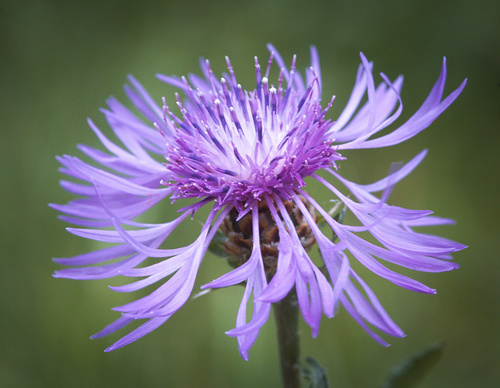
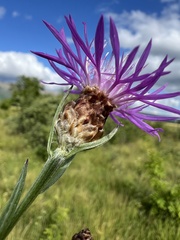
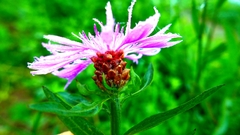
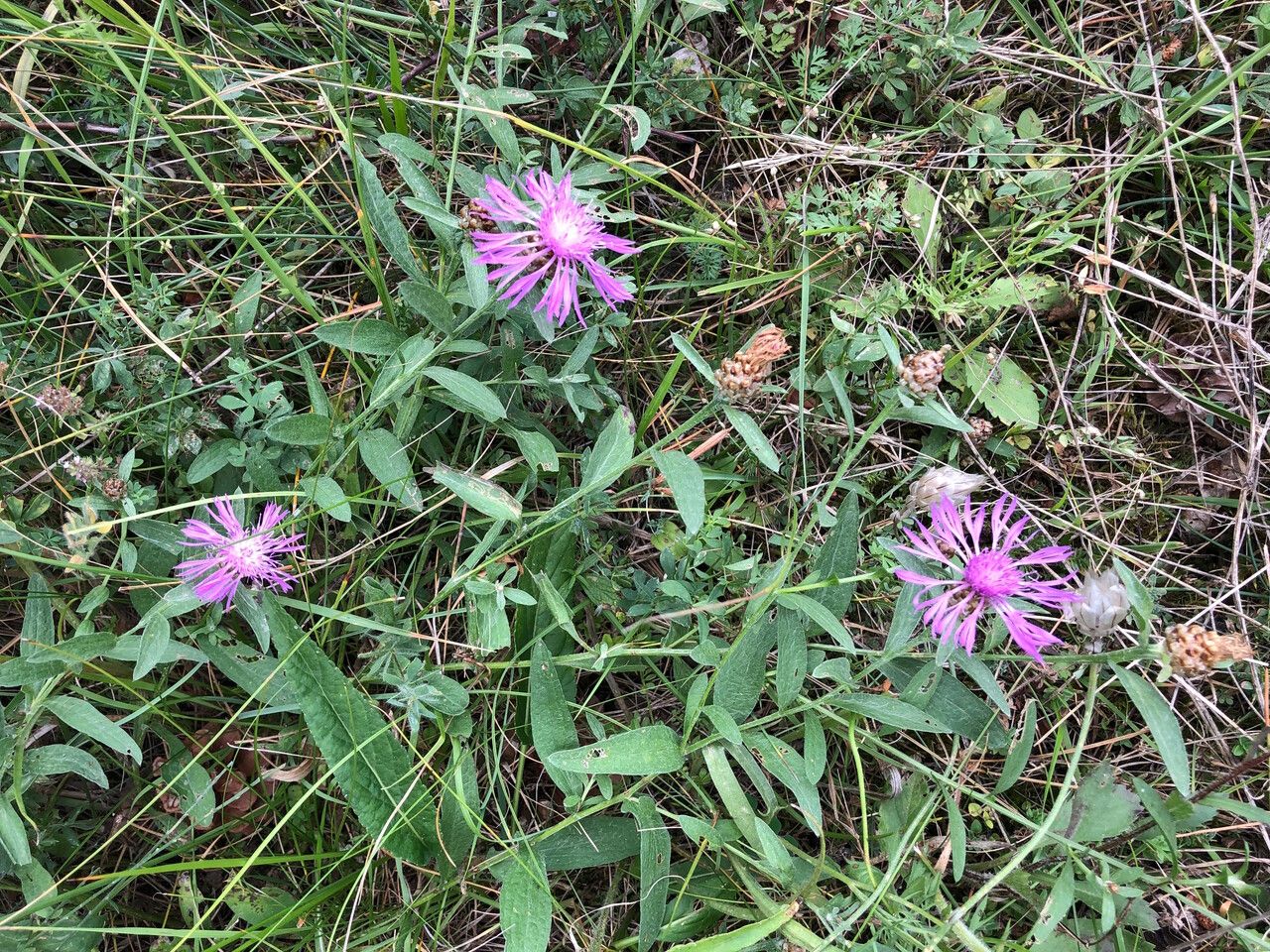
Brown knapweed (Centaurea jacea L., 1753) is a perennial Asteraceae plant native to France. Its unarmed stems and pink-purple flower heads grow in moderately moist meadows, grasslands and edges, providing flowers for pollinators where mowing allows them to develop.
Read moreBrown knapweed and Brown-ray knapweed
Allow a few hours of direct sun per day, preferably morning or evening.
Full sun; dense shade is unfavorable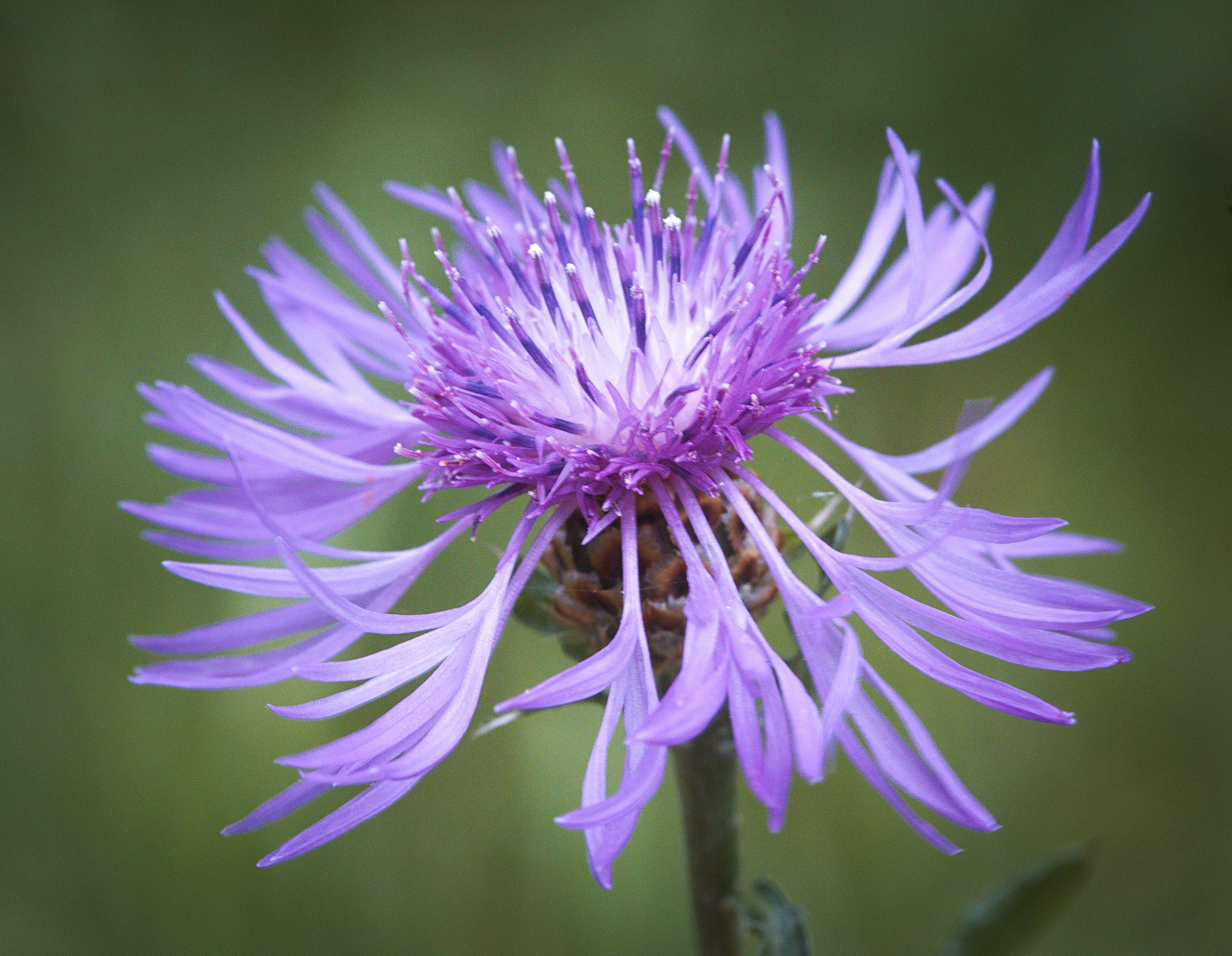



© photo
(c) hedera.baltica, some rights reserved (CC BY-SA) · cc-by-sa
Mirko Ubović · cc0
Patrick Le Mao · cc0
Taken Jul 3, 2021 by k.dimitrov d (cc-by-sa)
Taken Aug 22, 2021 by Lina Teresa Buitrago (cc-by-sa)
Taken Sep 7, 2021 by cscoq (cc-by-sa)
Taken Aug 3, 2020 by Polinella (cc-by-sa)
Taken Dec 28, 2021 by Dieter Wagner (cc-by-sa)
© copyright of the Board of Trustees of the Royal Botanic Gardens, Kew.




Global distribution
Native from Europe to western Siberia and the Caucasus, including mainland France and Corsica. Introduced populations also occur outside this range.
- Native10
- Introduced2
- Metropolitan France
- Corsica
- Belgium
- Germany
- Switzerland
- Italy
- Spain
- Central Europe
- Western Siberia
- Caucasus
- North America
- Eastern Australia
Hexagons: regions where the plant occurs. Green dots: native range.↗
Identity
Brown knapweed (Centaurea jacea L., 1753) is a perennial member of Asteraceae. Its accepted name was published by Linnaeus in 1753. POWO places its native range from Europe through western Siberia to the Caucasus. ↗ ↗
French names recorded in the consulted datasets include jacée, jacée des prés, tête de moineau and ambrette. English names include brown knapweed and brown-ray knapweed. The binomial distinguishes this meadow perennial from other knapweeds sharing similar common names. ↗ ↗
French and European references describe it as an outdoor perennial of meadows and grasslands. These references do not establish an invasive status for France, where it belongs to the native flora. ↗ ↗
Recognition
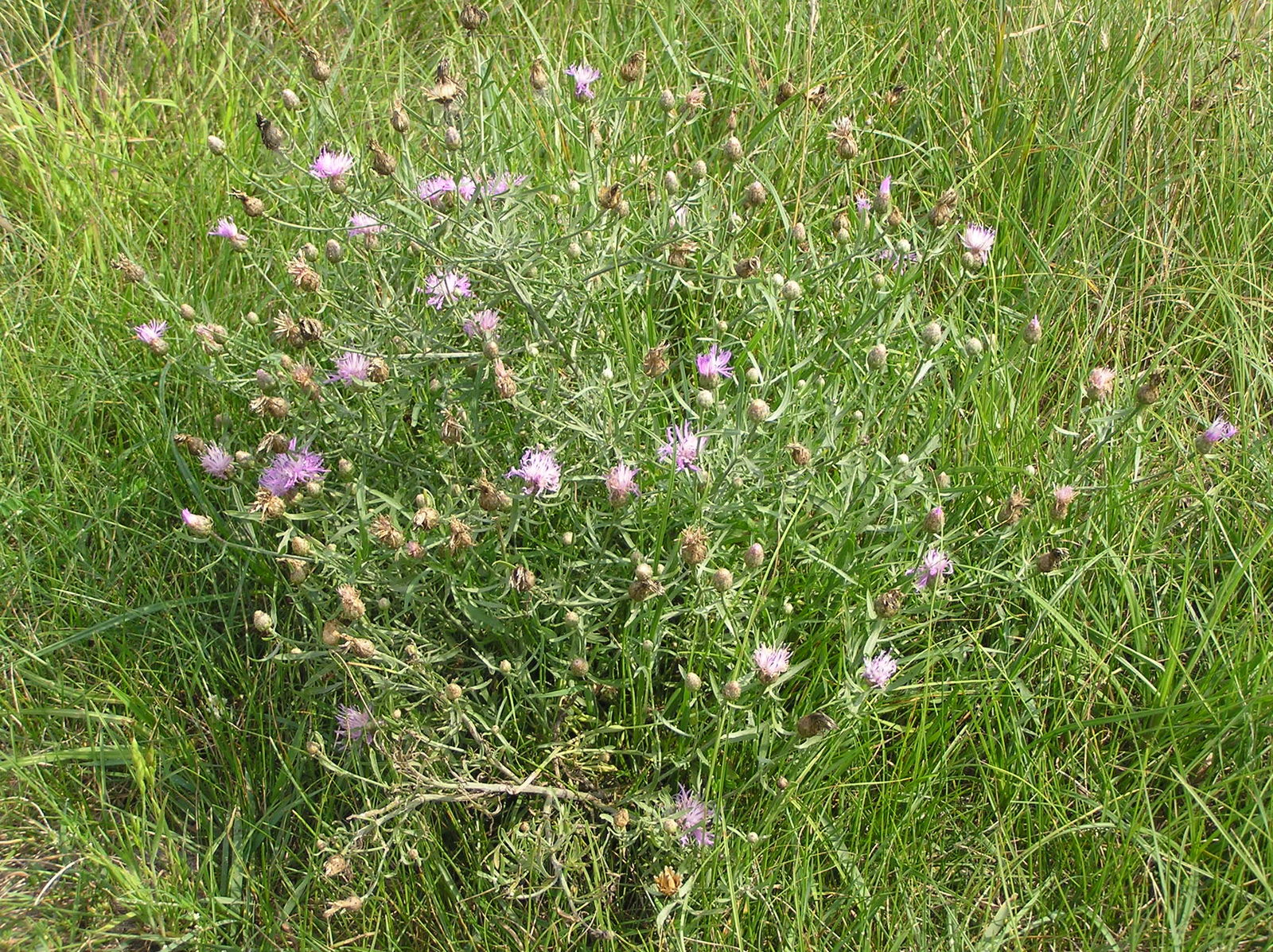
Info Flora describes a plant 10–60 cm (4–24 in) tall with oval to lance-shaped lower leaves, entire or slightly toothed. The RHS gives a horticultural height reaching 1.5 m (5 ft), lance-shaped leaves and fine whitish felt on stems and leaves. Wild meadow plants and well-grown garden clumps need not reach the same size. ↗ ↗
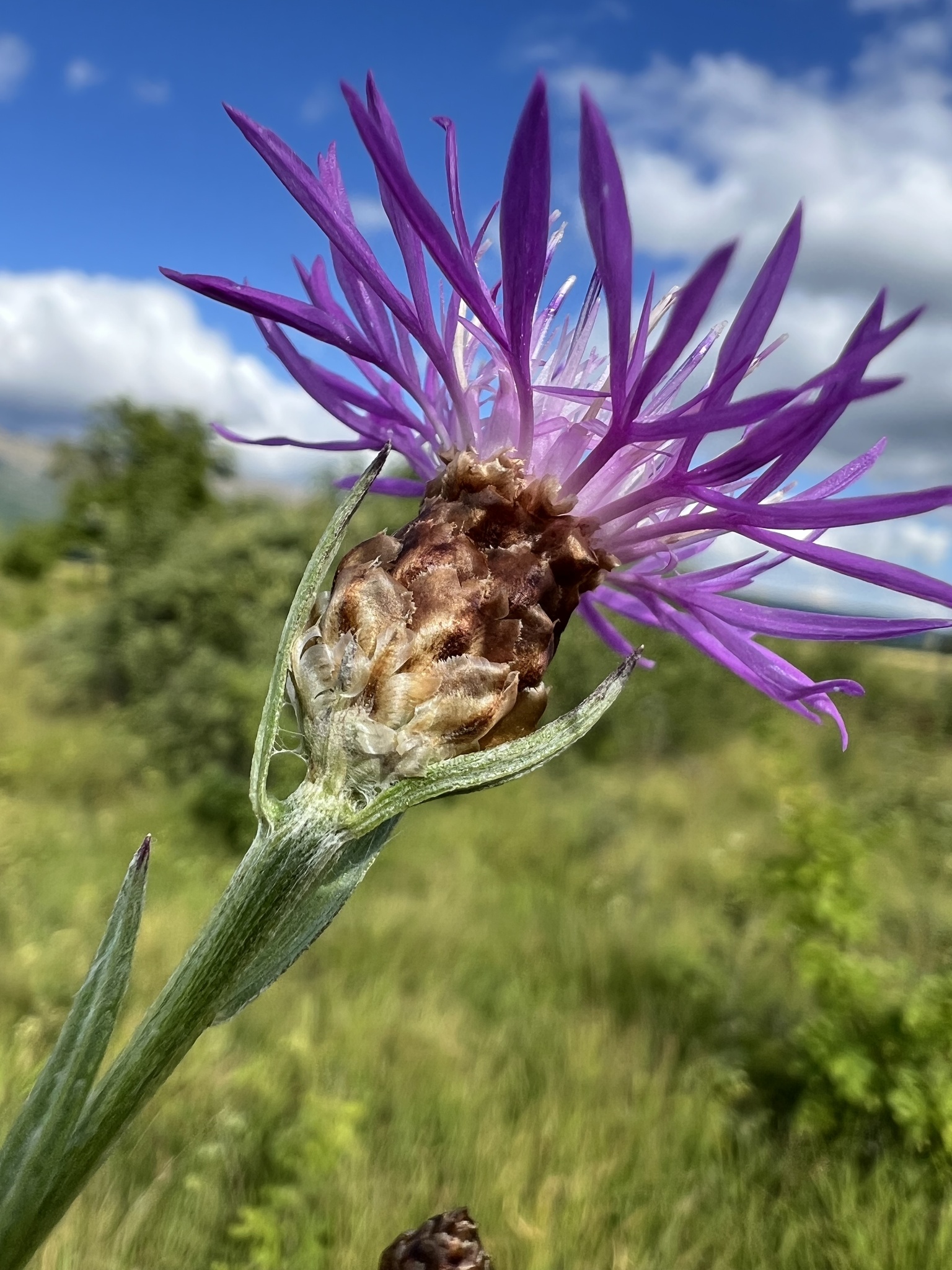
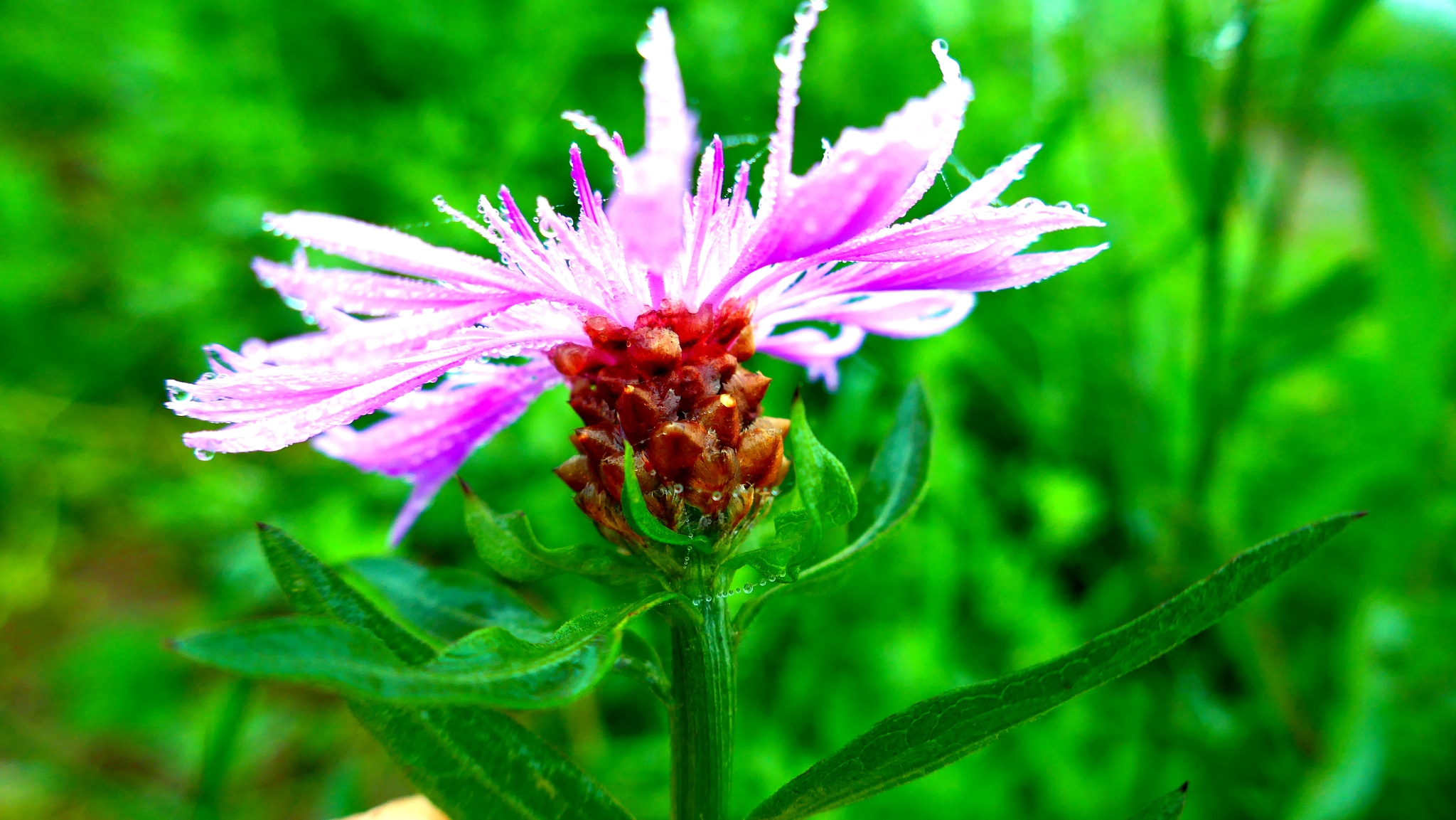
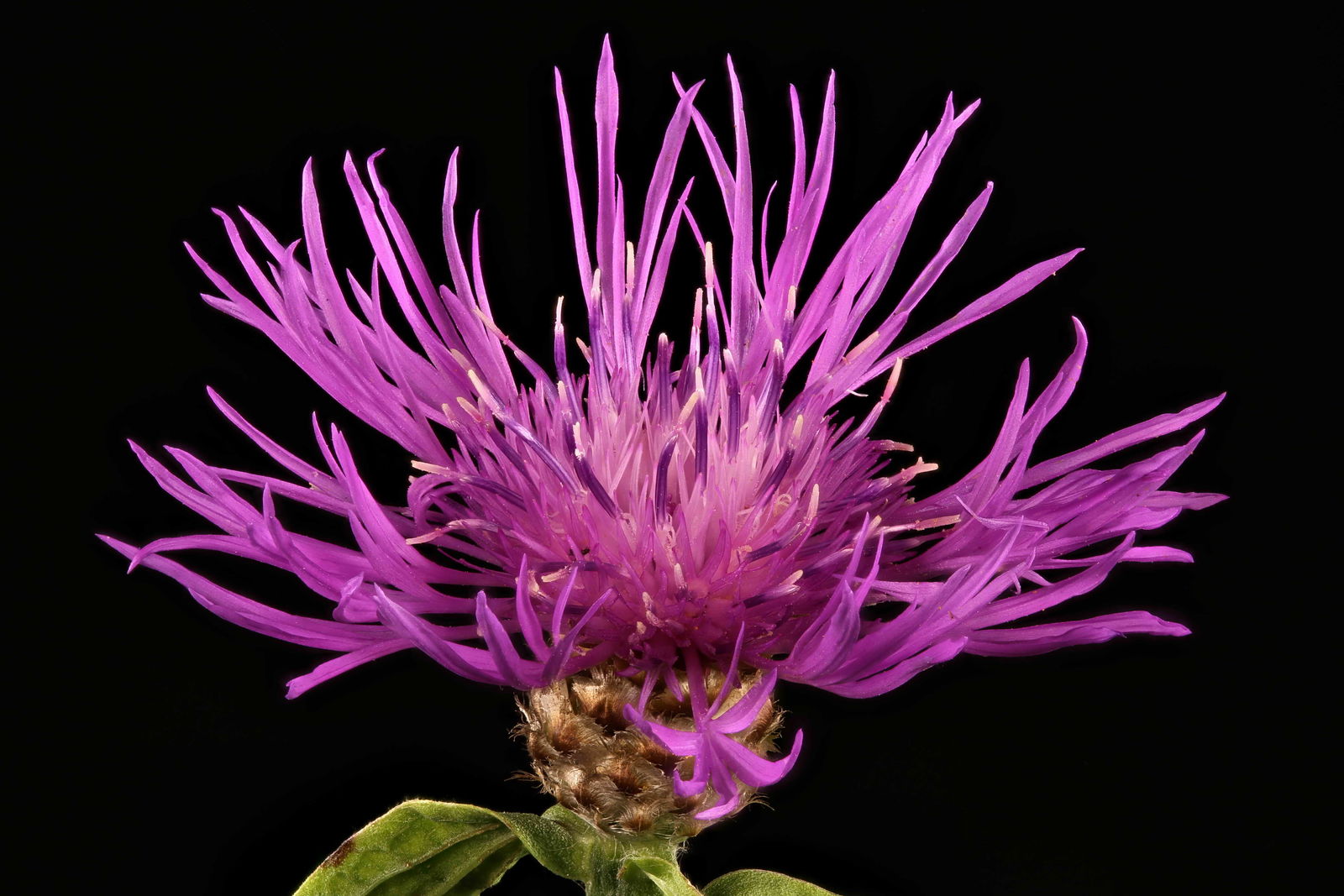
Pink, mauve or purple flower heads sit above the foliage. Their overlapping, light brown involucral bracts often have hairy or scaly appendages. These brown structures explain the name brown knapweed and are a more useful identification feature than flower color alone. ↗ ↗
Unlike spiny thistles such as Cirsium, brown knapweed is unarmed. Leaves alternate along the stem, and the involucral bracts carry an entire, scaly appendage. Enlarged outer florets may give the head a radiating outline. ↗
Useful taxonomy
Homotypic historical names listed in the synonymy include Behen jacea, Calcitrapa jacea, Centaurea pratensis, Cyanus jacea, Jacea pratensis and Rhaponticum jacea. They belong to the naming history of the same accepted species. ↗
The Centaurea jacea group is taxonomically complex. POWO recognizes several infraspecific taxa, and the CBNFC photo guide uses a regional treatment referring to older subspecies affiliations. An older subspecies name does not identify a horticultural cultivar. ↗ ↗
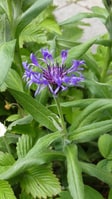
Centaurea cyanus, also treated as Cyanus segetum, is an annual with numerous blue or violet heads. Centaurea jacea persists as a perennial and usually bears pink-purple heads. Their life cycles and involucral bracts help separate them. ↗ ↗
Meadows and native range
POWO and Trefle include mainland France and Corsica in the native range. French conservatory records also treat the species as native. The consulted CBNFC-ORI regional page records native status and an LC (Least Concern) status for France. ↗ ↗ ↗
Moderately moist meadows are a characteristic habitat in French botanical accounts. The RHS also recommends meadow, prairie-style and wildlife plantings; Useful Temperate Plants describes hedges and uncultivated ground. ↗ ↗ ↗
Although sold for naturalistic gardens, brown knapweed is part of France’s native meadow flora rather than a recent ornamental introduction. Its place in a meadow depends on local plant communities and management, including the timing and extent of mowing. ↗ ↗
Life cycle and pollinators
Brown knapweed is perennial. French conservatory records give flowering from late spring into early autumn; Trefle describes summer into early autumn, and the RHS emphasizes summer. Useful Temperate Plants gives a later summer-to-early-autumn window. These Northern Hemisphere accounts describe different settings rather than a fixed worldwide season. ↗ ↗ ↗ ↗
The RHS lists nectar and pollen value. Useful Temperate Plants records pollination by bees, flies and Lepidoptera. Mowing before the heads develop removes both the flowers available to insects and the later opportunity for seed production. ↗ ↗
The RHS recommends seed propagation or autumn division. Useful Temperate Plants describes spring sowing, autumn division and spring basal cuttings. Follow the corresponding local growing seasons, adjusting for climate and hemisphere. ↗ ↗
Growing and management
Choose full sun and well-drained soil, from relatively poor to average fertility. Useful Temperate Plants describes tolerance of dry to moist conditions but not shade. Persistent waterlogging is less suitable than an open meadow soil. ↗ ↗
The RHS allows chalk, loam and sand across acidic, neutral and alkaline soils. Trefle gives the narrower pH interval 6.5–7. These descriptions differ in precision: one is broad horticultural guidance, the other a numerical ecological range. ↗ ↗
Removing some spent heads can keep a garden clump tidy. In a pollinator meadow, leave part of the planting to flower and set seed before mowing rather than removing every head at once. ↗ ↗
Toxicity, uses and precautions
The cited references do not supply an exact ASPCA species account for brown knapweed. Earlier descriptions as non-toxic are therefore not treated as veterinary confirmation. Useful Temperate Plants says that no hazards are known, but this statement does not establish non-toxicity to cats, dogs or horses. ↗
PFAF reports cooked young leaves, whereas Useful Temperate Plants gives no known edible uses. Historical medicinal uses do not resolve this disagreement and do not provide a recommendation to eat the plant or use it as a treatment. ↗ ↗
Use ordinary precautions: identify plants correctly, avoid treated material and keep medicinal experimentation separate from gardening. Seek veterinary advice after unusual ingestion by a sensitive animal rather than treating a lack of hazard reports as a safety guarantee. ↗ ↗
Look-alikes and main sources
Field cornflowers, garden cornflowers and ornamental knapweeds do not all denote the same plant. Centaurea cyanus, or Cyanus segetum, is an annual with blue heads; Centaurea montana, or Cyanus montanus, is a mountain perennial with larger blue heads. Brown knapweed combines a perennial habit with pink-purple heads and conspicuous brown involucral bracts. ↗ ↗ ↗
Check the binomial when buying seed. For a meadow in France, seed origin should suit the local meadow flora. An ornamental plant sold simply as a perennial cornflower may belong to a different species. ↗ ↗ ↗
- Plants of the World Online / Kew, Centaurea jacea L.
- GBIF Backbone Taxonomy, Centaurea jacea L.
- Royal Horticultural Society, Centaurea jacea
- InfoFlora, Centaurea jacea L.
- CBNFC-ORI, Centaurea jacea L., 1753
- CBNFC-ORI, Photo identification guide to knapweeds and cornflowers
- Useful Temperate Plants, Centaurea jacea
- Plants For A Future, Centaurea jacea — Internet Archive, 2026-07-11
- Flora of North America, Centaurea cyanus
Main sources
- Plants of the World Online / Kew, Centaurea jacea L.
- GBIF Backbone Taxonomy, Centaurea jacea L.
- Royal Horticultural Society, Centaurea jacea
- InfoFlora, Centaurea jacea L.
- CBNFC-ORI, Centaurea jacea L., 1753
- CBNFC-ORI, Photo identification guide to knapweeds and cornflowers
- Useful Temperate Plants, Centaurea jacea
- Plants For A Future, Centaurea jacea — Internet Archive, 2026-07-11
- Flora of North America, Centaurea cyanus
- Royal Horticultural Society, Centaurea montana
- POWO/WCVP / Plants of the World Online, Centaurea jacea
- Trefle, species data, Centaurea jacea
- RHS content, Centaurea jacea
Frequently asked questions
Is brown knapweed native to France?
Yes. POWO and Trefle include mainland France and Corsica in its native range, and French botanical conservatories treat it as native.
Is brown knapweed the same as cornflower?
No. Centaurea cyanus is an annual with blue heads associated with fields; Centaurea jacea is a perennial with pink-purple heads associated with meadows.
Does brown knapweed attract pollinators?
Yes. The RHS lists nectar and pollen value, and Useful Temperate Plants records visits by bees, flies and Lepidoptera.
Can it grow in a flower meadow?
Yes, on well-drained soil. Leave some areas unmown until flowering and seed production are complete.
Is it invasive in France?
The cited sources do not justify an invasive status in France. Knapweeds can have different weed or regulatory statuses outside Europe.
Can its leaves be eaten?
The sources differ on this point. There is no food recommendation here; do not eat an unidentified plant without expert identification.
Similar plants
If you are unsure about a plant’s toxicity, ask a botanist or veterinarian for advice.