
Oxeye daisy (Leucanthemum vulgare, )
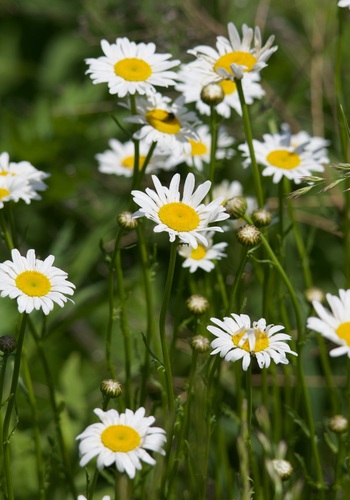
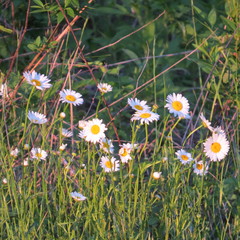
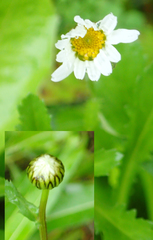
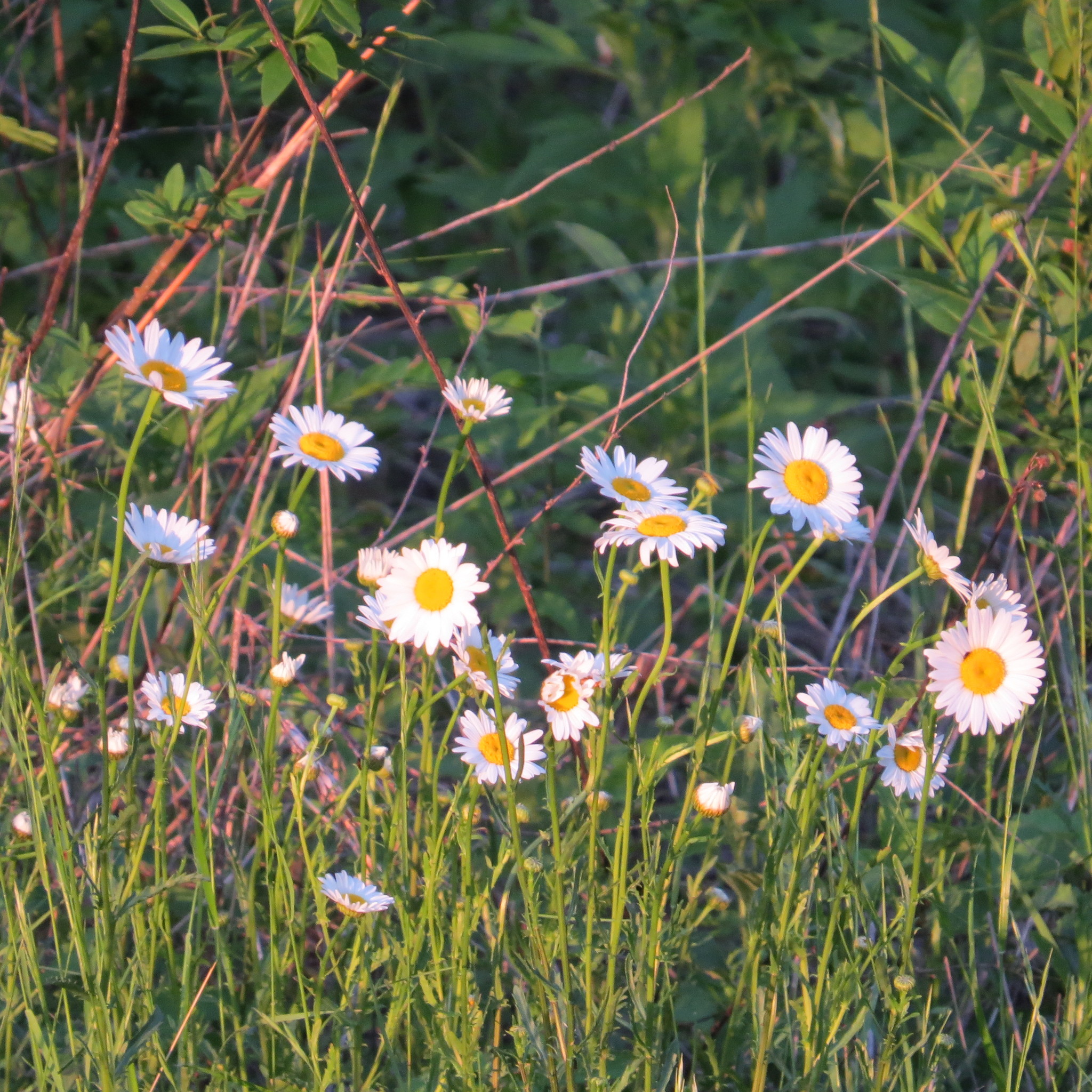
Oxeye daisy (Leucanthemum vulgare Lam.) is an herbaceous perennial in the Asteraceae, native to France and much of temperate Europe. White ray florets surround yellow centers on upright stems above a clump of toothed leaves.
Read moreOxeye daisy, Ox-eye daisy and Moon daisy
Place in full sun, with intense direct light all day long.
Full sun; light partial shade tolerated
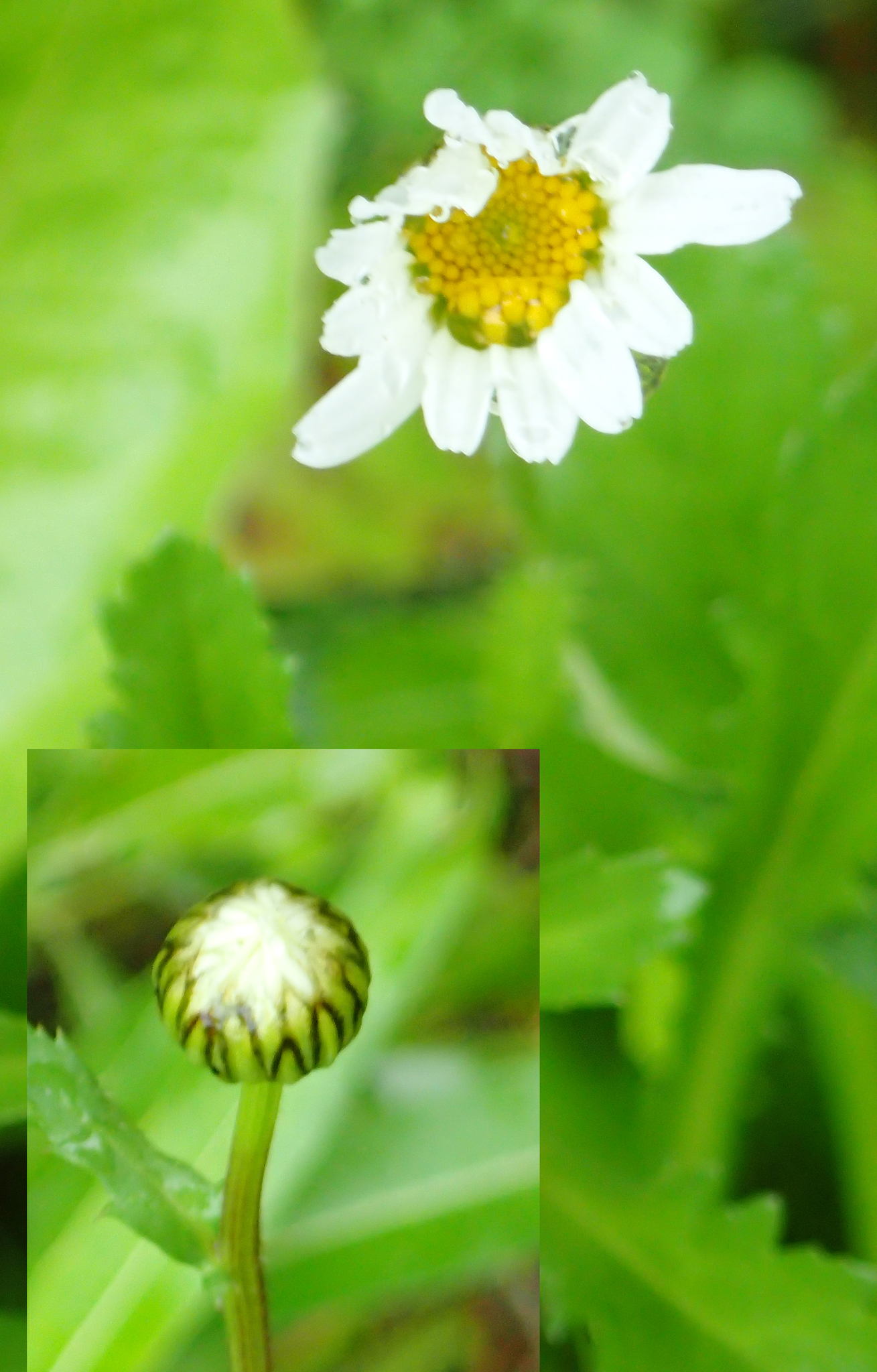
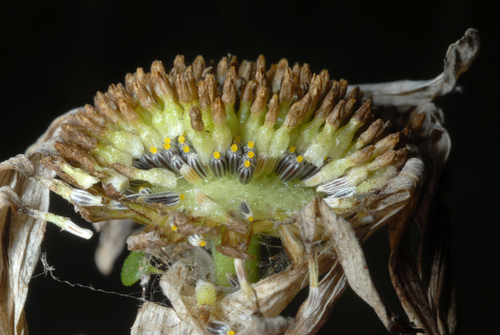
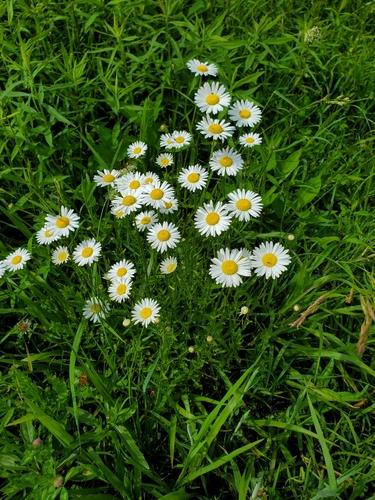
© photo
(c) Ben Zerante, some rights reserved (CC BY-NC), uploaded by Ben Zerante · cc-by-nc
Chrissy McClarren and Andy Reago · cc0
Connie Taylor · cc-by
(c) Douglas Goldman, some rights reserved (CC BY-SA) · cc-by-sa
(c) Will Kuhn, some rights reserved (CC BY) · cc-by
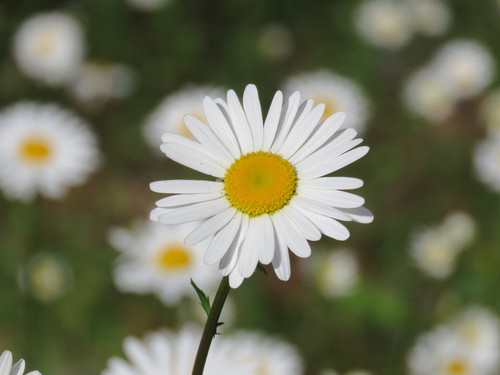
Global distribution
A temperate Eurasian species, native to France according to the botanical references used. Outside its native range it may be a weed, naturalized or regulated, notably in North America.
- Native4
- Introduced2
- Invasive1
- Metropolitan France
- Great Britain and Ireland
- Temperate Europe
- Siberia and western Asia
- North America
- New Zealand
- Washington State
Hexagons: regions where the plant occurs. Green dots: native range.1
Botanical identity
Oxeye daisy (Leucanthemum vulgare Lam.) is a perennial Asteraceae published by Lamarck in Flore française in 1779. POWO/Kew and WFO accept the name; GBIF also places it in Leucanthemum, Asteraceae and the order Asterales. 1 2 3
English names include ox-eye daisy and moon daisy. French floras use several vernacular names for this same taxon. Tela Botanica's standardized name refers to the large meadow daisy “in the broad sense,” a reminder that floras may distinguish subspecies and related complexes more finely. 4 5
Historical labels explain much of its synonymy. Chrysanthemum leucanthemum L., Matricaria leucanthemum (L.) Scop., Pyrethrum leucanthemum (L.) Franch. and Tanacetum leucanthemum (L.) Sch.Bip. belong to its nomenclatural history; they do not identify florist chrysanthemums or edible chamomiles. 1 4
Recognition
A clump of Leucanthemum vulgare reaches 20–90 cm (8–35 in), depending on conditions. Basal leaves are obovate to spoon-shaped, irregularly toothed, lobed or sometimes pinnatifid. Higher leaves become smaller, alternate, stalkless and sometimes partly clasp the stem. 4 8
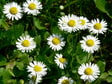
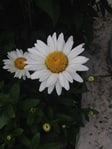
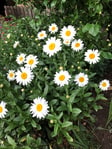
Each visible “flower” is a composite head, with outer white ray florets surrounding a disk of yellow tubular florets. RHS describes solitary heads from late spring to early summer; Tela Botanica records flowering in France from May to August. 6 4
Brown to black margins on the involucral bracts offer a useful identification detail. The dry achenes lack a conspicuous crown of hairs, unlike many Asteraceae with a pappus. Penn State describes an upright perennial spreading by seeds and short rhizomes, with alternate toothed or lobed leaves and white heads with yellow centers. 4 9
Native status and range
France lies within the species' native range: oxeye daisy is not a naturalized alien there. POWO includes France within a broader range extending from Europe to Siberia and Iran. Tela Botanica records it in meadows, grassland and fields throughout France. 1 4
Native status does not prevent vigorous spread. Open meadows mown late allow flower heads to develop, while bare or disturbed ground can favor seedlings. In French gardens, mowing, division and local removal manage that growth; it does not confer invasive alien status. 6 4
Across North America, public agencies describe oxeye daisy as introduced, weedy or invasive, depending on the state or province. University of Minnesota Extension treats it as locally invasive, and the Washington State Noxious Weed Control Board lists it as a regulated weed. Advice for a native French meadow therefore needs a local status check before use elsewhere. 10 11
Cultivation and care
In borders and flowering meadows, oxeye daisy mainly needs full sun, ordinary well-drained soil and restrained management. RHS recommends moderately fertile, moist but well-drained soil in sun or light partial shade. NC State also emphasizes drainage and sun, with light shade tolerated in hot climates. 6 8
Establishment determines the need for watering. During the first season, about 5–15 mm (0.2–0.6 in) per week, without rain, can help roots establish. Once in a meadow, missed watering is less troublesome than rich, waterlogged soil. Excess nitrogen softens stems, increases lodging and undermines a low-fertility meadow. 6 8
Deadheading in a border prolongs flowering. Meadow mowing depends on the aim: cutting after flowering limits seed production, while later mowing retains insect resources and allows renewal. RHS also advises cutting stems to ground level in winter; NC State recommends division every 2–3 years to maintain vigor. 6 8
Ecology, pollinators and spread
The open flower head gives many insects easy access. RHS includes Leucanthemum vulgare among its pollinator plants for nectar and pollen. Population-biology observations cited in North American management accounts also describe pollination by several insect orders. 6 11
Meadow structure matters more than a mass of daisies alone. Close-mown lawns allow little flowering. In unmanaged meadows, tall grasses may smother plants, or daisies may concentrate in open patches. Regular late mowing with removal of cuttings often helps preserve a richer mosaic. 4 9
Toxicity and uses
Its low toxicity rating does not establish general food safety. NC State reports low-severity poisonous characteristics, chiefly possible contact dermatitis from leaves and flowers containing sesquiterpene lactones. People sensitive to Asteraceae should wear gloves for extensive handling. 8
Historical food and medicinal uses appear in ethnobotanical accounts, but do not amount to consumption advice. Tela Botanica explicitly cautions about plant use, and horticultural references alone do not justify eating it at home. For children, cats, dogs, horses and people with allergies, avoid ingestion, watch for skin reactions and seek medical or veterinary advice after significant exposure. 4 8
Livestock risks also require context. Washington State's Noxious Weed Control Board says the species is not known to be toxic to livestock, but its documents report poor palatability, possible milk taint and interference with grazing. It should not be treated like lily-of-the-valley for toxicity, or deliberately offered as fodder. 11
Cultivars and look-alikes
A frequent look-alike is lawn daisy (Bellis perennis). It stays low, with lawn-level rosettes and short flowering stalks. Oxeye daisy grows taller, develops stem leaves and produces larger heads. 4 8
Chamomiles and Anthemis also warrant care. Penn State lists look-alikes including chamomiles, Bellis perennis, Argyranthemum frutescens, Shasta daisy and fleabanes. The word “daisy” alone cannot establish identity for gathering, toxicity decisions or seed purchases. 9
Shasta daisy is Leucanthemum × superbum, a garden hybrid that is often larger and more extensively selected. Within L. vulgare, RHS lists 'May Queen' as an early form with single white heads and yellow centers. It should not replace local provenances in a meadow managed for ecological purposes. 7 6
Main sources
- Plants of the World Online / Kew, Leucanthemum vulgare Lam.
- World Flora Online, Leucanthemum vulgare Lam.
- GBIF Backbone Taxonomy, Leucanthemum vulgare Lam.
- Tela Botanica eFlore, Leucanthemum vulgare
- INPN, Leucanthemum vulgare Lam., 1779
- Royal Horticultural Society, Leucanthemum vulgare
- Royal Horticultural Society, Leucanthemum vulgare 'May Queen'
- NC State Extension Gardener Plant Toolbox, Leucanthemum vulgare
- Penn State Extension, Daisy, Ox-eye
- University of Minnesota Extension, Oxeye daisy
- Washington State Noxious Weed Control Board, Oxeye Daisy
Frequently asked questions
Is oxeye daisy native to France?
Yes. The references describe it as native to France or present in meadows, grassland and fields throughout France. It is therefore not treated as an invasive alien species there.
Is Leucanthemum vulgare invasive?
It is native in France. Outside Europe it is introduced and sometimes regulated or described as invasive, notably in parts of North America.
How does it differ from lawn daisy?
Lawn daisy (Bellis perennis) forms low rosettes in lawns, often under 15 cm tall. Leucanthemum vulgare is taller, with upright leafy stems and larger flower heads.
How does it differ from Shasta daisy?
Shasta daisy is Leucanthemum × superbum, a garden hybrid that is often larger and more extensively selected. L. vulgare is the wild or naturalistic meadow daisy.
Is oxeye daisy toxic?
Toxicity is rated low. NC State mainly reports contact dermatitis associated with leaves and flowers containing sesquiterpene lactones. Children and animals should not ingest it without professional advice.
Can I sow it in a wildflower meadow?
In France, yes, provided the mix suits local conditions and mowing is not too early. Outside Europe, check its local status before sowing.
Similar plants
If you are unsure about a plant’s toxicity, ask a botanist or veterinarian for advice.