
Max-chrysanthemum (Leucanthemum maximum, )


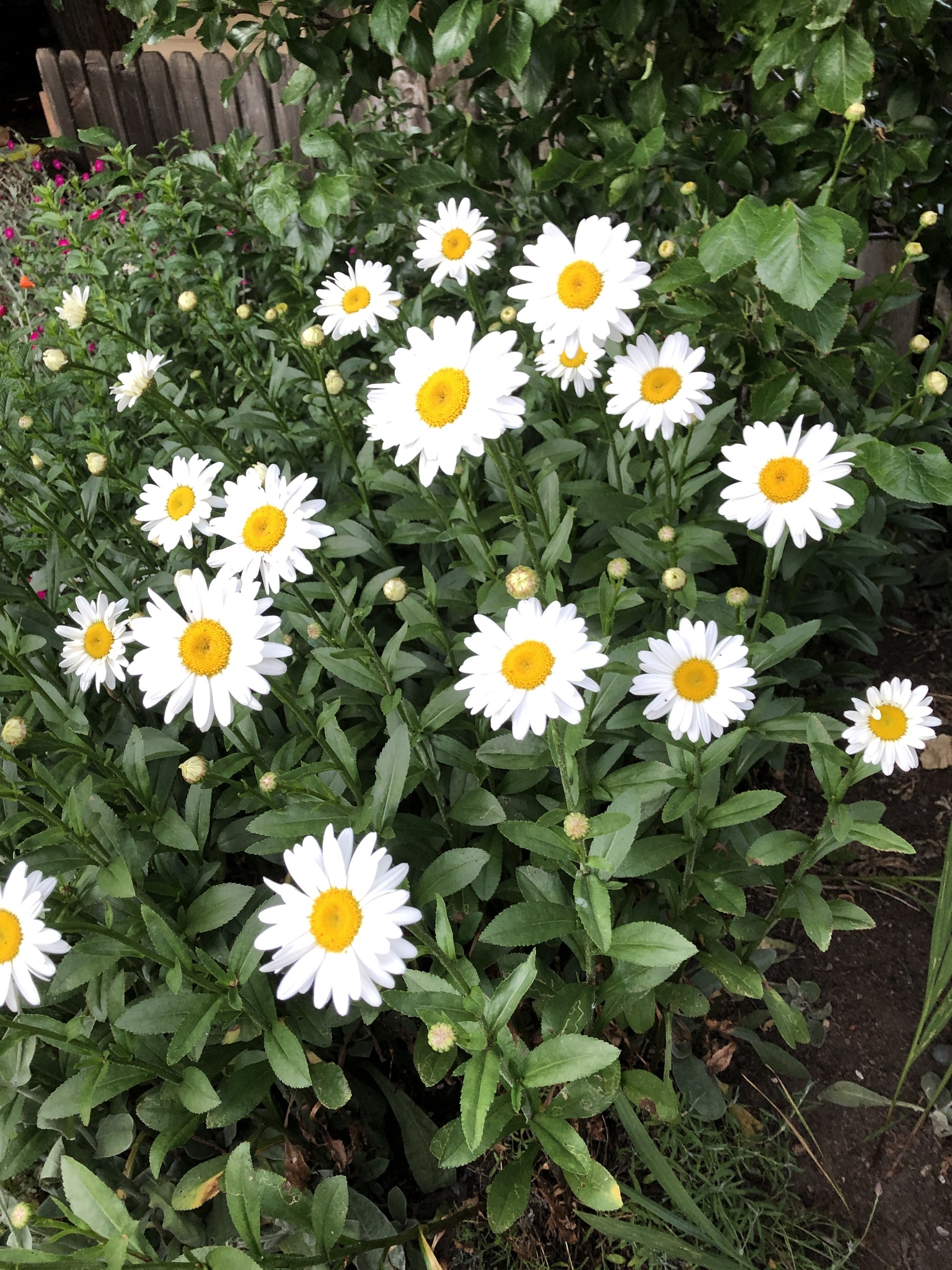
Max-chrysanthemum (Leucanthemum maximum (Ramond) DC.) is an herbaceous perennial in the Asteraceae, native from northwestern Spain to the Pyrenees. Its deciduous clump has lance-shaped leaves and bears large white heads with yellow centers in summer, resembling garden daisies but distinct from the hybrid Shasta daisy.
Read moreMax-chrysanthemum and Pyrenean marguerite
Place in full sun, with intense direct light all day long.


© photo
(c) t-daddy, some rights reserved (CC BY-NC) · cc-by-nc
Wikimedia Commons · CC BY-SA or Public Domain
Wikipedia · CC BY-SA
Taken Jun 12, 2022 by Lucy Natarajan (cc-by-sa)
Taken Jan 1, 1970 by Photoflora - L'Abbé COSTE (©)
Taken Jul 29, 2020 by Gary Bas (cc-by-sa)
Taken Aug 2, 2022 by Jim Ridley (cc-by-sa)
Taken Jun 3, 2017 by Shelia Gonzalez (cc-by-sa)
© copyright of the Board of Trustees of the Royal Botanic Gardens, Kew.




Global distribution
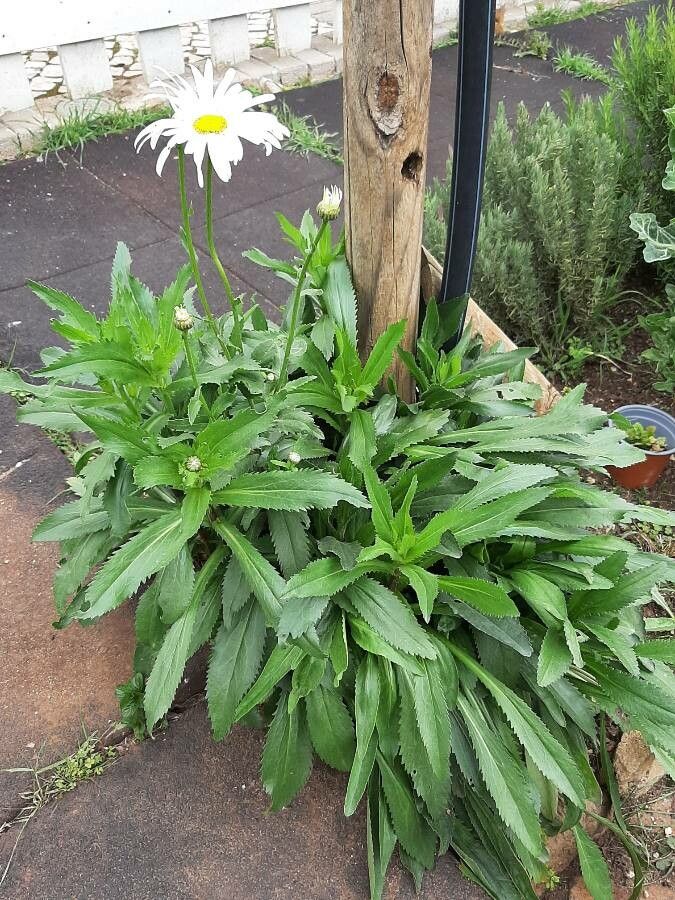
POWO/WCVP places the native range of Leucanthemum maximum from northwestern Spain to the Pyrenees, listing France and Spain as native regions and Germany as an introduction. In France, Tela Botanica associates it with Pyrenean rocks and woodland, notably in Ariège, and records regional protection in Aquitaine.
- Native4
- Introduced1
- France
- Pyrenees
- Ariège
- Northwestern Spain
- Germany
Hexagons: regions where the plant occurs. Green dots: native range.1
Identity
Mountain origins distinguish max-chrysanthemum (Leucanthemum maximum (Ramond) DC.), an accepted species in the Asteraceae, from the many garden plants called daisies. POWO/Kew records its publication in de Candolle's Prodromus and places it in Leucanthemum, with Chrysanthemum maximum Ramond as its historical basionym. 1 5
Also known as Pyrenean marguerite, it has several French names: grande marguerite des Pyrénées, marguerite géante, marguerite élevée and leucanthème élevé. These describe the same tall Pyrenean herb, rather than a florist's chrysanthemum or the small daisy of lawns. Keeping the names beside the binomial prevents those different plants from being conflated. 5 6
“Daisy” is an ambiguous name. Here it identifies a perennial native to the Pyrenees and northwestern Iberia. Commercial Shasta daisies chiefly belong to Leucanthemum × superbum, a related but distinct garden hybrid, so a similar white-and-yellow flower head does not establish that a plant is L. maximum. 1 4
Recognition
A deciduous herbaceous clump grows from a perennial rootstock. French descriptions often give a height of 35–70 cm (14–28 in), whereas RHS gives an ultimate garden height of 0.5–1 m (1.6–3.3 ft) depending on growing conditions. These are separate descriptive ranges, reflecting different accounts rather than one fixed height for every plant. 5 3
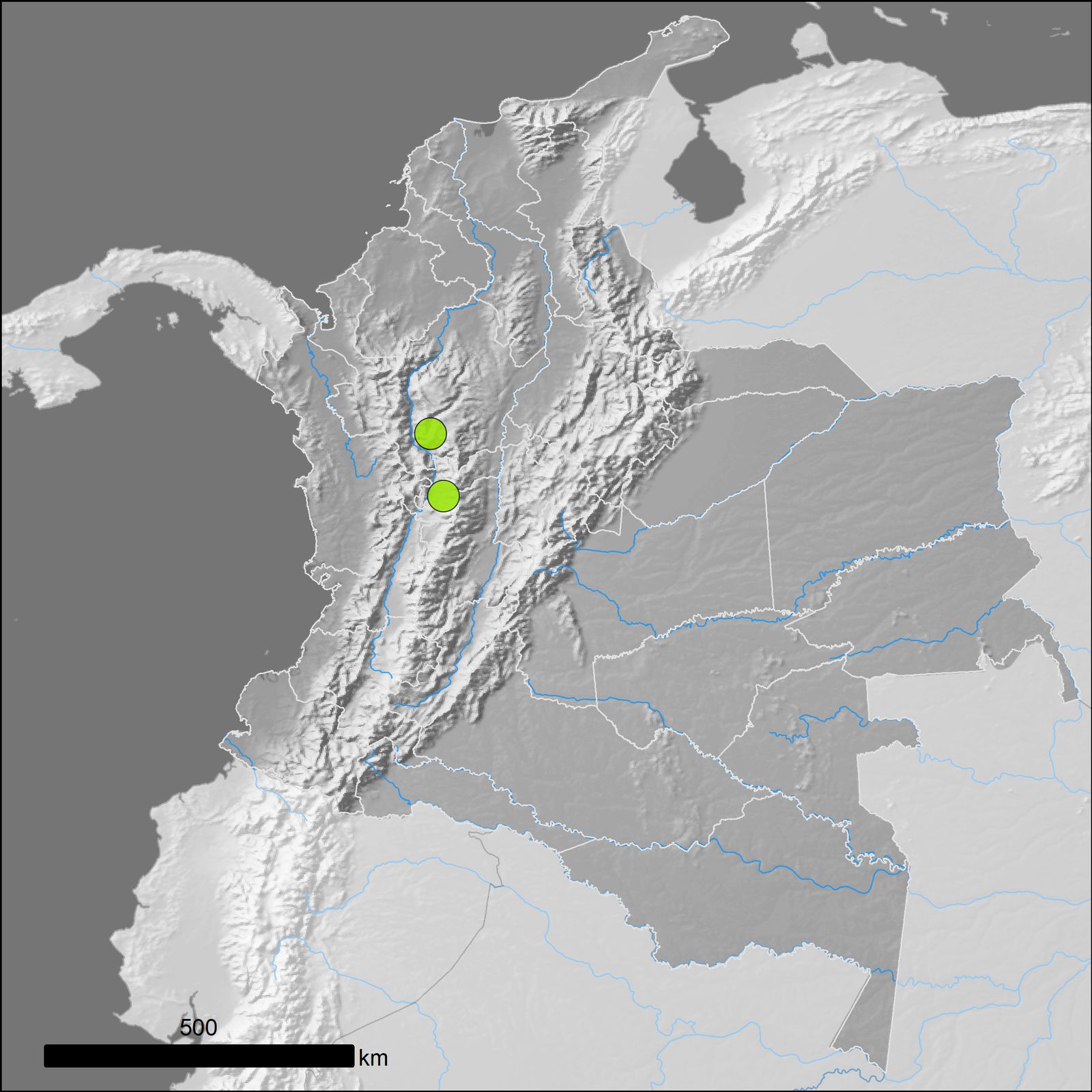
Upright stems are usually unbranched and hairless or only lightly marked. Lower leaves have stalks and an elliptical-lanceolate to spoon-shaped outline, narrowing at both ends and toothed along the margins. Stem leaves are narrower, oblong-lanceolate, sometimes stalkless or borne on a short, winged stalk. 5 2
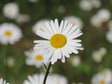
The apparent “flower” is a head. Tubular florets make up the yellow central disc, while white ray florets form the outer ring. Tela Botanica records heads reaching 6 cm (2.4 in); the WFO/Flora of North America treatment generally describes 21–34 ray florets with rays 20–30 mm (0.8–1.2 in) long, sometimes longer. 5 2
Taxonomy, names and look-alikes
Leucanthemum maximum (Ramond) DC. is the stable reference. POWO accepts it as a species in the Asteraceae and lists synonyms from older treatments under Chrysanthemum, Matricaria, Tanacetum and Phalacrodiscus. Those generic names reflect its taxonomic history rather than separate plants that must all be grown differently. 1 6
Names worth recognizing include:
- Chrysanthemum maximum Ramond (botanical name)
- Chrysanthemum leucanthemum subsp. maximum (Ramond) P.Fourn.
- Chrysanthemum leucanthemum var. maximum (Ramond) Fiori
- Leucanthemum vulgare subsp. maximum (Ramond) O.Bolòs & Vigo
- Matricaria maxima (Ramond) Poir.
- Tanacetum maximum (Ramond) Sch.Bip.
These are not a list of separate garden plants. They explain why older catalogs, regional floras and toxicity lists may use “chrysanthemum” where the accepted name is Leucanthemum maximum. Reading the full botanical name matters when comparing those sources rather than treating every occurrence of chrysanthemum as the same taxon. 1 5
The most common horticultural confusion concerns the Shasta daisy. GBIF associates that common name with L. maximum in its vernacular records, but RHS and horticultural usage chiefly apply it to Leucanthemum × superbum and its cultivars. Retain the complete binomial for reliable identification, particularly when the sales name alone could refer to either plant. 6 4
Habitat, range and conservation
POWO/WCVP places the native range from northwestern Spain to the Pyrenees, listing France and Spain as native and Germany as an introduction. This agrees with the geographical meaning of the French name, grande marguerite des Pyrénées. The French and Spanish occurrence concerns the wild species, distinct from its wider cultivation in gardens. 1
Tela Botanica reproduces a French flora description associating the plant with rocks and woodland in the Pyrenean chain, particularly Ariège, and recording July–August flowering. Its setting is therefore a French mountain landscape; that description should not be extended to every daisy sold for garden borders. Other garden daisies may look similar without sharing this species' range or habitat. 5
Conservation requires care in the French context. Tela Botanica records conservation statuses and regional protection in Aquitaine. That does not make every cultivated plant untouchable, but wild populations cannot be treated as ordinary border weeds: respect their sites and obtain garden plants from cultivated stock. Outside Aquitaine, check the protection rules that apply locally before collecting wild plants. 5
In France, L. maximum is a native Pyrenean species and a cultivated garden plant, rather than an invasive alien. Elsewhere, databases record introductions or escapes from cultivation; the status depends on the territory. A garden occurrence and a native wild population should therefore remain distinct when interpreting distribution records. 1 6
Cultivation, life cycle and propagation
Choose a sunny site with moderately fertile, moist, well-drained soil. RHS accepts a broad range of textures, including chalk, clay, loam and sand, and acidic, neutral or alkaline conditions, provided water does not stagnate. Drainage is the condition that links these otherwise varied garden soils. 3
Water regularly without saturating the rootstock. For an established plant in the ground, 10–20 mm/week (0.4–0.8 in/week) during dry weather covers most growing and flowering conditions. Reduce watering when rain is sufficient and increase it temporarily in pots or very freely draining soil. The aim is moist soil rather than a suffocated crown. 3 4
The main flowering season is summer. RHS gives July–August for the species, as does the Coste description reproduced by Tela Botanica; those months describe their Northern Hemisphere setting. Remove spent heads progressively to keep the plant tidy, then cut stems to ground level once flowering has finished. Follow the plant's local season rather than transferring the calendar unchanged between hemispheres. 3 5
Division is the key maintenance task. RHS recommends dividing clumps every 2–3 years, in early spring or late fall, to maintain vigor. It also provides a straightforward way to multiply a garden plant without collecting from wild sites. The seasonal stages, rather than a single universal month, guide the timing. 3
Problems are usually modest where soil drains and air circulates. RHS chiefly identifies aphids and chrysanthemum leaf nematode, describing disease as rarely troublesome. In practice, excess water, shade and excessive nitrogen more often explain soft stems, tired clumps and weakened crowns. Correcting the growing conditions is therefore central to maintaining a sturdy plant. 3
Uses and cautions
Ornamental planting is the main use: sunny beds, perennial borders, informal and cottage gardens, and cut flowers. RHS includes the species among plants for borders, cutting gardens, coastal gardens and urban or courtyard gardens where exposure and drainage suit it. These different uses still depend on the same basic growing conditions. 3
POWO records medicinal and environmental uses, without a horticultural or health protocol that a gardener can directly apply. Eating the plant, making an infusion or using it therapeutically is therefore not recommended. Exact identification, the part used, dose and plant origin are too consequential to turn those use records into casual gardening advice. 1
Animal toxicity needs cautious wording. No exact ASPCA or Pet Poison Helpline entry for Leucanthemum maximum has been identified. ASPCA's “Daisy” entry concerns Chrysanthemum species, toxic to dogs and cats, while Pet Poison Helpline likewise describes Chrysanthemum as containing pyrethrins that may cause vomiting, diarrhea or reduced appetite. These are the taxa named by those references. 7 8
Because Chrysanthemum maximum is the historical basionym of L. maximum, it should not simply be called safe on the strength of an older entry. Low-level caution is preferable: prevent ingestion, do not offer it as fodder or food, and seek veterinary advice after substantial consumption or vomiting, excessive salivation, lethargy, diarrhea or skin symptoms. 1 7
Cultivars and related plants
The subject is the botanical species Leucanthemum maximum, rather than a group of Shasta cultivars. Modern selections with very double heads, fringed petals, compact habits or cream flowers mostly belong to Leucanthemum × superbum or other garden hybrids sold as Leucanthemum. A horticultural selection name does not automatically identify this wild species. 4
Comparison with Leucanthemum vulgare helps: oxeye daisy has a wider distribution in meadows and open habitats, generally with smaller heads. L. maximum has a more Pyrenean identity and larger heads, but the two are similar enough to require attention to leaves, habitat and scientific name. None of these characters should be considered in isolation. 5 2
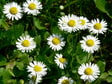
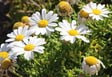
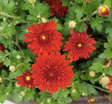
Other look-alikes are white-and-yellow Asteraceae: the low lawn daisy Bellis perennis, Canary Island marguerite Argyranthemum frutescens, florist's chrysanthemum Chrysanthemum × morifolium, and some Tanacetum or garden chamomiles. For toxicity or conservation questions, “daisy” alone never identifies the plant precisely enough. 6 7
When buying, check the binomial on the label, a healthy rootstock, green basal leaves and a freely draining pot. Expect full sun, moist but drained soil and regular division. A plant sold as “Shasta daisy” may be perfectly suitable for the garden without necessarily being Leucanthemum maximum. Clear identification makes that a choice rather than a source of confusion. 3 4
Main sources
- Plants of the World Online / Kew, Leucanthemum maximum (Ramond) DC.
- World Flora Online, Leucanthemum maximum (Ramond) DC.
- Royal Horticultural Society, Leucanthemum maximum (Ramond) DC.
- Royal Horticultural Society, Leucanthemum genus guide
- Tela Botanica eFlore, Leucanthemum maximum (Ramond) DC.
- GBIF Backbone Taxonomy, Leucanthemum maximum (Ramond) DC.
- ASPCA, Daisy toxicity entry for Chrysanthemum species
- Pet Poison Helpline, Chrysanthemum
Frequently asked questions
Is Leucanthemum maximum the Shasta daisy?
Not in the strict horticultural sense. Shasta daisy sometimes appears as a common name, but the garden Shasta daisy chiefly corresponds to Leucanthemum × superbum, a related hybrid.
Is max-chrysanthemum native to France?
Yes. POWO/WCVP lists France as native, and Tela Botanica associates it with rocks and woodland in the Pyrenees, notably Ariège.
Can Leucanthemum maximum be collected in the wild?
Not for gardening. Tela Botanica records regional protection in Aquitaine and several conservation statuses. Buy cultivated plants or divide an existing garden clump.
Which exposure produces the best flowering?
Full sun. RHS says leucanthemums flower best in sun and that Leucanthemum maximum needs moist but well-drained soil.
How often should the clump be divided?
Every 2–3 years if its center thins out or flowering declines. Division rejuvenates the clump and limits crown disease.
Is the plant toxic to cats and dogs?
There is no direct ASPCA entry identified for Leucanthemum maximum. Its former name Chrysanthemum maximum and the ASPCA/Pet Poison Helpline listings of Chrysanthemum or daisy as toxic favor low-level caution over calling it safe.
Is it invasive in France?
No in the French context. Botanical databases describe it as native to the French Pyrenees; conserving wild populations is the local concern rather than invasion.
Similar plants
If you are unsure about a plant’s toxicity, ask a botanist or veterinarian for advice.