
Perennial cornflower (Centaurea montana, )
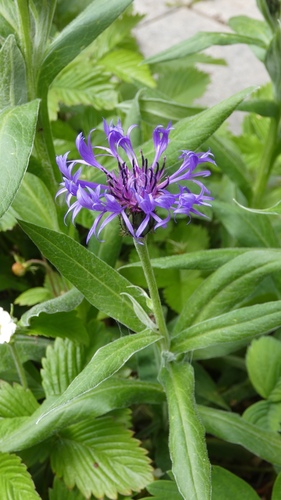
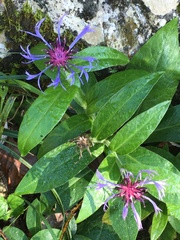
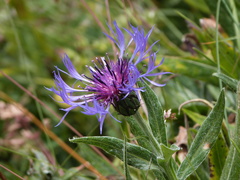
Perennial cornflower (Centaurea montana L., 1753) is a European perennial in Asteraceae. Its rhizomatous clumps carry blue flower heads with reddish centers above green, variably hairy leaves, and persist from one growing season to the next.
Read morePerennial cornflower, Mountain bluet, Mountain knapweed and Mountain cornflower
Allow a few hours of direct sun per day, preferably morning or evening.
Full sun or light partial shade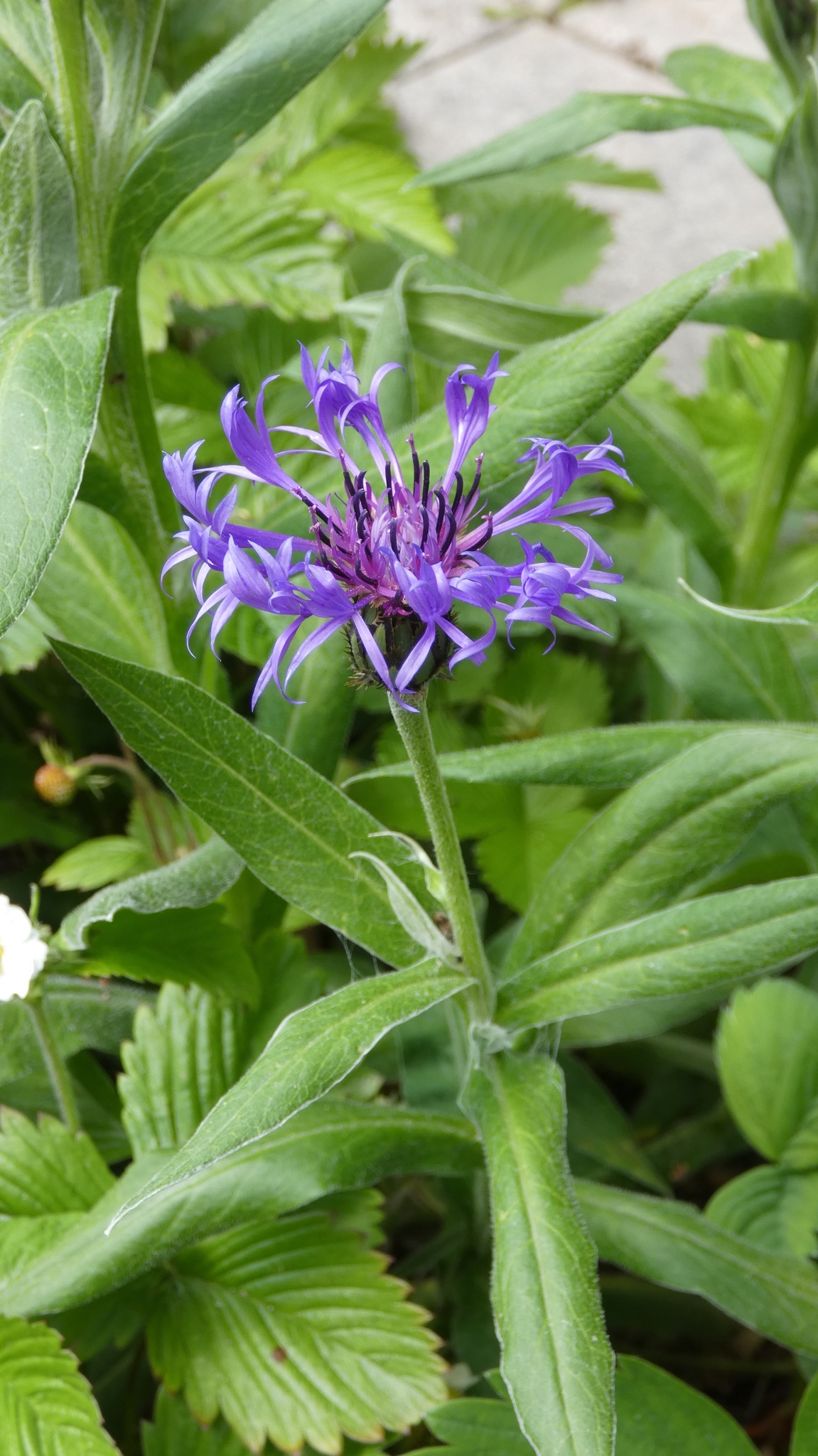
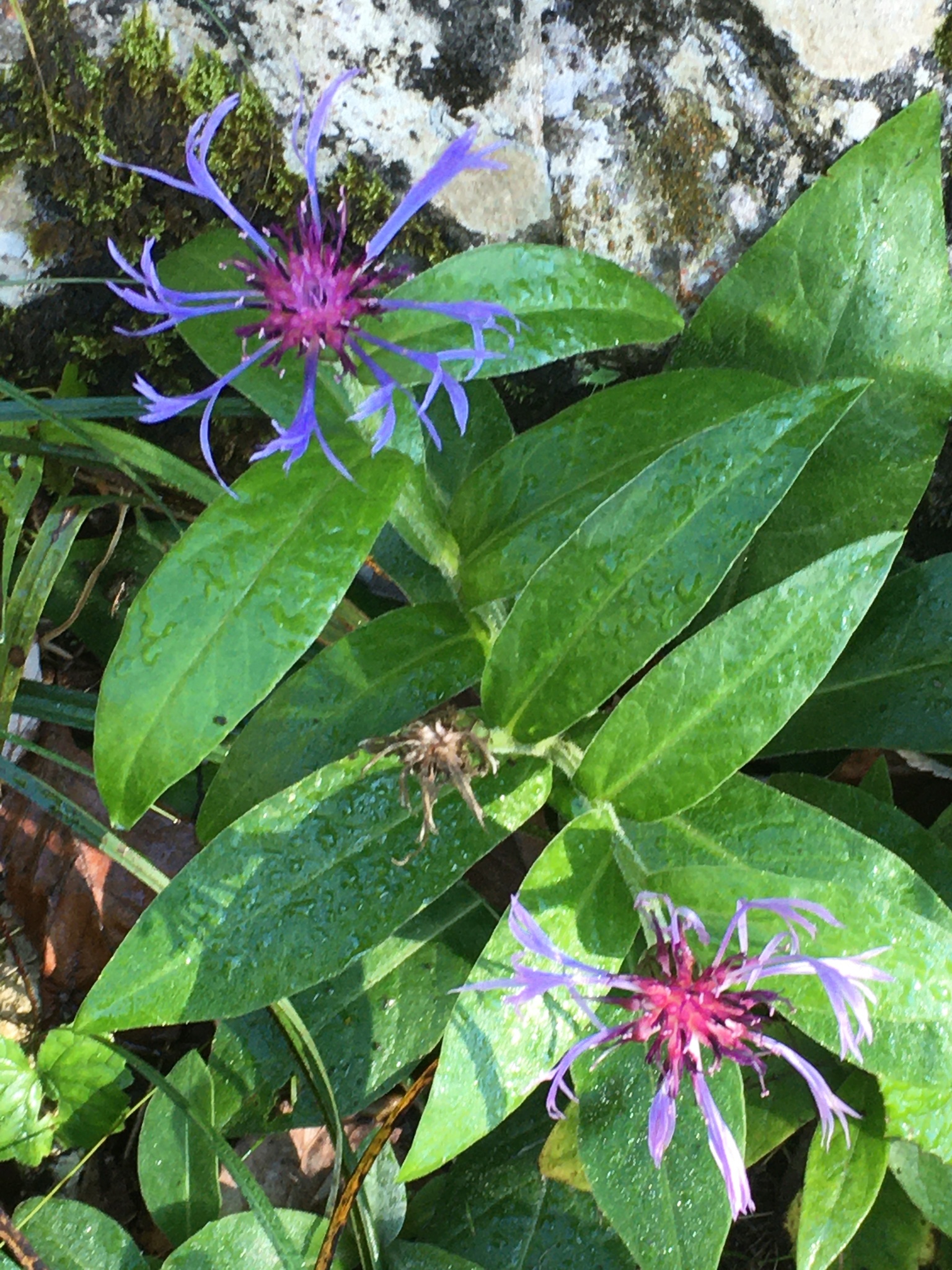
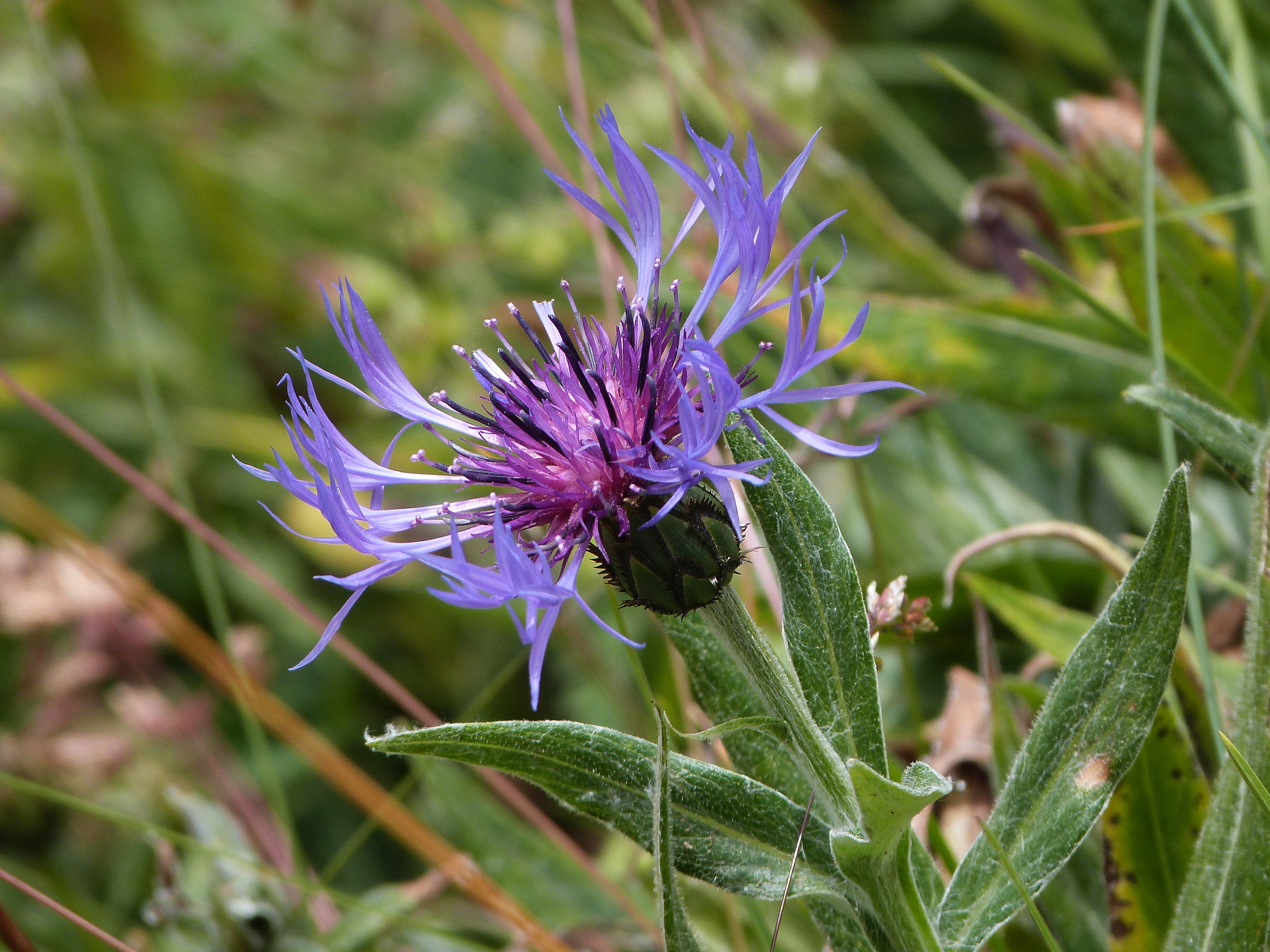
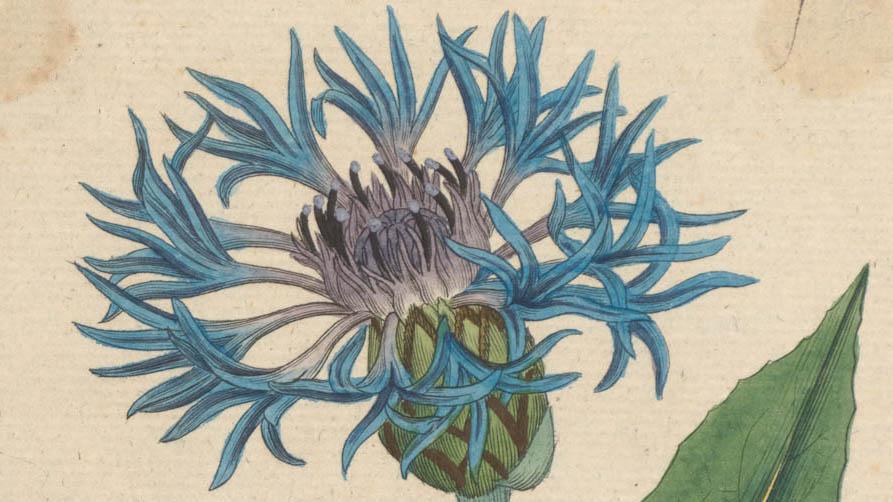
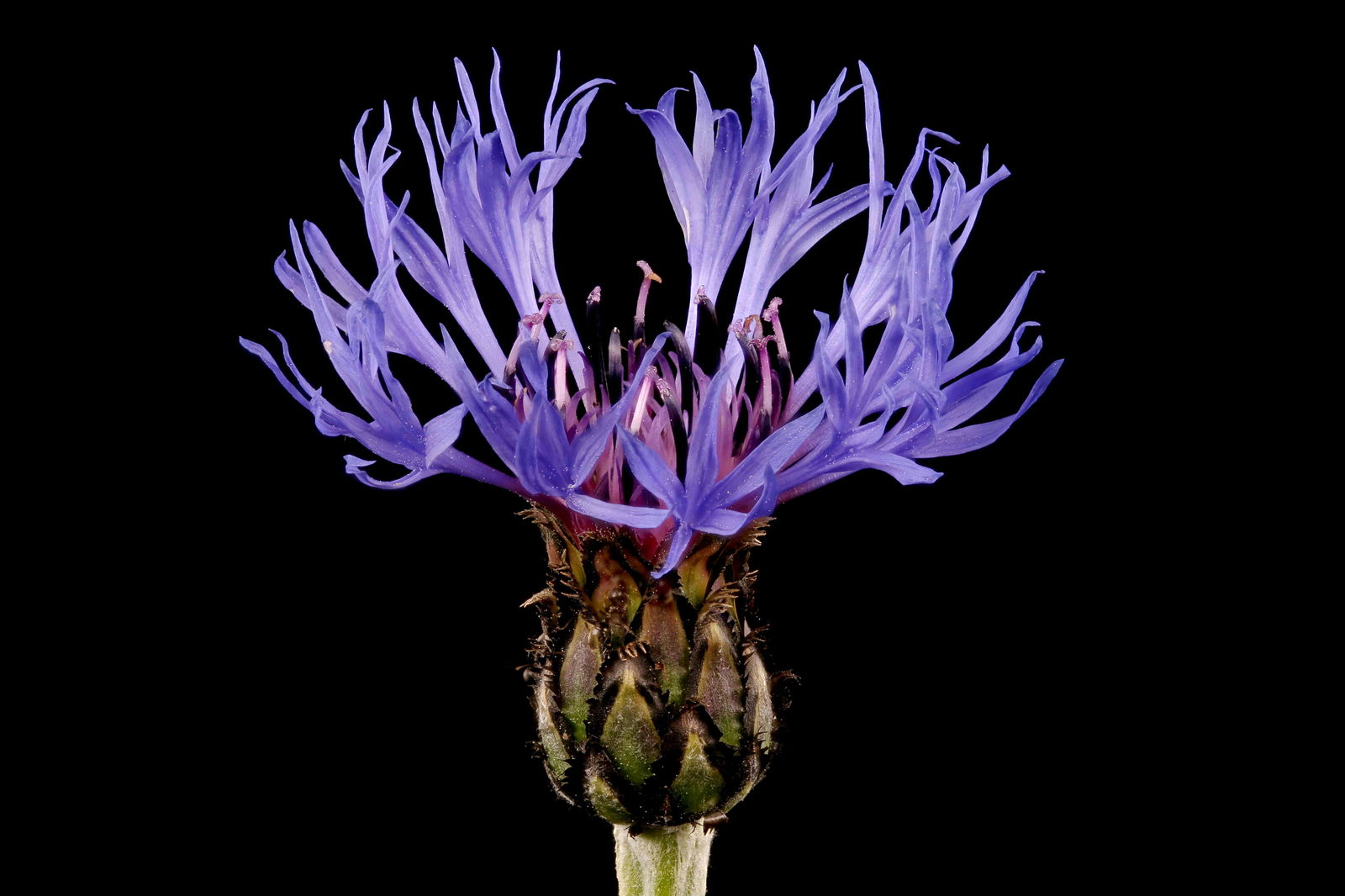

© photo
(c) perpe037, some rights reserved (CC BY-NC) · cc-by-nc
iNaturalist User · cc0
© copyright of the Board of Trustees of the Royal Botanic Gardens, Kew.
Global distribution
A European species. Trefle lists France and several neighboring European countries in its native range, with introductions recorded outside Europe.
- Native8
- Introduced2
- France
- Austria
- Belgium
- Germany
- Italy
- Spain
- Switzerland
- Great Britain
- North America
- New Zealand
Hexagons: regions where the plant occurs. Green dots: native range.5
Identity
Perennial cornflower (Centaurea montana L., 1753) belongs to Asteraceae. POWO/WCVP accepts this species name, published by Linnaeus in 1753, and describes a European perennial. 1 5
French names include centaurée des montagnes and bleuet des montagnes. English names include perennial cornflower, mountain bluet and mountain knapweed. These overlap with names for other blue-flowered Centaurea, so the binomial is useful for identification. 2 7
It is native in France according to the cited distribution records. Introduced or naturalized populations occur in parts of North America, but this does not establish an exotic invasive status for France. 2 11
Recognition
Rhizomes or stolons produce a persistent clump. Flora of North America gives 25–80 cm (10–31 in) in height; the RHS describes plants around 45 cm (18 in). This enduring clump contrasts with the annual habit of Centaurea cyanus. 6 7
Leaves are simple to lobed, green and variably hairy, especially beneath. NC State describes gray-green foliage of medium texture, while the RHS notes simple or lobed leaves with hairy undersides. Foliage can look relatively unobtrusive before flowering. 8 7
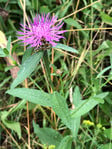
The RHS describes blue heads around 5 cm (2 in) across with reddish centers. NC State gives 2.5–7.5 cm (1–3 in). Long, spreading, deeply divided outer florets give each head a broad, finely cut outline. 7 8 6
Useful taxonomy
The accepted name is Centaurea montana L., published in 1753. WCVP includes Cyanus montanus (L.) Hill and Setachna montana (L.) Dulac among its synonyms. All refer to the naming history of this Asteraceae species. 1
Older records contain infraspecific treatments and names associated with Centaurea triumfettii subsp. semidecurrens or Cyanus montanus. These historical combinations should be distinguished from the currently accepted species name. 2 5
Names such as ‘Alba’, ‘Carnea’, ‘Parham’ and ‘Grandiflora’ belong to horticultural selections. The RHS records different name statuses for such plants; cultivar names are not equivalent to separate wild botanical taxa. 3 7
Habitat and range
POWO places the species in Europe. Trefle lists France, Austria, Belgium, Germany, Italy, Spain, Switzerland, Great Britain and Ireland among its native distribution records. These are attributed distribution records rather than a uniform description of every European population. 5 2
The epithet montana reflects its European mountain associations. Cool, drained soils, bright woodland edges and open beds suit it. Full sun is useful where exposure is not excessively hot and drying. 7 10
Go Botany treats it as non-native in New England, and Trefle records introductions in Canada and the United States. A naturalized population outside Europe does not determine its status in its French native range. 11 2
Life cycle and garden care
Rhizomes support a perennial clump. The RHS gives 2–5 years to full size, while Flora of North America describes rhizomes and stolons. A spreading garden clump may eventually need division to keep it within its allotted space. 7 6
The RHS describes flowering in late spring and summer. The cited PFAF description gives early-to-midsummer flowering, while Flora of North America gives a broader late-spring-to-late-summer period. In suitable Northern Hemisphere temperate gardens, late spring and early summer are the main flowering season; local conditions shift this timing. 7 9 6
Grow in full sun or light partial shade in moist but well-drained soil. Removing spent heads can encourage a tidy display, and lodging stems may need support. RHS propagation guidance includes spring sowing in a cold frame and division in spring or autumn, following the equivalent local seasons in either hemisphere. 7 8
Toxicity, edible uses and precautions
The cited sources do not supply a strong species-specific veterinary warning or an exact ASPCA account for Centaurea montana. ASPCA does list Centaurea cyanus, but that is a different species and its non-toxic classification cannot establish the status of perennial cornflower. 12 4
PFAF records no known hazards and describes flowers as edible in the cited account, alongside historical medicinal uses. Such uses do not establish the safety of every plant part, preparation or animal exposure. 9
With children and pets, discourage ingestion rather than using a lack of reports as reassurance. Remove chewed plant material where possible. Seek medical or veterinary advice after a large ingestion or signs such as vomiting, excessive salivation, diarrhea, irritation or lethargy. 9 4
Differences from annual cornflower
Centaurea cyanus is an annual of fields and disturbed ground; Centaurea montana is a perennial associated with European mountain habitats and garden beds. The persistent clump is a stronger distinction than blue flower color alone. 13 6
Annual cornflower typically has finer heads 3–4 cm (1.2–1.6 in) across. Perennial cornflower often has heads around 5 cm (2 in), with long spreading blue outer florets and a reddish center. 14 7
Annual cornflower renews itself by seed in meadows and fallows. Perennial cornflower suits borders and cutting gardens, with division available to propagate or contain the clump. White, pink and lavender horticultural forms provide alternatives to the usual blue. 7 3
Main sources
- POWO/WCVP / Plants of the World Online, Centaurea montana
- Trefle, species data, Centaurea montana
- RHS content, Centaurea montana
- ASPCA animal toxicity data
- Plants of the World Online / Kew, Centaurea montana L.
- Flora of North America, Centaurea montana
- Royal Horticultural Society, Centaurea montana
- NC State Extension Gardener Plant Toolbox, Centaurea montana
- Plants For A Future, Centaurea montana
- Chicago Botanic Garden Plant Finder, Centaurea montana
- Go Botany, Centaurea montana
- ASPCA, Bachelors Buttons toxicity entry
- Flora of North America, Centaurea cyanus
- Royal Horticultural Society, Centaurea cyanus
Frequently asked questions
Is perennial cornflower the same as field cornflower?
No. Centaurea montana is perennial, while Centaurea cyanus is the annual cornflower associated with cereal fields.
Does perennial cornflower return each year?
Yes. Its rhizomes or stolons form a persistent clump that can spread and be divided.
Does it need full sun?
Full sun is generally best, but RHS and NC State also allow partial shade.
Is it invasive?
The cited references do not establish an invasive status in France. Clumps can spread and may need division in a garden.
Is it safe for pets?
The cited references do not provide an exact ASPCA species account. Discourage ingestion and seek veterinary advice if digestive signs follow chewing.
Are its flowers edible?
PFAF describes edible flowers in the cited account. Do not use unidentified or treated plants for food or medicine; obtain expert identification.
Similar plants

If you are unsure about a plant’s toxicity, ask a botanist or veterinarian for advice.