
Field poppy (Papaver rhoeas, )
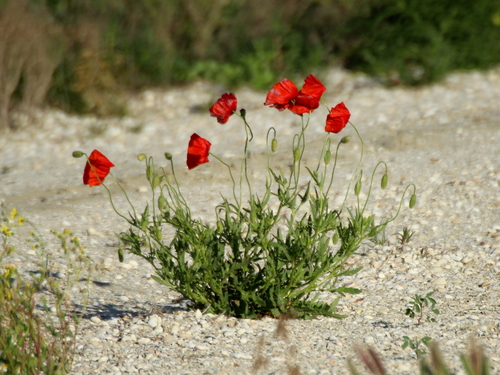
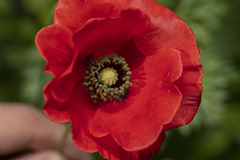
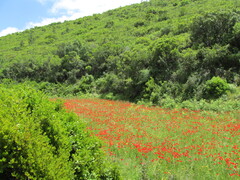
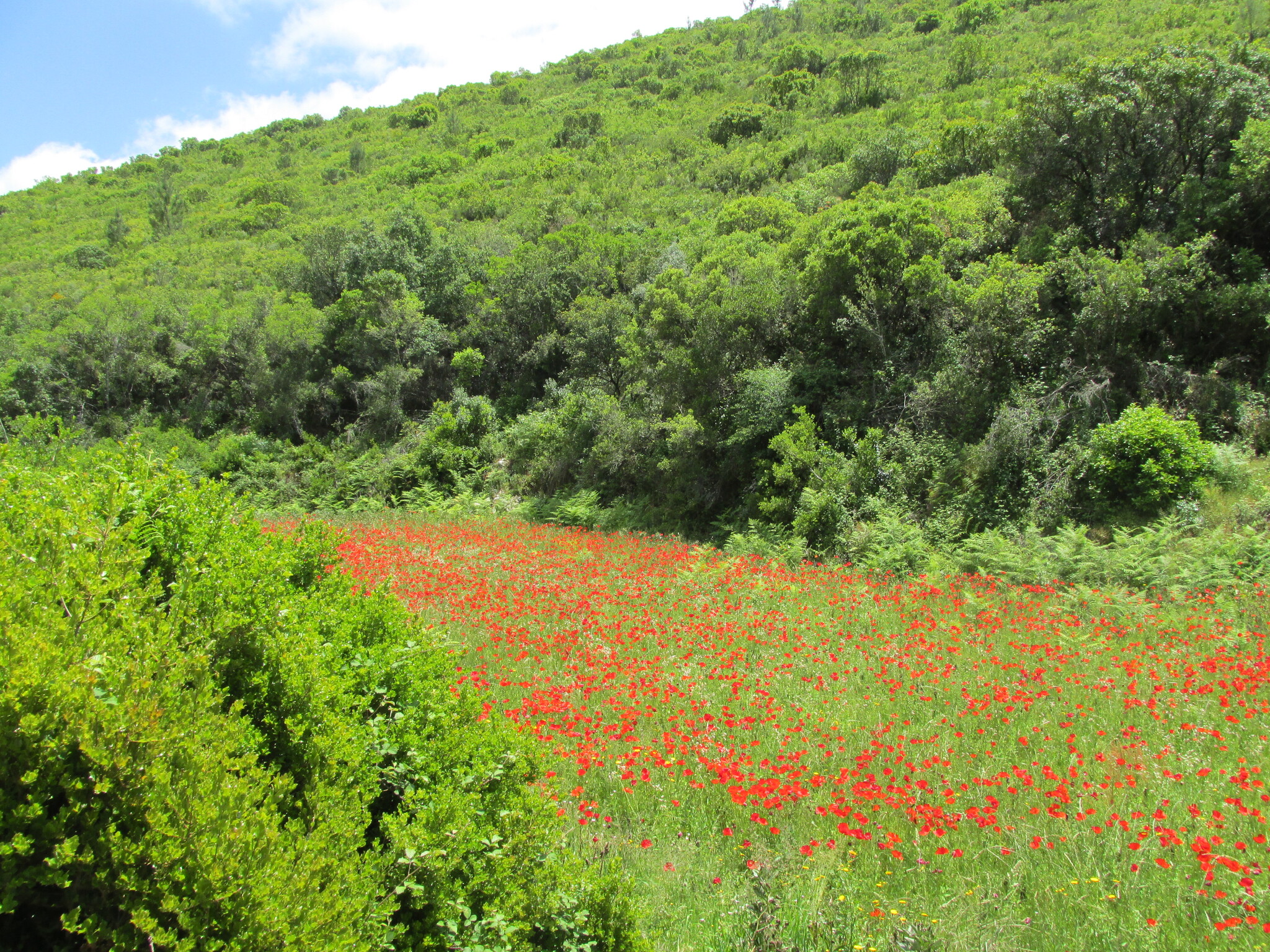
Field poppy (Papaver rhoeas) is an annual in the Papaveraceae family, characteristic of cereal fields, fallow ground, and recently disturbed soil. Its hairy, divided leaves and nodding buds lead to crumpled, usually red flowers, sometimes with black petal bases, followed by small capsules containing very long-lived seeds.
Read moreField poppy, Common poppy, Corn poppy, Flanders poppy and Red poppy
Place in full sun, with intense direct light all day long.



© photo
Andrew Bazdyrev · cc-by
Eleftherios Katsillis · cc-by
zebedeugalinha · cc-by
Taken May 8, 2020 by C. N. (cc-by-sa)
Taken Jul 12, 2022 by manuseitz (cc-by-sa)
Taken Jun 25, 2022 by Andrzej Konstantynowicz (cc-by-sa)
Taken May 27, 2021 by Patrice Nodet (cc-by-sa)
© copyright of the Board of Trustees of the Royal Botanic Gardens, Kew.




Global distribution
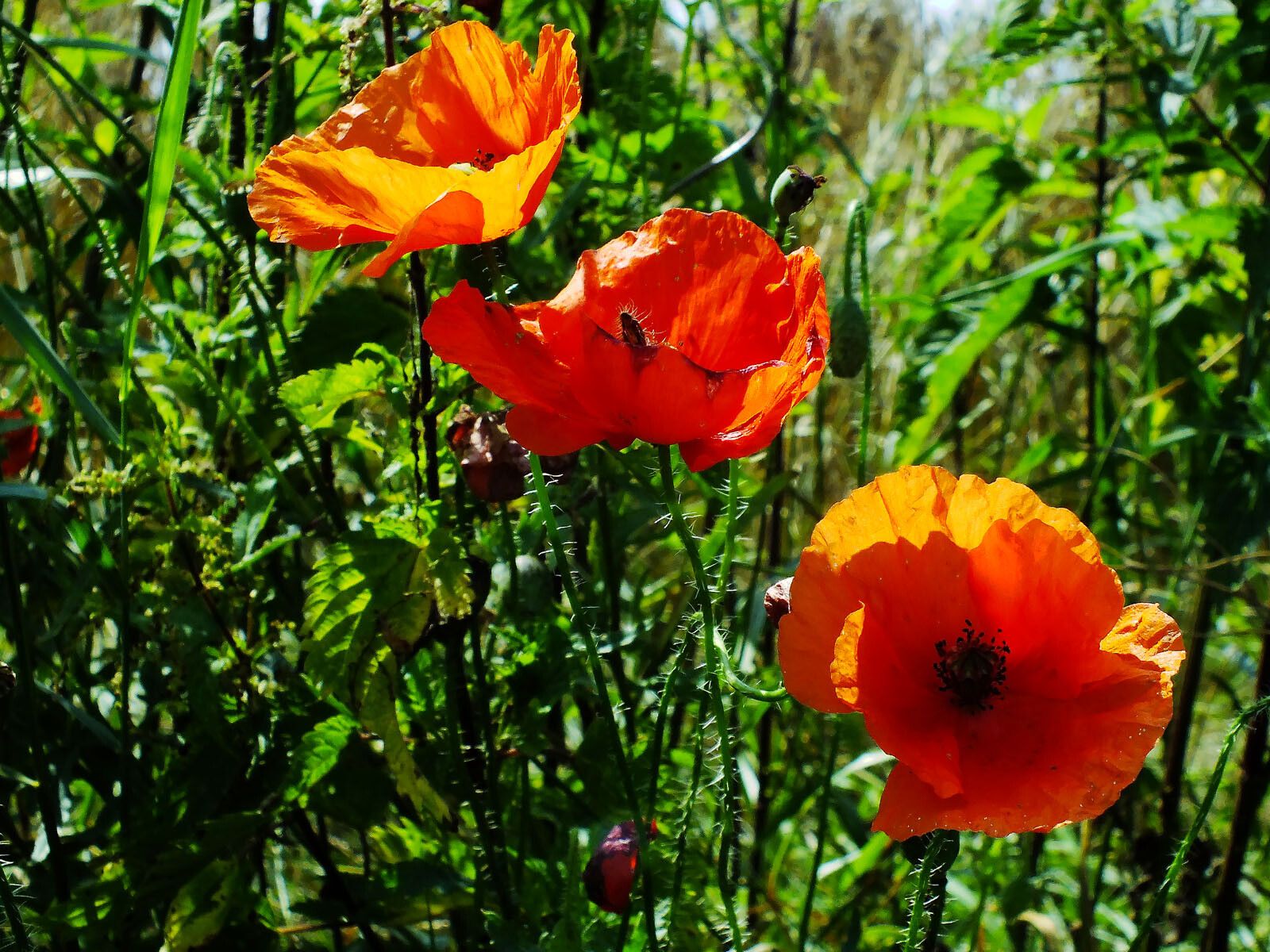
POWO treats Papaver rhoeas as native from Macaronesia through Europe and the Mediterranean to the western Himalayas. FNA describes it as introduced in North America, in fields, pastures, banks, railways, roadsides, and other disturbed sites. Tela Botanica and INPN document the taxon and its French names in France.
- Native7
- Introduced5
- Mainland France
- Great Britain
- Mediterranean Europe
- Macaronesia
- North Africa
- Southwestern Asia
- Western Himalayas
- Canada
- United States
- South America
- Australia
- New Zealand
Hexagons: regions where the plant occurs. Green dots: native range.1
Identity
Field poppy (Papaver rhoeas L., 1753) is an accepted species in the genus Papaver and the Papaveraceae family. Kew/POWO traces the name to Species Plantarum in 1753, and WFO confirms its accepted status. 1 2
Other established names include Common poppy, Corn poppy, Flanders poppy, and Red poppy. They refer to the same annual of fields and disturbed ground. In French botanical references, Tela Botanica and INPN record the names coquelicot and pavot coquelicot, linking garden usage with the nationally recognized taxon. 5 6
An arable wildflower, it accompanies open land, crops receiving little herbicide, banks, and recently disturbed soil. Its return depends on a seed bank rather than on the survival of individual perennial clumps. 1 3
Recognition
The light, upright habit typically reaches 20-80 cm (8-31 in) in floras, with simple or branched, bristly to hairy stems. FNA describes plants up to 8 dm (31 in); RHS records cultivated plants around 75-90 cm (30-35 in) tall. 3 4
Hairy green leaves are divided or toothed. Basal leaves have more distinct stalks, while upper leaves become more nearly stalkless. This bristly texture, together with nodding unopened buds, helps distinguish Field poppy from stouter, more glaucous poppies. 1 3
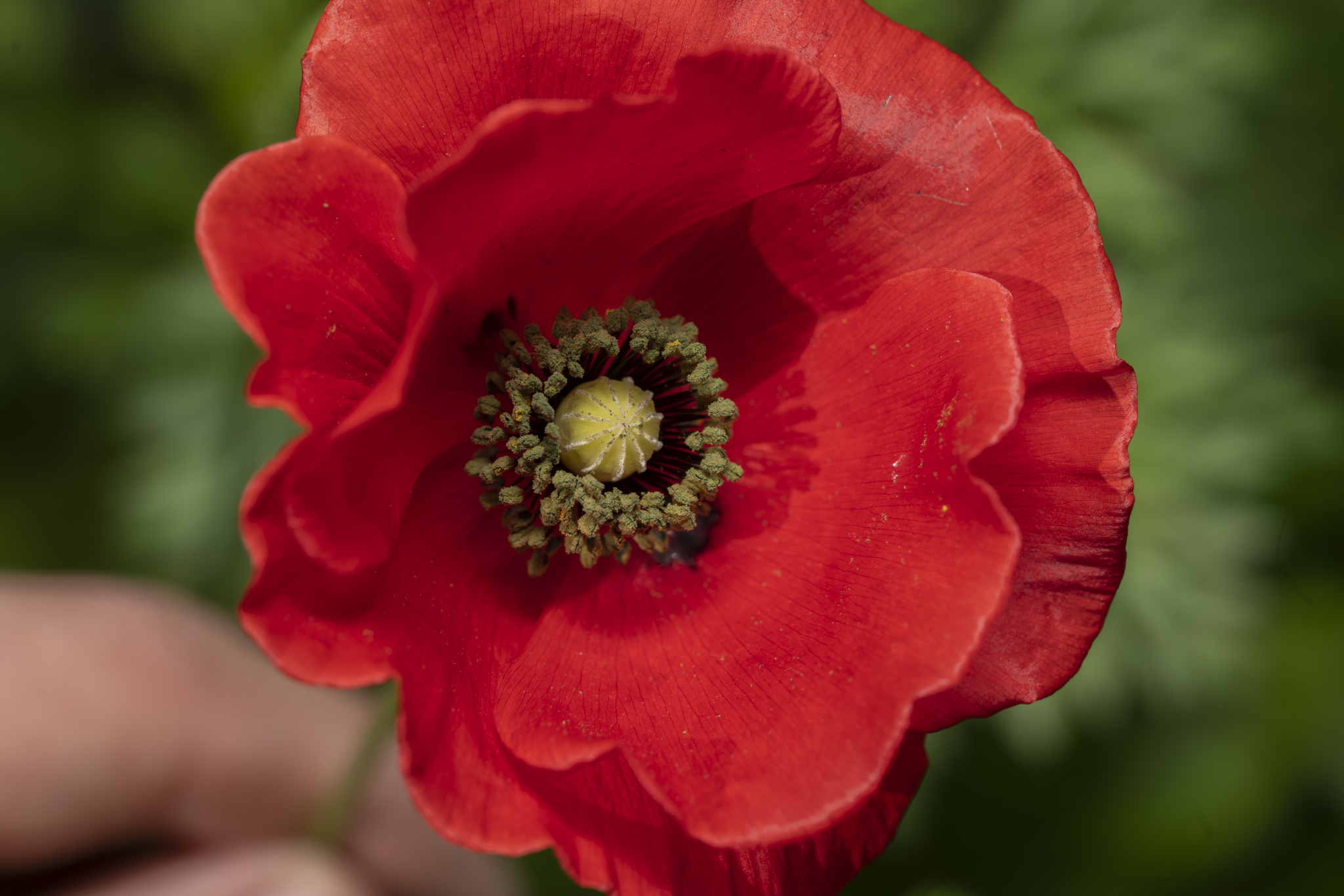
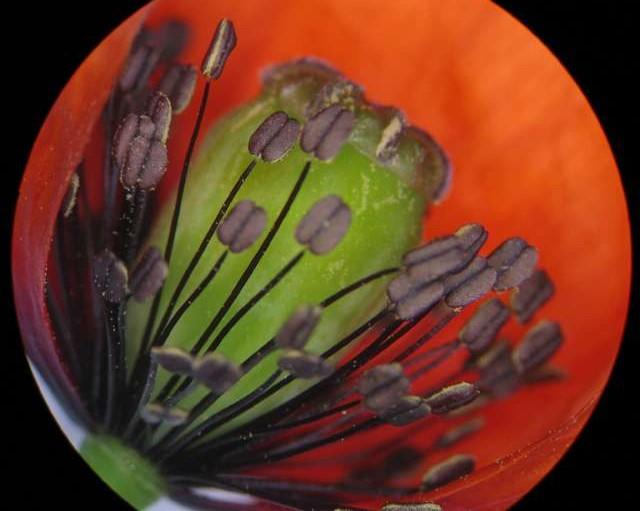
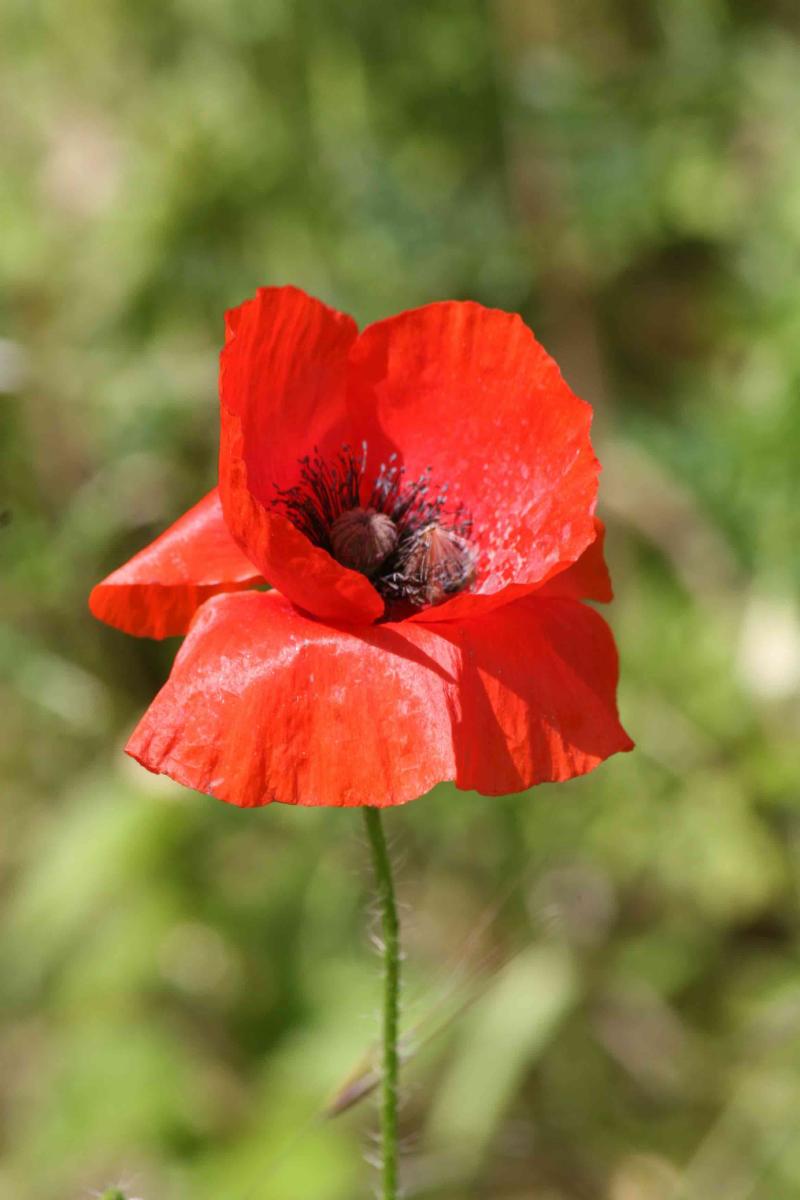
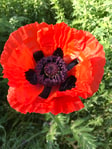
Four crumpled petals form the typical flower, bright red to orange-red, sometimes marked with a black basal spot. Kew gives a flower diameter of 7-10 cm (3-4 in); FNA describes white, pink, orange, or red petals, often spotted at the base. Garden selections extend the palette to pale yellow and semidouble forms. 1 3 4
Small, hairless capsules follow flowering. They are rounded to top-shaped and reach about 2 cm (0.8 in) according to FNA. As the capsule dries, seeds escape through pores near its top, allowing reseeding on bare ground. 3 1
Taxonomy and look-alikes
For this species the accepted name is Papaver rhoeas L. RHS cites Papaver arvaticum and Papaver vulgaris as horticultural or historical synonyms, while WFO also lists infraspecific names and forms that may occur in older floras. 4 2
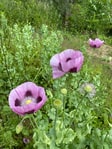
Confusion with Opium poppy (Papaver somniferum) needs particular care. Field poppy has distinctly hairy stems and buds, lighter flowers, and smaller capsules. Opium poppy is more robust, often glaucous, and has large capsules. Neither an uncertain identification nor a familiar poppy name makes extraction, infusions, or homemade preparations safe. 3 8
Long-headed poppy (Papaver dubium) and other field poppies may share the same habitat. Detailed identification relies on the capsule, hairs, flower stalk, and shape of the stigmatic disk, rather than red flower color alone. 3 5
Shirley poppies are not a separate species. Kew describes them as cultivars derived from Papaver rhoeas, selected for paler, pink, white, or semidouble flowers. Like other annual field poppies, they are grown from seed. 1 4
Habitat and range
Macaronesia, Europe, the Mediterranean, and the western Himalayas make up the broad native range recorded by POWO. Kew Species Profiles suggests a probable Mediterranean origin and extensive naturalization elsewhere, with a history closely tied to cereals and cultivated soils. 1
North American populations are introduced, according to FNA, occurring in fields, pastures, banks, railways, roadsides, and other disturbed places at 0-2,000 m (0-6,560 ft). Such habitats explain its appearance after plowing, earthworks, or the exposure of formerly covered soil. 3
Mainland French references INPN and Tela Botanica document Papaver rhoeas. It may be conspicuous and reseed locally, but the sources used do not establish a national invasive alien designation for France. 6 5
Its decline in intensively managed fields reflects the loss of favorable conditions through herbicides, cleaned seed, crop rotations, and soil being exposed less often at suitable times. Gardens can provide those conditions again: bare soil, light, little competition, and low nitrogen. 1 4
Life cycle, sowing, and cultivation
Direct sowing is the main way to grow Field poppy. Sow the fine seeds on the surface or barely cover them, then firm lightly for soil contact. Deep burial or thick mulch often prevents emergence. 4 1
Temperate climates offer two sowing windows: fall, for rosettes that overwinter and flower early, or spring, for later flowering. Open, well-drained soil matters more than a rich growing medium in either case. 4 3
RHS recommends full sun and well-drained chalk, loam, or sand. A restrained watering guide is about 5-15 mm/week (0.2-0.6 in/week) only during emergence when rain is lacking, then little water. Established plants tolerate a brief dry spell better than saturated soil. 4
Fertilizer is unnecessary. Nitrogen in a wildflower meadow produces taller, softer stems and favors competing grasses. Thin seedlings, remove competing weeds mechanically early on, and retain patches of bare soil for the next generation. 4 3
Long seed dormancy sustains the population. Kew reports that seeds can remain dormant in the soil for more than 80 years. Allowing a few capsules to ripen maintains the population, but unrestricted seed production can yield an overcrowded stand the following year. 1
Uses, symbolism, and toxicity
Its established role is ornamental and ecological: annual wildflower meadows, informal beds, vegetable-garden edges, well-drained banks, or short-lived bouquets. Kew also records its cultural role as a symbol of remembrance and its association with ground disturbed during World War I. 1
Historical food and medicinal uses recorded by Kew include seeds, petals, and dyes. These records do not establish safe homemade recipes: poppy identification, alkaloids, and differences between plant parts require care rather than casual consumption. 1
A moderate toxicity rating reflects precaution. Kew notes alkaloids in various parts and potential risks to horses, cattle, and sheep in large amounts. Pet Poison Helpline treats poppies as toxic to dogs and cats, with possible digestive signs, sedation, or excitement. 1 8
Treat cats, dogs, and horses as at risk, keep children and adults from ingesting the plant, and avoid homemade preparations. Contact a veterinarian or poison center after significant ingestion. These precautions do not equate Field poppy with Opium poppy; they recognize alkaloids within the Papaveraceae. 8 7
Cultivars and responsible growing
Garden forms of Papaver rhoeas remain annuals grown from seed. The Shirley group comes from selections with paler flowers, often lacking a large dark blotch and sometimes semidouble. Kew explicitly links Shirley poppies to this species. 1 4
Named seed mixtures such as Mother of Pearl, Angel's Choir, and Bridal Silk produce variable colors. They represent horticultural seed lots rather than stable botanical taxa, with the result depending on the supplier and seed generation. 4
Grow it responsibly by checking local suitability before introducing seed near sensitive natural habitats, and remove capsules if reseeding becomes excessive. Its alkaloids make homemade food or medicinal use inappropriate; this is a flower of open ground to appreciate as an ornamental. 6 8
Main sources
- Plants of the World Online / Kew, Papaver rhoeas L.
- World Flora Online, Papaver rhoeas L.
- Flora of North America, Papaver rhoeas
- Royal Horticultural Society, Papaver rhoeas, common poppy
- Tela Botanica eFlore, Papaver rhoeas L.
- INPN / MNHN, Papaver rhoeas L., CD_NOM 112355
- NC State Extension Gardener Plant Toolbox, Papaver
- Pet Poison Helpline, Poppy
Frequently asked questions
Is Field poppy a perennial?
No. Papaver rhoeas is an annual, sometimes a short-lived biennial after fall germination. Its dormant seeds are chiefly responsible for its return.
Why do poppies appear after building work?
Disturbance brings dormant seeds toward the surface and creates bright, bare soil. Kew notes that field poppy seeds can remain viable in the soil for a very long time.
Should I sow Field poppy in fall or spring?
Either can work. In mild climates, fall sowing often gives early flowers; elsewhere, spring sowing on a fine seedbed works well.
Is Field poppy toxic to cats and dogs?
Treat it as toxic. Pet Poison Helpline lists poppies as toxic to dogs and cats, with possible nervous-system effects. These records support a precautionary toxic status.
Is Field poppy dangerous to horses?
Caution also applies to horses. Kew reports alkaloids in all parts and a potential risk to horses, cattle, and sheep when large amounts are eaten.
Can I eat the seeds or make poppy tea?
No food or medicinal use is advised. Although Kew records uses of seeds and petals, alkaloids and confusion between poppies mean it should be treated as an ornamental.
How can I distinguish it from Opium poppy?
Field poppy has distinctly hairy stems and buds, lighter flowers, and small capsules. Opium poppy is more robust and bears large, globular capsules.
Is Field poppy invasive in France?
No national invasive alien status is established for mainland France. It may reseed heavily in open soil, but it is a common arable wildflower that can be managed by cutting capsules before they ripen.
Similar plants

If you are unsure about a plant’s toxicity, ask a botanist or veterinarian for advice.