
California poppy (Eschscholzia californica, )
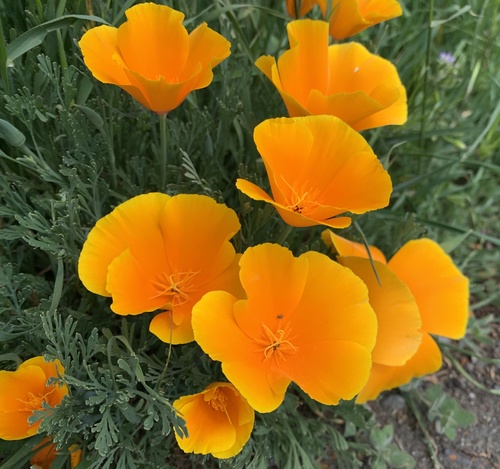
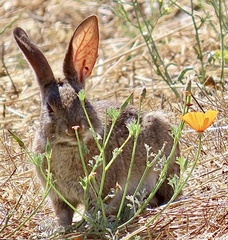
California poppy (Eschscholzia californica Cham.) belongs to the Papaveraceae and is native to western North America. An annual or sometimes a short-lived perennial in mild climates, it has finely divided blue-green foliage and satiny yellow to orange flowers that close at night and in cool or cloudy weather.
Read moreCalifornia poppy, California golden poppy, golden poppy and cup of gold
Place in full sun, with intense direct light all day long.
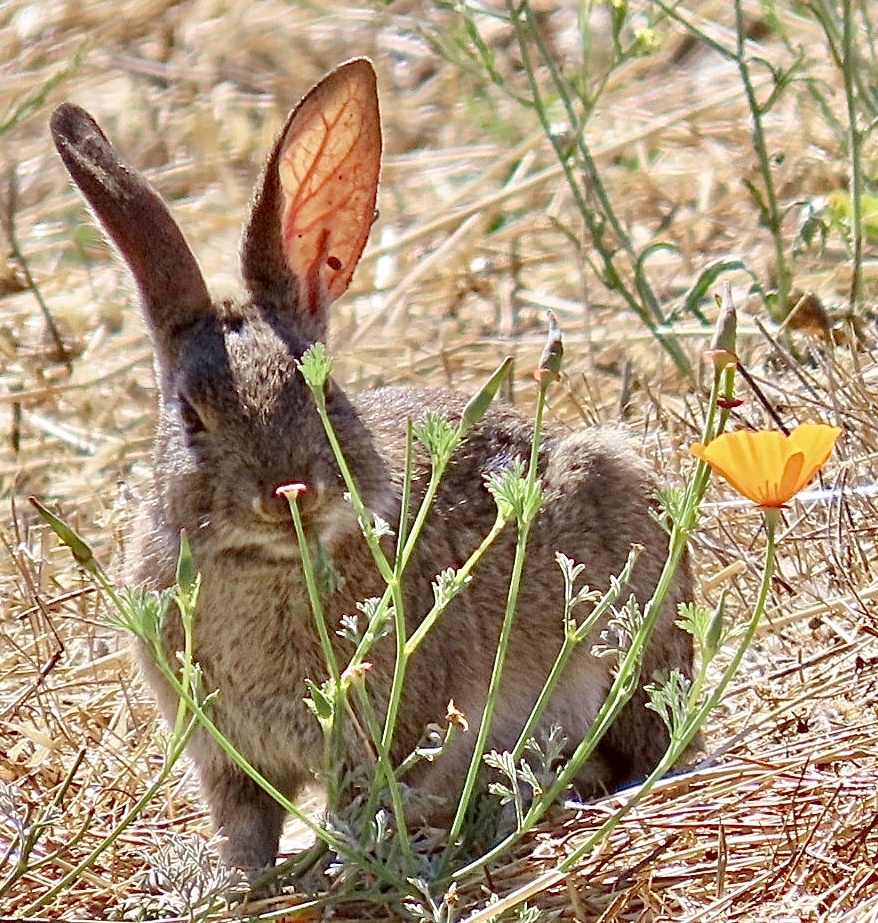
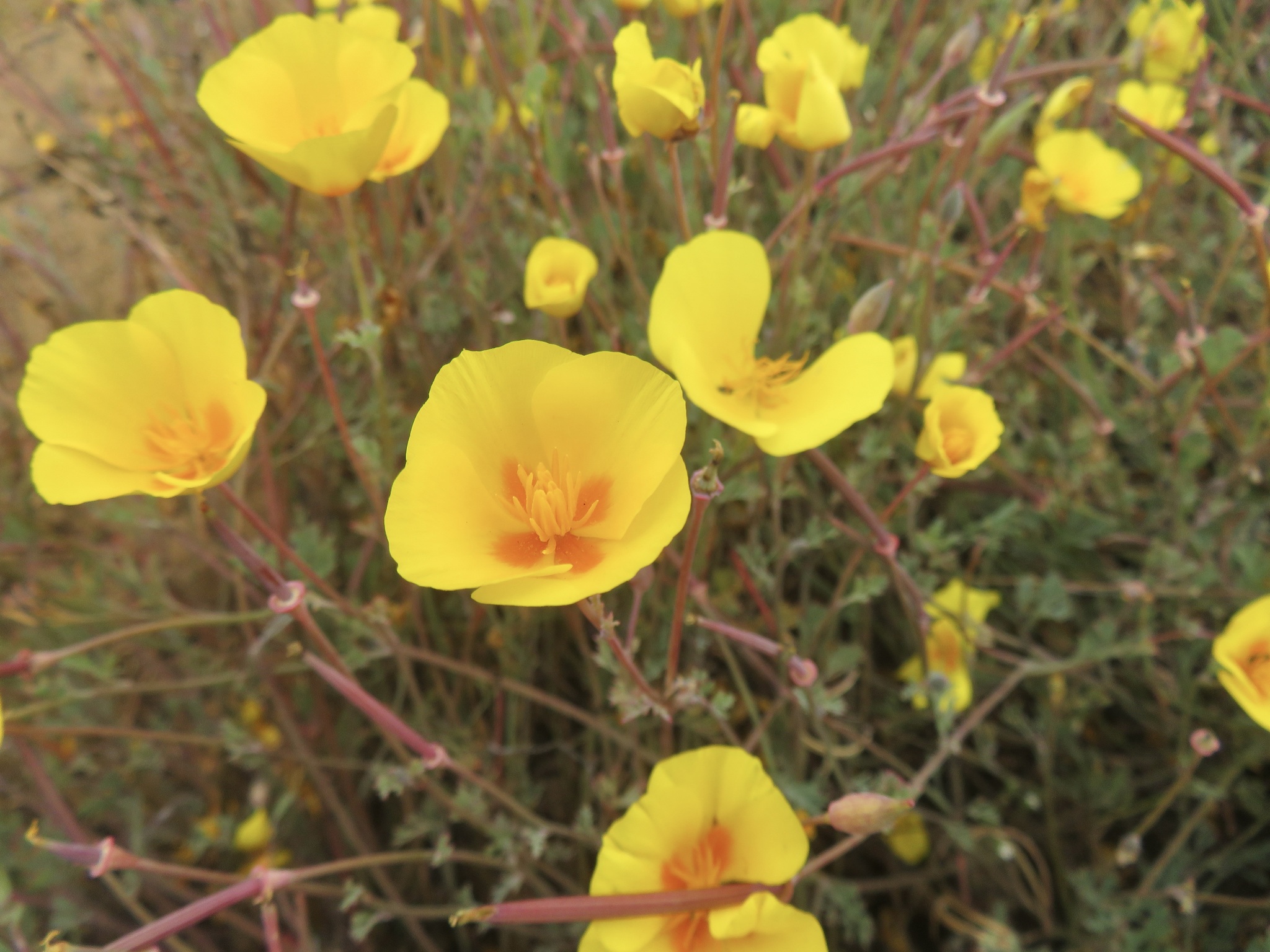


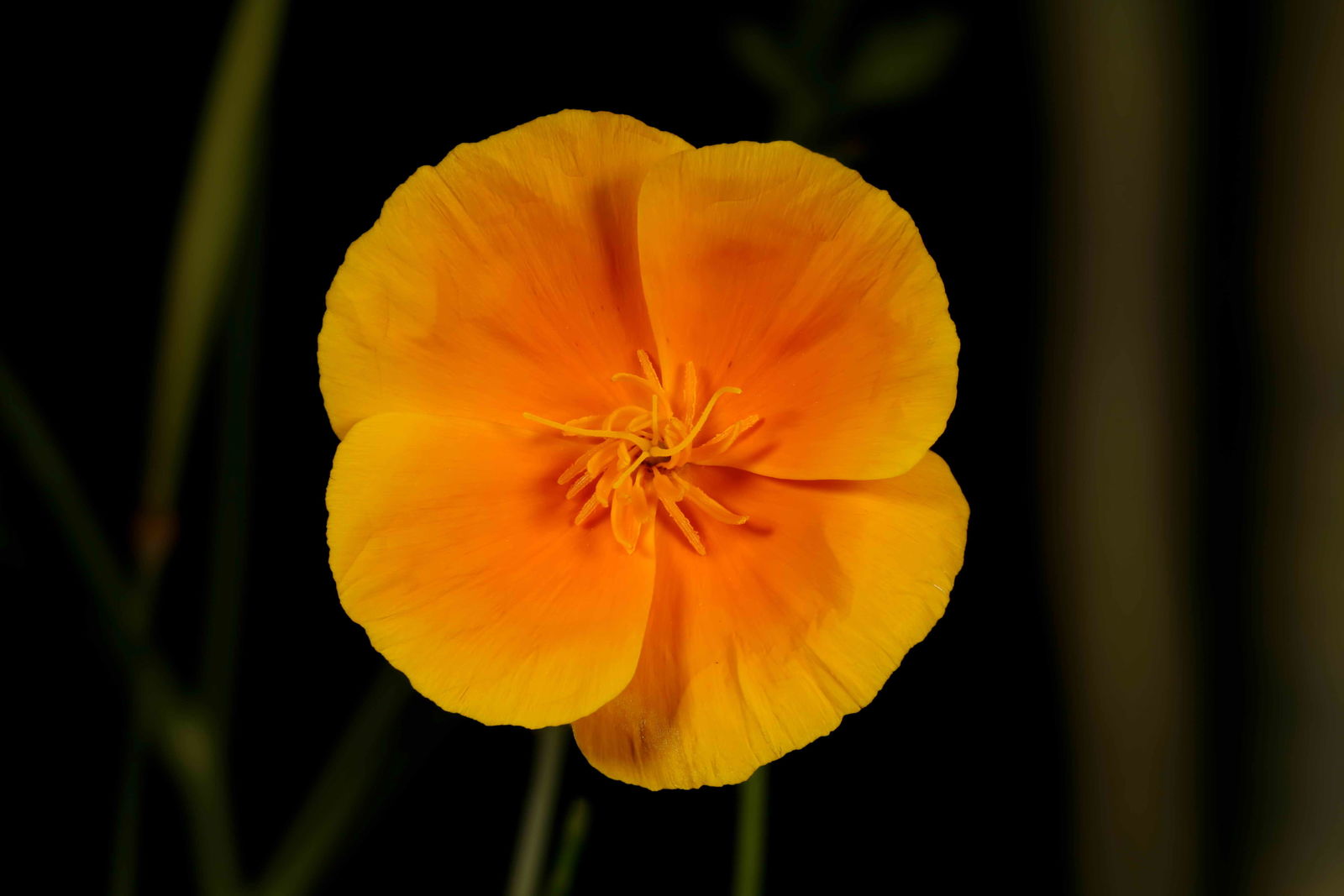
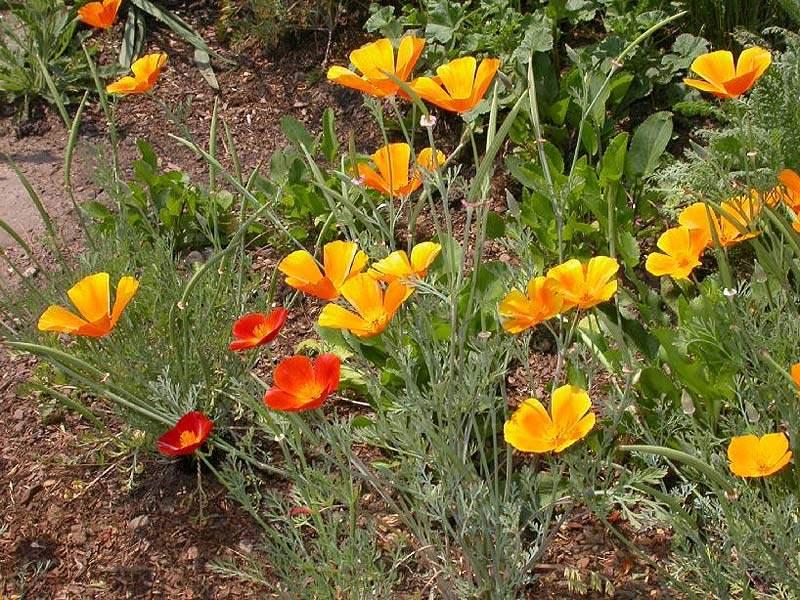
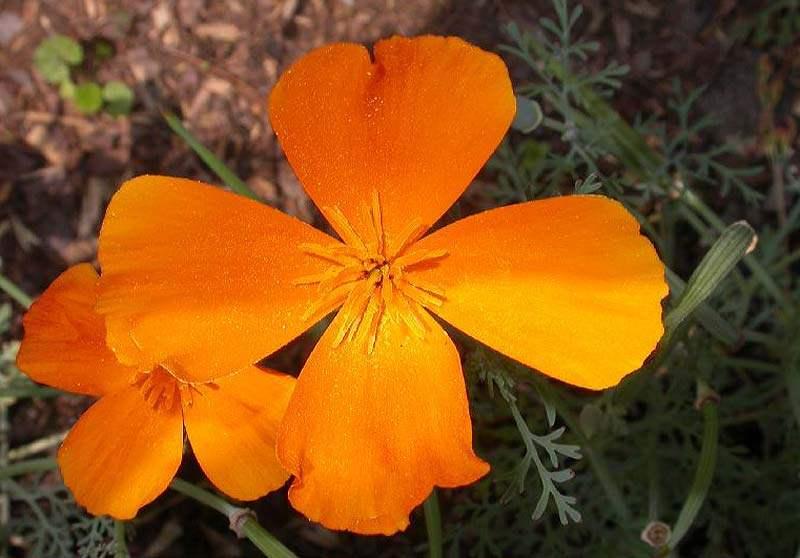
© photo
(c) pronghornranch67, some rights reserved (CC BY-NC) · cc-by-nc
Irene · cc0
Daniel Hetzel · cc0
Taken May 3, 2022 by Fabrice Rubio (cc-by-sa)
Taken Jun 12, 2022 by Fabrice Rubio (cc-by-sa)
Taken Jun 23, 2020 by Biewalda (cc-by-sa)
Taken Jul 19, 2019 by del dem (cc-by-sa)
Taken Jun 27, 2020 by Giode Tonpino (cc-by-sa)
© copyright of the Board of Trustees of the Royal Botanic Gardens, Kew.




Global distribution
The species is native to western North America, from Washington and California through the Great Basin and southwestern United States to northern Mexico. In Europe it is chiefly cultivated, escaped or locally naturalized; no national invasive status is assigned to it in France.
- Native9
- Introduced6
- Invasive1
- California
- Oregon
- Washington
- Nevada
- Arizona
- Utah
- New Mexico
- Texas
- Northern Mexico
- Metropolitan France
- Corsica
- Spain
- Great Britain
- New Zealand
- Australia
- Canary Islands
Hexagons: regions where the plant occurs. Green dots: native range.1
Identity
California poppy is Eschscholzia californica Cham., an accepted name published in 1820 in Horae Physicae Berolinenses. POWO/Kew accepts the species, and GBIF places it in Ranunculales, family Papaveraceae, genus Eschscholzia. 1 2
Despite the familiar word poppy, this plant is not a Papaver. It shares a family with corn poppy and opium poppy but belongs to a separate genus, named for Johann Friedrich von Eschscholtz, who joined a Russian expedition to California in the early 19th century. 4 5
California golden poppy, golden poppy and cup of gold are other established names. French names include eschscholzie de Californie and globe du soleil. GBIF and EPPO also record several European vernaculars, reflecting cultivation far beyond its native range. 2 8
Recognition
Eschscholzia californica is a hairless, sometimes glaucous annual or short-lived perennial. Flora of North America gives a height of 5–60 cm (2–24 in). USDA describes a low, spreading to upright habit, with basal and stem leaves generally blue-green. 3 6
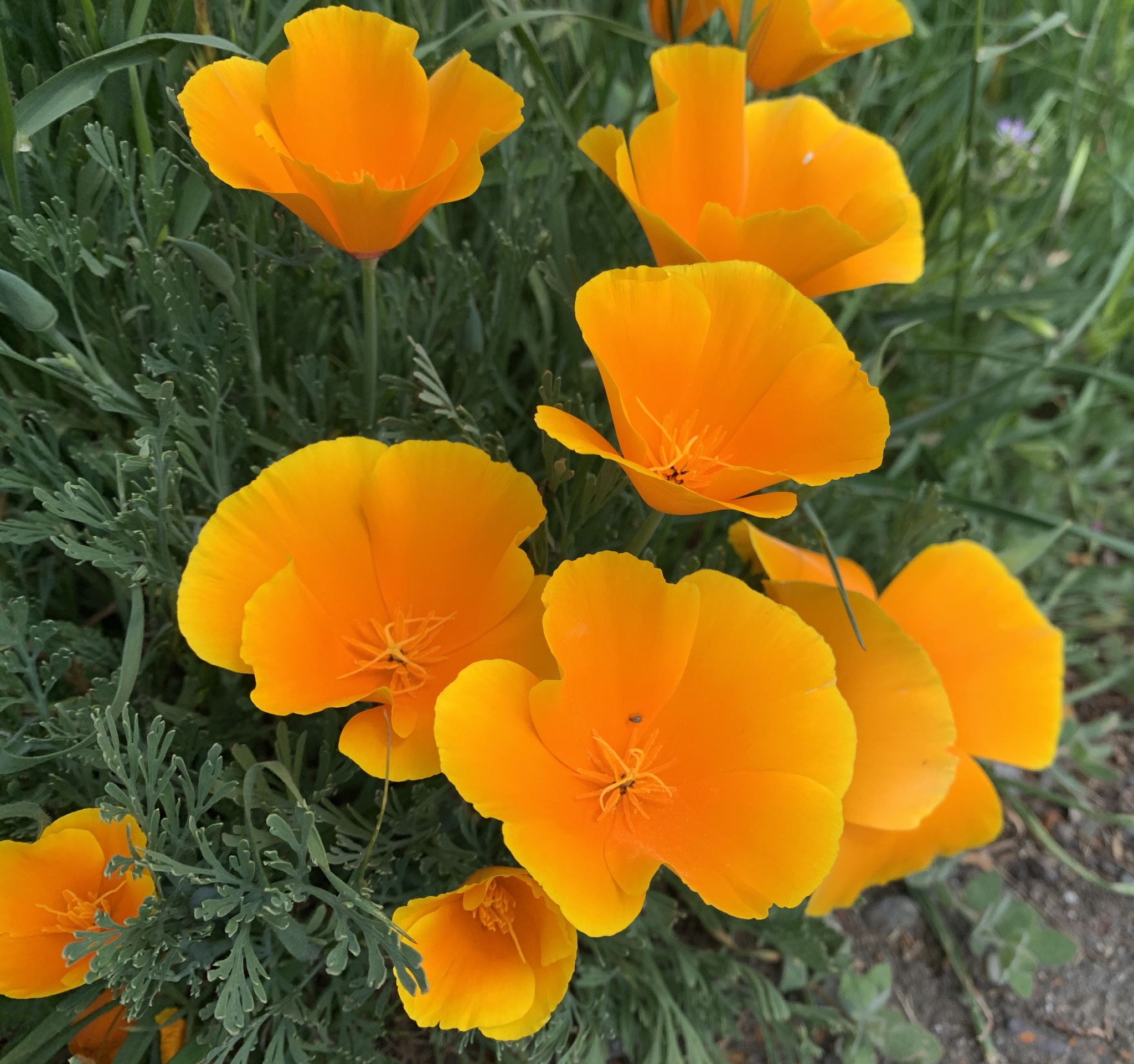
The foliage is a useful identifying feature before flowering: alternate leaves, finely and deeply divided, blue-green to silvery, often forming a loose clump. NC State describes fern-like foliage that browns after flowering as the plant completes its annual cycle or enters summer dormancy. 5
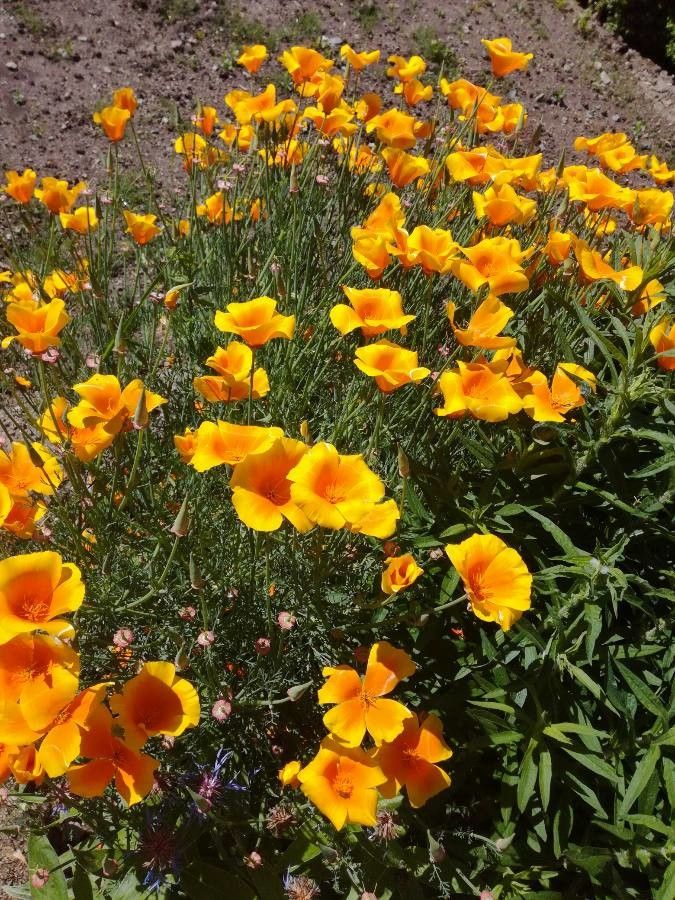
Solitary flowers rise above the leaves as satiny cups. Their four petals are usually yellow to orange, sometimes more intensely orange at the base. FNA gives petal lengths of 20–60 mm (0.8–2.4 in), while NC State reports flowers about 7–8 cm (2.8–3.1 in) across in its horticultural context. Cultivars extend the colors to cream, white, pink and red. 3 5 4
Flowers close at night and in cloudy, cold, rainy or windy weather. This is a normal response to low light or unfavorable conditions, rather than a symptom of disease. 6 7
Long capsules follow flowering. FNA gives lengths of about 3–9 cm (1.2–3.5 in). USDA explains that ripe capsules split and can throw small seeds up to about 1.8 m (6 ft) from the parent plant, helping to create spontaneous drifts on open ground. 3 6
Useful taxonomy
POWO accepts two subspecies: Eschscholzia californica subsp. californica and E. californica subsp. mexicana. The species name is usually sufficient in gardens, whereas local seed provenance matters in North American ecological restoration. 1 6
Kew's principal homotypic synonyms are:
- Chryseis californica (Cham.) Lindl.
- Omonoia californica (Cham.) Raf.
GBIF's backbone also includes historical or horticultural names such as Eschscholzia cornuta, E. douglasii and E. minutiflora as synonyms. Botanical synonymy and horticultural labeling should be distinguished: multiple names do not necessarily represent separate species. 2 1
Horticultural cultivars are a different category. 'Thai Silk', 'Chiffon', 'Ivory Castle', 'Strawberry Fields' and 'Rose Chiffon' describe selected colors or semi-double flowers, rather than separate species. 4 5
Habitat and range
Western North America forms the native range. POWO summarizes it as the western and south-central United States to northern Mexico; USDA describes occurrence from Washington and the Pacific coast to Baja Sur, the Great Basin and parts of the Sonoran Desert. 1 6
Native habitats are open: slopes, plains, washes, grasslands, sagebrush areas, open juniper and pinyon woodland, and sandy or gravelly soils. This ecology explains its success in lean, dry, sunny gardens. 5 6
POWO records introductions to many other regions, including France, Corsica, Spain, Great Britain, New Zealand and several Australian regions. FNA notes widespread planting for ornament, roadsides and restoration, with frequent escapes that do not always persist. 1 3
In France, CBNFC-ORI records taxon CD_NOM 97346 as naturalized and assessed as non-invasive in Franche-Comté. EPPO follows it as introduced in the Euro-Mediterranean region and reports localized monitoring or regulation, notably in the Canaries and other Macaronesian or Spanish settings. 10 8 9
No national French invasive status is assigned, but spread still needs managing. Avoid uncontrolled sowing of exotic mixtures near dry natural habitats, coasts or islands, and follow local guidance for those environments. 9
Growing in the garden
Full sun suits California poppy. NC State describes full sun as ideal and says the plant does not grow in shade; RHS recommends bright borders, gravel gardens and dry meadows. 5 4
Keep the soil lean, light and free-draining. RHS recommends full sun with sandy or poor soil and notes strong drought tolerance once plants establish. Rich, damp or heavy soil, overwatering and excess fertilizer promote leaves at the expense of flowers. 4
Direct sowing is the best approach. A taproot makes transplanting difficult, especially with older seedlings. Sow in autumn where winters are mild; elsewhere, spring sowing into warmed, weed-free soil is sufficient. 4 5
Water sparingly. To establish seedlings evenly in containers or very dry soil, aim initially for about 5–15 mm (0.2–0.6 in) a week, then water only during prolonged drought. USDA reports flowering with small amounts of supplemental water in its native Mediterranean-climate setting, while harsh sites naturally shorten flowering. 6
Deadheading depends on the aim. Removing spent flowers can prolong the display and limit seed dispersal. Leaving some capsules to ripen allows plants to return the following year where the soil remains open. 5 4
Toxicity and precautions
California poppy contains alkaloids. Poison Control names protopine, allocryptopine, N-methyllaurotetanine and reticuline in Eschscholzia californica products and notes that sleep, anxiety and pain claims lack useful human studies. 7
It should not be confused with opium poppy. Poison Control explains that although both belong to the Papaveraceae, Eschscholzia californica does not contain opium. That distinction does not make concentrated extracts harmless. 7
FNA describes the species as toxic to people while also recording historical ethnobotanical uses. Neither eating the fresh plant nor preparing homemade tea, extracts or sedatives is recommended. 3 7
No species-specific ASPCA entry was selected for this account. Poison Control recommends keeping plants and herbal products away from children and animals; caution applies to cats, dogs and horses rather than an assurance of non-toxicity. 7
Look-alikes, cultivars and responsible planting
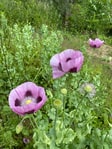
The word poppy readily suggests Papaver rhoeas or P. somniferum. California poppy differs in its finely divided blue-green foliage, cup-shaped flowers that close in low light, and long, slender capsules rather than the opium poppy's large, rounded ones. 3 5
Cultivars still self-seed. Double, pink, red and cream forms remain horticultural California poppies, and seed-grown offspring may vary rather than match the original packet. 4
In a flower meadow, grow it as an annual for lean soil, rather than as a perennial in a fertilized border. Sow thinly, leave some open ground for the next generation, and avoid exotic mixtures near sensitive natural habitats where regional lists call for caution. 4 9
Main sources
- Plants of the World Online / Kew, Eschscholzia californica Cham.
- GBIF Backbone Taxonomy, Eschscholzia californica Cham.
- Flora of North America, Eschscholzia californica
- Royal Horticultural Society, California poppy genus guide
- NC State Extension Gardener Plant Toolbox, Eschscholzia californica
- USDA NRCS Plant Guide, California poppy, Eschscholzia californica
- Poison Control, What to know about California poppy products
- EPPO Global Database, Eschscholzia californica (ESHCA)
- EPPO Global Database, reporting articles for Eschscholzia californica
- CBNFC-ORI, Eschscholzia californica Cham., 1820, CD_NOM 97346
Frequently asked questions
Is California poppy a true poppy?
It belongs to the Papaveraceae, but not to Papaver. Its accepted name is Eschscholzia californica, in the genus Eschscholzia.
Is California poppy perennial?
It is described as an annual or short-lived perennial. In French gardens it mainly behaves as an annual that returns from seed.
When should I sow California poppy?
Sow directly where it will grow in spring, or in autumn where winters are mild. Direct sowing is preferable to transplanting.
Why do the flowers close?
This is normal. The flowers close at night and in cold, cloudy, rainy or windy weather.
Is California poppy poisonous to cats or dogs?
Severe veterinary toxicity is not established, but ingestion calls for caution. The plant contains alkaloids, and Poison Control recommends keeping plants and herbal products away from children and pets.
Can I make California poppy tea?
No medicinal use is recommended. Poison Control notes that claims about sleep, anxiety or pain lack useful human studies, and concentrated products vary considerably.
Is California poppy invasive in France?
POWO lists it as introduced in France and Corsica. CBNFC regional data describe it as naturalized and assessed as non-invasive in Franche-Comté. EPPO nevertheless reports localized concerns, notably in Spain and Macaronesia.
Similar plants


If you are unsure about a plant’s toxicity, ask a botanist or veterinarian for advice.