
Iceland poppy (Oreomecon nudicaulis, )

Iceland poppy (Oreomecon nudicaulis) is a short-lived, cool-climate perennial in the Papaveraceae family, often grown as a biennial or annual. Native to cold regions from central Siberia to Yukon, it has gray-green basal leaves and airy, crinkled yellow, white, orange, red or pink flowers in cultivation. Kew and WFO accept Oreomecon nudicaulis for the plant still widely sold as Papaver nudicaule.
Read moreIceland poppy, Icelandic poppy and Arctic poppy
Papaver nudicaule
Place in full sun, with intense direct light all day long.
Full sun; light shade only on hot afternoons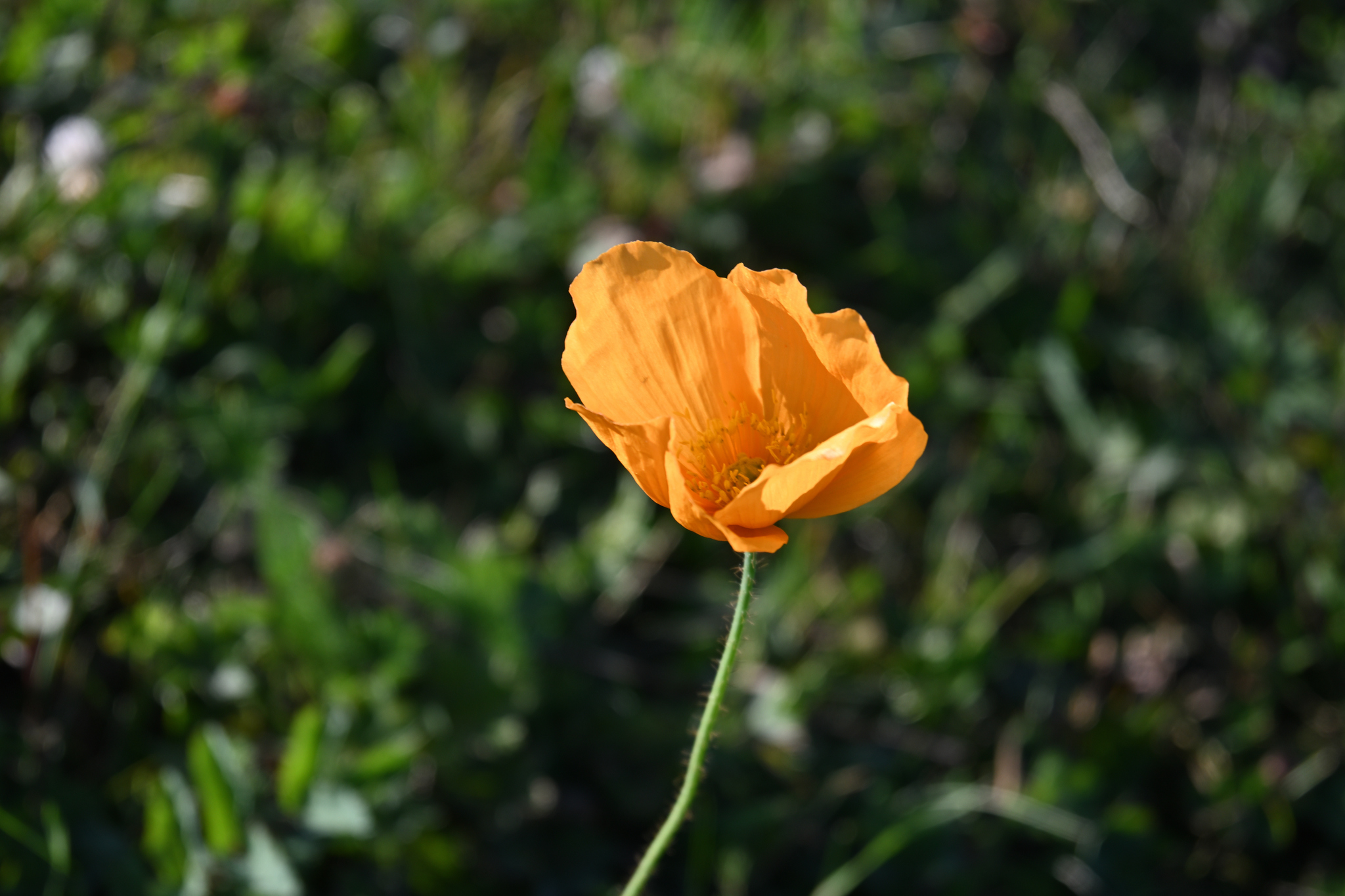

© photo
(c) niveum, some rights reserved (CC BY-NC) · cc-by-nc
Dmitry Kulakov · cc-by
Syd Cannings · cc-by
(c) Syd Cannings, some rights reserved (CC BY) · cc-by
(c) Dmitry Kulakov, some rights reserved (CC BY) · cc-by
Global distribution
For the accepted name Oreomecon nudicaulis, POWO/Kew records a native range from southern and eastern central Siberia to Yukon. The common name Iceland poppy is misleading: in Iceland and western Europe this is a cultivated plant, not a French native.
- Native9
- Introduced4
- Alaska
- Yukon
- Yakutia
- Kamchatka
- Magadan
- Khabarovsk
- Amur
- Buryatia
- Sakhalin
- Tibet
- Greenland
- Colorado
- Southern Argentina
Hexagons: regions where the plant occurs. Green dots: native range.1
Identity
Iceland poppy bears the accepted name Oreomecon nudicaulis (L.) Banfi, Bartolucci, J.-M.Tison & Galasso. The very familiar horticultural name Papaver nudicaule L., published by Linnaeus in 1753, remains a synonym and still appears in catalogs, RHS accounts and several growing references. 2 1 3
Both names remain useful for identifying the plant. Horticultural trade, RHS, Missouri Botanical Garden, GBIF and many catalogs still use Papaver nudicaule, while Oreomecon nudicaulis is the accepted botanical name. Recognizing the older binomial makes these references easier to follow. 5 4 6
Common names such as Icelandic poppy and Arctic poppy, alongside the French names meaning Iceland, Arctic or bare-stemmed poppy, refer to the same broad horticultural plant. “Iceland” is chiefly a cultural association: Kew places the native range in cold parts of northern Asia and northwestern North America, excluding Iceland. 1 12
Recognition
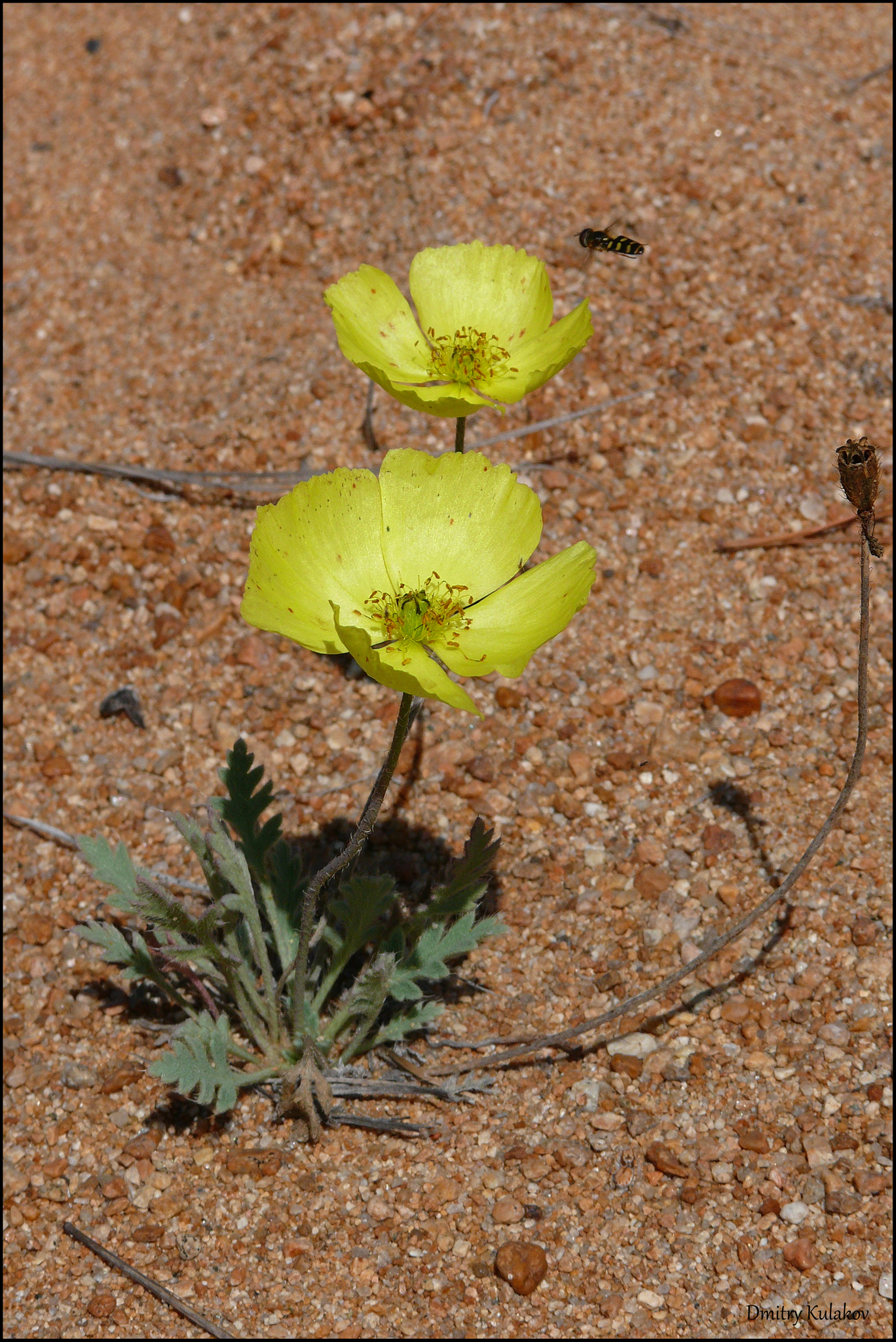
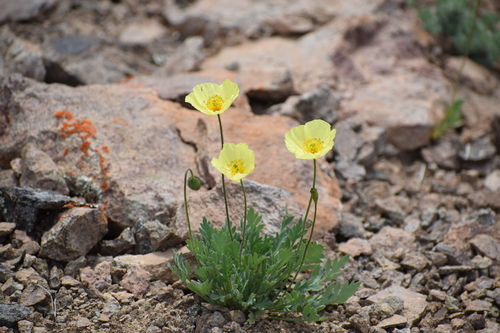
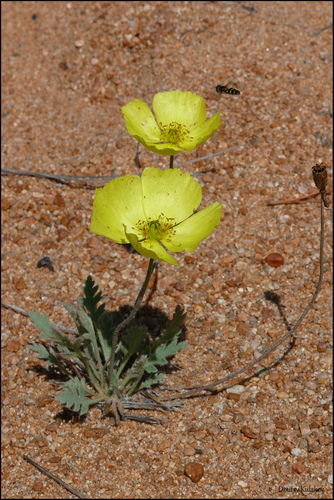
Under either Oreomecon nudicaulis or Papaver nudicaule, botanical accounts describe a low clump of basal leaves, often gray-green to blue-green, hairy and deeply divided. Flora of China describes a variable perennial 20–60 cm (8–24 in) tall, with a taproot, very short or virtually absent stems, entirely basal leaves and bare flower stalks. 7
Slender, upright, hairy flower stalks rise above the rosette and carry almost no leaves. Buds often nod before opening into cup- or saucer-shaped flowers. Botanical descriptions give a diameter of 4–6 cm (1.6–2.4 in) for wild forms in China, while garden forms can reach about 10 cm (4 in) across. 7 6
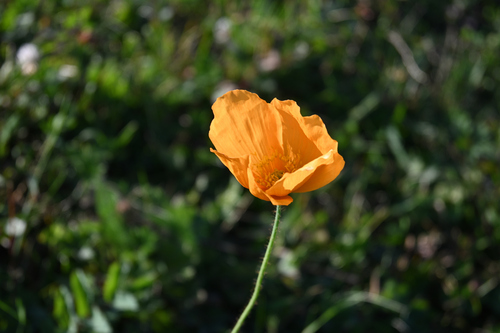
Usually four crinkled petals make up each flower. Wild forms are chiefly yellow, white or orange; garden selections extend the palette to red, pink, salmon, cream and white. RHS and the Muséum describe the ornamental appeal of these varied terminal flowers and their tissue-like petals, reminiscent of field poppies. 5 8
Short to inversely egg-shaped capsules follow flowering. Often hairy, they hold numerous tiny seeds. This feature helps distinguish Iceland poppy from poppies with large, rounded capsules, but never establishes that a plant is safe to eat or use in homemade preparations. 7 9
Useful taxonomy
Gardeners commonly know Papaver nudicaule, while POWO/Kew and WFO accept Oreomecon nudicaulis. WFO also explicitly lists Papaver nudicaule as a synonym of Oreomecon nudicaulis. 1 3
Useful synonyms and historical names include:
- Papaver nudicaule L., the familiar horticultural synonym
- Papaver alpinum var. nudicaule (L.) Fisch. & C.A.Mey., a historical combination
- Papaver nudicaule f. typicum Serg., a historical form name
- Meconopsis nudicaulis, cited by RHS in horticultural synonymy
- Papaver croceum and Papaver nudicaule var. croceum, names often encountered for orange-flowered garden forms. 1 5 6
Flora of China adds a qualification: plants cultivated as “Iceland poppies” often have complex origins involving several related species, including Papaver radicatum. A seed-packet label therefore cannot establish a precise botanical identity on its own. 7
Habitat and range
Kew places Oreomecon nudicaulis from southern and eastern central Siberia to Yukon. Listed native regions include Alaska, Yukon, Amur, Buryatia, Irkutsk, Kamchatka, Khabarovsk, Magadan, Primorye, Sakhalin and Yakutia. 1
Subalpine to subarctic habitats characterize the species. Flora of China describes woodland margins, meadows, grassy steppes, slopes, valleys, river gravel, moraines and roadsides, often at 1,000–2,500 m (3,300–8,200 ft), with lower or higher extremes depending on the region. 7
Beyond that range, Kew records introductions in Greenland, Colorado, Tibet and southern Argentina. EPPO also notes ornamental cultivation, often involving hybrids or closely related horticultural strains. 1 12
Metropolitan France chiefly grows Iceland poppy as a cultivated plant, with no invasive alien species status recorded. The Muséum national d'Histoire naturelle presents it as a garden plant at the Jardin des Plantes rather than a spontaneous member of the French native flora. 8
Garden cultivation
A cool-season plant, Iceland poppy needs the conditions described by RHS: full sun and deep, fertile, well-drained soil. Missouri Botanical Garden emphasizes cool summers, steady moisture without waterlogging and the difficulty of growing it in hot, humid climates. 5 6
French gardens often grow it as a biennial, sowing in summer or early fall, planting before winter and flowering the next spring. The Muséum describes this pattern at the Jardin des Plantes: sowing in July, planting in October and flowering the following spring. This example reflects that garden's seasonal conditions. 8
Spring sowing is another option in cool climates or for an early annual crop. Johnny's gives germination in 7–12 days at 18–24 °C (64–75 °F), with only a very light covering over the seed, and notes that quality declines as temperatures rise. 10
Water to help plants establish without saturating the crown. A practical starting range is 5–15 mm/week (0.2–0.6 in/week), excluding rainfall, followed by consistently moist but well-drained soil. In pots, excess water as temperatures climb causes more failures than restrained watering. 6 10
Transplant early and carefully, because an established taproot resents disturbance. Direct sowing or transplanting very young plug-grown seedlings gives better results than moving an established rosette. 10 5
Toxicity and caution
A precautionary moderate toxicity rating reflects the available warnings. The Muséum notes that most plants in Papaver produce toxic alkaloids, and Pet Poison Helpline treats poppies as toxic to pets, with possible digestive or neurological signs. 8 9
That caution does not equate Iceland poppy with opium poppy. It means that an ornamental Papaveraceae containing alkaloids should not be treated as food, herbal tea, an extract or a homemade remedy. No part is recommended for human or animal ingestion. 9 7
Keep leaves, flowers, stems and capsules away from dogs, cats and horses. Monitor any ingestion and seek veterinary advice if symptoms develop. Children should not treat capsules or seeds as edible playthings. 9
Look-alikes, cultivars and responsible growing
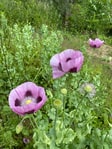
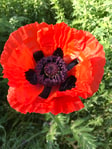
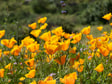
Visual confusion mainly involves field poppy (Papaver rhoeas), Oriental poppy (Papaver orientale), opium poppy (Papaver somniferum) and California poppy (Eschscholzia californica). Iceland poppy is recognized by its basal rosette, bare flower stalks and crinkled cool-season flowers. 7 8
Taxonomic confusion with Papaver croceum or Oreomecon crocea also matters. Missouri Botanical Garden treats Papaver nudicaule var. croceum and lists horticultural synonyms, while WFO and Kew now place several former names in Oreomecon combinations. These overlapping names do not mean that every plant sold as “Iceland poppy” is botanically identical. 6 3
The Champagne Bubbles, Wonderland, Meadow Pastels and Summer Breeze series are horticultural strains selected for color, size or cut-flower use. NC State, for example, published trial results for 'Meadow Pastels', while RHS illustrates its Papaver nudicaule account with Wonderland. These names help gardeners choose plants but do not guarantee a precise taxonomic identity. 11 5
Responsible growing treats Iceland poppy as a cool-season ornamental: well-drained soil, full sun, moderate watering and renewal from seed. Avoid food or medicinal uses, and check local conditions before deliberately spreading it near sensitive natural habitats. 5 12
Main sources
- Plants of the World Online / Kew, Oreomecon nudicaulis (L.) Banfi, Bartolucci, J.-M.Tison & Galasso
- Plants of the World Online / Kew, Papaver nudicaule L.
- World Flora Online, Oreomecon nudicaulis
- GBIF Backbone Taxonomy, Papaver nudicaule L.
- Royal Horticultural Society, Papaver nudicaule / Icelandic poppy
- Missouri Botanical Garden Plant Finder, Papaver nudicaule var. croceum
- Flora of China, Papaver nudicaule
- Muséum national d'Histoire naturelle, Iceland poppy
- Pet Poison Helpline, Poppy toxicity to pets
- Johnny's Selected Seeds, Iceland Poppy key growing information
- NC State Extension, Papaver nudicaule 'Meadow Pastels' cut flower trial
- EPPO Global Database, Papaver nudicaule (PAPNU)
Frequently asked questions
Is Papaver nudicaule still the correct name?
The horticultural name Papaver nudicaule remains common, but POWO/Kew and WFO treat it as a synonym of the accepted name Oreomecon nudicaulis. The familiar garden name remains useful for recognition.
Does Iceland poppy come from Iceland?
Not according to the accepted native range. Kew places Oreomecon nudicaulis from southern and eastern central Siberia to Yukon. Iceland is associated mainly with the common name and cultivation.
Is Iceland poppy toxic to cats and dogs?
Treat it as toxic as a precaution. Pet Poison Helpline treats poppies as toxic to pets, and the Muséum notes that most Papaver produce toxic alkaloids. Do not allow ingestion of leaves, stems, flowers or capsules.
Can Iceland poppy be used in tea or as a sedative?
No ingestion, extract or medicinal use is recommended. Alkaloids and confusion between poppies mean the plant should be treated solely as an ornamental.
Why does Iceland poppy die after flowering?
This is common. Iceland poppy is a short-lived, cool-climate perennial, often grown as an annual or biennial. Summer heat and warm, humid conditions greatly shorten its life in cultivation.
When should I sow Iceland poppy?
Sow in cool spring weather, or in late summer or mild fall weather for flowering the following year. Sow the tiny seeds almost on the surface.
Is Iceland poppy invasive in France?
No invasive alien species status is recorded for metropolitan France. It is mainly cultivated; possible garden escapes do not in themselves establish a national invasive status.
Similar plants
If you are unsure about a plant’s toxicity, ask a botanist or veterinarian for advice.