
Opium poppy (Papaver somniferum, )

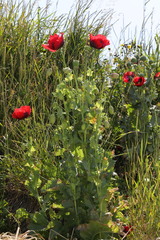
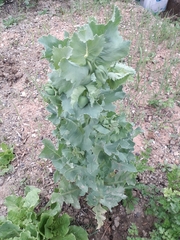
Opium poppy (Papaver somniferum) is a glabrous, glaucous annual in the Papaveraceae family, known as an ornamental, a source of food seeds, and a historical source of opioid alkaloids. Its identification, regulated food uses, and toxic plant parts require separate consideration, within applicable local law.
Read moreOpium poppy, Breadseed poppy and Maw seed


© photo
(c) mirkovolani, some rights reserved (CC BY-NC) · cc-by-nc
Stephen James McWilliam · cc0
ㅤ · cc-by
Taken Apr 19, 2022 by Monteiro Henrique (cc-by-sa)
Taken Aug 2, 2020 by Michael Andresek (cc-by-sa)
Taken Jan 1, 1800 by Tela Botanica − Daniel MATHIEU (cc-by-sa)
Taken Oct 31, 2016 by Yoan MARTIN (cc-by-sa)
© copyright of the Board of Trustees of the Royal Botanic Gardens, Kew.




Global distribution
POWO gives a native range in Macaronesia and the western and central Mediterranean. FNA notes that the species is not certainly known in the wild and probably reflects very long domestication in southeastern Europe or southwestern Asia. It is now widely cultivated, escaped, or introduced in temperate regions.
- Native4
- Introduced6
- Macaronesia
- Western Mediterranean
- Central Mediterranean
- Mainland France
- Great Britain
- Central Europe
- Turkey
- India
- North America
- Australia
Hexagons: regions where the plant occurs. Green dots: native range.1
Identity
Opium poppy (Papaver somniferum L., 1753) is an accepted species of Papaver in the Papaveraceae family. Linnaeus published the name in Species Plantarum in 1753; POWO, WFO, and GBIF retain it at species rank within Ranunculales. 1 2 3
The names Opium poppy, Breadseed poppy, and Maw seed emphasize different uses of the same species. The French name oeillette chiefly refers to traditional food seeds and oil; Opium poppy emphasizes latex alkaloids and requires careful attention to regulation. 3 7
Botanical identification, controlled food seeds, and alkaloid-bearing plant parts are three separate subjects. Horticultural or historical familiarity does not establish safe extraction, processing, dosing, or domestic use, and the plant's regulated uses require an appropriate legal framework. 9 12
Recognition
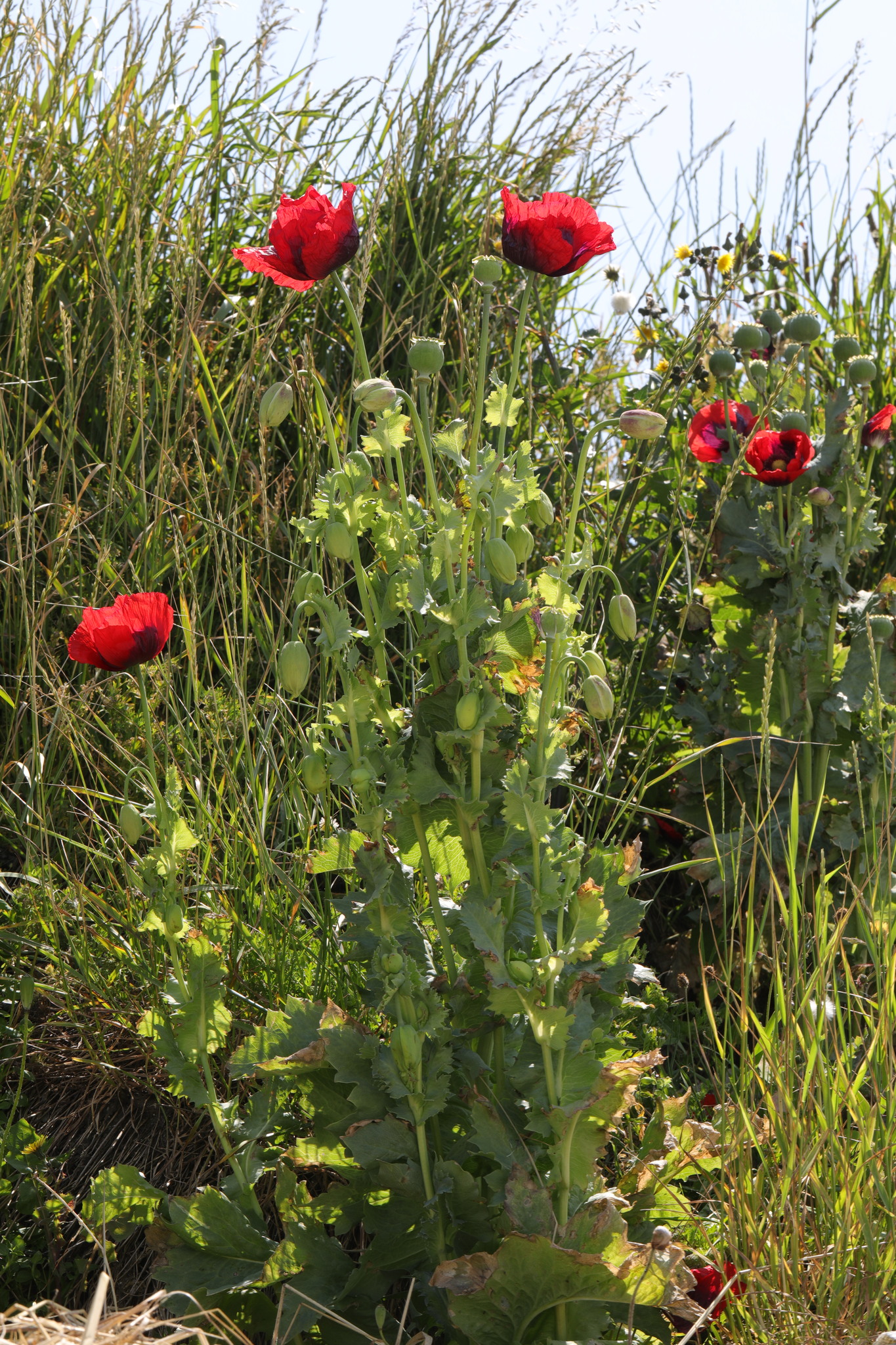
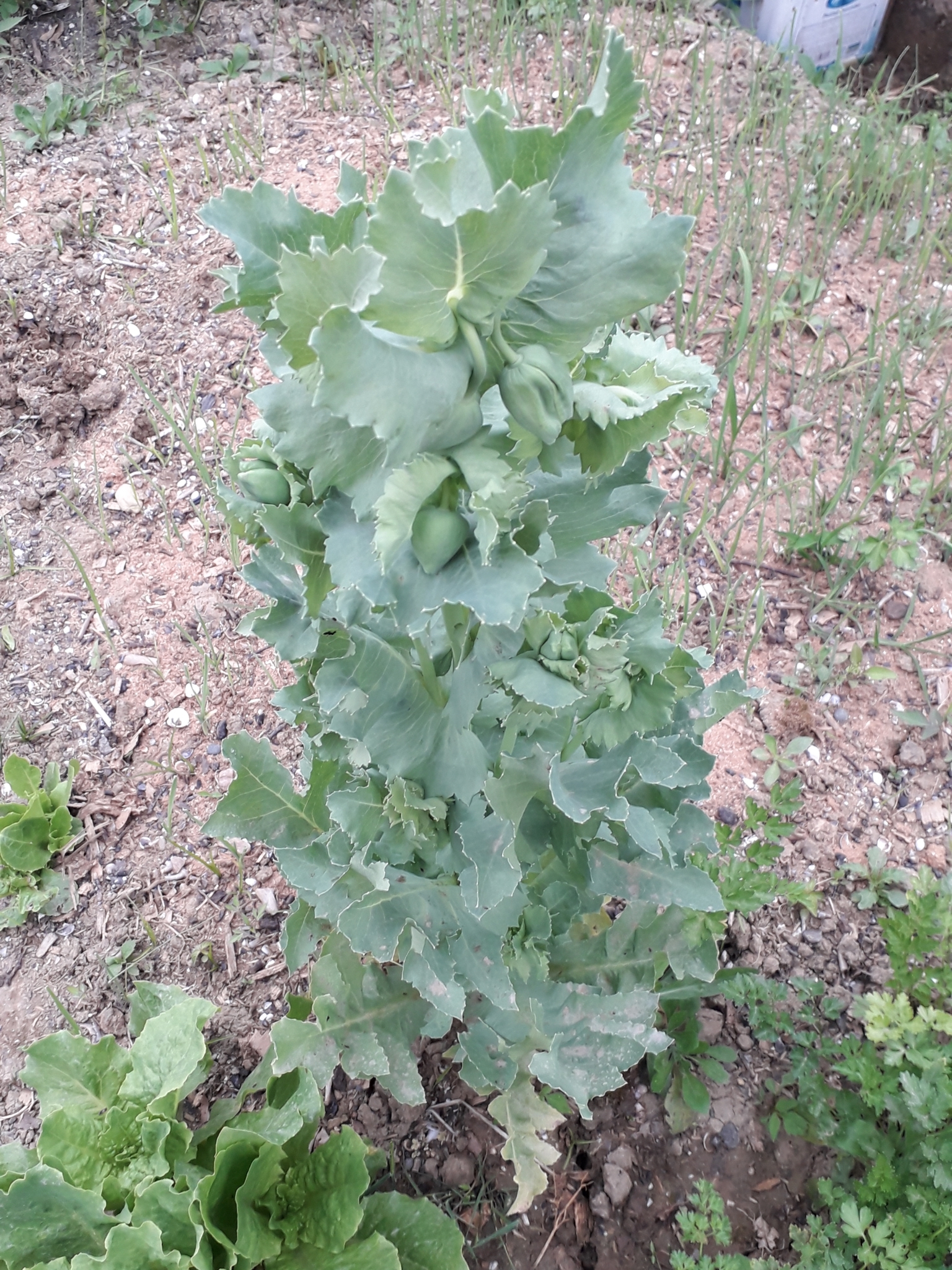
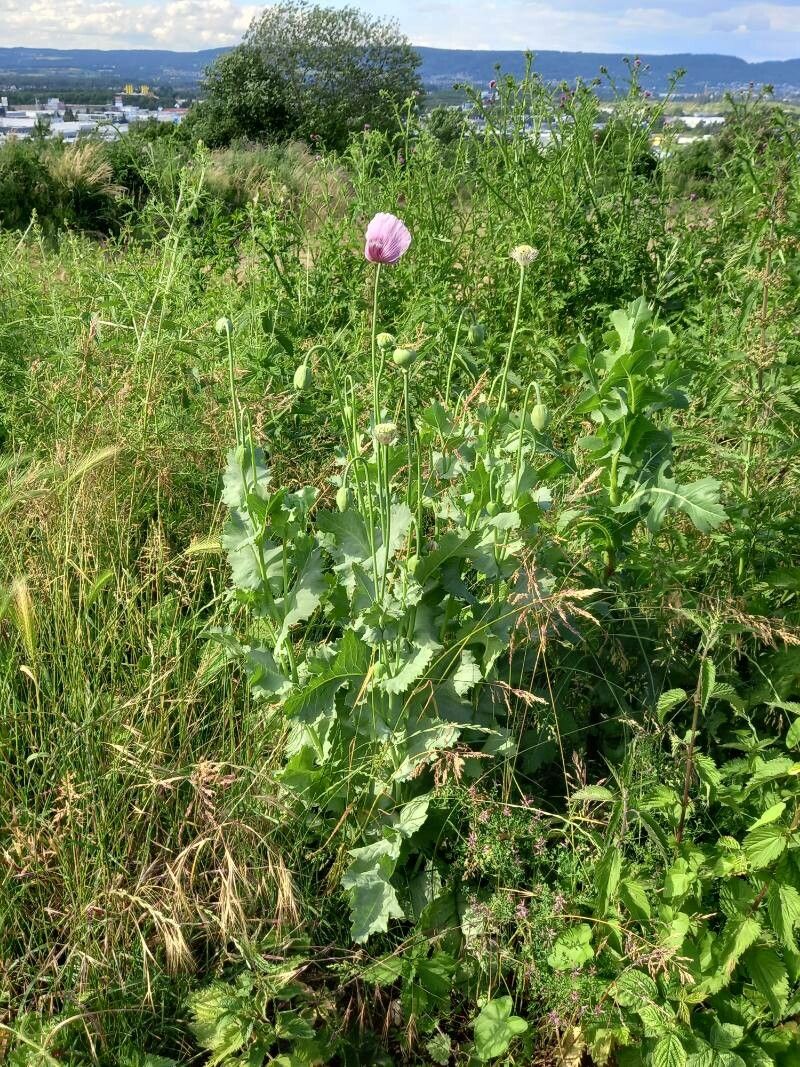
An upright, often hairless annual, Papaver somniferum has glaucous foliage. WFO describes plants 30-60 cm (12-24 in) tall, sometimes 100 cm (39 in), and up to 1.5 m (5 ft) in cultivation; RHS likewise gives an ultimate height of about 1-1.5 m (3.3-5 ft). Straight, blue-green to glaucous-green stems release milky sap when injured. 2 5
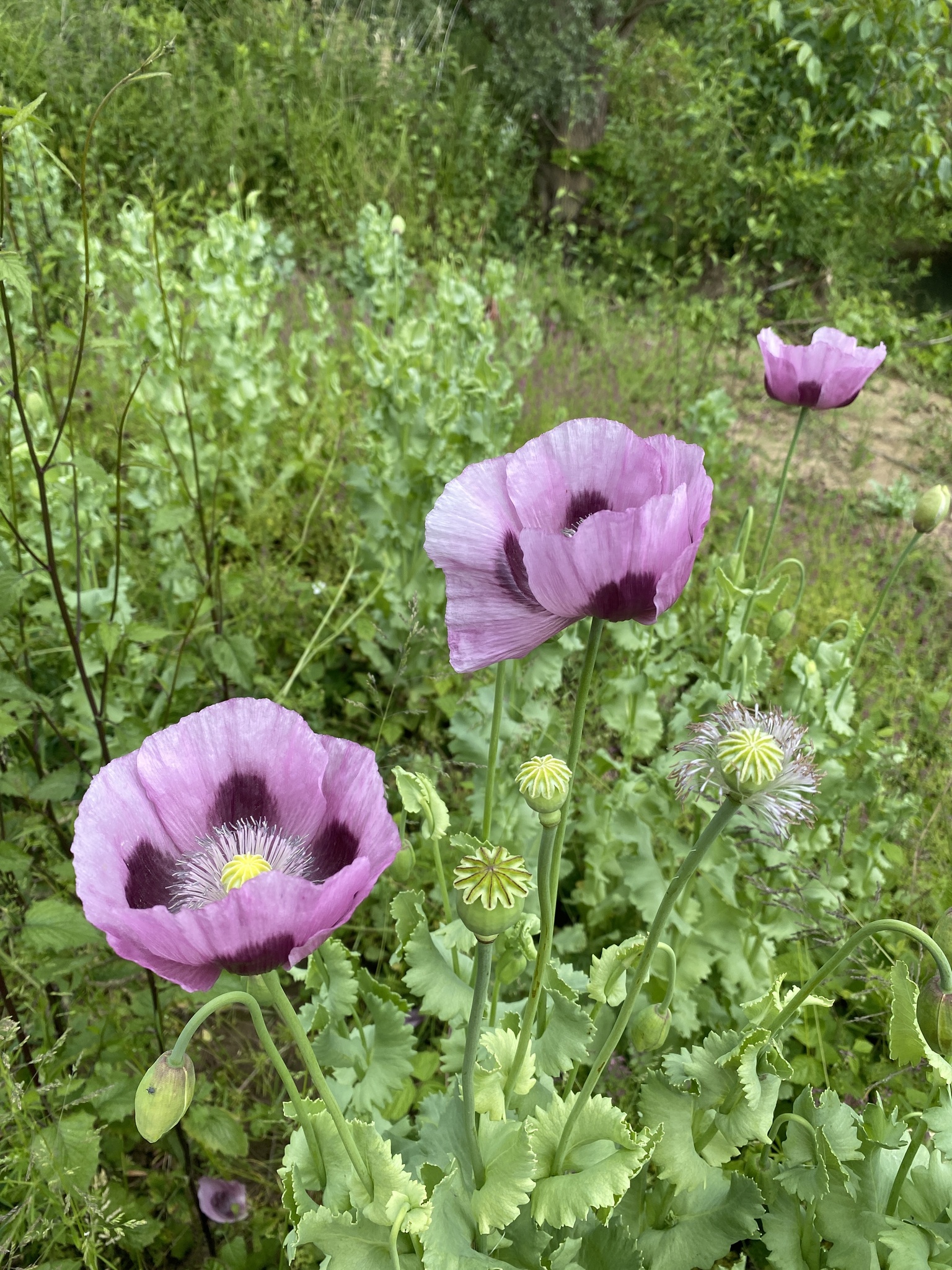
Clasping upper leaves provide a useful identification feature. Leaves are alternate, oval to oblong, hairless and waxy, with visible veins and wavy, toothed margins. Lower leaves may have short stalks, while upper leaves are stalkless and clasp the stem, helping distinguish this species from Field poppy. 2 6
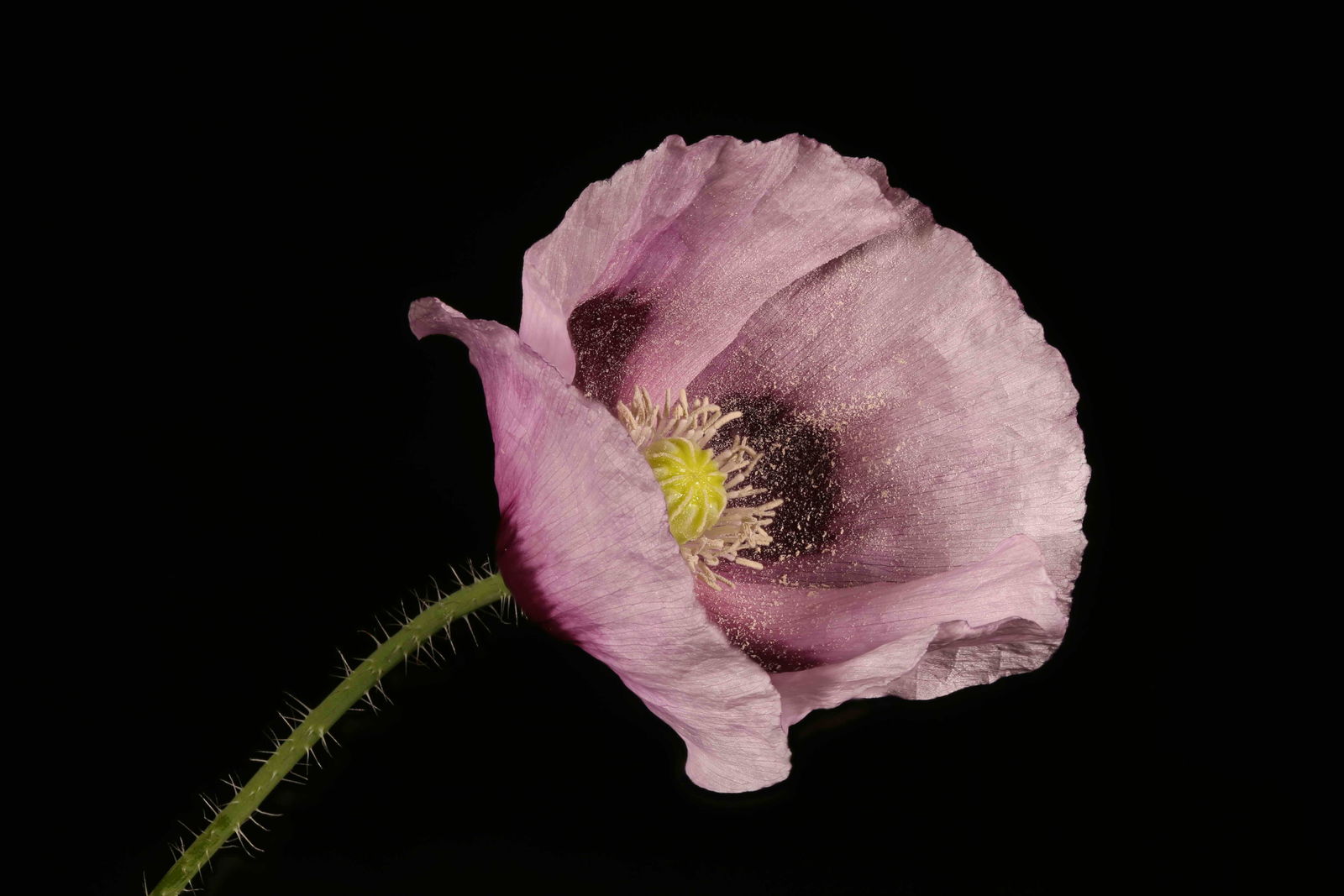
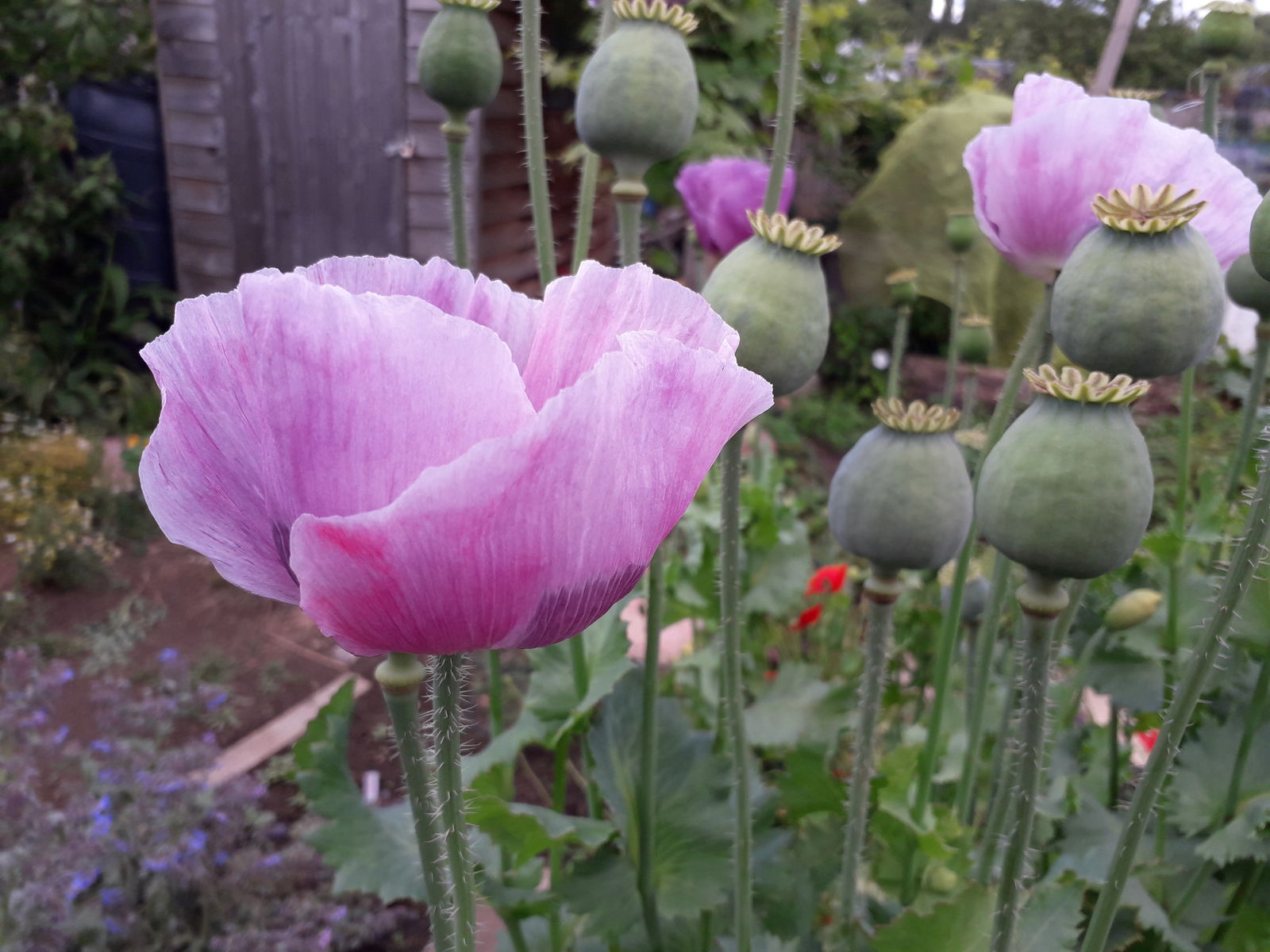
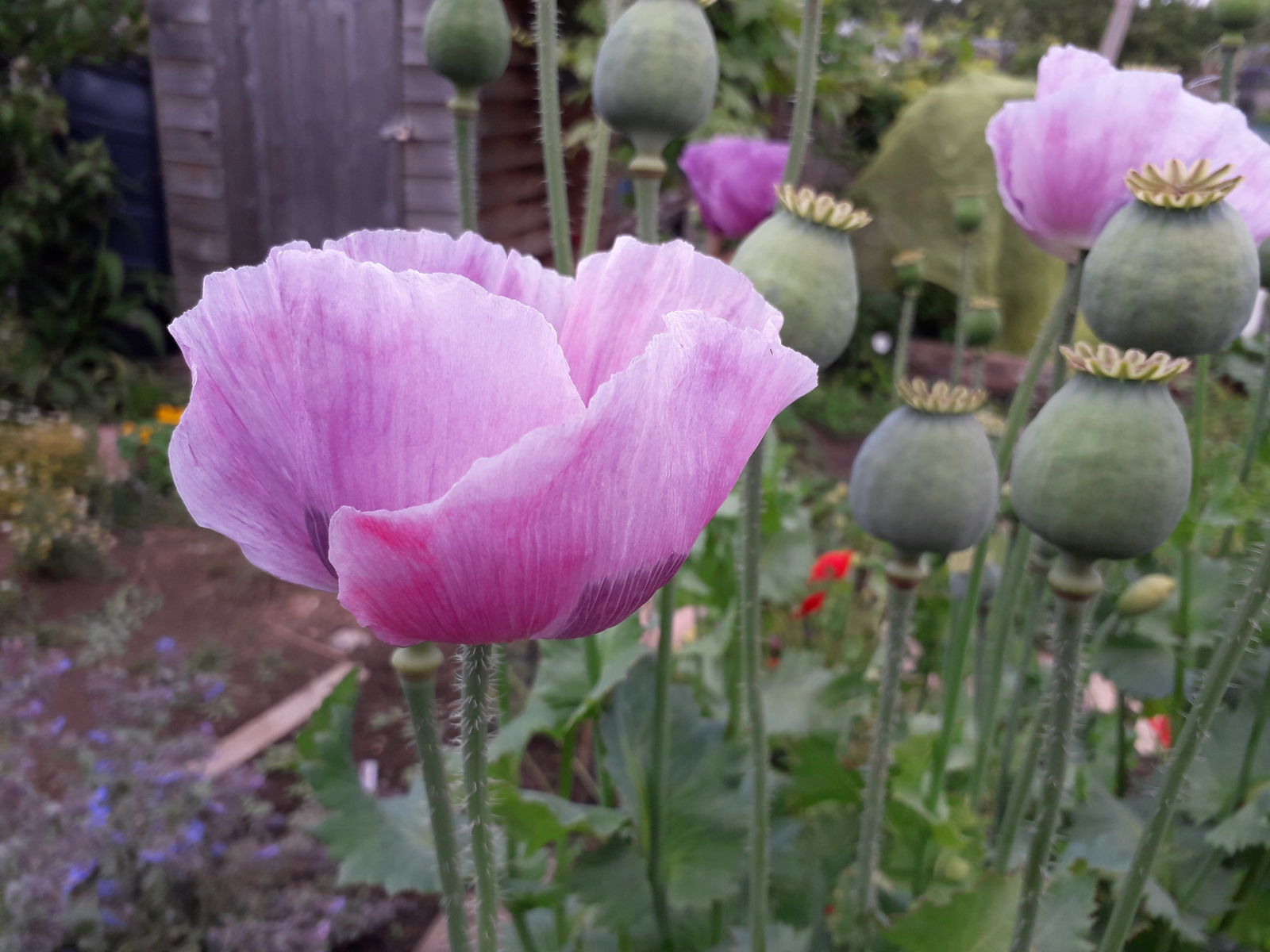
Solitary, broad flowers carry crumpled petals. WFO gives a diameter of 5-12 cm (2-5 in), with white, pink, red, purple, or variable petals, often with a dark basal blotch. RHS notes that garden forms may be single, double, or deeply cut. 2 5
After flowering, an urn-shaped to globular capsule becomes the most recognizable feature. Initially green and later brown, it is topped by a flat stigmatic disk. Although ornamental, this structure must not be taken as an invitation to harvest, prepare, or process the plant. 5 11
Taxonomy, names, and look-alikes
Historical and horticultural synonyms listed by GBIF include Papaver album, Papaver hortense, Papaver nigrum, Papaver officinale, Papaver opiiferum, and Papaver paeoniiflorum. A sales label may describe color, double flowers, or a seed strain without changing the accepted botanical name. 3 2
POWO also recognizes infraspecific ranks, including Papaver somniferum subsp. somniferum and subsp. setigerum. This complexity helps explain why its exact wild origin is difficult to summarize: a crop with a very long cultivation history does not have the straightforward range of a strictly wild species. 1 4
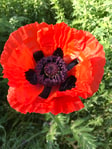
Garden look-alikes chiefly include Field poppy (Papaver rhoeas), a more delicate and often bright red annual; Oriental poppy (Papaver orientale), a perennial with a hairy rosette and large ornamental flowers; and the generally shorter, cool-climate Iceland poppies. For Opium poppy, the combination of a hairless annual habit, clasping leaves, and a large capsule with a flat disk is the most useful guide, together with the scientific name. 4 5
Habitat and range
Macaronesia and the western and central Mediterranean form the native range reported by POWO, which places this annual in temperate biomes. Flora of North America qualifies that account: the species is not certainly known in the wild and probably originated in southeastern Europe and/or southwestern Asia before cultivation spread it. 1 4
Cultivation has carried the species far beyond that range. POWO lists introductions across Europe, Asia, Africa, North and South America, and Oceania. FNA describes it as introduced from cultivation, sometimes a crop weed or a plant of disturbed sites, including fields, clearings, banks, roadsides, and railways. 1 4
No national invasive alien designation is established for France in the sources used. POWO includes France within its native range, but botanical presence does not mean that the species should be encouraged everywhere or that all uses are unrestricted. Distinguish its occurrence from food or ornamental cultivation and from regulated uses of its parts; applicable rules depend on jurisdiction. 1 12
Life cycle and ecology
A single season contains the annual sequence of germination, rosette, flowering stem, flower, capsule, and seeds. FNA records spring-to-summer flowering in North America; RHS likewise treats it as an outdoor ornamental annual with short-lived flowers and capsules often described as “pepper pots.” 4 5
Where ornamental growing is lawful, general requirements include full sun to light partial shade, well-drained or moist but well-drained soil, and no standing water. RHS lists it as drought-tolerant and suited to gravel gardens, wildflower meadows, borders, and informal gardens. 5
Pollinators may visit the flowers. RHS includes Papaver somniferum among plants providing nectar and pollen to bees and other insects. This value does not reduce the need to prevent children and animals from swallowing any part or to avoid processing capsules. 5 10
Food, medicinal uses, and regulation
Poppy seeds are a familiar ingredient in breads, pastries, and edible oils in some regions. EFSA notes that the seeds come from Papaver somniferum and may become contaminated with opium alkaloids through pest damage, harvesting, or processing. 7 8
Seeds normally contain no opium alkaloids or only very small amounts, according to EFSA and European Union references. Particles of latex, capsule, or poppy straw can nevertheless contaminate the seed surface. The European Union has therefore set maximum morphine-equivalent levels for certain foods containing poppy seeds. 7 8
Surface contamination is also described by the FDA, which reports serious effects linked to the misuse of contaminated seeds, particularly homemade preparations intended to extract residues. Food use should rely on compliant supply chains and public-health advice; homemade extraction or processing does not establish safety. 9 7
Medicinal uses belong within pharmaceutical and regulatory systems. FNA records the plant's long history as a source of opium and modern derivatives such as morphine and codeine. This historical information does not authorize domestic use, and legal requirements vary by jurisdiction. 4 12
Toxicity and precautions
A high toxicity rating reflects precaution. EFSA identifies numerous alkaloids in Opium poppy latex, including morphine and codeine. The FDA notes that opiate alkaloid exposure can cause nausea, sleepiness, breathing problems, and serious effects depending on dose and circumstances. 7 9
Dogs and cats are at risk according to Pet Poison Helpline, which lists poppies as toxic and describes possible sedation, agitation, altered pupils, or behavioral changes. IVIS likewise describes nervous-system and digestive effects of Papaver alkaloids, with particular concern for animals eating plant debris or other parts. 10 11
Horses also require protection, alongside cats and dogs. Although public pet references focus chiefly on dogs and cats, IVIS discusses risks to animals and horses exposed to plant debris. Preventing ingestion of every plant part is the precautionary approach. 10 11
If a child, adult, or animal swallows part of the plant, do not try to estimate a safe dose. Contact a healthcare professional, veterinarian, or poison center, giving the name Papaver somniferum and the part thought to have been swallowed. 9 10
Ornamental varieties and responsible identification
Ornamental forms include single, double, fringed, or deeply cut flowers in white, pink, red, purple, and almost black. RHS notes double and deeply cut forms; GBIF retains historical names that may appear in catalogs and older literature. 5 3
Neither flower color nor a cultivar name establishes chemical composition. University of Wisconsin Extension explains that horticultural forms may be selected for appearance or seeds, but appearance alone cannot determine their alkaloid profile. Decorative double forms require the same caution as seed strains. 6 9
Responsible identification generally needs photographs of the whole plant, clasping upper leaves, buds, flower, and capsule. Handling, cutting, drying, storing, or processing capsules is unnecessary for confirming the species and may be risky. 2 11
Main sources
- Plants of the World Online / Kew, Papaver somniferum L.
- World Flora Online, Papaver somniferum L.
- GBIF Backbone Taxonomy, Papaver somniferum L.
- Flora of North America, Papaver somniferum
- Royal Horticultural Society, Papaver somniferum, opium poppy
- University of Wisconsin–Madison, Susan Mahr, Breadseed or Opium Poppy, Papaver somniferum (12 June 2017), Internet Archive capture 12 July 2024
- EFSA, Opium alkaloids in poppy seeds, 2018 update
- Regulation (EU) 2021/2142, maximum opium alkaloid levels in certain foods
- FDA, Opiate Alkaloids on Poppy Seeds
- Pet Poison Helpline, Poppy
- IVIS, Papaver somniferum: Opium poppy
- Légifrance, order of February 22, 1990, list of substances classified as narcotics
Frequently asked questions
Are Opium poppy and Breadseed poppy the same species?
Yes. Papaver somniferum is the botanical name for Opium poppy, also called Breadseed poppy according to its use and context.
Do poppy seeds naturally contain opium alkaloids?
EFSA and European regulations explain that seeds normally contain little or none, but particles of latex or poppy straw may contaminate them during harvesting and processing.
Can I use the capsules or latex?
Do not use capsules, latex, poppy straw, extracts, or homemade preparations. These parts are toxic and may be regulated.
Is Opium poppy toxic to animals?
Yes. Pet Poison Helpline treats poppies as toxic to dogs and cats, and IVIS describes neurological and digestive signs in animals exposed to Papaver alkaloids.
Is Opium poppy a perennial?
No. Botanical references and RHS describe it as an annual. Repeated appearances in a garden generally come from seeds or new seedlings, rather than a perennial rootstock.
How can I tell it from Field poppy?
Opium poppy is usually more hairless and glaucous, with clasping upper leaves and a large capsule topped by a flat disk. Field poppy is more delicate, typically red-flowered, and has a smaller capsule.
Does this account provide cultivation instructions?
No. It describes the species for identification and responsible botanical understanding, without a growing protocol. Practical decisions depend on local law and safety requirements.
Similar plants
If you are unsure about a plant’s toxicity, ask a botanist or veterinarian for advice.