
Jute (Corchorus olitorius, )
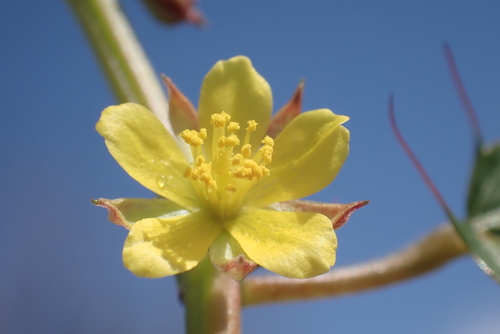

Jute (Corchorus olitorius) is an annual herb in the Malvaceae, cultivated across tropical and subtropical regions for its mucilaginous leaves and jute fiber. Reddish stems bear toothed leaves with two long basal bristles, followed by ribbed cylindrical capsules full of gray seeds. Young shoots can be harvested within weeks; mature seeds concentrate poisonous cardiac glycosides.
Read moreJute, Tossa jute, Nalta jute, Jute mallow and Jew’s mallow
Place in full sun, with intense direct light all day long.
Full sun; warmth essential for germination and growth



© photo
(c) Mike Ross, some rights reserved (CC BY-NC), uploaded by Mike Ross · cc-by-nc
Wikimedia Commons · CC BY-SA or Public Domain
Wikipedia · CC BY-SA
Taken Jul 16, 2019 by S M (cc-by-sa)
Taken Oct 28, 2014 by Tela Botanica − S. Paulin KOURA (cc-by-sa)
© copyright of the Board of Trustees of the Royal Botanic Gardens, Kew.


Global distribution
Its precise geographic origin remains debated. Genetic diversity points to sub-Saharan Africa as the main center, with a secondary center in the Indo-Burmese region. It is now cultivated in almost all tropical and subtropical regions.
- Native3
- Introduced1
- Invasive1
- Sub-Saharan Africa
- India, Bangladesh and South Asia
- Southeast Asia
- Brazil, the Caribbean and Réunion
- Australia
Hexagons: regions where the plant occurs. Green dots: native range.1
Identity
Jute (Corchorus olitorius L., 1753), also called tossa jute, nalta jute, jute mallow or Jew’s mallow, is an annual herb in the Malvaceae. Plants of the World Online accepts the name published by Linnaeus in 1753. 1 2
The genus name comes from Greek korkhoros, which already denoted a similar vegetable plant. The Latin epithet olitorius means “relating to vegetables.” The French word jute was borrowed from English in the 19th century; its history runs through Bengali jhōto to Sanskrit jūta. 5
Recognition
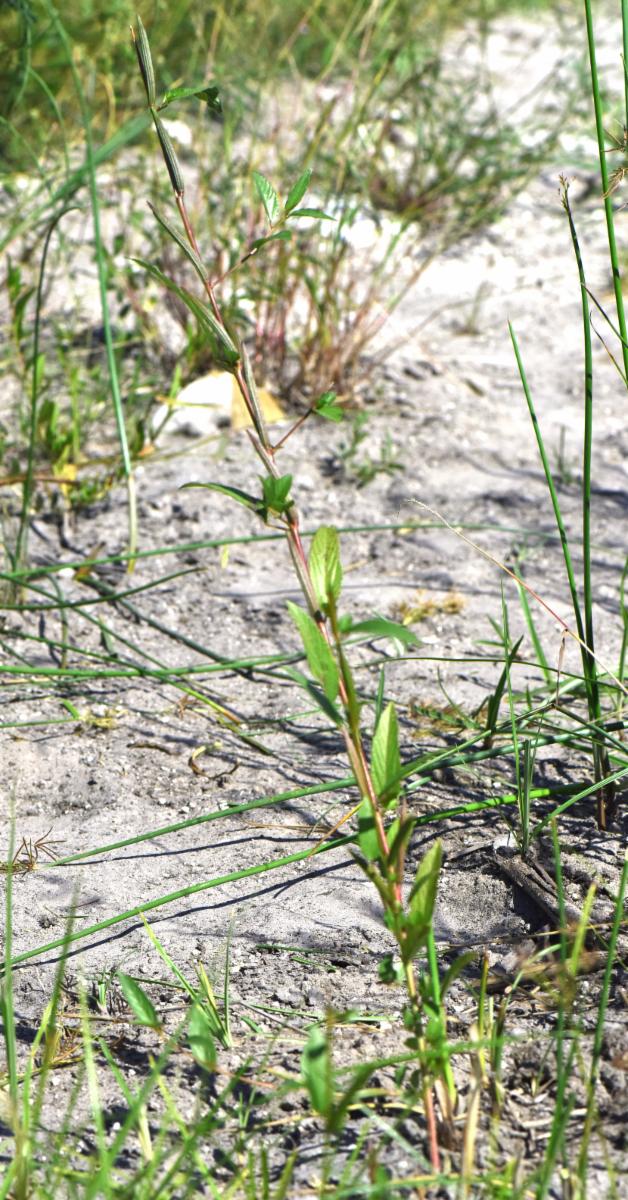
An upright stem, often reddish at the base, branches chiefly near the top. Unrestricted tropical plants commonly reach 1–3 m (3–10 ft), with reports up to 4 m (13 ft). Plants repeatedly cut as leafy vegetables remain nearer 60 cm–1.5 m (2–5 ft). 4 5
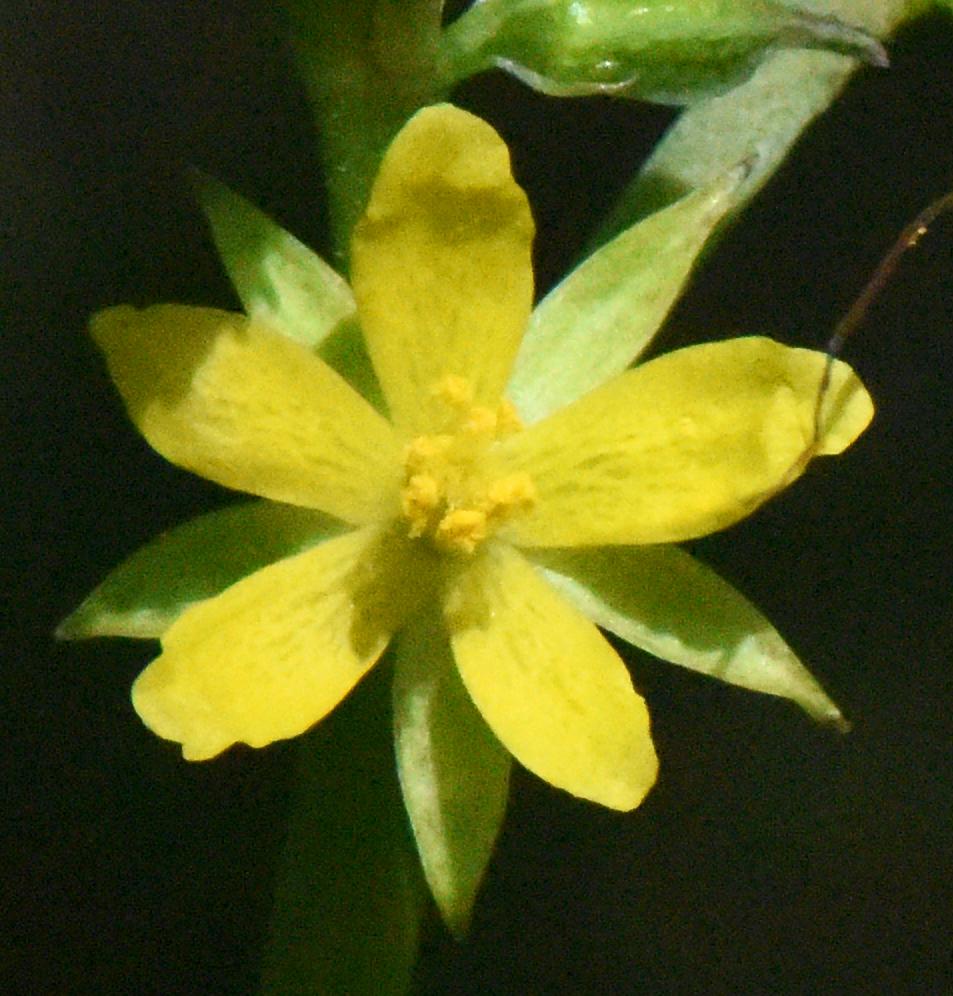
Alternate, toothed, ovate-lanceolate leaves are 7–10 cm (2.8–4 in) long. Two long basal bristles extend from the base of the blade, providing a useful identification character. Small yellow flowers appear singly or in groups of two or three in the leaf axils. Cooking produces the conspicuous mucilaginous texture that distinguishes this vegetable from many neighboring tropical greens, alongside its leaf characters. 4 6
The hairless, often brittle stem has no underground storage organ comparable to a rhizome or bulb. A simple taproot supports rapid growth within one season rather than overwintering. 5
Useful taxonomy
Corchorus olitorius L., published in 1753, remains the accepted name in POWO. It belongs to the broadly defined Malvaceae, subfamily Grewioideae. Botanical literature includes Corchorus olitorius var. incisifolius Asch. & Schweinf. and C. olitorius var. malchairii (De Wild.) R.Wilczek, without displacing the accepted species name. 1
The related white jute, Corchorus capsularis, is also a fiber crop. Its globular capsules distinguish it from the cylindrical, ribbed capsules of C. olitorius. 5
Habitat and range
Its precise origin remains debated. Genetic diversity identifies sub-Saharan Africa as the principal center and the Indo-Burmese region as a secondary center. POWO places the native range in the tropical and subtropical Old World. 5 1
After centuries of cultivation in Asia and Africa, the species now occurs throughout most tropical and subtropical regions, including Brazil, the Caribbean and Réunion. It also grows as a crop weed in Australia, Egypt and several East African countries. 4
In mainland France it is not native and is grown as an annual in gardens or under protection, after the last frost. In other frost-prone climates, the same warmth requirement determines the growing season rather than a fixed sowing month. 2 8
Life cycle and reproduction
Seeds germinate in 2–5 days in soil warmed to 25–32 °C (77–90 °F), the optimum range described for cultivation. Soaking for 24 hours before sowing markedly speeds emergence. 5 3
Harvest young shoots once plants reach 20–30 cm (8–12 in), repeating every two to three weeks through the warm growing season. Uncut plants flower in summer, then produce ribbed cylindrical capsules 5–10 cm (2–4 in) long, packed with angular gray seeds 1–3 mm (0.04–0.12 in) long. 4 5
Below 10 °C (50 °F), growth slows and then stops; frost subsequently kills the whole plant. Without a rhizome, bulb or tuberous storage root, it does not regrow the following spring outside tropical or subtropical conditions. It is therefore cultivated strictly as an annual in France. 3
Uses and risks
Cooked leaves, rich in protein and vitamin C, form the basis of mloukhiya, a mucilaginous dish comparable to okra, served in North Africa, the Middle East and West Africa. Some analyses report up to 258 mg of vitamin C per 100 g (3.5 oz) of fresh leaves, alongside protein exceeding 25% of dry weight, an unusually high proportion for a leafy vegetable. 6
Stems also supply jute fiber, used for sacks and burlap. This is a major textile crop in India and Bangladesh. 4
Seeds concentrate potentially poisonous cardiac glycosides, including corchorosides A and B. A suspected case of cattle poisoning after eating jute seeds was documented in an Australian veterinary journal. Leaves and young fruit have culinary uses when cooked; this is distinct from the warning about seeds. 7 6
Varieties, lookalikes and related plants
Agricultural selections dominate cultivation of Corchorus olitorius, without a recognized ornamental cultivar. They chiefly distinguish a leaf-oriented group from a fiber-oriented group, according to the intended crop. 3
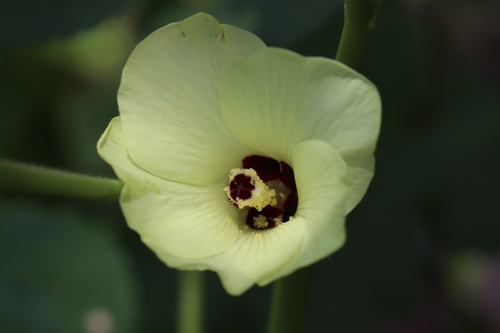
The most likely confusion is with Corchorus capsularis, the other major jute-fiber species. Its round capsules contrast with the long ribbed capsules of C. olitorius. Other mucilaginous vegetables, such as okra (Abelmoschus esculentus) and Malabar spinach (Basella alba), have a similar cooked texture without being close botanical relatives. 5
Capsule shape and size provide a clearer field distinction than the color of harvested fiber: 5–10 cm (2–4 in) long, cylindrical and ribbed in Corchorus olitorius, globular and much shorter in its textile relative.
Main sources
- Plants of the World Online / Kew, Corchorus olitorius L.
- INPN / MNHN, Corchorus olitorius L., 1753 — Jute
- Plants For A Future, Corchorus olitorius
- Purdue University NewCROP / Duke's Handbook, Corchorus olitorius
- Pl@ntUse / PROTA, Corchorus olitorius
- PMC / Foods journal, Corchorus species — nutrition and pharmacology review
- Australian Veterinary Journal via PubMed, suspected jute seed poisoning of cattle
- Tela Botanica / eFlore APD, Corchorus olitorius L.
Frequently asked questions
What is tossa jute?
Corchorus olitorius is an annual herb in the Malvaceae grown for mucilaginous leaves and jute fiber. Other names include nalta jute, jute mallow and Jew’s mallow.
Is tossa jute poisonous?
Cooked leaves are used as food. Seeds contain cardiac glycosides, including corchorosides A and B, and a suspected case of cattle poisoning after eating seeds was documented in a veterinary journal.
Can its leaves be eaten raw?
They are chiefly eaten cooked, in a mucilaginous sauce comparable to okra. Cooking develops their characteristic texture and is the documented culinary practice in Africa and the Middle East.
Where does tossa jute come from?
Genetic diversity points to sub-Saharan Africa, with a secondary center in the Indo-Burmese region. Centuries of cultivation in Asia and Africa were followed by wide distribution throughout the tropics.
How does Corchorus olitorius differ from Corchorus capsularis?
The capsule is the clearest distinction: cylindrical and ribbed in Corchorus olitorius, globular in Corchorus capsularis. Both provide jute fiber, but the former is the one commonly grown as a leafy vegetable.
Can tossa jute grow in France?
It is not native there. Grow it as an annual after the last frost, in full sun in a vegetable garden or large container. The first frost kills it.
Are textile jute and this leafy vegetable the same plant?
Much commercial jute fiber comes from Corchorus olitorius, alongside Corchorus capsularis. Depending on the selection, the same species can be grown for its leaves or stems.
Similar plants
If you are unsure about a plant’s toxicity, ask a botanist or veterinarian for advice.