
St John's wort (Hypericum, )
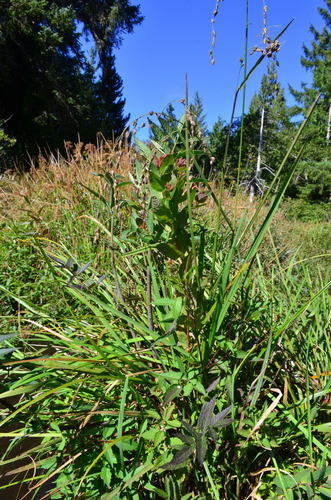
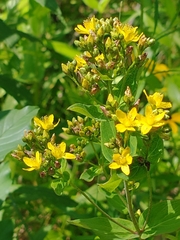
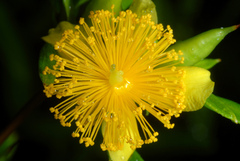
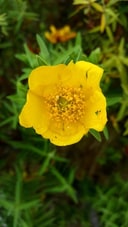
St John's wort (Hypericum) is a nearly worldwide genus in the Hypericaceae family, including ground covers, shrubs and herbaceous perennials. Its yellow garden flowers, illustrated by Hypericum calycinum, unite plants whose growth habits, medicinal uses and toxicity need to be distinguished at species level.
Read moreSt John's wort


© photo
Gabriel Campbell-Martinez · cc-by
Tom Norton · cc-by
Douglas Goldman · cc-by-nc
© copyright of the Board of Trustees of the Royal Botanic Gardens, Kew.
Identity
St John's wort (Hypericum Tourn. ex L.) is a genus of the Hypericaceae family. It includes the yellow-flowered garden plants commonly grouped under that English name, rather than a single species. Ground-covering forms and woody shrubs belong within the same broad botanical group, although they play different roles in planting. 1 2 8
A nearly worldwide range is recorded for the genus by POWO. That breadth helps explain why St John's wort can mean a ground cover on a bank, a berry-bearing shrub, a wild perennial or a medicinal plant whose use requires professional guidance. The shared name gives a starting point for recognition, but does not identify the particular plant. 1 4
Five yellow petals and conspicuous stamens give many garden St John's worts their familiar appearance. Shrub borders, informal hedges and ground-cover planting all make use of this yellow-flowered group. These visible similarities are useful for recognizing a genus, while the eventual height and shape depend on which species has been chosen. 8 4
Separating the genus from H. perforatum is essential. Medicinal properties and associated cautions cannot simply be transferred to every yellow-flowered Hypericum. Equally, a familiar ornamental appearance does not establish that a plant is harmless. Identifying the species connects the broad common name with the relevant growth habit, uses and risks. 1 5
Recognition
Star-shaped yellow flowers with five petals and numerous stamens in a central spray often identify St John's wort. In many species, opposite leaves and translucent or dark glands provide further useful characters. Flower color alone is a weak guide, whereas floral structure and leaf arrangement together give a more informative first impression. 4 8
Large-flowered Hypericum calycinum illustrates the ground-covering end of the genus. Its clear yellow flowers and rapid coverage explain its appeal in gardens. Its low outline also distinguishes its practical use from that of a wild medicinal herb or a woody shrub chosen for its fruits and framework. 8 4
Growth habit becomes crucial when comparing plants sold or described simply as St John's wort. A berry-bearing shrub, an evergreen ground cover and Hypericum perforatum have different shapes, uses and limitations. Check the leaves, overall outline, mature size and setting before treating the common name as an identification. 1 5
Photographs for identification should show more than the center of a flower. Include close views of the leaves and stem, the plant's height, any fruits and its surroundings. A dry garden, bank, meadow, waste ground or planted border supplies context that a tightly cropped picture of yellow petals cannot convey. 8 4
Useful taxonomy
Hypericum is the accepted name at genus level, within the Hypericaceae. POWO, World Flora Online and IPNI provide the botanical reference records for that name. The genus is the appropriate level when discussing the broad group of yellow-flowered plants; it should not imply that every plant mentioned belongs to one species. 1 2 3
Horticultural use spans more than the low-growing H. calycinum. Although that species is a familiar example, other members of the group are shrubs and serve different purposes in the garden. A general planting description can therefore refer to Hypericum without silently assigning the same size or habit to all of its members. 8 1
For herbal medicine, drug interactions, livestock poisoning or the invasion of pasture in certain countries, the name Hypericum perforatum supplies necessary precision. Those subjects concern a particular species and its documented behavior. They should not become undifferentiated claims about every member of the much broader genus. 5
The common name St John's wort helps recognize the group; the species name guides decisions about cultivation, risk, medicinal use and ecological status. Keeping both levels in view is especially useful when plants are exchanged or bought under a general name that does not reveal their eventual size or behavior. 1 8
Species lists show the diversity behind the common name, while growing guides mainly discuss familiar ornamental forms. Read those two kinds of information together: first establish which species is involved, then interpret its intended use. A broad genus description cannot replace the narrower identification needed for a particular planting or medicinal question. 6 7
Cultivation
Garden St John's worts generally favor sun or bright partial shade and well-drained soil. Many tolerate ordinary, sometimes poor soils, making them useful on banks, in uncomplicated borders and in places less suited to more demanding perennials. These are general horticultural tendencies; the particular species still determines how it occupies that space. 8 4
Prolonged waterlogging is the main difficulty described for garden planting. Heavy, cold, saturated soil weakens roots and leaves plants looking less tidy. On a bank or a freely drained border, the opposite problem can arise: some ground-covering forms spread so effectively that keeping them within their allotted space becomes the greater concern. 8
Choosing between a low carpet and a shrub is the first practical decision. The second is whether the soil stays freely drained through winter where winters are cold and wet. If it does not, another yellow-flowered plant is a better choice than trying to force St John's wort into unsuitable heavy ground. 7
Pruning depends on the plant's growth form. Shrubby types may be rejuvenated or reshaped in late winter under temperate conditions, while congested ground covers can receive a more thorough cleanup. Different species do not all produce the same woody framework, so one pruning approach should not be applied indiscriminately throughout the genus. 4
Yarrow, coreopsis, lavender, rudbeckia and low grasses make suitable companions in a yellow border. St John's wort contributes a more persistent framework than many annuals, helping organize the planting without an elaborate arrangement. Whether that framework is a low mat or a shrub depends on the form selected. 8
Uses
Bright, space-filling planting is a major ornamental use of St John's wort. It can cover border edges and banks, form low hedges, fill shrub beds or provide a transition between perennials and looser planting. Its usefulness comes from matching that role to a plant with the right height and growth habit. 8
Fruits extend the decorative season of some shrubby species beyond their yellow flowers. That additional interest makes them useful in bouquets and garden scenes where a brief flowering display alone would be insufficient. Not every St John's wort has the same fruit display, so the species matters here as much as it does for size. 4
Open flowers and exposed stamens offer resources for pollinators, particularly in gardens combining ornamental planting with a more naturalistic approach. The genus is less visually imposing than a tall sunflower, but its plants can give continuity and structure to a planted area while their flowers provide a point of insect activity. 8
A species must nevertheless suit its setting. A vigorous ground cover can become troublesome in a small border; a large shrub can outgrow the usefulness of a pot. Medicinal species raise a separate question of appropriate supervision. A shared flower color and common name do not remove these practical differences. 5
Caution
Low overall toxicity at genus level needs cautious interpretation. Certain species, especially Hypericum perforatum, contain active compounds associated with drug interactions and problems in grazing livestock. A general assessment cannot establish the safety of an unidentified specimen, nor can it predict the consequences of preparing or taking an extract. 5
In a family garden, avoid ingestion and do not prepare medicinal macerations without professional advice. Keep prunings away from grazing areas, and identify the species before reaching conclusions about its safety or use. These precautions follow from the differences within the genus rather than from the appearance of an individual yellow flower. 5 8
St John's wort offers useful yellow structure in a garden, but its common name can hide substantial botanical differences. Hypericum is a genus, not a single species or a guarantee of safety. Understanding the particular plant makes its ornamental qualities easier to use and keeps medicinal associations in their proper context. 1 4
Main sources
- Plants of the World Online / Kew, Hypericum
- World Flora Online, Hypericum
- International Plant Names Index, Hypericum
- Wikipedia EN, Hypericum
- Wikipedia EN, Hypericum perforatum
- Wikipedia EN, list of Hypericum species
- Better Homes & Gardens, St. John's wort growing guide
- Floralens, yellow-flowered plant selection
Species in this genus
If you are unsure about a plant’s toxicity, ask a botanist or veterinarian for advice.