
Tuberous sword fern (Nephrolepis cordifolia, )
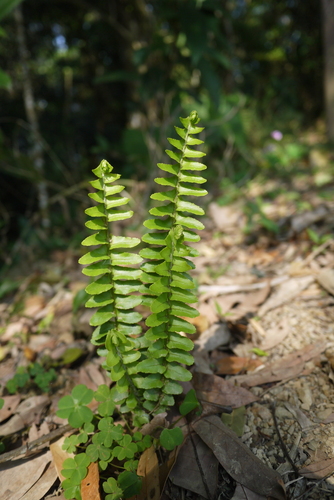
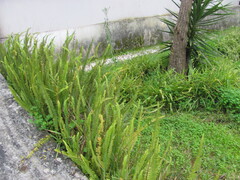
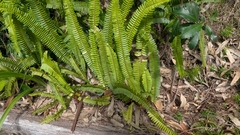
Tuberous sword fern (Nephrolepis cordifolia) bears rounded tubers on its runners. This perennial with narrow fronds grows in filtered light and a moist but drained mix; it can become invasive in some warm regions.
Read moreTuberous sword fern
Polypodium cordifolium
Give plenty of ambient light without direct sun on the leaves.
Bright filtered light indoors; partial shade in a sheltered position.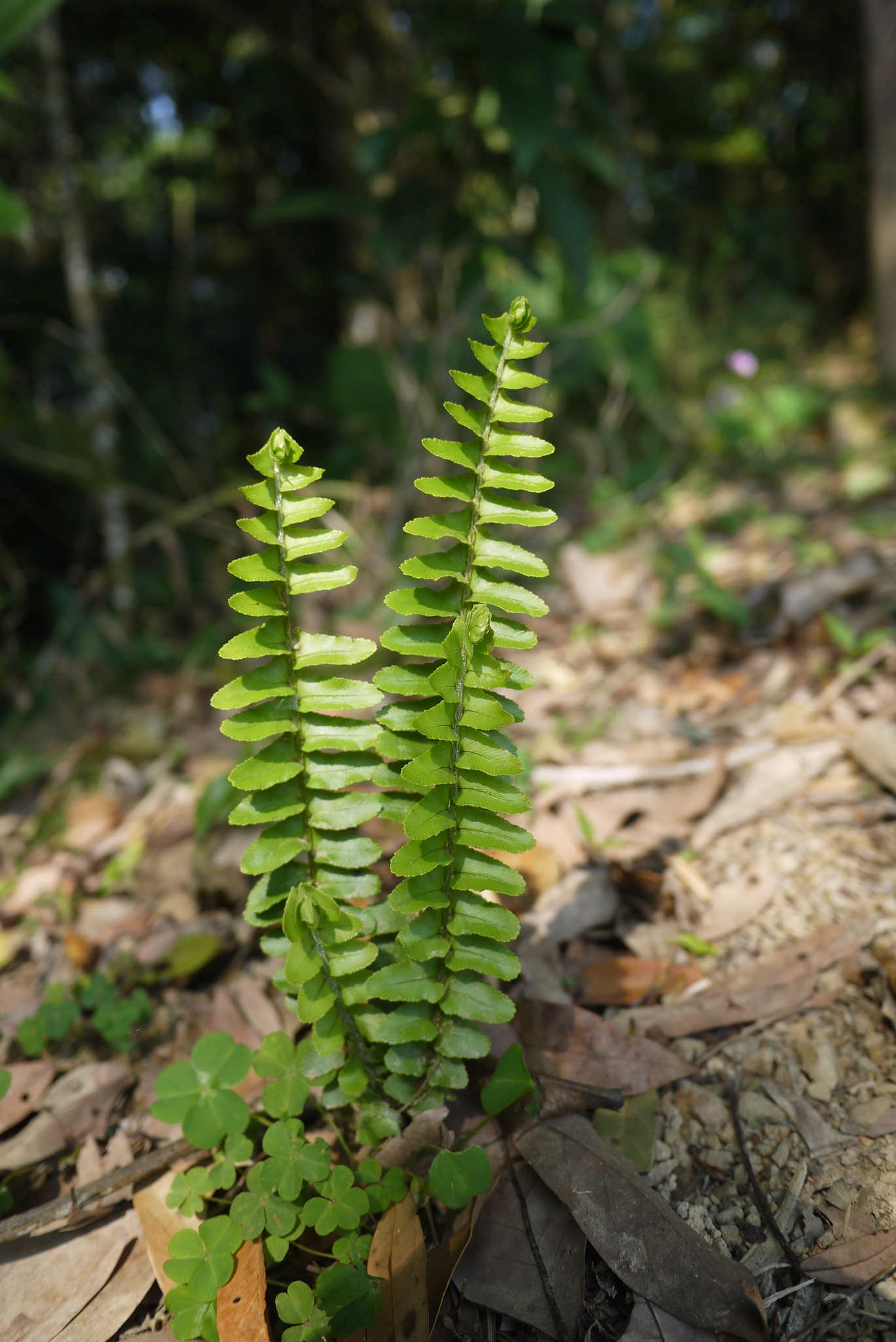
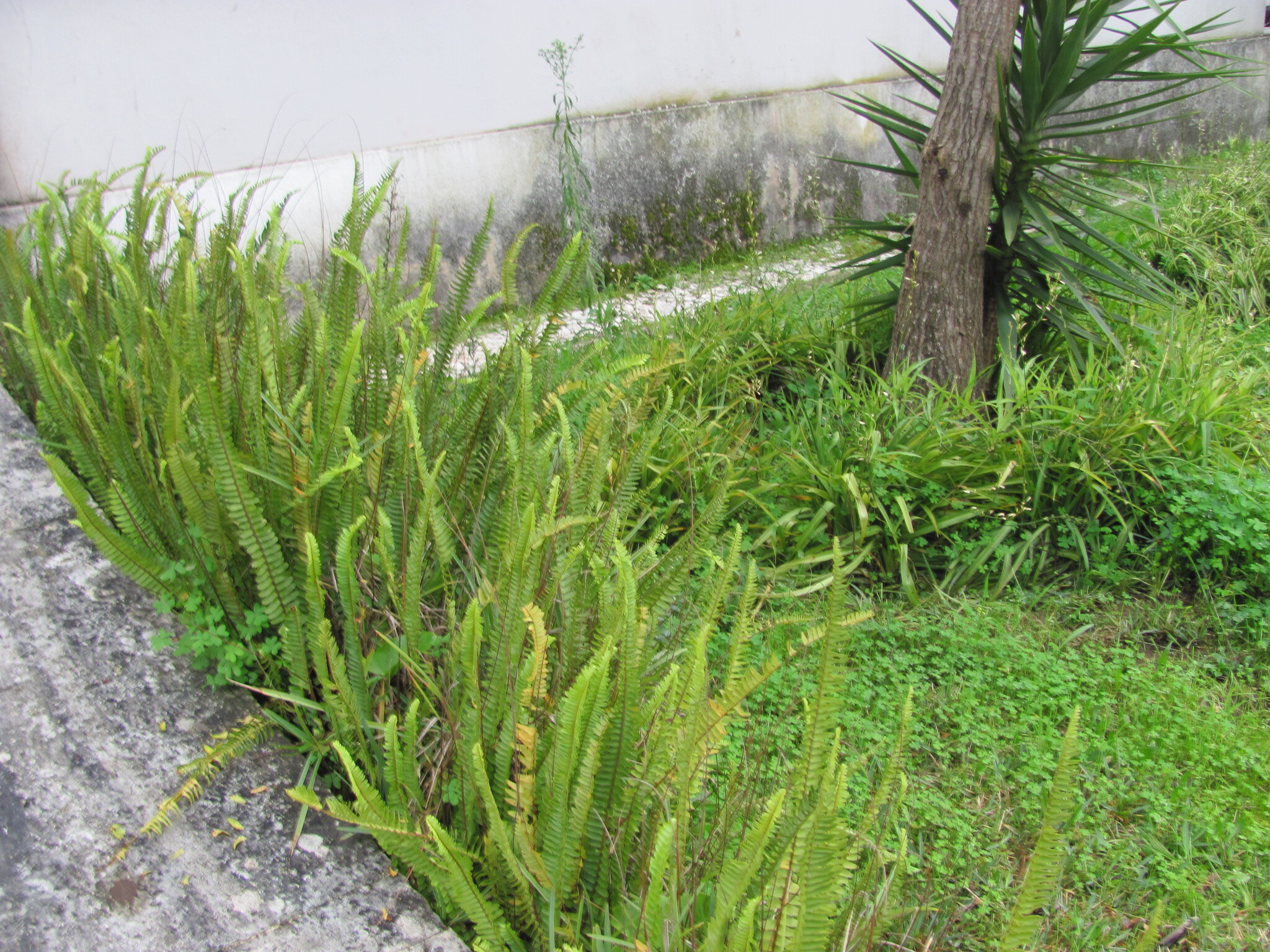
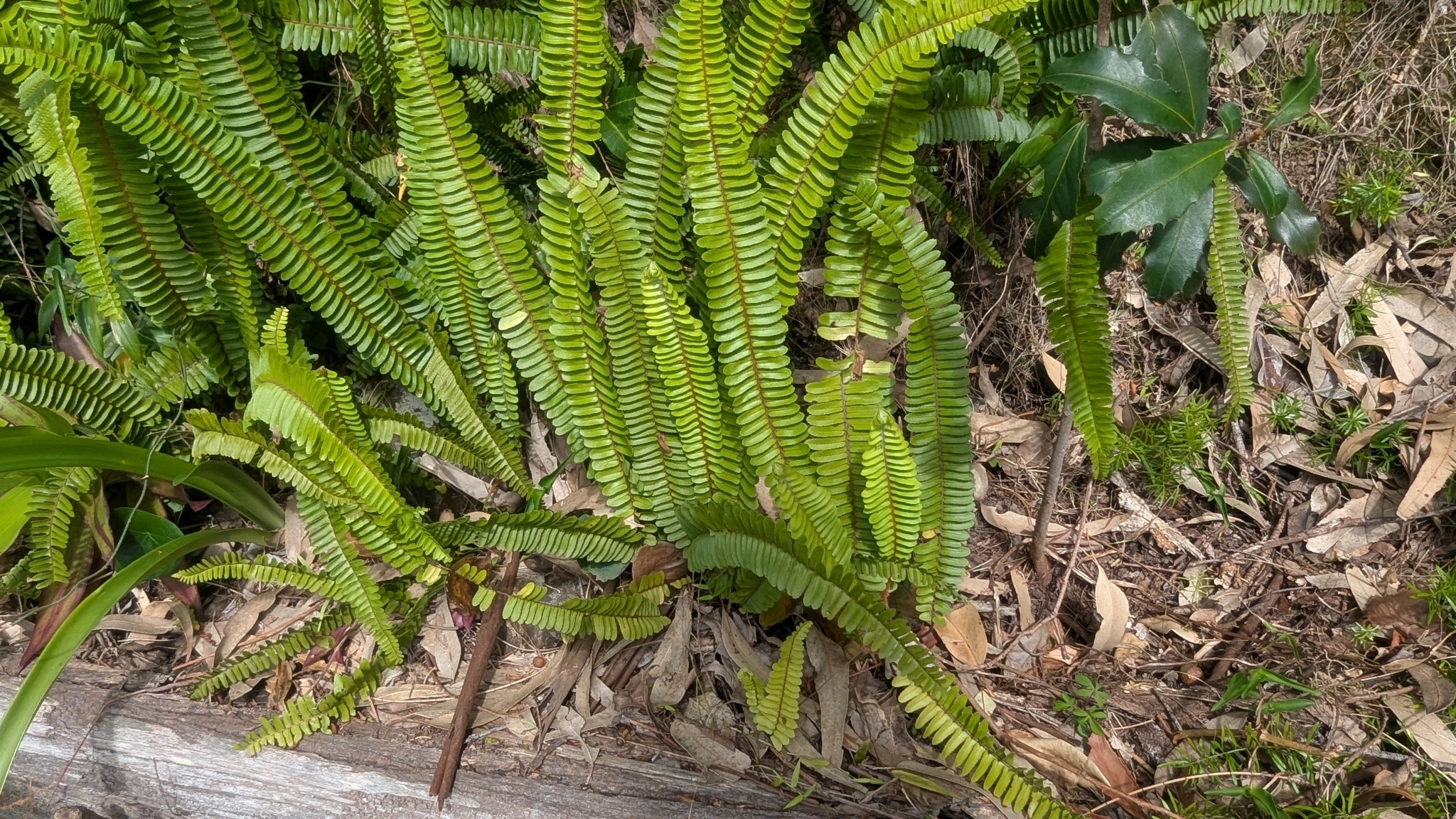


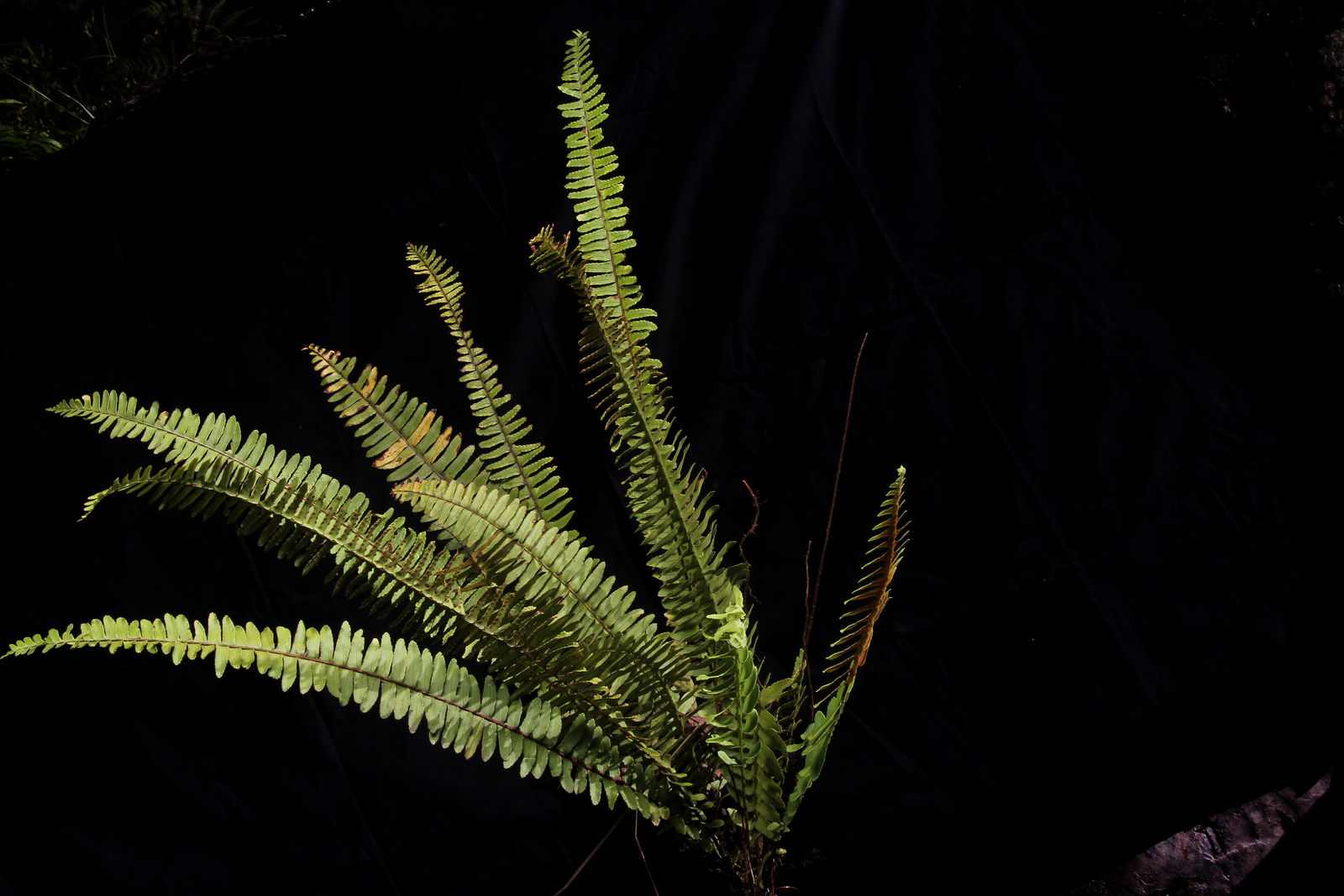
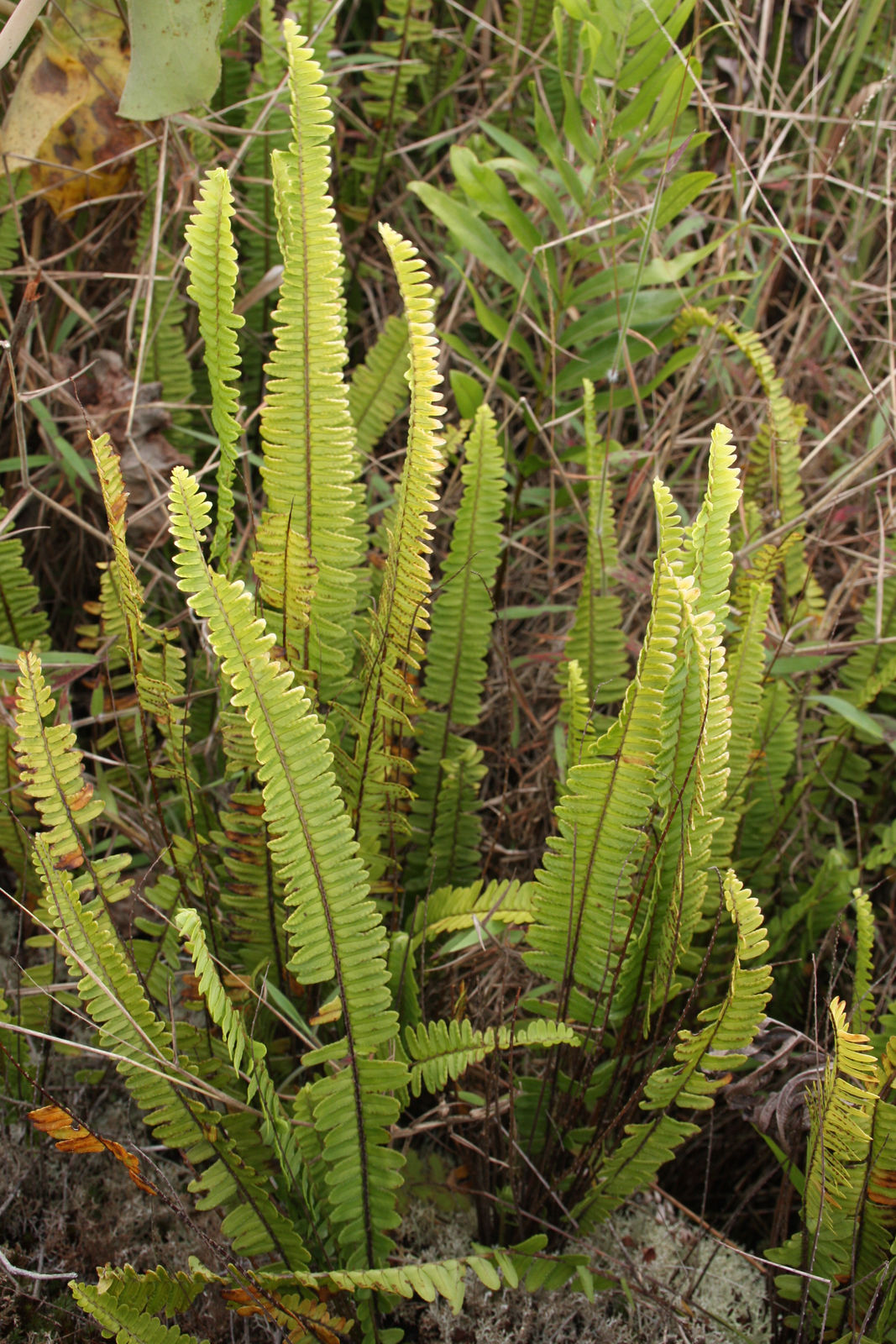
© photo
(c) cyunf, some rights reserved (CC BY-NC), uploaded by cyunf · cc-by-nc
zebedeugalinha · cc-by
Alesha Teitzel · cc-by
Taken Jan 17, 2021 by El Harrison (cc-by-sa)
Taken Mar 5, 2021 by concha ponce angie (cc-by-sa)
Taken May 5, 2017 by Rémi Knaff (cc-by-sa)
Taken Mar 19, 2022 by Espinoza-Zevallos Marco Elías (cc-by-sa)
© copyright of the Board of Trustees of the Royal Botanic Gardens, Kew.




Global distribution
Native to São Tomé and southwestern Cameroon, the western Indian Ocean and tropical or subtropical Asia through to the Pacific; introduced in Europe and the Americas, among other regions.
- Native4
- Introduced2
- Invasive1
- India
- Japan
- Réunion
- New Caledonia
- Mainland France
- New Zealand
- Florida
Hexagons: regions where the plant occurs. Green dots: native range.2
Identity
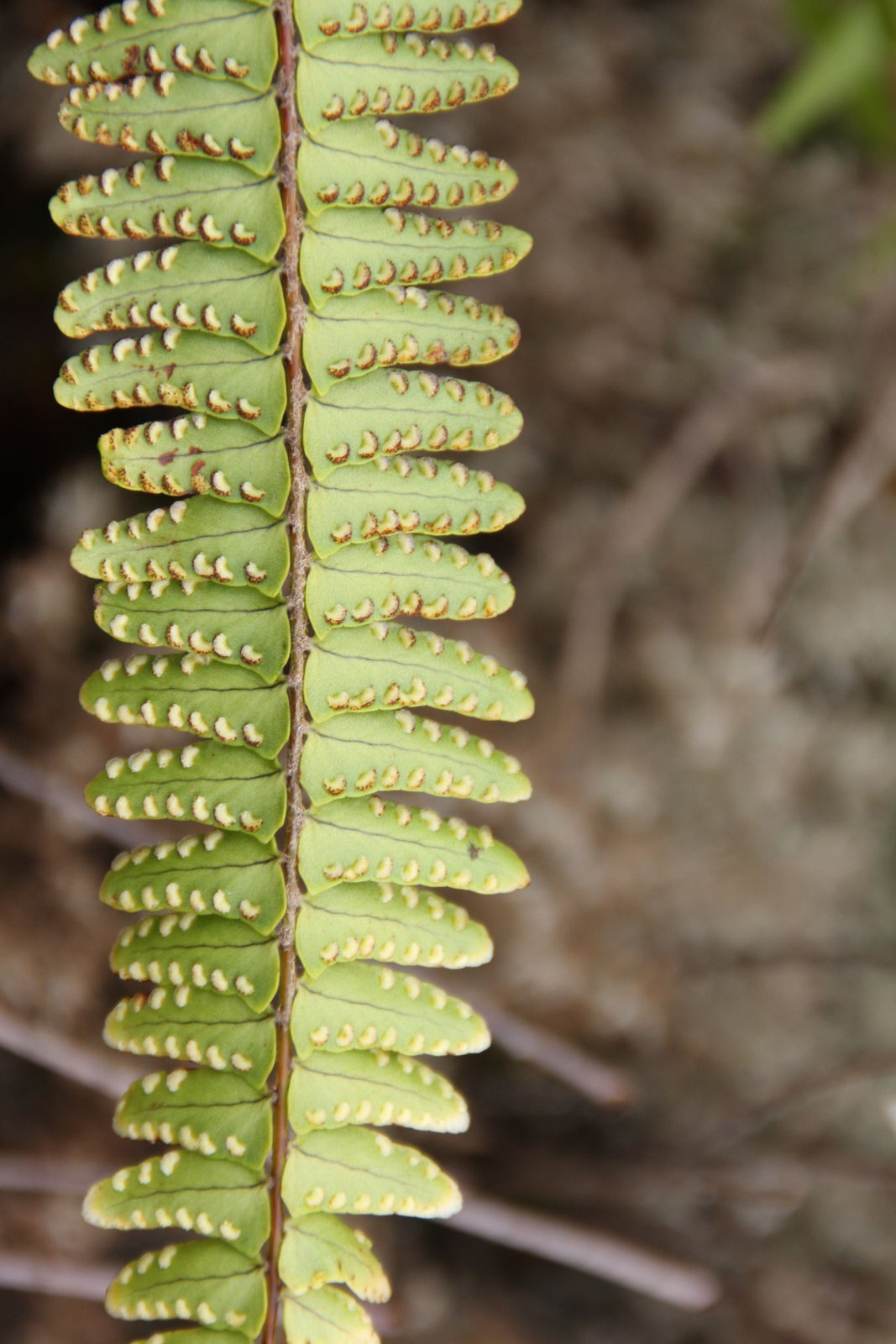
Tuberous sword fern (Nephrolepis cordifolia (L.) C.Presl, 1836) produces rounded tubers on long runners. The underground organs provide a concrete identification feature for this perennial fern, even when its foliage resembles that of a Boston fern. 1 4
Tuberous sword fern belongs to Nephrolepis, in the order Polypodiales. The accepted name Nephrolepis cordifolia is placed in the Polypodiaceae under a broad family classification. Its evergreen fronds and rhizome allow a clump to persist from one year to the next in favorable growing conditions. 2 7
Recognition
The rounded, hairy tubers measure 1 to 3 cm (0.4 to 1.2 in) and form on the runners of tuberous sword fern. Fronds begin upright, then arch as they lengthen. The horticultural height and spread are 0.5 to 1 m (1.6 to 3.3 ft). The figures describe a cultivated plant, rather than the length of every wild frond. 5 7
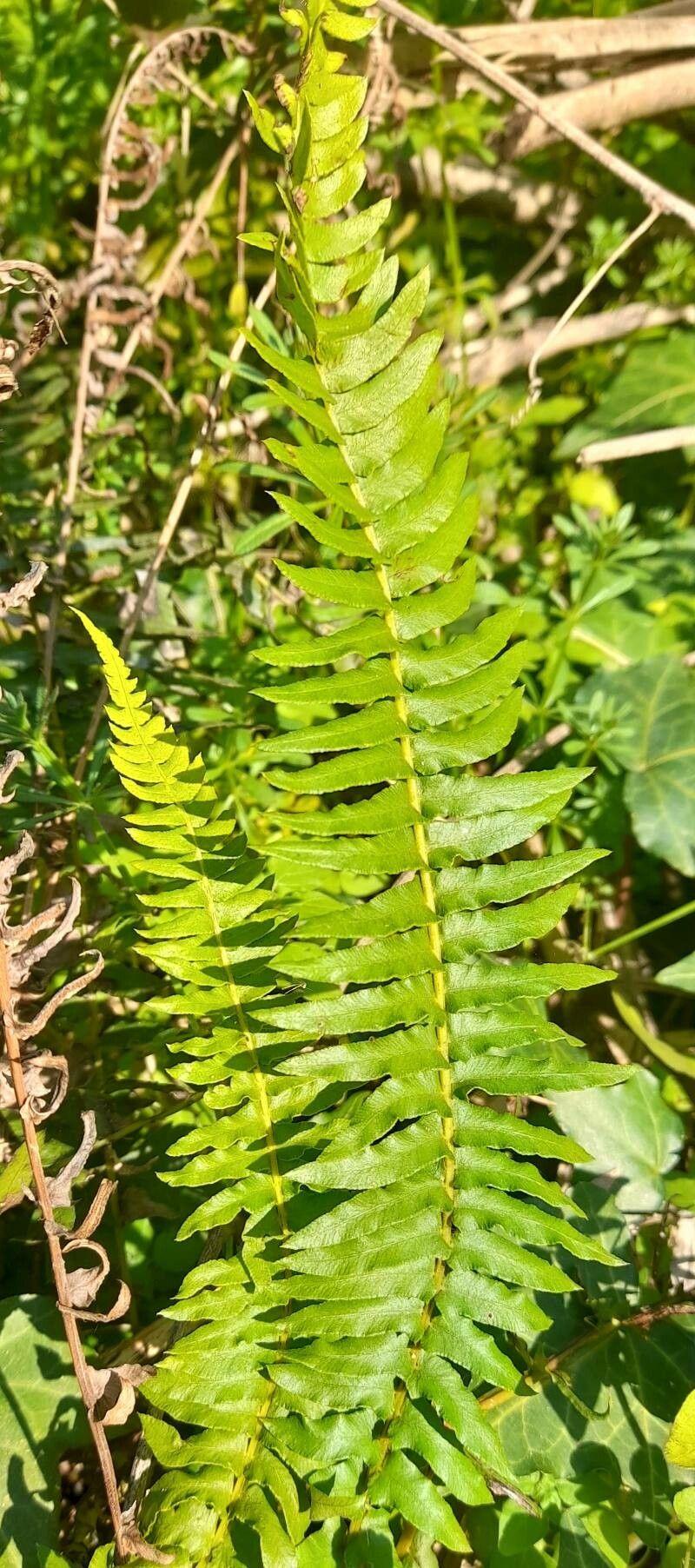
The blade is normally divided once, with leaflets arranged on either side of the central axis. Their margins are toothed or lobed, and their bases have a small lobe pointing toward the tip of the frond. The Australian horticultural flora gives blades mainly 50 to 70 cm (20 to 28 in) long, with variation among plants. 6
Useful taxonomy
The older name Polypodium cordifolium L. is the basionym of tuberous sword fern. Moving the species into Nephrolepis explains the parentheses around Linnaeus's abbreviation in the botanical authority. The combination in Nephrolepis was published in 1836. An older genus name on a label does not necessarily identify a different species. 3 2
Family boundaries differ among classifications. Tuberous sword fern is placed in Polypodiaceae in the broad sense, or in Nephrolepidaceae when that family is treated separately. The difference in family placement concerns the same accepted species, Nephrolepis cordifolia (L.) C.Presl. The binomial and authority help track its identity across the different family treatments. 2 3
Habitat and range
The native range of tuberous sword fern covers São Tomé and southwestern Cameroon, the western Indian Ocean, and tropical and subtropical Asia through to the Pacific. India, Japan, Réunion and New Caledonia are among its native territories. France and New Zealand, by contrast, are listed as territories of introduction. 2
Tuberous sword fern can grow on the ground, on rocks or as an epiphyte, established on a plant support. In New Zealand, its habitats include open forests, clay banks and roadsides. Finding a fern on a tree does not distinguish this species from another fern. Examination of the underground organs and fronds remains necessary for identification. 2 5
Life cycle and reproduction
Tuberous sword fern reproduces by spores and spreads vegetatively through its runners. Spores can be dispersed by wind or water. In southern Florida, spore production continues throughout the year. The warm-climate observation does not establish the rhythm of an indoor plant in France, or in another setting with different seasonal light and temperatures. 10
Separate runners that have already rooted in late winter or early spring. Ripe spores can be sown at 21 °C (70 °F), but the resulting plants do not necessarily reproduce the characters of a horticultural form. Vegetative propagation and sowing therefore serve different purposes when the aim is to preserve a cultivar. 7
In containers, repotting responds to crowded roots rather than an annual obligation. General advice for indoor ferns is to wait until the plant is cramped. Inspecting the pot and roots is therefore more useful than treating each new year as an automatic repotting date. 11
Uses and risks
Indoors, tuberous sword fern needs bright filtered light, a moist but free-draining mix and good ventilation. Water moderately during growth, then reduce watering in winter. Fronds kept too wet can rot: a humid atmosphere does not require continuously soaked foliage. 7
Apply a balanced liquid fertilizer monthly at half strength during growth. The calendar describes indoor cultivation in mainland France, in the Northern Hemisphere. Its water and growth levels are relative guides to be adapted to the plant. A winter with little light calls for different care from an active growing season; readers elsewhere should retain the growing context when interpreting the months. 7
Tuberous sword fern is explicitly listed as non-toxic to cats, dogs and horses. The cultivar 'Duffii' also has a non-toxic veterinary classification; that second assessment concerns the named form. The status for humans and children remains unestablished. An animal classification does not amount to a recommendation to eat the fern. 8 9
In Florida, dense stands of tuberous sword fern can replace native vegetation. The risk of spread depends on the territory and should inform the choice of an outdoor planting. 10
Varieties, look-alikes and related plants
'Duffii' is a dwarf cultivar with small rounded leaflets and a lemon scent when the foliage is crushed. The characters belong to the cultivar and do not describe every plant in the species. 8
In 'Plumosa', the segments are more finely divided. The origin of 'Plumosa' is unknown. Spore abnormalities have been reported in New Zealand, without resolving the hypothesis of a hybrid origin. Finely divided foliage therefore does not establish that a plant is a demonstrated hybrid. 6 4
Boston fern (Nephrolepis exaltata) has broader, softer fronds and lacks the characteristic tubers of tuberous sword fern. Examining the runners complements examination of the foliage when a label is missing or seems doubtful. 5
Main sources
The taxonomic treatment and regional floras help distinguish the identity of the species from characters specific to cultivars. 2 4
- Tela Botanica, eFlore: tuberous sword fern
- Kew, Plants of the World Online : Nephrolepis cordifolia
- GBIF Backbone Taxonomy : Nephrolepis cordifolia
- Flora of New Zealand : Nephrolepis cordifolia
- New Zealand Plant Conservation Network : Nephrolepis cordifolia
- Royal Botanic Gardens Victoria, HortFlora : Nephrolepis cordifolia
- Royal Horticultural Society : Nephrolepis cordifolia
- NC State Extension : Nephrolepis cordifolia
- ASPCA Poison Control : Duffii Fern
- University of Florida IFAS : tuberous sword fern
- University of Connecticut : Growing Indoor Ferns
Frequently asked questions
How can tuberous sword fern be recognized?
Rounded tubers on the runners provide a useful feature, alongside narrow fronds and toothed leaflets. Boston fern, Nephrolepis exaltata, lacks these tubers.
Are the balls in the pot normal?
Yes. Nephrolepis cordifolia naturally produces tubers on its runners. The organs are part of the plant.
What light suits Nephrolepis cordifolia?
Bright filtered light suits indoor or glasshouse cultivation, with moderate to high atmospheric humidity and good ventilation.
Is tuberous sword fern toxic to animals?
Tuberous sword fern is explicitly listed as non-toxic to cats, dogs and horses. Human status remains unestablished; veterinary classifications do not prove food safety.
Does it need as much water in winter?
No. Reduce watering in winter while keeping a free-draining mix. Fronds kept too wet can rot.
Similar plants
If you are unsure about a plant’s toxicity, ask a botanist or veterinarian for advice.