
Black-gold philodendron (Philodendron melanochrysum, )
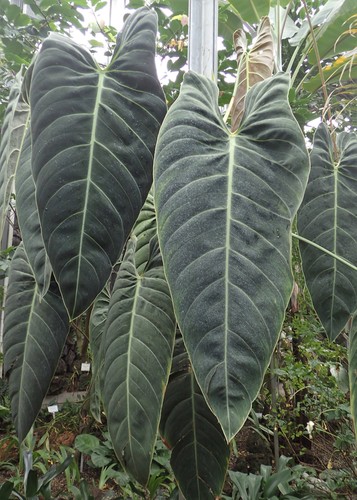
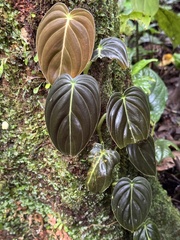

Black-gold philodendron (Philodendron melanochrysum) is a Colombian climber with large, velvety, dark green leaves and pale veins. This evergreen member of the Araceae family grows under warm shelter in filtered light, with a well-drained potting mix.
Read moreBlack-gold philodendron
Philodendron andreanum and Philodendron grandidens
Give plenty of ambient light without direct sun on the leaves.
Bright, filtered light; avoid scorching direct sun


© photo
(c) Krzysztof Ziarnek, Kenraiz, some rights reserved (CC BY-SA) · cc-by-sa
Harrison Reber · cc-by
Wikimedia Commons · CC BY-SA or Public Domain
© copyright of the Board of Trustees of the Royal Botanic Gardens, Kew.



Global distribution
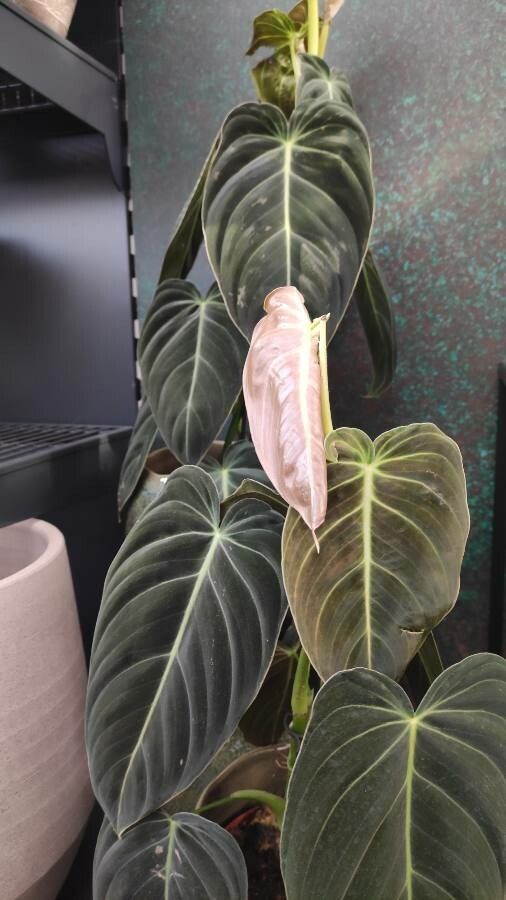
Native range accepted here is Colombia; horticultural descriptions may also mention Panama.
Identity
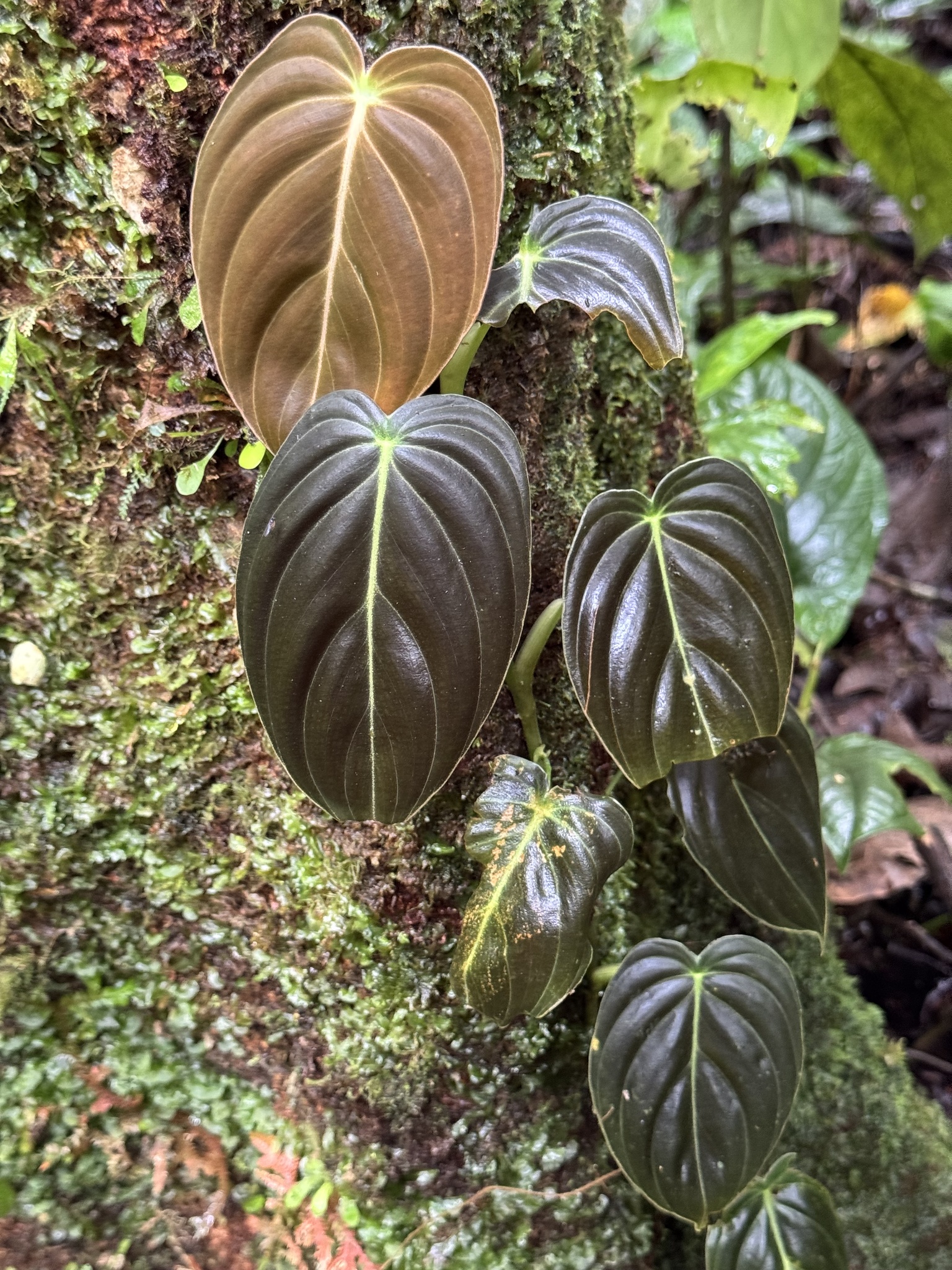
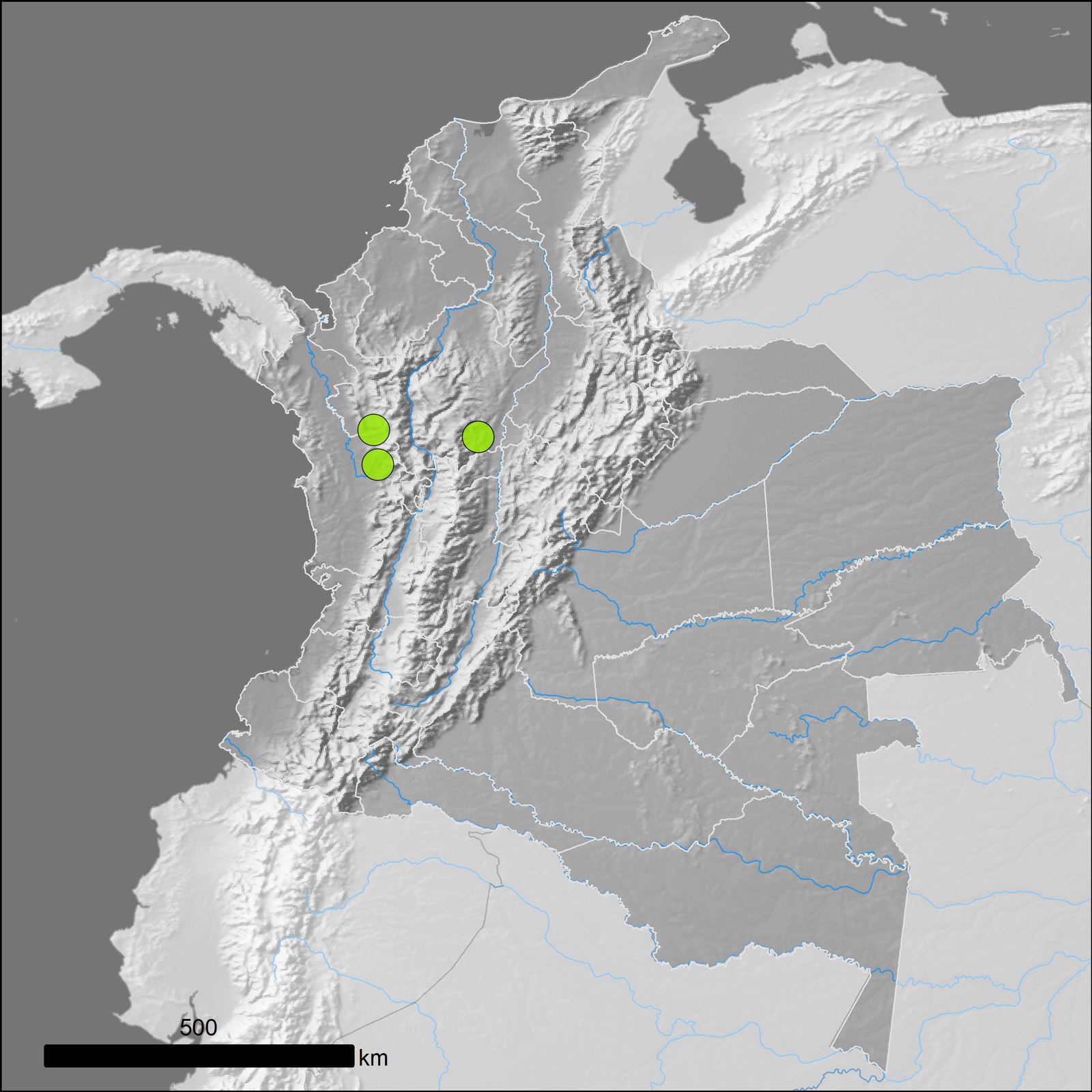
The velvety leaves of Black-gold philodendron (Philodendron melanochrysum Linden & André, 1873) combine dark green with pale veins and a coppery sheen. This evergreen climber belongs to the Araceae. Its English common name identifies the same plant as the botanical binomial Philodendron melanochrysum. 2 1
Native to Colombia, the species is grown as a foliage plant under warm shelter. Its ornamental appeal does not remove the risk of exposure: the plant is harmful if ingested, and its sap can irritate skin or eyes. Choosing a position therefore requires considering children and pets. 1 2
Recognition
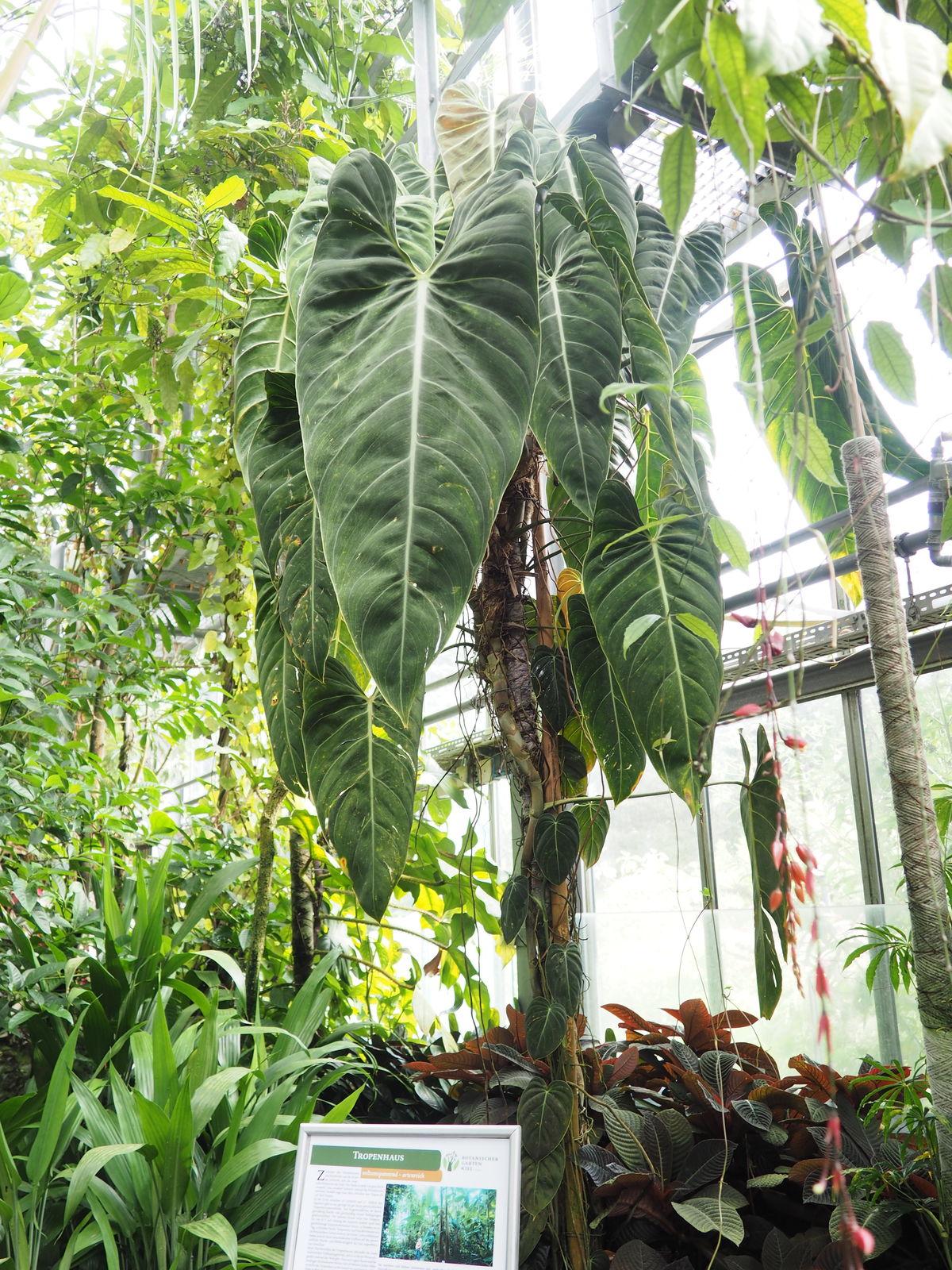
The heart-shaped leaves of Philodendron melanochrysum have a velvety surface, with pale green veins on a dark blade. Horticultural descriptions give a length of 25 to 75 cm. A coppery sheen is part of the foliage's appearance; a dark leaf need not be uniformly black to belong to the species. 2
Under shelter, the stated horticultural size reaches 2.5 to 4 m in height with a spread of 0.5 to 1 m. These dimensions concern an established plant, rather than a young specimen sold in a small pot. Growth is described as fairly slow, so large leaves should not be expected immediately after purchase. 2
In climbing philodendrons, aerial roots attach to supports. Differences between juvenile and adult foliage can complicate identification; examining several leaves and the growth habit is more useful than relying on color alone. 4
Useful taxonomy
The accepted name is Philodendron melanochrysum, published in L’Illustration horticole in 1873. The species belongs to the order Alismatales and the family Araceae. Two earlier names are associated with it: Philodendron andreanum Devansaye and Philodendron grandidens H.J.Veitch ex Rob.. 1
A botanical synonym therefore does not automatically denote a different variety. A label reading P. andreanum can refer to this same species, whereas the names ‘Glorious’ and ‘Splendid’ identify horticultural crosses. This distinction prevents the features of a hybrid from being attributed to the pure species. 1 5 6
Habitat and range
The native range accepted here for Philodendron melanochrysum is Colombia, in the wet tropical biome. Some horticultural descriptions add Panama; these accounts are not identical. The Colombian botanical range provides the reference used here for the species' origin. 1 2
In temperate cultivation, this origin calls for a position protected from cold. Conditions of 18 to 27 °C, without falling below 15 °C, are recommended for the species. Bright, filtered light avoids scorching from direct sun. Recommended atmospheric humidity is around 60 to 80 %. 3
Life cycle and reproduction
Philodendron melanochrysum is propagated from stem cuttings, including tip cuttings or a leaf accompanied by its bud. The cutting instructions require retaining the bud associated with the leaf, rather than cutting off a decorative leaf blade alone. Layering is also a general method for philodendrons, without constituting a protocol specific to this species here. 2 4
The calendar concerns temperate indoor cultivation in the Northern Hemisphere. Feeding accompanies growth from April to September, following the product instructions, then decreases in fall and winter. No feeding frequency is extrapolated from this recommendation. Repot in spring when the roots fill the pot; an interval of 2 to 3 years is suggested for the species. 3
The potting mix must remain well drained and contain organic matter. Reducing watering when temperatures drop avoids keeping the mix unnecessarily wet; excess water can cause root rot in philodendrons. Monthly scores indicate relative trends and do not replace observation of the mix itself. 2 4
Uses and risks
Philodendron melanochrysum suits a sheltered collection of foliage plants, with a support appropriate to its climbing habit. Mealybugs and glasshouse mites are among the pests reported on the species. Examining leaves and stems helps reveal an infestation before it spreads. 2
The calcium oxalate crystals described for the genus Philodendron explain mouth pain and swelling after ingestion. Drooling, vomiting and difficulty swallowing are also reported. The harmful effects of the species concern humans and pets; cats, dogs and children are among the groups covered by information about the genus. 4 2
This risk warrants keeping the plant out of reach and wearing gloves when handling it. The status of horses remains unknown; warnings concerning pets do not establish the status of every other animal species. An absence of information does not guarantee safety. 2
Varieties, look-alikes and related plants
‘Glorious’ is a hybrid, with Philodendron gloriosum as the seed parent and P. melanochrysum as the pollen parent. Its climbing habit and relatively elongated leaves belong to the description of this cross. The name does not identify a pure form of P. melanochrysum. 5
‘Splendid’ comes from P. verrucosum and P. melanochrysum. The hybrid ‘Splendid’ has purple-red areas on the undersides of its leaves. In the related species P. verrucosum, examine the scale-covered leaf stalks and red patches between veins on the leaf undersides. Velvety foliage with pale veins is therefore insufficient to identify P. melanochrysum. 6 7
Main sources
- Plants of the World Online, Philodendron melanochrysum Linden & André
- Royal Horticultural Society, Philodendron melanochrysum
- Royal Horticultural Society, Thirsty houseplants, section Black-gold Philodendron
- NC State Extension, Philodendron, genus care and toxicity
- Aroid Cultivars, Philodendron ‘Glorious’, hybrid
- Aroid Cultivars, Philodendron ‘Splendid’, hybrid
- NParks, Philodendron verrucosum, related species
Frequently asked questions
How can I identify Black-gold philodendron?
Its heart-shaped leaves are velvety and dark green with a coppery sheen and pale green veins. Their length in horticultural descriptions is 25 to 75 cm.
What light does Black-gold philodendron need?
Bright, filtered light suits this plant grown under shelter. Intense direct sunlight can scorch the leaves.
Is Black-gold philodendron toxic to cats?
The plant is harmful to pets if ingested; the genus is reported to cause problems for cats and dogs. Keep the plant out of their reach.
Are Glorious and Splendid synonyms of melanochrysum?
No. Glorious and Splendid are hybrids with Philodendron melanochrysum as the pollen parent. Their other parents are P. gloriosum and P. verrucosum respectively.
Similar plants
If you are unsure about a plant’s toxicity, ask a botanist or veterinarian for advice.