
Blue spruce (Picea pungens, )

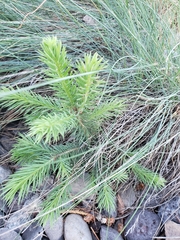
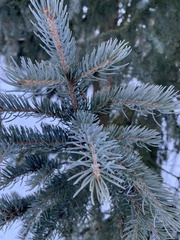
Blue spruce (Picea pungens), also called Colorado spruce, is a conifer in the Pinaceae family native to the central Rocky Mountains of the United States. Its often waxy, silvery blue to blue-green foliage has made it one of the most widely planted ornamental conifers in temperate regions, far beyond its natural mountain range.
Read moreBlue spruce, Colorado blue spruce and Colorado spruce




© photo
(c) Stephen Petersen, some rights reserved (CC BY-NC), uploaded by Stephen Petersen · cc-by-nc
Logan · CC BY-NC
iNaturalist User · cc-by
Taken Jan 17, 2021 by nat evans (cc-by-sa)
Taken Mar 29, 2021 by ECO_ECO_CC (cc-by-sa)
Taken Sep 23, 2022 by William Coville (cc-by-sa)
Taken Oct 20, 2022 by Dominik Muczyński (cc-by-sa)
Taken Aug 19, 2019 by Mathew March (cc-by-sa)
© copyright of the Board of Trustees of the Royal Botanic Gardens, Kew.




Global distribution
The native range is restricted to the central Rocky Mountains of the United States, from southern Wyoming and eastern Idaho to New Mexico and northern Arizona, at 1,800–3,050 m depending on latitude. It has become one of the most widely planted ornamental conifers outside that range, notably in temperate Europe and Asia.
- Native6
- United States (Colorado)
- United States (Wyoming)
- United States (Utah)
- United States (Idaho)
- United States (New Mexico)
- United States (Arizona)
Hexagons: regions where the plant occurs. Green dots: native range.1
Identity
Blue spruce (Picea pungens Engelm., 1879), also called Colorado spruce or Colorado blue spruce, is a perennial conifer in the genus Picea and family Pinaceae. Native to the central Rockies at 1,800–3,050 m (5,900–10,000 ft), it takes its scientific epithet from Latin pungens, meaning sharp-pointed. The word describes its stiff, sharp needles rather than any particular smell. 1 6
Botanist Charles Christopher Parry discovered Picea pungens on Pikes Peak in Colorado in 1862. George Engelmann first published the invalid names Abies menziesii and then Picea menziesii, before establishing the valid description in 1879, seventeen years after Parry’s discovery. 6
Recognition
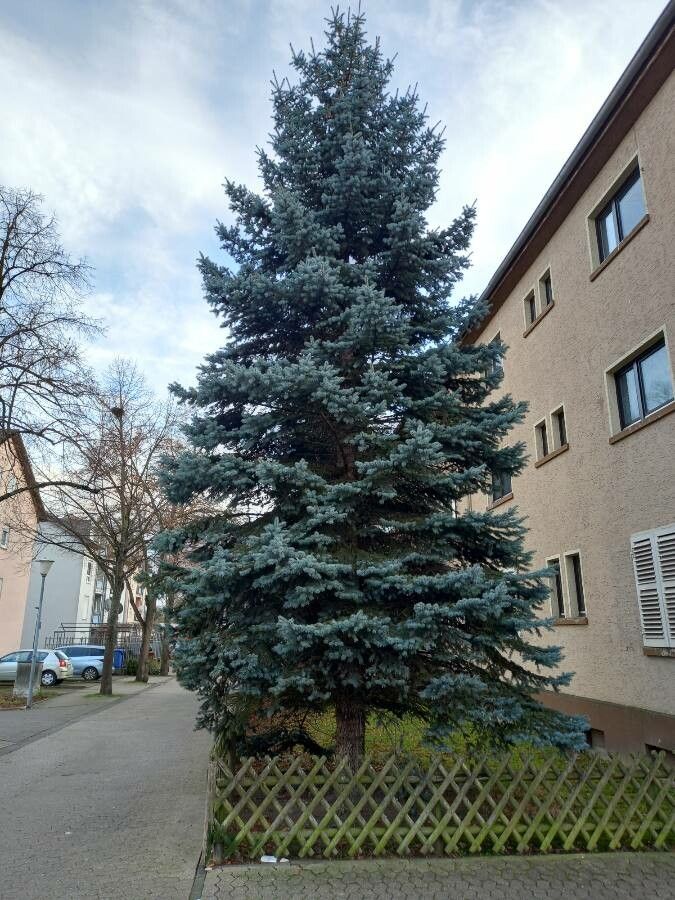
A distinct pyramidal crown and horizontal branches define the silhouette, with lower branches often reaching the ground on well-lit, open-grown trees. Wild specimens can exceed 30 m (98 ft); one Colorado tree measured almost 55 m (180 ft) in 2015. Most ornamental trees remain within 9–18 m (30–60 ft). 6 3
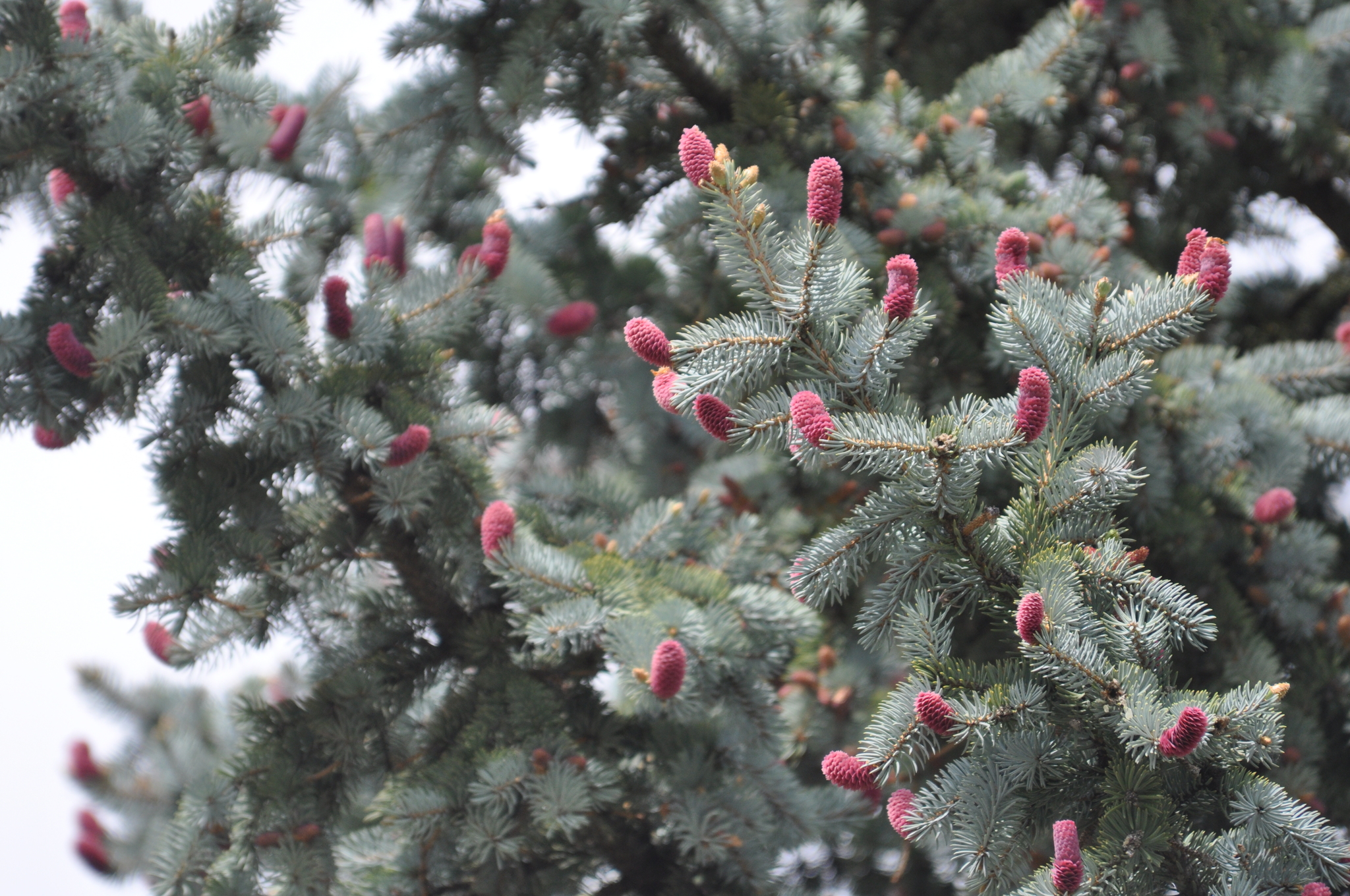
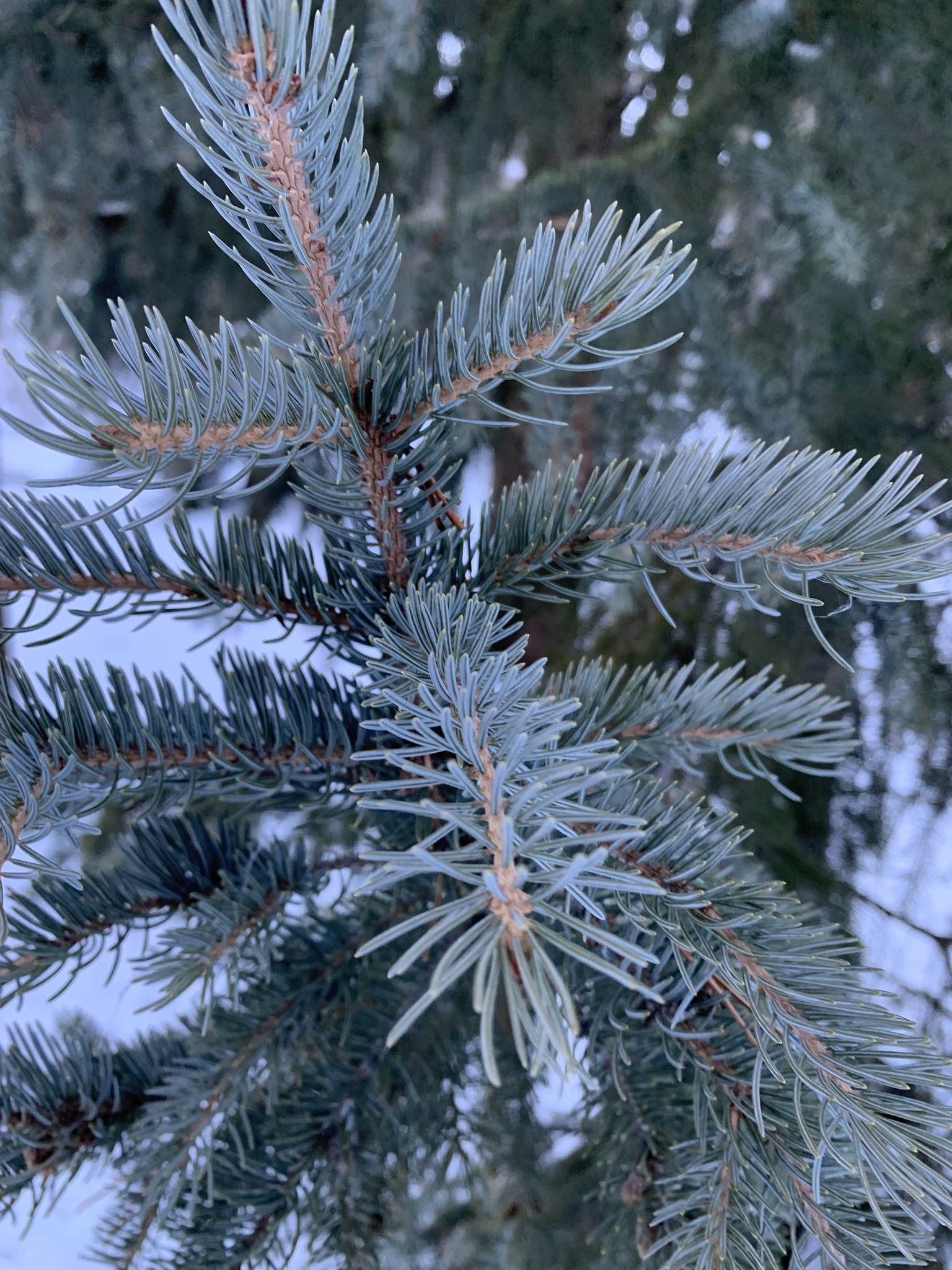
Stiff, sharp needles measure 1.5–4 cm (0.6–1.6 in) and have the four-sided cross section typical of spruces. They radiate around the twig on small woody pegs. Color ranges from blue-green to pronounced silvery blue, produced by an epicuticular wax layer that scatters light. The amount of wax varies considerably among seedlings. 2 3
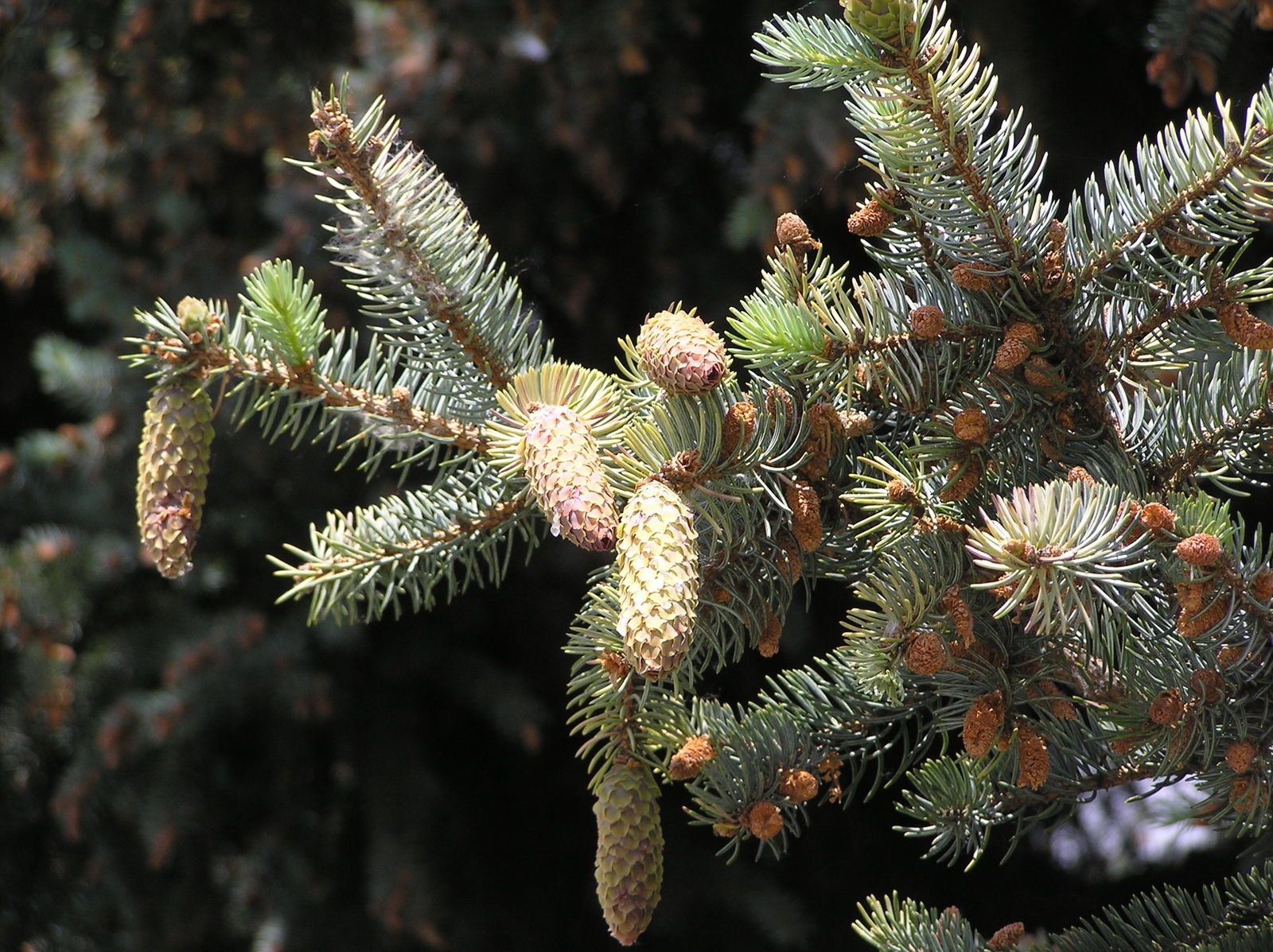
Small male cones are orange. Female cones become hanging cylinders on terminal branches, measuring 6–10 cm (2.5–4 in) long. Their thin, flexible scales change from green to light brown as they mature. Purplish gray to dark gray bark develops deep furrows and thick scales on old trees. 2 3
Useful taxonomy
Kew recognizes Picea pungens Engelm. as the accepted name in Pinaceae. Confusion about the correct name continued into the early 20th century: some authors used Picea parryana to honor its discoverer, before scientific usage settled on Picea pungens. 1 6
Engelmann spruce (Picea engelmannii Parry ex Engelm.) is the closest species requiring distinction in the field. The two share parts of their Rocky Mountain range. Engelmann spruce has softer, less sharply pointed needles and generally less waxy blue foliage than blue spruce. 4
Habitat and range
The central Rocky Mountains hold the species’ natural range: southern Wyoming, eastern Idaho, Utah, Colorado, northern Arizona and northern New Mexico. Moist slopes and cool valleys at 1,800–3,050 m (5,900–10,000 ft), depending on latitude, provide its habitat. The climate is cool, with most precipitation arriving in summer. 4 1
Streamside woodland is a frequent setting, where blue spruce may be the only conifer beside the water or grow with Rocky Mountain Douglas-fir, ponderosa pine and white fir. Its root system is shallow. Waterlogged soil increases the risk of uprooting in strong winds, although stability is good under normal conditions. 4
Ornamental planting has carried this spruce far beyond its original range, particularly into temperate Europe and Asia. Its regular silhouette and bluish color account for its popularity. The wild range remains narrow and mountainous, distinct from its worldwide horticultural distribution. The IUCN lists it as Least Concern (LC), a status associated in the source with wide distribution in cultivation and stability in its native range. 6 2 8
Life cycle and reproduction
Male and female reproductive structures occur on the same tree: blue spruce is monoecious. Male strobili occur throughout the crown; female strobili occupy terminal positions on upper branches. Heavy cone crops occur every two to three years, with seeds maturing in August of the same year. 4
Seeds germinate rapidly in the wild without prior stratification when exposed mineral soil provides enough moisture. Controlled cultivation nevertheless uses four to six weeks of cold stratification to achieve more even emergence. This distinction separates natural establishment from the aim of obtaining a uniform nursery crop. 4 5
Diameter growth remains slow. A wild tree with a trunk only 10–13 cm (4–5 in) across may already be 125–135 years old. The species is also long-lived: trees exceeding 460 years have been recorded at Cedar Breaks in Utah. 4 6
Uses and risks
Specimen planting, windbreak hedges and rows are the principal ornamental uses, drawing on the pyramidal habit and silvery blue color. Highly sought blue cultivars such as Hoopsii and Koster are propagated by grafting. Seed does not reliably reproduce their coloration, so seedlings cannot be assumed to match a named blue parent. 3 6
Available sources report no systemic toxicity in cats or dogs. Stiff, sharp needles chiefly present a mechanical hazard when swallowed or handled. Their sharpness also explains why softer-needled species are sometimes preferred for Christmas trees, especially where contact with the foliage is likely. 3 5
Air pollution and hot, humid summers cause further difficulty. Growth slows markedly under those summer conditions, while susceptibility to fungal disease rises. Cytospora canker (Leucocytospora kunzei) can affect up to half the branch tissue on weakened trees in the northeastern United States. 4 5
Varieties, look-alikes and related plants
More than 38 cultivars have been recorded, ranging from tall pyramidal trees to dwarf rock-garden forms. Hoopsii and Koster have particularly strong silvery blue coloration. Glauca Globosa and Montgomery offer rounded dwarf habits suited to small gardens, without the most intense blue coloring. 2 6
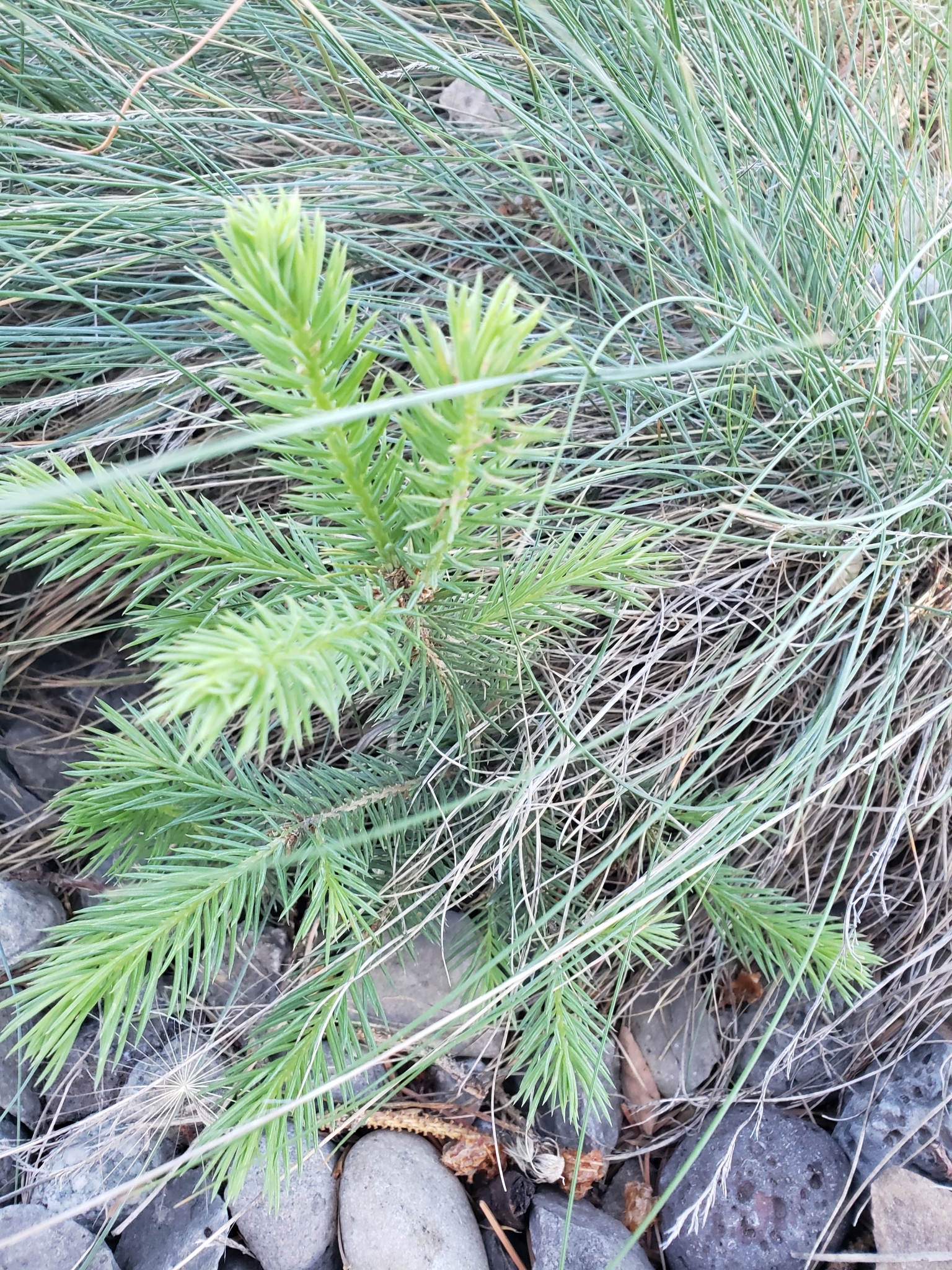
Two other spruces regularly create identification problems. Engelmann spruce, Picea engelmannii Parry ex Engelm., has softer, less waxy needles. White spruce, Picea glauca (Moench) Voss, has gray-green foliage that is distinctly less sharp. Unnamed blue spruce seedlings raise a different issue: their true color may only become clear after several years of growth.
Colorado designated blue spruce as its official state tree in 1939, following its discovery on Pikes Peak. Utah also used it as a state symbol from 1933 to 2014, then chose quaking aspen because blue spruce was relatively uncommon within the state.
Main sources
- Plants of the World Online / Kew, Picea pungens Engelm.
- Missouri Botanical Garden Plant Finder, Picea pungens
- NC State Extension Gardener Plant Toolbox, Picea pungens
- USDA Forest Service Silvics Manual, Picea pungens
- Plants For A Future, Picea pungens
- Wikipedia (en), Blue spruce — taxonomy, chemistry, notable trees
- StateSymbolsUSA, Colorado State Tree — Colorado Blue Spruce
- IUCN Red List, Picea pungens assessment
Frequently asked questions
Why are some blue spruce trees bluer than others?
Silvery blue coloration comes from a layer of epicuticular wax on the needles. It varies greatly among wild seedlings, so the bluest cultivars, such as Hoopsii, are grafted rather than seed-grown to preserve the trait.
Is blue spruce poisonous to cats or dogs?
Available sources report no systemic toxicity in cats and dogs. The stiff, sharp needles mainly present a mechanical hazard if swallowed, especially by young animals.
How does blue spruce differ from Engelmann spruce?
Engelmann spruce, Picea engelmannii, has softer, less sharply pointed needles and generally less waxy blue foliage than Picea pungens. The two species sometimes grow together at high elevations in the Rockies.
How tall does a mature blue spruce grow?
Wild trees can exceed 30 m (98 ft), and a Colorado specimen was recorded at almost 55 m (180 ft). In ornamental cultivation, most reach 9–18 m (30–60 ft), depending on the cultivar and soil conditions.
Why is blue spruce Colorado’s state tree?
Charles Christopher Parry discovered it on Pikes Peak in 1862, and George Engelmann published its scientific description in 1879. Colorado designated it as the official state tree in 1939.
Does blue spruce tolerate hot, humid climates?
No. It comes from cool mountains with relatively dry summers. Hot, humid summers slow its growth and markedly increase its susceptibility to fungal diseases.
Similar plants
If you are unsure about a plant’s toxicity, ask a botanist or veterinarian for advice.