
Smooth meadow-grass (Poa pratensis, )
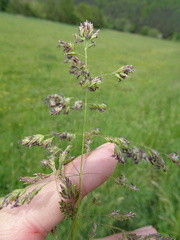
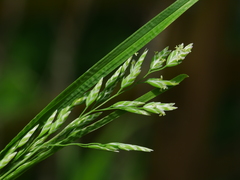
Smooth meadow-grass (Poa pratensis L., 1753) is a rhizomatous perennial grass in the Poaceae family, native to most of Europe, northern Asia and the mountains of the Maghreb. Also known as Kentucky bluegrass, it makes dense turf with creeping rhizomes. It is among the most widely sown lawn grasses in North America and a valued pasture grass in its native range.
Read moreSmooth meadow-grass, Kentucky bluegrass and Common meadow-grass
Allow a few hours of direct sun per day, preferably morning or evening.
Full sun; tolerates light partial shade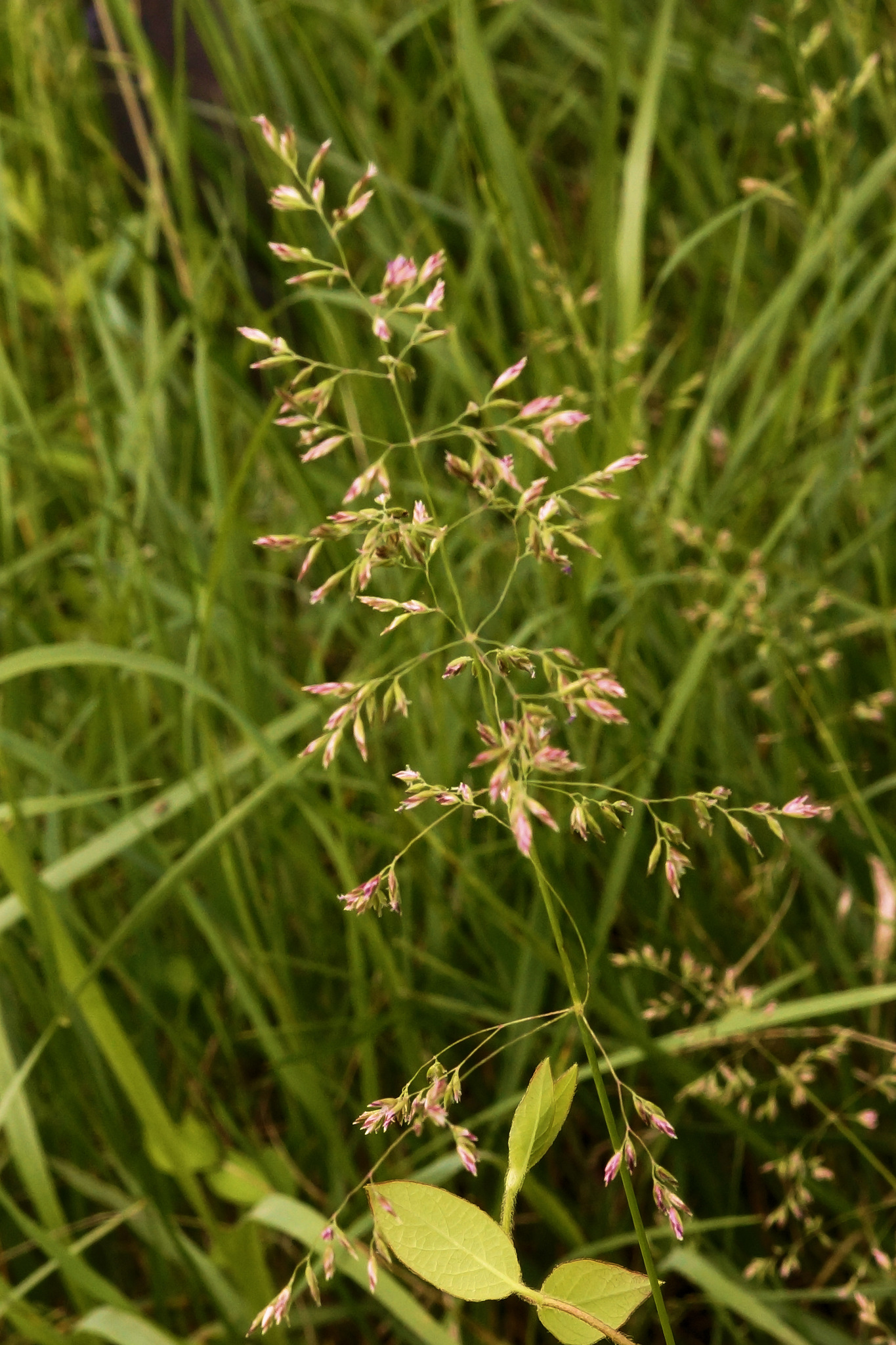

© photo
(c) Bill Harms, some rights reserved (CC BY-NC), uploaded by Bill Harms · cc-by-nc
Robert H. Wardell · cc0
Jacy Chen · cc-by
(c) Douglas Goldman, some rights reserved (CC BY-SA) · cc-by-sa
(c) Jacy Chen, some rights reserved (CC BY) · cc-by
Global distribution
Smooth meadow-grass is native to most of Europe, northern Asia and the mountains of Algeria, Morocco and Tunisia. Its native status in North America is disputed: some sources regard it as indigenous, while others describe an early introduction in forage seed mixtures brought by the Spanish Empire.
- Native4
- Introduced2
- Metropolitan France
- Europe
- Northern Asia
- Algeria
- United States
- Canada
Hexagons: regions where the plant occurs. Green dots: native range.1
Identity
Smooth meadow-grass (Poa pratensis L., 1753) belongs to the grass family Poaceae and subfamily Pooideae. Carl Linnaeus described it in Species Plantarum in 1753, and Plants of the World Online accepts that name today. Its creeping rhizomes create continuous turf in 2–6 months, unlike a purely tufted lawn grass that remains in separate clumps. 1 2
The Greek word poa means grass or fodder; pratensis means “of meadows,” referring to its moderately moist grassland habitat. The familiar alternative name Kentucky bluegrass reflects its blue-green foliage and historical popularity in Kentucky, although its North American origins are disputed. 3 9
Recognition
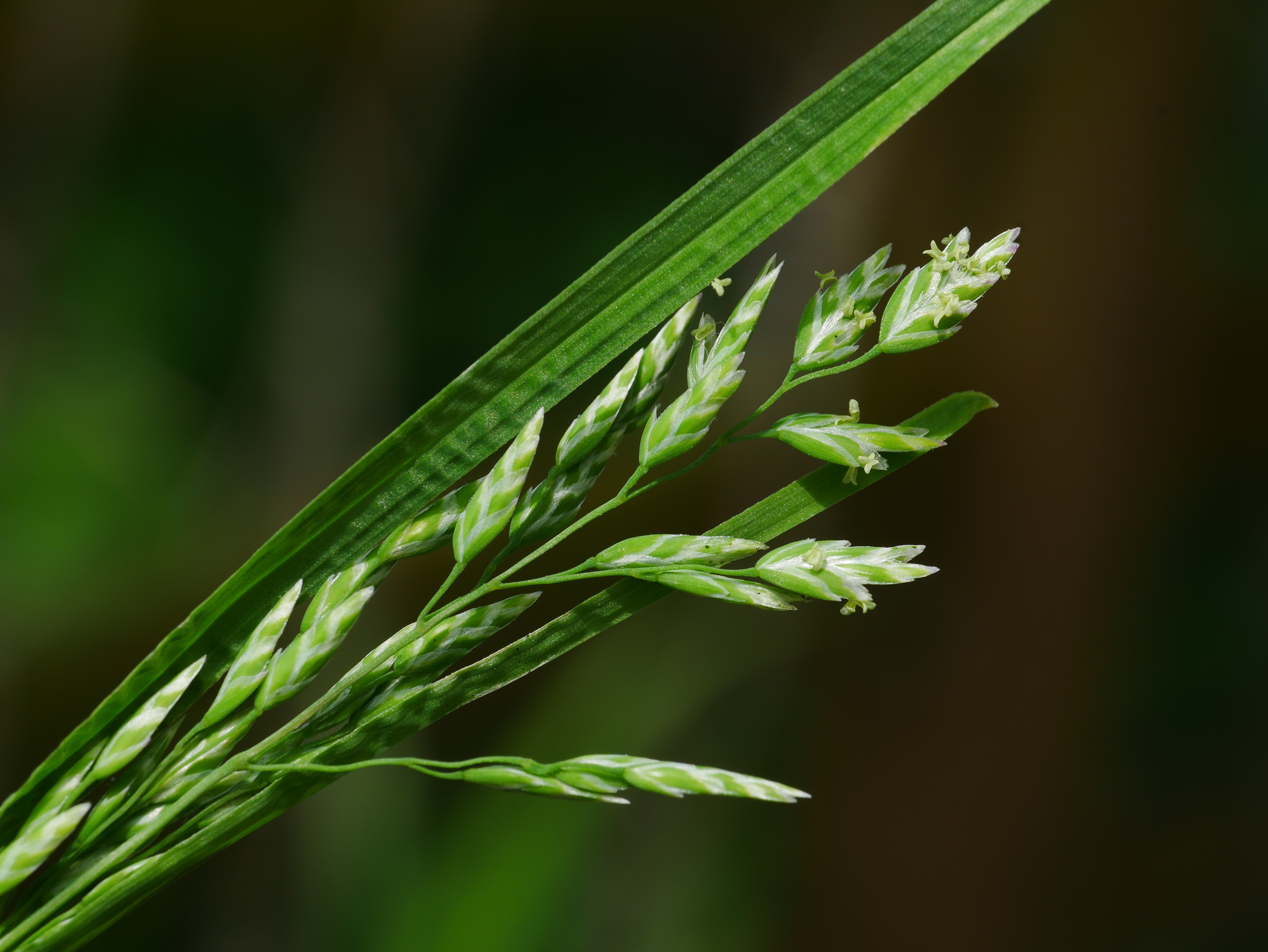
Boat-shaped leaf tips provide a stronger clue to the genus Poa than foliage color alone, and can be seen even on young shoots. Green to bluish-green blades are 1–5 mm wide, with smooth sheaths and a short, rounded ligule under 3 mm long, without a fringe of hairs. In Poa trivialis, the ligule clearly exceeds that length. 5 11
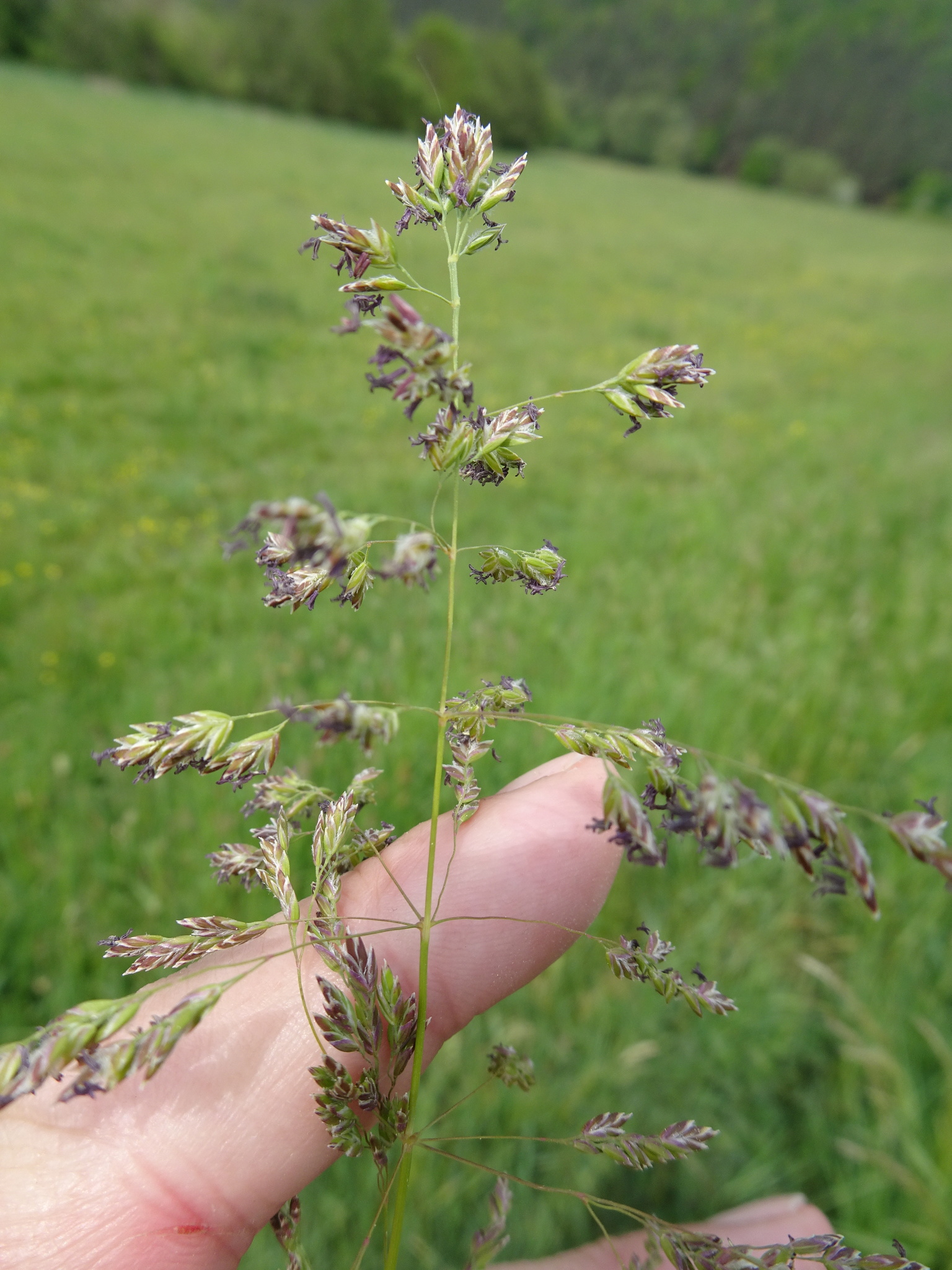
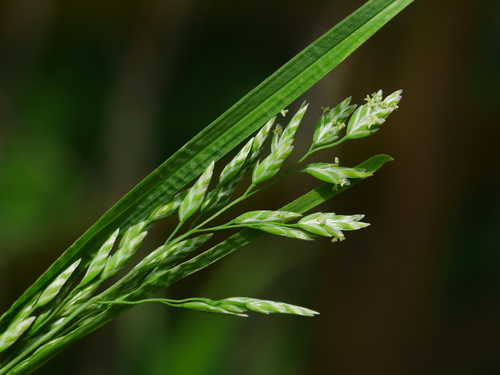
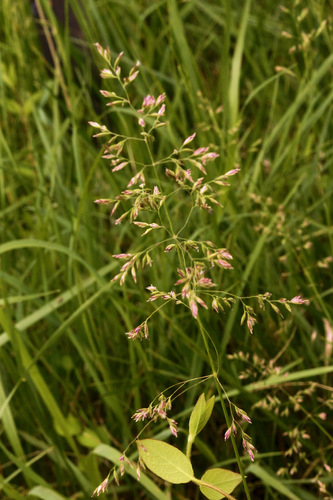
Plants stand 20–90 cm (8–35 in) high and spread their rhizomes over 15–60 cm (6–24 in), closing into a continuous carpet within one season. The open, pyramidal flower panicle measures 2–20 cm (0.8–8 in), with two to five branches at each node. Each spikelet contains two to five awnless flowers; both glumes have three veins, another useful distinction from Poa trivialis. 4 9
Useful taxonomy
Under the name Poa pratensis L., published in 1753, POWO recognizes a species with numerous regional subspecies and varieties. The narrow-leaved Poa pratensis subsp. angustifolia is sometimes treated as a separate species, depending on the flora consulted. A label can therefore differ without necessarily referring to a completely unrelated grass. 1
With several hundred recognized species worldwide, Poa is one of the largest genera in Poaceae. Fine classification within smooth meadow-grass is complicated by facultative apomixis: plants can produce seeds without fertilization. Reduced genetic exchange between neighboring lines preserves some lineages and blurs the boundaries between closely related varieties. 7
Habitat and range
Almost all of Europe, northern Asia and the mountains of Algeria, Morocco and Tunisia fall within its native range. Smooth meadow-grass occupies moderately moist meadows, fertile well-drained pastures, lawns and roadsides, from sea level to uplands. Hardy in USDA zones 2–7, it withstands cold down to -35 °C (-31 °F) under snow; hot summers instead trigger dormancy and yellowing foliage. 1 9 3
French meadows and lawns commonly contain this native grass. It tolerates fertile soils as well as waste ground and trampled sites, making its occurrence there quite ordinary rather than a sign of a newly arrived exotic species. 10
North American native status remains disputed. Some sources consider the species indigenous; others describe seeds arriving with forage mixtures carried by the Spanish Empire. Now the continent's most widely sown lawn grass, it has also established as a weed in disturbed natural grasslands in Canada and the Pacific Northwest. 5 4
Life cycle and reproduction
Slow germination takes 2–3 weeks, after which seedlings develop fibrous roots and produce basal tillers. Creeping rhizomes then extend the clump sideways. Over a few months, this underground growth weaves a continuous lawn rather than leaving the separate, isolated tussocks characteristic of purely tufted grasses. 3 5
Late spring to early summer flowering produces an open, pyramidal panicle. Most seeds form through facultative apomixis: an embryo develops without fertilization from an unreduced ovule, giving an offspring genetically identical to the parent. This nearly perfect cloning mechanism, studied through several candidate genes, explains the consistency valued by turf cultivar breeders. 7 1
Uses and risks
Residential lawns and sports turf are its chief uses, especially in temperate North America. Within its native range it also provides valuable pasture forage on fertile, well-drained soil. Mowing at 4–7 cm (1.5–3 in) encourages tillering and rhizome spread; repeated cuts below that range weaken the lawn over time. Soil pH 6–7 favors emergence and limits lime-related stress in seedlings, provided drainage is good. 3 5
No plant toxicity is documented for cats, dogs, horses or humans. This safe forage grass is widely eaten by livestock and wildlife, a different issue from the respiratory effects of its airborne pollen. 6 5
Pollen from smooth meadow-grass is among the best-studied grass allergens. It releases a group 5 allergen, one of the major triggers of seasonal hay fever in people sensitive to Poaceae pollen. 8
Varieties, look-alikes and related plants
Turf breeding has produced numerous selections chosen for color and resistance to foot traffic. Older forage cultivars such as 'Park', 'Troy' and 'Ginger' form a much smaller group, selected for hay production rather than ornamental lawns. Their different purposes matter more than treating every named selection as interchangeable. 3
Other meadow grasses cause most identification problems:
- Poa trivialis has a long, pointed ligule and rough sheaths, without comparable creeping rhizomes.
- Poa annua is a tufted annual without rhizomes, completing its cycle in one season.
- Poa angustifolia has much narrower leaves and is sometimes treated as a subspecies of Poa pratensis.
Short rounded ligules, creeping rhizomes and boat-shaped leaf tips together give the most reliable identification. Its tolerated temperature range of -35 to 35 °C (-31 to 95 °F) is much wider than that of Poa annua, an annual that declines and disappears when dry, hot summer conditions set in. 4 11
Main sources
- Plants of the World Online / Kew, Poa pratensis L.
- International Plant Names Index, Poa pratensis L.
- Penn State Extension, Kentucky Bluegrass
- Minnesota Wildflowers, Poa pratensis - Kentucky bluegrass
- Illinois Wildflowers, Kentucky Bluegrass (Poa pratensis)
- ASPCA, Kentucky Blue Grass toxic and non-toxic plant entry
- PMC, SERK and APOSTART - candidate genes for apomixis in Poa pratensis
- PMC, Grass pollen production and group V allergen content of agriculturally relevant species and cultivars
- Tela Botanica, eFlore BDTFX: Poa pratensis L. — official nomenclatural record 50735
- INPN / MNHN–OFB, Poa pratensis L., CD_NOM 114332: original species notice, archived 5 October 2022
- FloreAlpes, Poa pratensis - Smooth meadow-grass
Frequently asked questions
Is smooth meadow-grass toxic to cats and dogs?
No toxicity is documented for cats, dogs, horses or humans. It is a forage grass widely eaten by livestock.
Why is it called Kentucky bluegrass if it is not originally from North America?
The name refers to its blue-green color and historical popularity in Kentucky. Its native status in North America remains debated; some sources describe an early European introduction.
How can I tell smooth meadow-grass from annual meadow-grass (Poa annua)?
Smooth meadow-grass is a perennial with creeping rhizomes that form dense, continuous turf. Annual meadow-grass grows in tufts without rhizomes and completes its cycle in one season.
Is smooth meadow-grass invasive?
In France, where it is native, it is a common meadow and lawn grass that is not considered problematic. In North America it has become a weed in some disturbed natural grasslands, notably in Canada.
Why does a bluegrass lawn recover quickly after close mowing?
Creeping rhizomes store reserves and dormant buds below ground. Even after a close cut, the plant can restart growth from this underground network.
Does smooth meadow-grass reproduce only through seeds?
No. It often reproduces through apomixis, which produces seeds without fertilization, as well as spreading vegetatively by creeping rhizomes.
How high should I mow a smooth meadow-grass lawn?
A cutting height of 4–7 cm (1.5–3 in) encourages tillering and rhizome growth. Repeated close mowing weakens turf and helps weeds establish.
Similar plants

If you are unsure about a plant’s toxicity, ask a botanist or veterinarian for advice.