
Perennial ryegrass (Lolium perenne, )
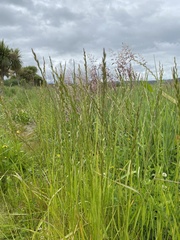
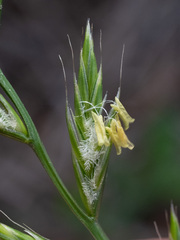
Perennial ryegrass (Lolium perenne L., 1753), also called English ryegrass, is a clump-forming perennial grass in the Poaceae, native from Macaronesia, North Africa and Europe to Siberia and the Himalayas. Widely naturalized in temperate regions, it provides fast-establishing dense turf and nutritious pasture. Some commercial cultivars harbor an endophytic fungus that protects against insects but can cause staggers in grazing livestock.
Read morePerennial ryegrass and English ryegrass
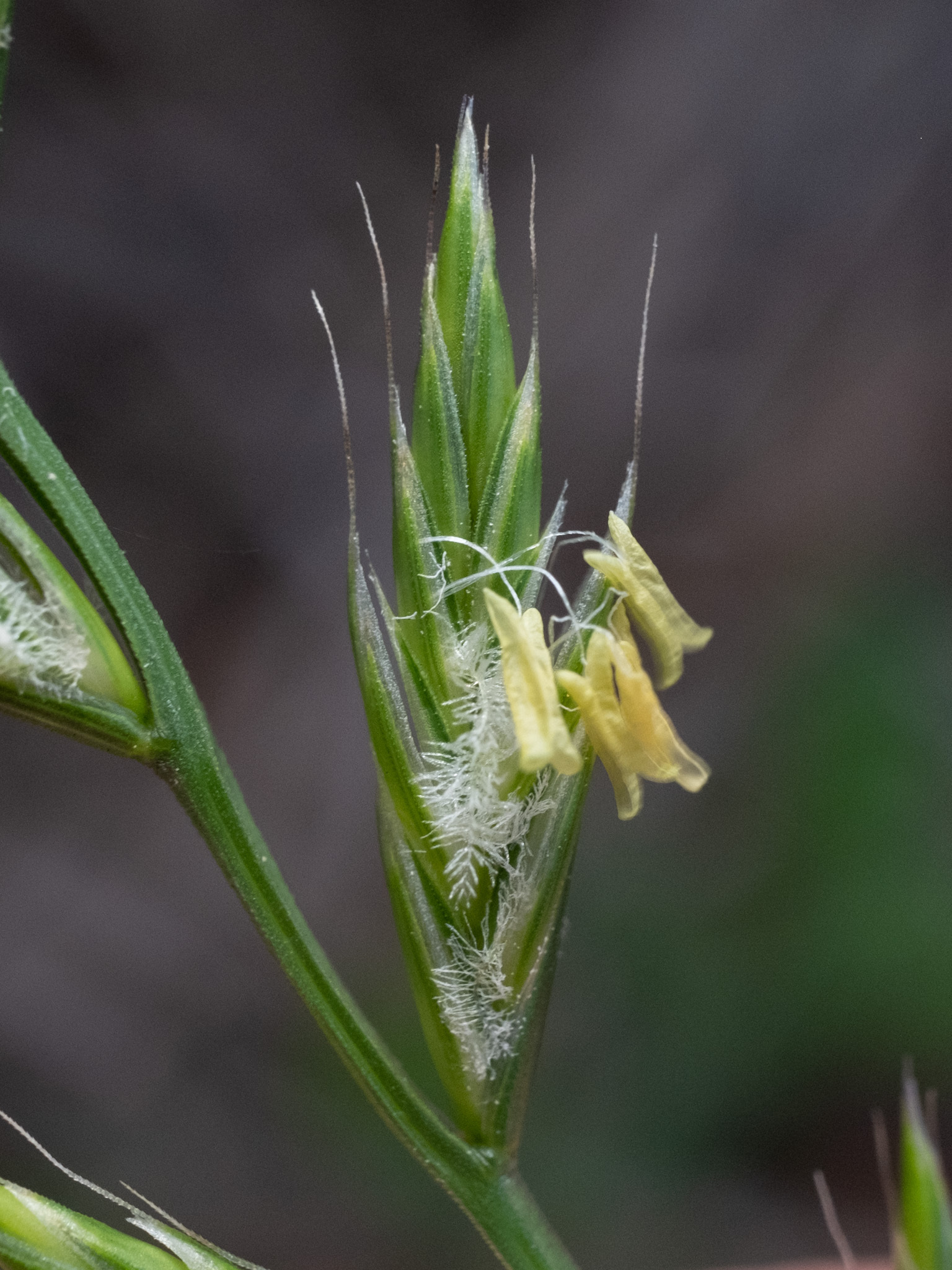
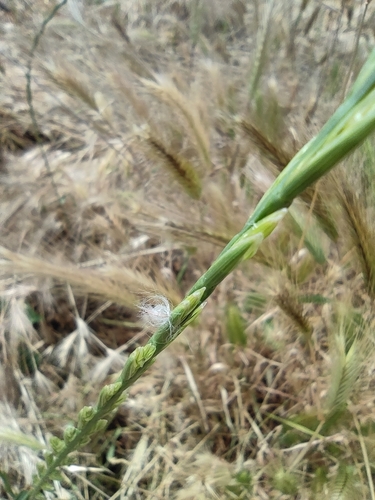
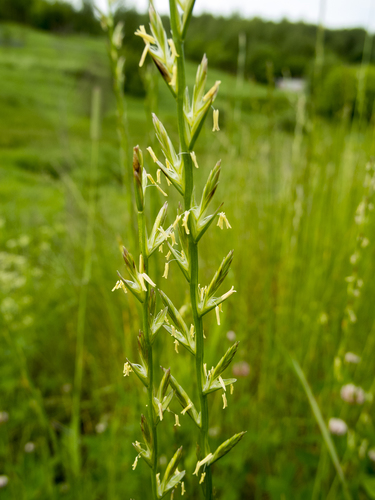
© photo
katunchik · cc0
Chris · cc0
Alex Abair · cc-by
(c) Daniel Heras González, some rights reserved (CC BY) · cc-by
(c) katunchik, some rights reserved (CC BY) · cc-by

Global distribution
Perennial ryegrass is native to Macaronesia, North Africa and Europe, extending to Siberia and the Himalayas. Its forage value and rapid emergence have made it one of the most widely sown grasses, extensively naturalized across temperate regions beyond its native range.
- Native3
- Introduced2
- Metropolitan France
- Europe
- North Africa
- United States
- Australia
Hexagons: regions where the plant occurs. Green dots: native range.1
Identity
Perennial ryegrass (Lolium perenne L.), described by Carl Linnaeus in 1753 in Species Plantarum, is a tufted perennial grass in the Poaceae, subfamily Pooideae. Plants of the World Online accepts this botanical name for the species. Its bunch-forming habit is central to its use in pasture and turf. 1 2
The Latin genus name Lolium refers to darnel. The epithet perenne derives from perennis, meaning lasting throughout the year, and describes the plant's perennial life cycle. This contrasts with annual darnel, Lolium temulentum, a toxic weed historically feared in contaminated grain. English ryegrass is another established common name for perennial ryegrass. 3
Recognition
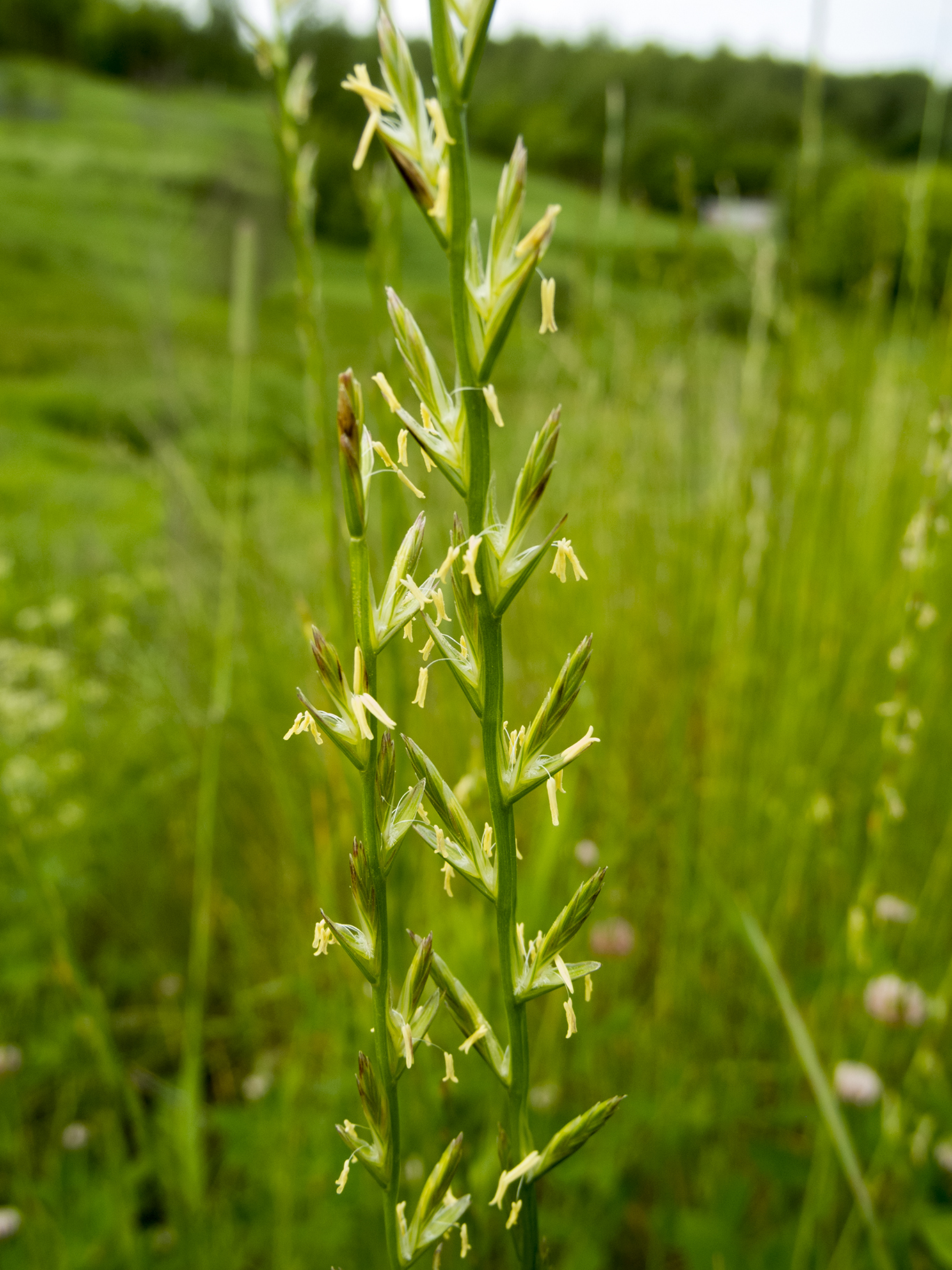
A perennial ryegrass clump normally reaches 20–60 cm (8–24 in), with hairless stems often tinged burgundy at the base; flowering spikes can reach 1 m (3.3 ft). Leaves measure 10–15 cm (4–6 in) long and 2–5 mm (0.08–0.2 in) wide. They are flat, with a glossy, keeled underside that helps identification even without flowers. The membranous ligule is only 1.5–2 mm (0.06–0.08 in) long. 3 4
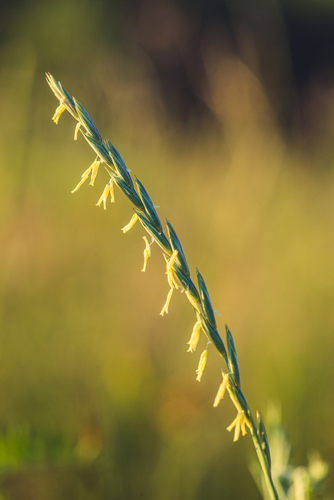
Young leaves distinguish Lolium perenne from Italian ryegrass, Lolium multiflorum: they are folded in the bud in perennial ryegrass and rolled in Italian ryegrass. Auricles at the leaf base are short, poorly developed or absent. Alternate spikelets sit flat along a smooth, grooved central axis. Each contains 2–10 flowers, rarely up to 14, with no awn or an awn shorter than 8 mm (0.3 in). 5 4
Useful taxonomy
Kew accepts Lolium perenne L., published in 1753. Some authors have placed the species in Festuca as Festuca perennis (L.) Columbus & J.P.Sm.. That reclassification draws on molecular phylogeny, but the name remains a synonym rather than the accepted name used here. Keeping the accepted name visible avoids confusing alternative classifications with different plants. 1
Closely related Lolium species form a small, readily interbreeding complex. Alongside Lolium perenne, Lolium multiflorum Lam. and their natural hybrid Lolium × hybridum Hausskn. are recognized separately. The hybrid is also known by the synonym Lolium × boucheanum Kunth. Their close genetic relationship helps explain why commercial seed mixtures sometimes include all three without a clear distinction. 1
Habitat and range
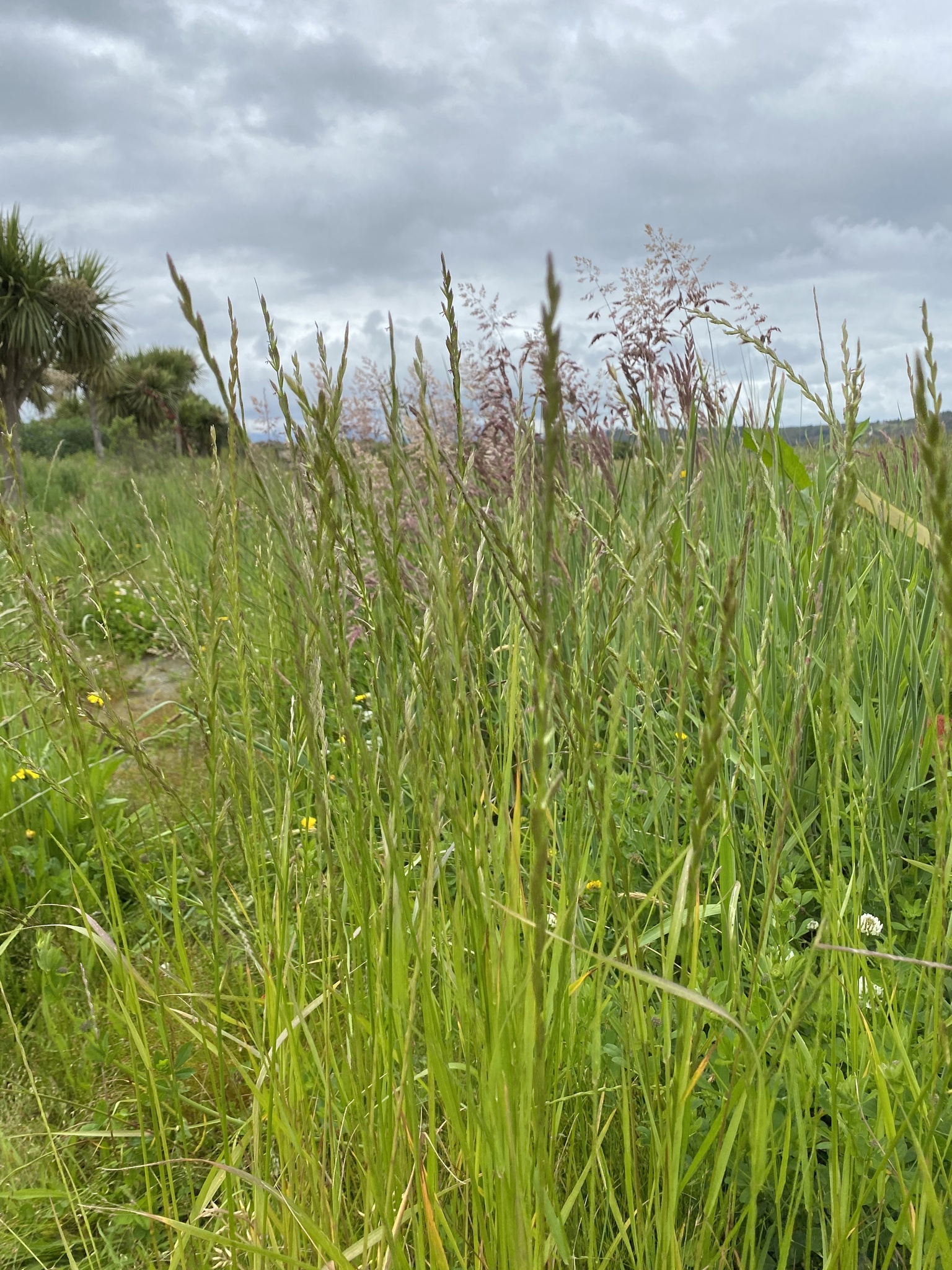
Across its native range, perennial ryegrass occurs from Macaronesia, North Africa and Europe to Siberia and the Himalayas. It grows in moist fertile meadows, well-drained pastures, roadsides and lawns, from sea level to moderate mountain elevations. The USDA 3–8 hardiness range and tolerance down to −20 °C (−4 °F) describe its ability to survive cold winters. The Royal Horticultural Society assigns H7, its category for the coldest continental winter conditions. 3 4
Within France, perennial ryegrass is native and among the most common grasses of meadows and lawns. This regional status concerns France; it should not be treated as a universal statement about the species wherever it has been introduced. 10
Rapid emergence in 7–10 days explains its frequent inclusion in lawn seed mixtures sold worldwide. Good forage value adds to that advantage. Extensive sowing has helped it naturalize across temperate regions far beyond its original range, so a cultivated or naturalized population need not indicate native occurrence. 9 11
Life cycle and reproduction
Germination is fast: under suitable conditions, the grain-like caryopsis produces a seedling in 7–10 days, sooner than most lawn grasses. The young plant develops a fibrous root system and then produces tillers from the base. Unlike Kentucky bluegrass, Lolium perenne forms no creeping rhizomes. It enlarges by tuft-forming tillering rather than sending underground stems through surrounding soil. 4 5
Wind carries the pollen from upright spikes with alternating spikelets. Flowering occurs in May–June in the Northern Hemisphere seasonal frame described here; local timing depends on climate and hemisphere. Perennial ryegrass crosses readily with Lolium multiflorum, regularly producing natural hybrids with intermediate features that can be difficult to identify from vegetative growth alone. 5 1
Uses and risks
Fast-establishing lawn and sports turf shares importance with nutritious pasture on fertile ground. Perennial ryegrass tolerates trampling when kept short and regrows soon after mowing, useful in rotational grazing. More than 1,000 cultivars are listed in the European catalog, with over 150 forage cultivars and about 90 turf cultivars registered in France. These figures describe the regional catalog context rather than the number available in every market. 3 9
The grass itself has no documented toxicity to cats, dogs or humans. The established grazing risk comes from an endophytic fungus in the genus Epichloë, present in some cultivars. It produces tremorgenic alkaloids such as lolitrem B, which causes ryegrass staggers in horses, cattle and sheep. Signs include tremors and an ataxic, uncoordinated gait, especially in dry, hot weather. Endophyte-free cultivars remove this risk but are more susceptible to insects. Distinguish fungal toxins in infected pasture from an inherent toxicity of the grass itself. 6 7
Pollen poses a separate risk to people with hay fever. Its two reference proteins, Lol p 1 and Lol p 5, trigger strong cross-reactivity in people sensitive to grass pollen. These allergens are widely shared by other temperate Poaceae and are among the most extensively studied grass-family allergens. Ingestion safety therefore does not imply that exposure to flowering grass is free of allergy risk. 8
Varieties, look-alikes and related plants
Breeding separates forage cultivars from turf-type cultivars selected for density and color, as well as endophyte-free and tetraploid cultivars. Tetraploids have broader foliage and better drought tolerance than standard diploid cultivars. These horticultural groups express different priorities within the same grass, so the intended use of a seed mixture matters as much as the species name. 3
Italian ryegrass, Lolium multiflorum, is the closest frequent look-alike. Its leaves are rolled in bud rather than folded, its auricles are long and clasping, and its spikelets have much longer awns. The natural hybrid Lolium × hybridum makes identification from leaves alone more difficult. That overlap also encourages breeders to work with mixtures rather than relying exclusively on a single pure species. 5 1
In lawn mixtures, perennial ryegrass acts as a nurse grass. Its rapid emergence stabilizes the soil while slower-establishing species such as Kentucky bluegrass develop the denser, longer-lasting turf that their rhizomes can knit together. The mixture combines quick initial cover with the different growth habits of its component grasses.
Main sources
- Plants of the World Online / Kew, Lolium perenne L.
- International Plant Names Index, Lolium perenne L.
- Royal Horticultural Society, Lolium perenne - perennial rye grass
- NC State Extension, Lolium perenne plant profile
- Cornell Weed Identification, Perennial Ryegrass (Lolium perenne)
- Merck Veterinary Manual, Perennial Ryegrass Toxicosis in Animals
- PMC, Toxic Indole Diterpenes from Endophyte-Infected Perennial Ryegrass Lolium perenne L. - Isolation and Stability
- PMC, Pollen allergic disease - pollens and its major allergens
- Plants For A Future, Lolium perenne
- INPN / MNHN, Lolium perenne L., 1753 - perennial ryegrass
- Tela Botanica / eFlore bdtfx, Lolium perenne L.
Frequently asked questions
Is perennial ryegrass toxic to cats and dogs?
No toxicity is documented for cats, dogs or humans. The known risk concerns livestock grazing cultivars that harbor a toxic endophytic fungus.
How can I distinguish perennial ryegrass from Italian ryegrass?
Perennial ryegrass has leaves folded in bud, short auricles and spikelets with no awn or only a short awn. Italian ryegrass has rolled leaves, long clasping auricles and much longer awns.
What causes ryegrass staggers?
This neurological syndrome in horses, cattle and sheep is caused by tremorgenic alkaloids such as lolitrem B, produced by an Epichloë endophytic fungus present in some commercial cultivars.
Is perennial ryegrass invasive in France?
No. It is native to France and among the most common meadow and lawn grasses there, without invasive status.
Why is some grass seed sold as endophyte-free?
These cultivars are selected without Epichloë festucae to remove the risk of staggers in grazing livestock, at the cost of greater susceptibility to some leaf-feeding insects.
How do Kentucky bluegrass and perennial ryegrass differ in lawns?
Perennial ryegrass emerges within days but forms no creeping rhizomes. Kentucky bluegrass emerges more slowly, then knits together a continuous turf through its rhizomes, explaining their frequent use in mixtures.
Can perennial ryegrass pollen cause allergies?
Yes. Its reference allergens, Lol p 1 and Lol p 5, are major hay-fever triggers in people sensitive to grass pollen, with strong cross-reactivity among Poaceae species.
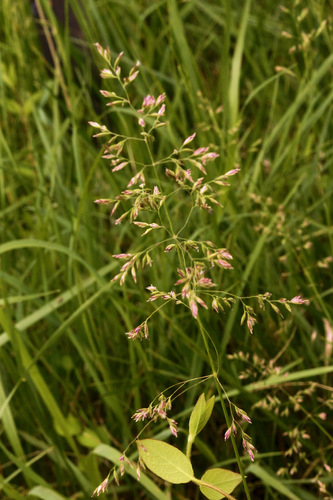
Similar plants
If you are unsure about a plant’s toxicity, ask a botanist or veterinarian for advice.