
European plum (Prunus domestica, )
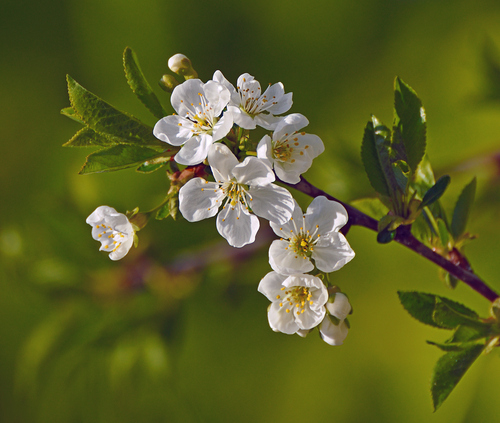

European plum is a deciduous fruit tree with white spring flowers. Its plums are eaten fresh or processed, but their kernels contain cyanogenic compounds.
Read moreEuropean plum and Garden plum
Prunus communis var. domestica and Druparia prunus
Allow a few hours of direct sun per day, preferably morning or evening.
Sun for good fruiting; partial shade is possible.


© photo
(c) Ввласенко, some rights reserved (CC BY-SA) · cc-by-sa
Nathan Odgers · cc0
Wikimedia Commons · CC BY-SA or Public Domain
Taken Dec 14, 2021 by Kai Best (cc-by-sa)
Taken Nov 11, 2022 by Dominik Muczyński (cc-by-sa)
Taken Nov 12, 2022 by Dominik Muczyński (cc-by-sa)
Taken Jul 16, 2015 by Tela Botanica − xbx (cc-by-sa)
Taken Mar 31, 2012 by Tela Botanica − Yoan MARTIN (cc-by-sa)
© copyright of the Board of Trustees of the Royal Botanic Gardens, Kew.




Global distribution
Native range from Transcaucasia to northern Iran; introduced into France among other places and widely grown in temperate regions.
- Native2
- Introduced1
- Transcaucasia
- Northern Iran
- France
Hexagons: regions where the plant occurs. Green dots: native range.1
Identity
European plum, Prunus domestica L., bears white spring flowers before its leaves unfold, followed by fleshy stone fruits. This deciduous fruit tree belongs to the Rosaceae family. A plum is a drupe: its flesh surrounds a hard casing that encloses the seed. 3
The flesh is eaten fresh, cooked or dried. This edibility does not extend to the kernel inside the pit, which contains compounds capable of releasing cyanide. Removing the pit is therefore part of preparing the fruit, especially for children. 38
Recognition
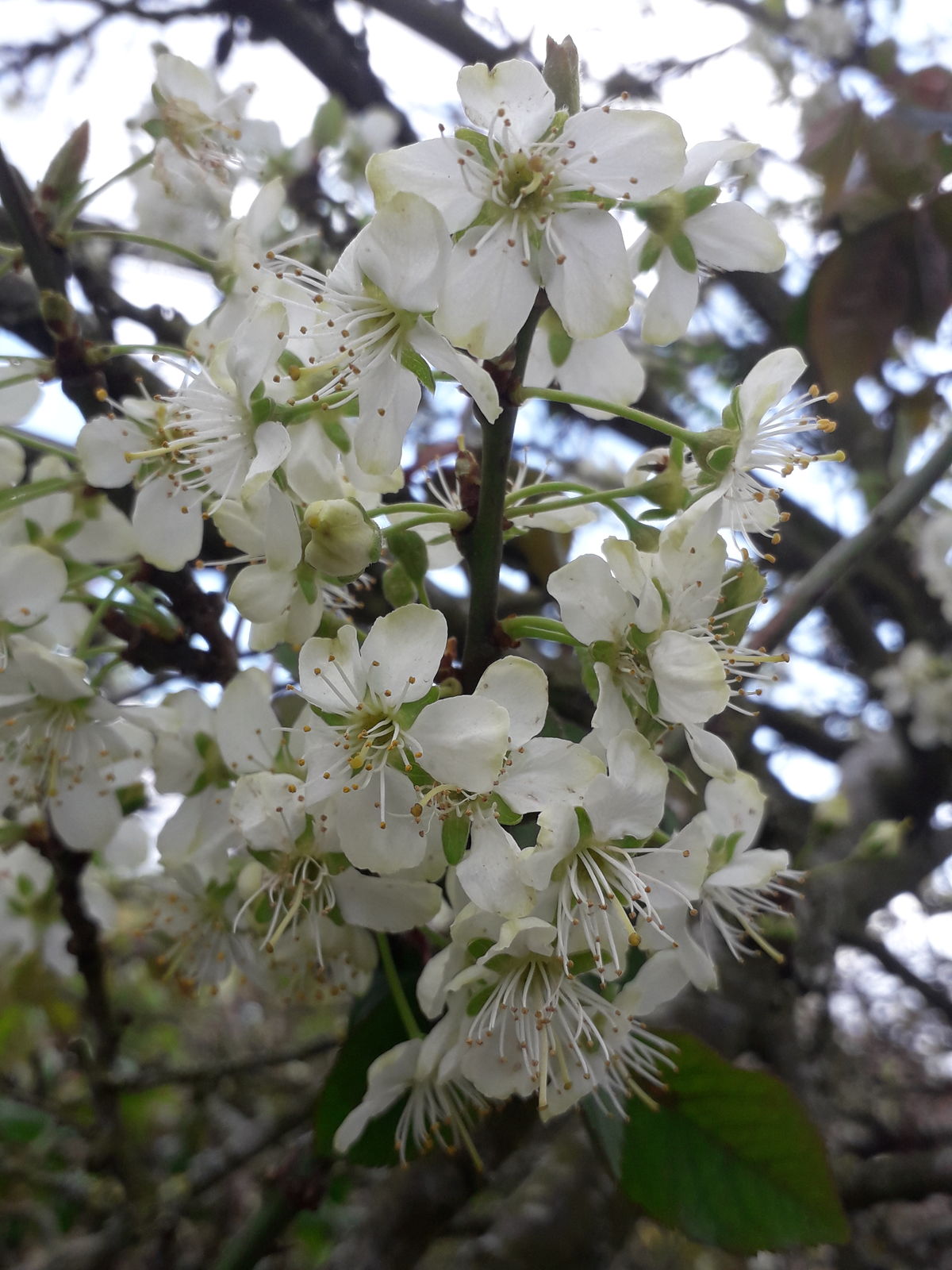
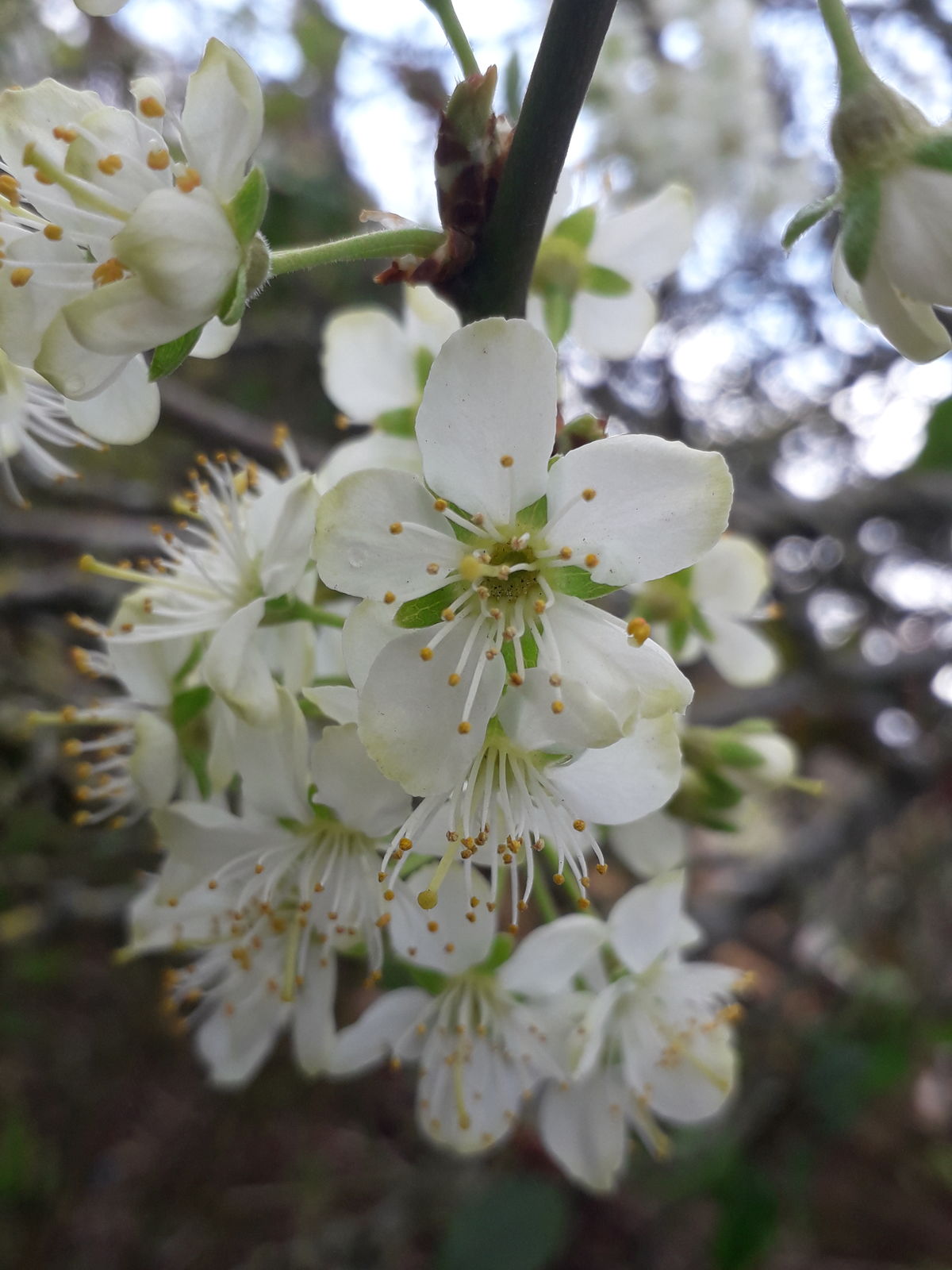
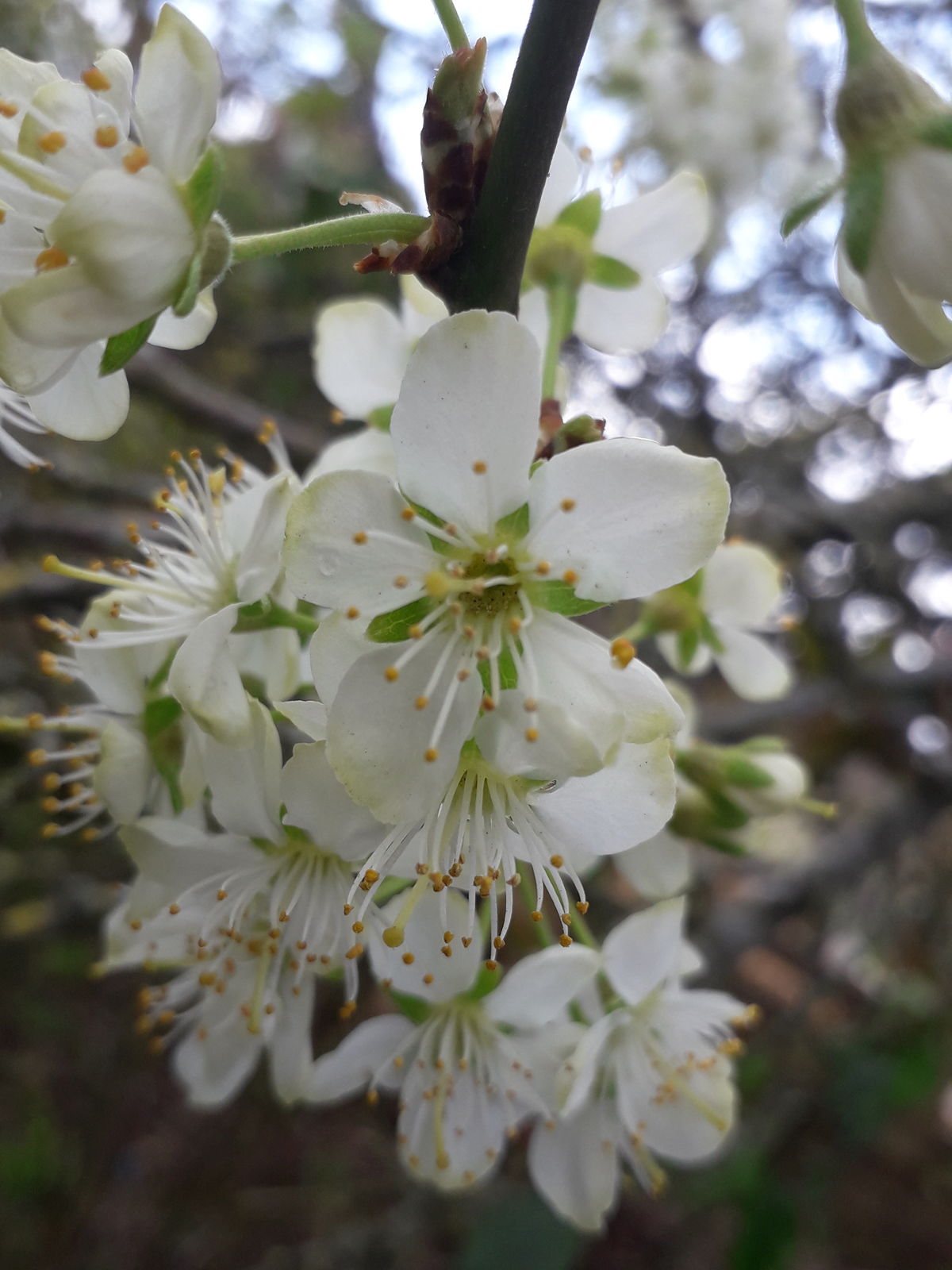
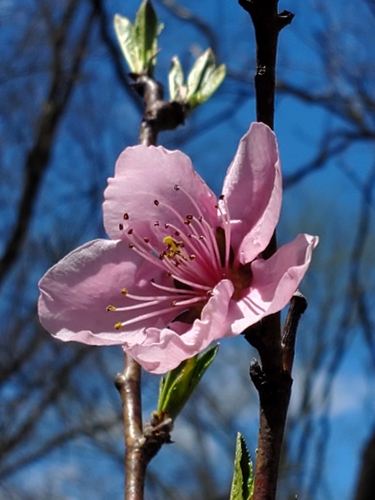
European plum leaves are simple and alternate, green, oval to elliptical, with toothed edges. Flowers appear singly or in pairs, with five white petals and long stamens. Some plants have thorns; their presence alone therefore does not rule out this species. 3
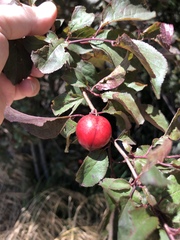
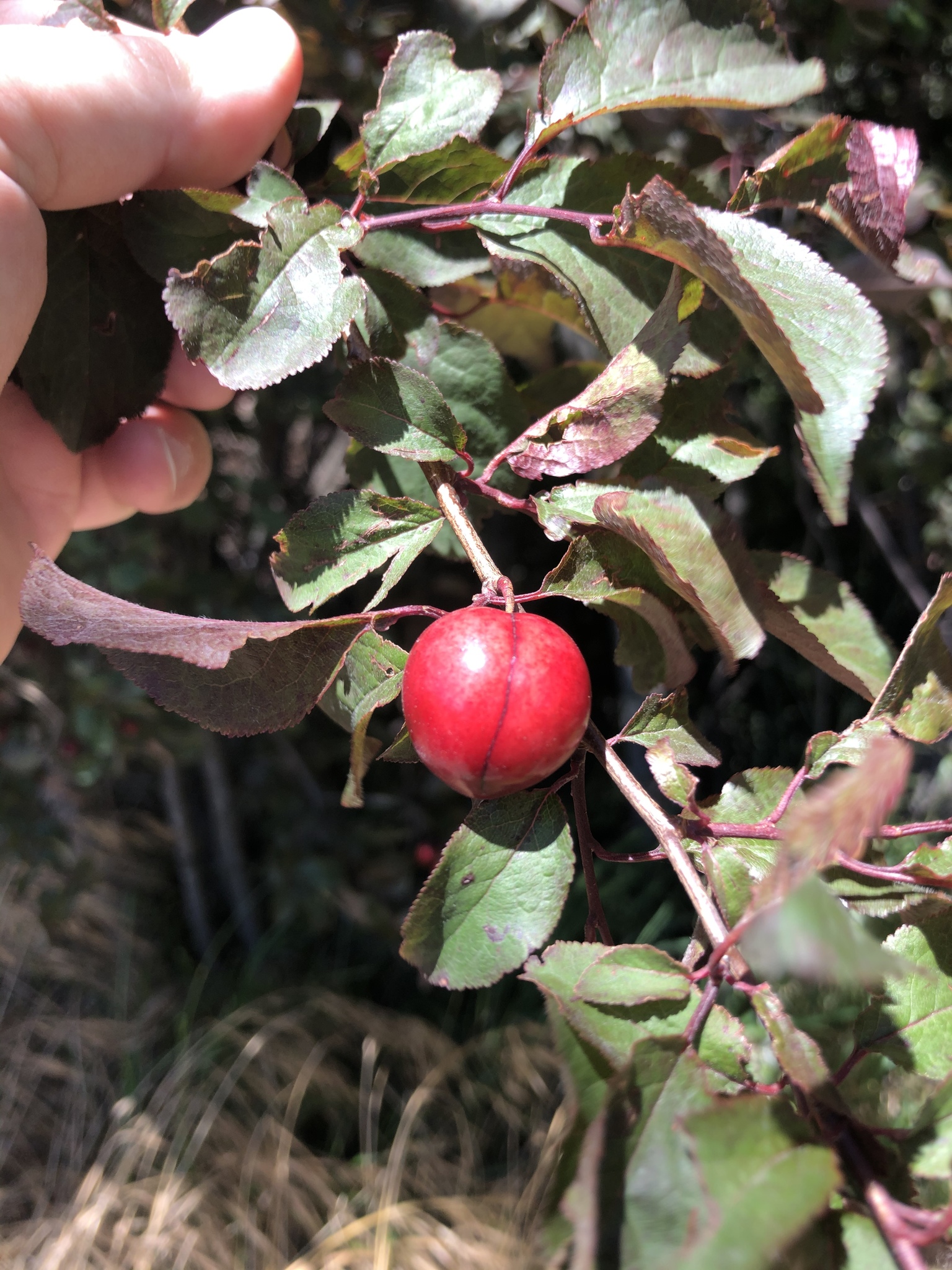
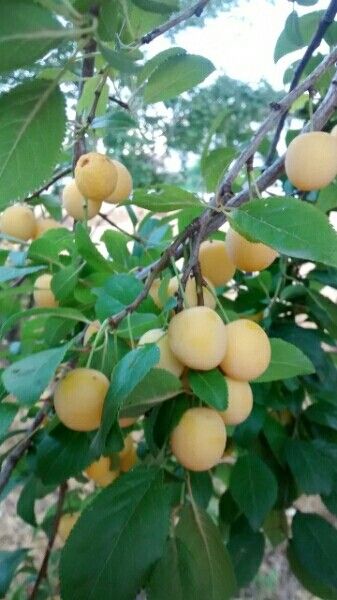
Branches may arch or droop. The skin of ripe fruit varies from yellow to red, purple, blue or black depending on the cultivar; the flesh is often golden yellow or greenish yellow. A yellow plum can therefore belong to the same species as a purple one. 4
The size of a cultivated tree depends greatly on its rootstock and training. A bush-trained tree on ‘Pixy’ reaches about 3 to 4 m (10 to 13 ft); this guideline does not apply to every plum tree. 5
Useful taxonomy
The name Prunus domestica was published by Linnaeus in Species Plantarum, on page 475, on May 1, 1753. It remains the accepted name of the species. 21
Synonyms include Prunus communis var. domestica (L.) Huds. and Druparia prunus Clairv.. These older names concern the botanical identity of European plum; they do not designate particular fruit cultivars. 1 A name such as ‘Stanley’, by contrast, specifies a horticultural selection whose characteristics should not be attributed to every individual in the species. 3
Habitat and distribution
The native range of European plum extends from Transcaucasia to northern Iran. France is among its introduced territories. Its presence in French orchards therefore does not establish that it is native to France. 1
In the garden, European plum prefers a sunny, sheltered position and fertile soil that retains moisture without staying waterlogged. Loamy or clay soil suits it if water drains properly. The recommended pH is 6 to 6.5, with tolerance of a wider range of soils. Avoiding frost pockets protects the future crop: flowers are more vulnerable to cold than the dormant tree. 5
Life cycle and reproduction
Flowering generally occurs in March–April under the temperate Northern Hemisphere horticultural conditions described here. Bees and other insects visit the flowers. A late frost can destroy blossom and reduce fruiting, even on a tree that survived winter well. 5
Not all cultivars are self-fertile. A variety that is not self-fertile needs a compatible partner whose flowering overlaps its own. Grafting preserves the chosen variety; a seedling grown from a pit may produce a different tree that takes longer to fruit. 5
Fruit ripens in summer or early fall, depending on the variety. Picking colored fruit that yields to the touch, over several rounds, avoids harvesting the whole crop before it is ripe. 5
The calendar reflects winter dormancy and the needs of young trees or plants in pots during growth. In the ground on mulched soil, feeding is not routine. In pots, potassium-rich liquid fertilizer is applied from April to August in this seasonal schedule. Summer pruning suits established trees; young trees are pruned in spring after buds open. Avoiding pruning during dormancy limits the risk of silver leaf disease and bacterial canker. Choose a dry day with more dry weather forecast afterward to reduce conditions favorable to infection. When fruit is too abundant, thinning young plums in early summer prevents branches from breaking under their weight. 5 Excess nitrogen encourages wood growth at the expense of fruit. 6
Uses and risks
Plums are used in compotes, jams and pastries; some are dried as prunes. The fruit bruises easily: gentle handling limits losses after harvest. 635
The body can convert amygdalin in the kernels into cyanide. Chewing or crushing kernels increases the risk of poisoning. Effects may be delayed and include breathing difficulties and feeling unwell, or even seizures or collapse. After ingestion of chewed or crushed kernels, or if symptoms occur, contact a poison control center or health professional promptly. 8
European plum is also toxic to cats, dogs and horses. Seeds, leaves and stems are involved; wilting of plant parts creates a particularly dangerous situation. Suspected ingestion warrants a prompt call to a veterinarian. Do not give pruning waste to animals. 7
Varieties, look-alikes and related plants
‘Stanley’ bears medium-sized fruit with blue skin and pale yellow flesh. 3 ‘Opal’ is self-fertile and produces dessert plums with reddish-purple skin and golden-yellow flesh. The characteristics of ‘Stanley’ and ‘Opal’ remain specific to those cultivars. 5
The rootstock and fruit variety have different functions. Cherry plum, Prunus cerasifera, can serve as a rootstock; its name on a label does not replace that of the grafted cultivar. 6 The everyday term “plum” also covers fruit from Japanese plum trees: a fruit sold as a plum therefore does not by itself identify Prunus domestica. 3
Main sources
Publication of the name Prunus domestica dates to May 1, 1753. 2
- Plants of the World Online, Prunus domestica
- International Plant Names Index, Prunus domestica
- NC State Extension, Prunus domestica
- Royal Horticultural Society, Prunus domestica
- Royal Horticultural Society, How to grow plums
- Société nationale d’horticulture de France, European plum
- ASPCA Poison Control, Plum
- National Capital Poison Center, Are pear, plum, and prune seeds toxic?
Frequently asked questions
Do I need two European plum trees to get fruit?
A self-fertile cultivar can fruit alone. A cultivar that is not self-fertile needs another compatible plum tree flowering at the same time.
Can I eat the kernels inside plum pits?
The kernels contain amygdalin, which can release cyanide. Do not chew or crush them; remove pits before giving fruit to children.
Why does a plum tree grown from a pit produce different fruit?
Seed propagation does not faithfully reproduce the parent cultivar. Grafting preserves the fruit variety and allows selection of a rootstock suited to the desired size.
When should an established European plum be pruned?
Prune established trees in summer in dry weather. Avoid the dormant period to limit the risks of silver leaf disease and bacterial canker.
Similar plants
If you are unsure about a plant’s toxicity, ask a botanist or veterinarian for advice.