
Staghorn sumac (Rhus typhina, )
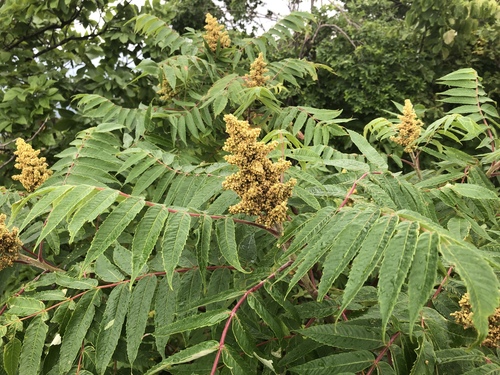
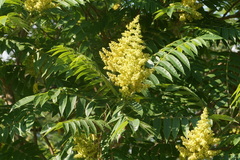
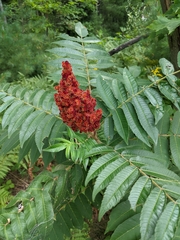
Staghorn sumac (Rhus typhina) is a dioecious shrub or small tree in the Anacardiaceae family, native to eastern North America. Its twigs have a dense coat of rusty hairs, its conical red fruit clusters persist through winter, and its leaves turn vivid red and orange in fall.
Read moreStaghorn sumac and Stag’s horn sumac

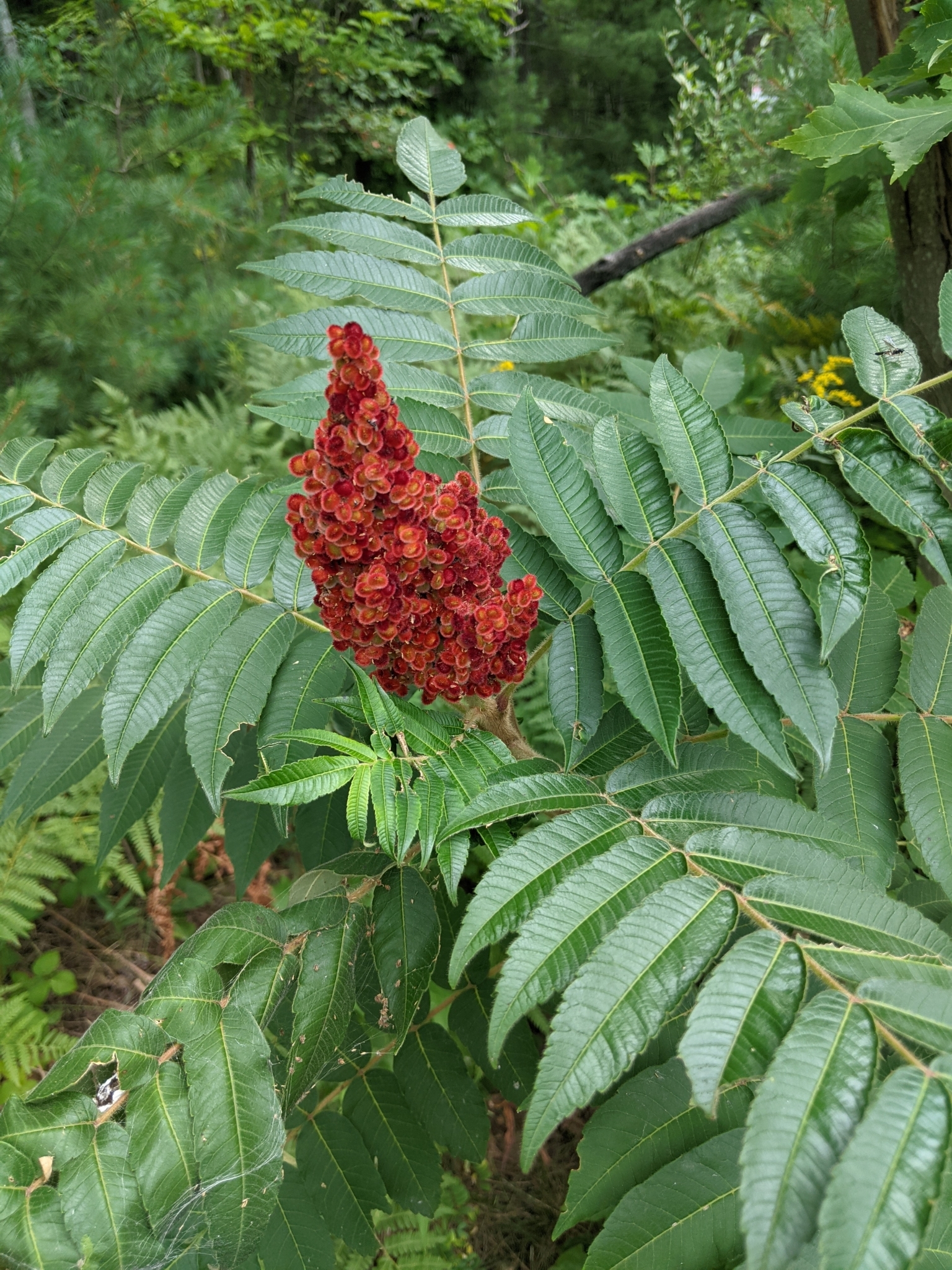


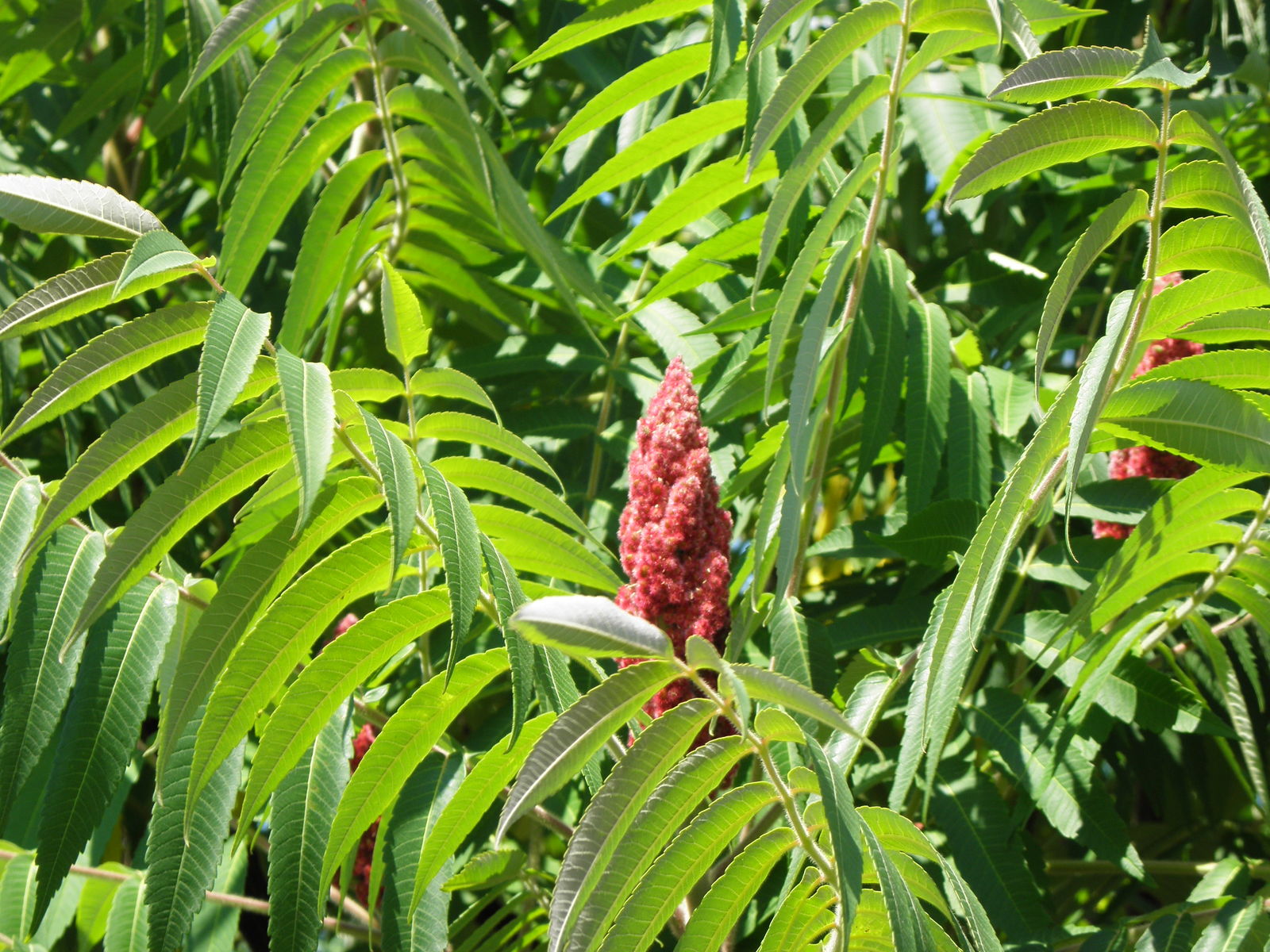
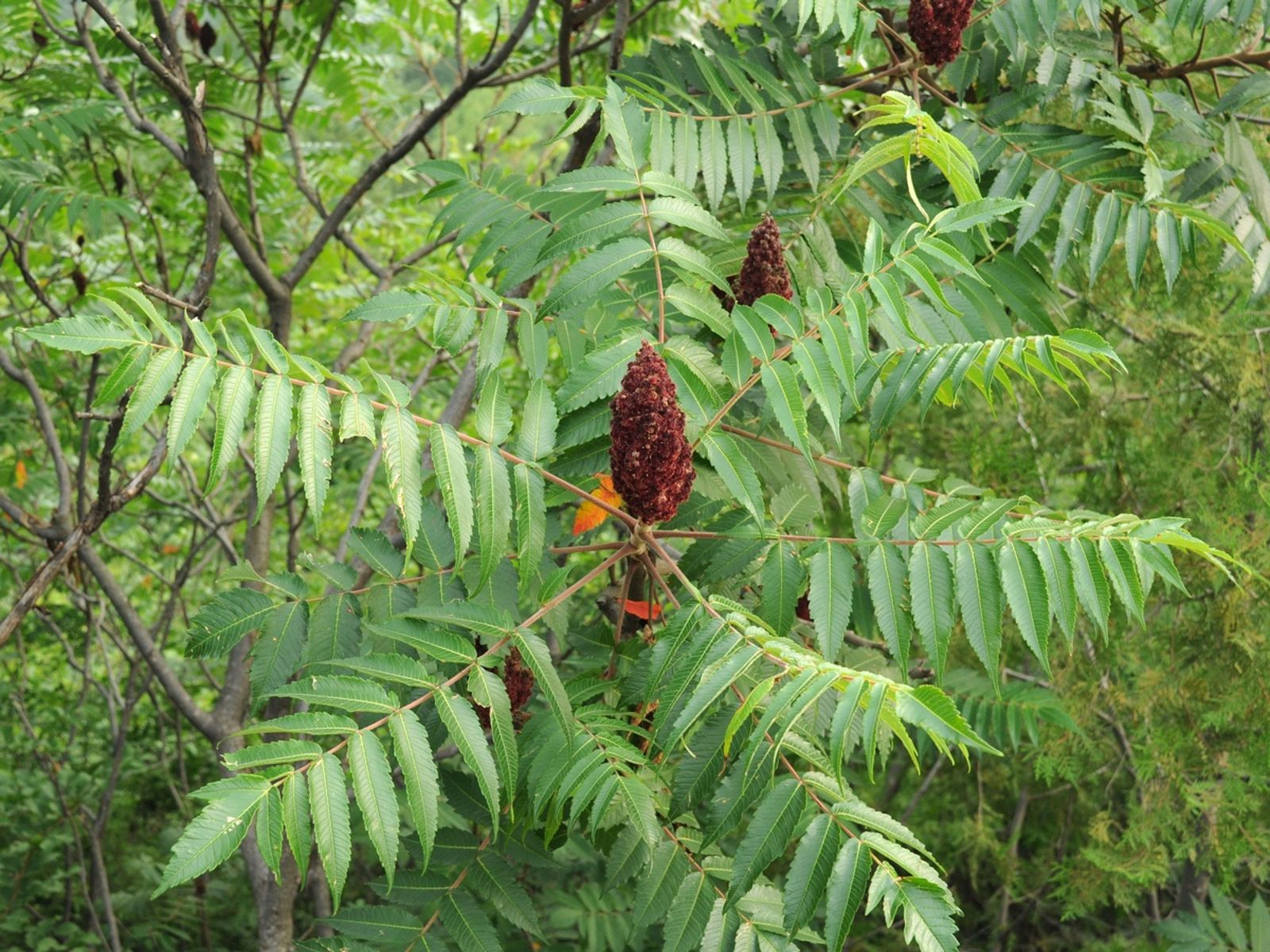
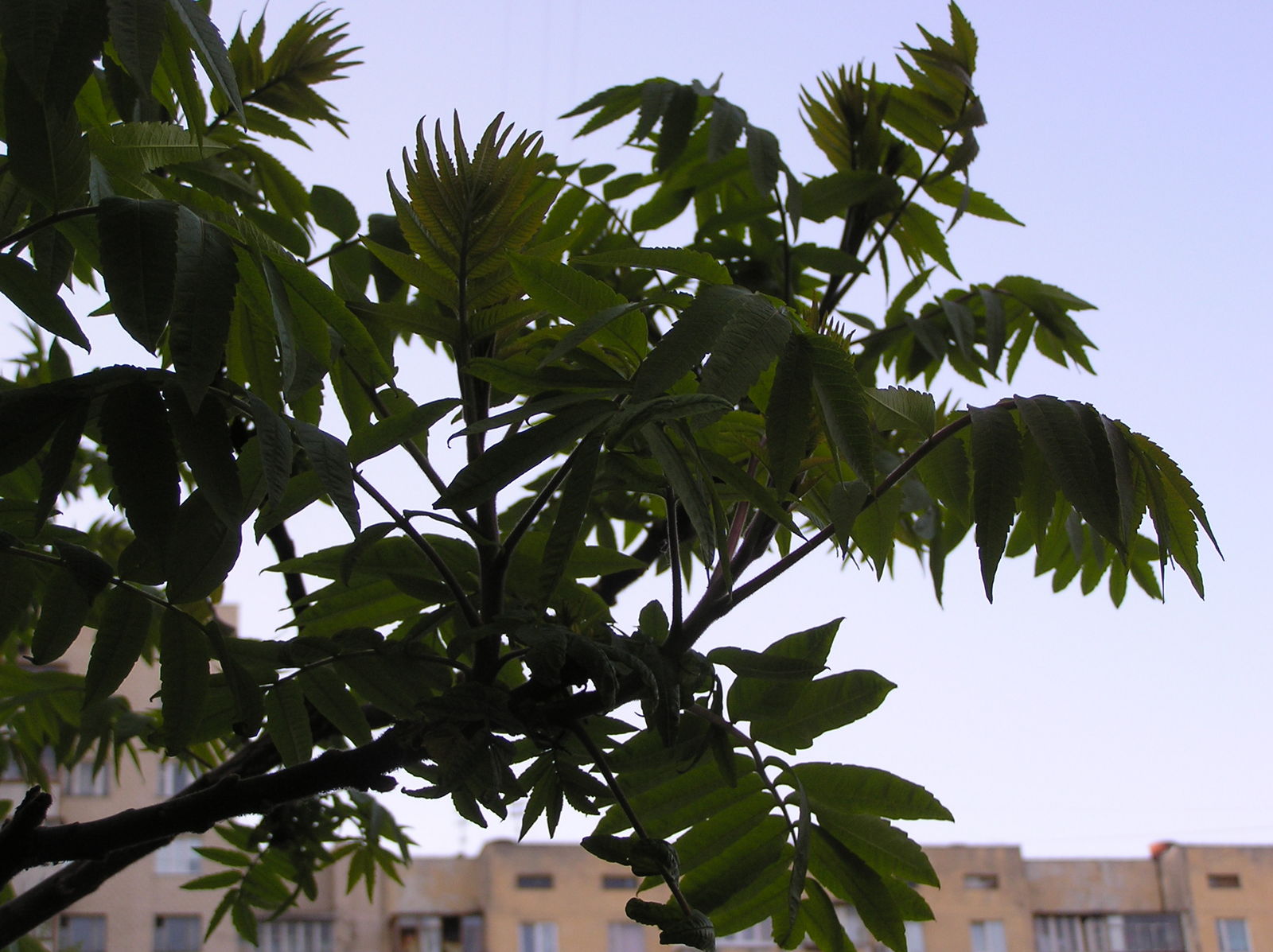
© photo
(c) mkosiewski, some rights reserved (CC BY-NC), uploaded by mkosiewski · cc-by-nc
Henggang Cui · cc0
Alan Prather · cc0
Taken May 1, 2020 by Ha Anna (cc-by-sa)
Taken Nov 19, 2021 by Helena Del Pozo (cc-by-sa)
Taken Mar 23, 2022 by Marieke Wiersma (cc-by-sa)
Taken Apr 1, 2020 by Manu (cc-by-sa)
Taken Jul 3, 2021 by Manuëlle (cc-by-sa)
© copyright of the Board of Trustees of the Royal Botanic Gardens, Kew.




Global distribution
Rhus typhina is native to eastern North America, from southeastern Canada to the Appalachians and American Midwest, on dry slopes and poor soils. Introduced to Europe as an ornamental in the 17th century, it has spread widely and become naturalized in places, with confirmed invasive status in several countries.
- Native2
- Introduced2
- Invasive2
- Canada
- United States
- Metropolitan France
- Poland
- Switzerland
- Belgium
Hexagons: regions where the plant occurs. Green dots: native range.1
Identity
Staghorn sumac (Rhus typhina L., 1756, nom. cons.), also written stag’s horn sumac, is a dioecious shrub or small tree in the Anacardiaceae family. Its accepted name is protected as a conserved name, stabilizing the nomenclature despite older competing names within Rhus. 1 6
The epithet typhina comes from Linnaeus’s original description, “Ramis hirtis uti typhi cervini,” meaning “branches hairy like a stag’s antlers in velvet.” This dense rusty coat identifies the species year-round, even without leaves or fruit in winter; few familiar European garden shrubs show it so strongly. The French name vinaigrier refers instead to the ripe, acidic fruits, long used in decoctions for a lemonade-like drink. 7 8
Recognition
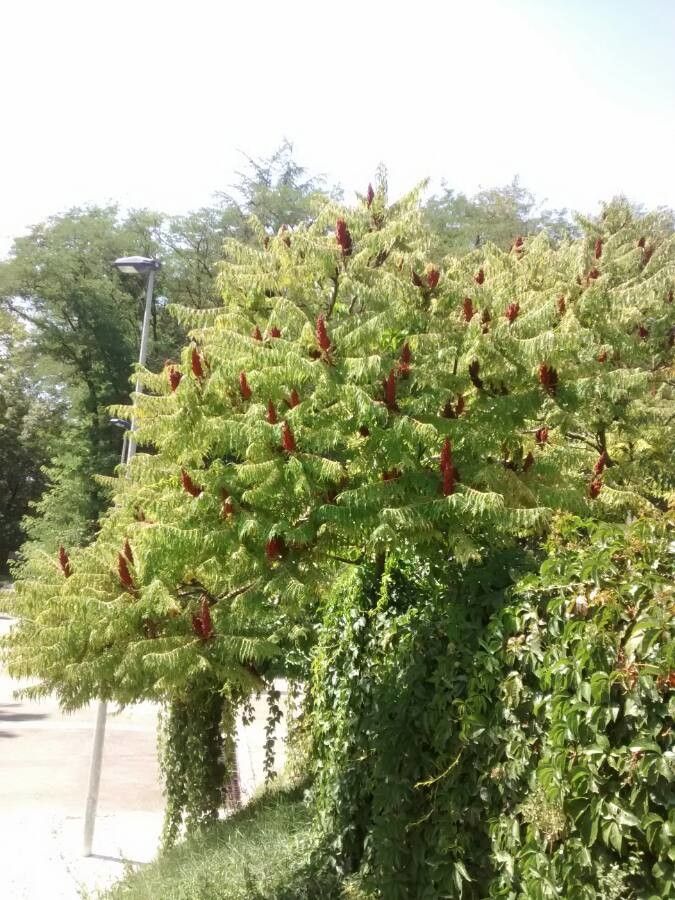
Dense velvety hairs on twigs and leaf stalks are the first clue to Rhus typhina: their rusty covering resembles antlers still in velvet. The plant usually reaches 3–8 m (10–26 ft) tall and 4–8 m (13–26 ft) across, with an irregular candelabra shape and rapid growth, particularly on young suckers. 2 8
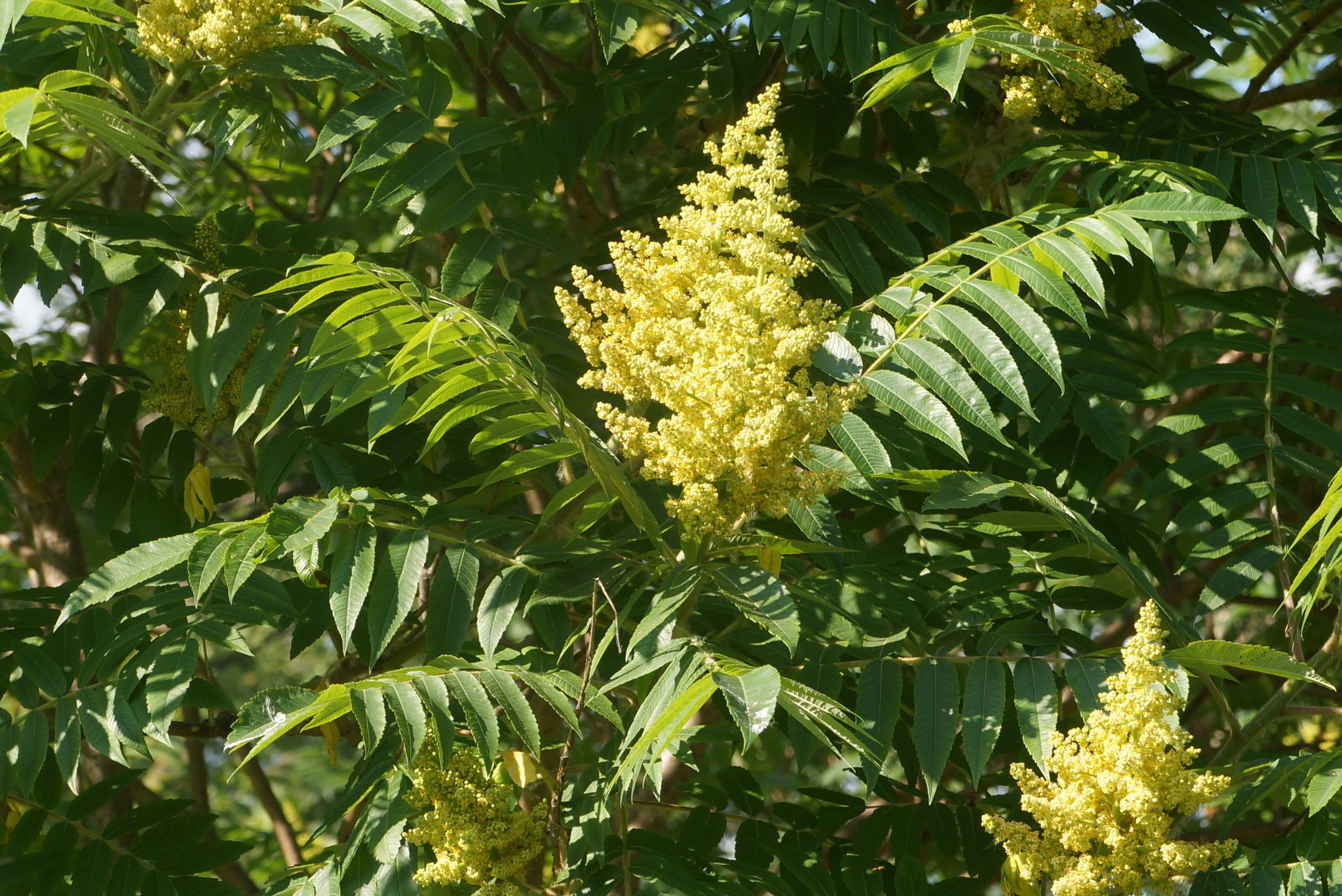
Each alternate compound leaf carries 11–31 toothed leaflets, with an overall length of 20–55 cm (8–22 in). The species is dioecious, with male and female flowers on separate plants. Upright greenish-yellow panicles 10–20 cm (4–8 in) long open in summer. Only females then produce conical clusters of velvety red drupes, also 10–20 cm (4–8 in) long, which remain through much of winter. 4 8
Fall turns the foliage red, orange and bright yellow, often with all three colors on one branch. Smooth gray-brown bark on young plants cracks with age; a fresh cut releases white milky sap. 7
Useful taxonomy
Botanical nomenclature treats Rhus typhina L. as a conserved name (nom. cons.), securing its use despite an older competing basionym. Rhus belongs to the Anacardiaceae family and the order Sapindales, and includes several dozen species across temperate and subtropical regions. 1 6
Historical synonyms include Rhus hirta (L.) Sudw., considered the correct name by some authors before typhina was formally conserved. Other names include Rhus typhina var. arborescens Willd. and f. laciniata (Alph.Wood) Rehder, whose finely divided leaflets preceded the foliage type later selected in Dissecta. 1
Habitat and range
Eastern North America is the native range of Rhus typhina, from southeastern Canada to the Appalachians, Midwest and southeastern United States. A pioneer of dry rocky slopes and poor, well-drained soils, it grows at pH 5.5–7.5 and also colonizes sunny woodland edges and road or railway banks. 5 3
Dormant plants tolerate about −25 °C (−13 °F), corresponding to USDA zones 3–8. Together with its soil tolerance, this hardiness helps it spread into northern and central Europe, far beyond its native range. Introduced to Europe as an ornamental in the 17th century, it became widespread for its fall foliage and decorative fruit, then naturalized locally, including southern France around the Garonne and Corsica. Vigorous suckering drives its colonizing behavior. In Switzerland, its invasive status is associated with a ban on sale and use; France and Belgium list it among species to monitor. These designations apply to those regions. 6 7
Life cycle and reproduction
Upright terminal flower panicles open in early to midsummer (June–July in the Northern Hemisphere). On female plants, the resulting fruit clusters turn from green to red between summer and early fall, then remain through winter, providing late food for several bird species when other supplies are scarce. 4 5
Root suckers are the main means of natural spread: a single plant can produce a whole colony of genetically identical stems. This explains both its horticultural vigor and its invasive behavior outside its native range. A detached sucker roots within a few weeks, while the resulting colony takes 5–15 years to reach its mature extent of 3–8 m (10–26 ft). That difference between quick rooting and gradual expansion can let suckering go unnoticed until it becomes difficult to contain. Hard seeds have an impermeable coat and require 24 hours of hot-water scarification to break dormancy before sowing. 3 7
Uses and risks
Garden planting chiefly values its ornamental qualities: the candelabra silhouette, conspicuous winter red fruit clusters and fiery fall foliage. The finely cut cultivar Dissecta holds the Royal Horticultural Society’s Award of Garden Merit. 2
Ripe acidic fruits are used in decoctions for a pink lemonade-like drink. They are harvested in midsummer before heavy rain washes away their acidity. Tannin-rich leaves also have historical uses in tanning hides and dyeing. 7 8
Available information reports no known toxicity to cats, dogs or humans, although the milky sap can irritate sensitive skin on contact. This differs from the severe toxicity of some relatives. In gardens, the main constraint is suckering: cutting a stem often activates dormant root buds and stimulates regrowth. 5 7
Varieties, look-alikes and related plants
Nurseries commonly offer three forms alongside the typical species: Dissecta, with finely cut foliage and an RHS award; Tiger Eyes (Bailtiger), a patented golden-leaved cultivar with a more compact habit; and the historical botanical form f. laciniata, whose divided leaflets were described before modern cultivars of this type. 2 1
Similar compound leaves can suggest tree of heaven (Ailanthus altissima), but its smooth twigs and unpleasant smell when crushed distinguish it from densely velvety staghorn sumac. The more consequential confusion is with poison sumac (Toxicodendron vernix). That species grows in wetlands, bears hanging white fruits and contains strongly irritating latex; Rhus typhina favors dry soils and bears upright conical clusters of red fruits. 7
Main sources
- Plants of the World Online / Kew, Rhus typhina L.
- Royal Horticultural Society, Rhus typhina details
- Plants For A Future, Rhus typhina — Internet Archive, 2026-05-15
- Missouri Botanical Garden Plant Finder, Rhus typhina
- NC State Extension, Rhus typhina
- Tela Botanica, BDTFX reference database, Rhus typhina
- French Wikipedia, staghorn sumac
- Wikipedia EN, Rhus typhina
Frequently asked questions
Is staghorn sumac invasive in France?
It is an introduced species, naturalized in places, particularly in southern France (Garonne and Corsica), and classified as invasive in several neighboring countries. Switzerland prohibits its sale and use; France and Belgium list it among species requiring monitoring.
Is staghorn sumac poisonous?
Available information reports no known toxicity to cats, dogs or humans, and the ripe fruits are edible. Its milky sap can nevertheless irritate sensitive skin on contact.
How can I tell staghorn sumac from tree of heaven?
Both have similar large compound leaves, but Rhus typhina has densely velvety, rusty twigs, whereas tree of heaven has smooth twigs. Tree of heaven also smells unpleasant when crushed, unlike staghorn sumac.
Can staghorn sumac be confused with poison sumac?
Their names can cause confusion, but their appearance differs. Toxicodendron vernix grows in wetlands, bears hanging white fruits and contains strongly irritating latex. Rhus typhina prefers dry soils and bears upright conical red fruit clusters.
Why is my staghorn sumac not producing fruit?
The species is dioecious: only female plants produce the characteristic red clusters. An isolated male, or a female without a nearby male for pollination, will not bear fruit.
How can I control staghorn sumac suckers?
Cutting stems often stimulates regrowth by activating dormant root buds. Better options are pulling young suckers with the attached root, mowing regularly around the colony, or installing a root barrier at planting.
Why is staghorn sumac called vinaigrier in French?
The name refers to the acidity of ripe fruits, used in decoctions for a refreshing lemonade-like drink. Ideally, harvest in midsummer before heavy rain washes away their acidity.
Similar plants
If you are unsure about a plant’s toxicity, ask a botanist or veterinarian for advice.