
White stonecrop (Sedum album, )
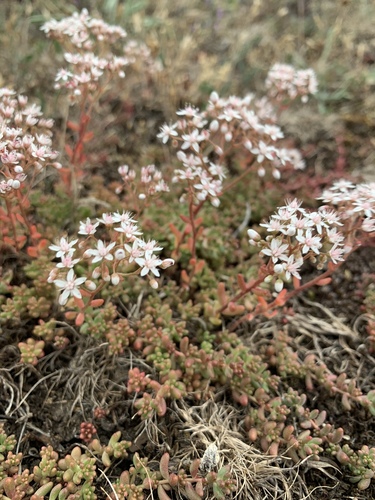
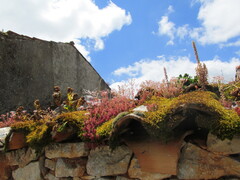
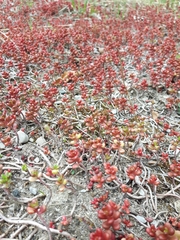
White stonecrop (Sedum album) combines small, fleshy, cylindrical to flattened leaves with white, star-shaped flowers. This succulent perennial in the Crassulaceae family spreads across rocky ground by stems that root at the nodes and suits well-drained rock gardens.
Read moreWhite stonecrop
Oreosedum album
Allow a few hours of direct sun per day, preferably morning or evening.
Full sun; light shade is tolerated.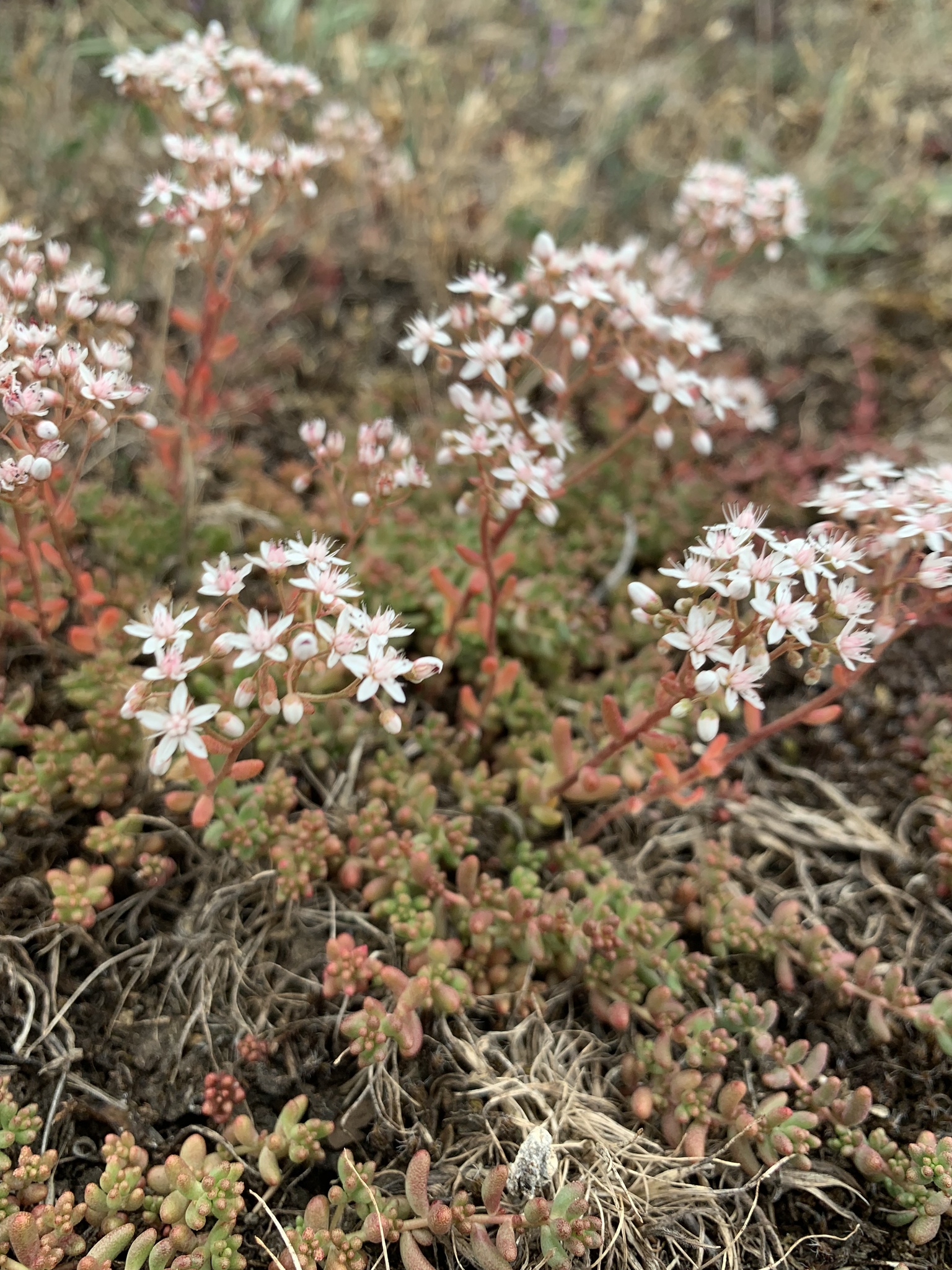


© photo
(c) drslimemold, some rights reserved (CC BY-NC) · cc-by-nc
zebedeugalinha · cc-by
Patrick Jackson · cc-by
Taken Jun 23, 2016 by Tela Botanica − Liliane ROUBAUDI (cc-by-sa)
Taken Jun 3, 2020 by Alain Bigou (cc-by-sa)
Taken Jun 2, 2022 by Annemarie Ahrens-Stehle (cc-by-sa)
Taken Jan 26, 2020 by sm Sm (cc-by-sa)
© copyright of the Board of Trustees of the Royal Botanic Gardens, Kew.




Global distribution
Native to Europe, the Mediterranean basin and east to northwestern Iran; introduced in other temperate regions.
- Native2
- Introduced2
- France
- Iran
- Great Britain
- Québec
Hexagons: regions where the plant occurs. Green dots: native range.1
Identity
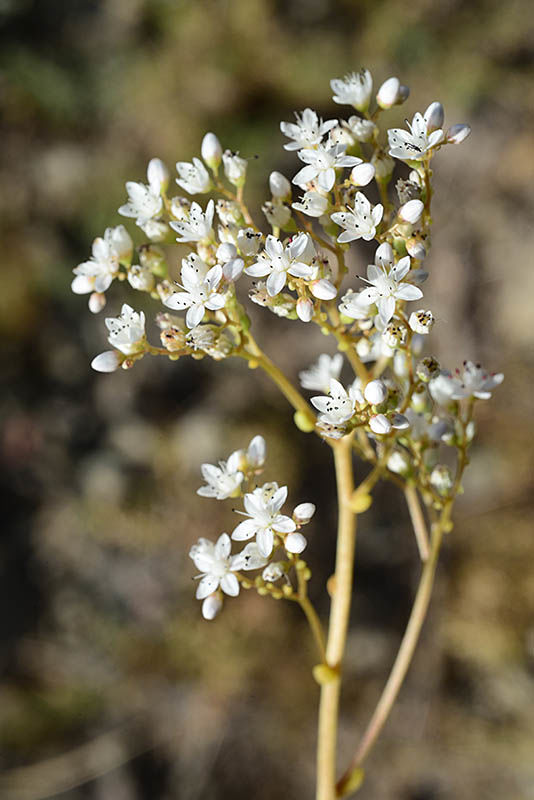
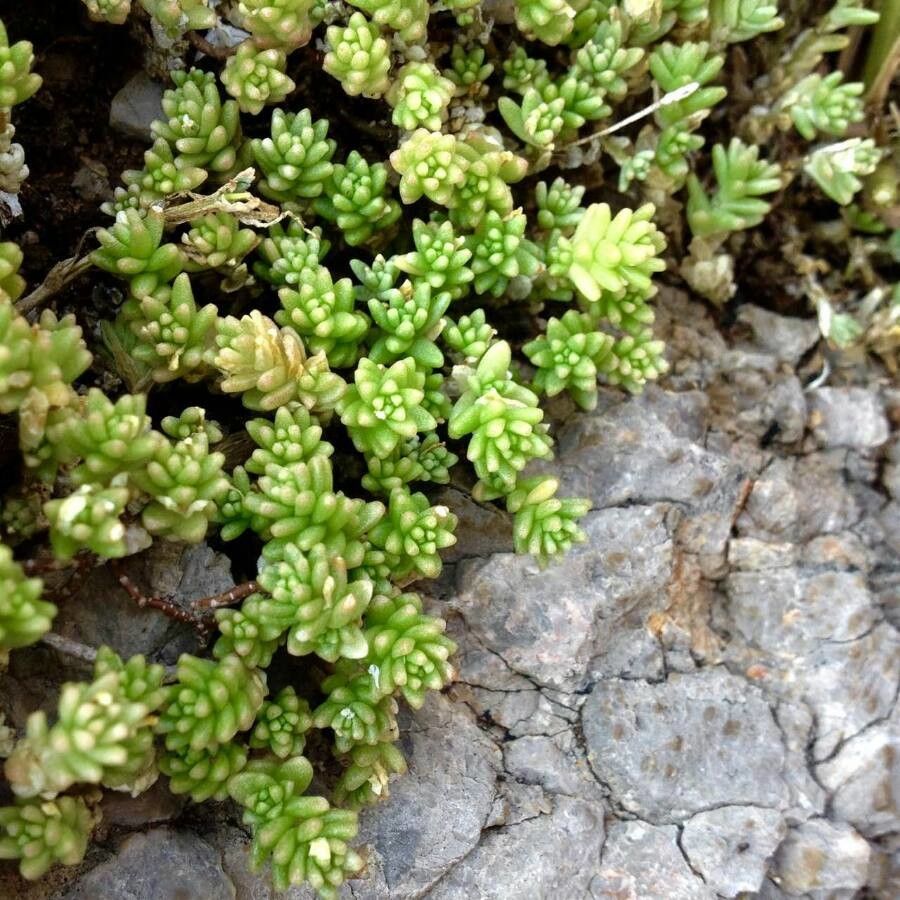
White stonecrop (Sedum album L., 1753) forms a mat of small, fleshy leaves topped in summer by white, star-shaped flowers. This succulent perennial belongs to the Crassulaceae family. Its creeping stems root at the nodes, allowing the mat to spread beyond the original plant. 3 1
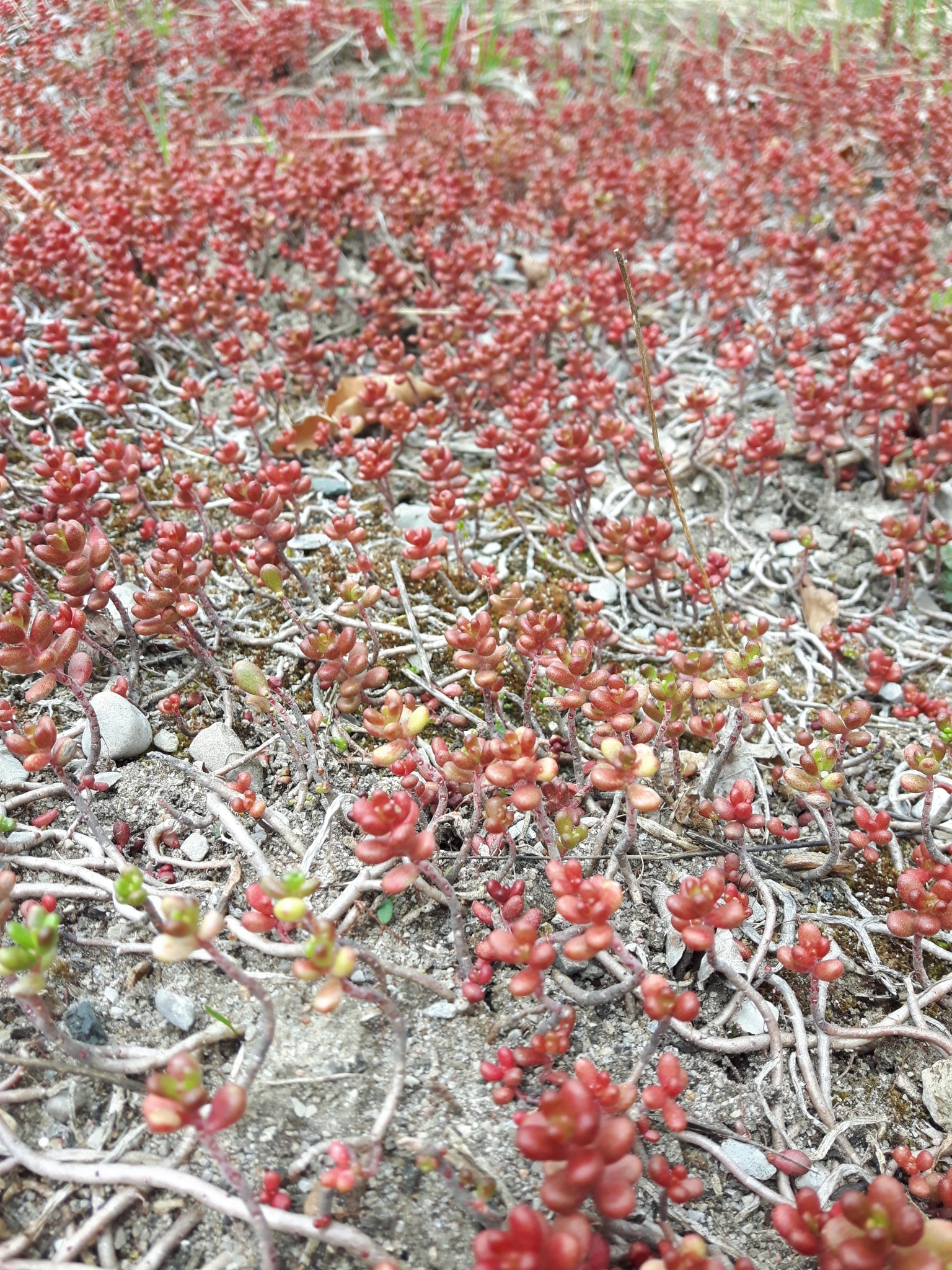
Vernacular names for the species vary between references and languages. 'White' describes the flowers; the foliage can turn reddish or brown with the season. A clump that turns red in fall therefore need not belong to a different species. Leaf color alone is insufficient to separate it from the green-leaved plants seen earlier in the year. 4 2
Recognition
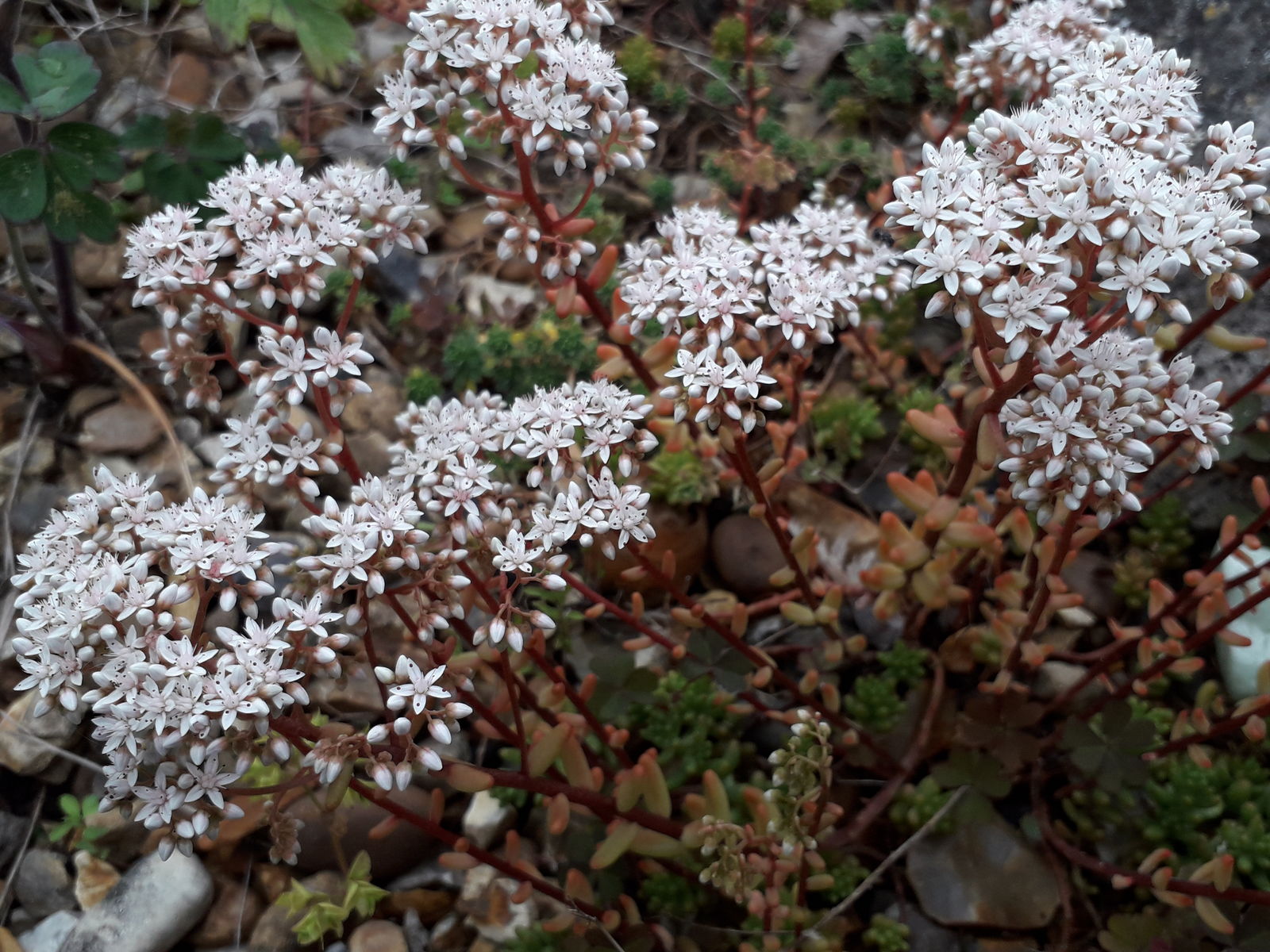
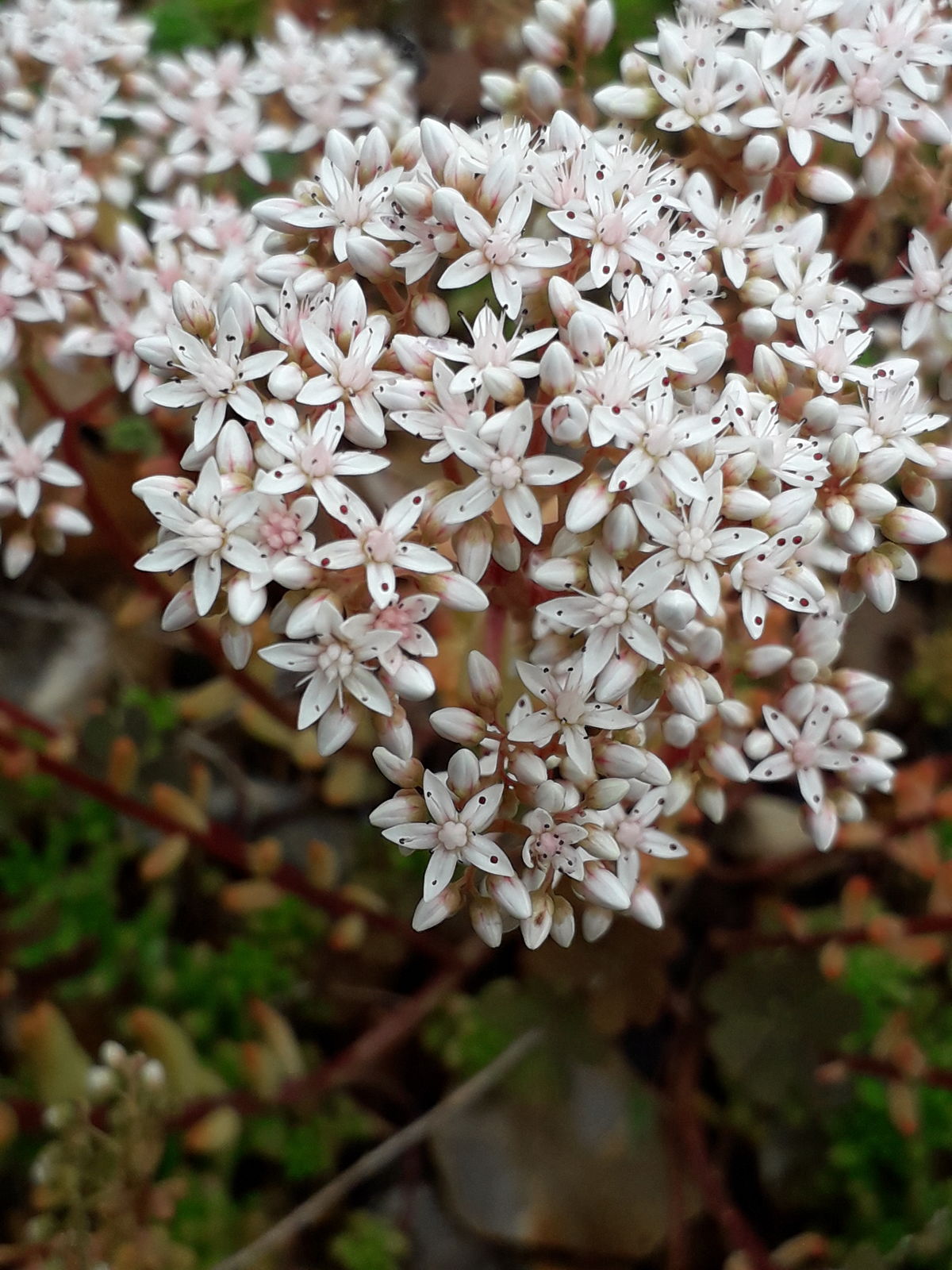
White stonecrop has stalkless leaves with entire margins and no hairs. Their shape ranges from cylindrical to a more flattened, oblong outline. The stems can be reddish. The white flowers, slightly pink at the center, have a corolla measuring 6 to 10 mm in the French flora's description. 3 4
The flora gives a height of 10 to 20 cm; a British horticultural description records up to 10 cm, with a spread of 0.1 to 0.5 m. These measurements come from different contexts and should not be read as a fixed size for every cultivated plant. 4 2
The British description classifies the foliage as evergreen. The North American profile uses a deciduous category, while also describing reddish-brown coloration in fall and winter. The small succulent leaves and the flowers provide more precise identification features than this conflicting foliage category. 2 3
Useful taxonomy
The name Sedum album was published in Species Plantarum in 1753 and remains accepted. Oreosedum album (L.) Grulich appears in its synonymy. Finding that name in a catalog is therefore not sufficient reason to conclude that it refers to a different plant. 1
The species includes recognized botanical subspecies, among them album, rupimelitense and serpentini. These botanical ranks differ from cultivars selected for gardens. A label bearing 'Coral Carpet' names a horticultural selection, whereas subsp. indicates a taxonomic subdivision. The terms describe different kinds of distinction within the species. 1 3
Habitat and range
White stonecrop is native from Europe through the Mediterranean basin to northwestern Iran. France and Corsica are within this range. Dry, rocky ground is its habitat; the French flora records it from sea level to 2500 m. 1 4
Great Britain, Ireland and Québec are among the territories where it has been introduced. Local occurrence does not therefore imply the same origin everywhere. In gardens, relatively infertile sandy or gravelly soils suit white stonecrop, provided that water can drain away. Light shade is tolerated, although full sun is preferred. 1 3
Life cycle and reproduction
White stonecrop flowers from June to August in the French flora consulted. Clusters of flowers rise above the mat of leaves. It can be propagated by division, leaf cuttings or seed; softwood stem cuttings are also recommended in cultivation. These methods provide several ways to establish further plants. 4 3 2
For sedums in general, spring or fall after flowering are suggested times to move or divide a clump. Seasonal advice for the genus does not set a compulsory date for every white stonecrop cultivar. The species' creeping stems root as they spread, making vegetative expansion easier. 6 3
The monthly guidelines refer to outdoor cultivation in mainland France. They summarize the low water needs of sedums and their renewed growth after winter: little supplementary watering, without prescribing a monthly volume. Fertilizer is generally unnecessary for sedums in poor soil. Excessive feeding can produce soft growth that flops, rather than improving the mat's structure. 6
Uses and risks
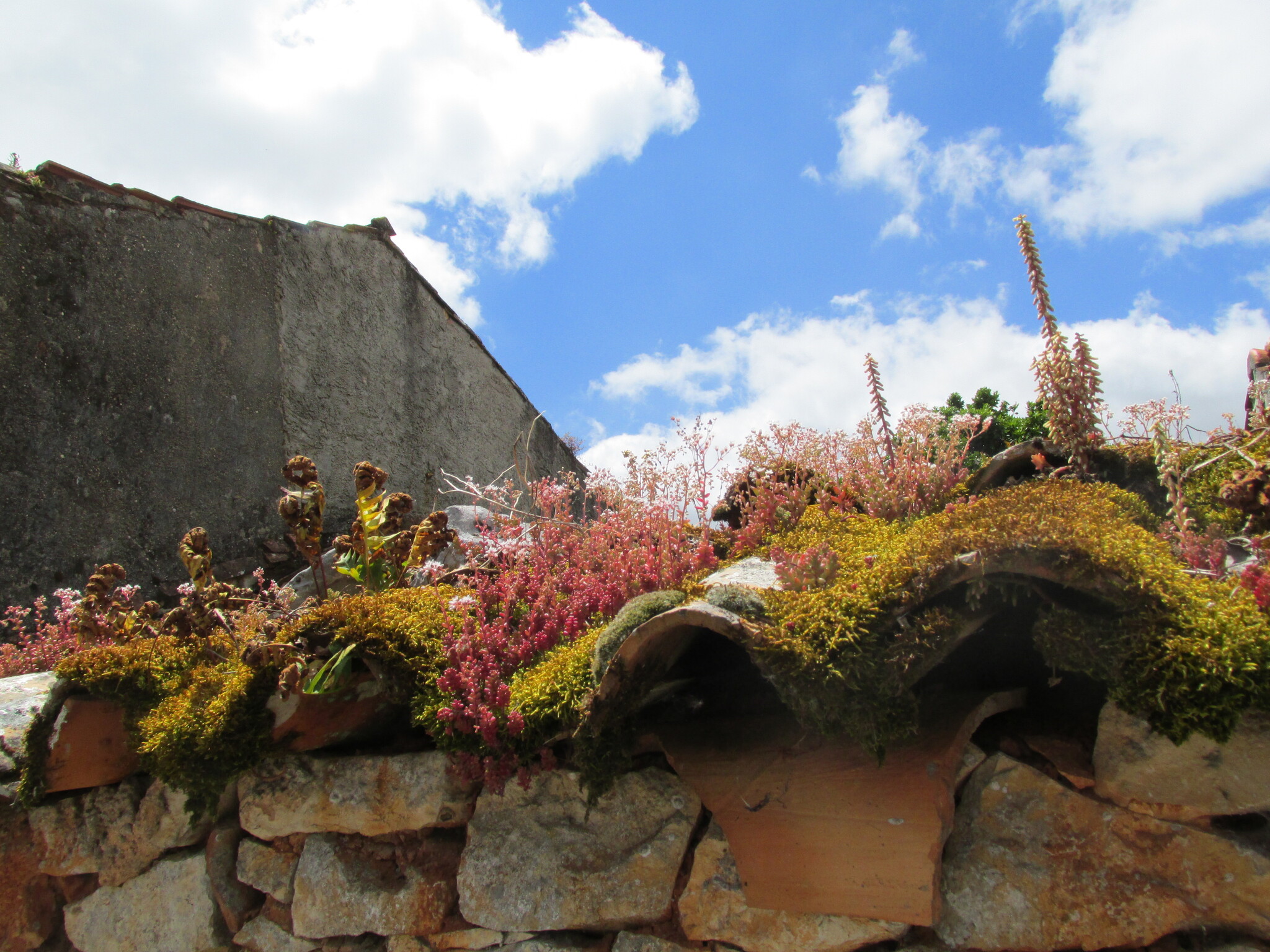
White stonecrop suits rock gardens and crevice gardens; it is also used as ground cover and on green roofs. Its flowers attract pollinators, especially butterflies. Rapid expansion can, however, cover neighboring plants of a similar height. Plan to limit the mat where several small perennials share the same space. 3
The species is classified as non-toxic to cats and dogs. This classification does not establish the status of horses, other animals or children specifically. In humans, eating substantial quantities of the leaves can cause digestive upset. Its use as an ornamental plant is not a recommendation to eat it, and safety status must be considered separately for each group. 5 3
Selections and look-alikes
In 'Coral Carpet', leaves emerge salmon-colored, turn green, then become bronze in winter; flowers range from white to pink. 'Orange Ice' forms a mat whose red-tinged green leaves turn orange in winter. These color changes describe the named selections, rather than every wild population of white stonecrop. 3
The related Sedum acre usually has yellow flowers and tiny, conical leaves that overlap like scales. White stonecrop combines white flowers with oblong leaves that range from cylindrical to flattened. Comparing flowers and foliage avoids identifying these succulent mats solely by their creeping habit. A feature of S. acre should not be transferred to S. album. 7 3
Main sources
Frequently asked questions
How can I recognize white stonecrop?
White stonecrop has small, fleshy, oblong to cylindrical leaves and star-shaped white flowers, sometimes pinkish at the center. Its creeping stems form a mat.
When does white stonecrop flower?
The French flora consulted describes flowering from June to August. The small flowers cluster above the foliage.
Does white stonecrop need fertilizer?
General guidance for sedums indicates that fertilizer is usually unnecessary in poor soil. Excessive feeding can weaken the growth so that it flops.
Is white stonecrop toxic to animals?
White stonecrop is classified as non-toxic to cats and dogs. The toxicology reference consulted does not specify the status of horses or other animals.
Similar plants
If you are unsure about a plant’s toxicity, ask a botanist or veterinarian for advice.