
Persian lilac (Syringa persica, )


Persian lilac (Syringa persica) is a compact deciduous shrub in the Oleaceae family, grown for fragrant mauve, pink or white flower panicles. Its horticultural name with a multiplication sign remains in use, although POWO, IPNI and GBIF currently treat Syringa persica L. as an accepted name.
Read morePersian lilac
Syringa × persica, Syringa afghanica and Syringa laciniata
Place in full sun, with intense direct light all day long.
Full sun; light partial shade is possible
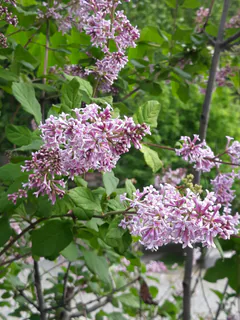


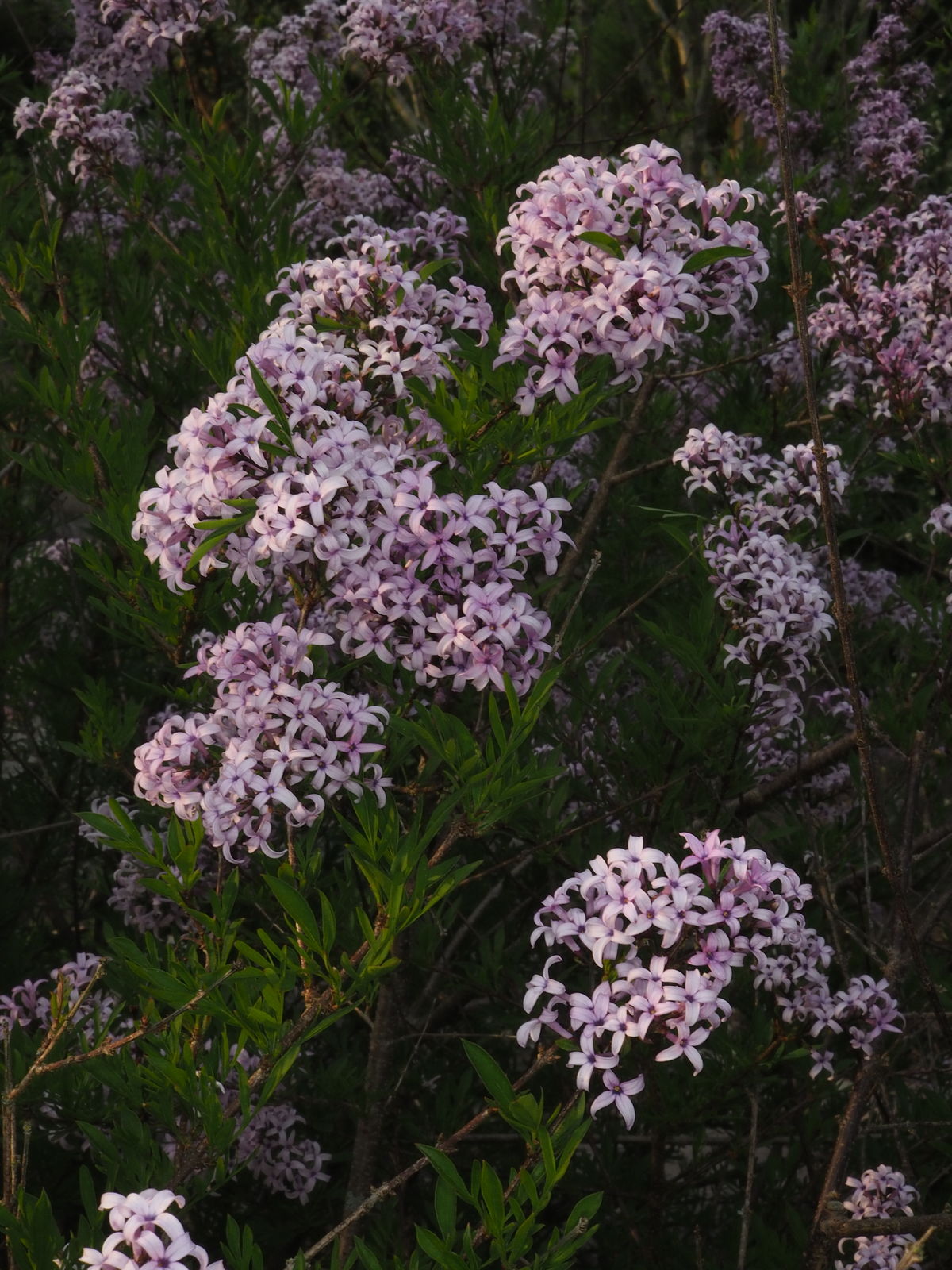
© photo
(c) etto, some rights reserved (CC BY-NC), uploaded by etto · cc-by-nc
Wikimedia Commons · CC BY-SA or Public Domain
Taken Apr 12, 2021 by Stephanie Miquel (cc-by-sa)
Taken Jul 3, 2022 by Tristan Jaton-Maria (cc-by-sa)
© copyright of the Board of Trustees of the Royal Botanic Gardens, Kew.


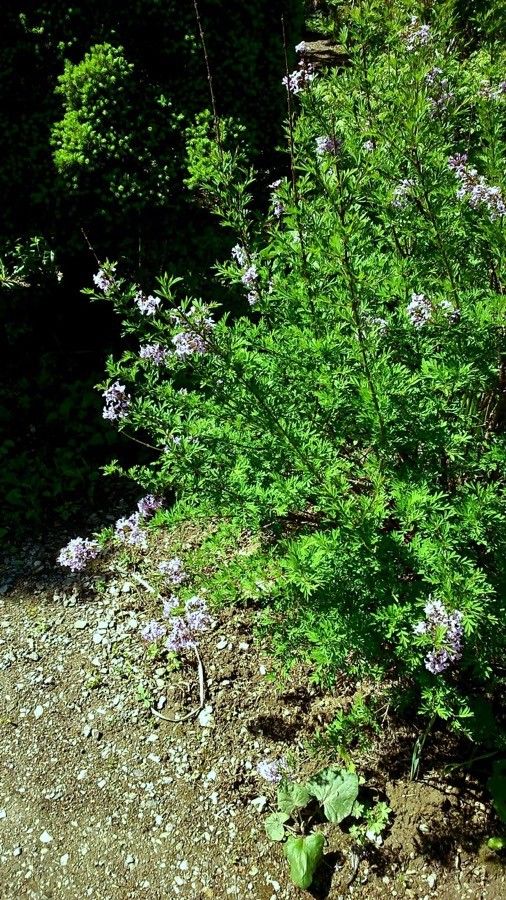


Global distribution
The horticultural name Syringa × persica differs from current taxonomic treatment. POWO accepts Syringa persica L. and records a range from eastern Afghanistan through Pakistan and the western Himalayas to Qinghai and north-central China. RHS and Oregon State retain Syringa × persica in horticulture.
- Native5
- Eastern Afghanistan
- Pakistan
- Western Himalayas
- Qinghai
- North-central China
Hexagons: regions where the plant occurs. Green dots: native range.1
Identity
Persian lilac (Syringa persica L., 1753) is a deciduous shrub in the Oleaceae family. Garden references often present it as a hybrid, but modern taxonomic treatment is more nuanced. POWO accepts Syringa persica L., published by Linnaeus in 1753, and records a native range from eastern Afghanistan through Pakistan and the western Himalayas to Qinghai and north-central China. 1 2
The name Syringa × persica remains useful because major horticultural sources, including RHS and Oregon State, employ it. Gardeners searching for Persian lilac will encounter that spelling, while POWO, IPNI and GBIF use Syringa persica L. 4 6 3
Keep the common name Persian lilac attached to the correct genus. Melia azedarach, a tree in the Meliaceae family, is also called Persian lilac in English and is classified as toxic by the ASPCA. It is a different plant. 9
Recognition
Compared with many common lilacs, Persian lilac has a finer, more compact habit. RHS describes a deciduous shrub up to 2.5 m (8 ft) tall, often wider than tall, with dark green foliage and masses of fragrant pale mauve flowers in summer. Oregon State gives about 1.2-2.4 m (4-8 ft) tall and somewhat wider, with dense growth that starts upright and becomes arching. Its opposite, simple, lance-shaped leaves are sometimes pinnate or three-lobed. 4 6
Airier flower panicles distinguish it from common lilac. Oregon State describes fragrant clusters 5-8 cm (2-3 in) long, usually pale to mauve, with white, light pink and deeper pink selections. NC State also emphasizes a rounded or upright habit, slightly arching branches, very fragrant pale purple flowers and appeal to butterflies. 6 5
Three features are more useful than flower color alone: moderate mature size, leaves often narrower than those of Syringa vulgaris, and fragrant but less bulky panicles. Check the sale name carefully, since lilacs can look very similar when only foliage is present.
Taxonomy and hybrid status
Hybrid status is the most difficult aspect of Persian lilac's identity. Historically, the multiplication sign indicated an ancient hybrid. Oregon State summarizes the tradition: long cultivated in Persia and elsewhere, the plant was considered a possible cross of S. afghanica and S. laciniata, or other combinations. Alternative interpretations treated it as a stable form related to S. laciniata. 6
NC State describes a more recent taxonomic interpretation: the supposed parents S. afghanica and S. laciniata are now treated as synonyms of S. persica. POWO likewise lists Syringa afghanica and Syringa laciniata among the heterotypic synonyms of Syringa persica L. 5 1
These differing treatments do not support certainty about an ancient cross. Persian lilac still identifies the compact ornamental shrub for gardeners, but its names record a real distinction: Syringa × persica in horticultural references and Syringa persica L. in POWO, IPNI and GBIF. 2 3
Range, habitat and garden uses
Eastern Afghanistan, Pakistan, the western Himalayas, Qinghai and north-central China form the native range recorded by POWO. The epithet persica therefore does not establish modern Iran as its native home. NC State notes that the name refers to Persia while its account does not place the plant naturally in Iran. 1 5
Temperate gardens grow this lilac mainly for fragrance and a size less imposing than common lilac. RHS recommends it for urban and informal gardens, beds and cut flowers. NC State suggests specimen planting, groups, informal hedges or light screening where a compact lilac is wanted. 4 5
For France, the references used here do not establish a national invasive designation. Persian lilac can be long-lived and grow denser in gardens; identification, available space and leaf diseases are the more immediate concerns.
Growing, pruning and flowering
Growing requirements resemble those of familiar lilacs: good light, drainage, moderate fertility and air around the branches. RHS describes an easy plant in bright light and moist but well-drained, neutral to alkaline soil, including chalky ground. NC State recommends organic-rich, moist, neutral to slightly alkaline soil with clear drainage and good airflow, since waterlogging is poorly tolerated. 4 5
Full sun gives the best results. NC State allows partial shade, although shade often reduces flowering density and slows leaf drying. Oregon State also lists sun or partial shade and warns that powdery mildew can affect leaves in some regions. 5 6
Pruning needs to respect flower-bud formation. Lilacs set buds on established wood, so late cutting can remove the following season's bloom. University of Maryland Extension recommends pruning after flowering, gradually removing older wood and keeping the center open. RHS places Syringa × persica in pruning group 1 and notes tolerance of harder pruning when necessary; reserve that for occasional renovation of an old shrub. 7 4
Diseases and pests
Typical lilac problems include powdery mildew, blights, leaf spots, borers and stress-related dieback. RHS lists lilac leaf miner, privet thrips, lilac blight, honey fungus, phytophthora, powdery mildews and bacterial canker caused by Pseudomonas syringae. 4
NC State adds scale insects, borers, leaf miners, caterpillars, leaf spots, wilts and ringspot virus. It warns that Persian lilac is highly susceptible to powdery mildew unless its center remains open and ventilated. University of Maryland Extension describes mildew as very common on lilacs and often more cosmetic than life-threatening, with dense, shaded or damp foliage favoring infection. 5 7
Prevention starts with the planting site. Sun, spacing, watering at ground level, avoiding excess nitrogen and pruning after flowering reduce many risks. To limit borer problems, University of Maryland recommends avoiding injuries at the crown, keeping mulch away from the base and removing wilted or dead stems. 7
Toxicity and look-alikes
No specific toxin affecting cats, dogs or horses is identified here for Syringa × persica. That does not make it food. The ASPCA's general list notes that even plant material not classified as toxic may cause vomiting or digestive discomfort when swallowed by dogs or cats. 8
The significant warning concerns shared names. Melia azedarach, in the Meliaceae family, has the English names Persian lilac and chinaberry tree. The ASPCA lists it as toxic to dogs, cats and horses, with particular concern about its fruits. It is not a lilac of the genus Syringa. 9
Botanical identification matters for bouquets and cut branches. True Persian lilac has opposite leaves and lilac panicles; Melia azedarach is a different tree with compound leaves and berry-like fruits. Significant ingestion, symptoms or uncertainty about identity call for veterinary advice.
Cultivars, forms and related plants
White, pink and darker forms appear in the references, but they should not all be treated as stable modern cultivars. POWO and GBIF list historical names such as Syringa persica var. alba, var. caerulea and names associated with laciniata, chiefly useful for understanding synonymy. 1 3
Oregon State records white, light pink and dark pink selections, with leaves sometimes pinnate or three-lobed. These features explain variation among plants sold as Persian lilac: some sellers emphasize compact growth, others cut leaves, and others flower color. 6
Related plants worth distinguishing include the larger common lilac, Syringa vulgaris; Rouen lilac, Syringa × chinensis; compact lilacs such as Syringa meyeri; and the misleadingly named Melia azedarach. NC State also lists several similar lilacs among frequently confused plants or those filling a comparable garden role. 5
Main sources
- Plants of the World Online / Kew, Syringa persica L.
- International Plant Names Index, Syringa persica L.
- GBIF Backbone Taxonomy, Syringa persica L.
- Royal Horticultural Society, Syringa × persica
- NC State Extension Gardener Plant Toolbox, Syringa persica
- Oregon State University Landscape Plants, Syringa × persica
- University of Maryland Extension, Lilac: Identify and Manage Problems
- ASPCA, Toxic and Non-Toxic Plants list
- ASPCA, Pride-of-India / Melia azedarach toxicity entry
Frequently asked questions
Should the name be Syringa × persica or Syringa persica?
Both occur. Syringa × persica follows horticultural usage at RHS, while POWO, IPNI and GBIF accept Syringa persica L. as the botanical name.
Is Persian lilac really a hybrid?
RHS and Oregon State use the multiplication sign. NC State explains, however, that proposed parents such as S. afghanica and S. laciniata are treated as synonyms of S. persica in a more recent taxonomic approach.
How large does Persian lilac grow?
RHS gives 1.5-2.5 m (5-8 ft) tall and 2.5-4 m (8-13 ft) wide. Oregon State and NC State describe similar sizes, often 1.2-2.4 m (4-8 ft) tall and somewhat wider.
When does Persian lilac bloom?
It flowers mainly in late spring or early summer, depending on climate and source. The fragrant flowers are usually mauve to purple, with white or pink forms in cultivation.
Why is my Persian lilac not flowering?
Common causes include shade, pruning too late, a young plant, excess nitrogen or water stress. Pruning after flowering and providing at least six hours of direct sun help.
Can Persian lilac grow in a pot?
Yes, in a large, freely draining container with rich growing medium and closer attention to watering. In the ground, it needs less intervention once established.
Is Persian lilac toxic to cats, dogs or horses?
The sources used here identify no specific toxicity in Syringa for cats, dogs or horses. Identification still matters: the ASPCA lists Melia azedarach, also called Persian lilac in English, as toxic to these animals.
Is Persian lilac invasive in France?
No French invasive status is assigned. More immediate garden concerns are confusing names, susceptibility to powdery mildew and choosing a site that is dry without becoming scorching.
Similar plants
If you are unsure about a plant’s toxicity, ask a botanist or veterinarian for advice.