
Japanese tree lilac (Syringa reticulata, )
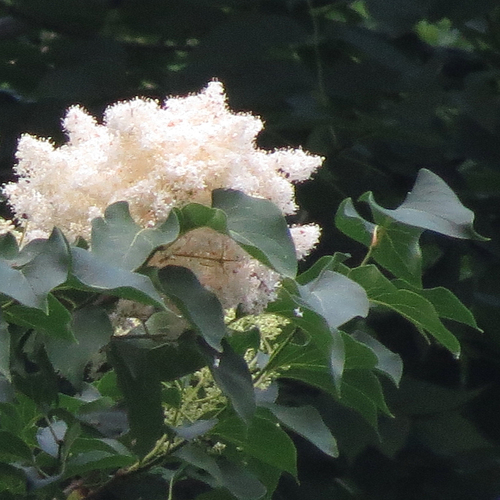

Japanese tree lilac (Syringa reticulata) is a small deciduous tree in the Oleaceae family, grown for large cream panicles in early summer and reddish-brown bark that peels with age. Its distinctly tree-like habit suits urban gardens where the soil drains well and the crown has room for air to circulate.
Read moreJapanese tree lilac, Japanese lilac and Tree lilac
Allow a few hours of direct sun per day, preferably morning or evening.
Full sun; light partial shade tolerated with fewer flowers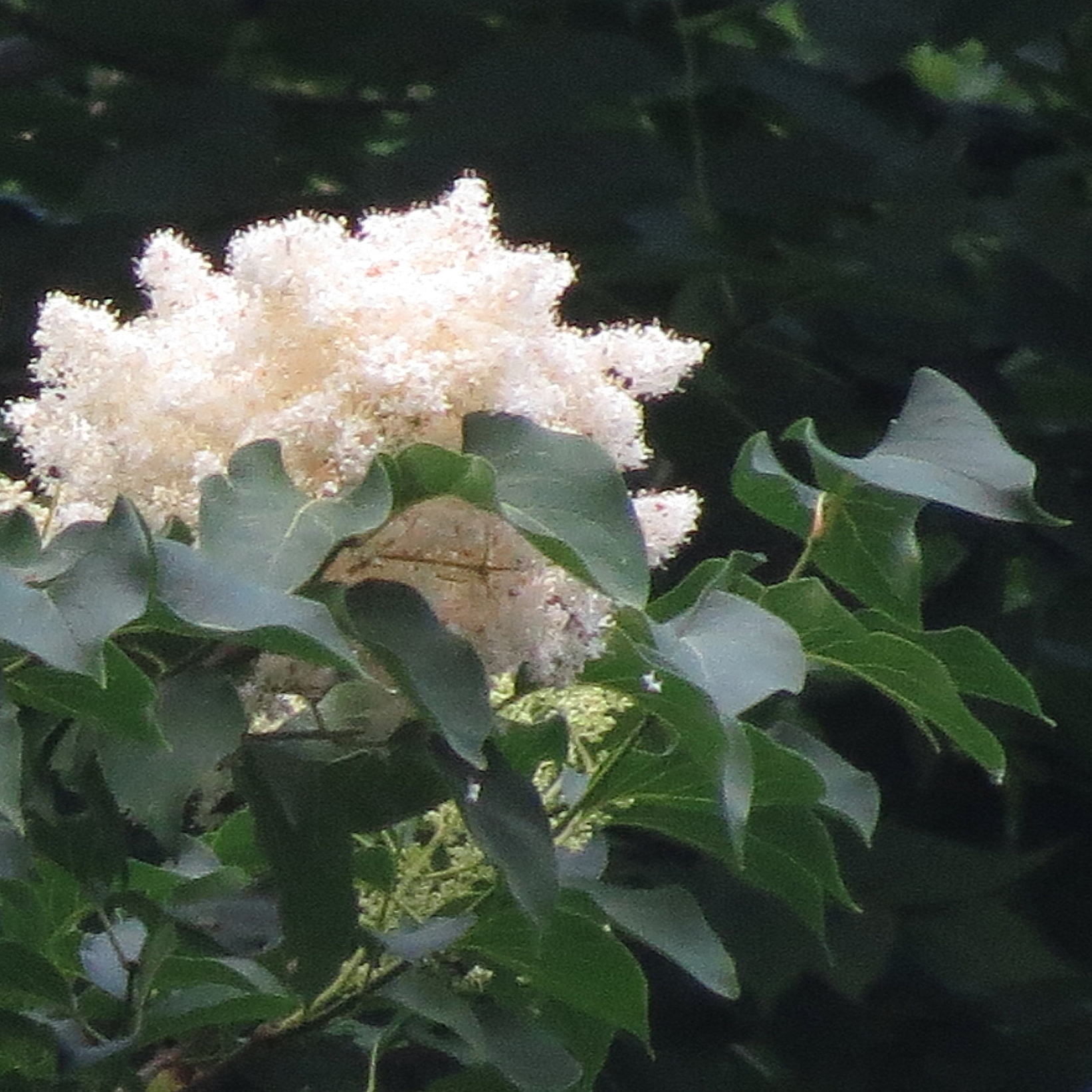


© photo
(c) cgbb2004, some rights reserved (CC BY-NC), uploaded by cgbb2004 · cc-by-nc
Wikimedia Commons · CC BY-SA or Public Domain
Wikipedia · CC BY-SA
Taken May 23, 2017 by Dieter Albrecht (cc-by-sa)
© copyright of the Board of Trustees of the Royal Botanic Gardens, Kew.


Global distribution
POWO/Kew treats Syringa reticulata as an accepted East Asian species. In France it is mainly cultivated in parks, gardens and street plantings; no French invasive status is assigned.
- Native4
- Introduced1
- Japan
- Korea
- Northeastern China
- Russian Far East
- Temperate North America
Hexagons: regions where the plant occurs. Green dots: native range.1
Botanical identity
Japanese tree lilac (Syringa reticulata (Blume) H.Hara) is a small deciduous tree in the Oleaceae family. POWO/Kew treats the name as accepted and places its native range in East Asia. GBIF confirms its position within Syringa. 1 2
Although grouped horticulturally with shrubby lilacs, it is chiefly useful as a small tree. The common English name captures that distinction: rather than forming the typical suckering clump of common lilac, it develops a rounded crown on one or a few trunks. 4 5
The current name carries the authority (Blume) H.Hara. Blume published the basionym, and Hara later placed the plant under Syringa reticulata. Older names, geographic forms and horticultural labels should therefore not be turned into separate species without taxonomic support. 1 2
Recognition
Tree-like stature is the first clue. In ordinary cultivation, Japanese tree lilac often reaches 6-9 m (20-30 ft) tall and 4.5-6 m (15-20 ft) wide, with a rounded crown. Missouri Botanical Garden, NC State and RHS all describe a garden tree taller and more arborescent than spring-flowering shrubby lilacs. 5 4 3
Opposite, simple, oval to broadly oval green leaves have no leaflets. They resemble common lilac from a distance, but taller growth, often larger leaves and decorative bark point to Syringa reticulata. Cornell also highlights reddish-brown to brown bark with lenticels and a texture that becomes more pronounced with age. 6 7
Early-summer flowering is the showiest feature. Instead of common lilac's purple spring clusters, Japanese tree lilac carries large terminal panicles, often 15-30 cm (6-12 in) long, in cream to white. Individual flowers are small and four-lobed. Their scent varies and can be less sweet than that of common lilac. 4 5 3
Dry capsules develop in clusters after flowering, turning from green through yellow to brown as they mature. The fruit has no food use identified here. It can help confirm identification and signals the need to watch for unwanted seedlings outside the native range. 4 9
Native range and status in France
East Asian territories listed within POWO/Kew's native range include Japan, Korea, northeastern China and the Russian Far East. This distribution helps explain its adaptation to cold temperate climates with distinct winters. 1
In Western Europe and France, Syringa reticulata is a cultivated plant. The sources do not establish a French invasive designation. North American public-garden networks nevertheless flag seed production and potential naturalization in some settings outside its native range. 9
Its status calls for a measured approach: no French invasive alert is assigned here, but planting in sensitive natural habitats outside its native range requires follow-up. Removing unwanted seedlings is a straightforward garden measure. 9
Growing in gardens and cities
Japanese tree lilac often fills the need for a hardy small tree that flowers after spring lilacs without the bulk of a large shade tree. Horticultural references recommend full sun and fertile, well-drained soil, preferably neutral to slightly alkaline. 3 5 6
Urban tolerance depends on the site. The University of Florida fact sheet recommends it for streets and parking lots and describes its tolerance of several urban stresses. Well-drained soil and careful establishment remain essential: compacted soil restricts root development, and drought-stressed trees are more vulnerable to borers. 6 8 13
Establishment shapes later performance. During the first two growing seasons, water deeply, mulch without covering the root collar and keep grass from competing directly with the roots. Once established, the tree becomes more self-sufficient and tolerates short dry periods reasonably well. 5 4
Container growing is possible for only a few years, using a large, deep container, freely draining growing medium and consistent watering. For a lasting specimen with a flowering crown and visible bark, planting in the ground is more appropriate. 3 7
Flowers, fruits and life cycle
Depending on climate, cultivar and exposure, flowering often falls in May-June or June-July in the Northern Hemisphere, later than common lilac. This timing extends a temperate garden's display between spring shrubs and midsummer flowers; seasonal timing shifts with local conditions. 3 5
Large, fairly open cream-to-white panicles sit at shoot tips. A healthy tree in full sun flowers best. Light shade may allow acceptable growth, but reduces panicle density and can produce a more elongated framework. 4 6
The fruits are dry capsules. They are not the chief ornamental feature, but explain the interest in cultivars with reduced fertility in public gardens and regions where seedling production is monitored. 9
Winter brings leaf fall and dormancy. Horticultural references commonly place this very hardy tree around USDA zones 3-7. Warmer regions may provide insufficient winter cold or expose it to excessive summer heat and dry air. 5 3
Pruning and training
Pruning should support the tree's framework. It can be trained on one or a few trunks, with low branches removed where they obstruct passage. Limited pruning is generally enough to develop a strong structure. 8 4
Mature trees need restraint. Remove dead wood, broken shoots and poorly placed branches, along with faded panicles if desired on prominent specimens. Heavy pruning can distort the crown, prompt shoots from older wood and leave the tree vulnerable to wounds. 5
Timing also matters. Japanese tree lilac flowers on existing wood, so prune sparingly to preserve flowering shoots. If bacterial disease is suspected, carry out pruning in dry weather. Major work near the trunk calls for arboricultural advice, especially along streets or in busy areas. 8 12 13 14
Diseases, pests and stress
Japanese tree lilac is generally robust but can still develop problems. NC State and Missouri Botanical Garden mention leaf diseases, powdery mildew, scale insects and lilac borers. Compacted soil, injuries, drought during establishment and poor airflow make symptoms more likely. 4 5
A white coating on leaves late in the season indicates powdery mildew. It is often more cosmetic than life-threatening, although it can signal stagnant air or stress. Leaf-spot management starts with collecting affected leaves, watering at ground level and allowing space around the crown. 4
Lilac borers are more concerning on stressed trees, particularly those affected by drought. Avoiding mower damage, forgotten staking ties and severe pruning is part of routine tree care. Mulching and checking ties complement watering during establishment. 8 6 13
Yellow leaves or chlorosis do not always mean insufficient fertilizer. Oxygen-starved soil, unsuitable pH, a planting pit that is too small or poor root development may be responsible. Improving drainage and soil structure is more useful than adding quick-release fertilizer. 5 7
Toxicity, animals and look-alikes
The horticultural sources used here do not describe true Syringa reticulata as a major toxic plant, but ingestion should still be avoided. Large amounts of leaves or flowers are not food and may warrant monitoring for digestive symptoms. 10 4
Shared common names create a significant hazard. Persian lilac and Pride of India may refer to Melia azedarach, a member of Meliaceae unrelated to Syringa. The ASPCA classifies Melia azedarach as toxic to animals. Do not extend the safety profile of Japanese tree lilac to every plant sold as lilac. 11
For cats, dogs and horses, branches, capsules and flowers should not be treated as food even though Syringa reticulata is not identified here as a major toxin. Vomiting, salivation, lethargy or ingestion of a poorly identified plant call for a veterinarian or poison-control service. 10
Cultivars and planting choices
'Ivory Silk' is the most widely planted cultivar, valued for regular growth, cream panicles and use in streets or parks. It remains a small tree with a real crown to accommodate, rather than a plant for a tiny pit between hard surfaces. 5 6
'Summer Snow' and 'Snow Cap' suit situations needing more contained growth. 'Regent' is often cited for hardiness and performance in cold climates. Variegated forms such as 'Chantilly Lace' and 'Golden Eclipse' add foliage interest but need balanced light: enough sun for color without scorching stress on young leaves. 4 7
'Snowdance' deserves attention in public plantings. Invasive-plant monitoring resources note reduced fertility, which may limit seedlings compared with seed-grown plants. Follow-up still matters, but reduced fruit production can make it a useful option where seed set influences selection. 9
At purchase, check the full botanical name, the cultivar if growth habit matters, and trunk training quality. Also check for trunk injuries, circling roots and ties that constrict the tree. 8 13
Main sources
- Plants of the World Online / Kew, Syringa reticulata (Blume) H.Hara
- GBIF Backbone Taxonomy, Syringa reticulata
- Royal Horticultural Society, Syringa reticulata
- NC State Extension Gardener Plant Toolbox, Syringa reticulata
- Missouri Botanical Garden Plant Finder, Syringa reticulata
- Cornell Woody Plants Database, Syringa reticulata
- Oregon State University Landscape Plants, Syringa reticulata
- University of Florida IFAS, Gilman and Watson, Syringa reticulata — Japanese Tree Lilac, ST-610 (October 1994; archived 23 June 2025)
- Public Gardens as Sentinels against Invasive Plants / MIPN, Plant Alert: Japanese tree lilac (Syringa reticulata), September 2025
- ASPCA, Toxic and Non-Toxic Plants list
- ASPCA, Pride of India / Melia azedarach
- University of Illinois Extension, Nancy Pataky, Japanese Tree Lilac Diseases (14 May 2010)
- Oregon State University Extension, Selecting, planting and caring for a new tree, EC 1438 (July 2025; general tree care, listing Syringa reticulata)
- Ask Extension, Colorado Master Gardener Denver County, response 9 July 2024
Frequently asked questions
Is Japanese tree lilac a shrub or a tree?
It is woody and closely related to shrubby lilacs, but is mainly grown as a small tree. In gardens it is often trained on one trunk with a rounded crown.
When does Japanese tree lilac flower?
It blooms mainly in early summer, often after common lilac. In the Northern Hemisphere, cream panicles appear around May-June or June-July, depending on climate and cultivar.
Does Japanese tree lilac smell as strong as common lilac?
Not always. Horticultural sources describe fragrant flowers, but the scent is often less sweet and less prized than that of Syringa vulgaris.
Is it suitable for streets and parking lots?
Yes, given a sufficiently large planting pit, drainage, full sun and watering during establishment. It handles urban conditions better than many lilacs, but cannot cope with oxygen-starved soil.
Is Japanese tree lilac invasive in France?
No French invasive status is assigned to Syringa reticulata. It may produce seedlings outside its native range, so remove unwanted young plants.
Is Japanese tree lilac toxic to cats, dogs or horses?
The references used here do not describe it as a major animal toxin, although ingestion still calls for caution. Do not confuse it with Melia azedarach, also called Persian lilac, which the ASPCA classifies as toxic.
Should faded flower panicles be removed?
It is optional. You can remove them on a young tree or prominent specimen, but avoid heavy pruning that unbalances the framework.
Similar plants
If you are unsure about a plant’s toxicity, ask a botanist or veterinarian for advice.