
Flat-leaved vanilla (Vanilla planifolia, )
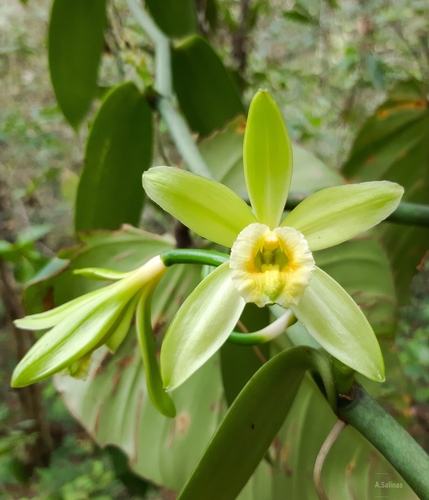
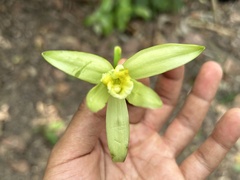
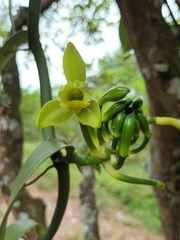
Flat-leaved vanilla (Vanilla planifolia) is a tropical climbing orchid in the Orchidaceae family, described by Andrews in 1808 and native from southern Mexico to northern Brazil. Its fruit must develop after pollination and undergo lengthy curing to become the familiar spice.
Read moreFlat-leaved vanilla, Vanilla and Vanilla orchid
Give plenty of ambient light without direct sun on the leaves.
Bright filtered light
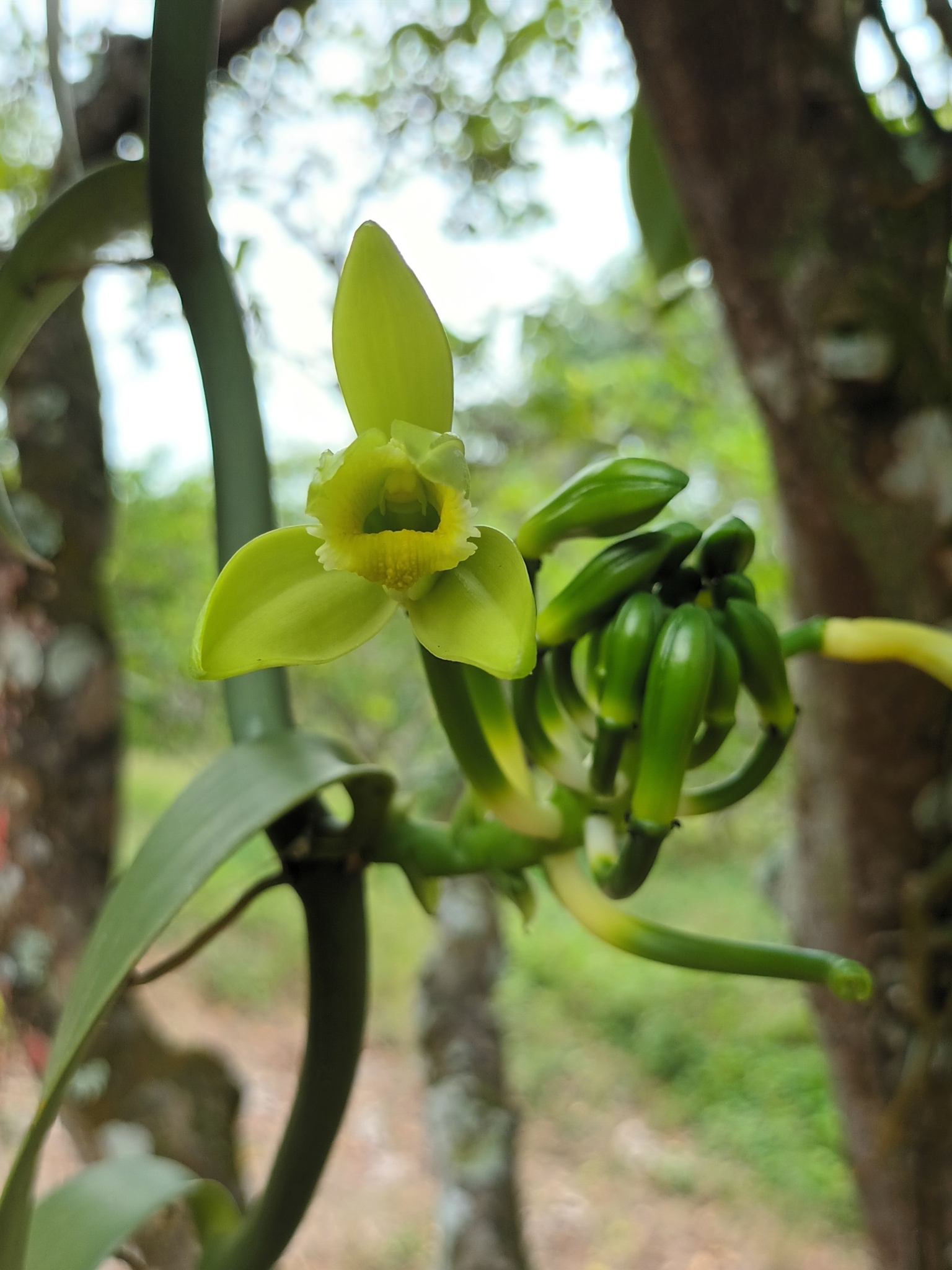


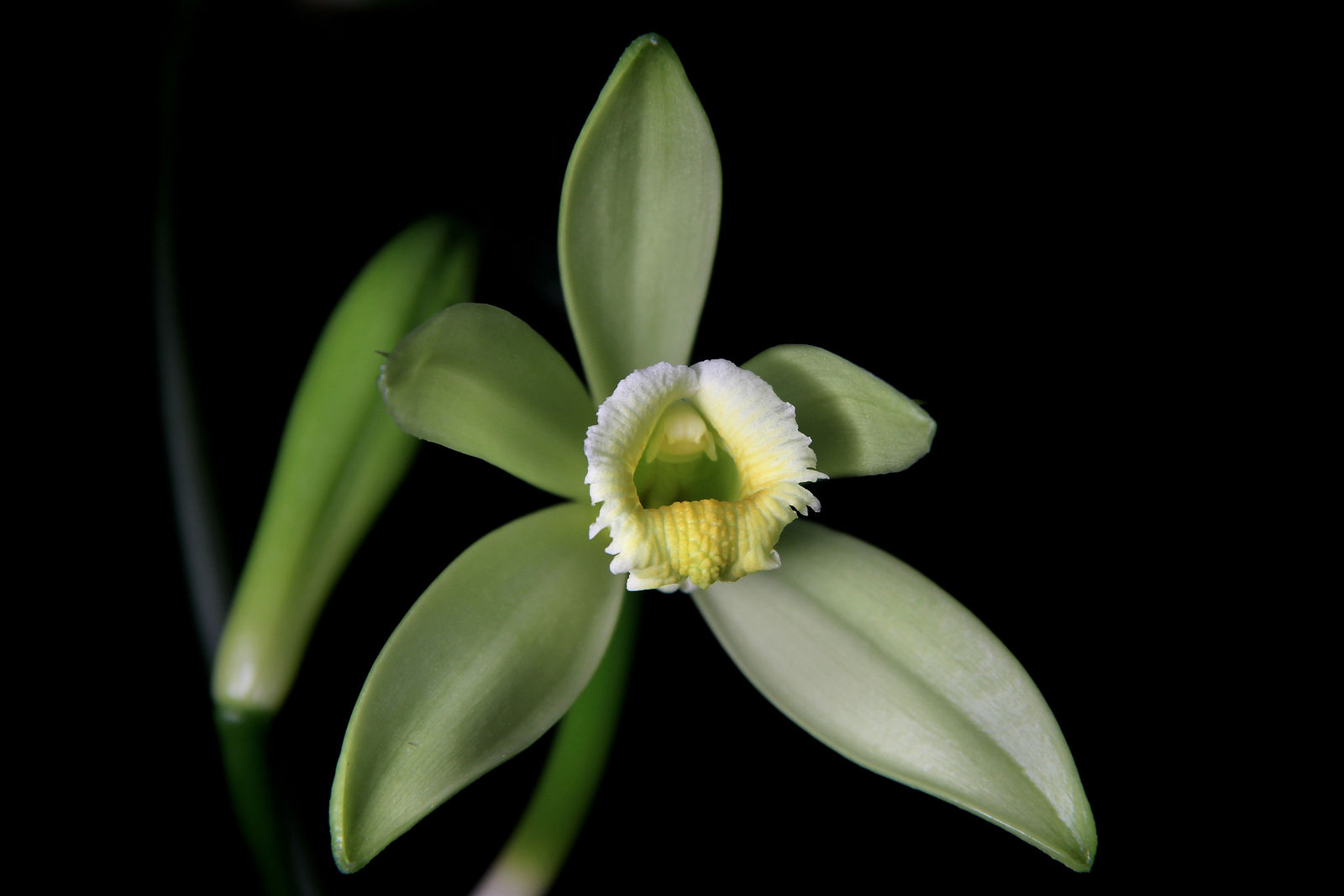

© photo
(c) Ariel Salinas Seq., some rights reserved (CC BY-NC), uploaded by Ariel Salinas Seq. · cc-by-nc
iNaturalist User · cc0
Aldous13 · cc-by
Taken Mar 6, 2013 by Daniel Barthelemy (cc-by-nc)
© copyright of the Board of Trustees of the Royal Botanic Gardens, Kew.




Global distribution
POWO/WCVP places the native range from southern Mexico to northern Brazil. Production areas such as Madagascar, Réunion and Java represent cultivation or introductions rather than the native range.
- Native8
- Mexico
- Belize
- Guatemala
- Honduras
- Costa Rica
- Panama
- Colombia
- Northern Brazil
Hexagons: regions where the plant occurs. Green dots: native range.1
Identity
Flat-leaved vanilla (Vanilla planifolia Andrews, 1808) is a climbing orchid in the Orchidaceae family. The spice comes from capsules harvested and carefully cured over time, rather than from an isolated seed or a fragrant flower. 1 3
Growing vanilla orchid, also known simply as vanilla, in a pot means caring first for a tropical vine. Producing a pod is an advanced cultivation goal, rather than the normal behavior of a young houseplant. 4 5
Recognition
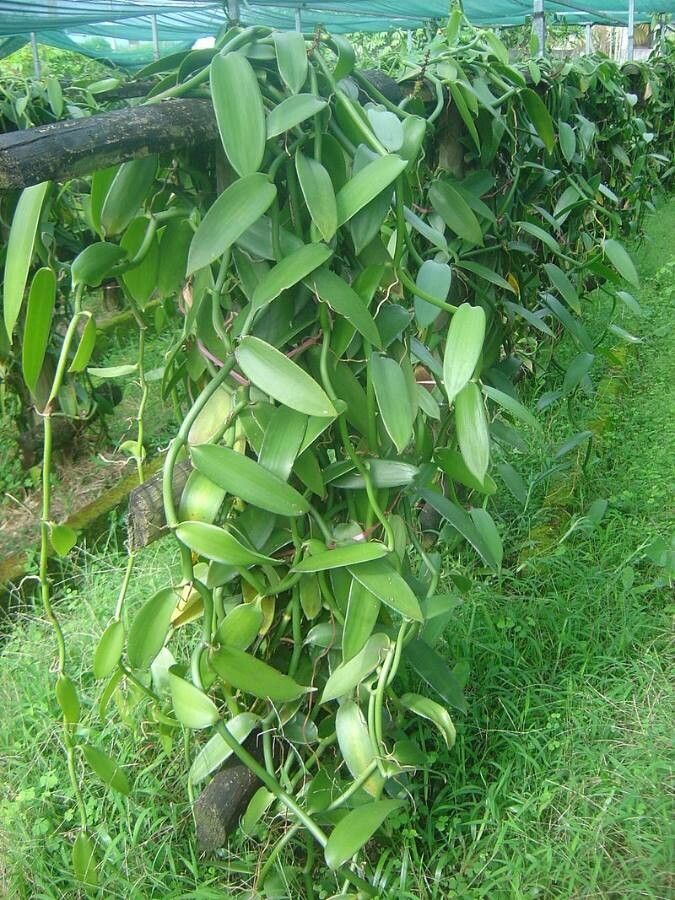
Long fleshy stems carry thick alternate leaves and aerial roots that cling to a support. A mature vine can reach roughly 10 m (33 ft) in length. In a pot, guide that length around a support or into loops; it is not the height of a compact plant. 6 7
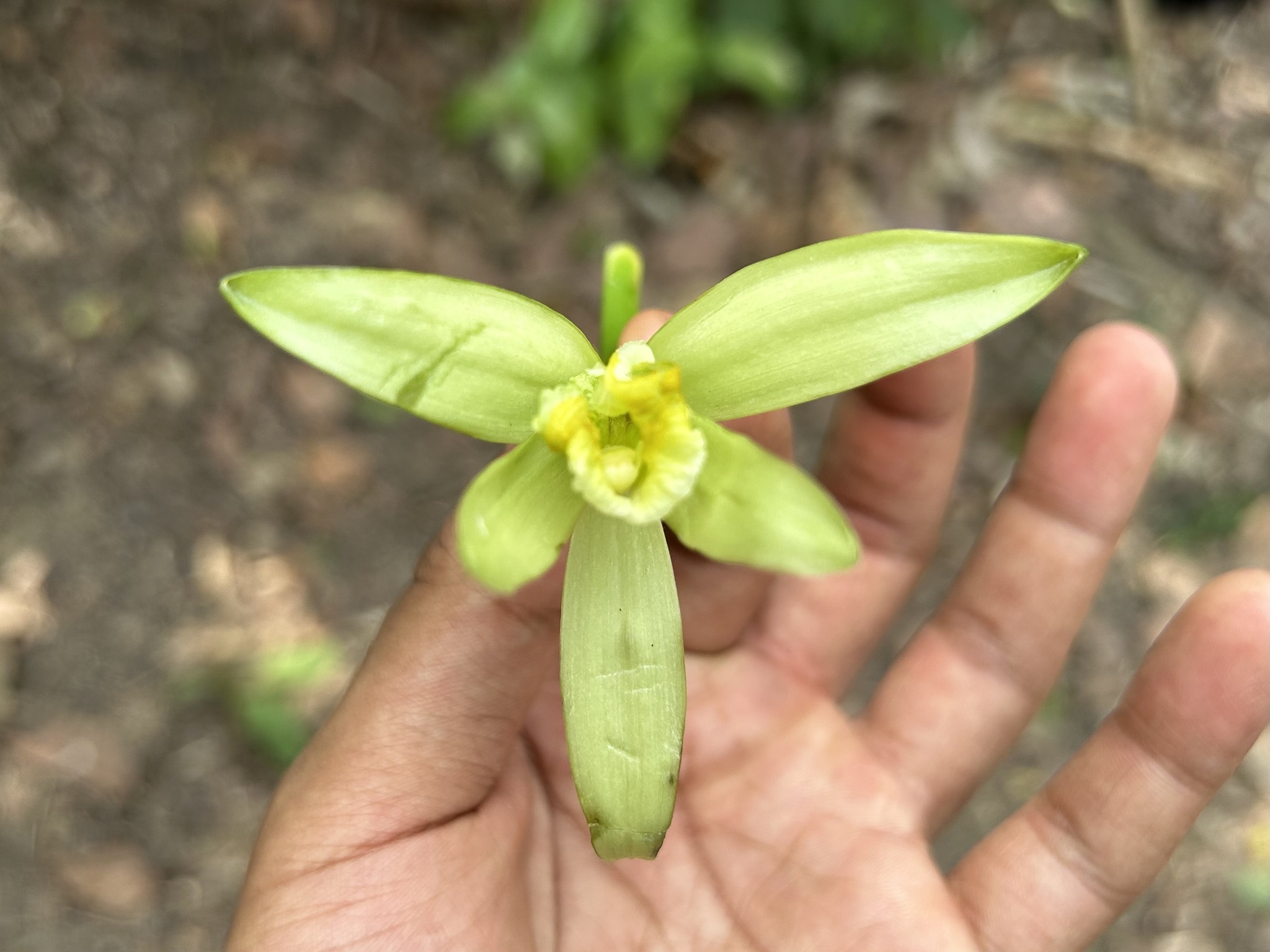
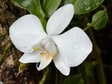
Greenish to yellow flowers are short-lived and appear on mature plants. The elongated fruit becomes a vanilla pod only after pollination, development and curing. 5 7 9
Useful taxonomy
For flat-leaved vanilla, POWO recognizes Vanilla planifolia as the accepted name. The main distinctions concern Vanilla tahitensis, Vanilla pompona and trade names for vanilla, which do not always refer to the same living plant. 1 2
- Epidendrum vanilla L. (historical synonym)
- Vanilla fragrans Salisb. (historical synonym)
- Myrobroma fragrans Salisb. (historical synonym)
The word vanilla can refer to a species, a cured pod, a flavoring or a food product. These uses of the name describe different things. 1
Habitat and range
A humid tropical forest vine, this species climbs living supports in filtered light. Its native range extends from southern Mexico to northern Brazil; Madagascar, Réunion and Java are chiefly areas of cultivation or introduction. 1 6
Indoors, these forest conditions call for an airy orchid mix, a vertical support, regular moisture and steady warmth around 20–30 °C (68–86 °F). Standing water around the roots is as dangerous as air that is too dry. 7 5 9
Life cycle and reproduction
Flowers develop on long, mature stems. Each lasts only briefly, and outside the range of suitable pollinators, hand pollination becomes essential for capsule production. 6 7
Propagation mainly uses stem cuttings with nodes; tissue culture is also used commercially. Division is not the practical method for this vine. Pods then need several months to develop and further postharvest curing, separating growing the plant from producing the spice. 7 9
Uses and risks
Flavoring is the main use of the cured capsules, which yield natural vanilla. The living plant is also grown in tropical collections as an example of a climbing orchid. 5 7 9
Orchids are listed as non-toxic to animals by the ASPCA, but Vanilla sap can irritate skin during repeated cutting or harvesting. Food extracts are a separate concern, since they may contain alcohol or other ingredients. 8 6
Varieties, look-alikes and related plants
Names such as Bourbon, Tahiti and Madagascar often indicate provenance or production type rather than identify a potted plant. When buying, check that it is a rooted V. planifolia, rather than merely a dried-out cutting. 7 6
Watch for these frequent look-alikes:
- Vanilla pompona, another cultivated vanilla orchid, with different pods and fragrance
- Vanilla tahitensis, Tahitian vanilla, a distinct cultivated taxon
- Hoya carnosa, a waxy indoor vine rather than an orchid
A support, alternate fleshy leaves, aerial roots and the botanical name help distinguish flat-leaved vanilla from hoyas, dischidias and other tropical vines. 3
Practical checks
With this climbing orchid, a hydrated, attached and actively growing stem is the priority. Pale aerial roots, firm unwrinkled leaves and steadily extending shoots indicate a workable balance of warmth, filtered light and moisture. A shriveled stem often points to dry air, too few places for roots to attach or a medium that suffocates the roots. 7
Useful checks focus on the following:
- a vertical support or looped vine to provide more anchoring points;
- coarse, uncompacted mix around the roots;
- regular moisture with air circulation;
- bright light, filtered especially behind hot glass;
- patience before expecting flowers or capsules.
Vanilla production requires a mature plant, a brief flowering window, often hand pollination and lengthy capsule curing. A healthy plant without pods is therefore a normal horticultural success. For household safety, the ASPCA generally lists orchids as non-toxic to cats and dogs, but vanilla sap may cause contact dermatitis. Food extracts require separate consideration from the living vine. 8 6
When buying a cutting, avoid very short or dehydrated sections. A viable cutting needs several nodes, a stem that is still firm and at least one point able to anchor. A single leaf or a stem without a node will not establish an orchid. 7
Main sources
- Plants of the World Online / Kew, Vanilla planifolia
- International Plant Names Index, Vanilla planifolia
- GBIF Backbone Taxonomy, Vanilla planifolia
- Wikidata, Vanilla planifolia
- French Wikipedia, Vanilla planifolia
- Wikipedia EN, Vanilla planifolia
- University of Florida IFAS Extension, Vanilla Growing in South Florida — Vanilla planifolia (HS1348)
- ASPCA, Orchid non-toxic entry
- University of Florida IFAS Extension, Growing Vanilla in the Home Garden (2026)
Frequently asked questions
Can flat-leaved vanilla produce pods indoors?
It is possible but requires advanced growing skills: a mature vine, flowering, hand pollination and lengthy curing of the capsules.
Is flat-leaved vanilla an orchid?
Yes. Vanilla planifolia is a climbing orchid, unlike the rosette-forming orchids commonly sold as houseplants.
Why is my flat-leaved vanilla shriveling?
Overly dry air, weak roots or a growing medium that is too compact often restrict water uptake.
Similar plants
If you are unsure about a plant’s toxicity, ask a botanist or veterinarian for advice.