
Arrowleaf elephant's ear (Xanthosoma sagittifolium, )
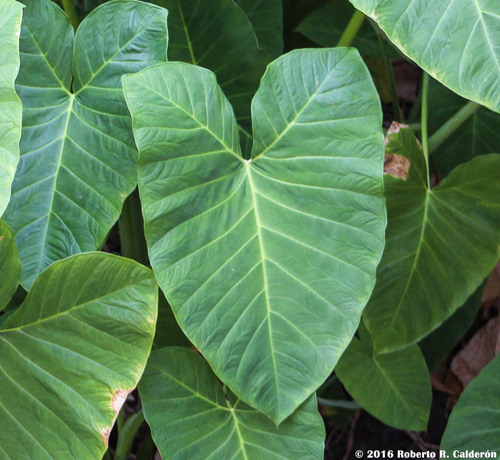


Arrowleaf elephant's ear (Xanthosoma sagittifolium) is a tropical American member of the Araceae whose large, arrow-shaped leaves have their petioles attached at the base of the blade. Its corms are used as food after cooking; its foliage is also grown as an ornamental.
Read moreArrowleaf elephant's ear
Arum sagittifolium, Caladium sagittifolium, Xanthosoma mafaffa and Xanthosoma violaceum
Give plenty of ambient light without direct sun on the leaves.




© photo
(c) Roberto R. Calderón, some rights reserved (CC BY-NC), uploaded by Roberto R. Calderón · cc-by-nc
葉子 · cc0
iNaturalist User · cc-by
Taken Jul 19, 2021 by Victoria Chaves Ramirez (cc-by-sa)
Taken Apr 17, 2019 by OTS - O.Vargas (cc-by-nc-sa)
© copyright of the Board of Trustees of the Royal Botanic Gardens, Kew.




Global distribution
Native range from Costa Rica to southern tropical America; numerous introductions in the tropics.
- Native4
- Invasive1
- Costa Rica
- Colombia
- Peru
- Brazil
- Florida
Hexagons: regions where the plant occurs. Green dots: native range.1
Identity
Arrowleaf elephant's ear (Xanthosoma sagittifolium (L.) Schott) is an American member of the Araceae with large, arrow-shaped leaves. Its French name, chou caraïbe, is used on Réunion for a food plant whose underground organs are eaten cooked. Its petiole attaches at the base of the leaf blade, a useful feature for distinguishing it from taro. 42
Arrowleaf elephant's ear is a herbaceous perennial that grows rapidly when warmth and moisture suit it. It is described as reaching 2 m (6.6 ft) in height in tropical horticulture. Its appeal extends beyond the harvest: leaves carried on long petioles are also the main attraction of ornamental plants. 23
Identification
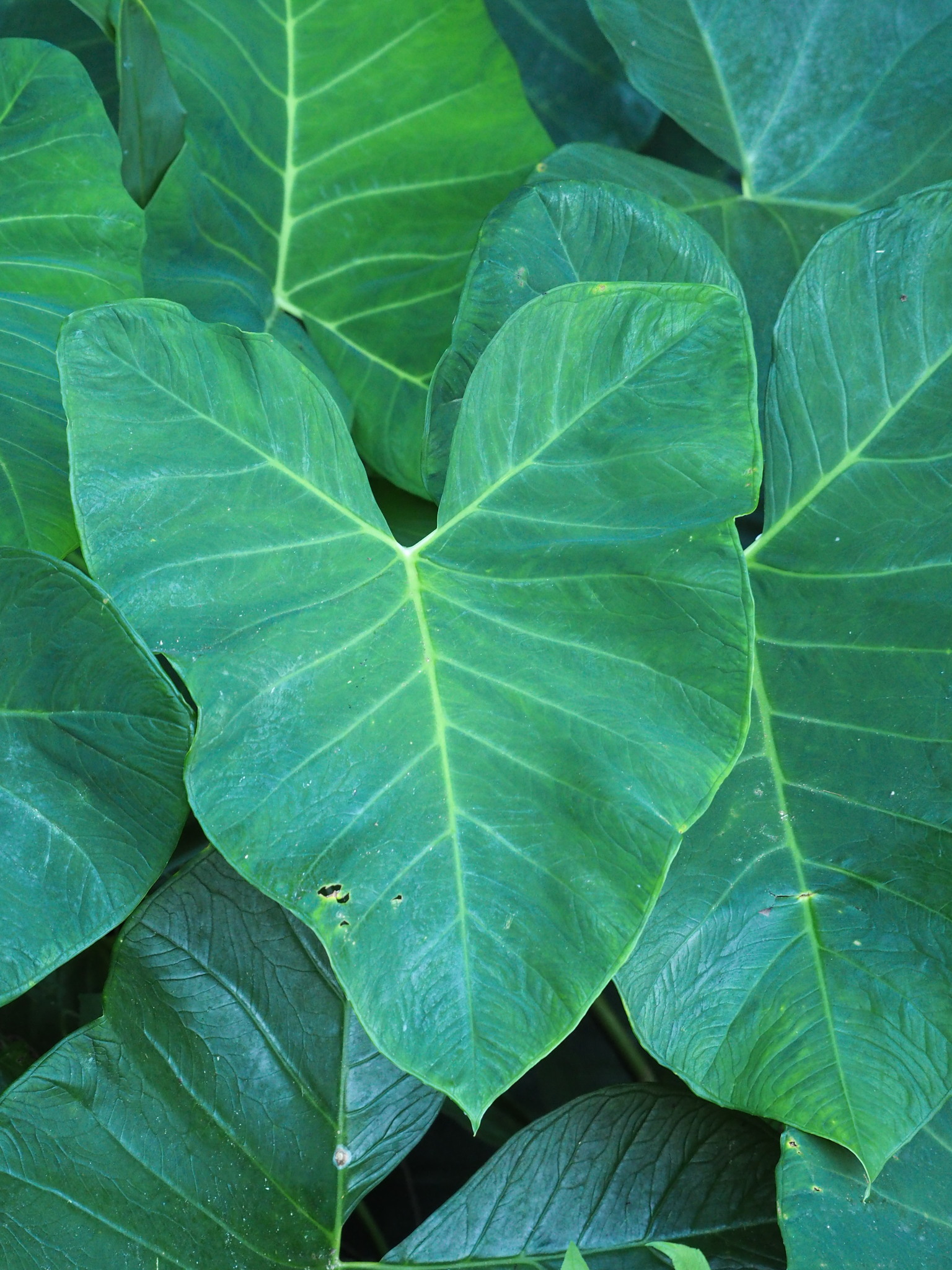
Arrowleaf elephant's ear develops a short, thick stem, globose to cylindrical in shape. Petioles can reach 1.5 m (4.9 ft); they carry dark green or purplish leaves up to 90 cm (35 in) long and 60 cm (24 in) wide. These dimensions describe a well-developed plant in tropical conditions without guaranteeing the same size in an indoor container. 2
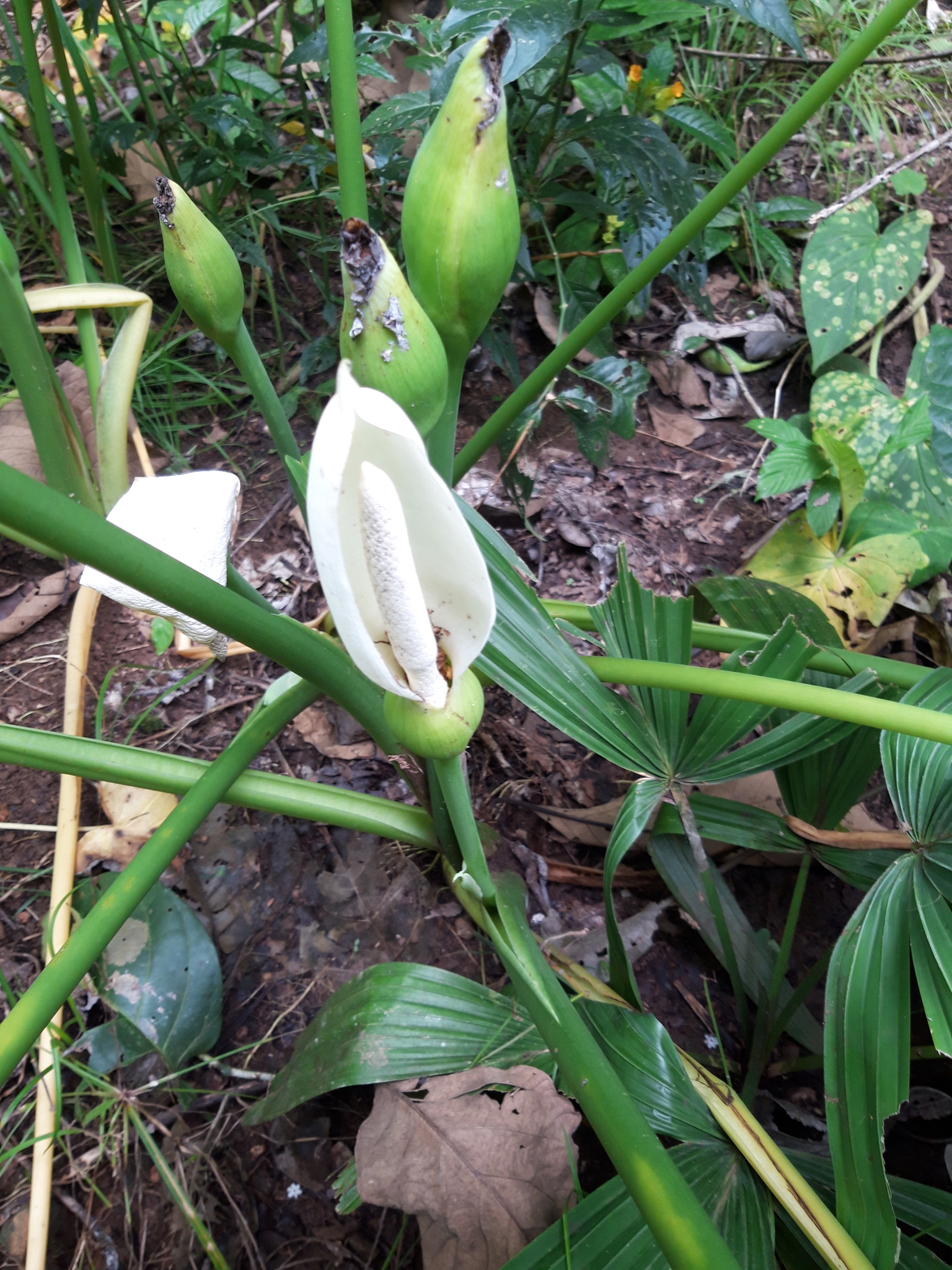
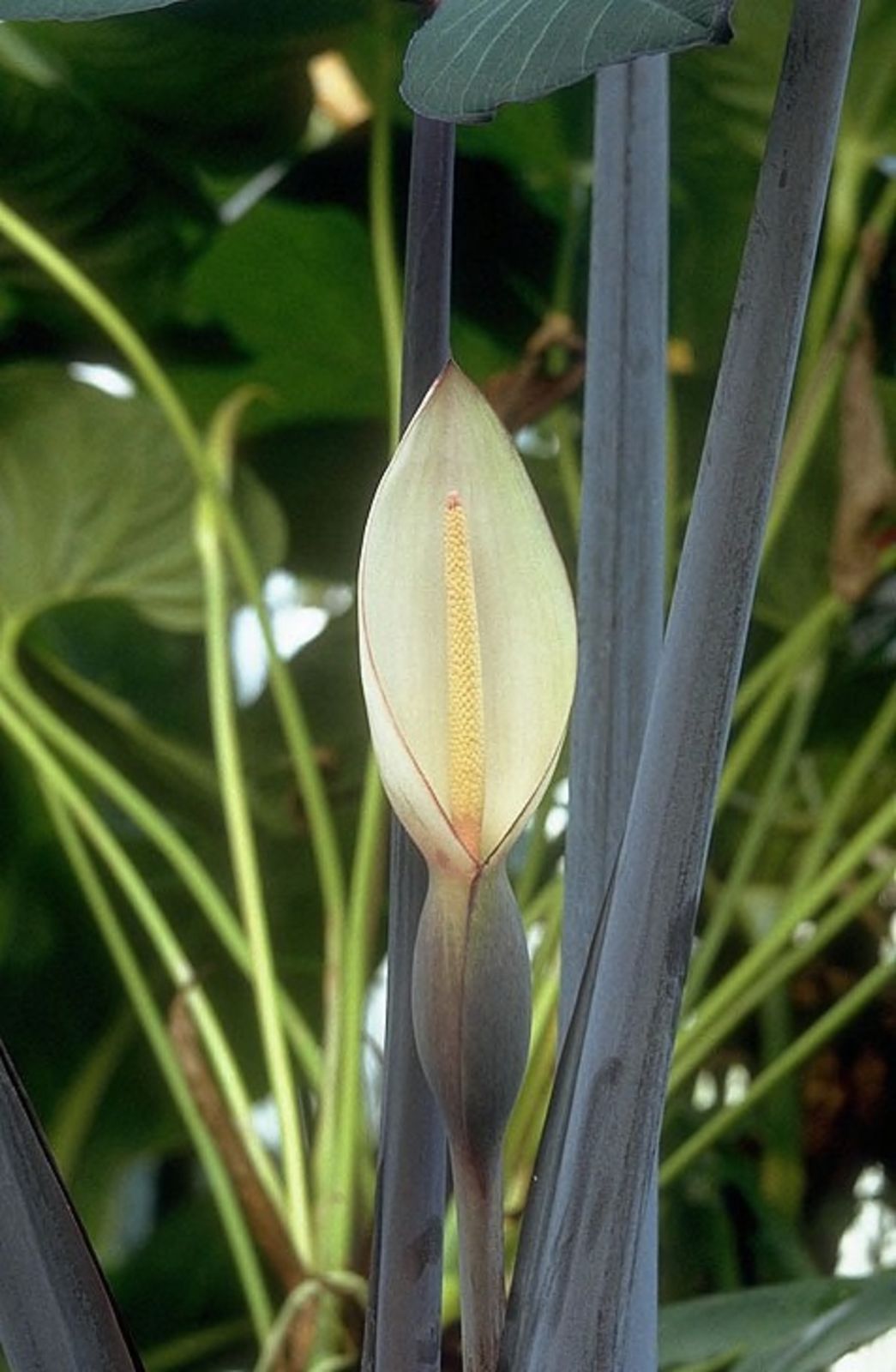
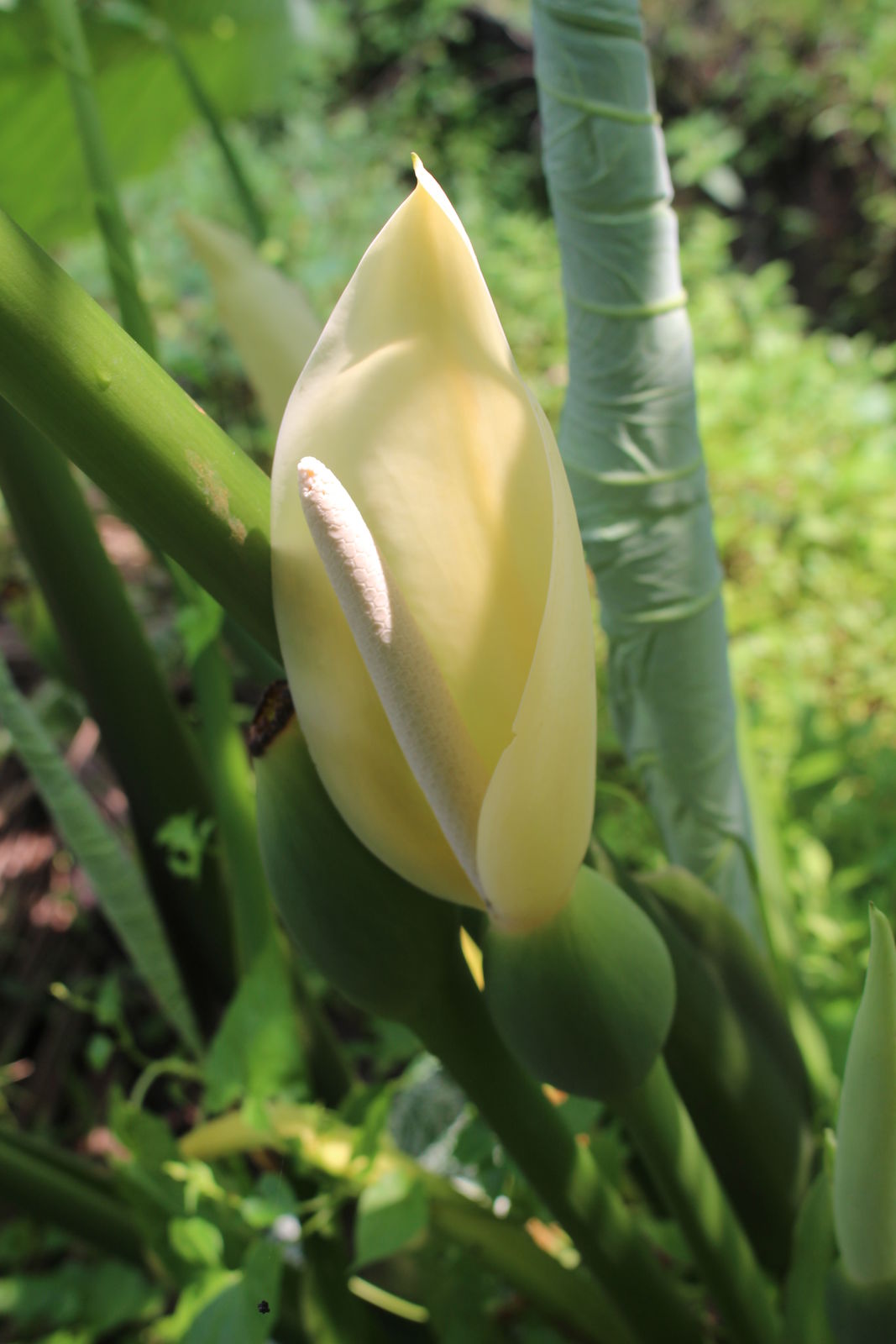
To identify the foliage, follow the petiole to its attachment point rather than judging the outline alone. The blade is sagittate, with two basal lobes. The inflorescence combines a spadix surrounded by a boat-shaped spathe, which may be greenish or purplish. Flowering remains uncommon among elephant's ears grown in temperate climates. 23
Useful taxonomy
The accepted name of Arrowleaf elephant's ear is Xanthosoma sagittifolium (L.) Schott, published in this combination in 1832. The species belongs to the Araceae family, in the order Alismatales. Parentheses in the authority recall the move from an earlier name, Arum sagittifolium L., its basionym. 1
The synonymy also includes Caladium sagittifolium (L.) Vent., Xanthosoma mafaffa Schott and Xanthosoma violaceum Schott. These botanical names can therefore lead to Arrowleaf elephant's ear in older works. They do not by themselves denote variegated cultivars or horticultural hybrids. 1
Habitat and distribution
The native range accepted here for Arrowleaf elephant's ear extends from Costa Rica to southern tropical America, including Colombia, Peru and Brazil. The species has been introduced in many tropical regions. It occurs beneath the forest canopy and on shaded banks. 12
In Florida, Arrowleaf elephant's ear can form dense colonies that shade and compete with native plants. Rhizomes and their fragmentation help it spread. This behavior concerns populations established in a favorable climate; it does not define a French regulatory status. For container cultivation, choose a growing medium that is moist but well drained, rather than transferring every aquatic use of elephant's ears to this species. 52
Life cycle and seasonal cultivation
Arrowleaf elephant's ear renews its foliage from corms, swollen underground stems. Rhizomes produce offsets: this vegetative propagation explains the expansion of clumps. The foliage is evergreen in tropical conditions; slower winter growth in temperate cultivation therefore does not describe an identical rest period in every climate. 523
In containers, choose partial shade and a fertile mix that retains moisture without becoming waterlogged. Seasonal advice for the elephant's ear group calls for potting up in warmth in March in its Northern Hemisphere reference, then moving plants outdoors once the weather has warmed. More water and fertilizer are recommended during growth, particularly in containers. 23
In temperate Northern Hemisphere climates, overwinter frost-free and reduce watering when the plant slows down. Resume watering and feeding as spring growth restarts. Adapt seasonal timing to local conditions. Needs follow actual growth: a plant kept warm and in leaf is not managed like a dormant corm. 3
Uses and precautions
The cooked corms of Arrowleaf elephant's ear are used as food on Réunion; they can be prepared like potatoes. The flesh of the harvested organs may be white, pink or yellow. Food use does not establish that a raw plant is harmless. 423
The oxalates present in these aroids include irritating calcium oxalate crystals. In humans, contact with Arrowleaf elephant's ear leaves can cause skin irritation or an allergic reaction. Avoiding sap contact and keeping cut plant parts out of children's reach are handling precautions. 35
For cats, dogs and horses, risk specific to each audience remains unestablished here; this status does not mean that the plant is safe. Agricultural use as fodder is not enough to demonstrate safety for each of these animals. 5
Cultivar and similar plants
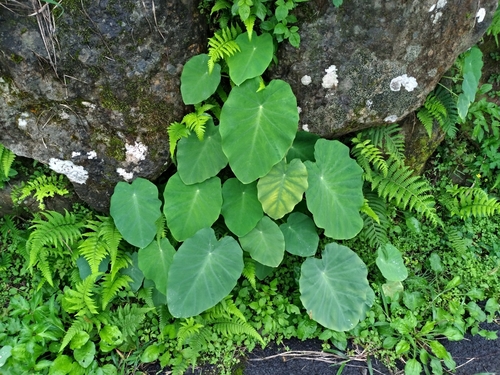
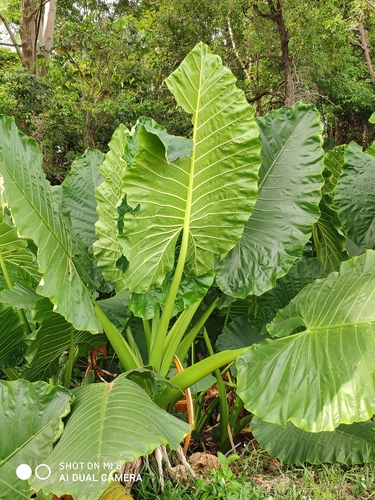
Taro (Colocasia esculenta) has a peltate blade: the petiole joins its underside away from the edge. In Arrowleaf elephant's ear, the attachment is at the base. Alocasias often share this basal attachment, so it mainly distinguishes Arrowleaf elephant's ear from taro rather than separating every aroid genus. 32
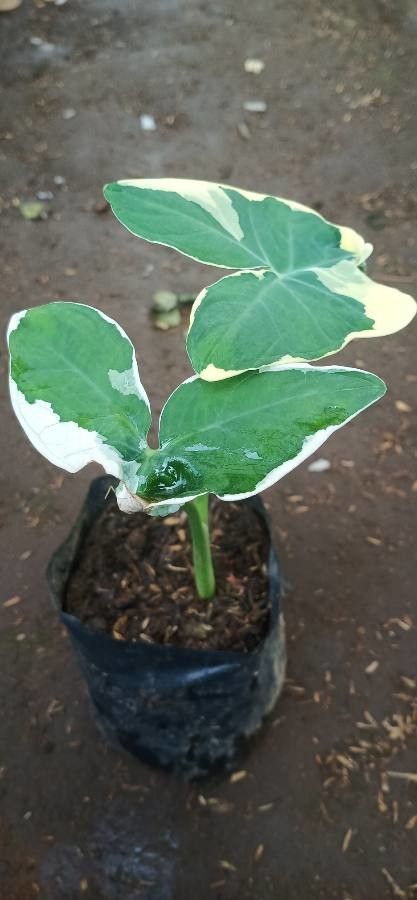
The cultivar ‘Variegatum Monstrosum’ has variegated leaves whose upper blade narrows to a threadlike extension. Its described height of 1–1.5 m (3.3–4.9 ft) applies to this cultivar of horticultural origin. This variegation and unusual blade shape do not characterize the whole species; the cultivar name does not denote a distinct species. 6
Main sources
- Plants of the World Online, Xanthosoma sagittifolium
- NParks, botanical profile of Xanthosoma sagittifolium
- University of Wisconsin–Madison Extension, Elephant Ears
- Chambre d’agriculture de la Réunion, Les légumes oubliés, chou caraïbe (food crop profile)
- University of Florida IFAS, Xanthosoma sagittifolium
- NParks, Xanthosoma sagittifolium ‘Variegatum Monstrosum’
Frequently asked questions
Is Arrowleaf elephant's ear the same plant as taro?
No. Arrowleaf elephant's ear is a Xanthosoma; taro is Colocasia esculenta. The former has its petiole attached at the base of the leaf blade, while taro has it attached beneath the blade.
Can you eat the corms raw?
No. Food uses of Arrowleaf elephant's ear concern cooked corms; because of the oxalates, the plant must not be consumed raw.
How should you adapt cultivation to a temperate winter?
Horticultural advice for the elephant's ear group calls for frost-free overwintering and less water when growth slows.
Is variegation a feature of the whole species?
No. The variegated foliage and partly threadlike leaf blade described here belong to the cultivar ‘Variegatum Monstrosum’.
Similar plants
If you are unsure about a plant’s toxicity, ask a botanist or veterinarian for advice.