
Ohio buckeye (Aesculus glabra, )
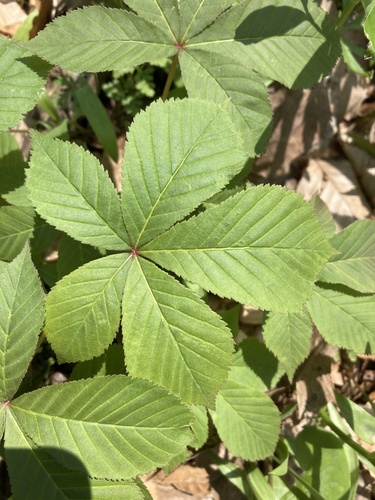
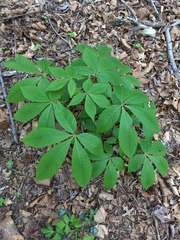
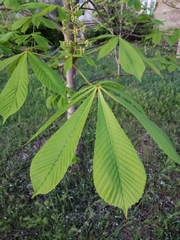
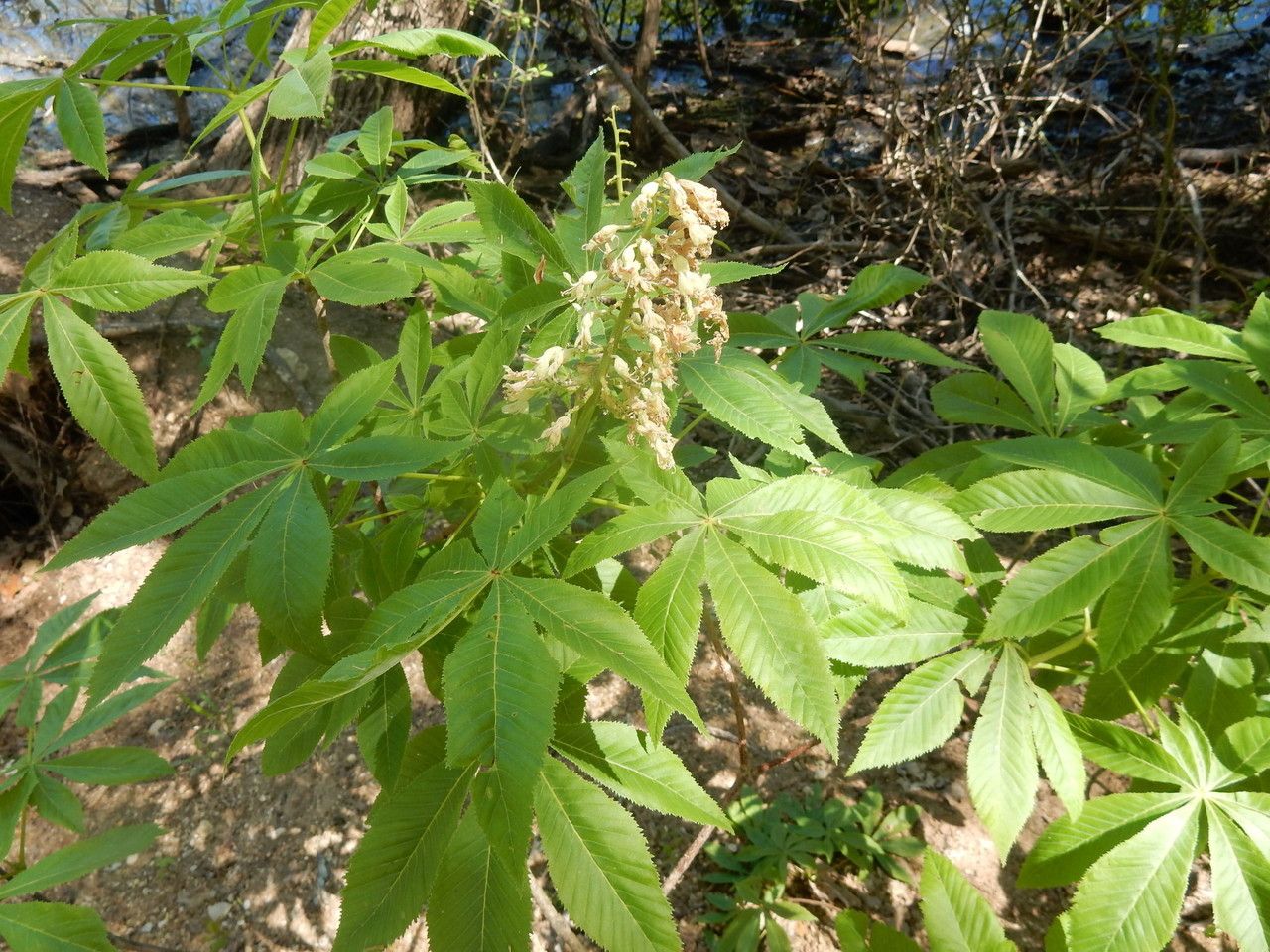
Ohio buckeye (Aesculus glabra) is a deciduous tree in the Sapindaceae, native to the central and eastern United States and southwestern Ontario. Palmate leaves, prickly capsules enclosing brown seeds with pale scars, and the foul smell of bruised bark and twigs distinguish it.
Read moreOhio buckeye, Texas buckeye and Fetid buckeye
Allow a few hours of direct sun per day, preferably morning or evening.
Full sun to partial shade; partial shade is advisable in hot climates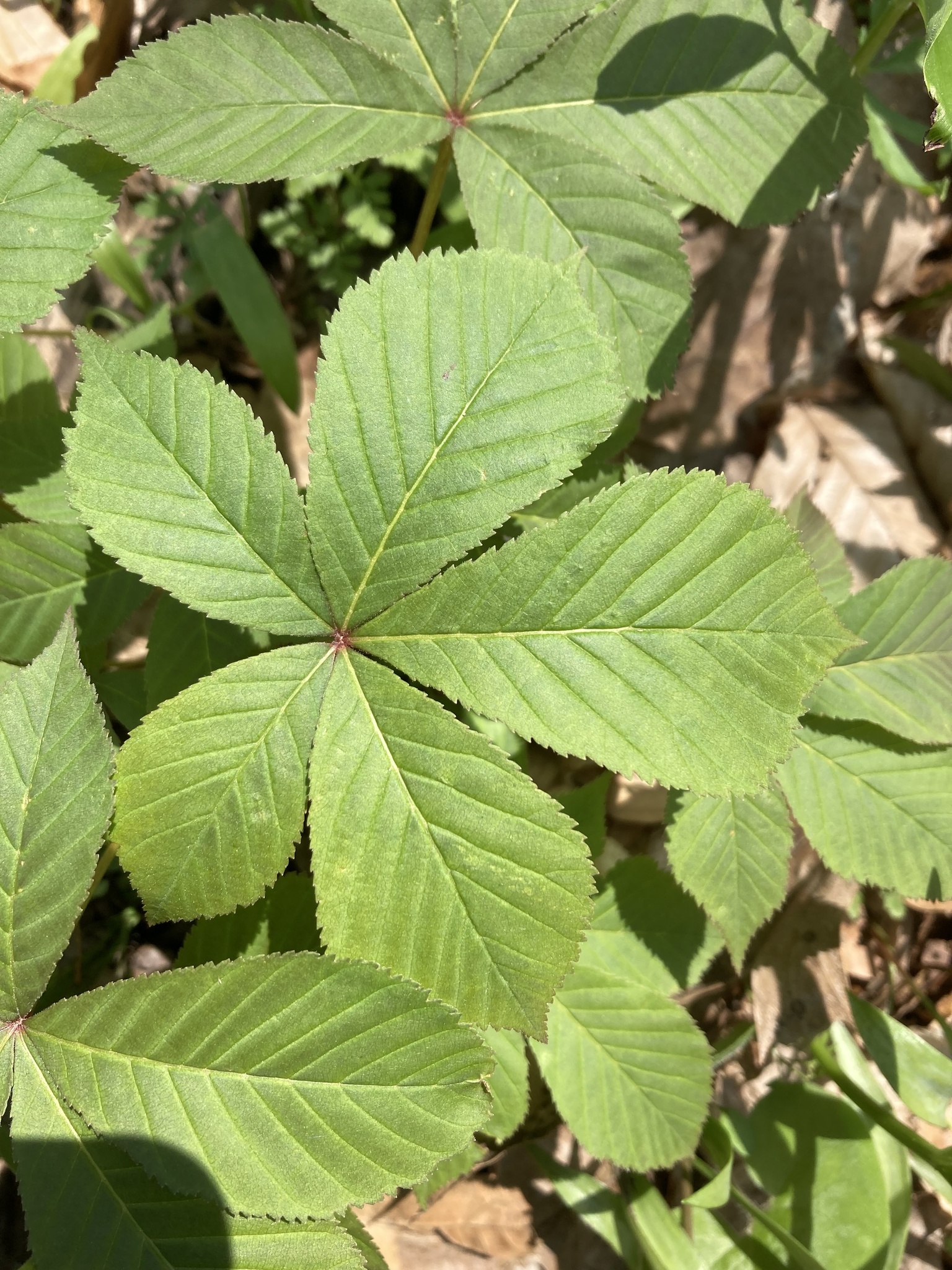
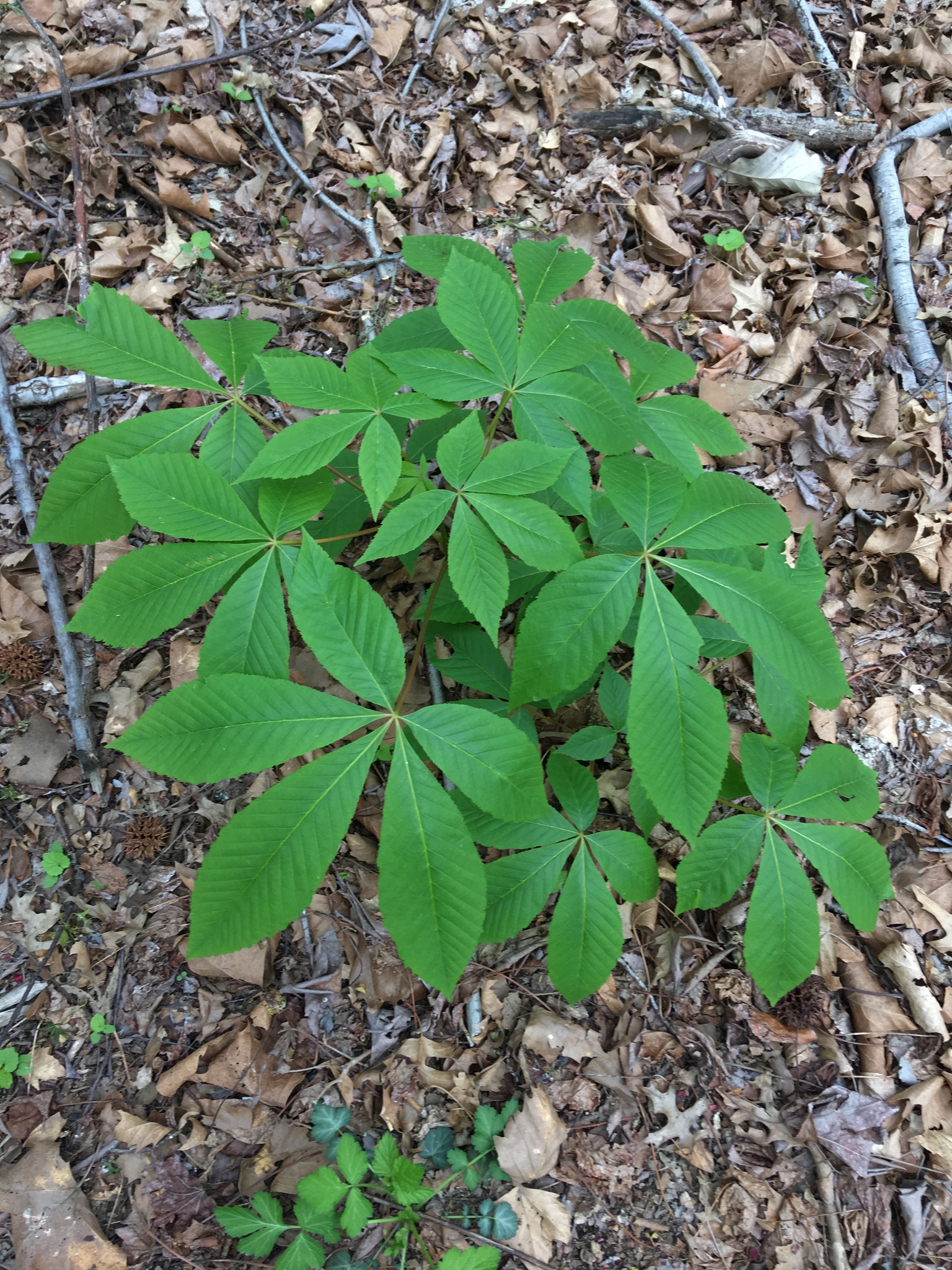
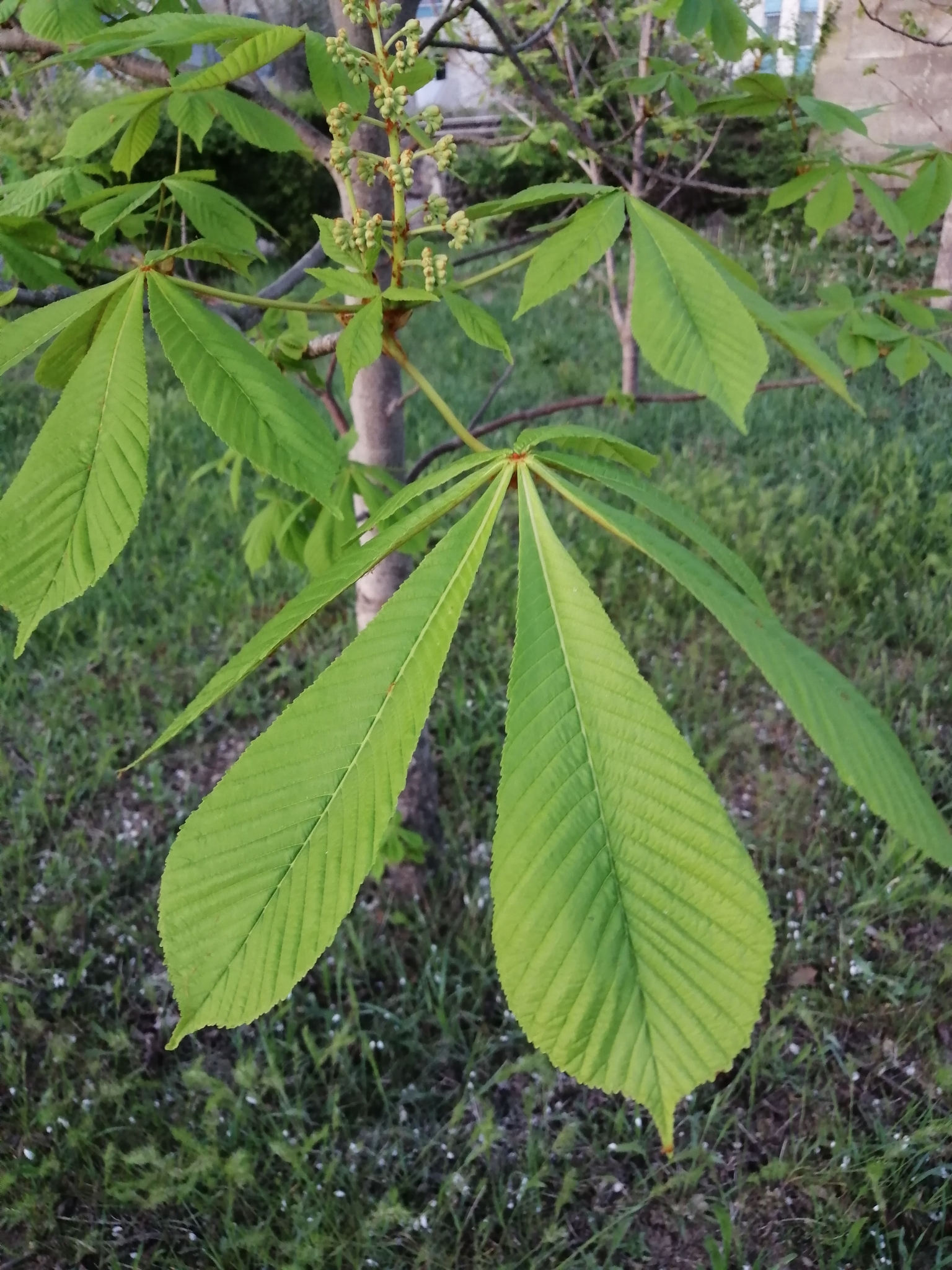


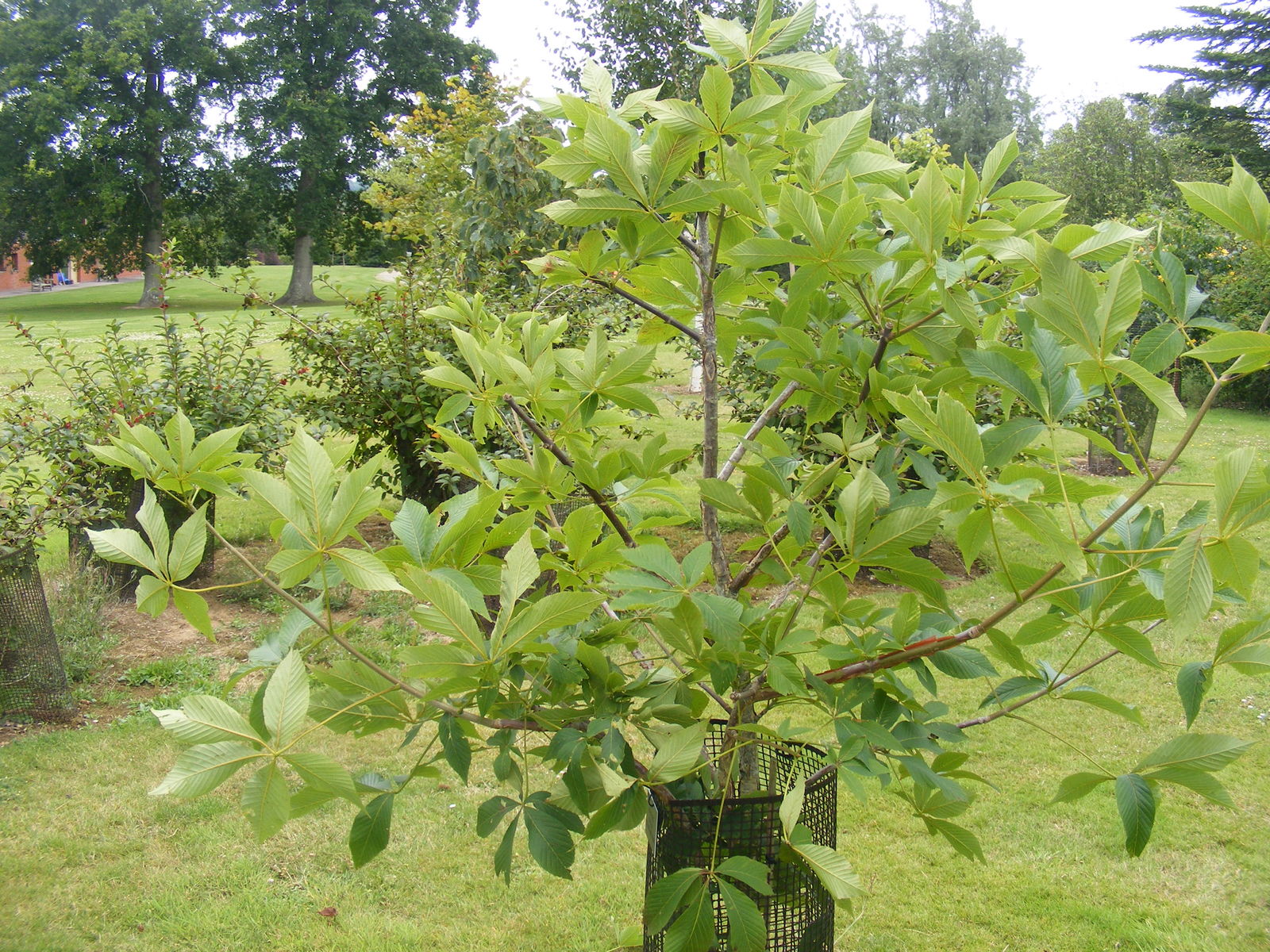
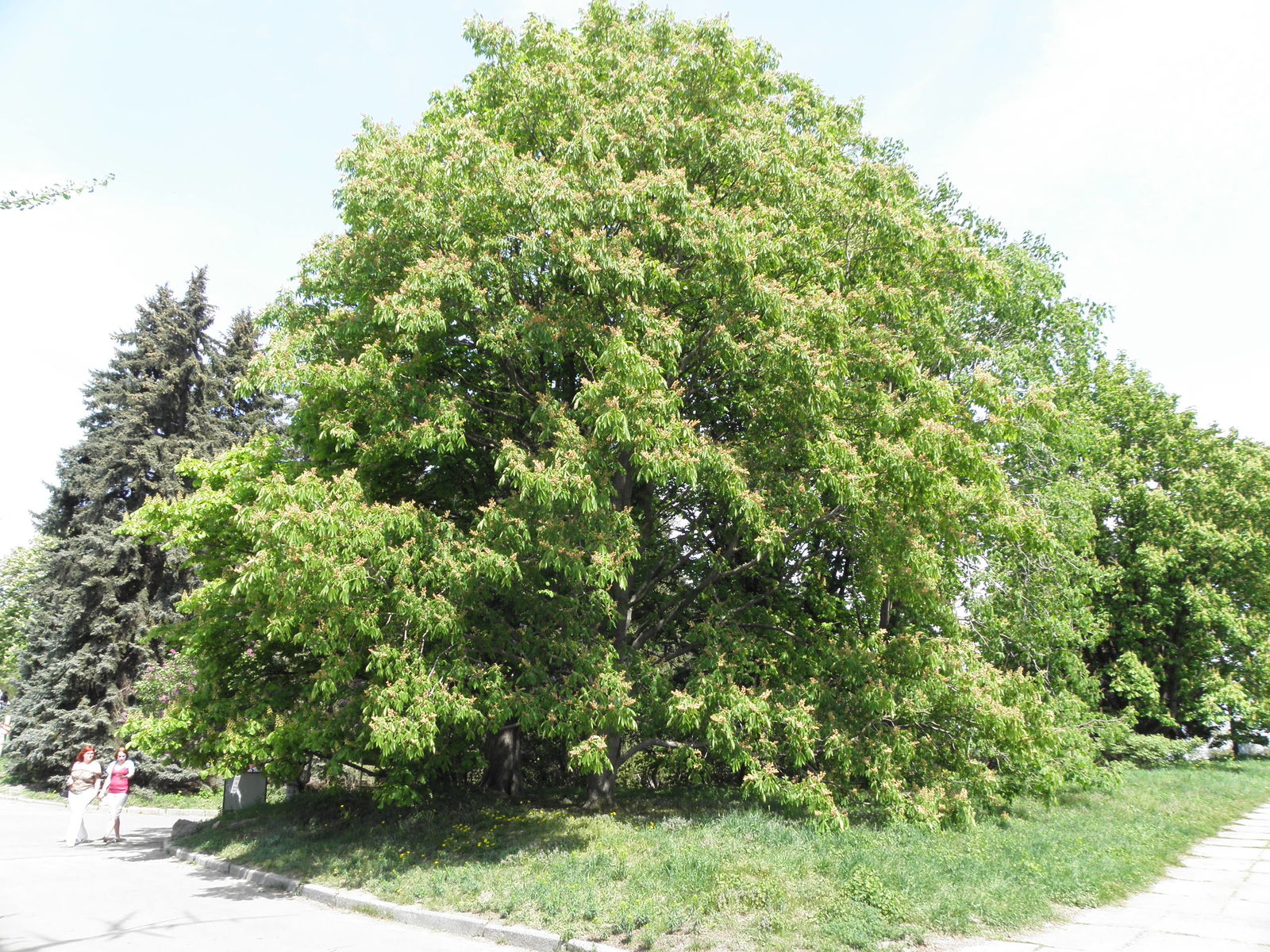
© photo
iNaturalist User · cc0
Daniel Atha · cc0
Roman A. Lagazyuk (Роман А. Лагазюк) · cc-by
Taken Mar 19, 2021 by catherine white (cc-by-sa)
Taken Sep 15, 2012 by Photoflora - Jean-Luc TASSET (©)
Taken Aug 4, 2020 by laura levesque (cc-by-sa)
© copyright of the Board of Trustees of the Royal Botanic Gardens, Kew.




Global distribution
Aesculus glabra is native to the midwestern United States and lower Great Plains, extending southeast into the geological Black Belt of Alabama and Mississippi. A single disjunct Canadian population grows on Walpole Island in Lake St. Clair, southwestern Ontario. Elsewhere it is mainly an ornamental or collection tree, with no documented invasive status.
- Native2
- United States
- Canada (Ontario)
Hexagons: regions where the plant occurs. Green dots: native range.1
Identity
Ohio buckeye (Aesculus glabra Willd., 1809) is a deciduous tree in the Sapindaceae, subfamily Hippocastanoideae. It grows mainly along streams and in lowland forests of its native midwestern United States. The Latin epithet glabra means hairless, referring to mature foliage with little or no hair, unlike the more densely hairy leaves of several related Aesculus species. 1 2
The name Ohio buckeye derives from the Native American word hetuck, meaning deer’s eye, which describes the pale mark on the brown seed. First applied to pioneers on the Ohio frontier, buckeye became a nickname for all the state’s residents. Fetid buckeye refers to the unpleasant smell of bruised bark and twigs. Texas buckeye is another established English name. 3
Recognition
On the best sites, wild Aesculus glabra exceeds 20 m (66 ft) and rarely reaches 40 m (131 ft), compared with 6–12 m (20–39 ft) for trees grown in gardens and parks. Opposite, long-stalked leaves are palmate. The typical variety has five leaflets, oval to obovate-lanceolate with unevenly toothed edges; var. arguta, farther west toward the Great Plains, has seven to eleven narrower leaflets. 2 3
Young bark is pale gray to gray-brown, first cracking into small, thin plates before becoming smoother and ash-gray with age. Even without flowers or fruit, bruised bark and twigs give off a pronounced foul smell. Common horse chestnut, widely planted in France, has a much more neutral smell. 7
Yellow-green to pale yellow flowers form upright panicles 10–15 cm (4–6 in) long. Individual flowers measure 2–3 cm (0.8–1.2 in). Their stamens project well beyond the petals, distinguishing Ohio buckeye from yellow buckeye (Aesculus flava), whose stamens remain shorter than the petals. 7
The fruit is a rounded, woody capsule 4–5 cm (1.6–2 in) across, light brown when ripe and covered with small prickles that often fall away. Each capsule contains one to three seeds, rarely up to six. Smooth, dark brown seeds bear a broad pale scar resembling a deer’s eye, the origin of buckeye. 7
Useful taxonomy
Two botanical entities make up the species, with only a narrow overlap between their ranges:
- Aesculus glabra var. glabra, the typical variety, centered on the Ohio basin and bearing five broader leaflets;
- Aesculus glabra var. arguta (Buckley) B.L.Rob., a shrubbier western variety extending toward the Great Plains, with seven to eleven narrow, doubly toothed leaflets.
Older literature includes the synonym Aesculus glabra subsp. arguta (Buckley) A.E.Murray and geographical varieties now treated as synonyms, such as Aesculus glabra var. leucodermis Sarg. POWO’s accepted name remains Aesculus glabra Willd. 1
Habitat and range
Ohio buckeye is native to the midwestern United States and lower Great Plains, extending southeast to the geological Black Belt of Alabama and Mississippi. Its sole Canadian population is isolated on Walpole Island in Lake St. Clair, southwestern Ontario. 1 7
The species grows along streams, in mesic lowland forests and on old-field edges, on calcareous or alluvial soils. IUCN lists Aesculus glabra as Least Concern: its broad range has no documented threat at the global scale. 6
Outside its native range, Ohio buckeye is mainly planted as an ornamental or collection tree, with no documented invasive status elsewhere. Hardier than common horse chestnut, it tolerates approximately −35 to −40 °C (−31 to −40 °F) depending on provenance and grows in USDA zone 3, well beyond its original range. 2
Life cycle and reproduction
Flowering takes place in local spring before the leaves fully expand. Ohio buckeye is trimonoecious: one tree bears male, female and functionally bisexual flowers. This arrangement favors cross-pollination by visiting insects carrying pollen between trees, without excluding self-fertilization. 7
Fresh seeds collected in local autumn need winter cold stratification in moist soil to germinate properly the following spring. Seeds quickly lose viability if allowed to dry or sown too late. The taproot develops rapidly, making late transplanting risky; plant young trees in their permanent position early. 2 3
Uses and risks
The soft, light wood has little value as timber. Ohio buckeye is occasionally planted for ornament, but plentiful fallen fruit and twigs make it a poor choice near a house or sidewalk. Recent university research has found preliminary anticancer properties in bark and seed extracts. This remains exploratory research. 2 8
Seeds, young shoots and bark are toxic, containing tannic acid and saponins such as aesculin. ASPCA lists Aesculus as toxic to dogs, cats and horses, with signs ranging from vomiting and diarrhea to neurological effects after substantial ingestion. Several Native American nations, including the Lenape, nevertheless ate seeds after prolonged soaking and cooking that largely broke down these compounds. They also used crushed seeds to stupefy fish in streams or carried seeds in their pockets for rheumatism. 5 7
Varieties, look-alikes and related plants
The shrubbier western var. arguta has seven to eleven narrow, doubly toothed leaflets, compared with five broader leaflets in the typical var. glabra. Their ranges overlap only along a narrow band. 7
The most frequent look-alike is yellow buckeye (Aesculus flava), whose stamens remain shorter than the petals, whereas Ohio buckeye’s project well beyond them. Yellow buckeye often grows larger and lacks the same smell when bruised. Common horse chestnut (Aesculus hippocastanum), introduced from Europe, has much larger leaves with seven leaflets and a less densely prickled capsule. 3
Main sources
- Plants of the World Online / Kew, Aesculus glabra Willd.
- Missouri Botanical Garden Plant Finder, Aesculus glabra
- NC State Extension Gardener Toolbox, Aesculus glabra
- Plants For A Future, Aesculus glabra
- ASPCA, Buckeye (Aesculus spp.) toxicity entry
- IUCN Red List, Aesculus glabra assessment
- USDA Forest Service, Silvics Manual, Ohio Buckeye
- The Ohio State University, cytotoxic compounds from the buckeye tree
Frequently asked questions
Is Ohio buckeye toxic to dogs and cats?
Yes. ASPCA lists Aesculus, including Aesculus glabra, as toxic to dogs, cats and horses. Seeds, young shoots and bark contain aesculin and other saponins that cause vomiting, diarrhea and, after substantial ingestion, neurological signs.
Why is it called fetid buckeye?
Bruised bark, twigs and leaves give off a distinct unpleasant smell. It is a useful identification clue, especially outside flowering or fruiting.
How does Ohio buckeye differ from yellow buckeye?
The most reliable distinction is in the flowers. Aesculus glabra has stamens that project well beyond the petals, while those of yellow buckeye, Aesculus flava, are shorter than the petals. Yellow buckeye also grows larger and lacks the same foul smell when bruised.
Can Ohio buckeye seeds be eaten?
Raw seeds are toxic to livestock and humans because of tannic acid and saponins. Some Native American nations ate them after lengthy soaking and cooking that largely neutralized these compounds. Do not attempt this without precise knowledge of the traditional process.
Why is Ohio buckeye the state tree of Ohio?
Buckeye originally referred to pioneers on the Ohio frontier, then became a nickname for all Ohio residents. The tree was later officially designated the state tree; its name is also used by Ohio State University sports teams.
Is Ohio buckeye suitable near a house?
It is rarely recommended there. Abundant fallen fruit, twigs and leaves make it messy beside a patio, driveway or sidewalk. It is better suited to a park, open space or botanical collection.
Similar plants
If you are unsure about a plant’s toxicity, ask a botanist or veterinarian for advice.