
Green amaranth (Amaranthus viridis, )
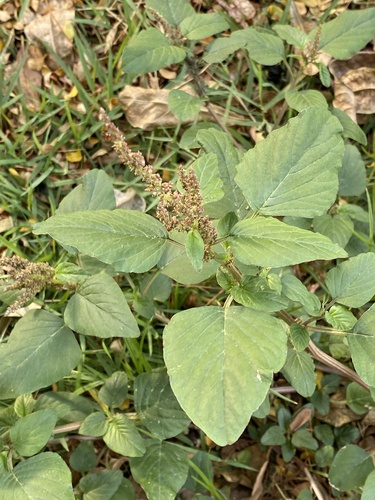
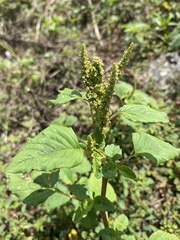

Green amaranth (Amaranthus viridis) is an annual in the Amaranthaceae family, widespread in tropical, subtropical and warm temperate regions. Its slender, smooth stem, narrow flower spikes and oval leaves make it a familiar weed of gardens and waste ground. It is also a traditional leafy vegetable in many African, South Asian and Caribbean cuisines.
Read moreGreen amaranth, Slender amaranth, Callaloo and African spinach
Place in full sun, with intense direct light all day long.
Full sun to light partial shade; grows best in full sun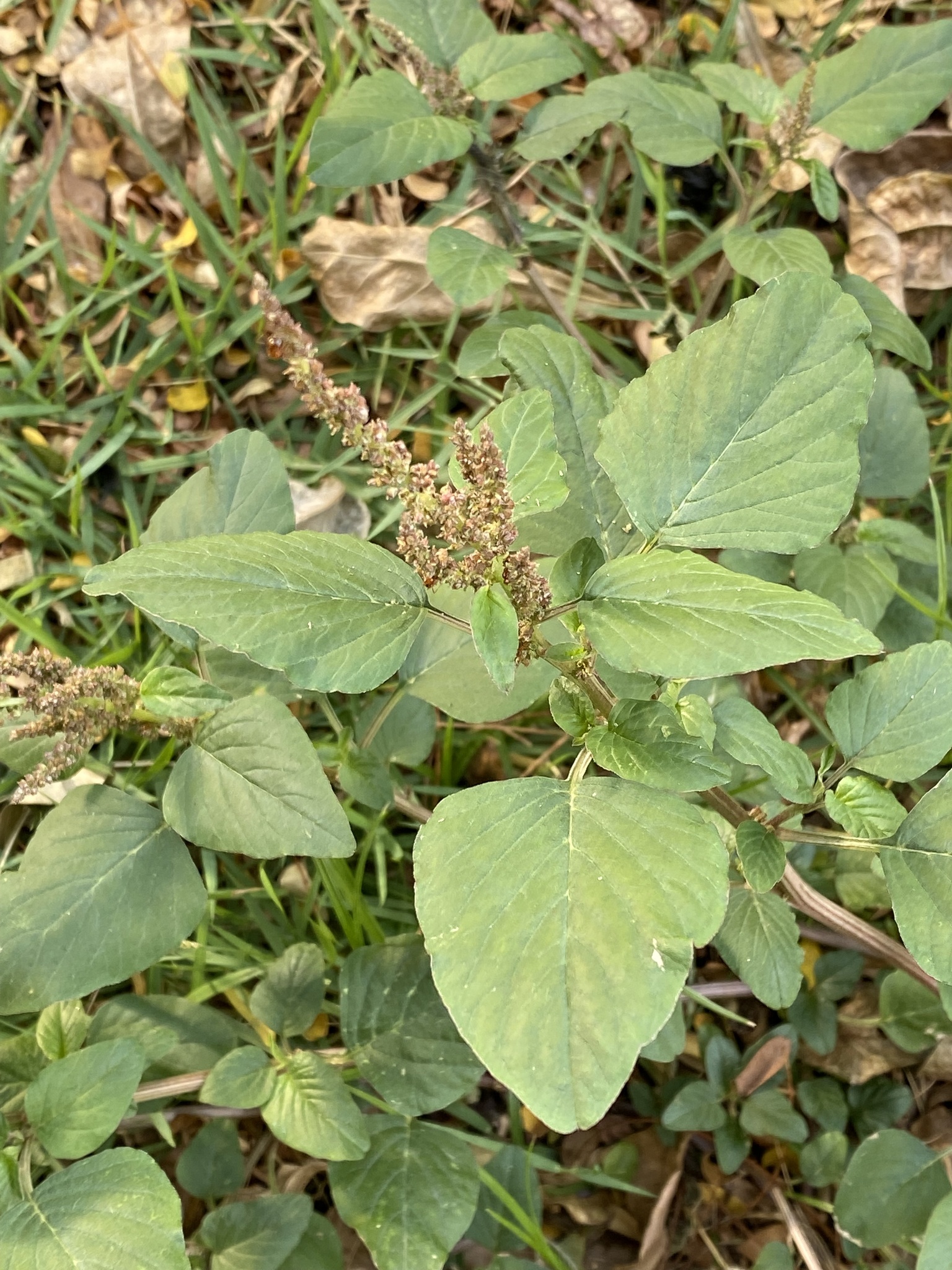



© photo
(c) smathichong, some rights reserved (CC BY-NC) · cc-by-nc
Alan Weakley · cc0
Wikimedia Commons · CC BY-SA or Public Domain
Taken May 17, 2011 by OTS - Oviedo-Brenes, Federico (cc-by-nc-sa)
Taken Oct 15, 2019 by Photoflora - Jean-Luc TASSET (©)
© copyright of the Board of Trustees of the Royal Botanic Gardens, Kew.




Global distribution
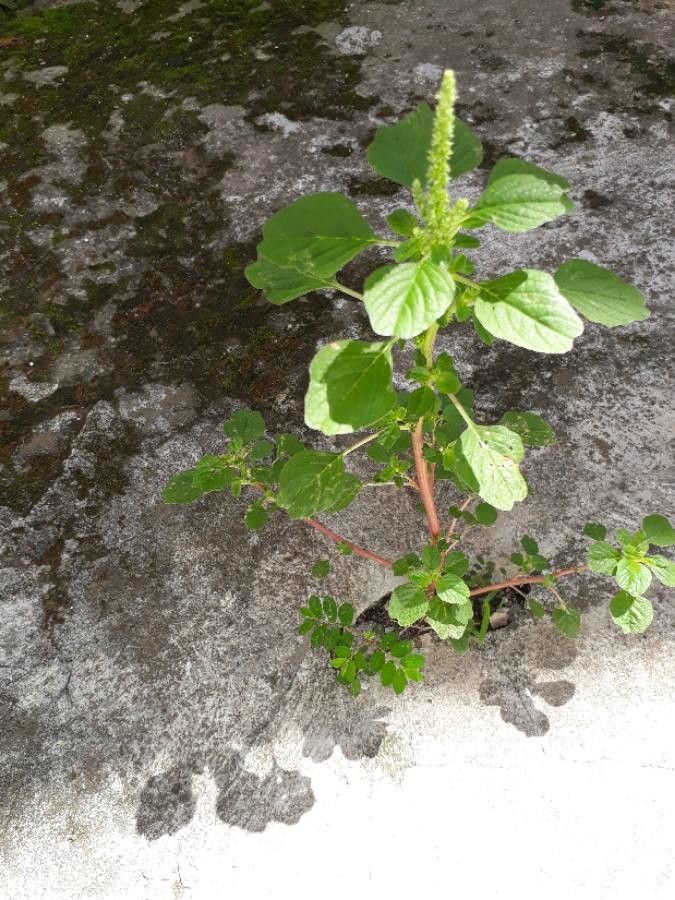
The precise native range of Amaranthus viridis remains debated. WCVP places its origin from southeastern Mexico through the American tropics, while some sources favor East Asia. It is now widespread across most continents in tropical, subtropical and warm temperate regions, often harvested as a vegetable rather than removed as a weed.
- Native2
- Introduced6
- Mexico
- Brazil
- India
- Nigeria
- Sri Lanka
- Mainland France
- Australia
- United States
Hexagons: regions where the plant occurs. Green dots: native range.1
Identity
Green amaranth (Amaranthus viridis L., 1763), also known as slender amaranth, is an annual in the Amaranthaceae family and the genus Amaranthus. Carl Linnaeus described the species in 1763. Its precise origin remains debated: WCVP places it from southeastern Mexico through the American tropics, while other sources favor East Asia. Today it is widespread in tropical, subtropical and warm temperate climates, but the first frost kills it. 1 5
The name slender amaranth reflects the botanical synonym Amaranthus gracilis Desf. ex Poir., referring to the thin stem and narrow flower spikes. Regional names also include callaloo in the Caribbean and African spinach in West Africa, where cooked leaves commonly replace spinach. The same plant can therefore be recognized as either a familiar vegetable or a weed. 4 3
Recognition
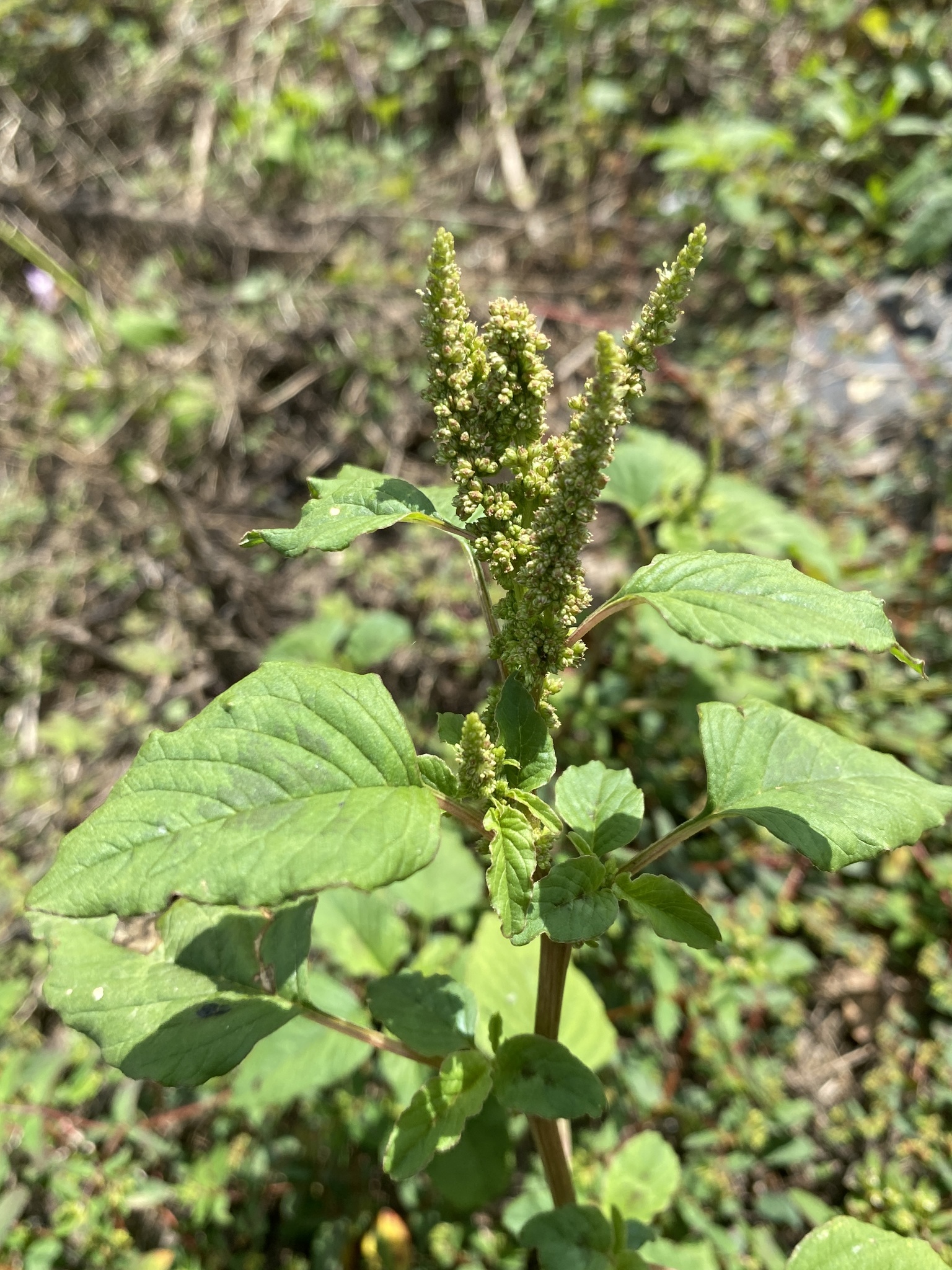
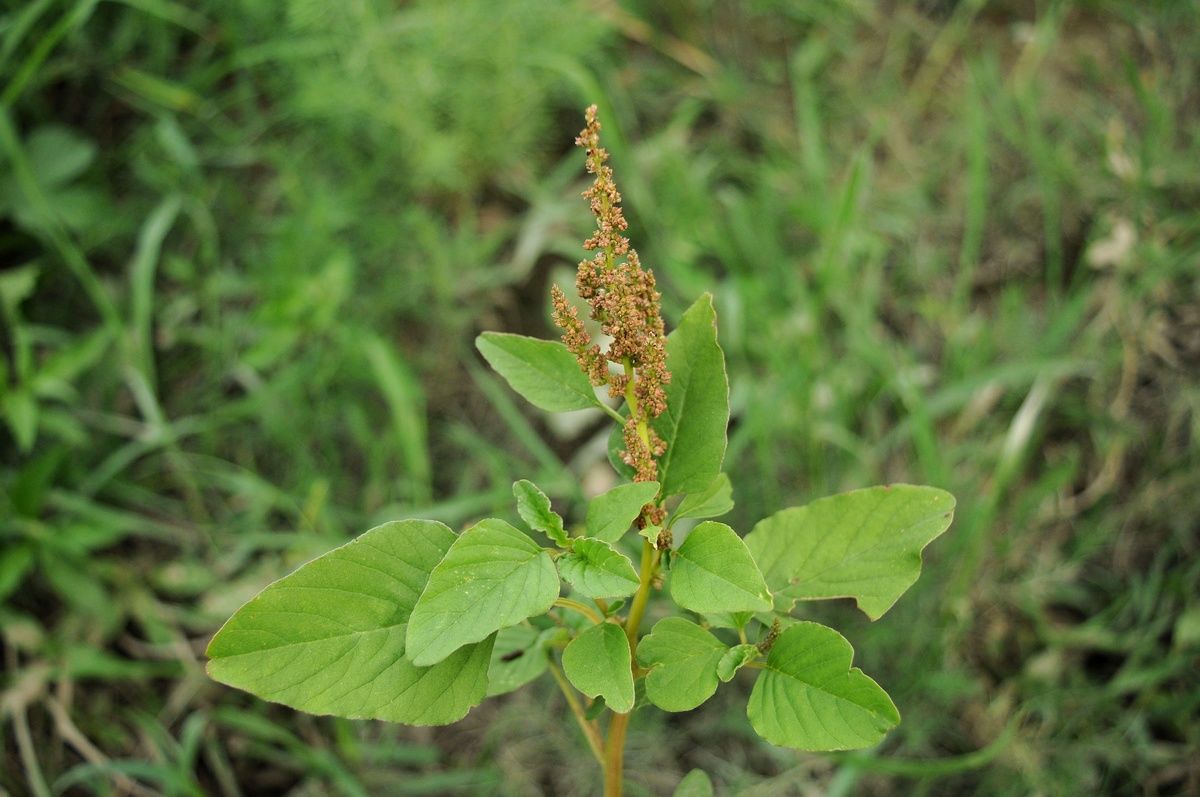
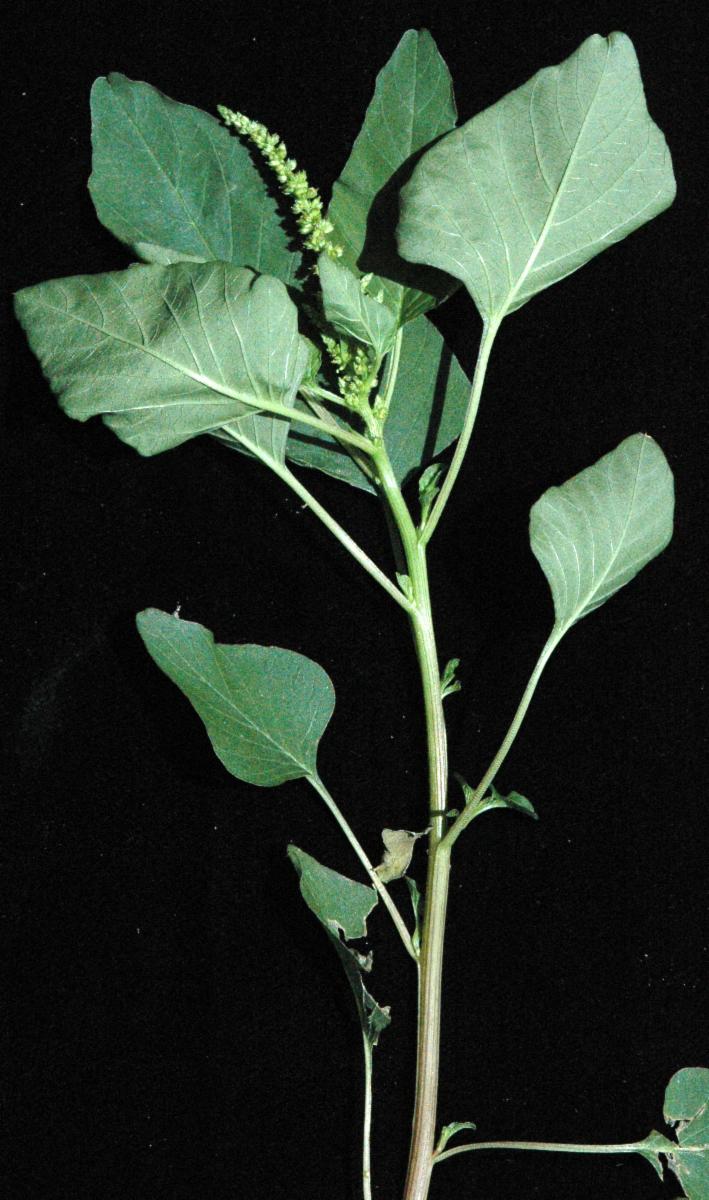
Slender, upright or spreading stems are hairless to slightly hairy, green to reddish, and usually reach 20–80 cm (8–31 in). Records extend to 1 m (3 ft) in favorable conditions. The smooth stem separates it from Amaranthus retroflexus, whose rough, hairy stem can be recognized by touch without a magnifying glass. 4 3
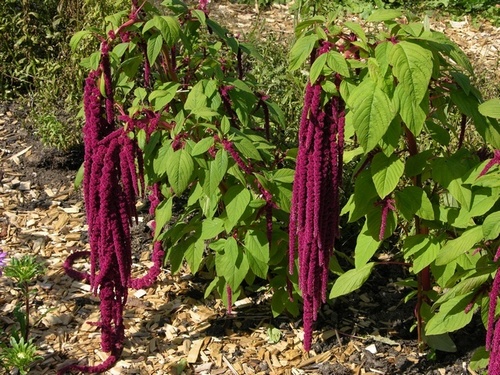
Alternate, stalked leaves are oval to diamond-shaped or oblong, 2–8 cm (0.8–3 in) long, and often notched at the tip. Tiny greenish flowers lack petals and form narrow, slender terminal and axillary spikes with limited branching. The loose, fine flower clusters contrast with the denser spikes of some related weeds. 5 4
Each plant is monoecious and self-fertile: it bears both male and female flowers, which are pollinated by wind. Seed production therefore does not depend on an insect pollinator or on a neighboring plant flowering at the same time. 3
Useful taxonomy
Within Amaranthaceae, the accepted name is Amaranthus viridis L., published in 1763, according to Plants of the World Online. This name anchors the species despite its numerous historical synonyms. 1 2
Botanists in the 19th century moved the species into genera no longer used for it, leaving a substantial synonymy. Euxolus viridis (L.) Moq., Glomeraria viridis (L.) Cav. and Pyxidium viride (L.) Moq. all refer to the same plant under different generic names. The later illegitimate homonym Amaranthus viridis All., 1785 can mislead readers of old floras; Linnaeus's earlier name takes priority. 1
Historical confusion centers on Amaranthus graecizans L., a separate species accepted by WCVP. Its original description long overlapped with that of Amaranthus viridis in older floras. Some modern field guides still perpetuate this ambiguity between the two amaranths with small green flowers. 1 4
Habitat and range
Disturbed, well-drained, nitrogen-rich ground supports this weed in vacant lots, roadsides, crop fields and gardens. Its C4 photosynthesis allows rapid growth in summer heat when some other plants slow down. The combination of warmth and soil disturbance explains many of its familiar growing sites. 5 8
Outside its debated original range, green amaranth is now naturalized on most continents, including Africa, South Asia, the Caribbean and Oceania. It is often gathered as a vegetable rather than treated solely as a weed. Scattered occurrences are also recorded in France, a regional observation rather than a worldwide status claim. 6 7
Life cycle and reproduction
Germination of green amaranth chiefly occurs in warm soil from spring into summer. In cooler ground, seedlings emerge slowly and unevenly. Flowering and fruiting can continue almost year-round in tropical climates, while in temperate climates they are concentrated in summer. Local warmth therefore matters more than a fixed calendar date. 8
Numerous glossy black, lens-shaped seeds develop on each spike, each barely more than 1 mm (0.04 in) wide. Ripe seeds are easily gathered by scraping the spikes over a container. This simple harvesting method helps explain their widespread use as food in addition to the leaves. 4
Uses and risks
Cooked young leaves feature in many cuisines: saag in India, koora thampala in Sri Lanka, ewe tete in West Africa and callaloo in the Caribbean. Reported nutritional values include calcium up to 2,243 mg per 100 g of dry matter, vitamin C up to 790 mg per 100 g, and protein reaching 38% of dry weight. These are reported upper values rather than a standard portion's composition. 3 4
Seeds can be eaten raw, roasted or ground into flour, and used in porridge or biscuits. Reported composition includes 14–16% protein and 4.7–7% fat. A decoction of the whole plant has traditionally been used for dysentery and inflammation and as an astringent and worm remedy. These historical uses do not establish clinical effectiveness. 3
The cited account recognizes no toxicity in humans or domestic animals, but plants grown in nitrogen-rich soil can accumulate nitrates in their foliage. The documented concern is especially relevant to harvesting soon after nitrogen fertilizer application or feeding large quantities of the plant to livestock. Edibility does not remove that growing-condition risk. 3
Varieties, look-alikes and related plants
Ornamental cultivar selection is not recognized for Amaranthus viridis in the cited treatment. Variation seen in the field mainly involves how reddish the stem becomes and how densely the flower spikes develop. These differences belong to natural variation rather than an established range of garden cultivars. 1
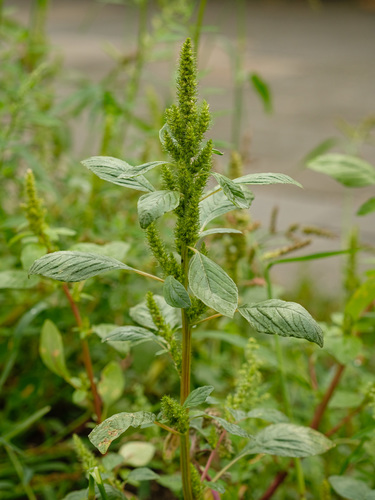
Edible or weedy relatives most often confused with green amaranth include Amaranthus graecizans, historically mixed with its description; Amaranthus blitum, another traditional leafy vegetable with very similar leaves; and the larger, fleshier Amaranthus dubius. Amaranthus viridis often grows alongside Amaranthus retroflexus. The former's smooth stem contrasts sharply with the latter's rough, hairy growth, a difference that can be checked quickly by sight and touch. 4
Main sources
- Plants of the World Online / Kew, Amaranthus viridis L.
- International Plant Names Index, Amaranthus viridis
- Plants For A Future, Amaranthus viridis
- Wikipedia EN, Amaranthus viridis (slender amaranth)
- Wikipedia FR, Amaranthus viridis
- INPN / MNHN, Amaranthus viridis L., 1763
- USDA PLANTS Database, Amaranthus viridis (AMVI)
- Useful Tropical Plants (theferns.info), Amaranthus viridis
Frequently asked questions
Is green amaranth poisonous?
No toxicity is recognized in humans or domestic animals in the cited account. The documented concern is nitrate accumulation in leaves when the plant grows in soil with excessive nitrogen.
Can you eat green amaranth?
Yes. Young leaves are cooked like spinach in many African, South Asian and Caribbean cuisines. Seeds are eaten raw, roasted or ground into flour.
How can you distinguish it from Amaranthus retroflexus?
Amaranthus viridis has a slender, smooth stem and narrow flower spikes. Amaranthus retroflexus has a rough, hairy stem and a dense terminal spike with spiny bracts.
Where does the name slender amaranth come from?
It reflects the botanical synonym Amaranthus gracilis Desf. ex Poir., which describes the slender stem and narrow flower spikes.
Are Amaranthus viridis and Amaranthus graecizans the same species?
No. Plants of the World Online accepts them as distinct species. Their historical descriptions overlapped for a long time, explaining the persistent confusion in some field guides.
Where does green amaranth usually grow?
It grows on waste ground and roadsides and in crop fields and gardens, favoring disturbed, nitrogen-rich soils in tropical to warm temperate climates.
Can it be confused with other edible amaranths?
Yes, especially Amaranthus blitum and Amaranthus dubius, which have similar leaves and growth habits. Flower-spike density and stem hairiness remain the most useful clues.
Similar plants
If you are unsure about a plant’s toxicity, ask a botanist or veterinarian for advice.