
Love-lies-bleeding (Amaranthus caudatus, )
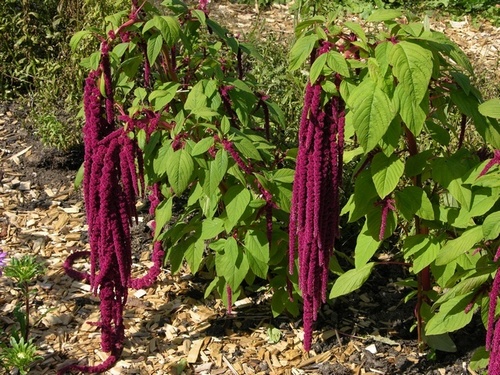

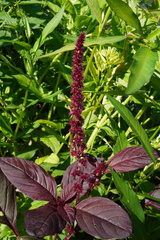
Love-lies-bleeding (Amaranthus caudatus) is an annual in the Amaranthaceae family from high Andean valleys between Ecuador and northwestern Argentina. Its long, usually purple, trailing flower clusters explain its English name. Andean civilizations domesticated it for its protein-rich seeds; it is now widely grown as an ornamental and is attracting renewed interest as the pseudocereal kiwicha.
Read moreLove-lies-bleeding, Pendant amaranth, Tassel flower, Velvet flower, Kiwicha and Foxtail amaranth
Place in full sun, with intense direct light all day long.
Full sun in a warm, sheltered position


© photo
(c) Biopix, some rights reserved (CC BY-NC) · cc-by-nc
Andrés Ramírez-Barrera · cc-by
Patrick Hacker · cc-by
Taken Sep 21, 2018 by Patrick Daullet (cc-by-sa)
Taken Sep 29, 2020 by mnl momji (cc-by-sa)
Taken Oct 6, 2019 by patriez vilplocktigern (cc-by-sa)
Taken Sep 26, 2021 by Andre S (cc-by-sa)
Taken Oct 19, 2022 by Elfenbeinspecht (cc-by-sa)
© copyright of the Board of Trustees of the Royal Botanic Gardens, Kew.




Global distribution
Amaranthus caudatus is native to the high Andes from Ecuador to northwestern Argentina, with a center of domestication in Peru. It was cultivated there for millennia before Spanish colonization greatly reduced its cultivation in favor of wheat and barley. It is now grown worldwide as a garden flower and is being rediscovered as a grain crop in several countries, with no invasive status documented in the cited sources.
- Native4
- Introduced4
- Peru
- Ecuador
- Bolivia
- Argentina
- Mexico
- India
- China
- Kenya
Hexagons: regions where the plant occurs. Green dots: native range.1
Identity
Love-lies-bleeding (Amaranthus caudatus L., 1753) is an annual flowering plant in the Amaranthaceae family and the genus Amaranthus. Other established names include pendant amaranth, tassel flower, velvet flower and foxtail amaranth. Carl Linnaeus described the species in 1753; its native Andean range extends from Ecuador to northwestern Argentina. 1 3
Dark purple tassels give the name love-lies-bleeding its vivid image of dripping blood, an association recorded in Victorian flower symbolism. The seed has another name, kiwicha, a Quechua term now used by agricultural programs reviving interest in this Andean pseudocereal. These names reflect its two main roles: a striking garden flower and a traditional food crop. 9 4
Recognition
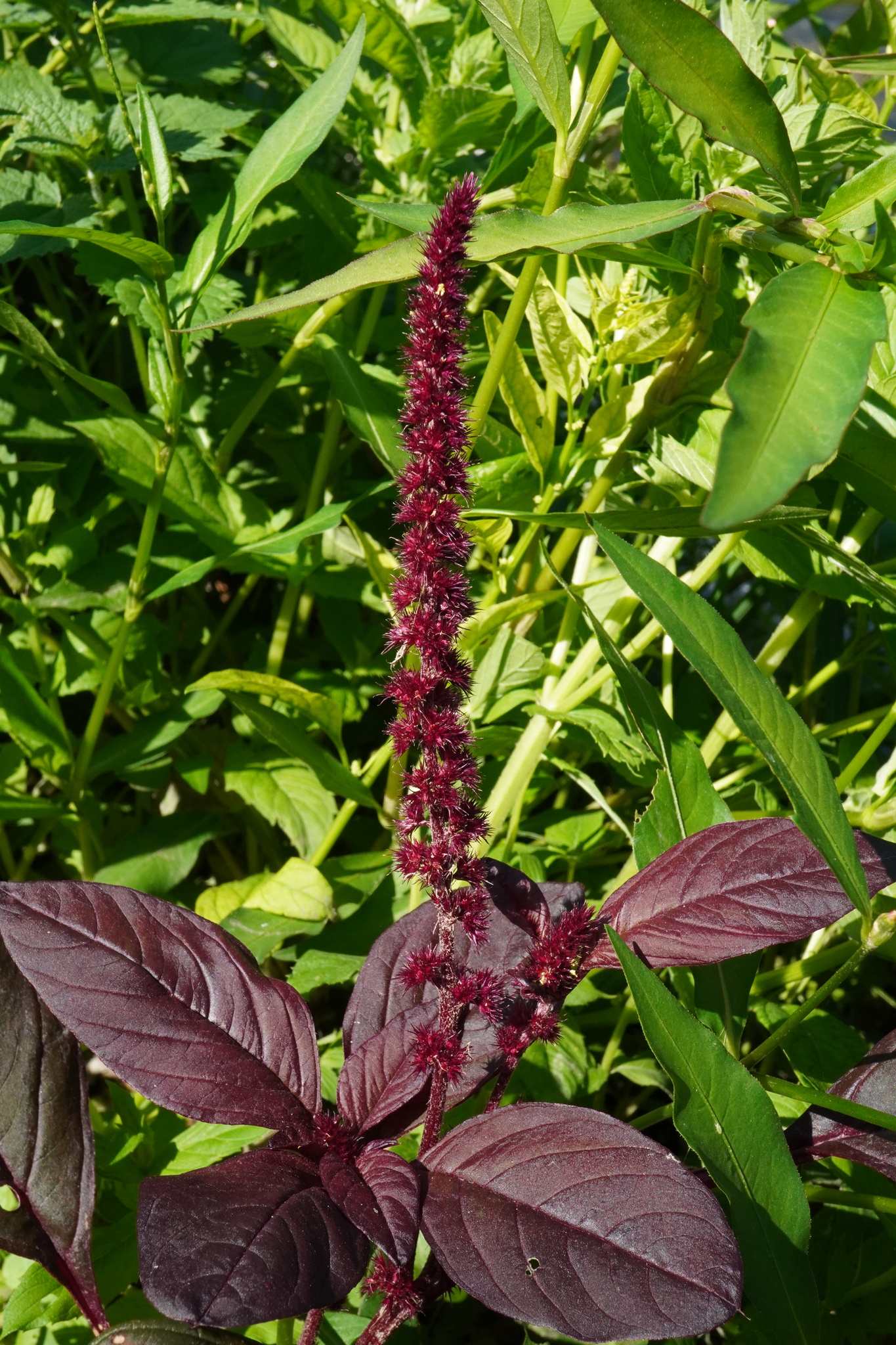
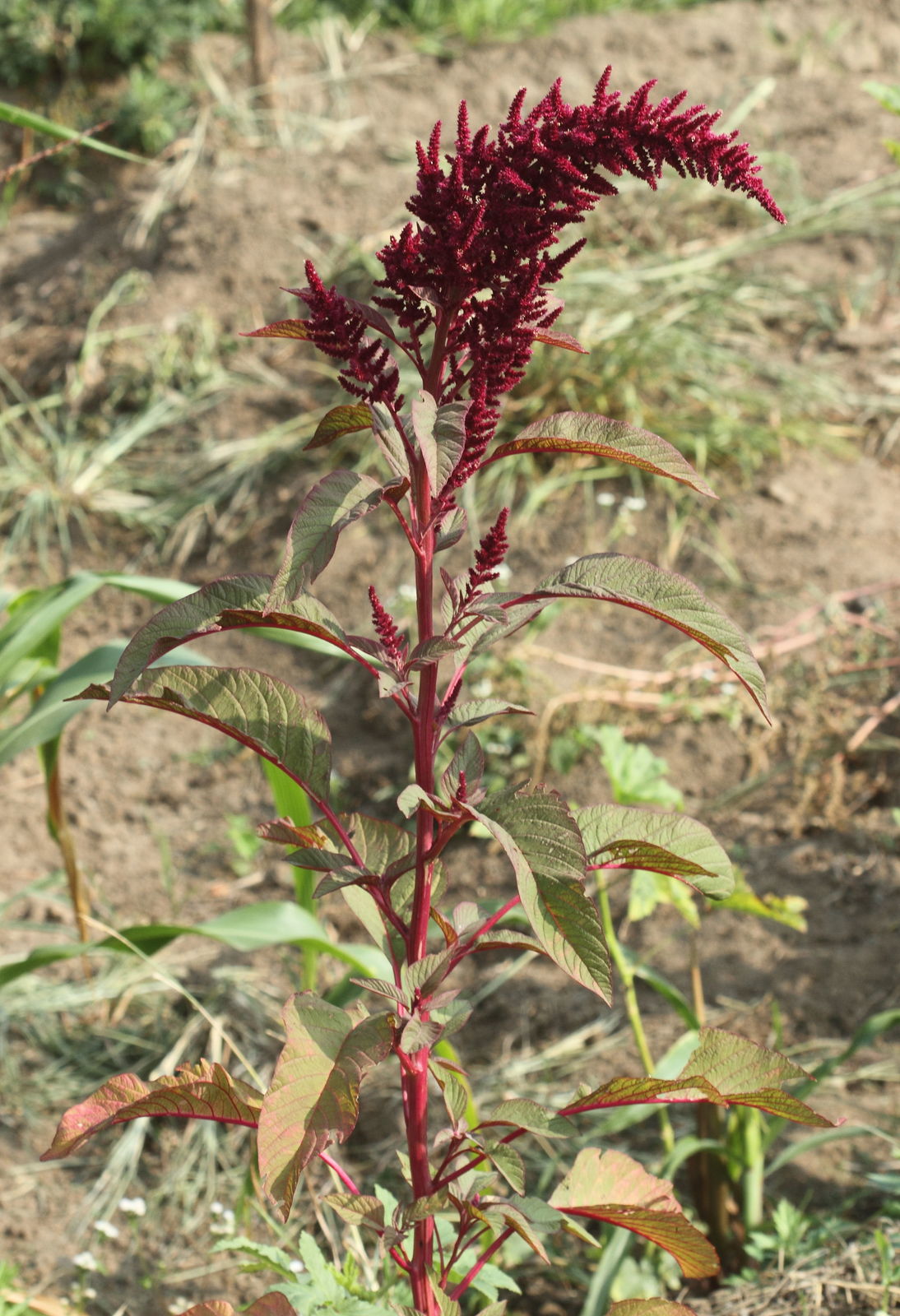
Upright, branching stems, often flushed red, vary greatly in height with the cultivar. Compact selections stand about 0.6 m (2 ft) tall, while the most vigorous food-crop forms can reach 2.5 m (8 ft). The difference in scale is substantial even though both belong to the same species. 5 6
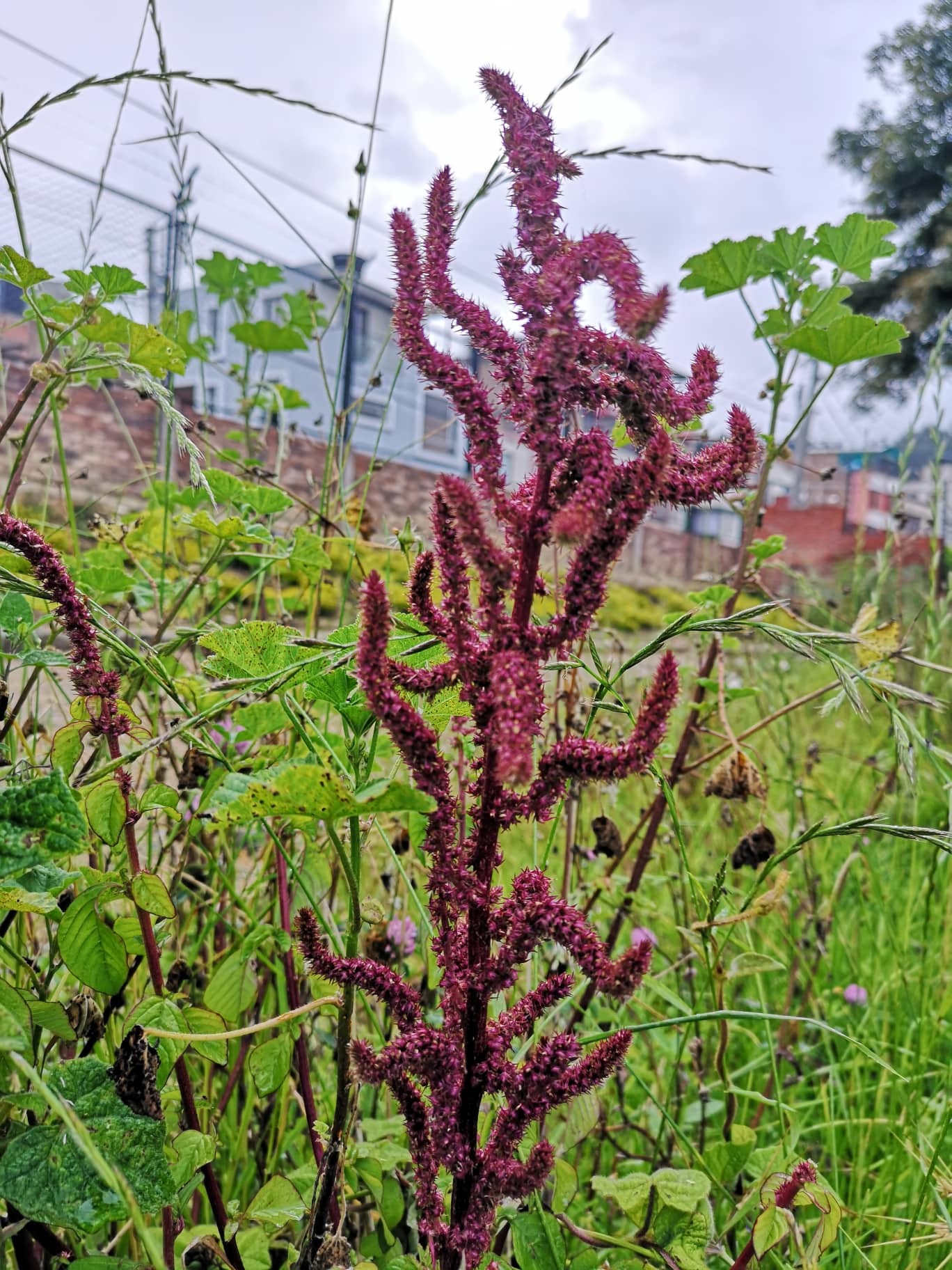
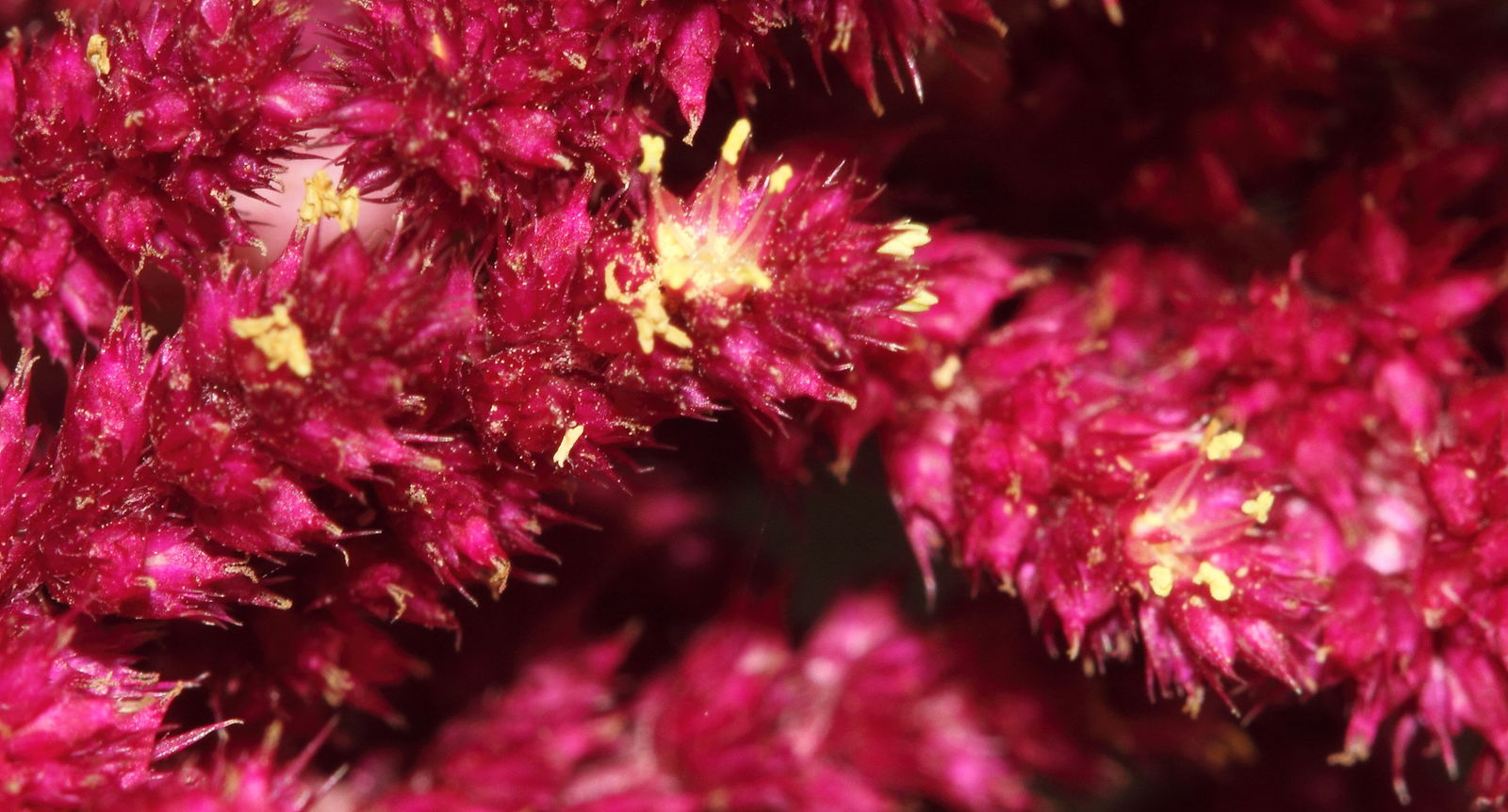
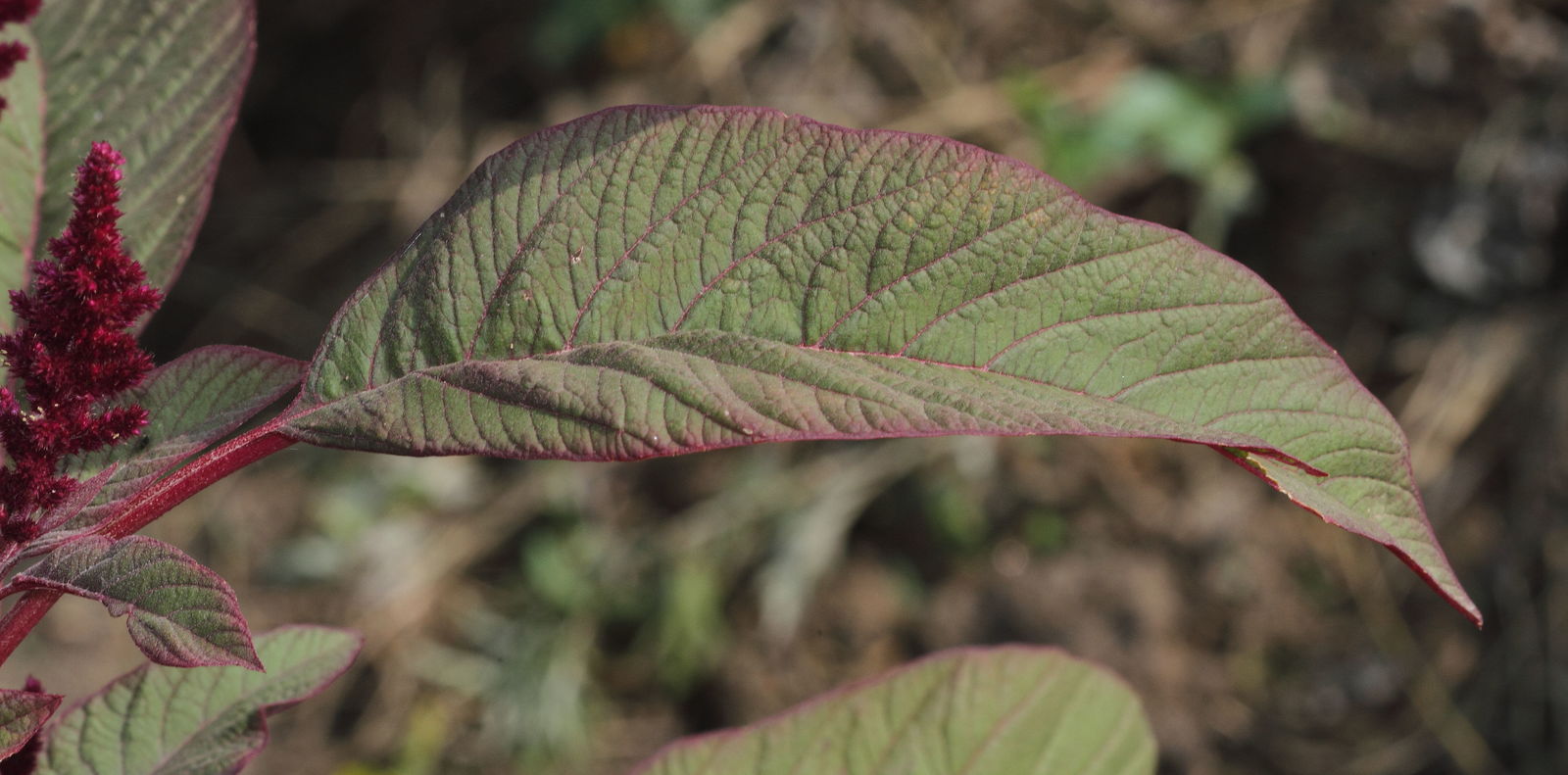
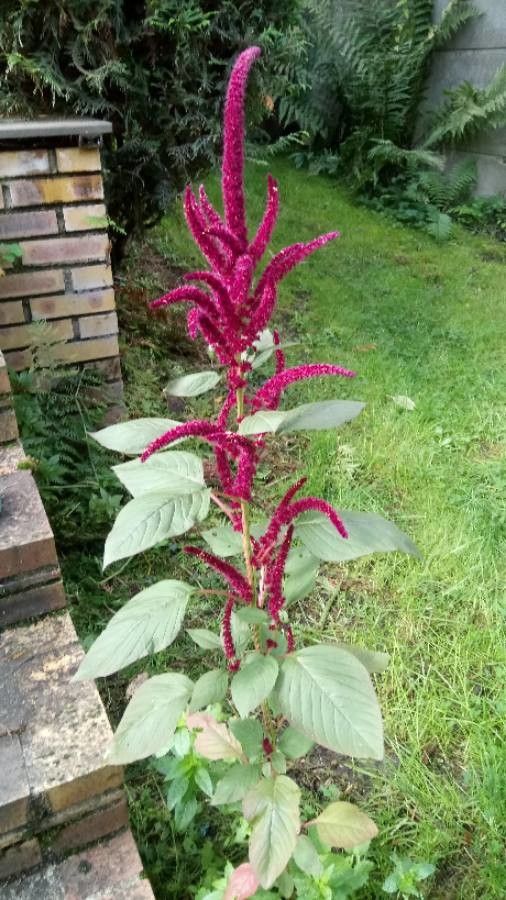
Oval leaves alternate along the stems and may be bright green or tinged purple, depending on the selection. The typical flower cluster forms a long hanging tassel, often deep purple, that can exceed 50 cm (20 in) on a well-developed plant. 6 4
Tiny seeds, less than 1 mm (0.04 in) across, differ in color: pale seeds characterize food-crop forms, while many ornamental forms have darker seeds. This mainly reflects selection rather than a strict taxonomic boundary. Like other amaranths, the plant is monoecious and self-fertile. Its minute, petal-less flowers are wind-pollinated rather than dependent on insects. 4 5
Useful taxonomy
For this Andean crop, POWO accepts the name Amaranthus caudatus L., published in 1753, within the Amaranthaceae family. This provides a stable reference for comparing horticultural names and alternative classifications. 1 2
Several dozen similar-looking species make up Amaranthus. One recent treatment places this plant under Amaranthus hybridus subsp. caudatus (L.) Iamonico & Galasso, a classification that is not universally accepted alongside POWO's species treatment. Named infraspecific taxa include Amaranthus caudatus subsp. mantegazzianus (Pass.) Hanelt and Amaranthus caudatus var. albiflorus Moq., distinguished mainly by flower color or growth habit. 1
The plant is diploid, with 32 chromosomes (2n = 32), a chromosome count reported for the genus Amaranthus in the cited account. 4
Habitat and range
High Andean valleys between Ecuador and northwestern Argentina form the native range, with a center of domestication in Peru. This mountain setting links the species' natural distribution to its long history as a crop. 1 4
Growth above 2,500 m (8,200 ft) distinguishes this species within its genus in the cited account. Cultivation reaches 3,100 m (10,200 ft) in Peru, helping explain its longstanding place in mountain-valley agriculture. 4
From its Andean home, love-lies-bleeding has spread into gardens worldwide and has regained attention as a food crop in Mexico, China, Nepal, India and Kenya. The cited sources document no invasive status. In France it is chiefly a bedding and cut-flower plant, occasionally escaping from gardens; that observation is specific to France. 4 3
Life cycle, domestication and cultivation
Sow under cover 6–8 weeks before the last expected frost in temperate climates, or directly outdoors once frost risk has passed. Germination is rapid as the soil warms. Flowers appear from summer until the first frosts, and seeds ripen 4–6 months after sowing. Use local frost dates rather than a fixed month to plan the crop. 5 6
Andean civilizations, including the Incas, cultivated the protein-rich seeds for millennia. Spanish colonization in the 16th century greatly reduced production in favor of wheat and barley. Renewed agricultural interest under the name kiwicha is now encouraging cultivation beyond the Andes, especially in Asia and East Africa. 4
Excessively wet soil favors two major disease problems: damping-off caused by Pythium and Fusarium on seeds or seedlings, and stem rot associated with Sclerotinia and Alternaria. On young foliage, leaf beetle larvae (Diabrotica spp.) and cutworms (Agrotis spp.) account for much of the insect damage described for the crop. 4
Ornamental and food uses, and risks
European gardens mainly value the long, trailing flower clusters for sunny, sheltered beds and for fresh or dried arrangements. 'Fat Spike' bears upright spikes rather than hanging tassels; 'Viridis' offers pale green clusters instead of the typical purple. The ornamental effect therefore depends strongly on the chosen cultivar. 7 8
Young leaves are eaten cooked like spinach. The seeds contain 13–18% good-quality protein and are rich in lysine, an amino acid often limited in plant proteins. They can be cooked, popped like popcorn or ground into gluten-free flour. Their nutritional profile complements conventional grains such as corn and rice, which are relatively low in lysine. 5 4
No toxicity is documented for humans, cats or dogs in the cited account; the status for horses remains uncertain because species-specific data are lacking. Plants grown in nitrogen-rich soil can nevertheless accumulate nitrates in their leaves. This matters particularly when the foliage is being grown for food. 5
Varieties, look-alikes and related plants
Pale green 'Viridis' and upright-spiked 'Fat Spike' illustrate stable cultivar differences in color and habit. More compact selections are also available for smaller flower beds, extending the ornamental range beyond the familiar long purple tassels. 8
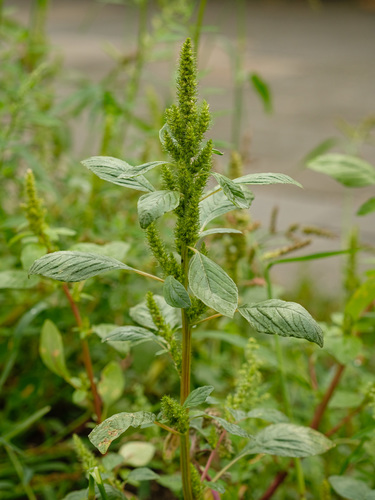
Similar grain amaranths include Amaranthus hypochondriacus and Amaranthus cruentus, both of which can carry dense, colorful flower clusters. Against these relatives, the typical deep purple, hanging tassel is the simplest field clue to Amaranthus caudatus. Some ornamental cultivars deliberately depart from that pattern, so flower color and posture alone do not describe every cultivated form. 4
Main sources
- Plants of the World Online / Kew, Amaranthus caudatus L.
- International Plant Names Index, Amaranthus caudatus
- INPN / MNHN, Amaranthus caudatus L., 1753
- Wikipedia EN, Amaranthus caudatus
- Plants For A Future, Amaranthus caudatus
- Missouri Botanical Garden Plant Finder, Amaranthus caudatus
- Royal Horticultural Society, Amaranthus caudatus
- Royal Horticultural Society, Amaranthus caudatus 'Viridis'
- Encyclopaedia Britannica, love-lies-bleeding
Frequently asked questions
Is love-lies-bleeding poisonous?
It is considered non-toxic to humans, cats and dogs; its status for horses remains uncertain. Soil with excessive nitrogen can cause nitrates to accumulate in the leaves, especially relevant when the crop is intended for food.
Can you eat love-lies-bleeding?
Yes. Young leaves are cooked like spinach. Its lysine-rich seeds, known as kiwicha, can be cooked, popped like popcorn or ground into gluten-free flour.
Where does the name kiwicha come from?
Kiwicha is the Quechua name for the seed. Current agricultural programs use it when promoting this Andean pseudocereal, whose cultivation declined sharply after Spanish colonization.
Why do some plants have upright flower spikes?
Cultivars such as Fat Spike were selected for upright spikes rather than long, hanging tassels. Others, including Viridis, have pale green flower clusters instead of purple ones.
Can love-lies-bleeding be confused with other amaranths?
Yes, especially Amaranthus hypochondriacus and Amaranthus cruentus, two similar grain amaranths. The typical trailing purple flower cluster is the simplest field clue.
Does love-lies-bleeding need staking?
Staking is recommended for the tallest cultivars, whose long flower clusters weigh down the stems and make them liable to fall over in wind.
How high does it grow in its native range?
Amaranthus caudatus can grow above 2,500 m (8,200 ft), with cultivation recorded up to 3,100 m (10,200 ft) in Peru; the cited account describes this ability as unique within its genus.
Similar plants
If you are unsure about a plant’s toxicity, ask a botanist or veterinarian for advice.