
Pot marigold (Calendula officinalis, )
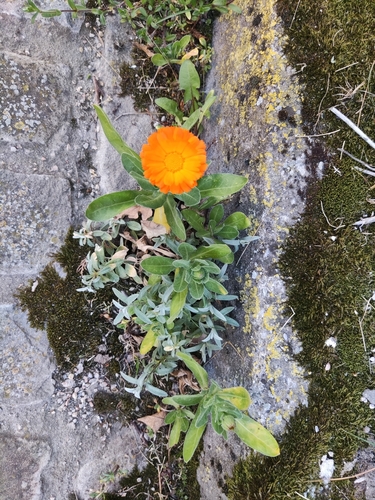
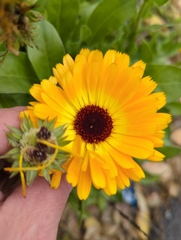
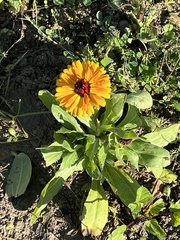
Pot marigold (Calendula officinalis), also called garden marigold, is an annual or biennial plant in the Asteraceae family, probably native to the western Mediterranean. Grown since antiquity for bright yellow to deep orange flower heads, it serves as an ornamental, an edible flower and a traditional external remedy. It is considered non-toxic to cats and dogs.
Read morePot marigold, Calendula, Common marigold, Mary's gold, Scotch marigold and Garden marigold
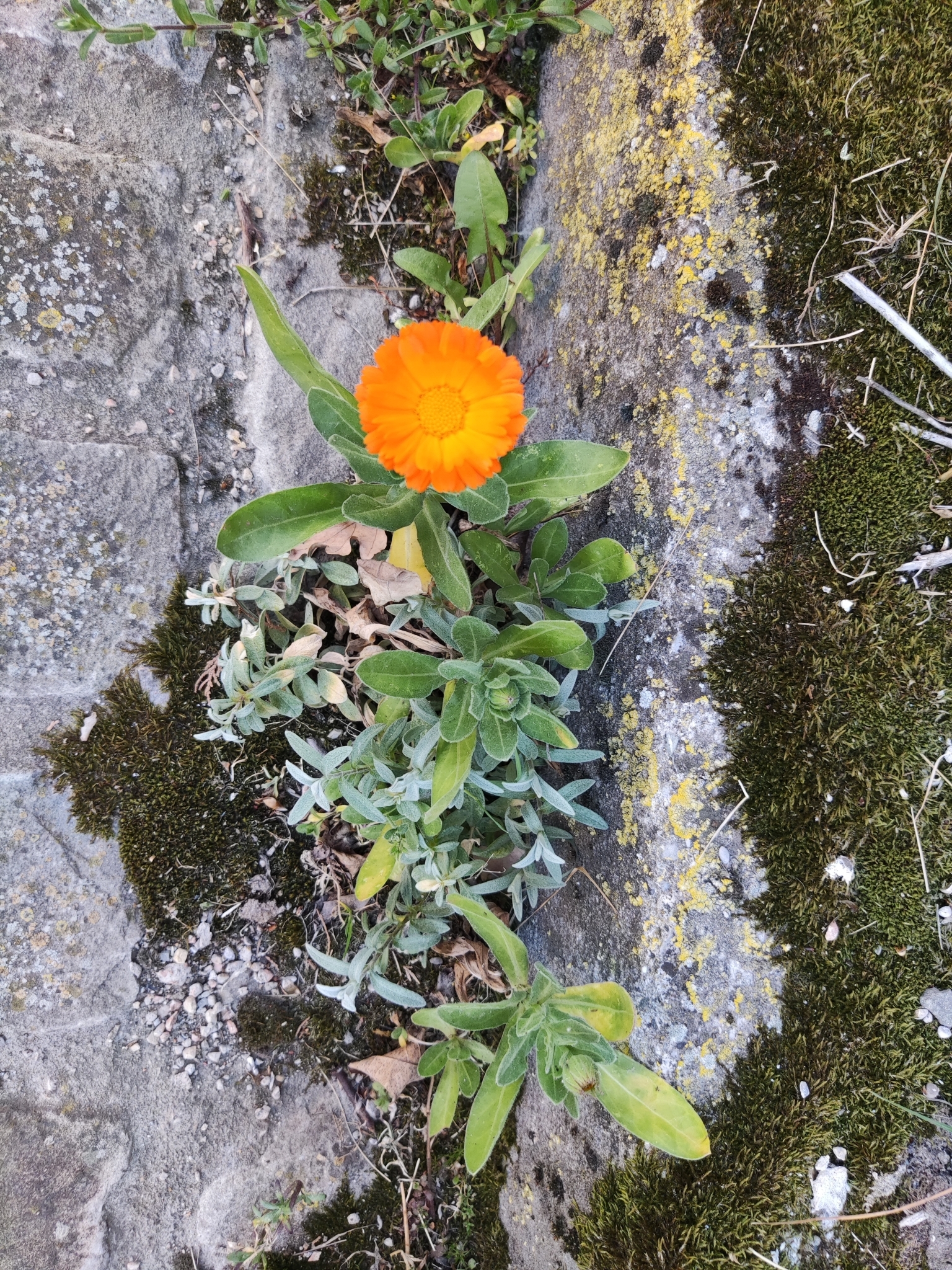
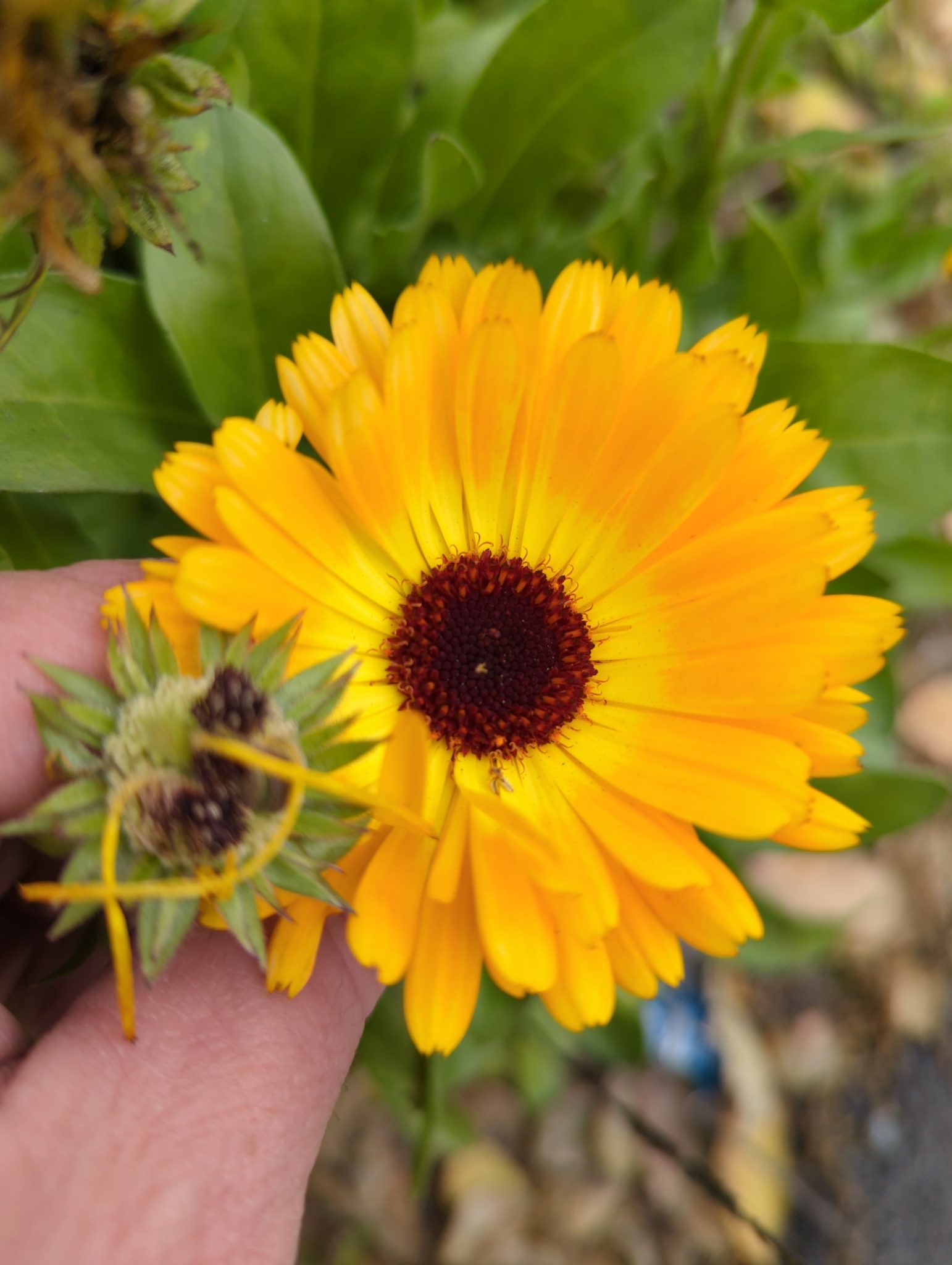
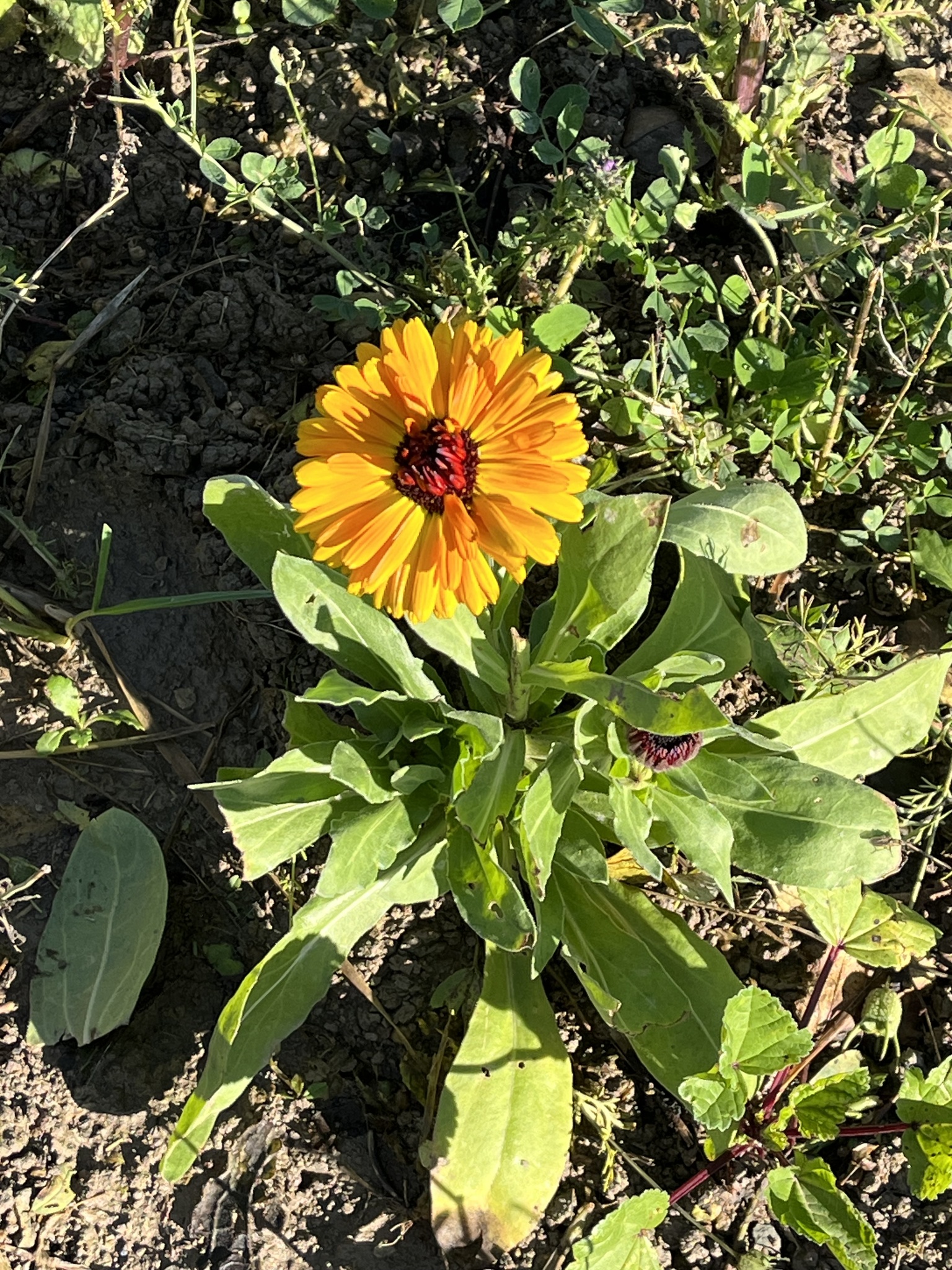


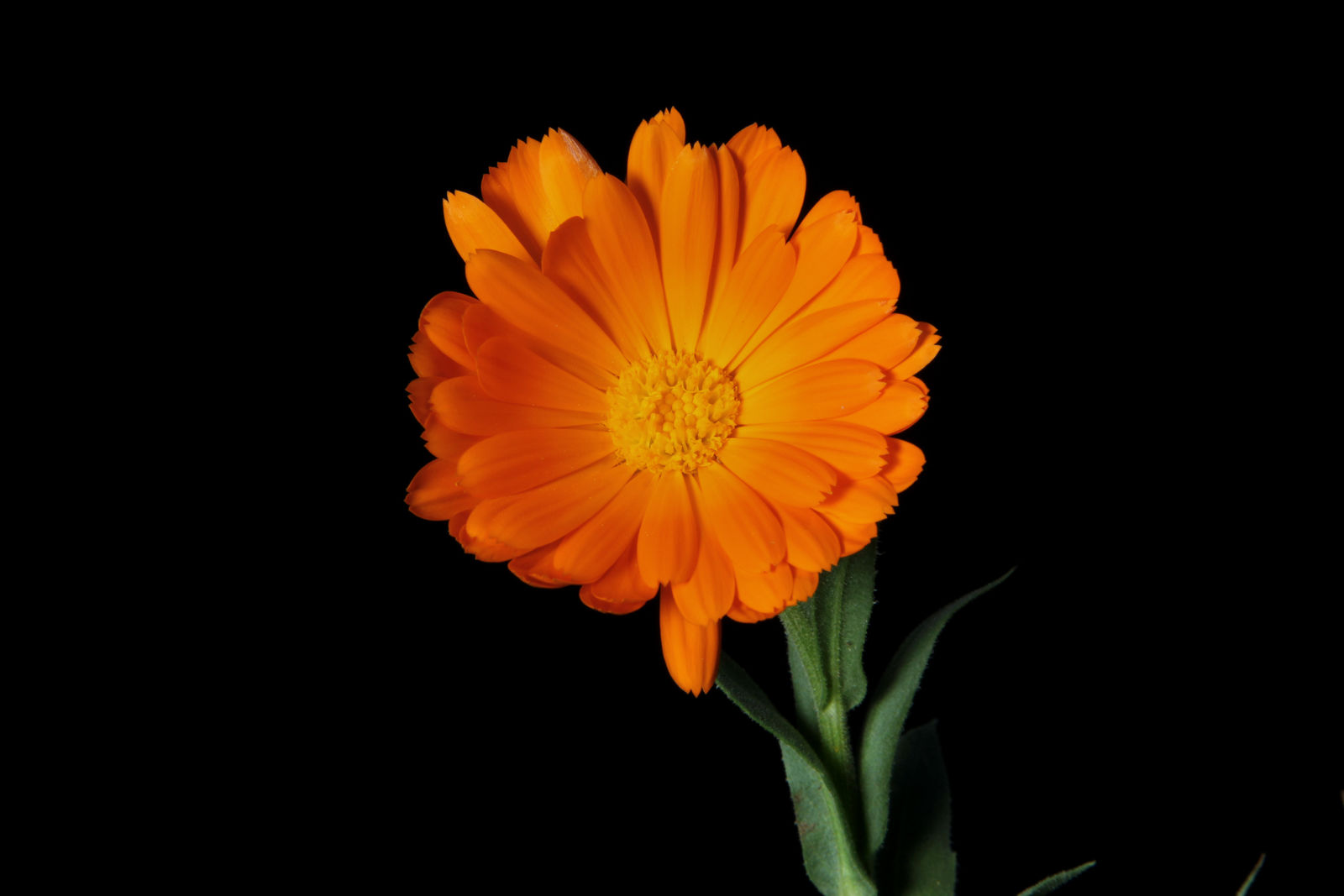
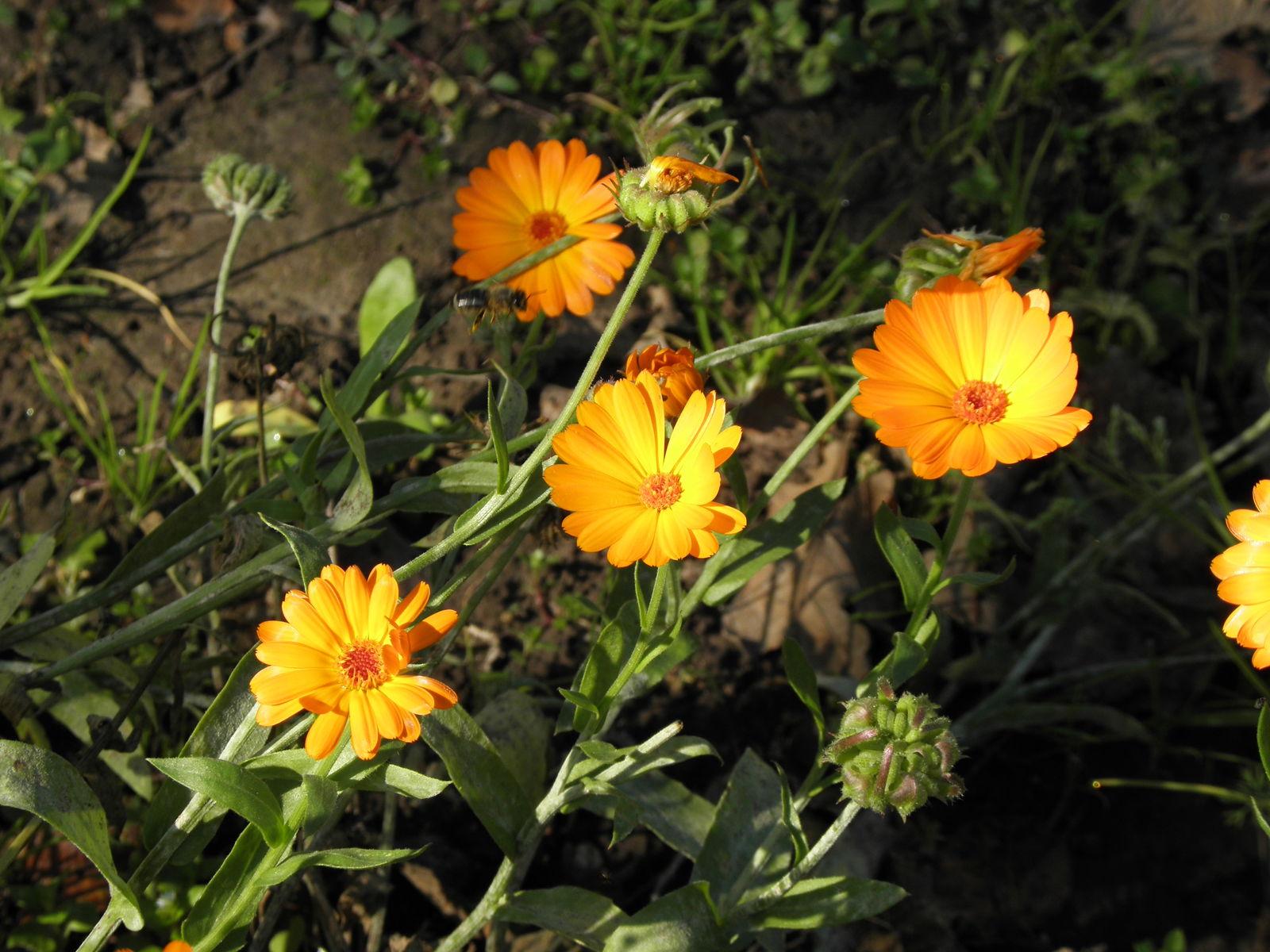
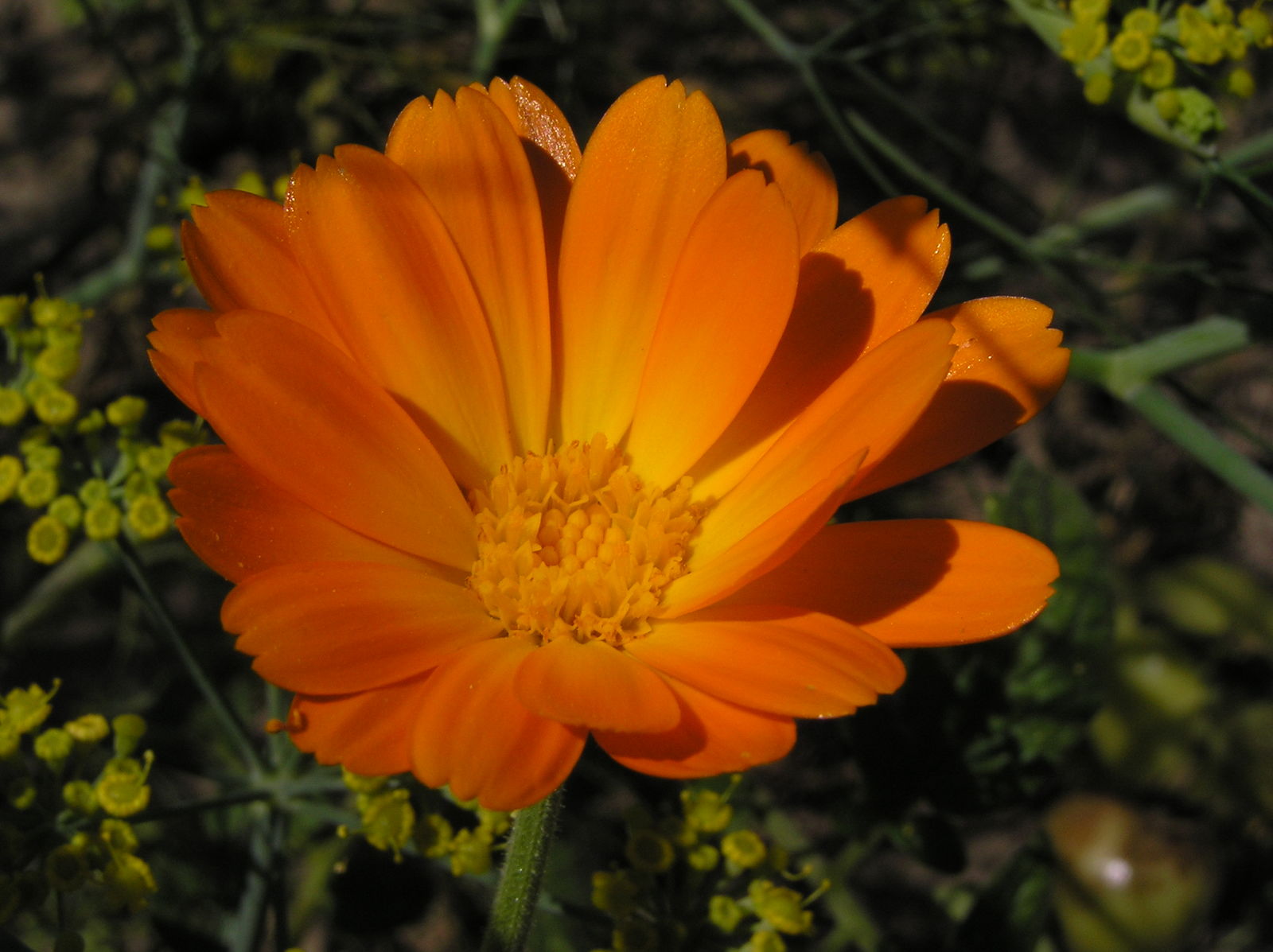
© photo
Irene Saltini · cc0
iNaturalist User · cc0
Taken Oct 30, 2022 by Jim Knopf (cc-by-sa)
Taken Mar 4, 2020 by Adrien Broni (cc-by-sa)
Taken Feb 22, 2022 by Torres Pedro (cc-by-sa)
Taken Feb 8, 2022 by Tristan Jaton-Maria (cc-by-sa)
Taken May 31, 2020 by Vargová Gabriela (cc-by-sa)
© copyright of the Board of Trustees of the Royal Botanic Gardens, Kew.




Global distribution
Pot marigold is probably native to the western Mediterranean, but its long history of cultivation makes the precise native range uncertain according to POWO. It is now widely naturalized in Europe and warm temperate regions worldwide, where it self-sows readily. A presumed Mediterranean origin should therefore be distinguished from its global presence through cultivation and garden escapes.
- Native2
- Introduced1
- Spain
- Italy
- United Kingdom
Hexagons: regions where the plant occurs. Green dots: native range.1
Identity
Pot marigold (Calendula officinalis L., 1753), also called garden marigold, is a herbaceous member of the Asteraceae family described by Linnaeus in 1753. It ranks among Europe's longest-cultivated garden flowers, combining ornamental, edible and medicinal uses. 1 2
Although usually grown as a self-seeding annual, the species is botanically a short-lived perennial that survives cold winters poorly. Its French name, souci, is unrelated to the French word for worry: it derives from Late Latin solsequia, meaning “following the sun,” through earlier forms including solsie and soucy. That history belongs to the French name rather than the English word marigold. 9 11
The medieval genus name Calendula comes from Latin calendae, the first day of the month, linking the plant with a calendar or almanac. Its flower heads open and close with the sun, a form of nyctinasty. The epithet officinalis indicates a plant sold in apothecaries for medicinal use. 9 10
Recognition
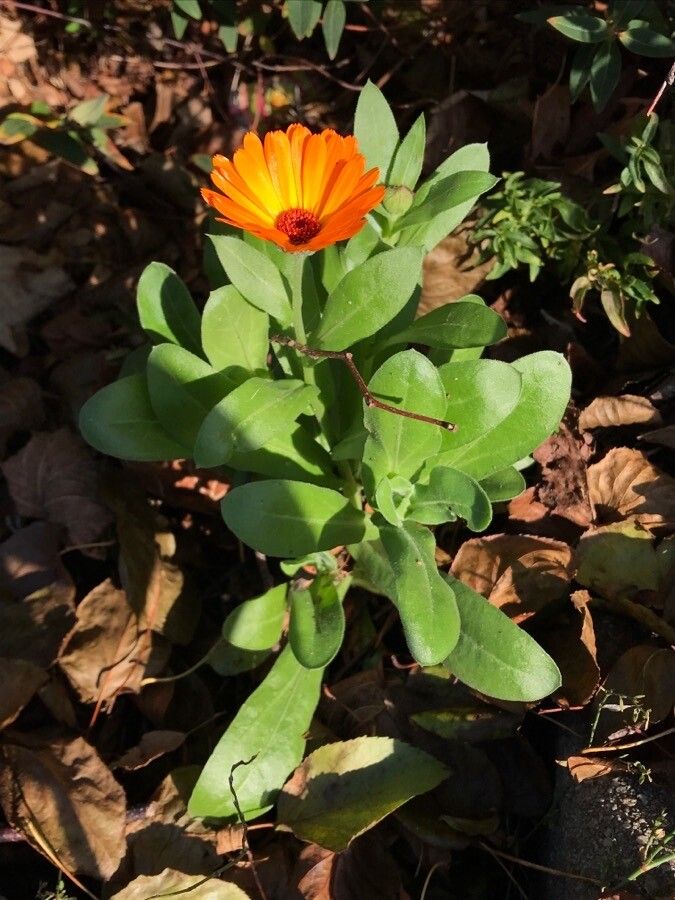
Branched clumps of pot marigold reach 40–80 cm (16–32 in) tall. Slightly aromatic, oblong to lance-shaped leaves alternate along the stems and lack stalks. The flower heads, 4–7 cm (1.5–3 in) across, have ray florets surrounding a central disc and range from bright yellow to deep orange. 8 6
A characteristic daily rhythm is visible in the blooms: flower heads close at night and reopen in sunlight. After flowering, each head produces curved achenes, dry one-seeded fruits of several shapes without a feathery pappus. Their variation supports several dispersal routes and abundant self-seeding. 9
Successive flower heads can extend the display from spring until the first frosts in temperate climates, helping explain the calendar association of the genus name. Plants stay relatively low and spreading, often almost as wide as they are tall, making them useful for borders and window boxes. 3 5
Achene shape is itself an identification clue. A single head contains several curved forms, sometimes winged or bristly, whereas many other Asteraceae have more uniform fruits. These differences favor dispersal by wind, animals and simple gravity, rather than relying on just one route. 9
Useful taxonomy
Linnaeus published the species in 1753, and Calendula officinalis L. remains the accepted name in the Asteraceae, formerly called Compositae. Its long history in cultivation has generated numerous synonyms; recognizing these names prevents them from being mistaken for separate species:
- Caltha officinalis (L.) Moench, a synonym;
- Calendula aurantiaca Kotschy ex Boiss., a synonym;
- Calendula eriocarpa DC., a synonym;
- Calendula officinalis var. prolifera Gaudin, a synonym;
- Calendula prolifera Steud., a synonym;
- Calendula santamariae Font Quer, a synonym.
International and national botanical references agree on the accepted scientific name, Calendula officinalis, making it the dependable reference point. In everyday English, marigold also refers to Tagetes, a different genus, so the common name alone cannot settle an identification. 1 11 13 1 2
Reported chromosome numbers vary: 2n = 28, 32 or 36. This variation reflects the species' long domestication and the variability found within it, rather than a single uniform chromosome count across all cultivated material. 14
Habitat and range
A western Mediterranean origin is probable, although centuries of cultivation obscure the precise native range. POWO places its origin in the western Mediterranean, notably Spain. In southern Europe it occurs on waste ground, cultivated land and roadsides. 1 7
Cultivation has carried pot marigold northward through Europe and into other warm temperate regions, where it has naturalized and self-sows readily. France's national natural-history inventory records the species, but its presence there is chiefly associated with cultivation and garden escapes rather than truly wild populations. A presumed Mediterranean origin should therefore be distinguished from today's widespread cultivated distribution. 11 5
Horticultural references give a broad USDA zone range of 2–11, and the achenes tolerate considerable cold, helping explain spontaneous spring seedlings. This wide range describes where the plant can be grown and renewed by seed; it should be read alongside its poor survival as a perennial through cold winters. 6 7
Life cycle and reproduction
Sunlight strongly influences flowering: pot marigold performs best with at least six hours of direct sun on light, poor, well-drained soil. Excess nitrogen promotes foliage at the expense of blooms. Water moderately, increasing frequency in hot weather, preferably in the morning so that the leaves can dry. 6 3
Direct sowing of the achenes in their final position is the usual propagation method, in spring or fall according to local conditions. Plants then self-seed from year to year. Regular deadheading extends flowering, whereas allowing many heads to set seed tends to exhaust the plant. 3 7
Serious health problems are uncommon, but powdery mildew can affect damp foliage. Aphids, slugs, snails and whiteflies may also attack young growth. These are the main problems described for an otherwise relatively undemanding garden flower. 5
Uses and risks
Ornament, food and traditional medicine all feature in the long history of pot marigold. In the 12th century, Hildegard of Bingen used it for scalp ringworm, while Albertus Magnus recommended it for wound healing. The plant also appears among those prescribed for royal estates in Charlemagne's capitulary De Villis. 9
In gardens it suits beds, borders and vegetable plots, where it is often planted beside vegetables as a nectar-bearing companion flower. Its petals and leaves are edible, with a slightly bitter, peppery flavor. Unopened buds can be pickled, while petals color salads, soups, rice and baked goods as a saffron substitute for coloring. The plant also supplies a yellow household dye. 9 7
Traditional medicinal use is chiefly external, for skin irritation, small wounds, bites and mild inflammation, including preparations in creams and ointments. The WHO recognizes topical use for superficial wounds and moderate inflammation of skin and mucous membranes. These are descriptions of documented uses rather than evidence for every claimed treatment. 7 12
Flower heads contain flavonoids, including quercetin and isorhamnetin derivatives, triterpene saponins, color-producing carotenoids and essential oils. The triterpene fraction, especially faradiol, contributes substantially to the anti-inflammatory effect demonstrated on skin. Clinical evidence remains limited, however, and the documented use is predominantly topical. 9 12
The ASPCA classifies Calendula officinalis, listed as garden marigold, as non-toxic to dogs and cats. A low potential for contact dermatitis with topical use is documented in people allergic to Asteraceae. No notable toxin is reported from ordinary culinary consumption of the petals, keeping the overall risk profile low. 4 7
Varieties, look-alikes and related plants
Breeding has produced many horticultural cultivars, selected mainly for flower color and double heads. Fiesta Gitana is a dwarf series awarded the Royal Horticultural Society's Award of Garden Merit. Orange King has large double orange flowers, Pacific Beauty spans yellows and oranges, and Touch of Red has bicolored petals. 3 8
Shared English names create the main confusion: marigold can mean either Calendula or the distinct genus Tagetes. The name Calendula officinalis is the clearest way to distinguish pot marigold from other marigolds when identifying a plant or checking a source. 6 10
Within Calendula, the closest comparison is field marigold (Calendula arvensis), also called wild marigold. It is smaller, with somewhat different central achenes, and shares related properties while remaining a separate species from the familiar garden plant. 9
Main sources
- Plants of the World Online / Kew, Calendula officinalis L.
- International Plant Names Index, Calendula officinalis L.
- Royal Horticultural Society, Calendula officinalis - common marigold
- ASPCA, Garden Marigold (Calendula officinalis) non-toxic entry
- Missouri Botanical Garden Plant Finder, Calendula officinalis
- NC State Extension Plant Toolbox, Calendula officinalis
- Plants For A Future, Calendula officinalis (pot marigold)
- Wikipedia (EN), Calendula officinalis
- Wikipedia (FR), Souci officinal (pot marigold)
- Encyclopædia Britannica, pot marigold (Calendula officinalis)
- INPN / Muséum national d'Histoire naturelle, Calendula officinalis L. (cd_nom 87429)
- MedlinePlus (NIH), Calendula
- Tela Botanica, Calendula officinalis L. (bdtfx-nn-12155)
- Wikipedia (DE), Ringelblume (Calendula officinalis)
Frequently asked questions
Is pot marigold toxic to cats and dogs?
No. The ASPCA lists Calendula officinalis (garden marigold) as non-toxic to dogs and cats. Topical use carries a low risk of contact dermatitis in people allergic to Asteraceae.
Are pot marigold flowers edible?
Yes. The petals and leaves are edible, with a slightly bitter, peppery taste. Petals add color to salads, soups, rice and baked goods, and can substitute for saffron as a coloring agent.
Is pot marigold an annual or a perennial?
Botanically it is a short-lived perennial, but it survives cold winters poorly. In temperate climates it is almost always grown as a self-seeding annual.
Where does pot marigold come from?
It probably originated in the western Mediterranean, but its long history of cultivation makes the exact origin uncertain. It is now naturalized across many temperate regions.
How can you keep pot marigold flowering?
Remove spent flower heads regularly and grow it in full sun on poor, well-drained soil. In temperate climates flowering can then continue from spring until the first frosts.
Does pot marigold have medicinal uses?
Traditionally, yes. It has been used externally for skin irritation, small wounds and inflammation; the WHO recognizes topical use for superficial wounds and mild skin inflammation.
Is pot marigold the same as other marigolds?
No. Pot marigold (Calendula) is distinct from Tagetes marigolds, although both share the English name marigold. The scientific name is the most reliable way to tell them apart.
Similar plants

If you are unsure about a plant’s toxicity, ask a botanist or veterinarian for advice.