
Common columbine (Aquilegia vulgaris, )
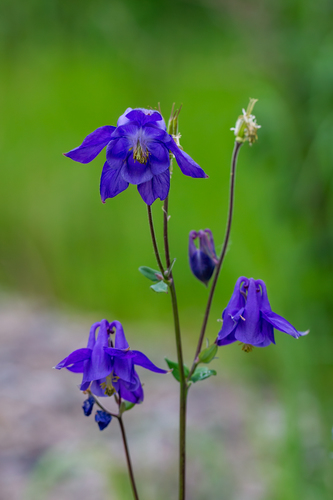
Common columbine (Aquilegia vulgaris) is a European perennial in the Ranunculaceae, widely grown for its distinctive spurred flowers. Blue and violet are typical of wild forms, while garden cultivars offer many colors. It favors bright partial shade, often self-seeds and should not be eaten.
Read moreCommon columbine, Columbine, Granny's bonnet and European crowfoot
Give plenty of ambient light without direct sun on the leaves.
Gentle sun, bright partial shade or a light woodland edge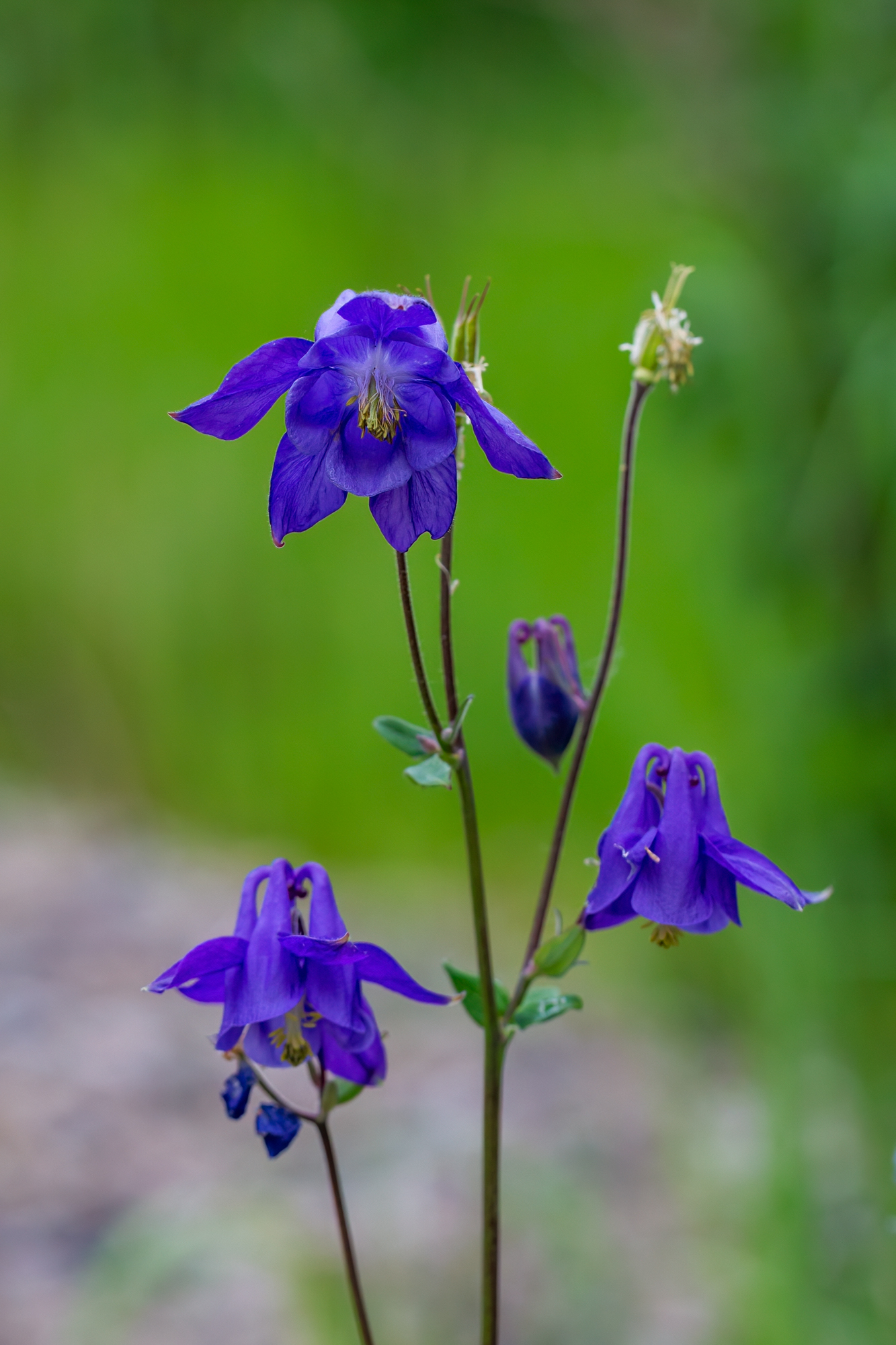


© photo
(c) Pekka Malinen, some rights reserved (CC BY-NC-SA), uploaded by Pekka Malinen · cc-by-nc-sa
iNaturalist User · cc0
Bobo-X · cc-by
Taken May 2, 2021 by Araújo Manuela (cc-by-sa)
Taken Jul 25, 2021 by Carlos Veri (cc-by-sa)
Taken Apr 18, 2022 by Jim Knopf (cc-by-sa)
Taken May 10, 2022 by Dave Flack (cc-by-sa)
Taken Nov 3, 2016 by Yoan MARTIN (cc-by-sa)
© copyright of the Board of Trustees of the Royal Botanic Gardens, Kew.




Global distribution
POWO accepts Aquilegia vulgaris as a species of Ranunculaceae. Native to Europe, it is widely cultivated, with naturalized populations and horticultural hybridization in several temperate regions.
- Native2
- Introduced1
- Europe
- France
- North America
Hexagons: regions where the plant occurs. Green dots: native range.2
Identity
Common columbine (Aquilegia vulgaris L., 1753) is an accepted European species in the Ranunculaceae. POWO, World Flora Online and Wikidata provide a stable reference for its identity. Its botanical name distinguishes a particular species from the wider assortment of columbines sold for gardens, a distinction that matters when comparing flower forms, seedlings and ingestion precautions. 2 3 1 10
Columbine and granny's bonnet are familiar names, while European crowfoot is another established English name. General garden references to columbines can include numerous cultivars and hybrids. The binomial Aquilegia vulgaris specifies the European species, often blue to violet in its wild forms but much more variable in cultivation. 5 4
Ranunculaceae includes many ornamental plants with irritating or more strongly toxic constituents. Family membership alone does not establish the severity of an individual exposure, but columbine should not be treated as an edible decorative flower. Its value in a border is ornamental rather than culinary. 6
Recognition
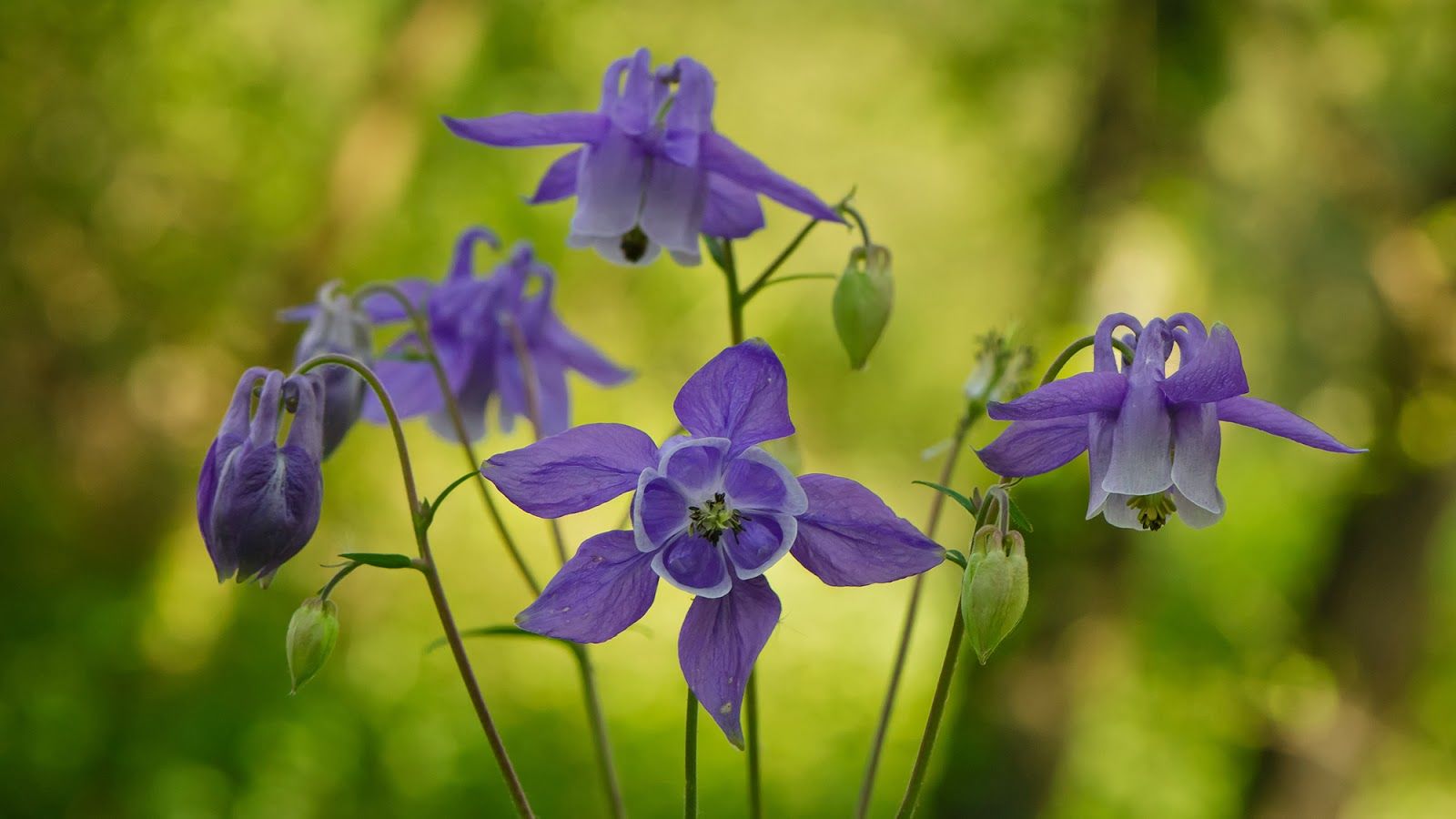
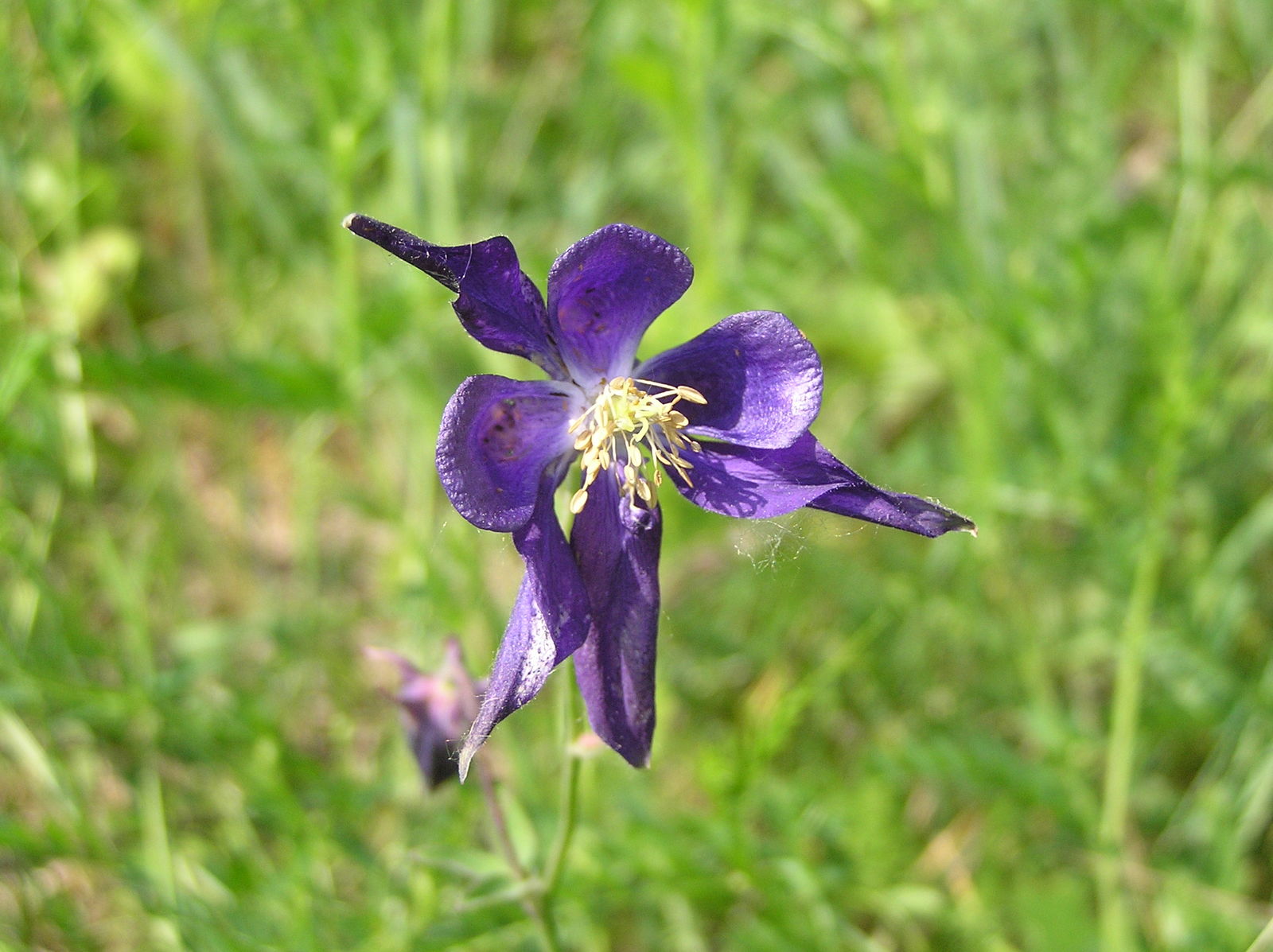
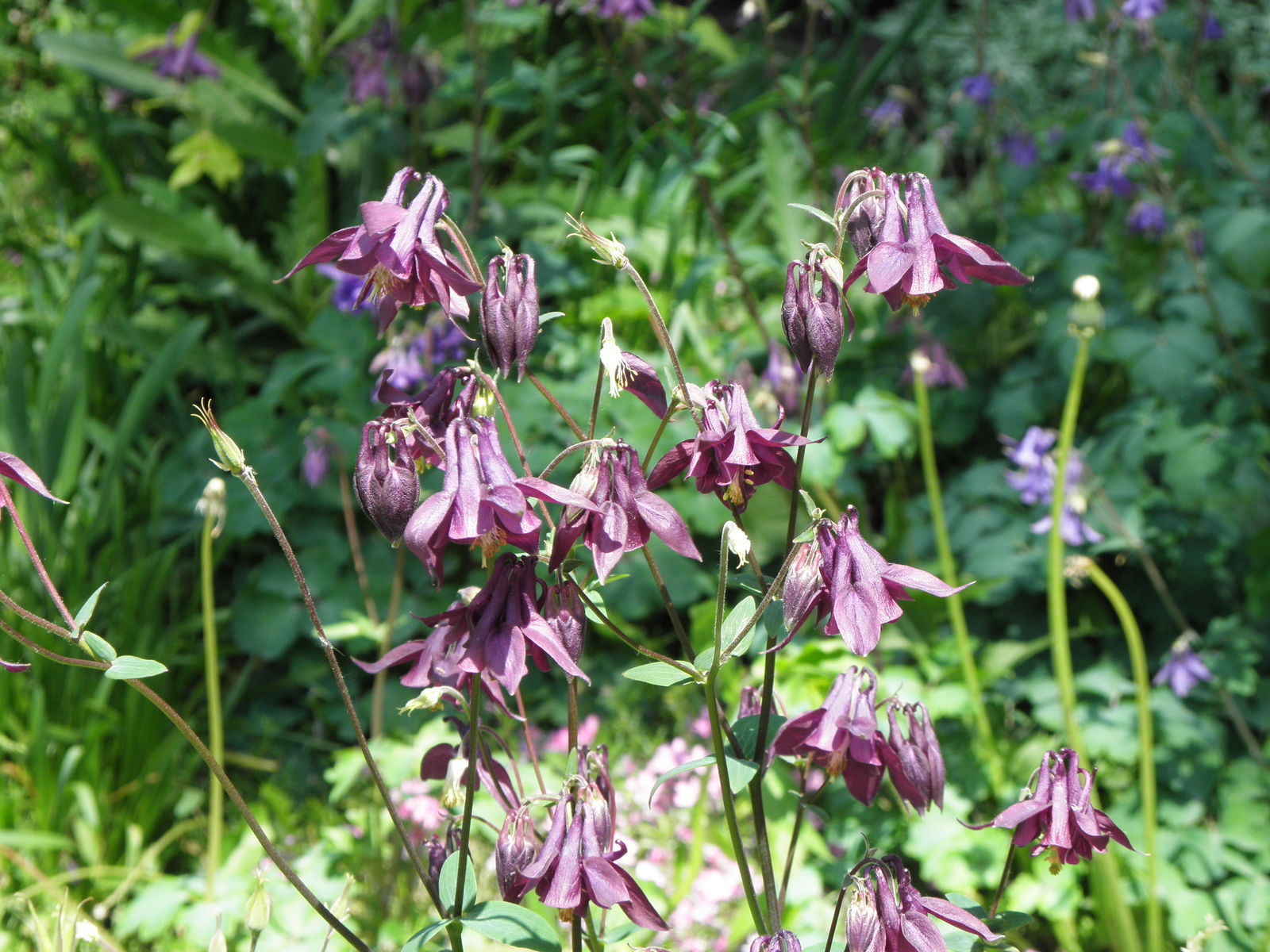
Divided green to blue-green foliage appears before the distinctive spurred flowers of common columbine. Depending on the form, flowers may nod downward or open more widely. Five nectar-bearing spurs extend behind the petals and provide the most useful visual feature for recognizing the familiar single-flowered form. 5 7 9 10
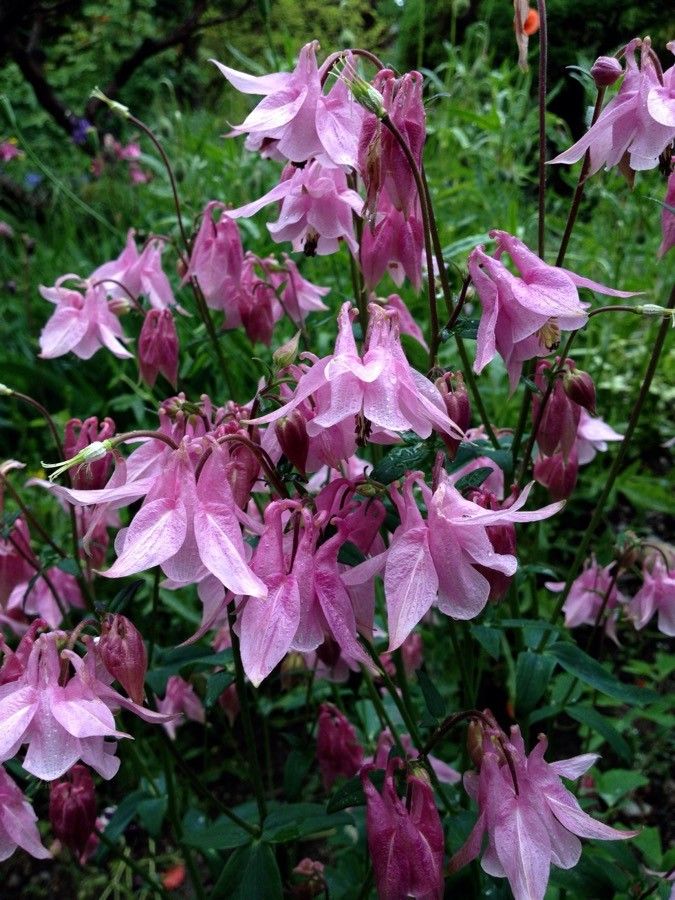
Blue, violet, pink, white and dark red flowers all occur in cultivated plants, sometimes in two colors or double forms. Self-sown seedlings readily recombine these features. A plant bought under a precise cultivar name may therefore produce offspring that look different, even when the original plant continues flowering as expected. 5
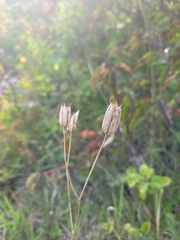
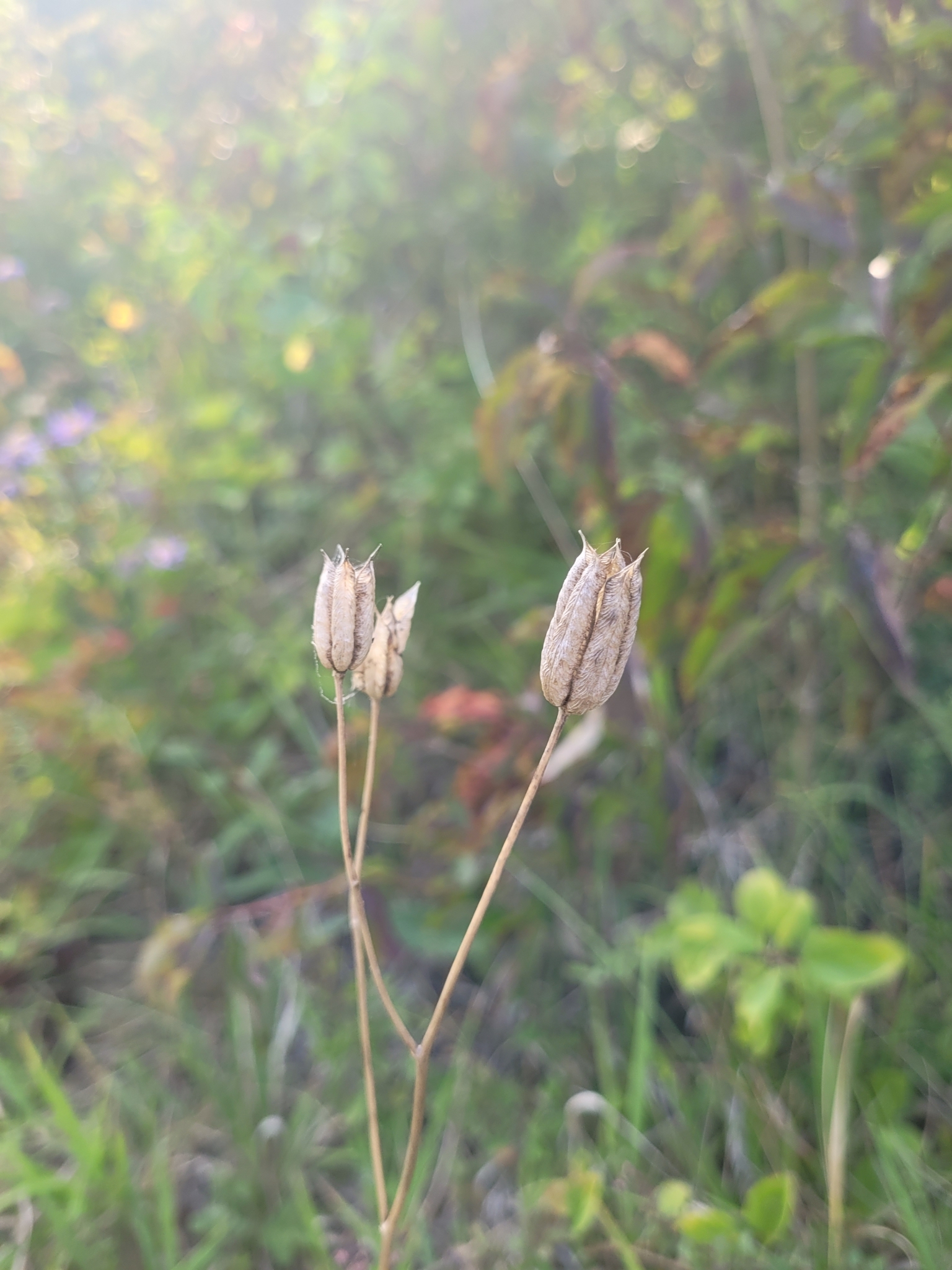
Dry seed capsules develop after flowering and release numerous seeds. Those seeds can keep a columbine population in the garden after the original parent has died. Common columbine is consequently a perennial whose individual plants may be short-lived, yet whose descendants shift around the planting over time.
The spurs project backward from the petals, giving the flower a lantern-like outline or the shape of a small inverted bell. In a violet flower border, that outline contributes as much as the color itself: the airy, hanging flowers create a different texture from flat or densely clustered blooms. 7 9 10
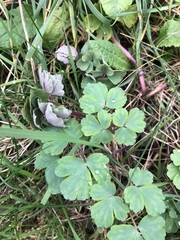
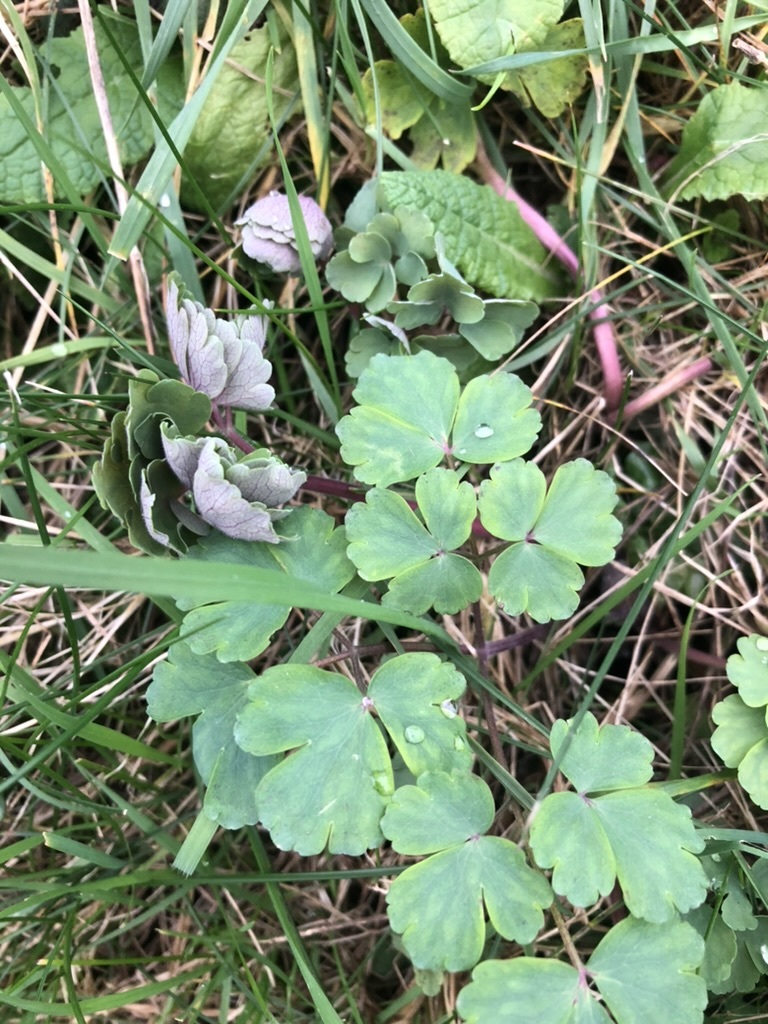
Before flowering, look for rounded, lobed leaflets forming a light clump. These differ from broad foxglove leaves and the thicker foliage of heucheras. Hot summer conditions may cause the leaves to yellow or partly disappear; that does not mean the seeds already produced have also been lost.
Cultivation and sowing
Gentle sunshine, bright partial shade and well-drained soil that stays moist in spring suit common columbine. In a hot climate, a light woodland edge provides a more suitable setting than a dry site exposed to intense afternoon sun. The exposure should be judged against local heat and moisture rather than a fixed compass direction. 7 5 10
Growing from seed is often the simplest method. Leaving a few capsules to ripen produces volunteer seedlings. To limit mixing around a named cultivar, remove faded flowers or isolate plants, since columbines cross readily and their seedlings may not preserve the parent's appearance. 5
In perennial borders, columbine combines with hardy geraniums, heucheras, foxgloves, airy ferns and spring bulbs. Its foliage can look tired after flowering. A low companion plant helps cover that gap while preserving the open character of the spring display.
Informal gardens make room for its changing position. Seedlings may appear between paving stones, along a hedge or in a cool patch of gravel, while disappearing from another spot. That movement can be welcome in a naturalistic planting and less suitable where a tightly drawn border depends on every plant staying in place.
To retain violet flowers close to the wild appearance, select suitable seedlings and remove unwanted flower colors before they set seed. Without selection, crossing produces a variable population that may be attractive but less faithful to the original color scheme. 5
A simple choice guides management. In an informal garden, keep the best seedlings and remove plants growing in inconvenient places. In a carefully coordinated color border, deadhead before capsules ripen to reduce mixing. Both approaches work, but they produce visibly different plantings after three years.
Summer companions can take over as columbine's main display ends. Hardy geraniums, lady's mantle, light ferns and heucheras hide fading leaves without overwhelming the spring flowers. This role as a seasonal presence helps explain why common columbine works naturally along a border or woodland edge rather than as a solitary pot display.
Toxicity
Reports concerning Aquilegia vulgaris describe toxic compounds and human poisoning after ingestion. Cyanogenic glycosides and other documented constituents warrant moderate caution rather than treating the plant as harmless to eat. Ornamental use and food use require different judgments, even when the flowers look delicate and appealing. 5 8
Children, adults who might mistake flowers for an edible garnish, and animals that chew leaves or seeds deserve particular attention. Common columbine should not be used as food or as a homemade medicinal preparation. Keeping that distinction clear avoids turning an attractive border plant into an ingestion risk. 5
Ordinary ornamental planting remains practical. Pick up cut material where animals chew plants, keep bouquets beyond the reach of very young children, and avoid tasting flowers or seeds. These measures address access to the plant without implying that every garden containing columbine is unsuitable for people or pets.
Seeds need attention because they are numerous, dry and easy to handle. Collect them for sowing if desired, but do not leave them in an open dish accessible to children. Apply the same care to indoor arrangements containing stems that have developed seed capsules. 8
Knowing the plant's identity supports proportionate care. Aquilegia vulgaris contributes spring flowers and a light woodland-edge appearance, but it belongs among ornamental plants that should not be eaten. Its usefulness in planting schemes does not remove the need to manage discarded material and collected seed sensibly.
For curious cats, dogs or other small animals, bouquets, loose seeds and pruning waste are the main access points to consider. A living plant in a border presents a different situation from cut leaves placed beside a cage or food bowl. Removing those accessible scraps allows the ornamental planting to remain while reducing opportunities for chewing. 7 9
Place in a violet flower planting
Among violet-flowered border plants, common columbine represents an airy woodland-edge form with distinctive spurs. The species name Aquilegia vulgaris keeps the connection between its botanical identity, variable garden forms, self-seeding behavior and ingestion precautions clear. Flower color alone does not make all columbines interchangeable. 2 5
Choosing the species by name makes practical comparisons easier. A violet-flowered seedling, a double cultivar and a hybrid sold simply as columbine may share a general garden role while differing in appearance and predictability from seed. Retaining that distinction helps match the planting to the desired effect without assuming every packet or flowering pot contains the same plant.
Main sources
- Wikidata, Aquilegia vulgaris
- Plants of the World Online / Kew, Aquilegia vulgaris
- WFO Plant List, June 2026, Aquilegia vulgaris L. — accepted species name
- International Plant Names Index, Aquilegia vulgaris
- Wikipedia EN, Aquilegia vulgaris
- Wikipedia EN, Aquilegia
- Royal Horticultural Society, Aquilegia vulgaris — common columbine plant profile
- Plants For A Future, Aquilegia vulgaris
- University of Zurich, Institute of Veterinary Pharmacology and Toxicology, Aquilegia vulgaris — botanical/toxicological profile
- Missouri Botanical Garden, Plant Finder, Aquilegia vulgaris
Frequently asked questions
Is common columbine the same as hybrid columbines?
No. Aquilegia vulgaris is the common species; many garden columbines are related cultivars or hybrids.
Why distinguish common columbine from the genus as a whole?
Aquilegia vulgaris is a particular species. Naming it precisely allows its self-seeding habit and ingestion precautions to be distinguished from general information about columbines.
Is common columbine poisonous?
Treat it as poisonous if eaten. Toxic compounds are reported in the species, and it should not be consumed.
Does common columbine self-seed?
Yes, often. Seedlings may have different flower colors from the parent plant.
Where should I plant common columbine?
Choose gentle sun or bright partial shade with moist, well-drained soil.
Is common columbine long-lived?
Individual plants sometimes live only a few years, but the population can persist through self-seeding if seed is allowed to mature.
Similar plants
If you are unsure about a plant’s toxicity, ask a botanist or veterinarian for advice.